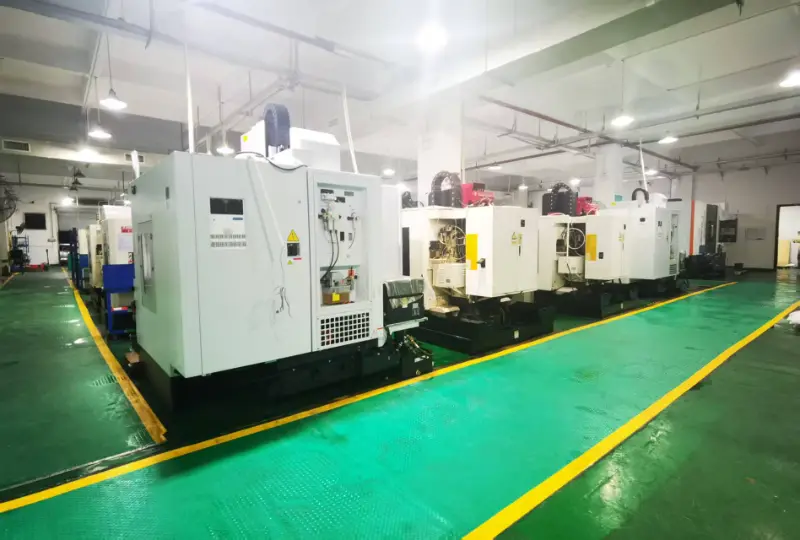
In modern industrial manufacturing, finding a plastic material capable of replacing metal is key to improving durability and reducing costs. POM material, with its excellent mechanical strength, wear resistance, and chemical stability, has become the preferred choice for precision parts. Known as “metal in plastics,” it is a highly crystalline linear polymer formed by the polycondensation of formaldehyde molecules. Since its introduction in the 1920s, it has been widely used in automotive manufacturing, industrial fields, and everyday products such as zippers and toys. The current global annual consumption is approximately 2.6 million tons, proving that truly excellent materials often work quietly behind the scenes.
This article provides a comprehensive analysis of POM properties, advantages and disadvantages, and handling methods in special situations (such as improper combustion).
Core Properties and Functions of POM Material
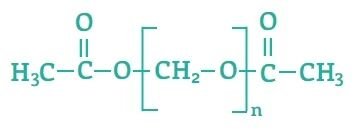
POM appears as light yellow or white translucent or opaque powder or granules. It is hard, dense, and ivory-like. POM is a linear polyether characterized by high crystallinity, with its molecular backbone consisting of repeating −CH₂O− structural units. Under unlubricated or light-load conditions, it exhibits exceptional tribological properties, excellent rigidity and strength, and outstanding dimensional stability. The following is a comprehensive overview of POM properties.
Mechanical Strength and Rigidity
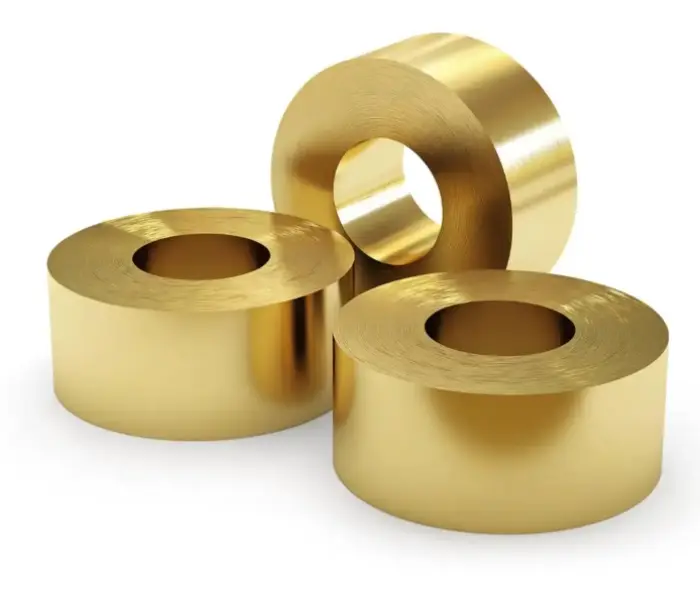
POM is known as “acetal steel” due to its regular −CH₂O− molecular chain structure. This high uniformity enables tight packing, similar to reinforced concrete, resulting in strong crystallization ability. Its crystallinity reaches 75%–85%, giving the material excellent rigidity and resistance to deformation. In terms of performance, POM has a tensile strength of 60–75 MPa, comparable to H62 brass.
Excellent Self-Lubrication and Wear Resistance
The slight polarity introduced by oxygen atoms in the molecular chain forms an effective transfer film during friction. This gives POM excellent self-lubricating properties under no lubrication or light load conditions, with a very low coefficient of friction. Therefore, it is often used to manufacture gears, bearings, sliders, and other transmission components.
Outstanding Fatigue Resistance
POM has excellent creep resistance. Under long-term load, the creep value is extremely low (e.g., only 2.3% after 3000 hours at 23°C under a load of 21 MPa), which helps reduce stress concentration caused by creep and improves fatigue performance. It also has high toughness and impact resistance, capable of withstanding repeated impact loads while maintaining high impact strength, making it suitable for components subjected to frequent impacts (such as gears, bearings, and structural load-bearing parts).
Good Chemical Resistance
POM is not resistant to strong acids and oxidizing agents but has some stability against dilute and weak acids. It has good solvent resistance and can withstand hydrocarbons, alcohols, aldehydes, ethers, gasoline, lubricating oils, and weak bases, maintaining considerable chemical stability even at high temperatures. However, its weather resistance is poor; prolonged exposure to ultraviolet light leads to degradation of mechanical properties, surface powdering, and cracking.
Differences Between POM-C and POM-H
POM materials are classified into homopolymer (POM-H) and copolymer (POM-C) based on molecular polymerization:
POM-H material
Homopolymer POM consists of a single formaldehyde molecule type, with a crystallinity of 75%–85%. It offers excellent mechanical properties, with a tensile strength of 70 MPa, flexural strength of about 98 MPa, and a melting point of 180°C. However, it has poor thermal stability, a narrow processing temperature range (10–20°C), and is easily corroded by strong acids.
POM-C material
Copolymer POM is produced by adding components such as ethylene oxide to homopolymer POM. Although its crystallinity is slightly lower (70%–75%), it has a tensile strength of 62 MPa, flexural strength of about 91 MPa, and a melting point of around 175°C. Its advantages include better resistance to high-temperature acids and bases, easier processing, and slightly lower cost.
Core Physical Parameter Comparison Table of POM
| Property | POM-H | POM-C | Description |
|---|---|---|---|
| Tensile Strength (MPa) | ~70 – 80 | ~60 – 70 | POM-H has higher strength and better tensile capability. |
| Flexural Strength (MPa) | ~110 – 120 | ~90 – 100 | POM-H has better resistance to bending fracture. |
| Flexural Modulus (MPa) | ~3000 – 3500 | ~2500 – 2800 | POM-H is more rigid and less prone to elastic deformation under compression. |
| Rockwell Hardness (R-scale) | ~M90 – M94 | ~M80 – M85 | POM-H has a harder surface and better wear resistance during sliding friction. |
| Notched Impact Strength (kJ/m²) | ~7 – 10 | ~5 – 8 | Both have similar impact resistance; POM-C is slightly tougher. |
| Elongation at Break (%) | ~15 – 25 | ~30 – 60 | POM-C can undergo greater deformation before breaking. |
If your design demands high precision, rigidity, and resistance to friction and wear—and you require stability in humid environments or under varying temperatures—POM is often the preferred choice.
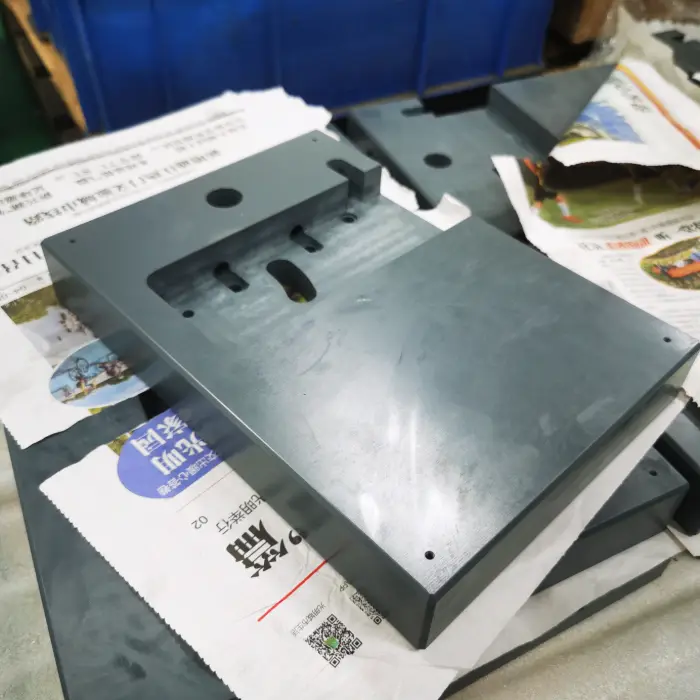
Pros and Cons of POM material
To better understand the application boundaries of POM, the following comparison table is provided:
| Pros | Cons |
|---|---|
| Excellent dimensional stability: Low water absorption, minimal influence from environmental humidity. | Poor thermal stability: Easily decomposes at high temperatures. |
| High hardness: Scratch-resistant surface with a solid feel. | Not resistant to strong acids and alkalis: Easily fails when exposed to strong oxidizing agents or acidic substances. |
| Good resilience: Suitable for clips and fasteners. | High shrinkage: Requires precise mold temperature control during injection molding. |
| Good electrical insulation: Suitable for electronic components. | Poor UV resistance: Becomes brittle after long-term outdoor exposure. Additives like HALS and carbon black can reduce light degradation. |
POM Modification and Reinforcement Methods
POM also has some shortcomings, such as low impact toughness, high notch sensitivity, poor heat resistance, easy decomposition, and a relatively high coefficient of friction. Therefore, other materials are added to POM to expand its performance and application range.
Reinforcement Modification of POM
To improve the heat resistance, rigidity, dimensional stability, fatigue resistance, creep resistance, and mechanical properties of POM, composite reinforcement is required. Common reinforcing fillers include long and short glass fibers, carbon fibers, glass beads, talc, and potassium titanate whiskers.
Mainly used to replace metals such as copper and zinc in the production of bearings, high-strength gears, and structural components.
Toughening Modification of POM
Due to its high crystallinity (generally 70%–85%) and large crystal grains, POM has low notch impact strength and tends to fracture in a brittle manner. There are two main methods to improve its impact toughness: elastomer toughening and rigid particle toughening.
Elastomer toughening involves adding elastomer materials such as TPU, EPDM, and NBR to enhance the toughness of POM.
Adding rigid particles such as glass beads, talc, and potassium titanate whiskers can disperse stress and improve both strength and toughness, which is known as rigid particle toughening.
Toughened POM is widely used in products such as automotive door clips, seat belt buckles, and transmission gears.
Wear-Resistant Modification of POM
There are two ways to improve the wear resistance of POM. One is chemical modification, which introduces lubricating segments into the POM molecular chain through grafting or block copolymerization. The other is physical blending modification, with the most common method being the addition of PTFE and molybdenum disulfide.
Weather-Resistant Modification of POM
Photodegradation of POM forms hydroxyl and carbonyl groups on its molecular chains. As the concentration of carbonyl groups increases, POM’s ability to absorb ultraviolet light also increases, leading to more chain scission. Current research shows that adding nano-scale zinc oxide and carbon black can effectively slow down the photodegradation process of POM.

Application Fields and Components of POM
Automotive : fuel pumps, power steering components, door lock systems.
Industrial machinery: precision gears, conveyor chains, pump impellers, slide rails.
Electronics: printer components, coffee machine moving parts, switch buttons.
Consumer products: zippers, ballpoint pen components, ski binding devices.
Drone industry: precision structural parts, gears, flange bushings.
Medical field: joints for wearable prosthetics, brain-computer interface components.
Hazards of Improper POM Combustion and Handling Methods
POM is a flammable material with an ignition point of approximately 375°C. Improper combustion (such as overheating decomposition in injection molding machines or warehouse fires) can lead to serious safety hazards.
Combustion Characteristics
Flame color: light blue or colorless; sometimes burns without visible flame, which may delay fire detection and suppression.
Odor: emits a strong pungent formaldehyde and fishy smell; proper ventilation and personal protection (activated carbon masks or protective clothing) are required.
Melt dripping: burning is accompanied by molten dripping, spreading the fire.
Hazards Produced
POM combustion or thermal decomposition releases a large amount of formaldehyde gas (CH₂O), which is highly corrosive and toxic, causing severe irritation and burns to the respiratory system, skin, and eyes.
Post-Combustion Handling Procedures
Personnel evacuation: if a strong formaldehyde odor is detected, wear gas masks immediately and evacuate, ensuring proper ventilation.
Equipment cooling: if decomposition occurs in an injection molding machine, stop heating immediately and use PP (polypropylene) or PE (polyethylene) for purging to remove residual POM from the barrel.
Waste disposal: after complete cooling, residues should be sealed and treated as hazardous chemical waste.
Site decontamination: contaminated areas should be ventilated intensively for extended periods. Since formaldehyde is water-soluble, diluted ammonia solution can be sprayed if necessary to neutralize odors.
Summary
Understanding POM properties not only helps in product design but also ensures production safety. As a high-performance engineering plastic, POM is irreplaceable in precision manufacturing.
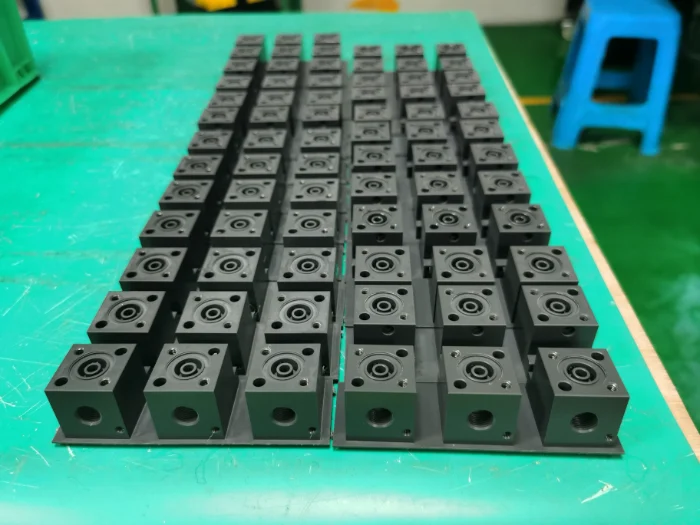
If you want to learn more or obtain POM machining quotes, you can contact Weldo machining.We handle dozens of POM machining projects on a weekly basis, encompassing a wide range of components such as pom structural parts, connecting rods, bearings, and gears. With over a decade of machining experience—backed by skilled 5-axis operators and a seasoned programming team—we ensure that your custom POM parts are delivered on time and to the highest quality standards.