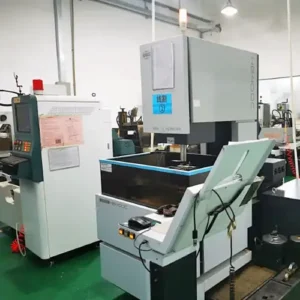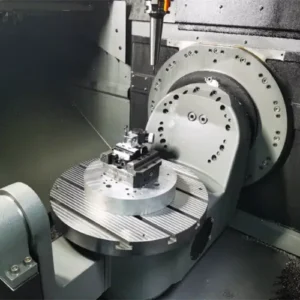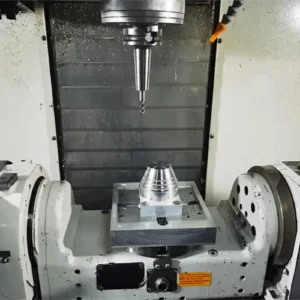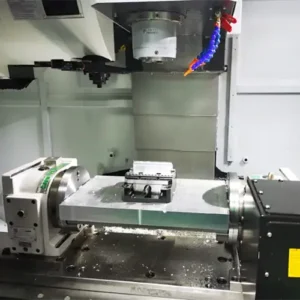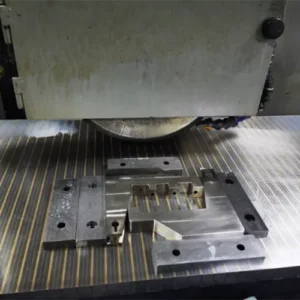









Aluminum alloy, as one of the most commonly used machining materials, is widely seen in CNC machining, aluminum extrusion, and sheet metal fabrication factories. This is due to its excellent comprehensive properties, including good strength, toughness, corrosion resistance, and machinability. This article mainly introduces aluminum strength from the perspective.
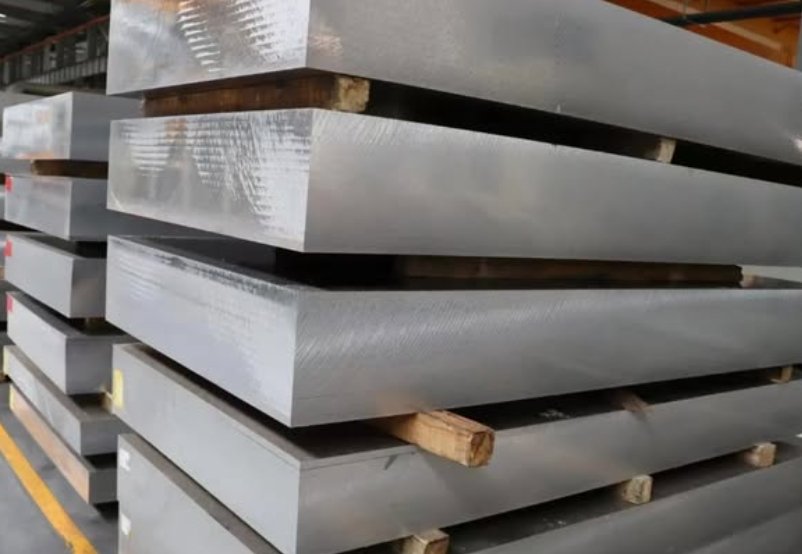
Yield strength of aluminum
Yield strength is the stress limit at which a metal material resists slight plastic deformation. For materials without a clear yield phenomenon, the yield strength is defined as the stress corresponding to 0.2% residual deformation. When the external force exceeds this value, the part will undergo permanent deformation and fail; below this value, the deformation is recoverable.
The yield strength of pure aluminum is relatively low, only 7–30 MPa, while commonly used aluminum alloys of different grades show significant differences due to heat treatment and aging. For example, 6061-T6 has a yield strength of about 241–276 MPa, 7075-T6 as a high-strength aerospace aluminum can reach 503–505 MPa, and 5052-H32 is about 193 MPa. Annealed materials generally have lower strength, which is an important basis for structural design and machining selection.
How to calculate 6061 t6 aluminum yield strength
The yield strength of 6061-T6 aluminum alloy is measured by a uniaxial tensile test at room temperature: a standard specimen is clamped on a universal material testing machine and stretched at a constant speed while recording the stress–strain curve. Since this alloy has no obvious yield plateau, the 0.2% offset method is used to determine the yield strength, that is, the stress corresponding to a residual strain of 0.2%. In engineering practice, this value is often referred to as the yield strength 6061 T6 aluminum, and is commonly expressed as 6061-T6 aluminum yield strength MPa.
The measured 6061-T6 aluminum yield strength MPa range is usually between 241–276 MPa, and the widely recognized 6061-T6 aluminum yield strength MPa typical value in the industry is 241 MPa. This value is not only a benchmark indicator in aluminum alloy material standards, but also an important basis for mechanical structure design, stress verification, fixture selection, and CNC machining parameter formulation, directly affecting dimensional stability and structural safety during load-bearing, assembly, and long-term use.
The typical tensile strength of 7075-T6 aluminum alloy is about 572 MPa, which represents the maximum tensile stress it can withstand before fracture. As an aerospace-grade high-strength aluminum alloy, this property makes it suitable for structural design and machining applications under high load and high stress conditions.
The following is a table of yield strength parameters for commonly used aluminum alloy materials.
| Alloy | Temper | Yield Strength Range (MPa) | Typical Value (MPa) |
|---|---|---|---|
| 3003 | H14 | 110–145 | ~125 |
| 5052 | H32 | 160–200 | ~193 |
| 5083 | H321 | 215–275 | ~240 |
| 6061 | T6 | 241–276 | 241 |
| 6063 | T6 | 160–200 | ~175 |
| 2024 | T3/T4 | 290–340 | ~320 |
| 7075 | T6 | 503–505 | ~505 |
Tensile strength of aluminum
The tensile strength of pure aluminum is relatively low, typically in the range of 40–90 MPa, with limited strength, mainly used for non-load-bearing structural parts. However, different aluminum alloys show significant differences in tensile strength after heat treatment or cold working. Among them, the typical tensile strength of 6061-T6 is about 260 MPa, offering good overall mechanical properties and machinability. 7075-T6, as a high-strength aerospace aluminum alloy, can reach about 572 MPa. In addition, commonly used 5052-H32 is about 230 MPa, 6063-T6 is about 185 MPa, and 2024-T3 is about 470 MPa. The strength differences among grades directly determine their applicability in various scenarios such as mechanical structures, aerospace, and general profiles.
6061 aluminum tensile strength
The tensile strength of 6061 aluminum alloy varies significantly with heat treatment condition:
O temper (annealed): tensile strength is about 124–193 MPa, with a typical value of 152 MPa for 6061-O aluminum alloy. It is relatively soft with good ductility, suitable for bending, stamping, and complex forming parts;
T4 temper: about 214–276 MPa, with a typical value of 241 MPa for 6061-T4 aluminum alloy. It has moderate strength and good toughness, suitable for structural parts requiring both formability and medium load;
T6 temper: 262–303 MPa, with a typical value of 276 MPa for 6061-T6 aluminum alloy. It has the best combination of strength and corrosion resistance and is the most commonly used condition for machining.
Among commonly used aluminum alloys, the tensile strength of 6061-T6 is moderate, lower than about 572 MPa of 7075-T6, higher than about 185 MPa of 6063-T6, and slightly higher than about 230 MPa of 5052-H32.
With balanced strength, weldability, corrosion resistance, and machinability, 6061 is widely used in structural brackets, automation equipment parts, valve bodies, flanges, heat dissipation components, automotive parts, and pneumatic components. It is a highly cost-effective general engineering aluminum material in scenarios requiring certain load-bearing capacity while maintaining ease of processing.

Ultimate tensile strength of aluminum
The ultimate tensile strength of aluminum alloys is the same as tensile strength; both refer to the maximum stress that the material can withstand before fracture in a uniaxial tensile test divided by the original cross-sectional area, with the unit MPa. Therefore, the typical values of ultimate tensile strength are the same as those of tensile strength. Below are typical ultimate tensile strength (tensile strength) values for common aluminum and aluminum alloys:
| Series | Grade | Temper | Ultimate Tensile Strength (MPa) |
| 1xxx (Pure Aluminum) | 1050 | O | 60–80 |
| 1050 | H18 | 140–170 | |
| 1060 | O | 60–80 | |
| 1060 | H18 | 130–160 | |
| 1100 | H14 | 110–140 | |
| 3xxx aluminum (Al-Mn) | 3003 | O | 100–130 |
| 3003 | H14 | 140–170 | |
| 3004 | H32 | 210–250 | |
| 5xxx aluminum (Al-Mg) | 5052 | O | 170–210 |
| 5052 | H32 | 210–260 | |
| 5052 | H34 | 230–280 | |
| 5083 | H112 | 270–310 | |
| 5083 | H321 | 300–350 | |
| 6xxx aluminum (Al-Mg-Si) | 6061 | T4 | 240 |
| 6061 | T6 | 290–310 | |
| 6063 | T5 | 170–210 | |
| 6063 | T6 | 215–245 | |
| 6082 | T6 | 290–320 | |
| 2xxx aluminum (Al-Cu) | 2017 | T4 | 380–420 |
| 2024 | T3 / T4 | 470–490 | |
| 7xxx aluminum (High-Strength Al-Zn-Mg-Cu) | 7075 | O | 220–240 |
| 7075 | T6 | 560–580 | |
| 7050 | T7451 | 540–590 | |
| Cast Aluminum | A356 | T6 | 220–240 |
| A380 | As-cast | 310–330 |
Breaking strength of aluminum
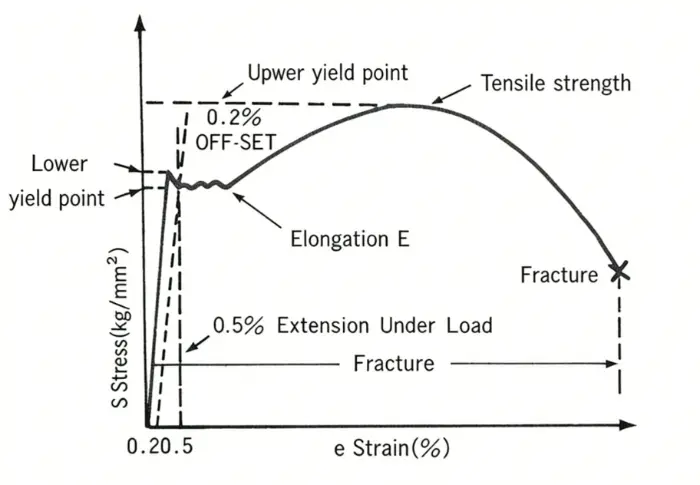
Fracture strength (σk) refers to the true stress at the moment of final fracture during tensile testing, calculated as the ratio of the load at fracture Pk to the reduced cross-sectional area Ak after necking (σk = Pk/Ak). It is used to characterize the material’s resistance to fracture. For ductile materials, since the load-bearing capacity has already started to decrease after necking, the engineering significance of fracture strength is relatively limited; for brittle materials, since necking hardly occurs, fracture strength is close to tensile strength. Therefore, in practical engineering, tensile strength (σb) is usually used to represent the fracture resistance of materials.
From the stress-strain relationship, fracture strength corresponds to the end of the curve, while tensile strength corresponds to the peak of the curve. Although there is a difference between the two, they are often simplified in engineering applications. For aluminum alloys, fracture strength is greatly influenced by alloy type and heat treatment condition, with typical values ranging from about 70 MPa to 570 MPa. For example, pure aluminum is about 70–110 MPa, 6061-T6 is about 290–320 MPa, and 7075-T6 can reach about 500–570 MPa. If you want to learn more about the fracture strength of other aluminum alloy grades, you can refer to the tensile strength table above or consult weldo engineers.
This graph shows the relationship between tensile strength, fracture strength, and external stress:
Compressive strength of aluminum
The compressive strength of aluminum alloy refers to the maximum compressive stress that aluminum can withstand before significant plastic deformation or crushing occurs under pressure. The compressive strength of aluminum varies greatly depending on alloy type, heat treatment condition, processing technology, and testing conditions. The following are common cases:
pure aluminum
Pure aluminum (such as 1xxx series) has relatively low compressive strength. At room temperature, the compressive yield strength is approximately 7–110 MPa and it is prone to plastic deformation.
common aluminum alloys
6061-T6 aluminum alloy: compressive yield strength is about 240–310 MPa at room temperature, commonly used in mechanical structures and automotive components.
6063-T5/T6 aluminum alloy: compressive yield strength is about 150–200 MPa, mostly used in building curtain walls and doors and windows.
7075-T6 aluminum alloy: compressive yield strength can reach 500–600 MPa, commonly used in aerospace and high-end mechanical fields.
high temperature or special alloys
Some aluminum matrix composites (such as aluminum matrix composites containing Al₃Ti reinforcement phase) can reach a compressive yield strength of 938 MPa at 400℃, but such materials are costly and are mostly used in extreme environments.
New aluminum-based entropy alloys (such as Al₈₅Cu₅Li₄Mg₃Zn₃) have compressive strength exceeding 1000 MPa at room temperature, but have not yet been widely applied.
It should be noted that in actual engineering, the compressive strength of aluminum is affected by factors such as cross-sectional shape, slenderness ratio, and end constraints. Slender components are prone to buckling failure, so structural stability must be considered in design.
The following are reference ranges of compressive strength for common aluminum and aluminum alloys after heat treatment:
| Series | Grade | Temper | Compressive Strength(MPa) |
| 1xxx Pure Aluminum | 1050 | O | 15–30 |
| 1050 | H18 | 140–150 | |
| 1060 | O | 15–30 | |
| 1060 | H18 | 130–140 | |
| 1100 | H14 | 90–110 | |
| 3xxx aluminum (Al-Mn) | 3003 | O | 40–50 |
| 3003 | H14 | 120–140 | |
| 3004 | H32 | 180–200 | |
| 5xxx aluminum (Al-Mg) | 5052 | O | 90–110 |
| 5052 | H32 | 190–210 | |
| 5052 | H34 | 210–230 | |
| 5083 | H112 | 140–160 | |
| 5083 | H321 | 210–240 | |
| 6xxx aluminum (Al-Mg-Si) | 6061 | T4 | 140–160 |
| 6061 | T6 | 240–310 | |
| 6063 | T5 | 130–160 | |
| 6063 | T6 | 190–210 | |
| 6082 | T6 | 250–270 | |
| 2xxx aluminum (Al-Cu) | 2017 | T4 | 240–270 |
| 2024 | T3/T4 | 320–340 | |
| 7xxx aluminum High-Strength | 7075 | O | 90–110 |
| 7075 | T6 | 500–600 | |
| 7050 | T7451 | 460–490 | |
| Cast Aluminum | A356 | T6 | 160–180 |
| A380 | As-cast | 150–170 |
Fatigue strength of aluminum
The fatigue strength of aluminum refers to the maximum safe stress that aluminum alloys can withstand under repeated and cyclic loading without fracture. If this value is exceeded, the material will gradually crack and eventually fail after multiple cycles.
It is closely related to the material’s tensile strength: generally, the fatigue strength of aluminum alloys is about one-third of their tensile strength. For example, for aluminum with a tensile strength of 300 MPa, the fatigue strength is usually around 100 MPa. Only specially optimized high-strength aluminum alloys can approach half of their tensile strength.
The following is a quick reference table for fatigue strength of aluminum and aluminum alloys:
| Series | Grade | Temper | Fatigue Strength (10⁷ cycles) |
| 1xxx (Pure Aluminum) | 1060 | O (annealed) | 25–35 |
| 1060 | H18 (cold worked) | 45–60 | |
| 5xxx (Al-Mg) | 5052 | H32 | 115–125 |
| 5083 | H112/H321 | 120–140 | |
| 6xxx (Al-Mg-Si) | 6061 | T6 | 95–100 |
| 6063 | T6 | 90–110 | |
| 2xxx (Al-Cu) | 2024 | T3/T4 | 100–120 |
| 2A12 | T6 | 95–110 | |
| 7xxx (Ultra-high strength) | 7075 | T6 | 150–165 |
| Cast Aluminum | A356 | T6 | 70–85 |
other influencing factors of aluminum fatigue strength
Finer grains and more uniform internal structure lead to higher fatigue strength.
Smoother surfaces and treatments such as shot peening and polishing that introduce compressive stress can significantly improve fatigue resistance and reduce crack initiation.
Loading conditions are also critical: greater stress variation and more severe stress concentration (such as sharp corners and holes) will significantly reduce fatigue performance. Under long-term high-cycle loading, even when stress is far below the yield strength, fatigue failure may still occur.
Shear strength of aluminum
The shear strength of aluminum alloy refers to its ability to resist transverse sliding and shear failure, and in engineering it is typically about 0.6 times the tensile strength. The following are reference values for common aluminum alloys:
shear strength of 6061 aluminum
T6 temper: design shear strength is about 115 MPa, and actual measured shear strength can reach 160–200 MPa.
T4 temper: shear strength is about 85–100 MPa.
6063 aluminum alloy
T6 temper: design shear strength is about 85 MPa, and actual measured shear strength is 120–150 MPa.
T5 temper: shear strength is about 75–90 MPa.
7075 aluminum alloy
T6 temper: shear strength is about 180–220 MPa, one of the highest among common aluminum alloys.
T751 temper: shear strength is about 160–190 MPa.
5052 aluminum alloy
H32 temper: shear strength is about 125–165 MPa, with good corrosion resistance and moderate shear strength.
O temper: shear strength is about 100–120 MPa.
2A04 aluminum alloy (for rivets)
Shear strength ≥275 MPa, suitable for riveting applications with high shear loads.
It should be noted that the above values are typical values. In actual engineering, they should be determined based on specific material specifications, heat treatment processes, and service conditions. For thermal break aluminum profiles, national standards require a shear strength not less than 40 MPa, and industry specifications usually require not less than 45 MPa.
Summary of aluminum strength
This article focuses on the key mechanical properties of aluminum and aluminum alloys, systematically explaining the definitions, typical values, and engineering significance of yield strength, tensile strength, compressive strength, fatigue strength, and shear strength. It also compares the performance differences of commonly used alloys such as 6061, 7075, and 5052 under various heat treatment conditions. If you are selecting the right aluminum material or need customized machining solutions, feel free to contact us for professional advice and a fast quotation—we are committed to providing efficient and reliable solutions for your project.