In my experience overseeing manufacturing workflows, black oxide is the secret behind the sleek, durable “gun-metal” finish seen on industrial tooling and aerospace components. It’s cost-effective, offers lubricity, and prevents galling. However, mastering the process requires understanding the difference between hot and cold black oxide, as well as the importance of post-treatment. In this updated 2026 guide, I’ll show you how to achieve the perfect black oxide finish for ferrous materials and stainless steel. Let’s dive in.
What is Black Oxide Coating?
The origins of black oxide treatment, specifically black oxide coating, are found in the traditional ‘gun bluing’ techniques used by early gunsmiths to reduce glare and provide basic protection for firearms. Throughout the 20th century, the process was refined into the standardized chemical baths used today. It remains a staple in American manufacturing due to its reliability, aesthetic appeal, and the minimal impact it has on complex mechanical geometries, including size thickness.
Definition and Basic Principles
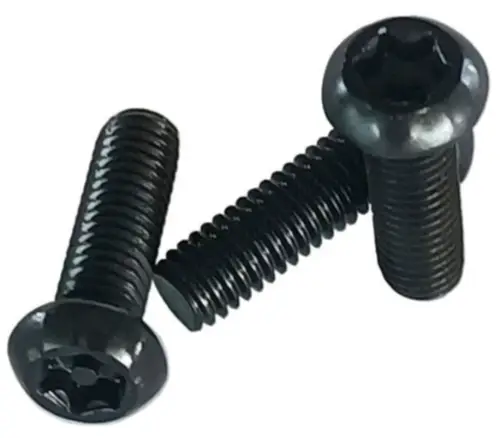
Black oxide, often referred to as blackening, is a chemical conversion coating used for ferrous materials, stainless steel, copper, and zinc. Unlike electroplating, which adds a layer of material to the surface, black oxide is a result of a chemical reaction between the iron in the metal and the oxidizing salts. This process transforms the surface into magnetite (Ferric Oxide), providing a uniform black finish without altering the part’s dimensional tolerances.
How the Chemical Conversion Process Works
The transition from raw metal to a finished black oxide surface involves a precise sequence of chemical immersion. Because it is a conversion process rather than a coating, the integrity of the substrate remains intact.
- Cleaning: Parts are thoroughly degreased and cleaned to ensure the chemical reaction occurs uniformly across the entire surface.Polishing or using alkaline and hydrocarbon solutions can remove grease. Sometimes, an acidic solution is used for degreasing.
- Rinsing: Cleaned parts are rinsed to remove any residual alkaline cleaners, as well as any acidic solution residues, to prevent corrosion of the parts.
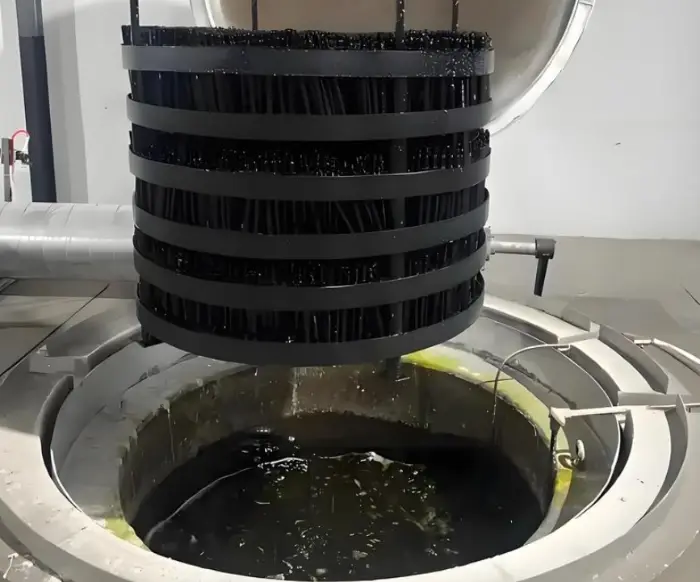
- Oxidation: Parts are submerged in a hot salt bath (typically sodium hydroxide and nitrites). This triggers the formation of magnetite on the surface.
- Post-Treatment: The resulting black layer is naturally porous. To achieve true corrosion resistance, the parts are sealed with a wax finish or supplemental oil, which penetrates the pores and locks out moisture.
| Feature | Black Oxide Characteristic |
| Coating Type | Chemical Conversion |
| Dimensional Change | Zero/Negligible |
| Primary Mineral | Magnetite (Ferric Oxide) |
| Appearance | Deep Black (Matte or Glossy) |
The oxidation process is a key step in blackening treatment, which includes 3 chemical reactions and 4 stages of material changes:
3 Chemical Reactions:
Ammoniation of Sulfite
3Fe + NaNO₂ + 5NaOH → 3Na₂FeO₂ + NH₃ ↑ + H₂O
Sodium Ferrate Conversion
6Na₂FeO₂ + NaNO₂ + 5H₂O → 3Na₂Fe₂O₄ + NH₃ ↑ + 7NaOH
Formation of Ferric Oxide
Na₂FeO₂ + Na₂Fe₂O₄ + 2H₂O → Fe₃O₄ ↓ + 4NaOH
The first reaction involves iron reacting with sodium nitrite and sodium hydroxide at high temperature to form sodium ferate, ammonia gas, and water.
The second reaction sees sodium ferate reacting with sodium nitrite to form sodium ferrate, ammonia gas, and sodium hydroxide.
The third reaction involves sodium ferate and sodium ferrate reacting to form magnetite and sodium hydroxide.
The 4 Stages of Change in Workpiece Material:
The first stage is the dissolution of the steel substrate. The second stage is the formation of the oxide film. The third stage is the growth of the crystals. Finally, in the fourth stage, a dense protective layer is formed.
Thus, the magnetite layer formed on the steel surface is very uniform and provides excellent protection for the steel.
Common Types of Black Oxide Coating Processes
When we look at black oxide applications, we typically group them into three main categories based on temperature and chemical makeup. Each method has its own place in the shop depending on the durability you need and the equipment you have on hand.
Hot Black Oxide (The Industry Standard)
This is the “true” blackening process and the one I recommend for most heavy-duty industrial parts. It involves immersing parts in a boiling bath of caustic soda and nitrates at approximately 285°F.
- Result: A deep, chemically bonded finish that becomes part of the metal surface, providing a quality black oxide layer for enhanced durability and protection.
- Best For: Critical components requiring maximum durability and a uniform, rich black appearance.
- Durability: It offers better black oxide corrosion resistance when sealed with a supplemental wax finish or oil.
Mid-Temperature Black Oxide
If you want the benefits of a hot bath without the intense heat and fumes(Ammonia), mid-temperature is the way to go. This process usually runs between 220°F and 245°F.
- Efficiency: It uses less energy and creates a safer working environment for the operators.
- Finish: You get a high-quality finish that is nearly indistinguishable from the hot process, though the chemical conversion isn’t quite as aggressive.
Cold Black Oxide (Room Temperature)
I often see this used for quick touch-ups or in shops that don’t want to deal with boiling chemical tanks. This is a copper selenium process that happens at standard room temperature.
- Application: It’s fast and convenient for parts that don’t face extreme wear.
- Trade-off: It is technically a coating rather than a deep conversion. Because of this, it is softer and requires a heavy wax finish to prevent rusting.However, it is best to apply paint or zinc plating to the surface of the workpiece after blackening to further enhance its corrosion resistance.
| Process Type | Operating Temp | Durability | Best Use Case |
| Hot | 285°F | Highest | Military, Aerospace, High-wear tools |
| Mid-Temp | 225°F – 245°F | High | General industrial components |
| Cold | 70°F – 75°F | Moderate | Prototypes, Field repairs, DIY |
Materials Compatible with Black Oxide Finishing
Black oxide treatment is widely used on various metals to enhance corrosion resistance, wear resistance, and aesthetics:
- Black oxide Carbon steel and alloy steel
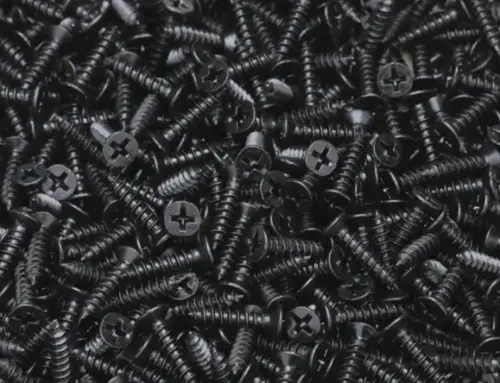
Low carbon, alloy, and tool steels are commonly treated with black oxide, which forms a black iron oxide (Fe₃O₄) layer that enhances corrosion resistance and reduces friction. This treatment is widely used for mechanical parts, fasteners, and tools, including the most common black oxide screws and bolts. These fasteners, along with drill bits, taps, and cutting tools, benefit from improved durability and performance in various applications. - Black oxide Cast iron
Black oxide treatment increases wear and rust resistance on cast iron, giving it a matte black appearance. It’s commonly used for engine parts and machine tool bases. - Black oxide Stainless steel
Stainless steel forms a smooth, dark surface after black oxide treatment, used in medical instruments and high-end hardware. Martensitic and austenitic steels need specific treatments to maintain their corrosion resistance and reduce glare. - Black oxide Copper and copper alloys
Copper, brass, and bronze can form a black oxide film, commonly used for electrical components and decorative hardware, reducing light reflection and enhancing corrosion resistance. - Black oxide Zinc and zinc alloys
Black oxide treatment on zinc and its alloys creates a black oxide film, often used on galvanized steel plates to improve corrosion resistance and appearance. - Powdered metals with Black oxide
Powdered metal components undergo black oxide treatment to enhance wear and corrosion resistance. It’s suitable for complex parts like gears, bearings, and electronic components.
Note:
Black oxide treatment requires specific process parameters depending on the metal, including temperature, solution composition, and treatment time.
Benefits of Black Oxide Coating
Choosing the right finish for your parts is about more than just looks; it’s about performance and the bottom line. I’ve found that black oxide remains a top choice for American manufacturers because it provides a unique balance of protection and precision without breaking the bank.
Dimensional Stability and Precision
One of the biggest reasons we use black oxide is that it does not change the size of your parts. Unlike plating or painting, which add a measurable layer of thickness, black oxide is a chemical conversion.
- Zero Buildup: The process penetrates the surface rather than sitting on top.
- Tight Tolerances: Perfect for high-precision components where even a 0.001-inch change would cause assembly issues.
- No Re-machining: You won’t need to resize parts after the treatment.
Improved Lubricity and Anti-Galling Properties
Black oxide significantly improves how moving parts interact. Because the finish is porous, it holds onto supplemental oils or wax finishes much better than bare metal.
- Prevents Seizing: It offers excellent anti-galling properties, which is critical for threaded fasteners and mating surfaces.
- Smoother Break-in: New parts can “break in” without the risk of metal-to-metal welding or excessive friction.
Aesthetics and Reduced Light Reflection
From a purely visual standpoint, black oxide provides a professional, high-end “gun-metal” look.
- Matte Finish: It effectively kills glare, making it the industry standard for hand tools, machine guards, and optical equipment.
- Safety: In a shop environment, reducing light reflection helps operators see their work more clearly and reduces eye fatigue.
Cost-Effectiveness
When you’re looking at large batches of parts, black oxide coating is hard to beat on price. It is generally much more affordable than chrome, nickel, or zinc plating.However, the resistance of black oxide to corrosion by strong acids and bases is relatively poor; therefore, it can be combined with zinc plating or electroplating for further treatment.
Limitation:The black oxide coating has limited rust resistance (3-6 months in indoor environments), requires an oil coating for better corrosion protection, is not resistant to strong acids and bases, and has a thinner layer, offering lower wear resistance compared to phosphating and electroplating or spray painting treatments.
The Importance of Post-Treatment for Black Oxide Corrosion Resistance
I can’t stress this enough: black oxide on its own is primarily for aesthetics and light reflection. To get the corrosion resistance my clients expect for industrial use, the post-treatment is the most critical step. Since the coating is naturally porous, it needs a “sealant” to block out moisture and oxygen.
The Role of Supplemental Oils and Waxes
The blackening process creates a surface that acts like a microscopic sponge. I use this to our advantage by “quenching” the parts in a secondary finish. This fills the pores and creates a true barrier against rust.
· Soluble Oils: The workpiece’s ambient temperature should generally be kept between 20°C and 30°C. This is the standard choice for a deep, “wet” black appearance and maximum protection.
· Wax Finish: it requires ambient temperature to be maintained at 40°C. The workpiece needs to be immersed in or coated with hot wax. it provides a “dry” touch while still locking out moisture.
· Lacquer: After the lacquer coating process, the workpiece needs to be baked at an ambient temperature between 60°C and 80°C to ensure the lacquer layer is completely dry and reaches optimal hardness. This is best for decorative items where a hard, permanent clear coat is needed over the black finish.
Enhancing Surface Hardness and Abrasion Resistance
While black oxide isn’t a thick plating like chrome, the combination of the chemical layer and the post-treatment oil significantly improves lubricity. This reduces friction during “break-in” periods for moving parts, preventing galling and surface scratches that lead to premature wear.
Maintenance Best Practices for Black Oxide Parts
Maintaining the integrity of the finish is straightforward if you follow a few basic rules I’ve developed over years of shop experience:
| Action | Why It Matters |
| Periodic Re-oiling | If the part looks “ashy” or dry, the protective barrier is thin. A quick wipe with light machine oil restores protection. |
| Avoid Acidic Cleaners | Strong chemicals will strip the black oxide finish down to bare metal almost instantly. |
| Humidity Control | Even with a wax finish, storing parts in a climate-controlled area prevents “blooming” or spot rusting. |
| Gentle Cleaning | Use a soft cloth to remove dust or debris to avoid scrubbing off the oil impregnated in the surface. |
Common Applications and Industry Uses
We see black oxide used across almost every major US manufacturing sector. Because it’s a conversion coating rather than a plating, it doesn’t change part dimensions, making it the top choice for precision-engineered components that need a professional blackening finish.
Automotive and Aerospace Components
In the automotive and aerospace worlds, we rely on this finish for parts where tight tolerances are non-negotiable. It’s a staple for:
- Engine components and transmission gears.
- Hydraulic blocks and valves.
- Fasteners that require a specific torque-tension relationship.
The process provides essential corrosion resistance when sealed with a wax finish, ensuring these critical parts survive harsh environments without peeling or chipping.
Industrial Tooling and Fasteners
For industrial tools, I always recommend black oxide to reduce light reflection and eye strain for operators. It’s the industry standard for:
- Hand tools like wrenches, sockets, and pliers.
- Machine shop tooling including drill bits, taps, and collets.
- Heavy-duty fasteners used in construction and assembly.
Beyond looks, the finish improves lubricity, which helps tools and fasteners run smoother and last longer under heavy use.
Electronics and Medical Devices
Precision is everything in electronics and medical tech. We use black oxide for internal components because it offers a sleek, non-reflective surface that won’t interfere with sensors or optical equipment.
- Sensors and housings: Keeps light interference to a minimum.
- Surgical instruments: Provides a durable finish that stands up to repeated use without the risk of plating flakes entering a sterile field.
- Circuit board standoffs: Maintains electrical conductivity while providing a clean, uniform look.
Frequently Asked Questions About Black Oxide
Is Black Oxide Coating Eco-Friendly?
In my experience, black oxide is one of the more environmentally “friendly” finishes compared to heavy metal plating. Since it doesn’t involve chromium or other toxic metals often found in electroplating, it’s a cleaner choice for many shops. However, we still treat the chemical baths with care to meet local safety standards.
Is Black Oxide Magnetic or Conductive?
One of the biggest reasons I recommend this finish for electronics is its performance:
Conductivity: It remains electrically conductive because the coating is incredibly thin.
Magnetism: It does not affect the magnetic properties of the underlying metal.
Precision: Since there’s no “build-up,” it’s perfect for tight-tolerance parts.
Does black oxide rust?
By itself, a black oxide layer provides very little corrosion resistance. It is a porous surface by nature. To prevent rust, I always ensure parts receive a post-treatment like a wax finish or a water-displacing oil. That secondary seal is what actually keeps the moisture out and the steel protected.
How to black oxide steel?
The blackening process is a chemical conversion, not a paint job. Here is the standard workflow we use:
Cleaning: Removing all dirt, oil, and scale.
Rinsing: Vital to prevent cross-contamination of tanks.
Blackening Bath: Soaking the part in a chemical solution (Hot, Mid-Temp, or Cold).
Rinse: Clearing off any remaining salts.
Sealant: Applying oil or wax to lock in the color and provide protection.
Can you black oxide stainless steel?
Yes, you absolutely can. While standard steel uses a typical caustic bath, stainless steel black oxide requires a specialized hot salt mixture to penetrate the chromium oxide layer. It’s a great way to get that sleek, matte look on high-end parts without losing the properties of the stainless base.
Conclusion
In conclusion, black oxide coating is a cost-effective solution for improving durability, corrosion resistance, and aesthetics in industrial components. It’s ideal for industries like aerospace, automotive, and tooling, offering protection without altering part dimensions. Post-treatment with wax or oil ensures long-lasting performance.
At Weldo Machining, we specialize in CNC machining, injection molding, aluminum extrusion, and sheet metal fabrication, with over 50+ type of surface treatment . Contact us today for more information and a personalized quote for your projects.