
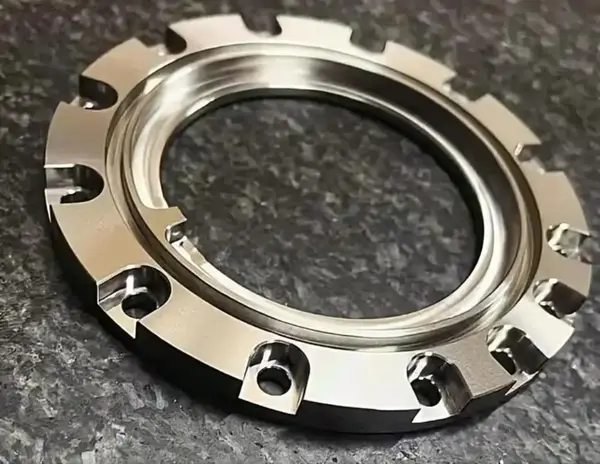
Titanium CNC Machining Services
Custom titanium parts made to drawing for weight-sensitive, corrosion-service, and mechanically demanding applications. We review grade, material condition, machining, finishing, and inspection against the required function and final dimensions.
- CP & Alloyed Titanium
- 시제품부터 양산까지
- 마감 및 검사
Titanium Properties Depend on Grade and Condition
Commercially pure, alpha-beta, and beta titanium offer different balances of strength, ductility, stiffness, corrosion performance, and machining behavior.
- 밀도
- Approx. 4.4–4.9g/cm³
- 인장 강도
- Approx. 240–1,400MPa
- 항복 강도
- Approx. 170–1,300MPa
- 탄성 계수
- Approx. 79–120GPa
- 연신율
- Approx. 8–30%
- 열전도율
- Approx. 6–22W/(m·K)
Broad references describe selected grades and conditions, not universal limits or one material specification. Confirm the exact alloy, product form, treatment, test direction, and certified data. Beta alloys such as Grade 19 differ from commercially pure titanium and Ti-6Al-4V.
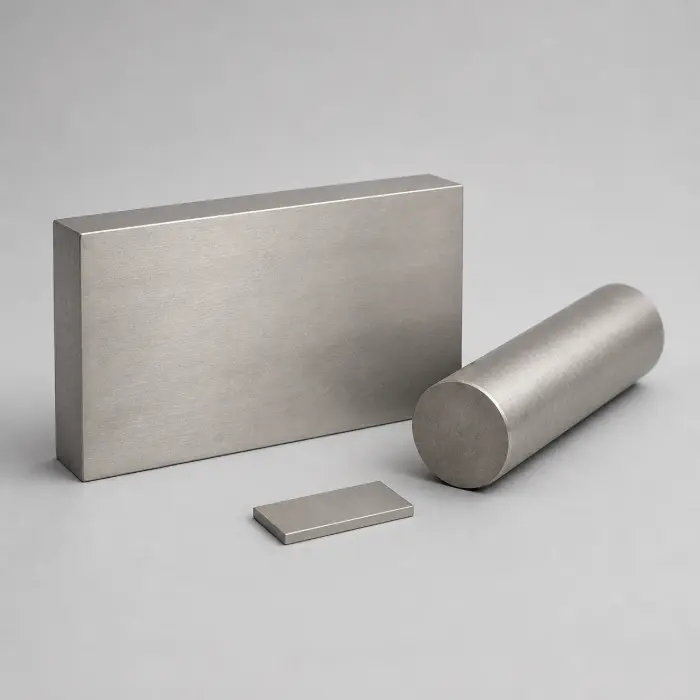
Choose the Titanium Grade for the Part
Compare required strength, formability, toughness, fatigue duty, corrosion exposure, and material condition.
1등급 티타늄
The most ductile and formable of commercially pure Grades 1–4, with useful corrosion resistance and weldability. A choice for formed shapes where strength requirements permit.
Applications & machining notes
- 재료의 정체성
- UNS R50250 · commercially pure titanium.
- 일반적인 부품
- Plate heat exchangers, transition plates, formed shells, and corrosion-service components.
- Machining considerations
- Ductility can increase burrs, adhesion, and smearing. Use suitable sharp tools, stable support, and controlled cutting exits, especially on formed or thin parts.
- Specification and finishing
- Confirm product form, temper or supplied condition, cleanliness, and final surface requirements. The material grade alone does not define suitability for every corrosive environment.
Grade 2 Titanium
A commercially pure grade balancing strength, ductility, weldability, and corrosion performance. Widely used for general industrial parts and selected fluid-service equipment.
Applications & machining notes
- 재료의 정체성
- UNS R50400 · commercially pure titanium.
- 일반적인 부품
- Seawater piping components, reactor equipment, fittings, and heat-exchanger parts.
- Machining considerations
- Plan chip control, tool adhesion, cooling, and support around thin walls or flexible features. Identify sealing and datum surfaces before setting the machining sequence.
- Specification and finishing
- State fluid chemistry, temperature, joining requirements, material standard, and finished-part acceptance conditions.
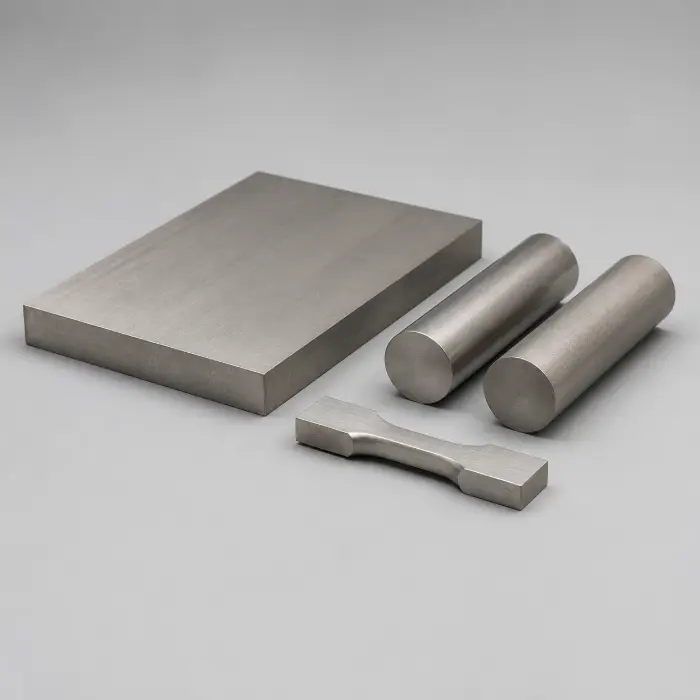
Grade 3 Titanium
A commercially pure grade with higher specified strength than Grade 2, while retaining useful corrosion performance and weldability. Formability depends on supplied condition and geometry.
Applications & machining notes
- 재료의 정체성
- UNS R50550 · commercially pure titanium.
- 일반적인 부품
- Pressure-vessel components, reactor equipment, and corrosion-resistant mechanical parts.
- Machining considerations
- Confirm stock condition and required strength before selecting tools and parameters. Control heat, tool wear, and feature deflection during final sizing.
- Specification and finishing
- Identify the governing material and product standards, certification requirements, joining route, and any critical finished surfaces.
Grade 4 Titanium
The highest specified strength among commercially pure Grades 1–4. A choice when greater strength is required while retaining the characteristics of unalloyed titanium.
Applications & machining notes
- 재료의 정체성
- UNS R50700 · commercially pure titanium.
- 일반적인 부품
- High-strength CP fasteners, dental or surgical components, and other precision parts made to the required material and product specifications.
- Machining considerations
- Match tooling and workholding to the supplied condition. Define critical fits, small threads, burr limits, and surface integrity before finishing.
- Specification and finishing
- Specify the governing material standard, product condition, surface finish, cleanliness, and any traceability requirements.
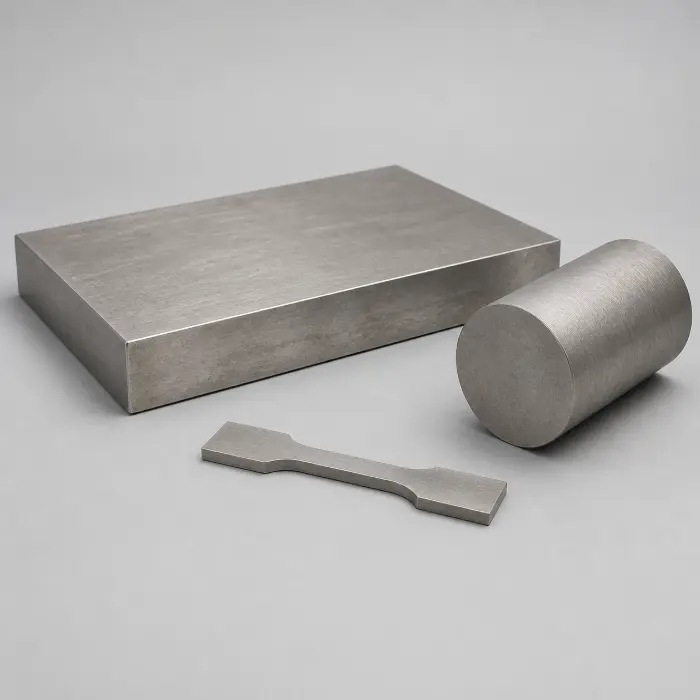
Grade 5 · Ti-6Al-4V
An alpha-beta titanium alloy selected for high specific strength, fatigue performance, and a suitable heat-treatment response. Common in mechanically loaded precision components.
Applications & machining notes
- 재료의 정체성
- UNS R56400 · nominal Ti-6Al-4V.
- 일반적인 부품
- Airframe fittings, selected compressor components, structural hardware, and high-strength fasteners.
- Machining considerations
- Manage concentrated cutting heat, tool wear, engagement changes, and flexible features. Plan stable workholding and staged roughing and finishing.
- Treatment and final acceptance
- Specify the supplied and final material conditions. Review any heat treatment, coating, surface integrity, and inspection requirements before final machining.
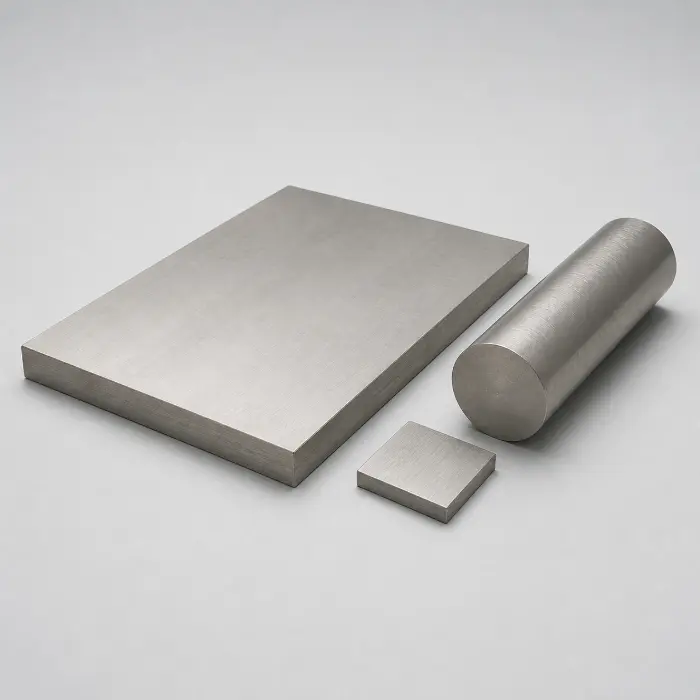
Grade 12 · Ti-0.3Mo-0.8Ni
A molybdenum- and nickel-alloyed titanium grade used where improved strength and crevice-corrosion performance are required for a defined service environment.
Applications & machining notes
- 재료의 정체성
- UNS R53400 · nominal Ti-0.3Mo-0.8Ni.
- 일반적인 부품
- Heat-exchanger components, pumps, valves, and selected chemical or oilfield equipment.
- Machining considerations
- Review material condition, tool wear, chip control, and the geometry of sealing or pressure-related features.
- Service and finishing requirements
- Specify fluid composition, concentration, temperature, crevice conditions, joining, and required corrosion acceptance. Performance is environment-dependent.
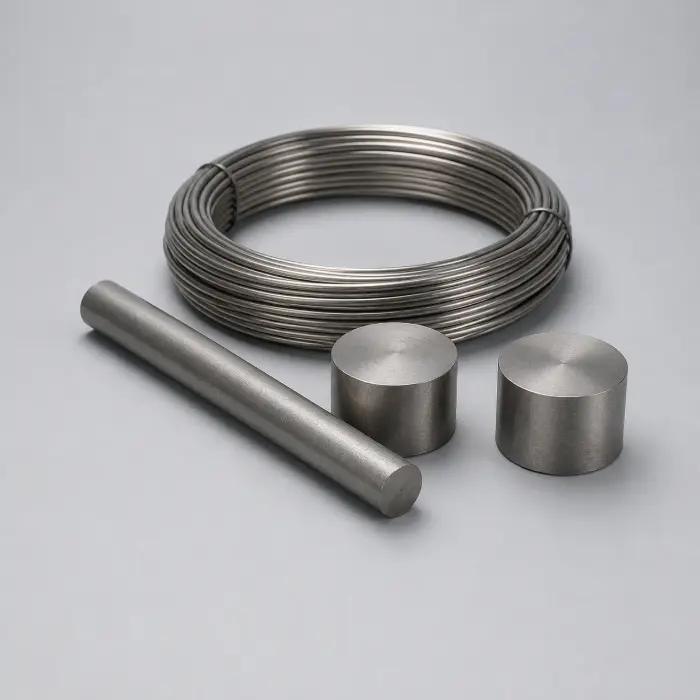
Grade 19 · Beta-C
A metastable beta alloy with a strong heat-treatment response and condition-dependent stiffness, strength, and toughness. Machining and final sizing must account for the required treatment sequence.
Applications & machining notes
- 재료의 정체성
- UNS R58640 · nominal Ti-3Al-8V-6Cr-4Zr-4Mo.
- 일반적인 부품
- High-strength springs, selected aerospace structures, and down-hole or mechanical components with defined service requirements.
- Machining considerations
- Confirm the incoming condition and hardness. Plan tools, support, roughing, aging, finishing allowance, and final inspection together.
- Property and service requirements
- Solution treatment and aging change strength, ductility, and elastic modulus. Define the governing specification and service environment instead of applying Grade 5 property data.
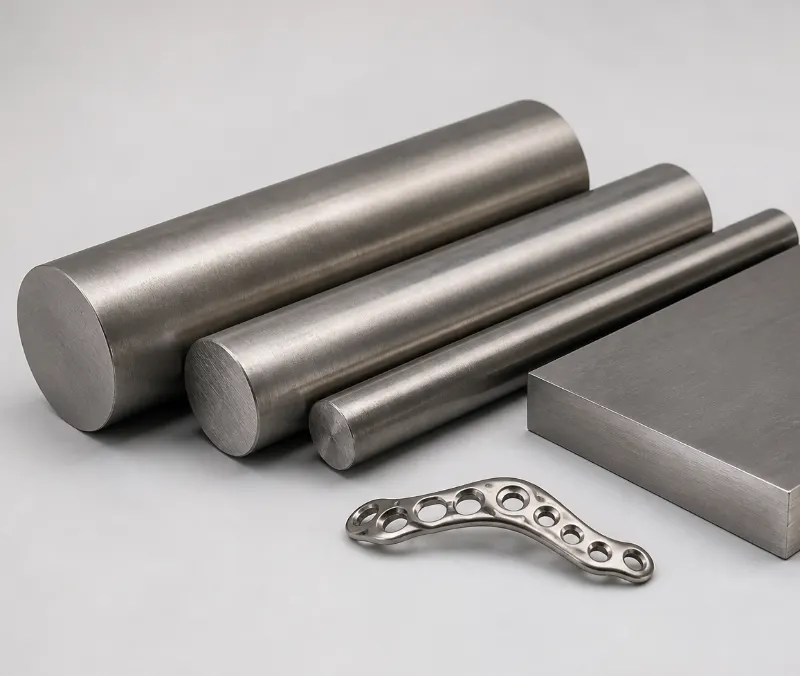
Grade 23 · Ti-6Al-4V ELI
An extra-low-interstitial alpha-beta alloy with controlled chemistry for applications requiring improved ductility and toughness relative to conventional Ti-6Al-4V in comparable conditions.
Applications & machining notes
- 재료의 정체성
- UNS R56407 · Ti-6Al-4V ELI, with the governing product standard and chemistry requirements specified.
- 일반적인 부품
- Selected orthopedic, surgical, cryogenic, and aerospace components made to the required material and finished-product specifications.
- Machining considerations
- Protect small features, surface integrity, and controlled dimensions. Define stock condition, burr limits, cleanliness, and traceability requirements before machining.
- Specification and qualification
- State the actual ASTM, AMS, ISO, or customer material specification and required certification. ELI chemistry does not by itself establish medical-device or finished-part approval.
Specify the grade, UNS designation where applicable, governing product standard, supplied and final conditions, and required certification. Similar trade names or international grades require a specification review before substitution.
Drawing-Based Titanium Machining Capabilities
Confirm the production route from the grade, size, geometry, datum structure, surface requirements, and inspection plan.
Machining Reference Parameters
| Machining length | Up to 5000 mm*Subject to process, geometry, equipment, stock, support, and workholding review. |
|---|---|
| Minimum diameter reference | From Ø0.5 mm*Confirm feature type, length, rigidity, tool access, and inspection for the actual geometry. |
| Dimensional references | General ±0.02 mm / selected features down to ±0.005 mm*Quotation references. Feature tolerances and final acceptance conditions require agreement. |
| Flatness or roundness | Selected features down to 0.01 mm*Separate form requirements, reviewed for size, datum setup, support, and measurement method. |
| 표면 거칠기 | Ra 0.8–1.6 µm / selected polished surfaces to Ra 0.4 µm*Process- and feature-dependent. Define the surface, measurement area, and finishing allowance. |
| 생산 범위 | Prototype, low-volume, and repeat productionControlled drawings, revisions, material condition, and agreed inspection records. |
Controls for Consistent Titanium Machining
Tool and Engagement Control
Match cutting tools and engagement to the alloy and condition. Monitor wear, adhesion, and edge condition through the operation.
Heat and Chip Management
Plan directed cooling and chip removal around the cutting edge. Avoid chip recutting, rubbing, and sudden engagement changes.
안정적인 공작물 고정
Use rigid support and controlled clamping to limit vibration, springback, and deflection in thin or slender features.
Staged Machining and Inspection
Separate roughing and finishing where appropriate, review stress release, and verify critical dimensions in the agreed final condition.
*Planning references confirmed against the complete drawing. Maximum length, minimum diameter, precision, form, and roughness are reviewed separately and should not be assumed achievable together.
Plan Geometry, Treatment, and Final Fits
A focused drawing review helps reduce difficult tool access, extra setups, tool wear, and unnecessary finishing.
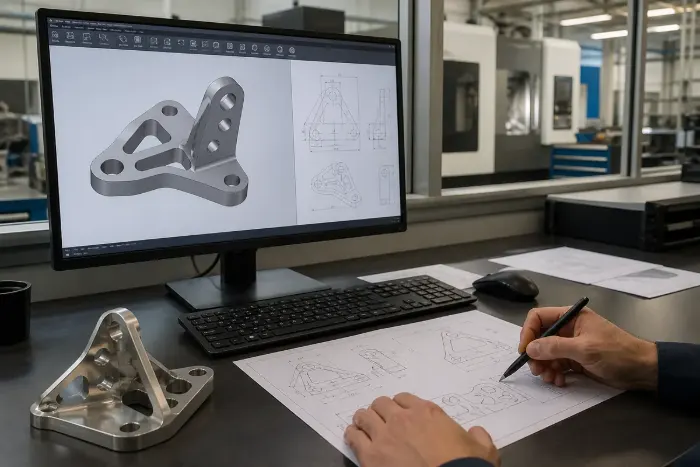
Design for Efficient Machining
Keep the geometry accessible and define the features that control the part’s function.
- Functional tolerances
- Apply tight limits to the interfaces that need them and provide a clear datum system.
- 내부 모서리 반경
- Use suitable larger radii where the design allows to improve tool access and engagement.
- Pocket and hole depth
- Review deep or narrow features, long tool reach, chip evacuation, and standard tool sizes.
- Thin-wall support
- Use stable sections and accessible locating faces; define acceptable distortion and the measurement condition.
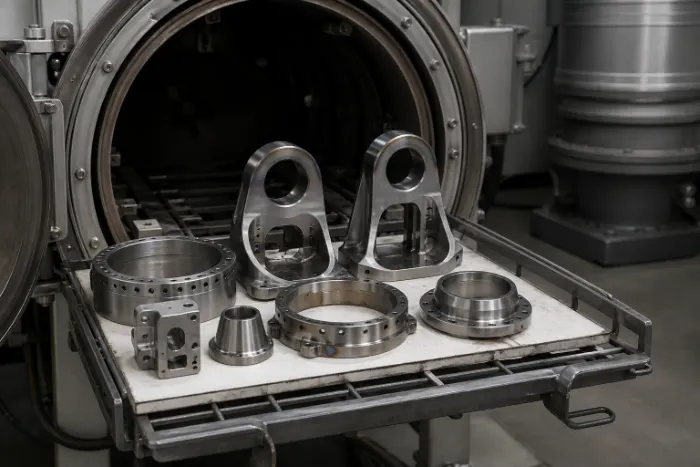
Heat Treatment and Final Dimensions
Select the route for the actual grade and required properties, with machining and finishing allowance planned together.
- Stress relief
- Used where appropriate to manage residual stress; confirm the specified process and its effect on final dimensions.
- 풀림
- Define the supplied and final conditions for the required ductility, microstructure, and machining sequence.
- Solution treatment and aging
- Applicable to suitable alpha-beta or beta alloys. Review strength, toughness, distortion, and final finishing together.
- Process records
- State required treatment documentation, material identification, and acceptance after any thermal processing.
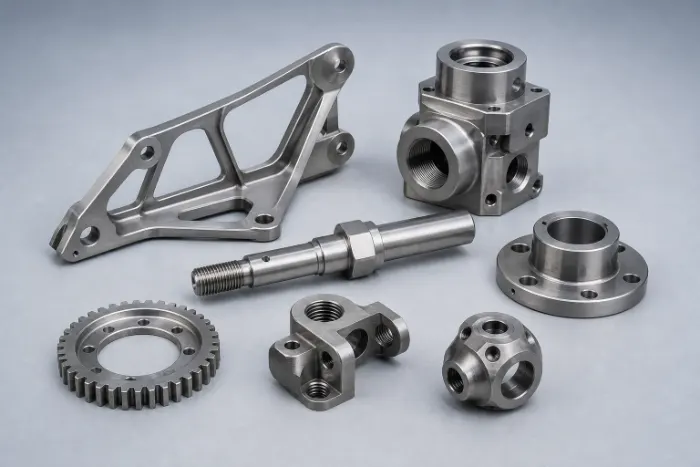
Weldo Titanium Machining Projects
Examples of turned, milled, and multi-axis titanium components made by Weldo, from functional prototypes to repeat production.
항공우주 및 해양
Structural hardware and corrosion-service parts made to the required grade and product specifications.
내과 및 외과
Precision components with specified material, surface, traceability, and qualification requirements.
자동차 및 로봇공학
Weight-sensitive parts, fasteners, and mechanical interfaces for demanding motion systems.
화학 공정
Fittings, housings, and fluid interfaces selected for the actual media, temperature, and service conditions.
도면 검토부터 최종 검사까지
Identify material, dimensional, and surface requirements before machining, then verify the agreed finished-part condition.
그림 리뷰
Confirm grade, datums, functional tolerances, finish, and inspection requirements.
재료 검증
Review the specified alloy, supplied condition, heat identification, and required material records.
공정 중 검사
Monitor critical features between stages and review movement after release or treatment.
최종 검증
Use suitable CMM, optical, or precision measurement for the agreed finished-part requirements.
Titanium Machining Questions
Why is titanium demanding to machine?
Low thermal conductivity can concentrate heat near the cutting edge. Tool adhesion, chemical reactivity, relatively low stiffness, and alloy-dependent strength also affect wear, deflection, chatter, and surface quality. The route must suit the actual grade and condition.
Which titanium grade should I select?
Grade 2 is a common industrial CP option, Grade 5 supports higher-strength structural duties, and Grade 23 provides ELI chemistry for specified toughness or qualification needs. Corrosion-service and beta alloys address different requirements. Select the grade from the required properties, product standard, and service conditions.
How can machining costs be reduced?
Use accessible geometry, suitable internal radii, practical depths, standard holes, and clear datums. Limit demanding tolerances to functional features and define material condition, surface finish, and inspection needs early.
티타늄 부품에 표면 처리를 할 수 있습니까?
Yes. Options include polishing, bead blasting, titanium anodizing, PVD coatings, dry-film lubricants, or specified surface-hardening treatments. Select a compatible system for the required wear, appearance, contact behavior, temperature, and finished dimensions.