In modern manufacturing, CNC has become a very common machining technology, but many people are unsure what CNC means when they first encounter the term. CNC stands for Computer Numerical Control and refers to an automated manufacturing technology that uses computer programs to control machine-tool movements and machining processes. Compared with traditional methods that rely on manual operation, CNC uses digital instructions to precisely control toolpaths, machining speeds, and motion trajectories, enabling machine tools to manufacture complex parts steadily and efficiently. Today, CNC technology is widely used in machinery manufacturing, automotive, aerospace, medical equipment, electronics, and many other fields, making it a fundamental part of modern precision manufacturing.
What Does CNC Mean?
CNC is a frequently used technical term in modern manufacturing, but many people do not fully understand what CNC means. CNC stands for Computer Numerical Control, a manufacturing technology that uses computer programs to control machine-tool movements and automate machining. Through digital instructions, CNC equipment can precisely control toolpaths, machining speeds, and motion trajectories to turn raw materials into parts that meet design requirements.
From a manufacturing perspective, CNC represents not only a type of equipment but also a digital approach to machining. Engineers send instructions to machine tools through CAD models and machining programs, allowing the equipment to perform cutting, milling, turning, and other operations according to a predefined process. Compared with conventional machining, CNC reduces human error, improves machining accuracy, and increases production consistency, making it an important technology in modern precision manufacturing.
What Do Computer, Numerical, and Control Mean in CNC?
To better understand the meaning of CNC, the abbreviation can be broken down into three words. Computer means that the CNC system reads and executes machining instructions through a computer program; Numerical means that the machining process is controlled by digital data, such as CAD models, G-code, and various machining parameters;
Control means that the computer uses these instructions to control machine-tool movements, including the toolpath, spindle speed, and feed rate.
In simple terms, CNC uses computer-generated numerical instructions to automatically control the machining process. This enables manufacturers to reduce the uncertainty associated with manual operation while achieving more stable, accurate, and repeatable part production.
What Does CNC Mean in Manufacturing?
In manufacturing, CNC refers not only to numerical-control equipment but also to a modern machining method based on digital program control. By converting part-design data into machining instructions that a machine can understand, CNC machine tools can automatically perform cutting, drilling, milling, and turning operations without requiring continuous manual control.
Compared with conventional machining methods, CNC machining provides greater accuracy and stability. Because the process is program-controlled, the same set of instructions can repeatedly produce parts to the same specifications, reducing human error and meeting modern manufacturing requirements for high precision, consistent quality, and complex-part production.
How Does CNC Work?
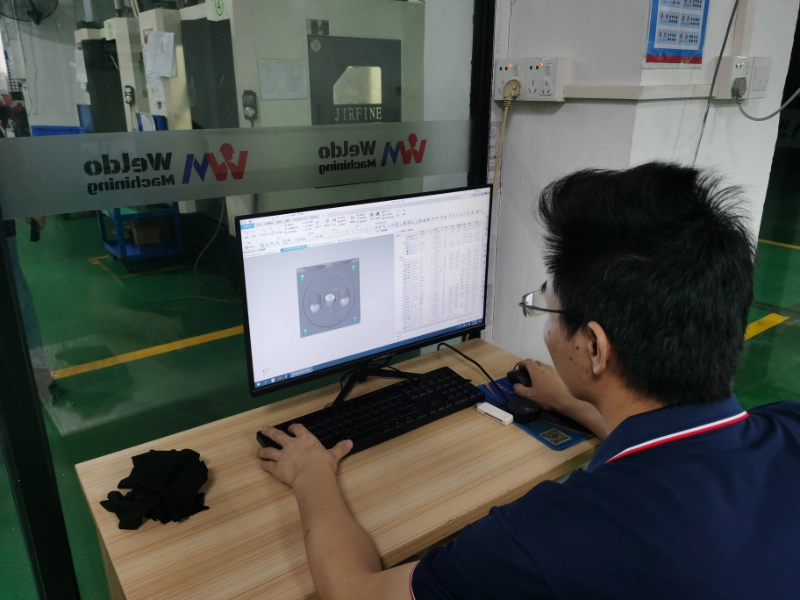
The core of CNC machining is the use of computer programs to control machine tools as they perform predefined operations. The process typically begins with part design. Engineers first use CAD (Computer-Aided Design) software to create a 2D drawing or 3D model, and then use CAM (Computer-Aided Manufacturing) software to convert the design data into a machining program that the machine tool can interpret, such as G-code.
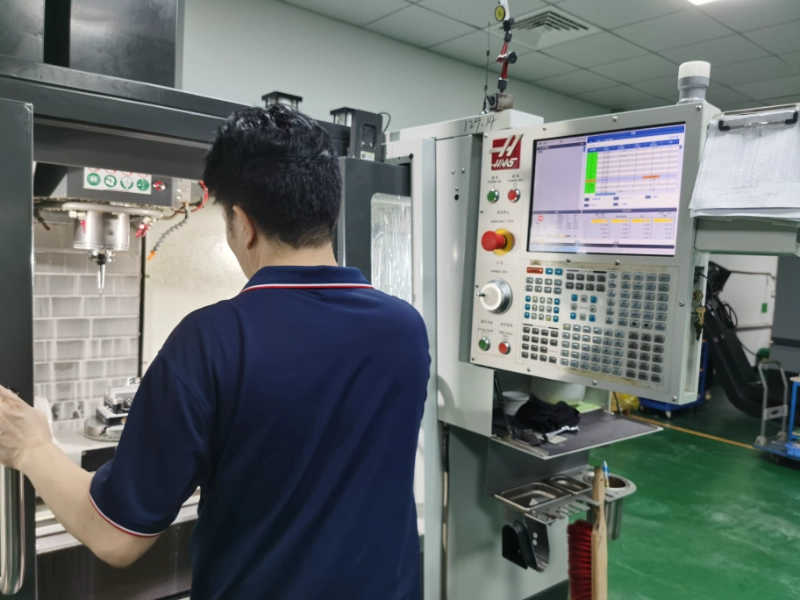
Once the CNC machine reads the program, its control system drives the cutting tool along the specified path and adjusts machining parameters such as spindle speed and feed rate to cut the material precisely. This workflow converts a digital design into a physical part, allowing complex components to be produced more quickly and consistently.
Why Is CNC Important in Modern Manufacturing?
CNC technology has become a foundation of modern manufacturing. It has not only changed traditional production methods that rely on manual operation, but has also driven manufacturing toward digitalization, automation, and greater precision. By controlling machine-tool movements through computer programs, CNC improves production efficiency while maintaining machining quality and meeting the growing demand for increasingly complex parts.
High Precision
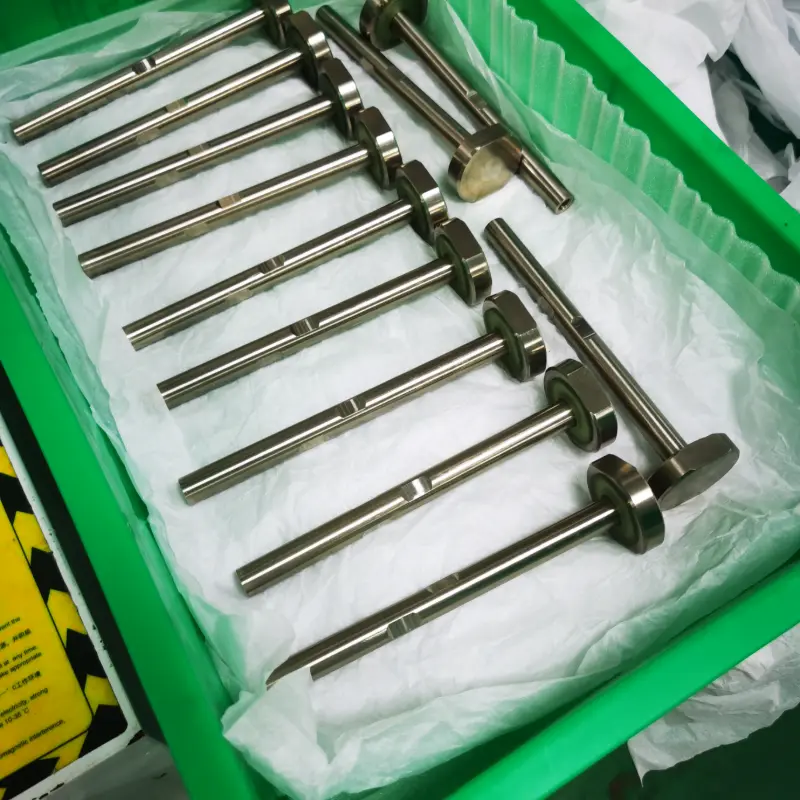
CNC machine tools use computer programs to precisely control toolpaths, machining speeds, and depths of cut, keeping part dimensions within strict tolerance limits. Compared with conventional machining, CNC reduces errors caused by differences in operators’ experience, enabling the consistent production of high-precision parts.
This high-precision capability makes CNC widely used for:
- Aerospace structural components
- Medical implant components
- Precision mechanical components
- Semiconductor equipment components
In these industries, even a small dimensional deviation can affect product performance, making stable machining accuracy one of the most important benefits of CNC technology.
High Repeatability
CNC machining relies on prewritten programs to control production. The same machining code can be executed repeatedly, allowing parts produced in each batch to remain highly consistent. Compared with conventional manual machining, which can be affected by the skill level of individual operators, CNC effectively reduces production variation.
This repeatable machining capability is particularly suitable for:
- Batch production of parts
- Manufacturing standardized products
- Product development requiring repeated reproduction
CNC machining helps companies maintain consistent product quality while reducing rework and quality-control costs.
Higher Efficiency
CNC equipment can automatically perform continuous machining tasks, improving overall production efficiency while reducing manual intervention. With a properly configured machining program, a single CNC machine can complete multiple operations in sequence, including milling, drilling, and tapping.
Compared with conventional machining, CNC can:
- Shorten part machining cycles
- Reduce manual operating time
- Improve machine utilization
CNC is therefore especially well suited to modern manufacturing environments that require fast delivery and stable production capacity.
Complex Part Manufacturing
CNC machining overcomes many of the structural limitations of conventional machine tools and can produce parts with complex geometries and precision-machined features. With multi-axis CNC equipment, cutting tools can approach the workpiece from multiple directions, making it possible to machine complex structures that are difficult to produce using traditional methods.
Examples include:
- Complex curved surfaces
- Deep-cavity structures
- Precision hole locations
- Multi-angle machining features
This capability makes CNC an important machining method in aerospace, medical, and advanced mechanical manufacturing.
Design Flexibility
One of the greatest advantages of CNC machining is its ability to adapt quickly to changes in product design. When a part’s structure or dimensions need to be adjusted, only the CAD model and machining program need to be modified, without recreating complex molds or changing the entire production process.
This flexibility is suitable for:
- Product development stage
- Rapid prototyping
- Low-volume custom production
For companies that need to continuously optimize product designs, CNC can significantly shorten development cycles and improve market responsiveness.
Reduced Human Error
During conventional machining, part quality often depends on the operator’s experience and skill level. By controlling the machining process through digital programs, CNC reduces the impact of human factors on product quality. Operators are primarily responsible for machine setup, program adjustments, and quality inspection, making the production process more standardized.
This not only improves machining stability but also helps companies establish a more reliable quality control system, reducing material waste and production rework.
CNC vs CNC Machine: Is There a Difference?
Many people who are learning What Does CNC Mean consider CNC and a CNC machine to be the same concept. In fact, there is a clear distinction between them: CNC refers to a control technology, while a CNC machine is the physical equipment that applies this technology.
What Is CNC (Computer Numerical Control)?
CNC is a digital control system whose main functions are:
- Reading machining programs
- Interpreting G-code commands
- Controlling machine tool movements
- Adjusting machining parameters
It can be applied to different types of manufacturing equipment, enabling them to perform automated machining.
For example:
- CNC Milling Machine
- CNC Lathe
- CNC Grinding Machine
- CNC Laser Cutting Machine
What Is a CNC Machine?
A CNC machine is a physical machining device that operates using a CNC control system. Through the coordinated operation of motors, the spindle, cutting tools, and the control system, it converts digital programs into actual machining movements.
Different types of CNC machines are suited to different machining tasks:
- CNC Milling Machine: Uses rotating cutting tools to machine flat surfaces, curved surfaces, and complex-geometry parts.
- CNC Lathe: Rotates the workpiece to machine shaft-type and sleeve-type parts.
- CNC Grinding Machine: Used for high-precision surface machining to improve dimensional accuracy and surface quality.
Why Is It Important to Distinguish Between CNC and a CNC Machine?
Understanding the distinction between the two helps provide a more accurate view of modern manufacturing. CNC technology determines the level of automation and control accuracy in the machining process, while the specific CNC equipment determines which machining tasks can be performed.
For example, a complex aerospace part may require:
- CNC technology to provide precise control
- A five-axis CNC machining center to machine complex structures
- Specialized cutting tools and machining programs to ensure final accuracy
Therefore, CNC is not simply a machine; it is a complete manufacturing system that connects digital design, machining programs, and automated manufacturing equipment.
Common CNC Terms You Should Know
Understanding some common CNC terms helps clarify the CNC machining process and digital manufacturing methods.
CAD (Computer-Aided Design)
CAD is a software technology used to create digital part models and engineering drawings, and it serves as the starting point of the CNC machining process. Engineers use CAD software to define a part’s dimensions, structure, and machining features, providing accurate data for subsequent manufacturing.
CAD files typically include:
2D engineering drawings
3D models
Dimensional information
Geometric features
These design data are then imported into CAM software to generate machining programs.
CAM (Computer-Aided Manufacturing)
CAM is used to convert CAD designs into machining instructions that a CNC machine can recognize. Based on the part structure, material properties, and machine capabilities, it plans cutting-tool paths and generates the corresponding machining program.
CAM is mainly responsible for:
Creating tool paths (Tool Path)
Setting machining parameters
Optimizing the machining sequence
Generating G-code programs
Put simply:
CAD determines what the part should look like, while CAM determines how the part will be manufactured.
G-code (Geometric Code)
G-code is the core programming language used by CNC machines to perform machining tasks. It tells the machine how the cutting tool should move and how the machining operation should be carried out.
Common control information includes:
Tool movement direction
Coordinate positions
Machining speed
Cutting path
After reading the G-code, the CNC control system converts the digital instructions into actual machine movements.
M-code (Miscellaneous Code)
M-code is used to control auxiliary functions during CNC machining, such as:
Starting and stopping the spindle
Turning on the coolant
Automatic tool changes
Ending the program
Unlike G-code, which controls tool movement, M-code is primarily responsible for managing the machine’s operating status.
By understanding the relationship among CAD, CAM, G-code, and M-code, it becomes easier to see the complete digital workflow of CNC machining, from the design model to the finished part:
CAD Design → CAM Programming → G-code/M-code Instructions → CNC Machining → Finished Part.
Conclusion: Why Understanding CNC Matters
CNC (Computer Numerical Control) is not only a machining technology, but also a fundamental part of digital, automated, and precision production in modern manufacturing. By using computer programs to control machine tool movements, CNC improves machining accuracy, maintains part consistency, and produces complex structural components that are difficult to manufacture using conventional methods. From CAD design and CAM programming to machine execution, CNC closely connects digital models with the actual manufacturing process, driving continued development in industries such as aerospace, automotive, medical, and electronics.
If you are looking for a reliable CNC machining solution, Weldo Machining provides professional CNC milling, CNC turning, and precision parts machining services, supporting a wide range of materials and complex part geometries. Whether you need product prototypes, low-volume production, or custom machining, contact us for more CNC machining information or submit your part drawings to receive professional machining advice and a quotation.