
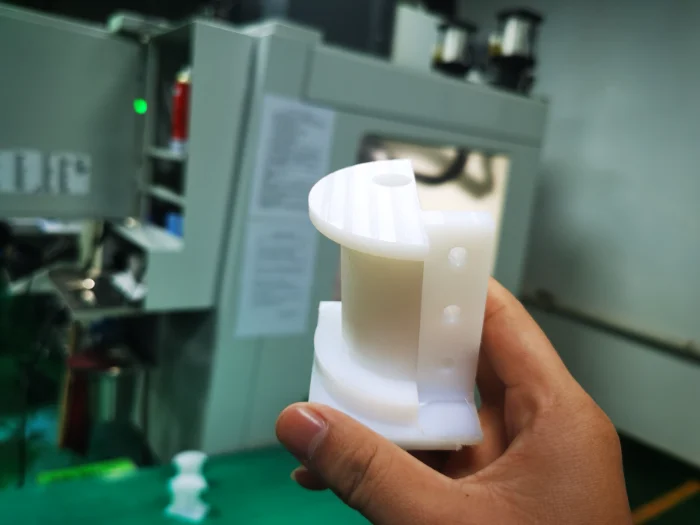
Custom Polyethylene Parts
CNC PE Machining Services
Polyethylene combines low friction, moisture resistance, chemical resistance and impact durability for wear, sliding and chemical-service parts. Send your drawing and operating requirements for a tailored PE machining solution and cost estimate.
- Low friction and moisture absorption
- Strong chemical and impact resistance
- Low-force workholding for flexible stock
- Heat-controlled milling and turning
PE Material Selection
Polyethylene Grades for Machined Parts
Select the grade from stiffness, wear, impact, chemical exposure and compliance requirements.
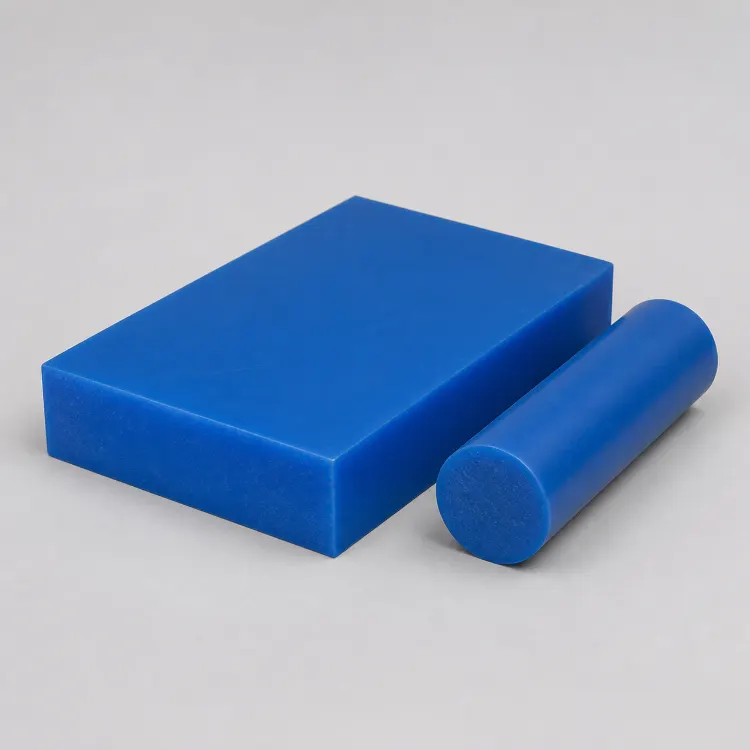
HDPE
- Rigid, impact-resistant and chemically stable.
- Used for plates, housings, supports and valve parts.
- Sharp tools and uniform support help maintain flatness.
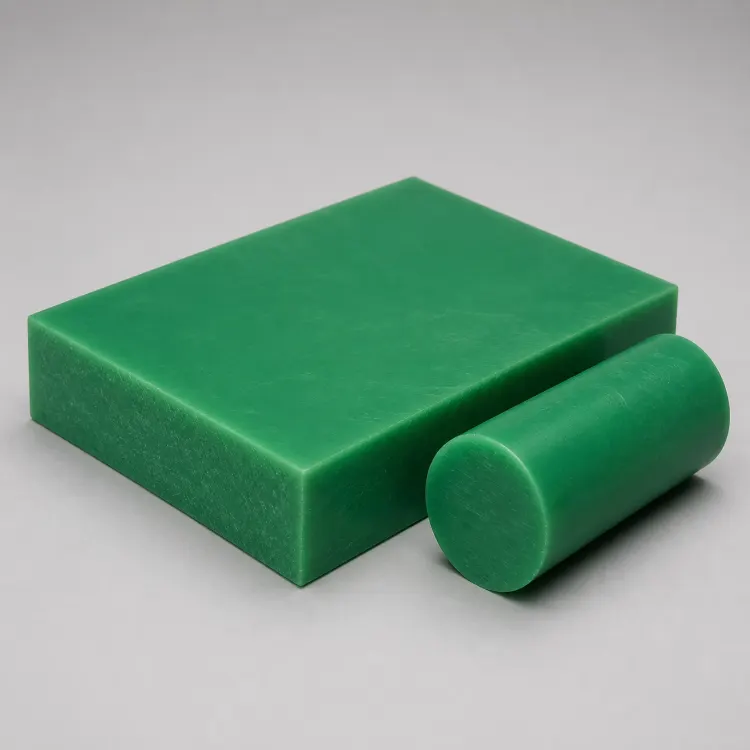
UHMW-PE
- Low friction with excellent wear and impact resistance.
- Used for guide rails, wear strips, bushings and liners.
- Light clamping and controlled finishing reduce distortion.
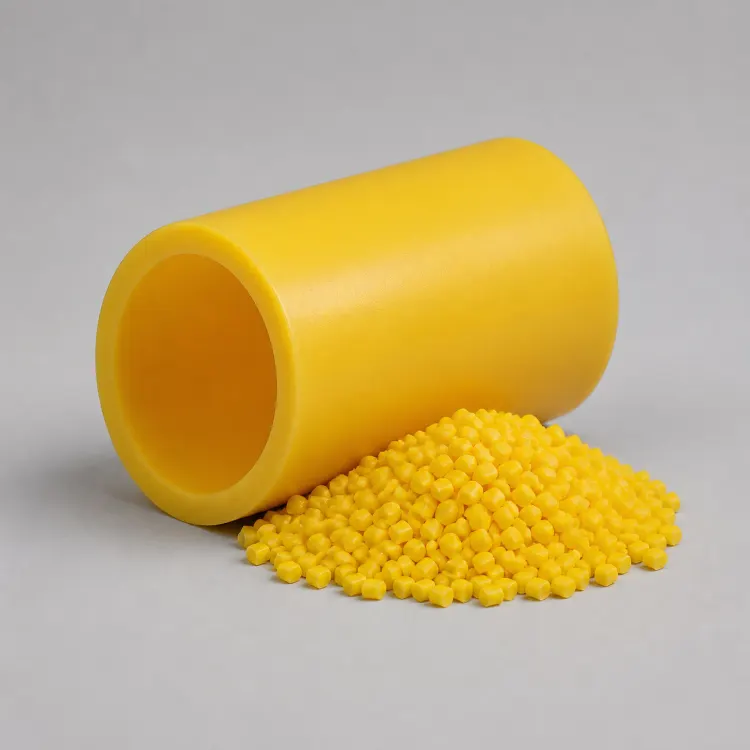
MDPE
- Balances flexibility, toughness and chemical resistance.
- Used for covers, piping parts and protective supports.
- Workholding is matched to its lower stiffness.
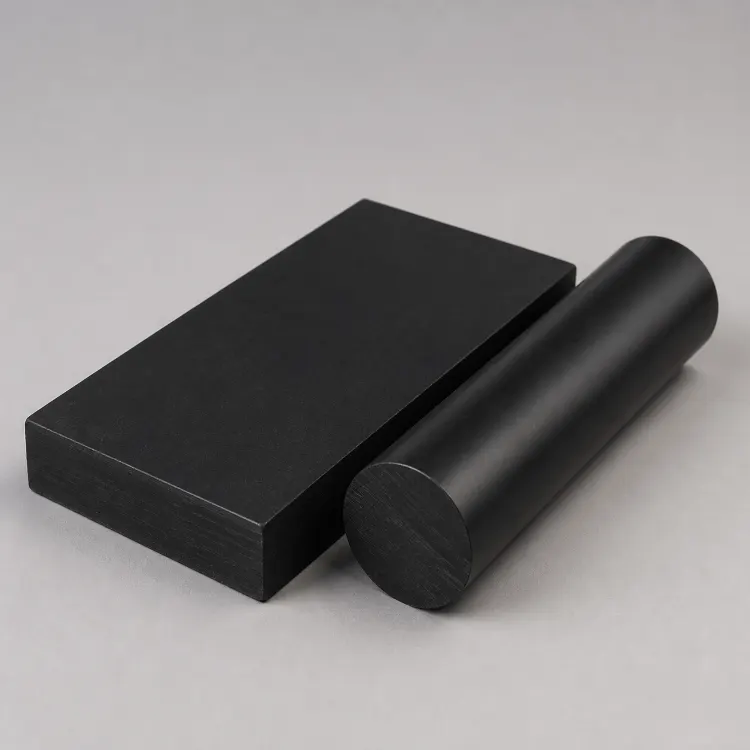
Special & Modified PE
- Includes UV-resistant, antistatic, filled and regulated grades.
- Selected by temperature, chemicals, load and compliance needs.
- Filled grades require adjusted tooling and cutting parameters.
PE Property Data
PE Material Property Ranges
Representative parameter ranges for commonly machined unfilled HDPE and UHMW-PE stock.
| Property | HDPE | UHMW-PE |
|---|---|---|
| Density | 0.95–0.96 g/cm³ | 0.93–0.96 g/cm³ |
| Tensile strength at yield | 23–26 MPa | 17–22 MPa |
| Tensile modulus | 950–1,400 MPa | 470–700 MPa |
| Elongation at break | 100–600%+ | 200–350%+ |
| Hardness | Shore D 64–67 | Shore D 62–66 |
| Water absorption | 0.03–0.10% | 0.01–0.05% |
| Typical service range | −50 to +80°C | −150 to +80°C |
Representative room-temperature values for unfilled stock shapes. The purchased grade and supplier test method govern the final material specification.
Machined PE Components
Parts Built Around Wear, Motion and Chemical Exposure
The part geometry, fit and service environment determine whether HDPE, UHMW-PE or another PE grade is the right choice.
Guide Rails & Wear Strips
Low-friction contact surfaces for conveyors, automation and material-handling systems.
Bushings & Sleeves
Replaceable sliding and locating components for moderate loads and low-maintenance assemblies.
Rollers & Pulleys
Lightweight rotating parts that reduce noise, wear and maintenance in conveying equipment.
Gaskets & Seals
Simple sealing, cushioning and isolation parts for compatible chemicals and temperatures.
Valve & Mixer Parts
Chemical-resistant bodies, seats, paddles and support components made to the drawing.
Custom Plates & Housings
Machined stock forms with holes, pockets, slots and mounting features for industrial assemblies.
PE Machining Control
How We Limit Burrs, Heat and Deformation
PE is softer and more temperature-sensitive than metal. Tooling, support and finishing strategy are adjusted to the grade and geometry.
Sharp Cutting Tools
Positive geometry creates a clean cut instead of rubbing, tearing or melting the edge.
Low-Clamp Workholding
Broad support and controlled pressure reduce distortion during machining and spring-back after release.
Heat & Chip Control
Stable cutting and continuous chip removal prevent local heat buildup and poor edge quality.
Controlled Finishing
Light finishing passes, deburring and drawing-based inspection protect critical dimensions and edges.
Secondary Operations
PE Finishing and Assembly Options
Finishing is selected for edge quality, friction, appearance or assembly—not applied automatically to every PE part.
| Operation | Purpose |
|---|---|
| As-Machined | Retains the controlled cutting finish and is the standard choice for most functional components. |
| Deburring & Edge Finishing | Removes loose burrs and sharp edges while protecting functional dimensions. |
| Polishing | Reduces surface marks or friction on selected faces when the geometry permits. |
| Texturing / Light Blasting | Creates a more uniform appearance; suitability is checked because aggressive treatment can damage soft PE. |
| Surface Activation | Flame, corona or plasma treatment can improve printing or bonding on PE's low-energy surface. |
| Plastic Welding & Assembly | Joins compatible HDPE components or integrates inserts and hardware into a finished assembly. |
Painting, coating and adhesive bonding require compatible pretreatment and application testing because polyethylene has very low surface energy.
View Surface Finishes →PE Machining Range
Defined CNC Machining Capabilities
Key quoting ranges for machined polyethylene parts, from individual prototypes to repeat orders.
| Parameter | Standard Capability |
|---|---|
| CNC milling envelope | 5 × 5 × 5 mm to 3000 × 1600 × 1000 mm |
| CNC turning envelope | Ø2 × 2 mm to Ø200 × 1000 mm |
| Standard dimensional tolerance | ±0.05 mm |
| Selected stable features | Down to ±0.02 mm |
| Recommended minimum wall | 1.5 mm |
| Minimum drilled hole | Ø0.5 mm |
| Production quantity | 1-piece prototype to 500+ repeat-production parts |
| Dimensional inspection | CMM, height gauge, micrometer, caliper and optical projector |
These are standard quoting ranges. The approved drawing, PE grade, wall rigidity and inspection conditions control the final production specification.
PE Machining FAQ
Questions Before You Order
Is PE plastic the same as HDPE?
No. PE is the polyethylene material family. HDPE is one member with higher density, rigidity and strength than lower-density PE grades.
Should I choose HDPE or UHMW-PE?
Choose HDPE for economical structural and chemical-resistant parts. Choose UHMW-PE when wear, impact and sliding performance are the main requirements.
Can CNC-machined PE hold tight tolerances?
Yes, within a realistic design window. The achievable tolerance depends on grade, size, wall thickness, geometry, clamping and operating temperature.
How are burrs and deformation reduced?
Use sharp tools, broad support, low clamping pressure, clean chip evacuation and light finishing passes matched to the part geometry.
Can you supply food-contact or medical PE parts?
Yes, when a suitable documented grade is specified. Compliance depends on the exact resin, additives, traceability and application requirements.