
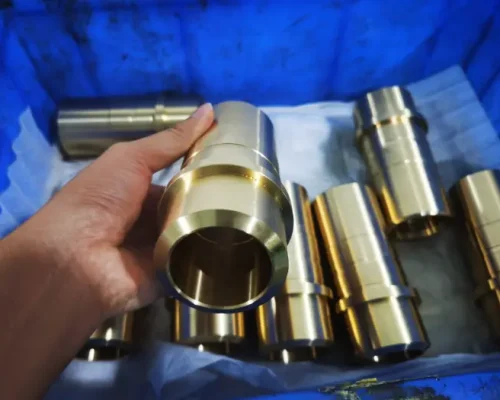
Bronze
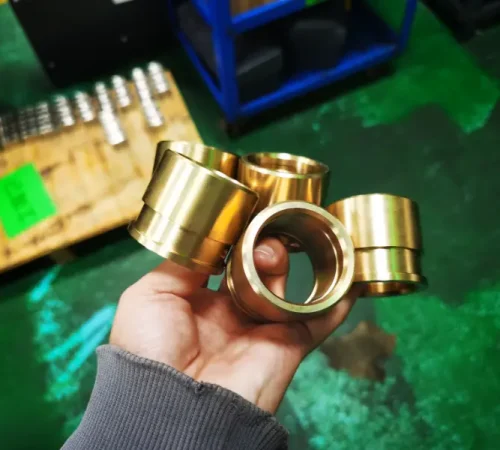
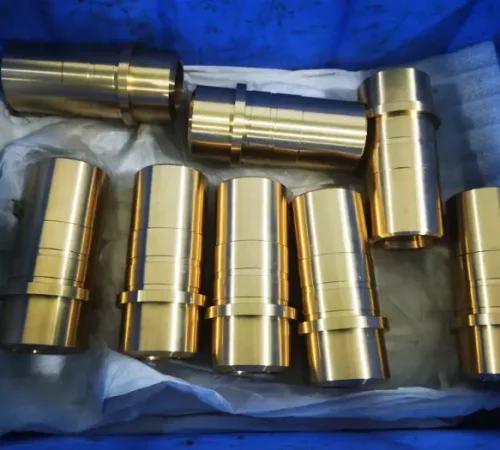
Leveraging our bronze processing expertise, we fulfill component requirements across the mechanical, precision instrumentation, and aerospace sectors. Contact us today to discuss your custom bronze needs!
Tolerances : ±0.002”
Other type bronze available in Weldo : Tin bronze,Aluminum bronze, bearing bronze, lead-tin bronze(C952,C932,C642,C863)
Process options:
- Casting
- Extrusion
- CNC machining
- Wire EDM
- Surface finish
Physical Properties of Different Bronze Type
Bronze allows for the adjustment of constituent ratios to create alloys with diverse material properties. The following lists common bronze alloys, along with their names and performance parameters.
| Material | Grade (Standard) | Tensile Strength (MPa) | Fatigue Strength (MPa) | Hardness | Density (g/cm³) | Notes |
|---|---|---|---|---|---|---|
| Tin Bronze | CuSn10 (EN CC480K / GB equivalent) | ≈ 320 | ≈ 110 | ≈ 100 HB | ≈ 8.8 | Cast tin bronze |
| Tin Bronze (Phosphor Bronze) | CuSn6 (ASTM B103 / UNS C51900) | 500–765 | ≈ 165–255 | 174–210 HB | ≈ 8.84 | Wrought, temper dependent |
| Aluminum Bronze | CuAl10Fe3 (EN CW307G / GB equivalent) | 610–760 | ≈ 200–250 | 160–230 HB | 7.5–7.8 | Cast / forged dependent |
| Nickel Aluminum Bronze | CuAl11Ni6Fe5 (ASTM B150 / UNS C63000) | ≈ 760 | ≈ 255 | ≈ 94 HRB | ≈ 7.58 | High-strength aluminum bronze |
| Bearing Bronze | CuPb15Sn8 (ISO 4382 / similar to UNS C93800) | 170–220 | ≈ 69 | 60–65 HB | ≈ 9.25 | High-lead bearing bronze |
| Leaded Tin Bronze (Gunmetal) | CuSn5Zn5Pb5 (EN CC491K) | 200–270 | ≈ 65–90 | 60–70 HB | 8.8–8.9 | Cast gunmetal |
| Leaded Tin Bronze (SAE 660) | CuSn10Pb5 (ASTM B505 / UNS C93200) | ≥ 241 | ≈ 110 | ≈ 65 HB | 8.8–8.9 | Standard bearing bronze |
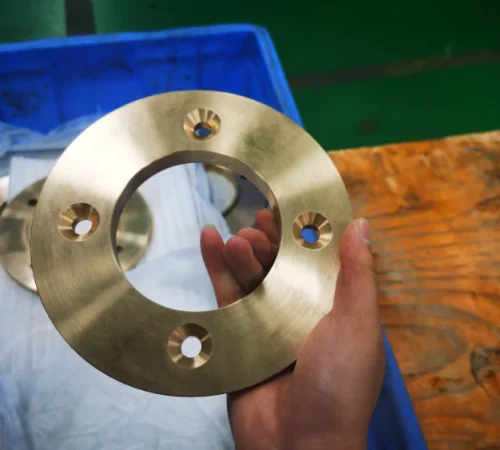
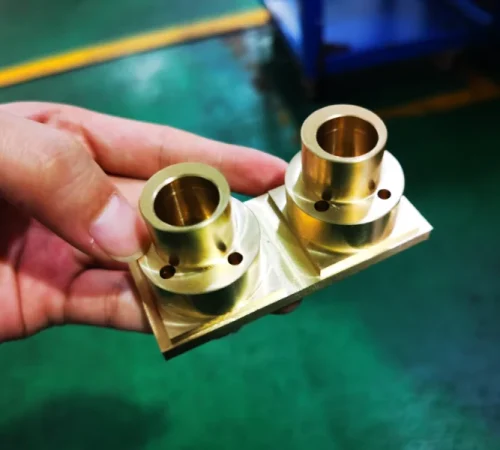
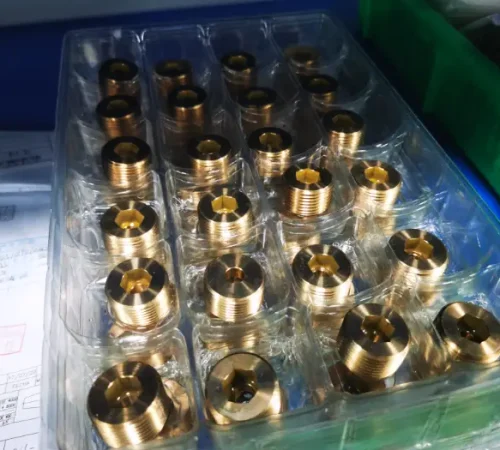
Surface finishes for bronze parts
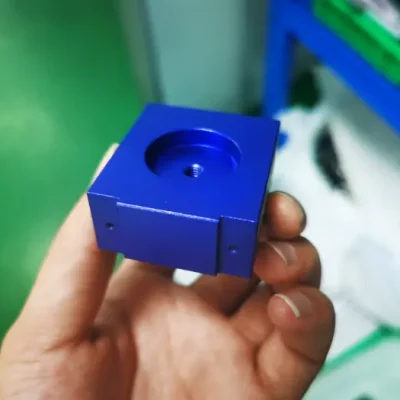
Bronze offers excellent corrosion resistance, but Weldo enhances its durability and appearance with sandblasting, polishing, painting, electroplating, and chemical coating.
| PROCESS | DESCRIPTION |
|---|---|
| As machined | After CNC milling, turning, grinding, and other machining processes, the original surface condition is maintained. |
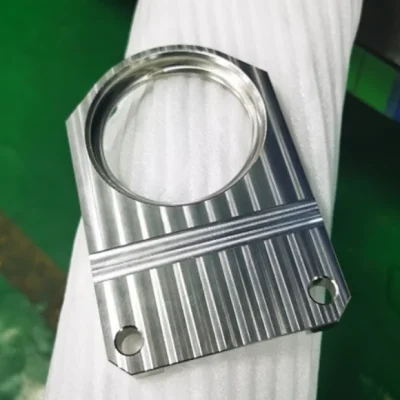
| Polishing | Abrades the surface to smoothness and luster, eliminating scratches and enhancing reflectivity. Ra ranges from 0.025–0.1 μm |
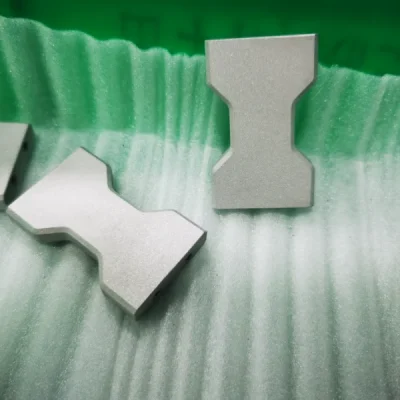
| Sand blasting | Uses high-speed abrasive jets (e.g., quartz sand) to create uniform rough/matte textures, removing oxides or improving coating adhesion. |
| Tumbling | Rotates parts with abrasives in a drum to deburr, round edges, and refine surfaces, ideal for small-batch parts. |
| Electropolish | Removes micro-protrusions via electrolysis for a bright, smooth surface; boosts corrosion resistance, used for stainless steel precision parts. |
| Alodine | A chemical conversion coating for bronze, forming an oxide layer to enhance corrosion resistance and aid paint adhesion. |
| Heat treatment | Alters material structure via heating/cooling to improve hardness/strength (e.g., quenching), no direct appearance change. |
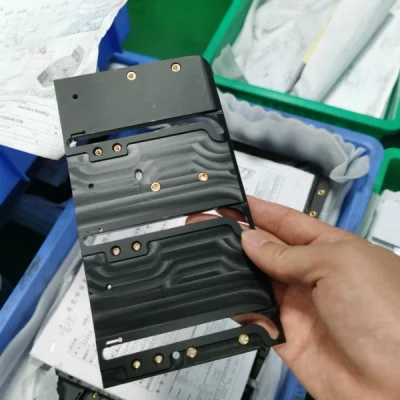
| Black oxidize | Forms a black oxide film on bronze workpiece for rust prevention, decoration, or reducing glare; thin, minimal size impact. |
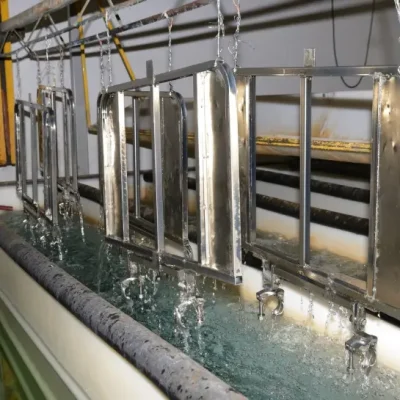
| Electroless Nickel | Deposits a uniform nickel layer via chemical reaction (no electricity), wear/corrosion-resistant, controllable thickness. |
| Chrome Plating | Electrolytically deposits chromium; decorative chrome (bright) or hard chrome (wear-resistant), used for auto parts, sanitary ware. |
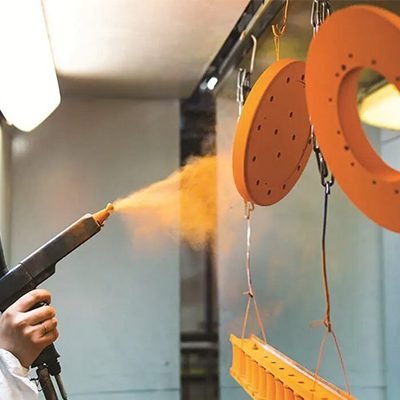
| Powder Coating | Electrostatically applies dry powder, cured at high temperature for a tough, color-varied coating; wear/corrosion-resistant. |
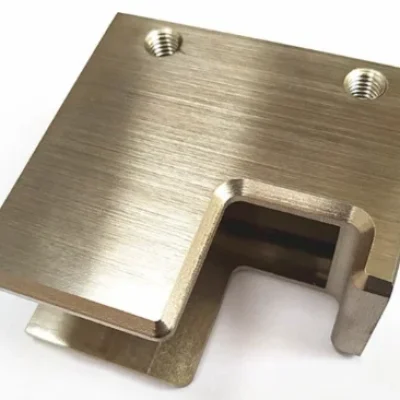
| Brushed Finish | Rubs the surface in one direction to create continuous fine lines; decorative and wear-resistant, used for bronze appliances. |
Pros and Cons of Bronze Materials
Pros
1. Good machinability: Bronze is relatively soft, with low cutting resistance. It causes less tool wear and suits complex-shaped parts.
2. Excellent wear resistance: Tin-containing bronze has moderate surface hardness, making machined parts ideal for friction components like bearings and gears.
3. Strong corrosion resistance: Better than ordinary steel in air, seawater, etc., suitable for outdoor or humid environments.
4. Good thermal and electrical conductivity: Retains bronze’s inherent properties, fit for heat-dissipating or conductive parts.
5. High dimensional stability: Minimal post-machining deformation, ensuring high precision for precision parts.
Cons
1. High material cost: Bronze is more expensive than steel, aluminum, etc., leading to cost pressure in mass production.
2. High density: Machined parts are heavy, which may increase overall equipment weight—unsuitable for lightweight needs.
3. Limited machining efficiency: Though easy to cut, high-hardness bronze alloys (e.g., aluminum bronze) may cause tool adhesion during high-speed machining.
4. Surface treatment limitations: Some bronze alloys have average post-machining gloss; extra polishing is needed for high decorativeness.
Application Fields of Bronze Parts
Industrial Machinery and Transmission Sector: Bronze is used for wear-resistant components like bearings and gears to enhance machinery performance.
Marine Engineering and Shipbuilding Sector: Bronze’s corrosion resistance makes it ideal for marine parts like propulsion systems and instrument accessories.
Aerospace Sector: Bronze’s high-temperature resistance and conductivity are crucial for aerospace parts like valve bodies and precision bushings.
3C Electronics Sector: Bronze’s thermal and electrical conductivity supports components like connectors, terminals, and heat sinks for electronics.

FAQ about Bronze Material
What type of material is bronze?
Bronze is an alloy primarily composed of copper and tin, to which other elements may be added. Characterized by high strength, excellent castability, and corrosion resistance, it is widely utilized in fields such as machinery, shipbuilding, and electrical engineering.
Is Bronze Magnetic?
Bronze is not magnetic. Bronze is an alloy of copper and tin; since both copper and tin are non-ferromagnetic substances, bronze as a whole does not possess magnetic properties. This characteristic gives bronze significant advantages in applications where resistance to magnetism is required—such as in the electronics industry and the manufacturing of precision instruments—making it ideal for producing components like anti-magnetic parts and spring contacts.
Does bronze scratch easily?
Bronze possesses relatively low hardness and a soft surface, making it susceptible to scratching; specifically, bronze alloys with a higher tin content tend to be softer and even more prone to scratches. The addition of other elements—such as aluminum or zinc—can increase the hardness of bronze, thereby enhancing its resistance to scratching. Furthermore, the application of coatings or plating treatments can create a protective film on the bronze surface, guarding against scratches and abrasion.