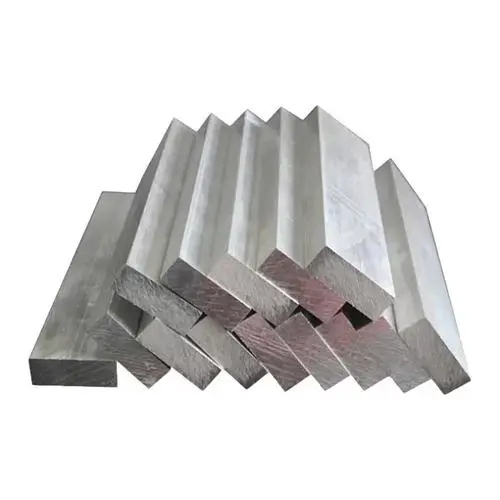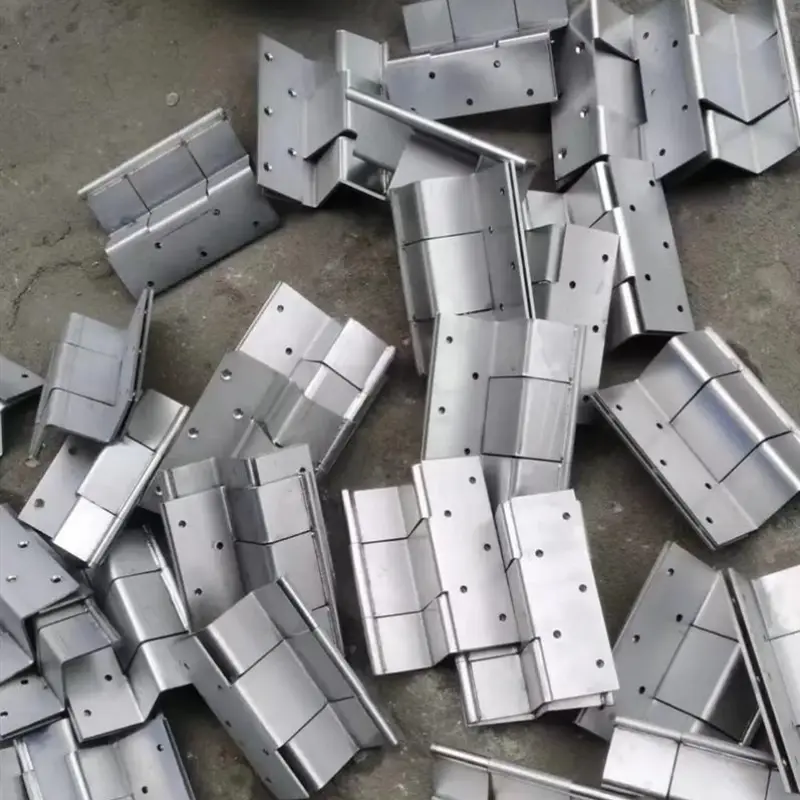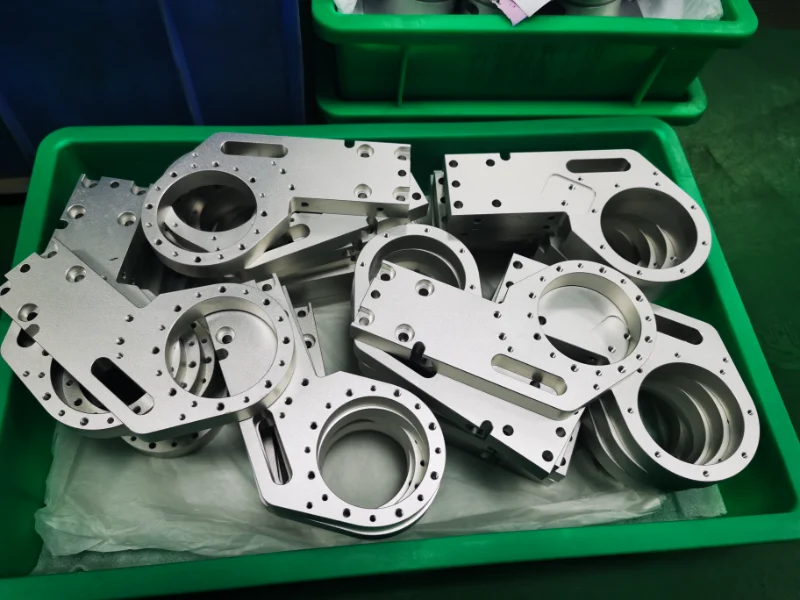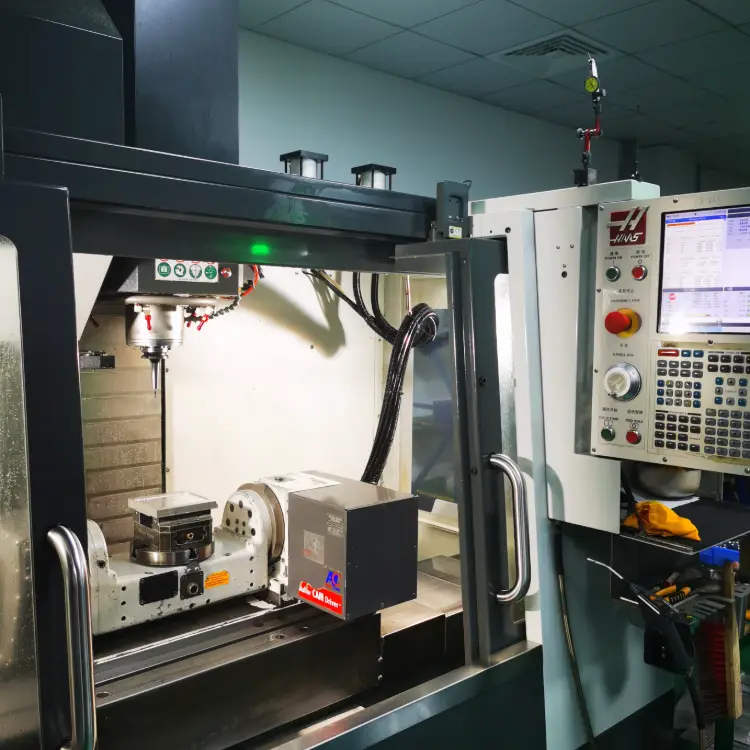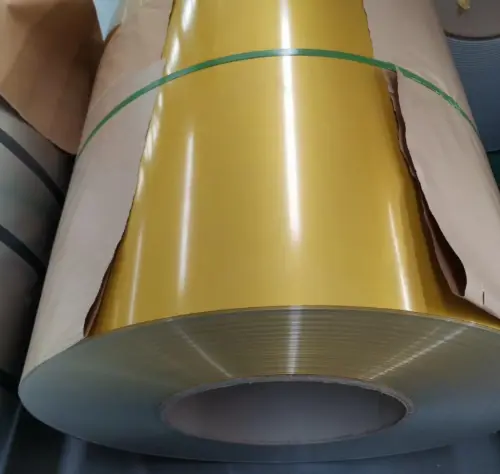
Introduction: As a 3-series aluminum-manganese alloy metal, 3003 aluminum alloy has relatively good processing performance. Common processes include 알루미늄 압출, hot rolling, cast rolling, and CNC 가공. The choice of processing method for this material depends on the performance requirements of the parts, such as heat dissipation, precision, subsequent surface treatment, etc. Below, I will give a detailed explanation around 3003 aluminum machining.

3003 Chemical Composition
According to the material composition information provided by aluminum alloy suppliers, the main components and contents of 3003 aluminum alloy are as follows.
| 요소 | Content (%) |
|---|---|
| 실리콘 (Si) | ≤0.60% |
| 철(Fe) | ≤0.70% |
| 구리(Cu) | 0.05%~0.20% |
| 망간 (Mn) | 1.00%~1.50% |
| 아연(Zn) | ≤0.10% |
| Other elements (total) | ≤0.15% |
| 알루미늄(Al) | 잔량 |
Aluminum (Al): Balance (about 98.6% or more), the matrix element of the alloy, providing basic metallic properties.
Manganese (Mn): 1.0%~1.5%, the main alloying element, can significantly improve the alloy’s strength, hardness, and corrosion resistance, while refining grains and improving processing performance.
Copper (Cu): 0.05%~0.20%, a small addition can reduce pitting corrosion, make the corrosion form more uniform, and improve corrosion resistance.
Silicon (Si): ≤0.6%, a small amount can improve casting performance, but excessive content may affect plasticity.
Iron (Fe): ≤0.7%, a small amount can improve strength, but excessive content may reduce corrosion resistance and plasticity.
Zinc (Zn): ≤0.1%, a small amount has little effect on performance.

3003 aluminum Equivalent Materials
Equivalent materials of 3003 aluminum alloy in other countries
3003 aluminum alloy has corresponding equivalent materials in different countries. The following are the main equivalent grades in major countries:
United States:
ASTM/AA standard: 3003 (such as 3003-O, 3003-H12, and other tempers)
UNS number: A93003
Europe:
EN standard: EN AW-3003 (chemical composition conforms to AlMn1Cu)
독일어 DIN standard: AlMnCu/3.0517
프랑스어 NF standard: A-M1 (or 3003(A-M1))
British BS standard: L61 (or 3003(N3))
일본: A3003 (corresponding to H4000 and H4100 series)
Russia: AMu (or 1400/AMЦ)
International Organization for Standardization (ISO) ISO 209.1: AlMn1Cu
중국: 3003 aluminum alloy (conforms to GB/T 3191)

3003 Aluminum Properties
밀도: The density is about 2.73g/cm³, making it a lightweight material, which helps reduce structural weight and achieve lightweight design.
융점: The melting point of 3003 aluminum alloy is usually around 660℃, making it easy to weld and cast. However, this material should not be used in high-temperature environments such as engine parts and stoves.
Mechanical properties: The tensile strength is about 140-180MPa, the yield strength is about 115MPa, and the elongation can reach 20%-30%. It has medium strength, good plasticity, and good ductility, and can meet the strength requirements of general structural parts and containers. Its strength is mainly improved by cold working, such as rolling and drawing.
절삭 가공성
성형성: It has excellent plasticity and is easy to process into complex-shaped parts through rolling, extrusion, drawing, stamping, deep drawing, and other processes. It is suitable for making containers, pipes, heat sinks, sheet metal parts, etc.
CNC Milling/turning performance: Its machining performance is moderate. Proper adjustment of machining parameters and oil cooling is necessary to prevent 3003 aluminum chips from sticking to the tool and causing breakage.
용접성: 3003 aluminum alloy has good welding performance, and the mechanical properties of welded joints are stable after welding, meeting the normal use requirements of general structural parts, containers, and sealing parts. For repair or assembly welding of 3003 aluminum materials, argon arc welding (TIG/MIG) is mainly used.
Non-heat-treatable strengthening: Due to the limited solid solubility of manganese in aluminum, 3003 aluminum alloy cannot significantly improve its strength through heat treatment processes such as quenching and aging. Its performance mainly depends on the cold working state and annealing treatment.
Electrical and thermal conductivity: It has good thermal conductivity and electrical conductivity, with a thermal conductivity of about 120W/(m·K) and an electrical conductivity of about 41%IACS, making it suitable for heat sinks and conductive parts.
Processing Processes Supported by 3003 Aluminum Alloy
Rolling: The ingot can be heated to 400-500℃ and made into plates, strips, or foils through multiple rolling passes. It is suitable for producing thin sheets, deep-drawn parts, etc., such as can bodies and battery cases.
알루미늄 압출: The ingot is heated to 450-500℃ and made into profiles of various cross-sectional shapes through extrusion dies, such as door and window frames, heat sinks, pipes, etc. It is suitable for producing complex-shaped components.
Drawing: O-temper 3003 aluminum alloy can improve the material’s strength and hardness through drawing processes, and is commonly used to produce components that require relatively high connection and fastening strength, such as rivets and fasteners.
CNC machining:
3003 aluminum alloy can be processed through custom CNC 밀링 to produce heat dissipation components, end caps, flanges, valve blocks, connectors, etc.
It can achieve effective weight reduction while meeting requirements for corrosion resistance, heat dissipation, and welding.

Common Processing Tempers of 3003 Aluminum Alloy
O temper (annealed temper): 3003 aluminum alloy in O temper has undergone complete annealing treatment. The material is the softest, with the highest plasticity and elongation. It is suitable for complex forming processes such as deep drawing, bending, and deep stamping, and is commonly used in food packaging containers, kitchenware, chemical containers, and other products with high formability requirements.
H12 temper (1/4 hard temper): H12 temper is obtained by light cold work hardening of 3003 aluminum material, giving it a certain strength while retaining good plasticity and processing performance. It is suitable for components that require a certain strength and may require secondary processing, such as composite packaging materials and small structural parts.
H14 temper (half-hard temper): H14 temper has a moderate degree of cold work hardening and achieves a good balance between strength and formability. It is one of the more common tempers of 3003 aluminum alloy and is commonly used in pipes, containers, building decorative parts, and other products.
H18 temper (full-hard temper): H18 temper has the highest degree of cold work hardening, with relatively high strength and hardness, but low elongation. It is not suitable for complex deformation processing and is mainly used for automotive components, electronic housings, and thin sheet structural parts with high requirements for strength, flatness, and dimensional stability.
H24 temper (partially annealed after work hardening): H24 temper is produced by partial annealing after cold work hardening. It combines a certain strength and formability and has good comprehensive performance. It is commonly used in building curtain walls, billboards, electrical appliance housings, and general sheet metal processed parts.
H112 temper (hot-worked formed temper): H112 temper is usually delivered directly after hot working such as hot rolling and hot extrusion of 3003 aluminum. Its performance is greatly affected by the processing process, with moderate overall strength and good formability. It is commonly used in profiles, pipes, heat exchanger components, and other products.
3003 aluminum application and component
- Chemical and Food Industry
Suitable for storage tanks, tank bodies, pipes, storage tank covers, pipe connectors, low-pressure flanges, light-load sealing parts, etc., and can meet general liquid storage, transportation, and corrosion resistance requirements. - Construction and Decoration Industry
Suitable for building curtain wall substrates, interior decorative panels, ceilings, anti-slip floors, eaves gutters, downspouts, decorative strips, etc., making use of its good formability, weather resistance, and surface treatment performance. - Daily Necessities and Kitchenware Industry
Suitable for pot lids, kitchenware, tableware, thermal box shells, beverage can bodies, sealing accessories, etc. The material is easy to form, corrosion-resistant, and suitable for mass processing and production. - Refrigeration, Air Conditioning, and Heat Exchange Systems
Suitable for evaporators, condensers, heat sinks, end caps, pipe fittings, distributors, header pipe joints, and heat exchanger-related accessories, making use of its good thermal conductivity, corrosion resistance, and welding performance.
Surface finish for 3003 aluminum
Common and suitable surface treatment methods for 3003 aluminum alloy can be selected according to the product’s use environment, appearance requirements, anti-corrosion requirements, and cost budget.
Powder Coating / Electrostatic Powder Spraying
Powder coating is a relatively common surface treatment method for 3003 aluminum alloy. Powder coating is sprayed onto the aluminum alloy surface through electrostatic adsorption, then heated and cured to form a dense coating. It has characteristics such as rich colors, good covering performance, and relatively strong weather resistance, and is commonly used in industrial equipment housings, building decorative parts, outdoor aluminum panels, and chassis housings.
Chemical Conversion Treatment
Chemical conversion treatment forms a thin film on the surface of 3003 aluminum alloy through a chemical reaction, improving the corrosion resistance of the substrate and the adhesion of subsequent coatings. It is commonly used as a pretreatment process before spraying, painting, or bonding, and can also be used for internal structural parts and industrial components with low anti-corrosion requirements. It has the characteristics of a simple process and relatively low cost.
Sandblasting Treatment
Sandblasting treatment uses a high-speed sand stream to impact the surface of 3003 aluminum alloy, removing oxide layers, slight scratches, and machining marks, and forming a uniform matte or rough texture. It is suitable for decorative parts requiring a matte texture, and is also commonly used as a pretreatment process before spraying or other surface treatments. However, sandblasting itself does not provide long-term corrosion protection and usually needs to be used together with spraying or chemical conversion treatment.
Brushing Treatment
Brushing treatment forms decorative textures such as straight lines or random patterns on the surface of 3003 aluminum alloy through mechanical grinding. It can enhance the metallic texture and cover slight surface defects, and is commonly used in decorative aluminum products, panels, housings, and nameplates. However, its main function is to improve appearance, and its corrosion resistance is limited. If used in humid or outdoor environments, it is recommended to combine it with a transparent protective coating or spraying treatment.
Common Material Shapes of 3003 aluminum
3003 Aluminum Sheet
3003 aluminum sheet is one of the more common material forms, with a wide thickness range. It can be used for thin sheets, medium-thick sheets, and some thick plate products. Because of its good plasticity, easy formability, and good corrosion resistance, it is commonly used to manufacture containers, tanks, building curtain wall substrates, decorative panels, kitchenware, sheet metal parts, and general structural covering parts.
3003 aluminum sheet can be formed through stamping, bending, drawing, deep drawing, rolling, and other processes. It is especially suitable for products that require formability and corrosion resistance but do not require high strength.
3003 Aluminum Tube
3003 aluminum alloy can be processed into seamless tubes, welded tubes, or heat exchange tubes. Due to its good corrosion resistance, weldability, and thermal conductivity, it is commonly used for liquid transfer pipelines, low-pressure pipelines, automotive oil pipes, chemical pipelines, condensers, evaporators, heat exchanger fittings, and related components in air conditioning and refrigeration systems.
It should be noted that 3003 aluminum tubes are more suitable for medium- and low-strength, low-pressure environments, and are not recommended for high-pressure, high-load, or high-temperature working conditions.
3003 Aluminum Profile
3003 aluminum alloy can be made into profiles with certain cross-sectional shapes through extrusion and other processes, such as decorative profiles, heat sink profiles, pipe connection profiles, lightweight support components, and general industrial profiles. Its advantages include good formability and good corrosion resistance, and it can also be combined with powder coating, chemical conversion treatment, brushing, and other surface treatments to improve appearance and protection performance.
However, if the profile needs to withstand high structural loads, or if there are high requirements for strength, rigidity, and mechanical performance, aluminum alloys such as 6061, 6063, and 6082 are usually preferred.
3003 Aluminum Strip
3003 aluminum strip usually has a relatively thin thickness and good ductility, making it suitable for continuous processing such as winding, slitting, stamping, and drawing. It is commonly used for packaging materials, aluminum foil substrates, heat dissipation fins, gaskets, stamped parts, battery case materials, decorative strips, and some flexible structural parts.
Because 3003 aluminum alloy has good formability and corrosion resistance, strip products are suitable for mass production and continuous processing.

3003 aluminum vs 5052 vs 6061
A simple comparison of the differences between 3003, 5052 알루미늄 , 그리고 6061 알루미늄 :
3003 aluminum alloy can only improve its strength through cold working. 5052 is an Al-Mg series anti-rust aluminum alloy, which achieves stronger solid-solution strengthening due to its higher magnesium content. 6061 is an Al-Mg-Si alloy and can obtain significant age-hardening effects through T5/T6 heat treatment.
3003 offers much better plasticity and deep drawing performance than 5052, with an elongation of 30%–40% in the O temper. 5052 has higher tensile strength and hardness, but it is more prone to tool sticking during machining and has a lower deep drawing limit. 6061 provides excellent machinability after heat treatment, but its deep drawing capability is far weaker than that of 3003, and its weldability is also relatively poorer.
3003 has excellent resistance to atmospheric and freshwater corrosion, but its seawater corrosion resistance is only moderate. 5052 offers significantly better resistance to seawater and marine atmospheric corrosion than 3003, making it suitable for marine environments. 6061 has good overall corrosion resistance, but its welded joints are prone to intergranular corrosion, and its seawater resistance is moderate. 3003 aluminum alloy has no risk of intergranular corrosion after welding.
3003 is lower in cost and is the preferred material for deep-drawn parts such as refrigeration heat exchangers and food containers. 5052 is slightly more expensive and is mainly used for structural components requiring medium-to-high strength and corrosion resistance, such as marine parts and hydraulic valve blocks. 6061 costs more than 3003 and is a globally used CNC structural aluminum material, widely applied in structural parts, valve bodies, frames, and other components.
3003 is easy to form and low in cost;
5052 has better corrosion resistance and bending performance;
6061 has the best strength and machining performance, and is suitable for CNC and structural parts.
Summary of 3003 aluminum machining
The above has provided a general explanation of this material. I believe you now have a relatively clear understanding of 3003 aluminum alloy. If you want to learn more related knowledge and processing suggestions, you can consult our Weldo machining engineering customer service staff. At the same time, we can also provide a transparent 3003 aluminum alloy machining 견적 to help your project obtain better profit margins.