
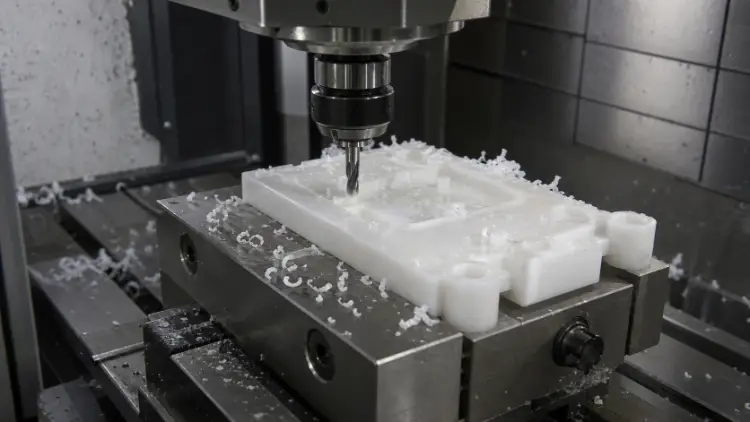
맞춤형 나일론 CNC 가공 서비스
Custom nylon and polyamide parts made to drawing for gears, bushings, rollers, guides, and precision assemblies. Weldo reviews the PA grade, stock condition, moisture response, machining, and inspection against your operating and dimensional requirements.
- PA6, PA66, PA12 & Modified Grades
- 시제품부터 양산까지
- 도면 기반 검사
Property References for Machining-Grade Nylon
Illustrative room-temperature ranges for selected unfilled PA6, PA66, and PA12 stock. Moisture state, product form, and test method can significantly change the reported properties.
- 밀도
- 1.01–1.15g/cm³
- 인장 강도
- 45–85MPa
- 인장 탄성 계수
- 1.4–3.5GPa
- 파단 시 연신율
- 20–200%
- 24시간 수분 흡수
- 0.3–2.5% · method-dependent
- 경도
- 70–85Shore D
Use exact supplier-grade data for design. A 24-hour water-absorption result does not establish equilibrium moisture uptake or dimensional growth. Specify the conditioning and measurement requirements for the actual part.
Drawing-Based Nylon Machining Capabilities
Milling and turning routes are confirmed from grade, geometry, stock size, workholding, moisture condition, and inspection requirements.
Machining Reference Parameters
| Part-envelope reference | Up to 3000 × 1200 × 850 mm*Subject to stock, equipment, tool access, support, and workholding. |
|---|---|
| Dimensional references | General ±0.10 mm / selected features ±0.05 mm*Confirm size, geometry, material condition, temperature, moisture state, and inspection method. |
| Thin-wall reference | From 0.80 mm*Review height, span, stock condition, clamping, and finished handling. |
| Small-hole reference | From Ø0.80 mm*Depends on depth, tool reach, chip removal, edge quality, and inspection access. |
| As-machined roughness | Ra 0.8–3.2 µm*Depends on grade, filler, tooling, geometry, cutting strategy, and functional requirements. |
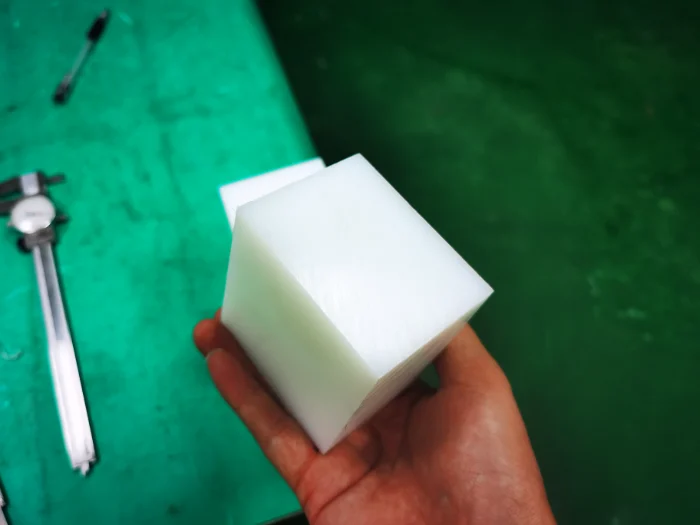
- Material and conditioning
- Define PA family, stock form, filler, supplied condition, expected humidity, and any required conditioning before final sizing.
- Stable workholding and cutting
- Plan support, clamping pressure, sharp tools, chip clearance, and balanced material removal.
- Final measurement state
- Agree datums, temperature, moisture condition, support, and inspection after release from the fixture.
*Planning references confirmed against the drawing. Maximum size, thin walls, small holes, tolerance, and roughness are assessed separately and should not be assumed achievable together.
Select the Nylon Grade for the Part
Compare load, heat, wear, moisture response, electrical behavior, and dimensional-stability requirements.
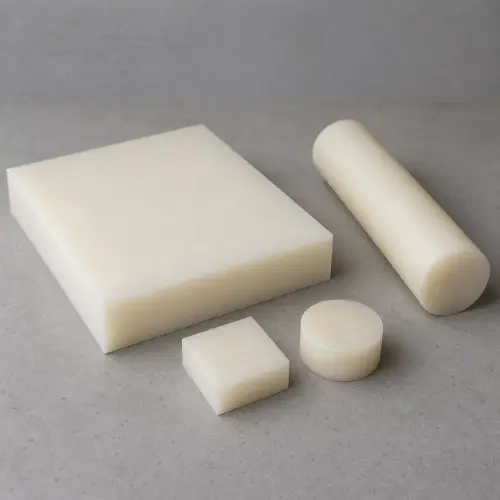
PA6 — 범용 나일론
A useful combination of toughness, wear performance, and economical stock options for general industrial components.
Applications & machining notes
- 일반적인 부품
- Gears, rollers, bushings, pulleys, and wear pads under suitable load and motion conditions.
- Selection considerations
- Specify moisture state, stock stress, operating humidity, and critical fits. Changes in moisture can alter both dimensions and mechanical response.
- Surface options
- As-machined, controlled polishing, light blasting, marking, or a validated grade-compatible coating route.
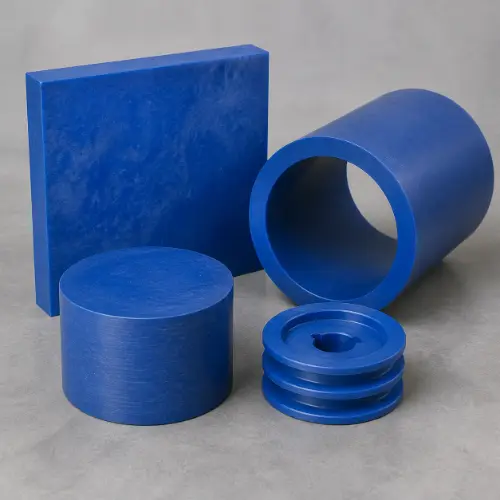
PA66 — Strength and Heat Performance
Often selected for higher stiffness or heat performance than general-purpose PA6 in comparable conditions, with final properties verified for the actual grade.
Applications & machining notes
- 일반적인 부품
- 기어, 베어링 블록, 커넥터 및 구조용 지지대를 적재했습니다.
- Selection considerations
- Compare supplier data in the required conditioning state. Define load, temperature, creep, humidity, stock form, and final dimensional acceptance.
- Surface options
- As-machined, fine polishing, light blasting, laser marking, or activated coating where compatible.
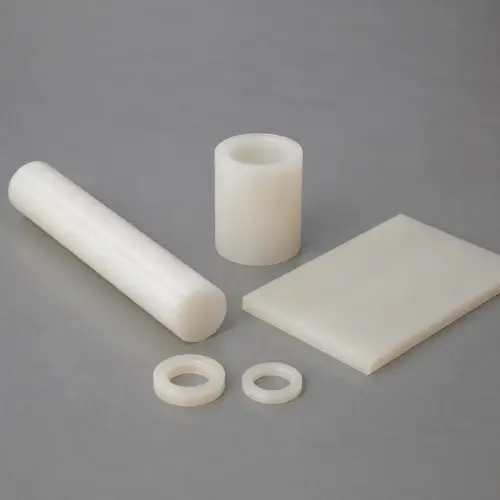
PA12 — Lower Moisture Uptake
Typically absorbs less moisture than PA6 and PA66, supporting parts where humidity-driven movement is an important selection factor.
Applications & machining notes
- 일반적인 부품
- Precision housings, pneumatic fittings, connectors, seals, and fluid-system components.
- Selection considerations
- Lower moisture uptake does not remove the need for temperature, support, and inspection control. Confirm grade, chemical exposure, stiffness, and service conditions.
- Surface options
- As-machined, polishing, light blasting, marking, or compatible primer and coating systems.
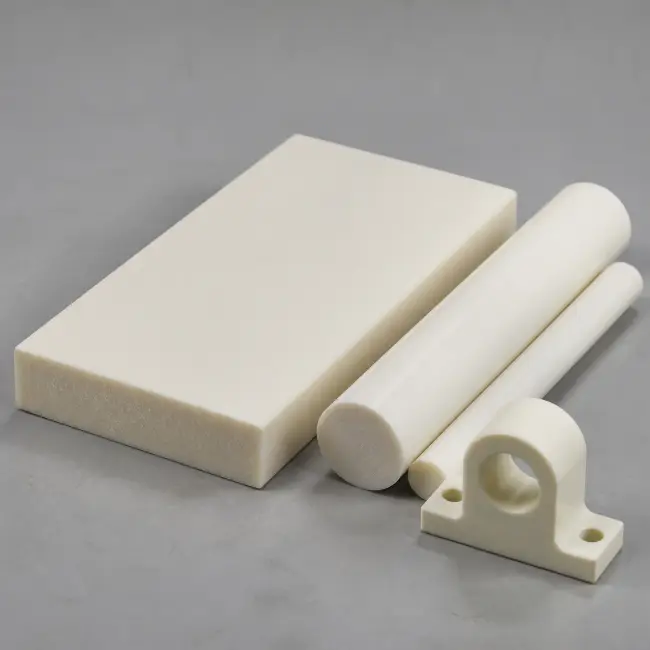
PA6 / MC 나일론 주조품
Cast nylon supports large stock forms and useful bearing, wear, and vibration-damping performance for suitable industrial mechanisms.
Applications & machining notes
- 일반적인 부품
- 대형 기어, 도르래, 롤러, 가이드 휠 및 마모 방지판.
- Selection considerations
- Review casting or stock condition, residual stress, moisture, machining allowance, and the final bearing or structural duty.
- Surface options
- Precision turning or milling, controlled grinding or polishing where required, light blasting, and marking.
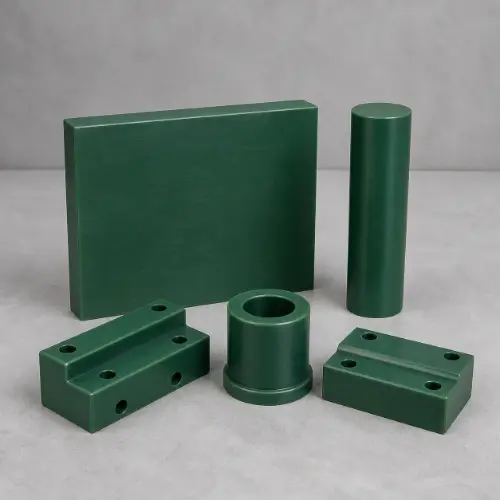
내부 윤활 처리된 나일론
Formulations containing internal lubricants target lower friction, stick-slip, or wear in selected low-maintenance motion systems.
Applications & machining notes
- 일반적인 부품
- 부싱, 슬라이드 블록, 마모 방지 스트립, 가이드 및 스러스트 와셔.
- Selection considerations
- Define load, speed, temperature, mating material, shaft finish, and lubrication. Dry-running suitability is specific to the grade and complete bearing system.
- Surface options
- As-machined, fine turning, polishing, or marking as specified. Preserve the agreed functional condition of sliding surfaces.
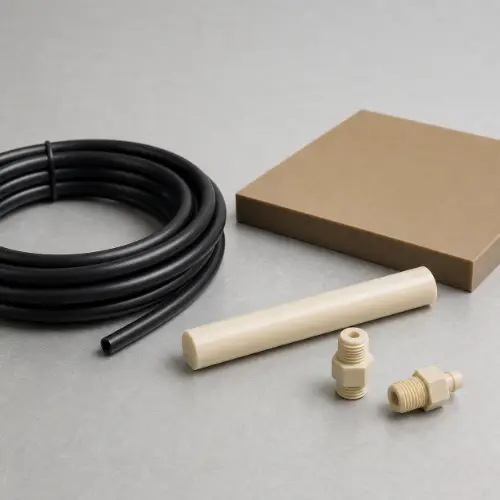
유리섬유 또는 탄소섬유로 보강된 나일론
Fiber reinforcement can increase stiffness and creep resistance while changing directional properties, impact response, surface texture, and electrical behavior.
Applications & machining notes
- 일반적인 부품
- Brackets, supports, housings, loaded fixtures, and selected reinforced gears.
- Selection considerations
- Specify filler type and percentage, stock direction, humidity, and required electrical properties. Abrasive fibers require suitable tools and edge finishing.
- Surface options
- As-machined, controlled blasting, marking, sealing, or a validated activated coating system.
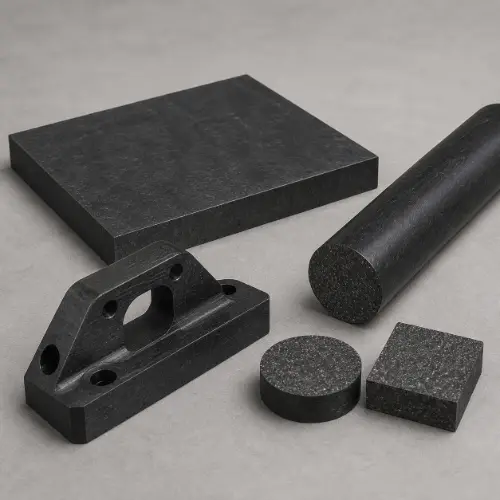
특수 폴리아미드 등급
PA11, PA610/612, PA1010, and PPA provide different options for moisture response, chemical exposure, flexibility, and temperature performance.
Applications & machining notes
- 일반적인 부품
- Fluid components, insulators, connectors, and precision housings matched to the actual grade.
- Selection considerations
- Identify the exact polymer and formulation. These families have different performance profiles; compare supplier data, stock availability, conditioning, and required records.
- Surface options
- Grade-compatible polishing, marking, plasma preparation, or coating as required by the application.
Specify the exact polymer, supplier grade, filler or lubricant, stock form, color, and required records. Conditioning and service moisture should be considered alongside the drawing dimensions.
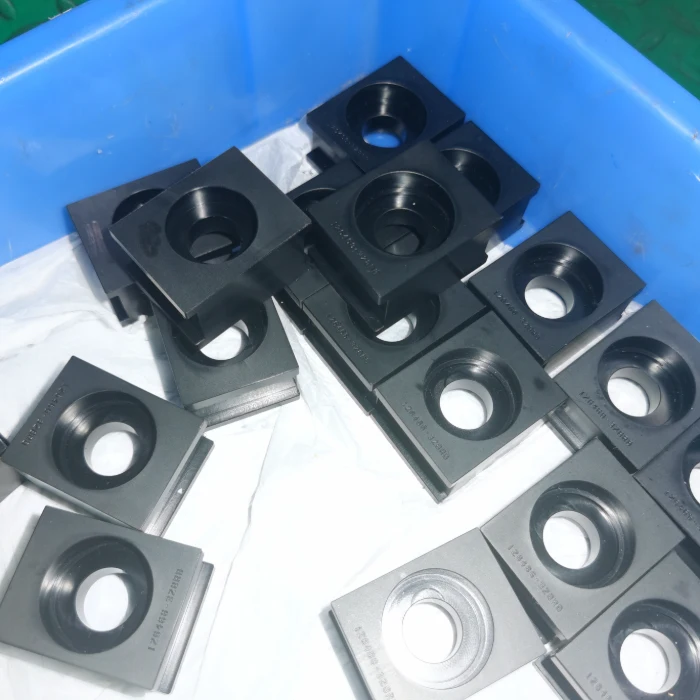
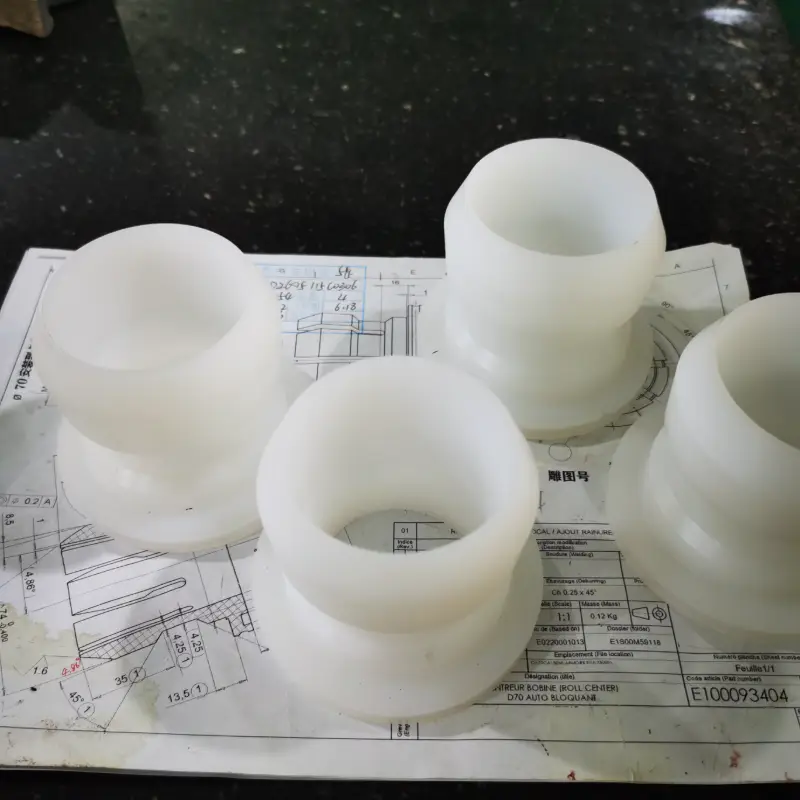
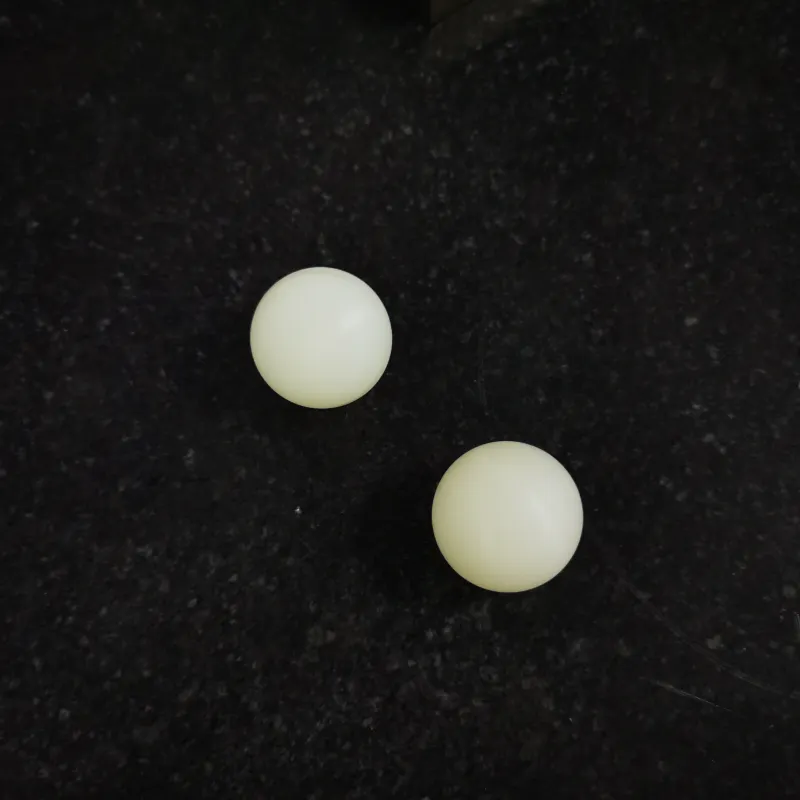
Weldo Nylon Machining Projects
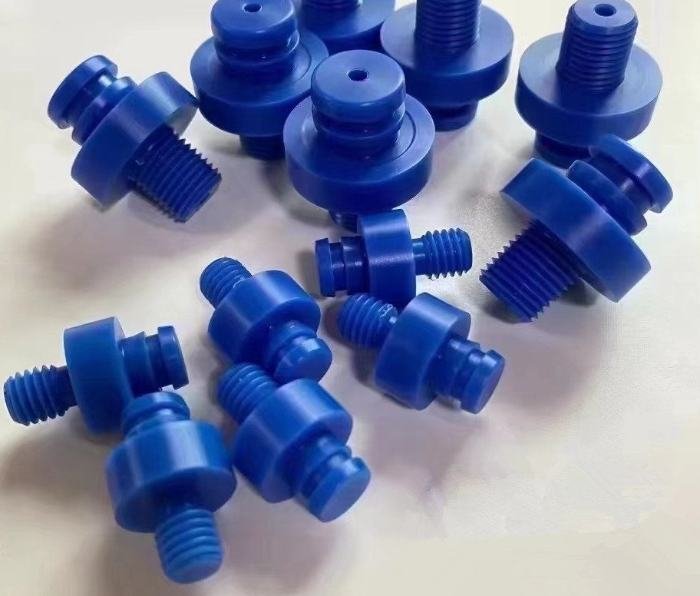
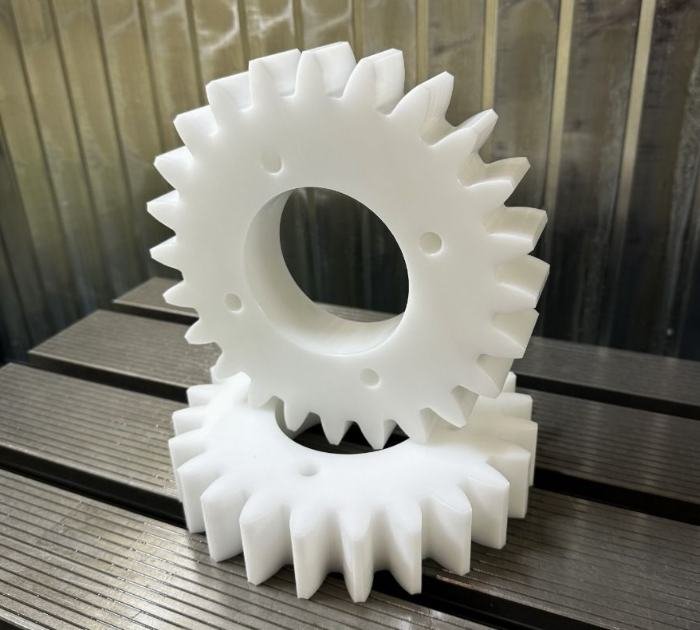
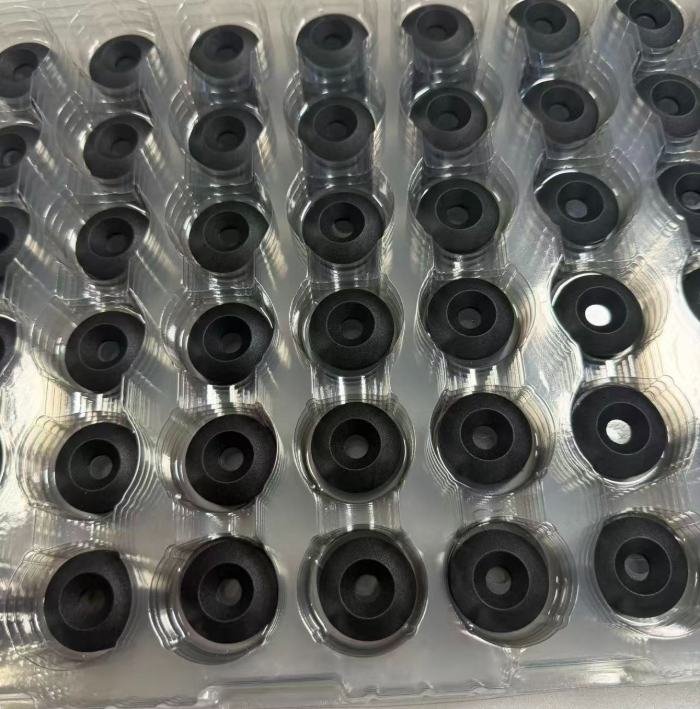
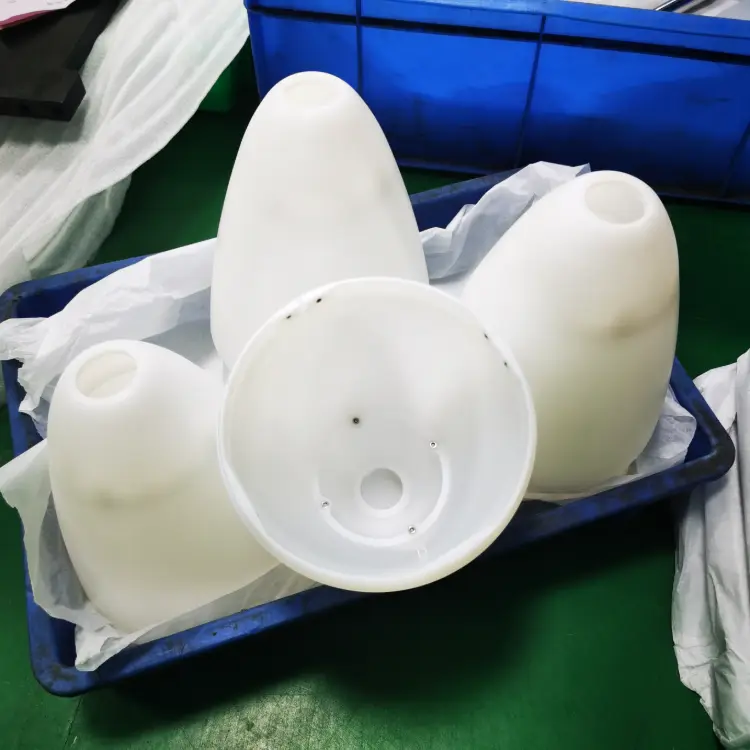
Examples of nylon bearing blocks, bushings, gears, threaded components, housings, and custom precision parts produced by Weldo.
재료 검토부터 최종 검사까지
Critical dimensions are accepted in an agreed, stable measurement condition, with material and finishing requirements defined before machining.
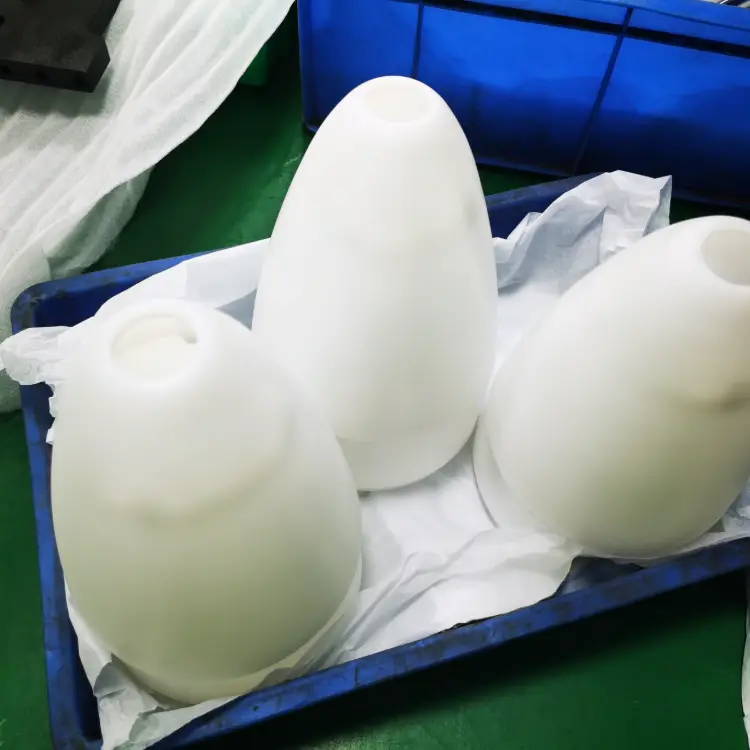
Material Review
Confirm polymer, supplier grade, stock form, filler, and the required conditioning state.
공정 관리
Manage heat, chip evacuation, clamping, support, and material movement between stages.
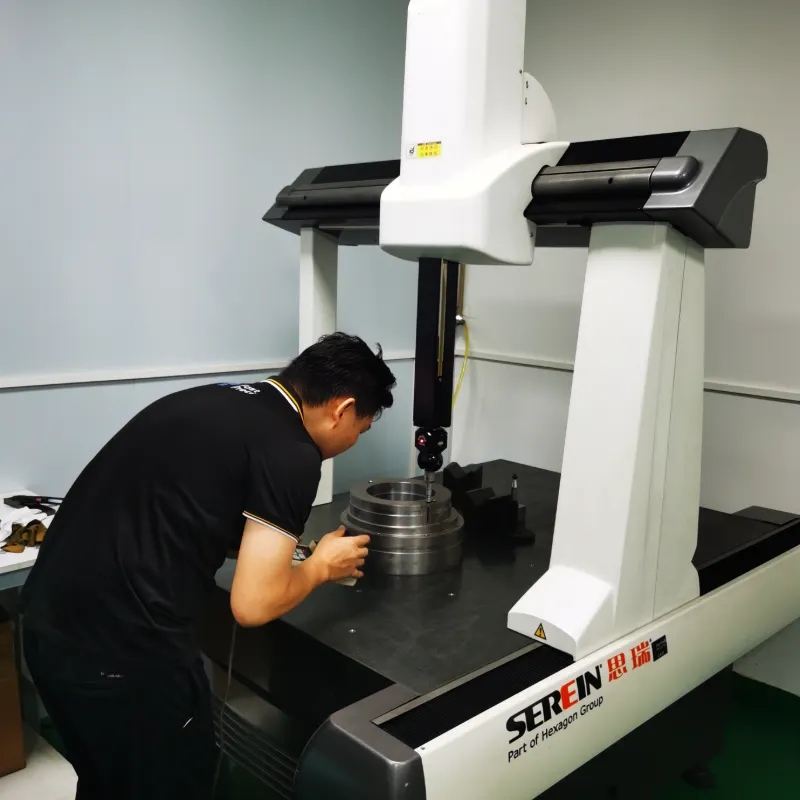
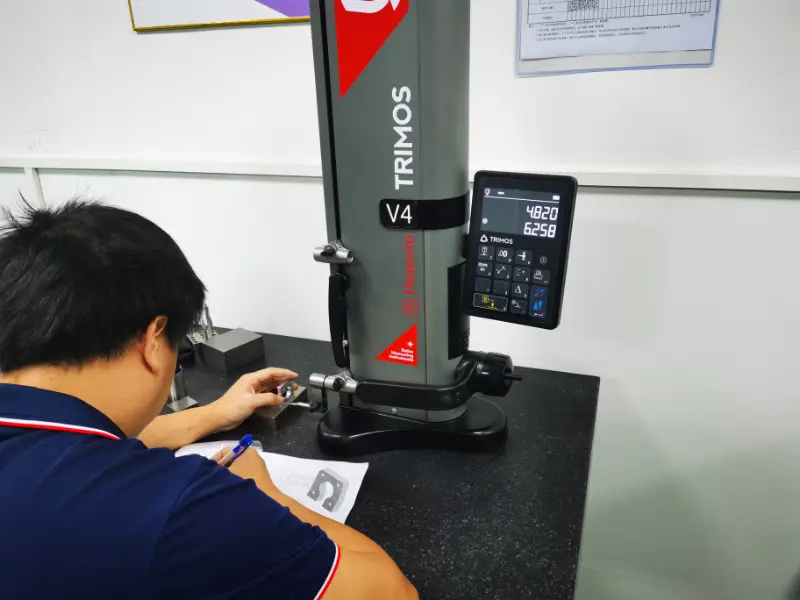
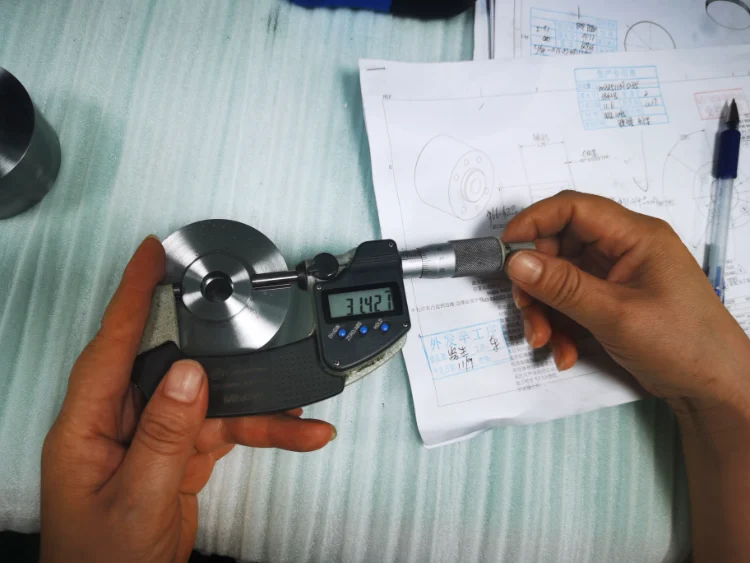
치수 검사
Inspect critical features with appropriate support, contact force, temperature, and moisture condition.
전송 제어
Confirm required records and clean, protect, label, and pack parts for the agreed handling and storage conditions.
Secondary operations can include deburring, controlled polishing, light blasting, laser marking, threaded inserts, and assembly. Define the effect on bearing surfaces, critical fits, and any coated or bonded areas.
Explore surface finishing options →Match Nylon to the Operating Conditions
Nylon offers useful options for lightweight motion and insulating components. Evaluate the complete duty before choosing the polymer, reinforcement, and final condition.
Wear and Motion
Compare load, speed, mating surface, lubrication, temperature, and expected wear life for gears, guides, rollers, and bearings.
Weight and Stiffness
Review deflection, sustained load, creep, geometry, and reinforcement alongside any weight-saving goal.
Moisture and Dimensions
Define dry or conditioned state, expected humidity or immersion, reference temperature, and the acceptance condition for critical fits.
Chemicals and Electrical Function
Specify media, concentration, temperature, electrical performance, and any required contact-material or product documentation.
Nylon Machining Questions
Which cutting tools suit nylon?
Sharp tools with suitable positive geometry and adequate chip space are common choices. Single- or two-flute carbide tools can suit many operations, while reinforced grades need tooling matched to abrasive fillers and the required edge condition.
What matters when turning nylon rod?
Plan controlled chuck pressure, short unsupported length, and suitable support for slender stock. Match tool geometry, chip control, and cutting heat to the grade, with final dimensions checked after release and stabilization.
How does moisture affect nylon dimensions?
Nylon absorbs and releases moisture, which can change dimensions and stiffness. PA families respond differently. Agree the stock condition, intended environment, conditioning requirements, and measurement state for close-fitting components.
How can machining cost be reduced?
Use available stock sizes, accessible geometry, practical radii, stable walls, and clear datums. Apply tight tolerances to functional features and define moisture, finishing, and inspection requirements early.
Can nylon parts be polished, marked, or coated?
Suitable secondary operations include controlled deburring, polishing, light blasting, marking, inserts, and assembly. Coating or bonding needs a compatible preparation and validation, especially for internally lubricated or filled grades.
How is the delivery schedule confirmed?
Review stock availability, grade, drawing revisions, quantity, secondary operations, conditioning, and inspection before agreeing the schedule. These requirements determine the practical production route.