
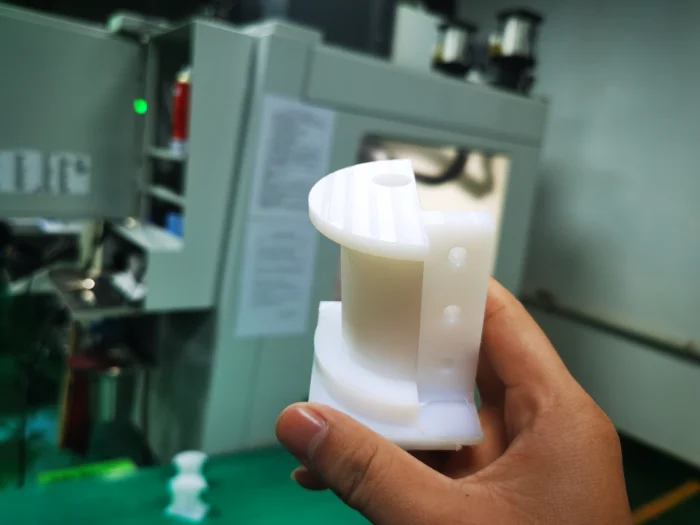
PE CNC Machining Services
Custom polyethylene guides, bushings, plates, and fluid-handling parts made to drawing. Weldo machines HDPE, UHMW-PE, and other specified grades with attention to flexible stock, heat, edge quality, and dimensional stability.
- HDPE & UHMW-PE
- Milling & Turning
- Van prototype tot productie
Polyethyleenkwaliteiten voor bewerkte onderdelen
Choose by stiffness, wear, impact, chemical exposure, and the documentation required for the intended use.
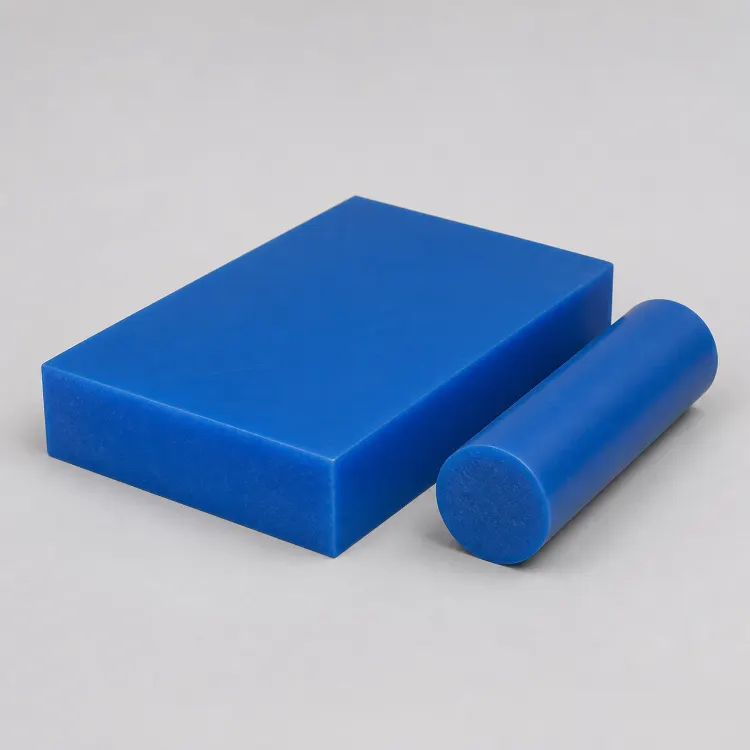
HDPE — General-Purpose Machined Parts
A practical choice for chemical-resistant plates, supports, housings, and fluid-handling parts. HDPE offers greater stiffness than lower-density PE grades while remaining relatively flexible compared with many engineering plastics.
View material details
- Typische onderdelen
- Mounting plates, valve bodies, protective housings, spacers, and equipment supports.
- Machining considerations
- Use sharp tools, broad support, and balanced material removal. Large plates and thin walls need particular attention to flatness and spring-back.
- Selection priorities
- Check the exact grade against sustained load, temperature, fluid exposure, and any food-contact or other documentation requirements.
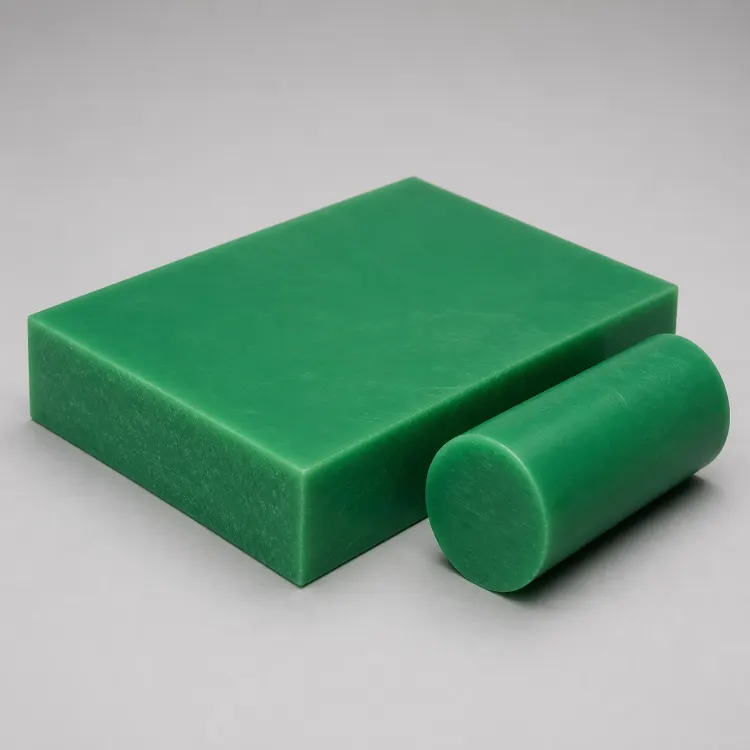
UHMW-PE — Wear and Sliding Components
Often selected for abrasion resistance, impact toughness, and low-friction sliding contact. It suits many wear components but needs clearance and support designed around thermal movement and creep.
View material details
- Typische onderdelen
- Guide rails, wear strips, bushings, liners, rollers, and conveyor components.
- Machining considerations
- Control clamping pressure and cutting heat; clear long chips and inspect dimensions after stabilization. Finish flexible edges without pulling or smearing them.
- Selection priorities
- Review load and sliding speed together with the mating material, lubrication, temperature, and the expected wear environment.
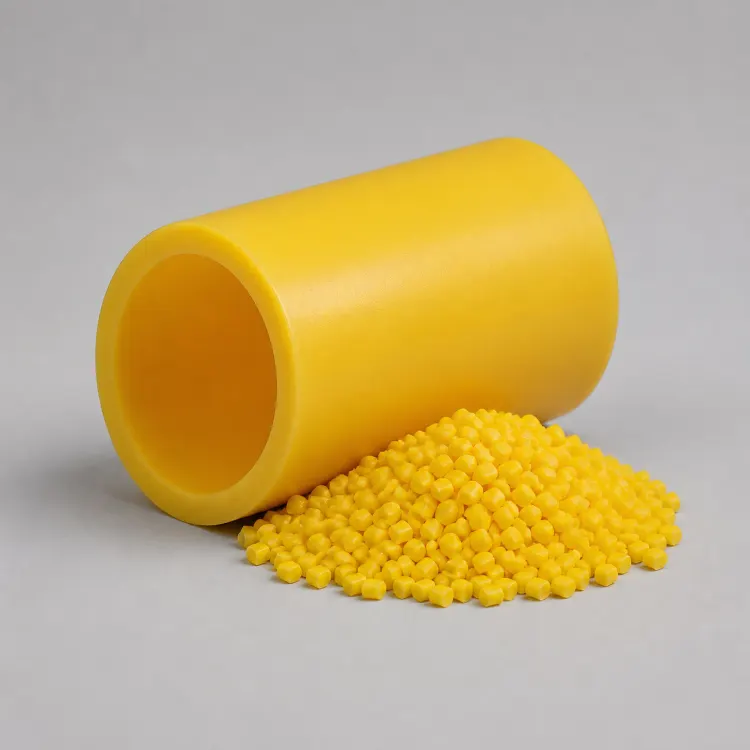
MDPE — Tough, More Flexible Parts
MDPE balances toughness and flexibility for selected protective, support, and fluid-system components. Confirm that the available stock grade has enough rigidity for the part.
View material details
- Typische onderdelen
- Covers, guards, protective supports, and drawing-based piping or fluid-handling components.
- Machining considerations
- Lower stiffness makes workholding and local support especially important. Review thin sections, unsupported spans, and the method used to measure flexible features.
- Selection priorities
- Specify stock form, required stiffness, chemical exposure, and the relevant application requirements; a piping designation alone is not a complete machined-part specification.
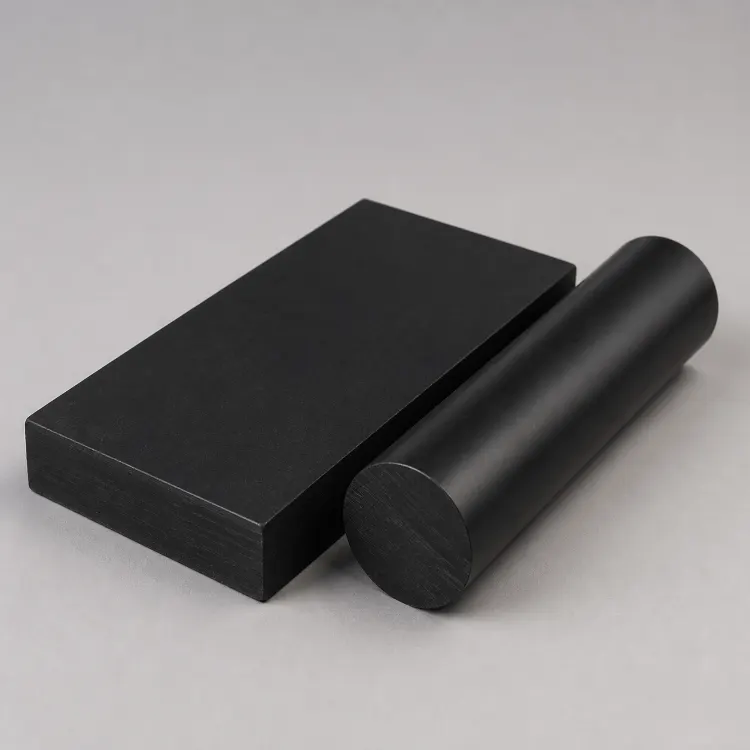
Special and Modified PE Grades
UV-stabilized, antistatic, filled, and documented application-specific grades address needs beyond standard natural PE. Additives can change wear, electrical behavior, and chemical compatibility.
View material details
- Typische onderdelen
- Outdoor guides, static-dissipative handling parts, wear elements, and components requiring specified material documentation.
- Machining considerations
- Select tooling and cutting conditions for the actual formulation. Fillers can affect tool wear, surface texture, and edge quality.
- Selection priorities
- Confirm the supplier grade, color, electrical performance, traceability, and compliance records. Neither color nor a generic grade label confirms approval.
PE offers low moisture uptake and useful chemical resistance, but load, creep, thermal expansion, and the exact service conditions still govern part performance.
HDPE and UHMW-PE Property References
Indicative ranges for selected unfilled stock shapes. Resin grade, stock processing, conditioning, and test method affect the values.
| Onroerend goed | HDPE | UHMW-PE |
|---|---|---|
| Dichtheid | 0,95–0,96 g/cm³ | 0,93–0,96 g/cm³ |
| Tensile Strength at Yield | 23–26 MPa | 17–22 MPa |
| Trekmodulus | 950–1.400 MPa | 470–700 MPa |
| Rek bij breuk | 100–600%+ | 200–350%+ |
| Hardheid | Shore D 64–67 | Shore D 62–66 |
| Wateropname | Very low; test-dependent | Very low; test-dependent |
Use the exact supplier datasheet for final design. Upper service references around 80°C apply only to suitable grades under specified conditions; loaded parts may require a lower limit. Confirm low-temperature duty, water-absorption test conditions, and creep behavior separately.
Machining Controls for Clean, Stable PE Parts
Tooling and support are matched to the material’s softness, flexibility, and thermal movement.
Scherpe snijgereedschappen
Suitable geometry and sharp edges limit rubbing, tearing, and soft burrs.
Supported Workholding
Broad support and controlled pressure reduce clamping distortion and spring-back.
Warmte- en spaanderbeheer
Limit heat buildup and clear stringy chips before they wrap or mark the surface.
Gecontroleerde afwerking
Finish critical features with a suitable allowance, deburr carefully, and inspect stabilized parts.
Drawing-Based PE Machining Capabilities
Reference ranges for quotation. The part, material, equipment, support, and inspection plan are reviewed together.
Machining Reference Ranges
| CNC-freesbereik | 5 × 5 × 5 to 3000 × 1600 × 1000 mmStock size, machine access, rigidity, and fixturing require review. |
|---|---|
| CNC-draaibereik | Ø2 × 2 to Ø200 × 1000 mmConfirm diameter, length, support, and wall thickness together. |
| Dimensional reference | General ±0.05 mmSelected stable features may be reviewed down to ±0.02 mm. |
| Wall-thickness reference | Vanaf 1,5 mmHeight, span, support, handling, and load govern suitability. |
| Drilled-hole reference | Vanaf Ø 0,5 mmDepth, location, tool access, and inspection must be confirmed. |
| Productiehoeveelheid | 1-piece prototypes to 500+ partsThe production route follows the drawing and order requirements. |
| Inspectie | Contact and optical methodsCMM, height gauge, micrometer, caliper, or optical projector as appropriate. |
Maximum envelope, smallest hole, thin-wall reference, and closest tolerance are assessed separately. They should not be assumed achievable together or on every PE grade.
PE Parts for Wear, Motion, and Chemical Service
Match the geometry and grade to the assembly’s load, temperature, mating surfaces, and fluid exposure.
Guide Rails & Wear Strips
Sliding contact surfaces for conveyor, automation, and material-handling equipment.
Bushings & Sleeves
Replaceable sliding or locating parts, with clearances matched to load and temperature.
Rollers & Pulleys
Lightweight rotating components for compatible conveying and handling applications.
Gaskets & Isolation Parts
Simple sealing, cushioning, or isolation components reviewed for compression and creep.
Valve & Mixer Components
Bodies, seats, paddles, and supports for fluids compatible with the specified grade.
Custom Plates & Housings
Machined holes, pockets, slots, and mounting features for industrial assemblies.
Afwerkings- en assemblagemogelijkheden voor PE
Select only the operations that serve the part’s edge quality, surface function, appearance, or assembly requirements.
Zoals bewerkt
The usual finish for functional PE parts. Specify the important faces, edge breaks, and acceptance requirements.
Deburring & Edge Finishing
Remove loose material and sharp edges while protecting holes, fits, thin sections, and functional dimensions.
Selected Surface Smoothing
Reduce tool marks where practical. A smoother appearance does not by itself guarantee lower friction or a mirror finish.
Textuur aanbrengen / Lichtstralen
Consider only where useful and validated. Soft PE can deform, roughen, or retain media under aggressive treatment.
Oppervlakteactivering
Flame, corona, or plasma processes may support printing or bonding. Qualify the treatment, timing, and adhesive or coating system.
Welding & Assembly
Suitable HDPE grades may be welded using a qualified process. UHMW-PE needs specialist joining review; define inserts and hardware early.
PE Machining Questions
Practical guidance for material choice, machining, joining, and documentation.
Is PE the same as HDPE?
PE is the polyethylene family. HDPE, MDPE, and UHMW-PE are different members with different stiffness, molecular structure, stock forms, and application strengths. Specify the actual grade for production.
Moet ik kiezen voor HDPE of UHMW-PE?
HDPE is often considered for general-purpose plates, supports, and chemical-service components. UHMW-PE is commonly considered where abrasion, impact, and sliding behavior dominate. Load, temperature, and dimensional requirements still need review.
Can PE hold tight machining tolerances?
The page’s general reference is ±0.05 mm, with selected stable features reviewed down to ±0.02 mm. These values depend on feature size, grade, rigidity, stock condition, temperature, and the agreed inspection method.
How are burrs and deformation controlled?
Sharp tooling, suitable support, controlled clamping force, chip evacuation, and a finishing strategy matched to the geometry help reduce distortion and edge damage. Critical dimensions are checked after stabilization.
Can PE be painted, bonded, or welded?
Painting and bonding usually require compatible surface preparation and application testing because PE has low surface energy. Welding depends on the grade and joint design; conventional HDPE welding methods should not be assumed suitable for UHMW-PE.
Can you machine food-contact or medical PE components?
A suitable documented grade can be reviewed for the intended application. Acceptance depends on the exact resin, additives, color, traceability, and any component-level requirements. A general PE designation does not establish compliance.