
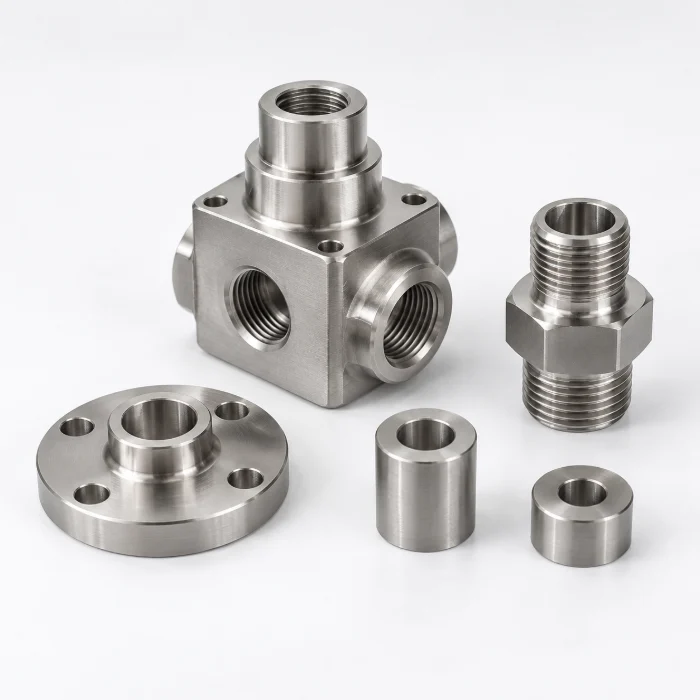
CNC Stainless Steel Finishing
Passivering
Passivation improves the corrosion resistance and surface cleanliness of Custom stainless steel parts.
Vraag een offerte aanPROCESS CAPABILITIES
Key Passivation Capabilities
Before quoting, we confirm the material, heat treatment condition, contamination type, applicable standard, acceptance method, and lead time.
| Artikel | Capaciteit |
|---|---|
| Core materials | 304, 304L, 316, 316L, 303, 410, 420, 440C, 17-4PH, and other approved stainless steels |
| Verwerkingsopties | Nitric acid passivation, citric acid passivation, pickling followed by passivation, and drawing-specified processes |
| Standards | ASTM A967/A967M, ASTM A380/A380M, AMS 2700, and customer specifications |
| Application methods | Immersion, spray, circulation, and approved localized treatment |
| Inspection records | Visual and dimensional inspection, free-iron verification, specified corrosion testing, and certificates of conformity |
| Volume and lead time | Prototypes, small batches, and production orders; standard custom parts typically ship in 3–15 days |
PROCESS OVERVIEW
Wat is passivering?
Stainless steel passivation uses controlled cleaning and acid treatment to remove free iron from the surface and promote a stable chromium-rich oxide film. This nanometer-scale film preserves the original part dimensions, making the process suitable for holes, threads, sealing surfaces, and precision fits.
Remove Free Iron
Removes iron contamination transferred during machining, grinding, and fixturing.
Restore Corrosion Resistance
Establishes a clean, continuous, chromium-rich surface that reduces early corrosion.
Preserve Dimensions
The nanometer-scale passive film suits tight tolerances, threads, and precision mating surfaces.
Improve Cleanliness
Controlled rinsing, drying, and packaging reduce residual acid, water marks, and secondary iron contamination.
Typical Passivation and Conversion Film Thicknesses
These ranges support preliminary process selection. Final acceptance follows the material standard, coating mass, performance testing, or drawing requirements.
Naturally formed chromium-rich oxide film.
Alodine or chromium-free chemical conversion coating.
Trivalent chromium or chromium-free post-plating passivation.
Organic anti-tarnish or corrosion-inhibiting film.
Dedicated chromium-free chemical conversion coating.
CONTROLLED PROCESS
How Is a Standard Passivation Process Performed?
Each step is controlled for surface cleanliness, material compatibility, and final acceptance.
- 01
Drawing and Material Review
Confirm the grade, heat treatment, weld condition, masking areas, and acceptance standard.
- 02
Degreasing and Cleaning
Remove cutting fluids, lubricants, polishing compounds, and handling residues.
- 03
Pickling or Descaling
Apply when weld heat tint, heat-treatment scale, rust, or heavy contamination is present.
- 04
Controlled Passivation
Select a nitric or citric acid system for the material and control concentration, temperature, and time.
- 05
Rinsing and Drying
Use specified water quality to remove chemical residues, then dry cleanly to prevent staining and recontamination.
- 06
Inspection and Packaging
Complete visual, dimensional, free-iron, or corrosion verification before contamination-controlled packaging.
PROCESS TYPES
Common Types of Passivation
The main process routes are nitric acid passivation, citric acid passivation, pickling followed by passivation, and electropolishing followed by passivation.
Nitric Acid Passivation
Used when the drawing, AMS 2700, or ASTM A967 specifies a nitric acid system. It removes free iron introduced during machining, with solution type, temperature, and time matched to the stainless steel grade.
Citric Acid Passivation
Used for precision parts without heavy oxide scale when free-iron removal is the primary objective. It suits medical, food-processing, and electronic components when permitted by the specification and verified by testing.
Pickling Followed by Passivation
Used for parts with weld heat tint, heat-treatment scale, rust, or heavy contamination. Pickling removes the affected surface layer before passivation restores a uniform corrosion-resistant surface.
Electropolishing Followed by Passivation
Used when parts require lower microscopic roughness, improved cleanliness, and reduced residue adhesion. Common applications include medical devices, food equipment, semiconductor parts, and hygienic fluid components.
Pickling and electropolishing remove material. Precision holes, sealing surfaces, and mating dimensions should specify material-removal limits, roughness, and final acceptance requirements.
MATERIAL SCOPE
Materials Suit for Passivation
Stainless steels undergo chemical passivation to remove free iron. Aluminum, zinc coatings, copper, and magnesium use their own conversion or anti-tarnish systems.
| Material Grade | Treatment and Function | Standaardonderdelen |
|---|---|---|
| 304, 304L, 316, 316L | Nitric or citric acid passivation removes free iron and restores the corrosion-resistant surface. | Valve bodies, manifolds, pipe fittings, medical devices, and food-equipment components. |
| 303 | Validated passivation parameters control staining and pitting associated with sulfide inclusions. | Precision shafts, spacers, fittings, threaded parts, and locating components. |
| 410, 420, 440C | Controlled passivation after heat treatment and grinding improves corrosion resistance on hardened parts. | Valve stems, pump shafts, tooling components, wear sleeves, and bearing parts. |
| 17-4PH, 15-5PH | Passivation after final aging and finishing removes process contamination while preserving dimensions. | Aerospace brackets, valve spools, couplings, and high-strength shafts. |
| 2205, 2507 | Machined parts are passivated directly; welded parts are descaled and cleaned before passivation. | Chemical-service valves, pump components, corrosion-resistant manifolds, and marine connectors. |
| 2024, 5052, 6061, 6082, 7075 aluminum | Chemical conversion coating improves corrosion protection, coating adhesion, or electrical contact performance. | Electronic enclosures, mounting plates, heat sinks, aerospace brackets, and connector housings. |
| Zinc-plated carbon and alloy steels | Trivalent chromium or chromium-free passivation after zinc plating improves resistance to white rust. | Fasteners, brackets, stampings, and equipment connectors. |
| Copper, brass, and magnesium alloys | Copper alloys receive anti-tarnish treatment; magnesium alloys use dedicated chemical conversion coatings. | Electrical terminals, brass fittings, magnesium housings, and lightweight structural parts. |
PROCESS COMPARISON
Passivation VS Other Surface Treatments
Select the process according to corrosion protection, dimensional, appearance, and wear requirements.
| Proces | Hoofdfunctie | Dimensional Effect | Typische toepassingen |
|---|---|---|---|
| Passivering | Removes free iron and restores the corrosion-resistant stainless steel surface | Nanometer-scale surface film with negligible dimensional effect | Precision stainless steel parts, valve bodies, and medical and food-equipment components |
| Pickling | Removes weld heat tint, scale, rust, and contaminated surface material | Produces controlled material removal | Weldments, heat-processed parts, and heavily oxidized surfaces |
| Elektropolijsten | Removes a small amount of material and reduces microscopic surface peaks | Requires evaluation of the removal allowance | Hygienic, high-cleanliness, and low-adhesion surfaces |
| Galvaniseren | Deposits functional nickel, chromium, zinc, or other metallic coatings | Produces measurable coating buildup | Wear-resistant, corrosion-resistant, conductive, or decorative parts |
| Anodiseren | Improves wear resistance, corrosion resistance, or electrical insulation on aluminum | Dimensions require allowance for coating thickness | Aluminum housings, sliding parts, and wear-resistant structural components |
KWALITEITSCONTROLE
How Is Passivation Quality Inspected?
Passivation produces little visible change on stainless steel, so acceptance relies on controlled testing rather than appearance alone. The inspection plan is selected according to the alloy grade, specification, and service environment.
Inspect for water marks, residual acid, discoloration, corrosion spots, powdery residue, and handling contamination.
Select water immersion, high-humidity, copper sulfate, or another specified method; some tests have alloy-specific limitations.
Recheck precision holes, threads, sealing surfaces, and critical fits to confirm that pretreatment caused no abnormal attack.
Perform salt spray or application-specific corrosion testing when specified instead of applying one fixed duration to every stainless steel grade.
PARTS & INDUSTRIES
Parts and Industries Require Passivation
Passivation protects precision stainless steel parts used in demanding industries.
Medische hulpmiddelen
Surgical tool parts, connectors, and valve bodies.
Food and Pharmaceutical Equipment
Agitator shafts, sanitary fittings, and pump parts.
Semiconductor and Vacuum Equipment
Vacuum fittings, fluid connectors, and sensor mounts.
Lucht- en ruimtevaart
17-4PH brackets, actuator parts, and fasteners.
Automation and Energy Equipment
Valve spools, guides, bushings, and manifolds.
ONE-STOP PRODUCTION
How Does Weldo Control Cost and Lead Time?
Weldo combines material sourcing, CNC machining, deburring, cleaning, passivation, inspection, and packaging in one manufacturing plan. Standard custom parts typically ship in 3–15 days, while production-order schedules are agreed according to quantity, inspection, and documentation requirements.
Define the material, heat treatment, surface condition, passivation standard, and acceptance method early to reduce rework.
Keep carbon-steel tools and contamination sources away from parts during machining, cleaning, handling, and packaging.
Link material lots, process records, and inspection results to each order for repeat production.
FREQUENTLY ASKED QUESTIONS
Passivation FAQs
Direct answers about dimensions, materials, corrosion resistance, and maintenance.
Does passivation change part dimensions?
Standard stainless steel passivation preserves the original part dimensions because the chromium-rich oxide film is only nanometers thick. When pickling or electropolishing is included, the material-removal allowance is incorporated into dimensional control.
Can passivated stainless steel still rust?
Passivated stainless steel can still corrode in high-chloride, continuously wet, or contaminated environments. Matching the alloy to the environment, controlling contact media, and cleaning regularly allow the passive surface to deliver its intended corrosion resistance.
Can 304, 316L, and 303 use the same passivation parameters?
304, 316L, and 303 require grade-specific passivation parameters. The solution system, temperature, time, and acceptance method should match each alloy's composition and inclusion characteristics.
Can aluminum alloys be passivated?
Aluminum alloys can receive Alodine or chromium-free chemical conversion coatings for corrosion protection, paint adhesion, and low electrical contact resistance. The process follows MIL-DTL-5541, ASTM B449, or the customer drawing.
Which surface treatments can be combined with passivation?
Passivation can be combined with pickling, mechanical polishing, electropolishing, and ultrasonic cleaning. Oxide removal, polishing, and cleaning are normally completed before passivation, rinsing, drying, and final inspection.
How should passivated parts be cleaned and maintained?
Clean passivated parts with a neutral detergent, clean water, and non-abrasive materials, then dry them thoroughly. Use clean tools and separate packaging during storage and assembly to prevent contact with carbon-steel particles and chloride contamination.
Does passivation affect electrical conductivity?
Passivation does not change the bulk conductivity of the metal, but the surface oxide or conversion film can increase contact resistance. Drawings should specify the permitted resistance for grounding, terminals, and EMI contact surfaces; aluminum parts can use a MIL-DTL-5541 Class 3 low-contact-resistance conversion coating.
REQUEST A QUOTE
Send Us Your Passivation Requirements
Submit the drawing, material, quantity, applicable standard, inspection requirements, and target delivery date for a manufacturing and passivation proposal.