
WELDO · PRODUCTIE OP MAAT
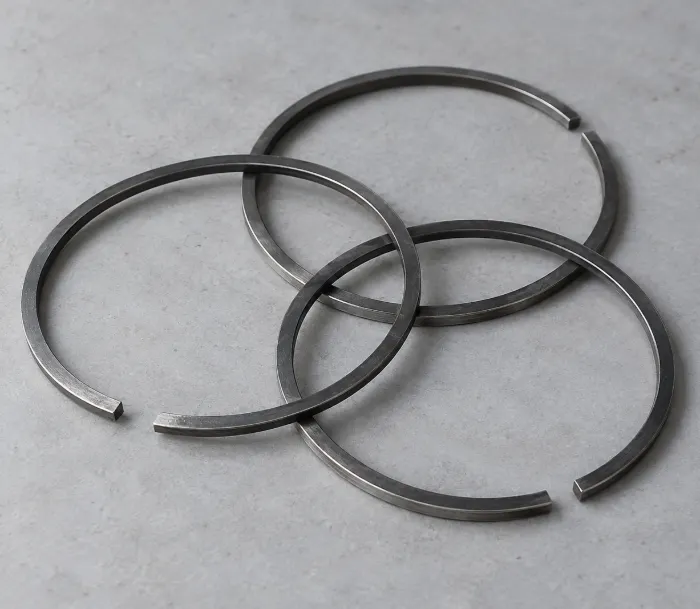
Op maat gemaakte zuigerringen
Elk detail, vervaardigd
voor de juiste pasvorm.
Geef de zuigerveren aan op basis van uw tekeningen en bedrijfsomstandigheden, in combinatie met een afgestemde materiaalkeuze, nauwkeurige bewerking, afwerking en keuring. Stuur uw project naar Weldo voor een productievoorstel, offerte en leveringsplan.
Vraag een offerte op maat aan ↗01 / RINGCONFIGURATIES
Op maat gemaakte zuigerringen voor diverse afdichtingstoepassingen
Stel de dwarsdoorsnede, het loopvlakprofiel en het voegontwerp gezamenlijk vast, zodat de fabricageafmetingen aansluiten bij de daadwerkelijke operationele vereisten.
Compressieringen
Voor auto-, motor- en dieselmotoren. Voor zuigerringen van motorfietsen zijn ringprofielen en eindposities nodig die zijn afgestemd op het tweetakt- of viertaktontwerp.
- Hardlopend gezicht: Regel de cilindrische of conische profielen en de contactband.
- Pasvorm: Controleer de groeven, de ingestelde eindspeling en de details van de positioneringspennen.
Schraper en olieringen
Regel de oliefilm op de cilinderwand en voer overtollige olie af, met op elkaar afgestemde schraapranden, afvoerkanaaltjes en de spanning van het ringpakket.
- Kenmerken: Controleer de sleuven, de olieretourgaten en eventuele bramen aan de randen.
- Werkwijze: Beoordeel assemblages uit één stuk en uit meerdere onderdelen afzonderlijk.
Compressorringen
Voor zuigercompressoren voor lucht en procesgassen, met specificaties inzake media, temperatuur, drukverschil en smering.
- Materialen: Metaal, met PTFE of PEEK gevulde composietmaterialen.
- Verbindingen: Ontwerpen met uitstulpingen, sjaalvormen of treden met uitzettingsruimte.
Afwijkende ringen
Voor het upgraden van apparatuur, verouderde afmetingen en nieuwe producten. Bepaal de afmetingen op basis van bijpassende onderdelen in plaats van slijtage na te bootsen.
- Afmetingen: Controleer de werkelijke boring, groef en slijtagetoestand.
- Validatie: Keur de monsters goed voordat het productieproces wordt vastgelegd.
02 / MATERIALEN & AFWERKINGEN
Begin met het materiaal.
Pas vervolgens de afwerking aan.
De belasting, de bedrijfsmedia, de cilindervoering en de smering zijn bepalend voor de materiaalkeuze. Een coating kan een ongeschikte ondergrond of een onjuiste passing niet corrigeren.
Grijs gietijzer
Gevestigde ringontwerpen · Motoren en industriële apparatuur
Grijs gietijzer is goed bewerkbaar, waarbij grafiet een belangrijke rol speelt bij het wrijvingsgedrag. Geef de kwaliteit, de microstructuur en de sterkte van het substraat aan – niet alleen de hardheid.
Mogelijkheden voor oppervlaktebehandeling: Fosfateren, verchromen of molybdeenbestuiving op het loopvlak, zoals gespecificeerd. Fosfateren bevordert het inlopen en biedt aanvullende bescherming tegen roest; verchroom- en molybdeenbehandelingen zijn bedoeld om slijtage en wrijving tegen te gaan.
Nodulair gietijzer
Hogere sterkte en taaiheid · Toepassingen waarbij het materiaal zwaar belast wordt
Een gecontroleerde grafietmorfologie zorgt voor een hogere sterkte en taaiheid. Bij ontwerpen met dunne doorsneden is controle nodig van de microstructuur, de warmtebehandeling en de sterkte van het afgewerkte onderdeel; de materiaalaanduiding alleen is geen reden om een smallere doorsnede te kiezen.
Mogelijkheden voor oppervlaktebehandeling: Kies een verchroming, molybdeenbesproeiing of een gevalideerde PVD-coating die past bij het substraat en de gebruiksomstandigheden. Controleer na de behandeling de afmetingen en de integriteit van het oppervlak.
Gelegeerd staal
Dunne secties · Hoge belastingen · Stabiele ringspanning
De materiaalsterkte, de warmtebehandeling en de vorm van de ring zijn samen bepalend voor de prestaties. Het verspanen van gewoon staal tot een splitring zorgt nog niet voor de vereiste treksterkte; daarnaast zijn ook passende vormgevings- en prestatiecontroles nodig.
Mogelijkheden voor oppervlaktebehandeling: Kies voor nitreren, PVD of DLC, afhankelijk van de staalsoort. Houd de verwerkingstemperatuur, vervorming en laagdikte onder controle om de elastische eigenschappen en de pasvorm te behouden.
Roestvrij staal
Gespecificeerde hittebestendigheid en compatibiliteit met media
Geef de exacte staalsoort en de warmtebehandeling aan. De term “roestvrij staal” op zich is geen garantie dat het materiaal geschikt is voor een elastische zuigerring. Beoordeel de sterkte, de corrosiebestendigheid en de wrijvingsvereisten afzonderlijk.
Mogelijkheden voor oppervlaktebehandeling: Onderzoek of nitreren of PVD/DLC geschikt is voor de betreffende staalsoorten. De verwerkingstemperatuur en het coatingsysteem moeten aansluiten bij de warmtebehandelde toestand van het substraat.
Gevuld PTFE
Lage wrijving · Geschikt voor het afdichten van compressoren
Vulstofhoudend PTFE biedt een lage wrijving en een goede chemische bestendigheid. Vulstoffen hebben een directe invloed op slijtage, kruip en de interactie met de cilinderwand; geef daarom de materiaalkwaliteit of de samenstelling aan.
Overwegingen bij de afwerking: Controleer de voegen, bramen, maatvastheid en reinheid. Pas niet de nitreer- of verchroomprocedures toe die voor metalen ringen worden gebruikt.
PEEK en zijn composietmaterialen
Draagvermogen en maatvastheid · Toepassingen met compressoren
Stem het vulsysteem af op het werkmedium, de cilindervoering en het toerental. De temperatuurclassificaties van de basishars alleen bepalen niet de bedrijfsgrens van het volledige systeem.
Overwegingen bij de afwerking: Plan de stabilisatie, de nabewerking en de inspectie in functie van de toestand van het materiaal. Houd rekening met de warmteontwikkeling tijdens de bewerking, vervorming door opspanning en de meetomstandigheden.
03 / TECHNISCHE DOELSTELLINGEN
Precisie gedefinieerd
per functioneel kenmerk.
Geef de axiale hoogte, de radiale wanddikte, de zijvlakken en de gemonteerde eindspeling afzonderlijk op — niet met één algemene bewerkingstolerantie.
| Belangrijkste kenmerk | Voorgestelde doelstelling | Aanvaardingsvoorwaarden |
|---|---|---|
| Tolerantie op de axiale hoogte | ±0,002–±0,005 mm | Eindtoestand na bewerking; vastgestelde meetpunten |
| Tolerantie voor de wanddikte van de radiale wand | ±0,010–±0,020 mm | Vastgestelde beperkingsvoorwaarde en coatingtoeslag |
| Vlakheid van de zijkant, ringen met rechthoekige doorsnede | 0,003–0,005 mm | Gespecificeerde ondersteuningsopstelling en meetkracht |
| Parallelisme aan de zijkant, ringen met rechthoekige doorsnede | 0,003–0,005 mm | Vastgelegd referentiepunt; niet rechtstreeks van toepassing op keystone- of opzettelijk verdraaide secties |
| Ruwheid van de gelapte zijvlakken | Ra 0,10–0,20 μm | Opgegeven meetrichting, filtering en uiteindelijke oppervlakteafwerking |
| Afgewerkte ruwheid van het loopvlak | Ra 0,20–0,40 μm | Opgesteld met specificaties voor profiel, coating en inloopperiode |
| Tolerantie voor de geïnstalleerde eindspeling | ±0,02–±0,05 mm | Opgegeven diameter en temperatuur; nominale spleet afzonderlijk bepaald |
Geef de maatreeks apart aan De grenzen voor de diameter en de dwarsdoorsnede zijn afhankelijk van de apparatuur, de opspanningen, de afwerking en de keuring. De zwenkdiameter van de machine is geen geldige grenswaarde voor de productie van ringen.
Beoordeel spanning en conformiteit samen De tangentiële kracht wordt bepaald bij de opgegeven boring en sluittoestand, en niet door één enkele waarde die voor alle afmetingen en materialen geldt.
Controleer de toestand bij de definitieve levering Controleer de afmetingen, vorm en prestaties na de warmtebehandeling en het aanbrengen van de coating – niet alleen in een eerder stadium van de bewerking.
04 / PRODUCTIEPROCES
Meer dan zomaar een machinaal bewerkte ring.
Een gecontroleerde definitieve aanpassing.
De geometrie wordt bepaald door CNC-bewerking. Aanvullende processen bepalen de ringspanning, de oppervlakteafwerking en de slijtvastheid. De reikwijdte van de speciale bewerkingen wordt vastgesteld tijdens de projectbeoordeling.
Beoordeling van tekeningen en processen
Controleer de boring, de groef, de dwarsdoorsnede en de verbinding. Kies de juiste aanlegwijze voor gietijzeren, gevormde stalen of kunststofringen, en houd rekening met de afwerkingsmarges.
Dunwandig draaien en bewerken van specifieke onderdelen
Pas de steun en de klemming aan de geometrie van de ring aan, controleer de afmetingen na het losmaken en verwijder bramen uit verbindingen, sleuven en olieretourgaten.
Precisie-slijpen en -leppen
Controleer de materiaalafname, de slijpwarmte en het profiel van het slijpvlak. Controleer op verbranding, scheuren en beschadigingen aan de randen – niet alleen op oppervlakteruwheid.
Afstemming van warmtebehandeling en coating
Controleer na de bewerking op vervorming en veranderingen in dikte. Leg vast wie verantwoordelijk is voor de speciale bewerkingen, de inspectie en de productiedossiers.
05 / INSPECTIE & TRACEERBAARHEID
Controleer elke vereiste.
Zorg ervoor dat elke partij traceerbaar is.
Materiaal en partij
Controleer de metaalkwaliteit, de hardheid en de gespecificeerde microstructuur, of de polymeerkwaliteit en het vulstofsysteem. Een dezelfde materiaalnaam is op zich geen reden voor vervanging.
Afmetingen en pasvorm
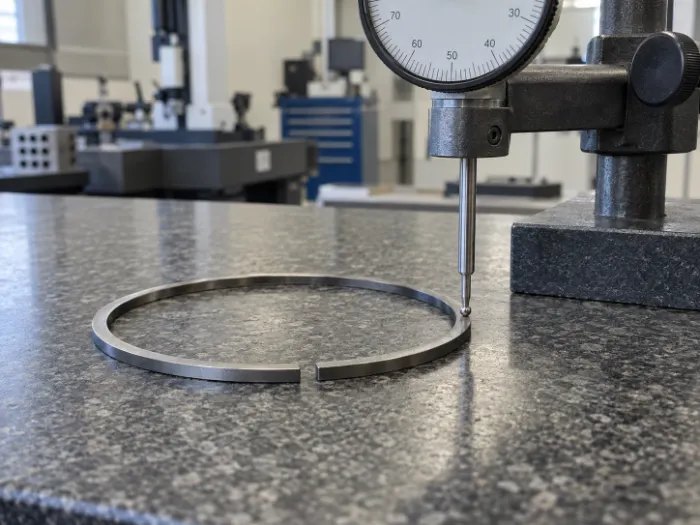
Controleer de axiale hoogte, de radiale wanddikte en de zijvlakken in de uiteindelijke toestand. Controleer of de gemonteerde eindspeling overeenkomt met de opgegeven maat in de meetboring.
Uiterlijk en functionaliteit tijdens het hardlopen
Controleer het profiel, de tangentiële kracht en de conformiteit van de boring zoals gespecificeerd. Controleer de laagdikte, de behandelde oppervlakken en de hechtingseisen.
Eerste artikelen en vervolgpartijen
Zorg voor het bijhouden van goedgekeurde tekeningen, materialen, procesroutes en inspectiemethoden. Valideer de betreffende eisen opnieuw na wijzigingen in materialen of processen.
De conformiteit met de afmetingen is geen vervanging voor prestatievalidatie. Lekkage, oliecontrole en levensduur worden gecontroleerd door middel van de overeengekomen testbankproeven of tests op het complete systeem.
06 / VAN TEKENING TOT LEVERING
Controleer de monsters.
Ga vervolgens over naar de productiefase.
Stuur uw tekeningen en bedrijfsvoorwaarden naar Weldo om de produceerbaarheid, de acceptatie-eisen en de prijsstelling te bevestigen. De doorlooptijden voor monsters en de productie worden afzonderlijk vastgesteld voor het gehele productieproces.
Tekeningen ter beoordeling indienen ↗Tekeningen en aansluitmaten
Afmetingen van ring, boring en groef. Bij vervangingsprojecten dient u monsters en informatie over de slijtage mee te sturen.
Materialen en bedrijfsomstandigheden
Eisen ten aanzien van materiaal of prestaties, media, temperatuur, drukverschil en smering.
Hoeveelheids- en leveringsdoelstellingen
Proefhoeveelheden, productiebehoefte en streefdata, rekening houdend met gereedschap en speciale processen.
Goedkeuring en documentatie
Kritische toleranties, oppervlaktebehandelingen, functionele validatie en rapportagevereisten.
07 / VRAGEN VAN KOPERS
Beantwoord de belangrijkste vragen
vóór de productie.
Van het vervangen van versleten onderdelen tot materiaalwijzigingen: stel duidelijke technische eisen vast voordat de productie van start gaat.
Wat bepaalt de prijs van op maat gemaakte zuigerveren?
De prijs is afhankelijk van het materiaal, de afmetingen van de ring, de complexiteit van het profiel, de toleranties, de oppervlaktebehandelingen en de inspectie-eisen. De bestelhoeveelheid is ook van invloed op de verdeling van de gereedschaps- en instelkosten. In offertes moeten eenmalige engineering- of gereedschapskosten worden gescheiden van terugkerende eenheidsprijzen, zodat kopers de kosten voor prototypes en serieproductie nauwkeurig kunnen vergelijken.
Kunt u vervangende ringen vervaardigen op basis van een versleten exemplaar?
Een versleten monster is een nuttig referentiepunt, maar de afmetingen ervan mogen niet rechtstreeks worden overgenomen. De cilinderboring, de zuigergroef, de oorspronkelijke specificaties en de slijtagetoestand moeten worden gecontroleerd om de vereiste geometrie en speling te bepalen. Keur de pasvorm en de prestaties van het monster goed voordat u een productiebatch bestelt.
Zijn strengere toleranties en kleinere eindspelingen altijd beter?
Nee. Productietoleranties zorgen voor maatvastheid, terwijl werkingsspelingen ruimte bieden voor thermische uitzetting en beweging. Een onvoldoende eindspeling kan ervoor zorgen dat de uiteinden van de ring tegen elkaar aan komen te liggen wanneer deze heet zijn. Geef de nominale speling en de bijbehorende tolerantie afzonderlijk op, waarbij de diameter van de meetbuis, de meettemperatuur en de uiteindelijke oppervlaktebehandeling duidelijk worden omschreven.
Wat is de oorzaak van voortijdige schade aan zuigerveren?
Veelvoorkomende oorzaken zijn onder meer vervuiling door schurende deeltjes, onvoldoende smering, oververhitting, schade tijdens de montage en ongeschikte speling of pasvlakken. Als de ring wordt vervangen zonder het onderliggende probleem te verhelpen, kan de storing zich herhalen. Controleer bij vervangingsprojecten eerst de ring, de cilindervoering, de zuigergroef en de gebruiksgeschiedenis voordat u het materiaal of de coating vervangt.
Hoe lang gaan op maat gemaakte zuigerveren mee?
Er is geen algemeen geldend cijfer voor de levensduur van alle zuigerringen. De levensduur hangt af van de belasting, temperatuur, snelheid, smering, vervuiling, de toestand van de cilindervoering en het materiaal en de oppervlaktebehandeling van de ring. Bepaal het vereiste aantal bedrijfsuren of cycli en spreek vervolgens representatieve test- en acceptatiegrenzen af voor slijtage, lekkage of olieverbruik.
Kan PTFE of PEEK een metalen compressorzuigerring vervangen?
Niet als een directe vervanging met dezelfde afmetingen. Polymeerringen verschillen van metalen ringen wat betreft thermische uitzetting, kruip, stijfheid en wrijving. Het ontwerp van de verbinding, de speling, de ondersteuning en de compatibiliteit met de cilinderwand moeten worden beoordeeld in het licht van de daadwerkelijke bedrijfsomstandigheden. Controleer de vervanging in de compressor voordat de productie wordt goedgekeurd.