
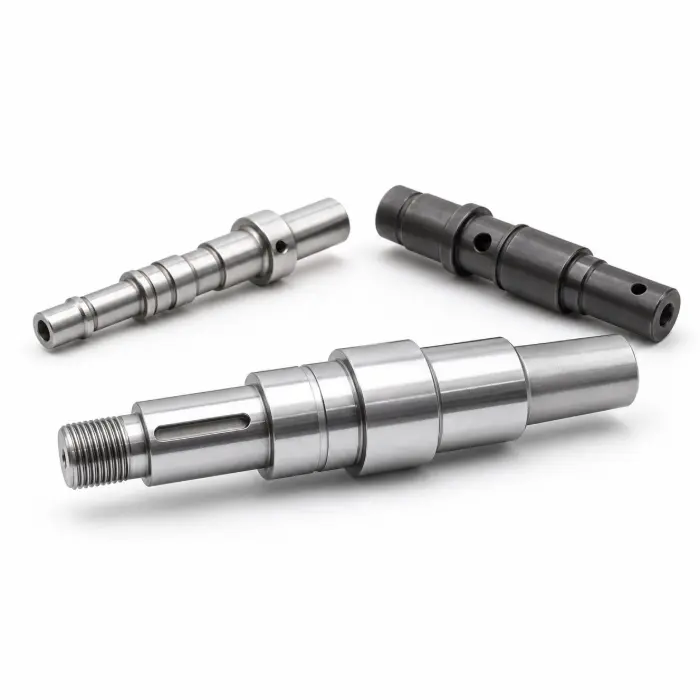
Stepped Shaft Machining
Custom Stepped Shafts Machining for Reliable Motion
Custom stepped shafts machined to your drawing for reliable fit, precise motion, and efficient assembly.
Get a Quote →Definition & Selection
One Shaft, Multiple Functional Diameters
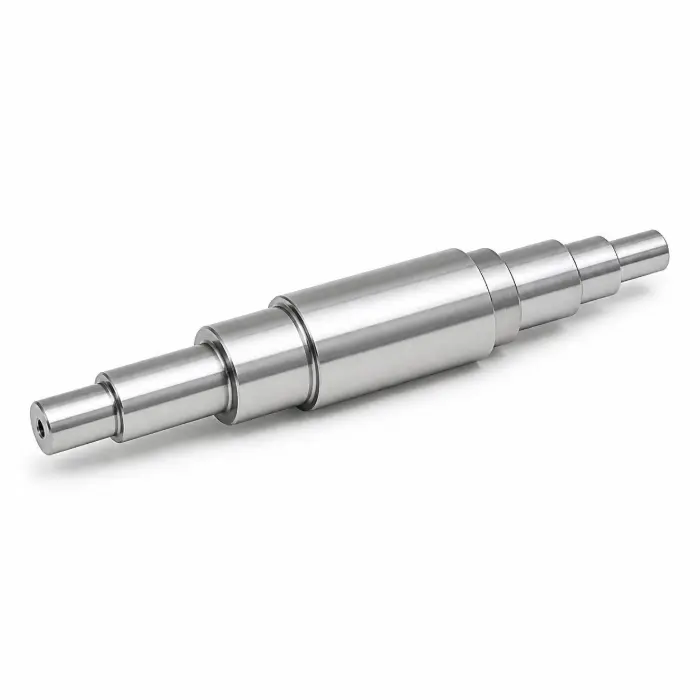
A stepped shaft, also called a step-down shaft, uses several diameters on one axis. Each section fits a bearing, gear, coupling, seal, or locating feature, while shoulders hold components in position.
Common Configurations
Features Built Around Your Assembly
Select features around torque transfer, axial retention, installation method, and assembly requirements.
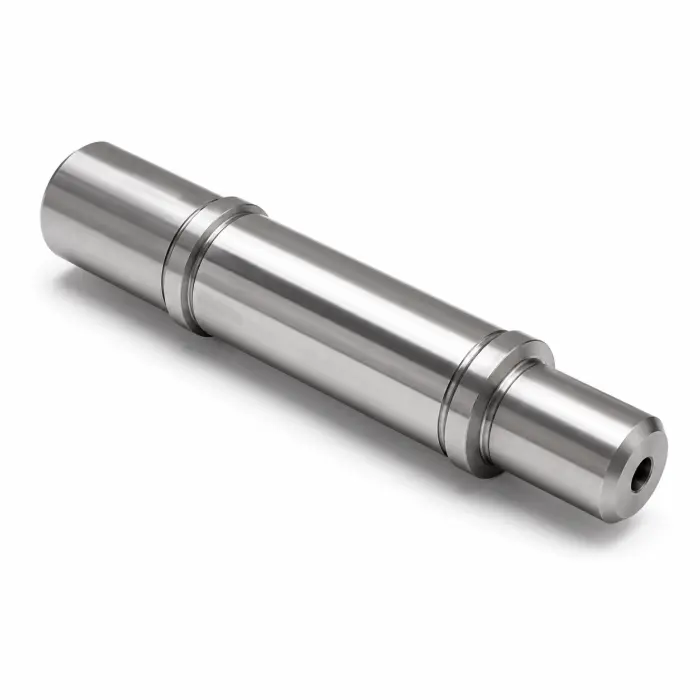
Bearing Journal
Function: Provides a controlled diameter for bearing support and rotational accuracy.
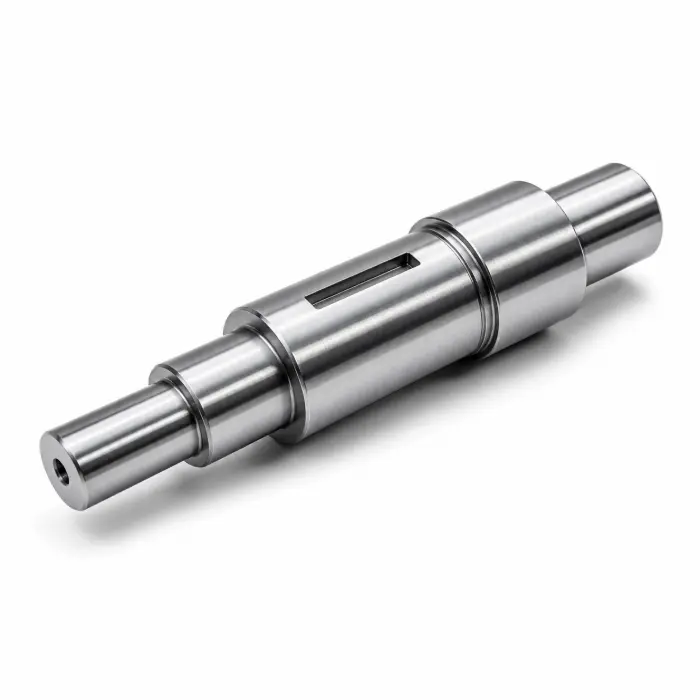
Keyway Section
Function: Transfers torque through a keyed hub connection.
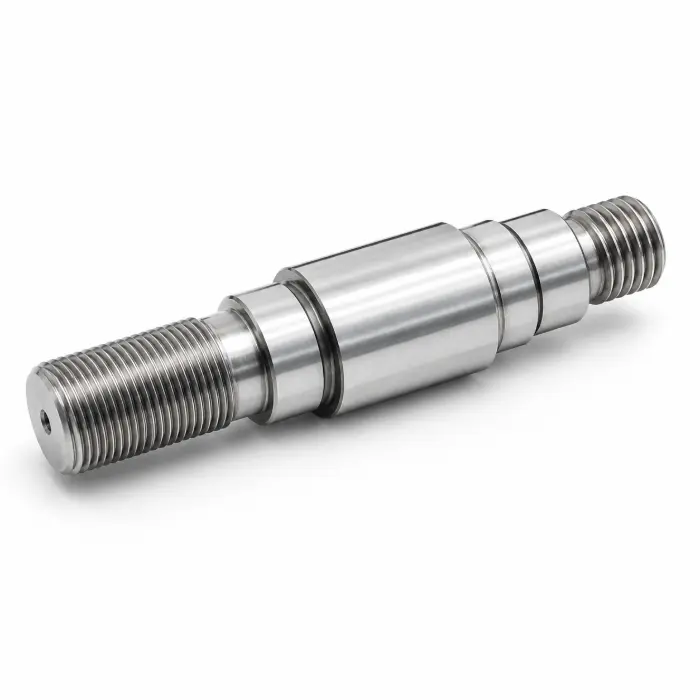
Threaded End
Function: Secures components with a nut or locking element.
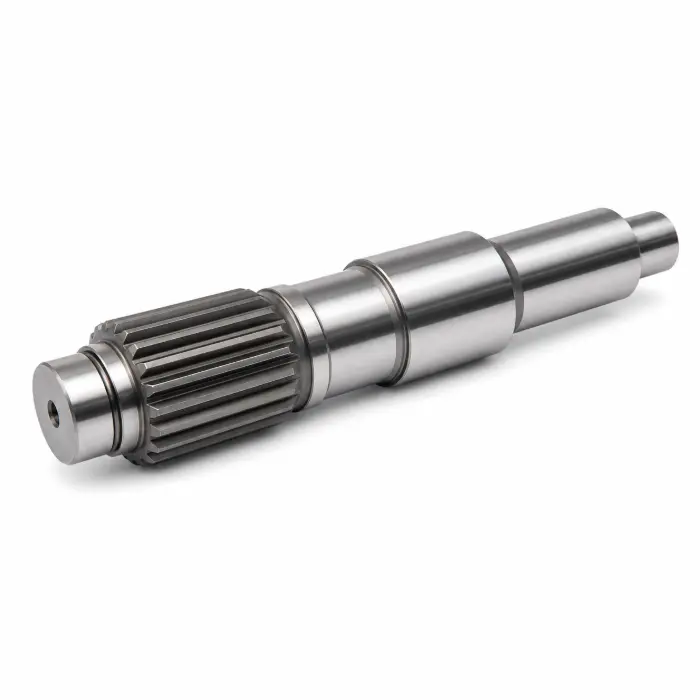
Splined End
Function: Uses multiple teeth for high-torque transmission and accurate positioning.
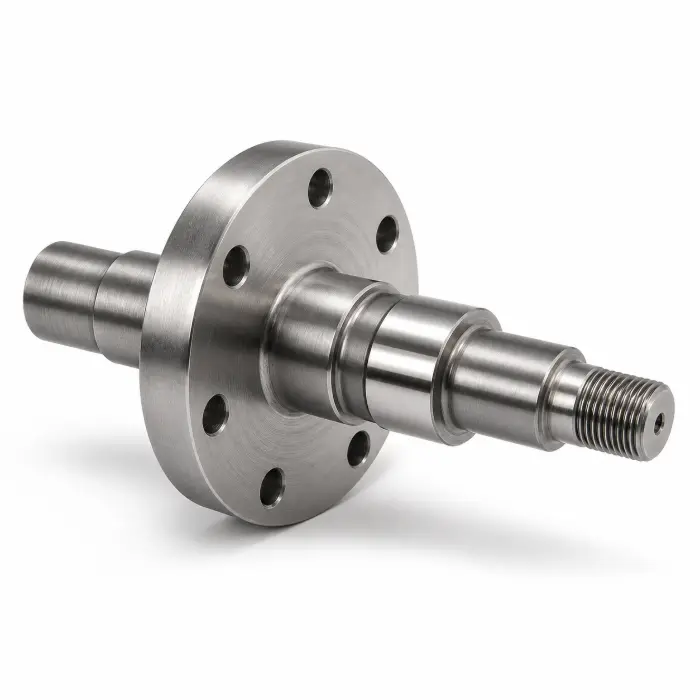
Flanged End
Function: Creates a rigid bolted mounting face and axial location.
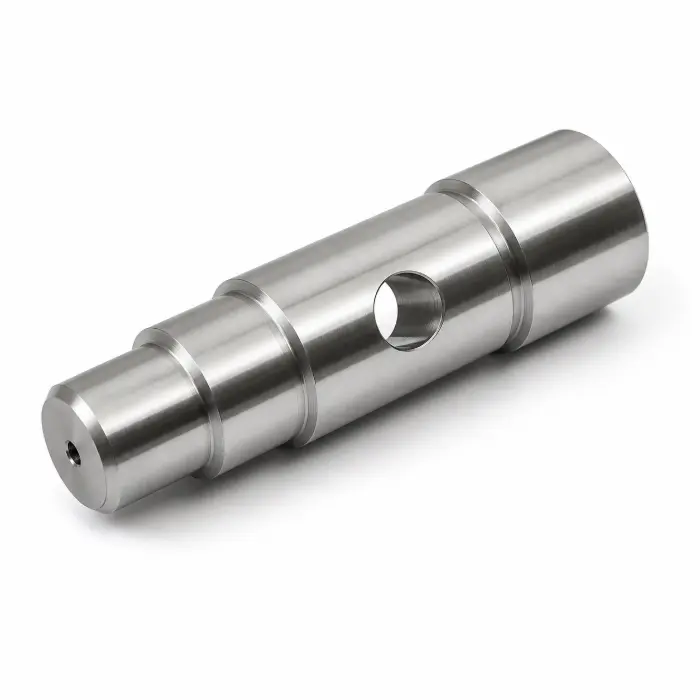
Cross & Center Holes
Function: Supports pins, lubrication, fixturing, and secondary connections.
Materials & Finishes
Choose the Material Around the Working Environment
Material, heat treatment, finish, and final machining are matched to load, speed, corrosion exposure, and fit requirements.
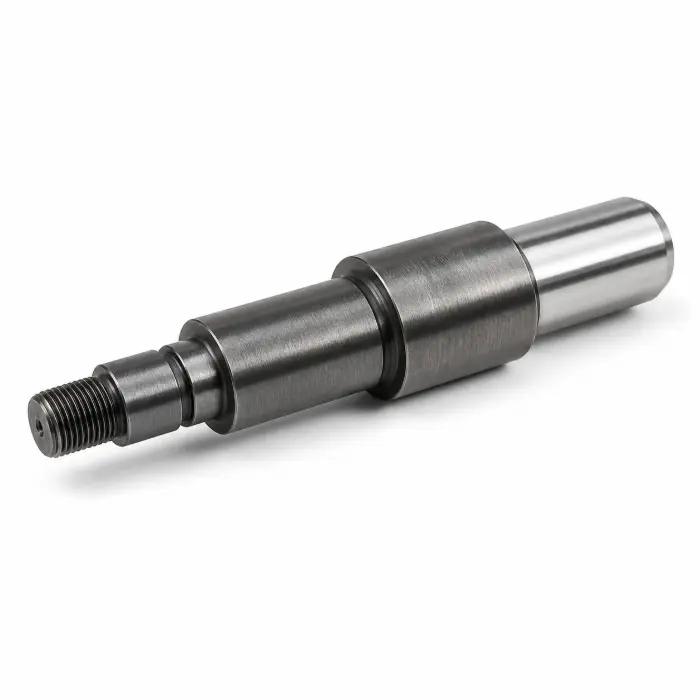
Alloy Steel
High strength and fatigue resistance for heavy loads.
Modified Plastic Prototyping Support
Customer-Specified Modified Plastics
We machine test samples in reinforced, flame-retardant, wear-resistant, and high-temperature grades before production approval.
Manufacturing Route
From Drawing to Finished Stepped Shaft
The route follows the drawing, material, key fits, critical features, heat-treatment needs, and inspection plan.
Drawing & DFM
Confirm dimensions, fits, datums, and manufacturing risks.
Process Programming
Plan setups, workholding, toolpaths, and inspection points.
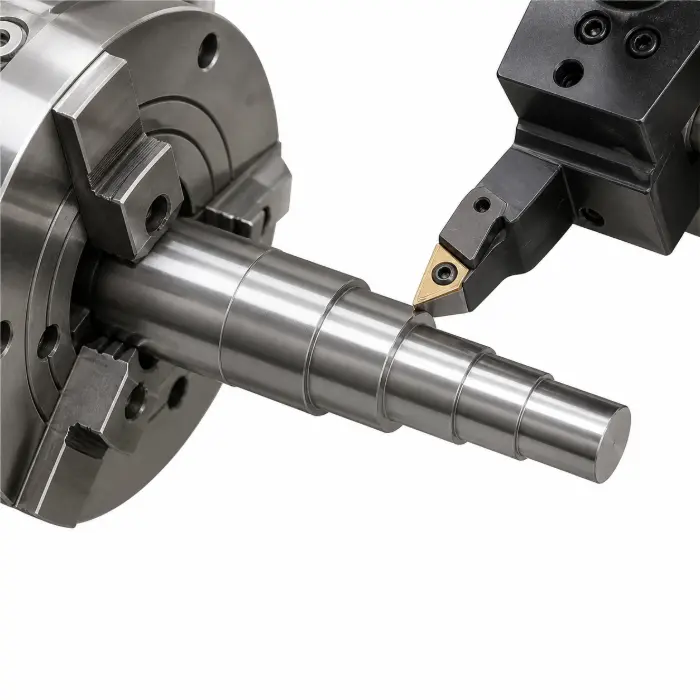
Turning-Led Machining
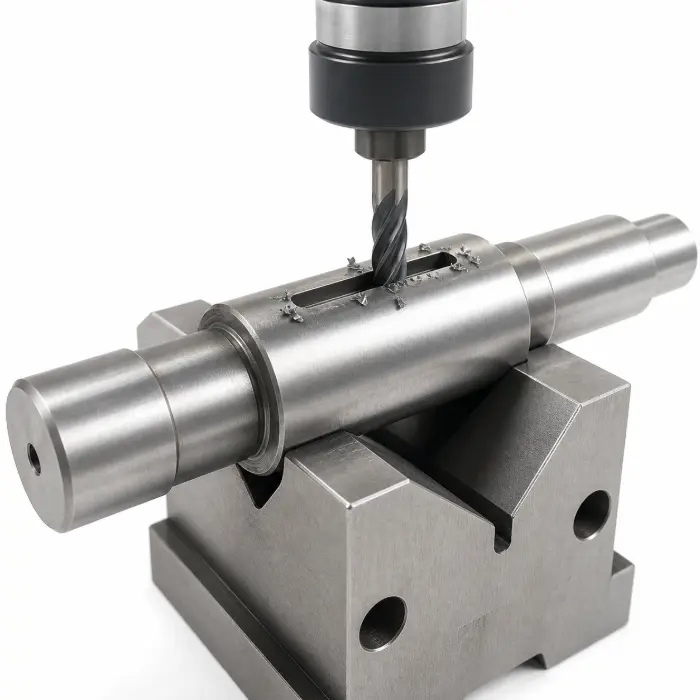
CNC turning leads; milling completes keyways, holes, and complex features.
Detail Machining
Use multi-axis machining, conventional machining, or EDM for detailed features.
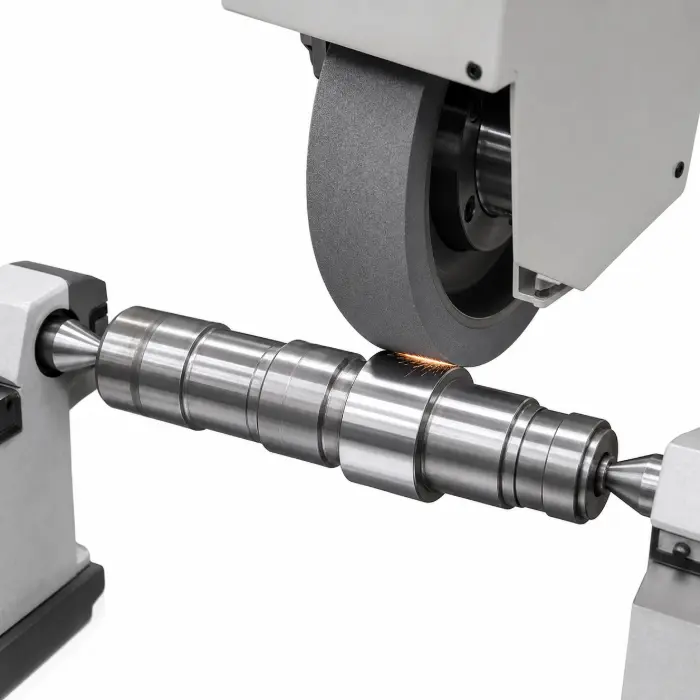
Heat & Surface
Apply hardening, corrosion protection, and final surface finishing.
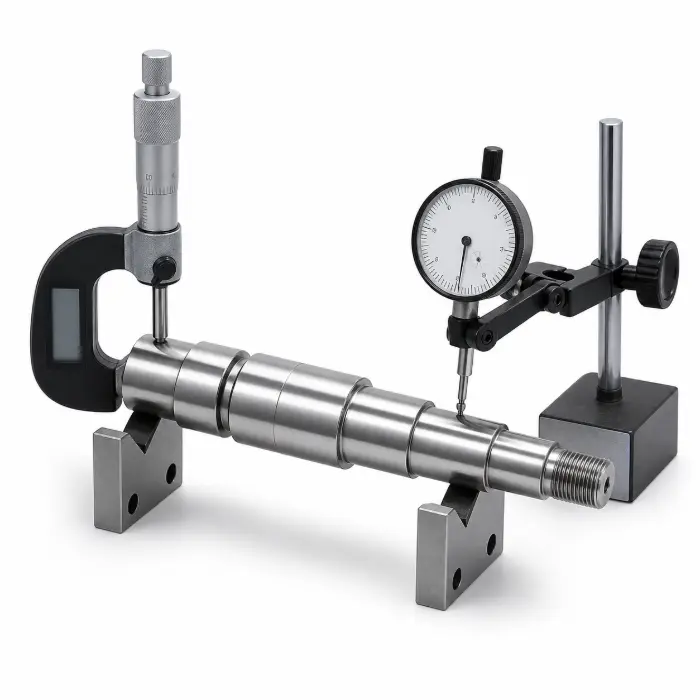
Inspection & Packing
Verify critical dimensions and protect parts for shipment.
Alternative Routes for Prototypes and Volume Production
CNC turning is the main route for precision metal shafts. These methods support prototype, material, and volume requirements.
Stepped Shaft Capability
Stepped Shaft Machining Capabilities
Key reference limits for custom stepped shaft machining.
Reference values only. Final limits depend on drawing review and may not apply simultaneously.
Send Your Drawing →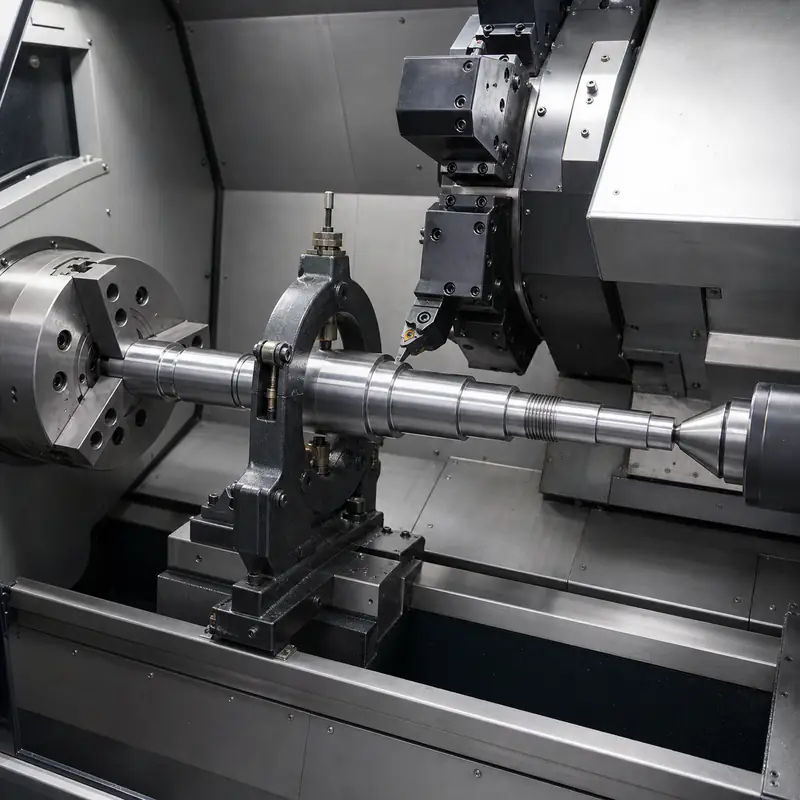
FAQ