
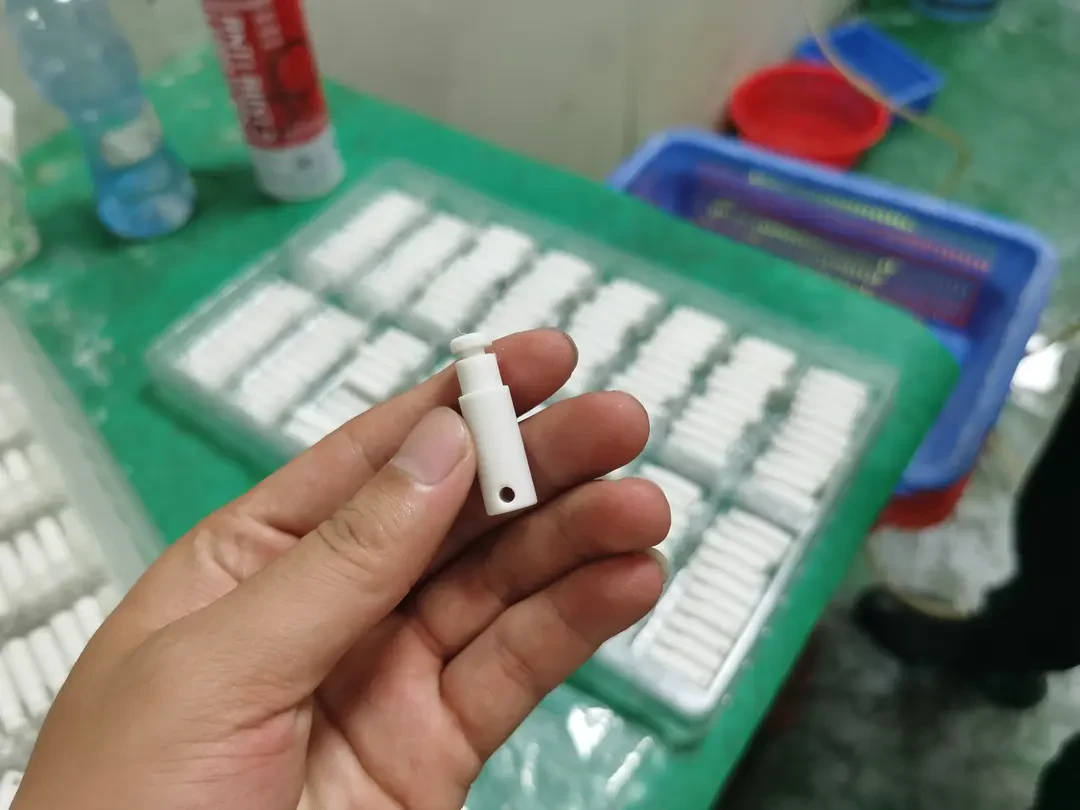
Custom Injection Molding Services
Turn approved designs into repeatable plastic parts with coordinated DFM, mold tooling, resin selection, molding, and inspection. Plan the material, finish, and production route before tooling begins.
- DFM & Mold Tooling
- Resin & Finish Options
- First-Article Review
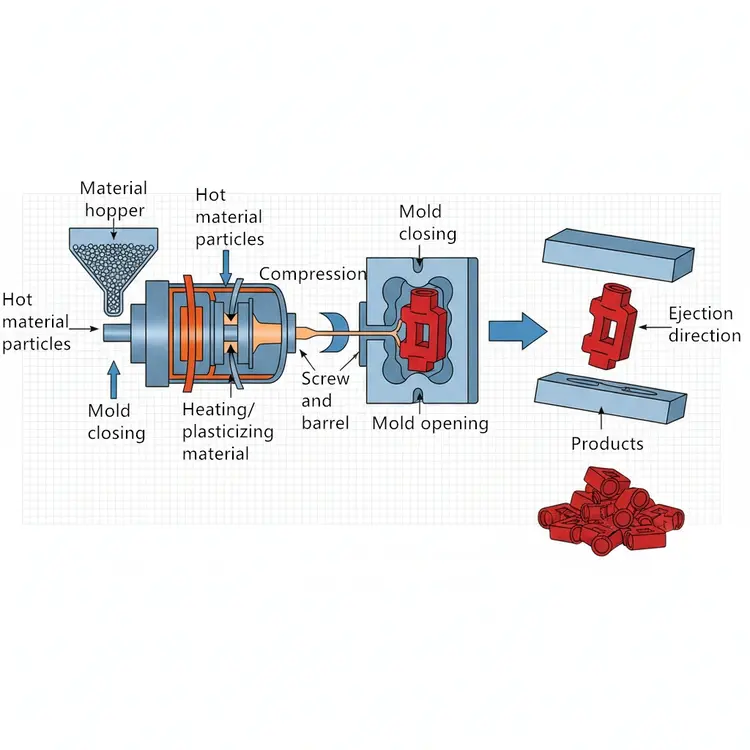
From Tooling Review to Approved Parts
Prepared resin is melted and injected into a closed mold, packed, cooled, and ejected. The tool and process are developed around the part's functional and cosmetic requirements.
DFM & Tooling
Review walls, draft, ribs, bosses, gates, ejection, and expected shrinkage.
Resin Preparation
Confirm grade, color, reinforcement, and drying or conditioning requirements.
Molding Cycle
Control filling, packing, cooling, and ejection to stabilize the molded part.
Sample Approval
Check critical dimensions and appearance before production release.
Injection Molding Materials
Select the exact resin grade by load, impact, temperature, chemicals, friction, appearance, flame rating, and application requirements.
ABS
Balanced impact resistance, processability, and cosmetic appearance for everyday functional products.
View material details
- Typical parts
- Housings, covers, handles, appliance components, and consumer-product parts.
- Molding considerations
- Match drying, gate design, wall transitions, and cosmetic requirements to the selected grade.
- Selection focus
- Impact, surface quality, color, temperature, and any specified flame rating.
Polypropylene / PP
Low density and chemical resistance, with suitable grades for flexible features and living hinges.
View material details
- Typical parts
- Closures, containers, hinges, packaging components, and chemical-resistant accessories.
- Molding considerations
- Review shrinkage, cooling, warpage, hinge orientation, and grade-specific hinge performance.
- Selection focus
- Stiffness, impact at service temperature, chemical exposure, and hinge durability.
Polyethylene / PE
Toughness and chemical resistance for molded caps, containers, and fluid-handling components.
View material details
- Typical parts
- Caps, containers, protective components, and suitable fluid-contact parts.
- Molding considerations
- Confirm injection-molding grade, density, shrinkage, stiffness, and demolding behavior.
- Selection focus
- Flexibility, impact, chemical compatibility, service temperature, and dimensional requirements.
Polycarbonate / PC
High impact strength and optional transparency for durable enclosures and protective components.
View material details
- Typical parts
- Guards, transparent covers, lenses, and impact-resistant housings.
- Molding considerations
- Control moisture, processing temperature, internal stress, and gate or ejector marks. Optical requirements need separate review.
- Selection focus
- Impact, clarity, heat resistance, chemical exposure, and the specified cosmetic standard.
PA / Nylon
Strength, toughness, and wear performance, including reinforced grades for structural parts.
View material details
- Typical parts
- Gears, clips, bearings, brackets, and reinforced mechanical components.
- Molding considerations
- Review drying, moisture conditioning, fiber orientation, shrinkage, and resulting dimensional change.
- Selection focus
- Load, wear, temperature, moisture exposure, reinforcement, and inspection condition.
POM / Acetal
Low friction and useful dimensional stability for precision moving and mating components.
View material details
- Typical parts
- Gears, latches, valves, sliding elements, and precision mechanical parts.
- Molding considerations
- Control resin-specific processing conditions, mold shrinkage, wall consistency, and feature relationships.
- Selection focus
- Friction, wear, fit, chemical exposure, and grade-specific mechanical performance.
PEEK
High-temperature and chemical performance for specialized industrial and equipment applications.
View material details
- Typical parts
- Specialized aerospace, medical-equipment, and demanding industrial components.
- Molding considerations
- Requires review of high-temperature tooling and processing capability, resin drying, crystallinity, and the selected filler system.
- Selection focus
- Service temperature, chemicals, wear, grade qualification, and critical dimensions.
TPE
Flexible thermoplastic grades for soft-touch surfaces, seals, cushioning, and grip features.
View material details
- Typical parts
- Soft grips, seals, bumpers, protective features, and suitable overmolded surfaces.
- Molding considerations
- Review hardness, flow, shrinkage, ejection, and any required adhesion to a rigid substrate.
- Selection focus
- Hardness, recovery, compression behavior, chemical exposure, and substrate compatibility.
TPU
Flexible, abrasion-resistant grades for resilient parts and mechanically demanding soft components.
View material details
- Typical parts
- Seals, flexible covers, protective parts, grips, and wear-resistant soft components.
- Molding considerations
- Confirm grade-specific drying, temperature, hardness, demolding, and compatibility with secondary processes.
- Selection focus
- Abrasion, flexibility, hydrolysis resistance, chemical exposure, and the intended service environment.
Material-family names do not establish a specific flame rating, biocompatibility, food-contact status, or application approval. Confirm the exact resin grade, supplier documentation, color system, and required tests during quotation.
Injection Molding Capabilities
Planning references for tooling and production review. Machine choice and accepted tolerances follow the complete part, resin, and mold specification.
Project Review References
| Nominal injection amount | 50–5000 g*Machine and resin dependent; runner and cavity requirements are included. Not a guaranteed net part-weight range. |
|---|---|
| Typical dimensional reference | ±0.05–0.20 mm*Depends on feature size, resin shrinkage, geometry, tooling, and measurement condition. |
| Selected precision features | From ±0.05 mm*Accepted after DFM, material, tooling, and inspection review. |
| Minimum-wall reference | From 0.5 mm*Resin, flow length, gating, geometry, and process dependent; not a general wall-thickness recommendation. |
| Mold-size reference | 400–1800 mm*Full mold dimensions, tie-bar clearance, opening requirements, and machine compatibility need confirmation. |
| Tooling range | Prototype aluminum and production steel molds, selected for resin, volume, geometry, and tool-life requirements. |
Tooling and Part Options
Tooling for the Production Plan
Review cavity count, mold material, inserts, side actions, runner system, maintenance, and intended production life.
Color and Molded Texture
Define approved color samples, gloss, polished or textured mold surfaces, gate marks, and cosmetic acceptance before tooling release.
Inserts and Secondary Work
Review insert molding, overmolding, machining, printing, coating, and assembly as part of the complete process route.
*These values are quotation references, not universal limits. Part size, resin, filler, shrinkage, mold layout, cooling, and inspection requirements determine the confirmed capability.
Design for Reliable Molded Parts
Resolve filling, cooling, ejection, and cosmetic risks before mold construction. Functional requirements guide each design decision.
Uniform Walls
Use consistent sections and gradual transitions to reduce uneven cooling, sink, voids, and warpage.
Draft Angles
Match draft to resin, wall depth, texture, and ejection needs to limit dragging and surface damage.
Ribs and Bosses
Use proportioned ribs and supported bosses to add stiffness without creating thick, slow-cooling masses.
Radii and Corners
Round internal transitions to support resin flow and reduce stress concentration at loaded features.
Gates and Ejectors
Agree locations around filling, weld lines, appearance, and surfaces that must remain functional.
Shrinkage and Fits
Account for exact resin grade, filler orientation, flow, and conditioning when defining tooling and final fits.
Molded Parts Across Industries
Injection molding combines repeat geometry, integrated features, and scalable production for a wide range of plastic components.
Automotive
Interior components, clips, ducts, electrical housings, and reinforced brackets.
Medical Equipment
Device housings, handles, and specified-material components for non-implant equipment applications.
Consumer Electronics
Enclosures, buttons, frames, connectors, and wearable-device components.
Industrial Equipment
Guards, knobs, gears, fluid components, fixtures, and protective covers.
Consumer Products
Closures, handles, appliance parts, packaging components, and durable accessories.
Electrical Systems
Connector bodies, insulating covers, cable-management parts, and sensor housings.
From Material Approval to Production Control
Agree on critical dimensions, appearance, and inspection conditions before tooling, then validate the part and process through samples and production checks.
Approve the Specification
Lock the drawing revision, resin, color, finish, cosmetic zones, and critical features.
Validate Tool and Samples
Review mold operation, filling, cooling, ejection, and first-article results.
Monitor Production
Control approved process settings and agreed dimensional and appearance checks.
Protect and Release
Confirm secondary work, records, identification, surface protection, and packing.
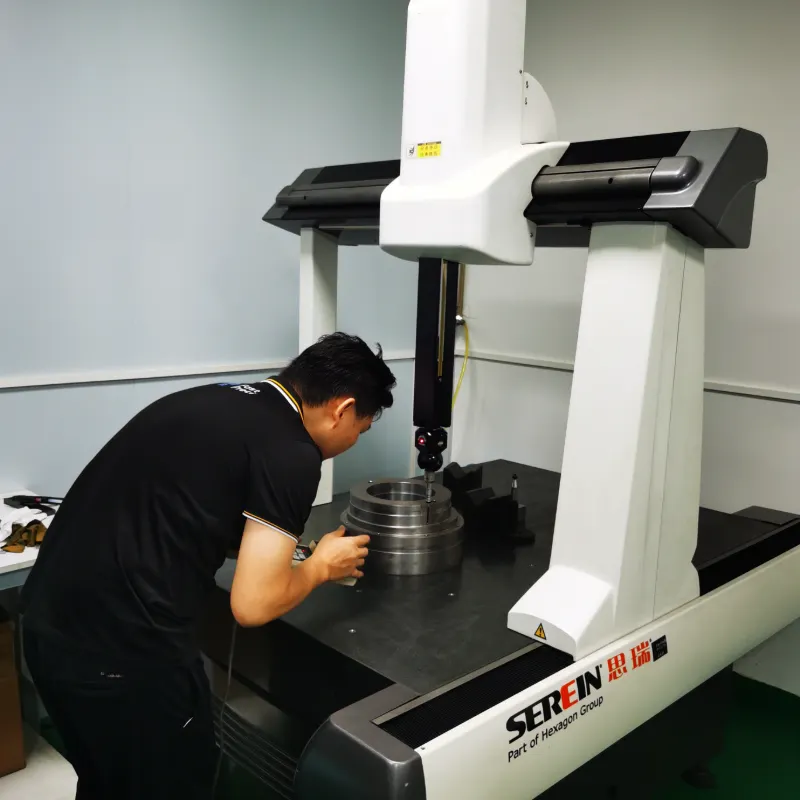
Dimensional Inspection
Use suitable calibrated measurement equipment for drawing-defined features, with plastic-part support and conditioning considered in the inspection plan.
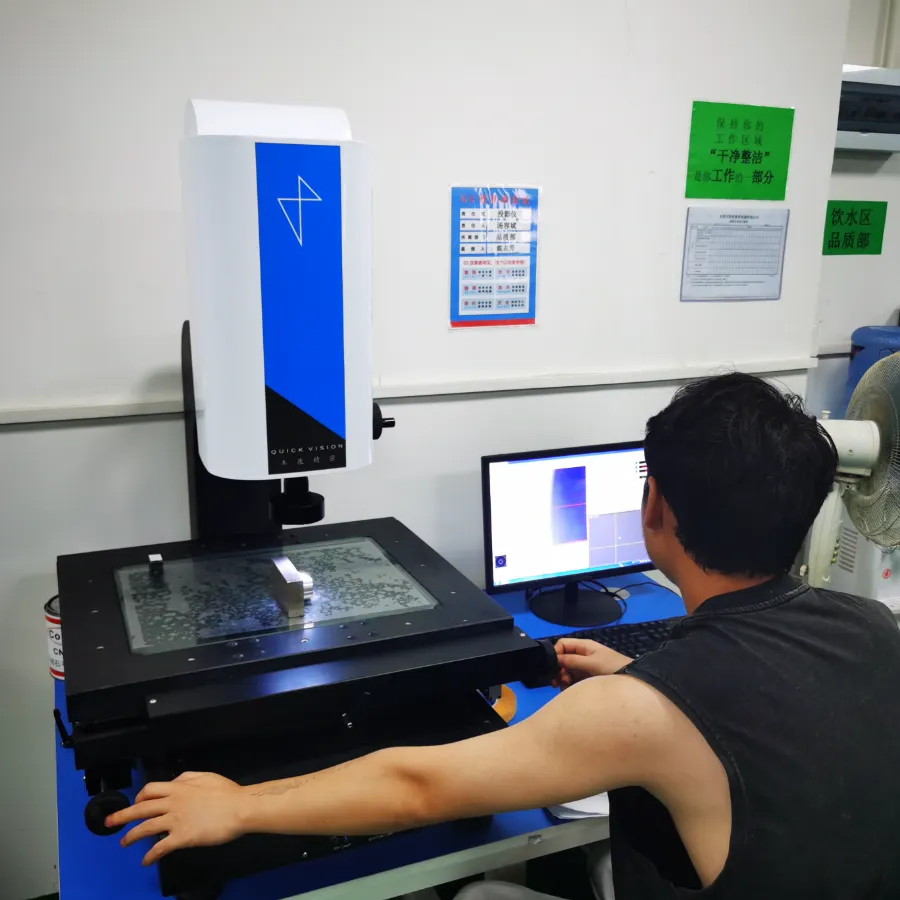
Profile and Appearance Checks
Optical methods support accessible profiles and edges. Appearance is assessed against agreed samples, zones, texture, and cosmetic criteria.
Confirm inspection reports, material records, sample approvals, color references, and application-specific testing during quotation so they are included in the project plan.
Injection Molding Questions
What is needed for an injection molding quote?
Send a 3D model and controlled 2D drawing with resin grade, color, finish, order quantity, expected annual demand, critical dimensions, and inspection requirements.
Can an existing injection mold be transferred?
A transfer is reviewed against ownership, mold dimensions, runner system, machine compatibility, condition, maintenance history, and available tool records. A trial may be needed before production approval.
Can color, texture, and gloss be customized?
Yes, subject to resin and tooling review. Agree on the color standard or sample, texture, gloss, cosmetic zones, and sample-approval criteria before tooling release.
What affects injection mold cost?
Part size, cavity count, tool material, side actions, inserts, runner system, surface requirements, intended tool life, and validation needs drive tooling cost.
What determines project lead time?
DFM revisions, resin availability, mold complexity, tool construction, trials, sample changes, testing, and secondary work determine the confirmed schedule.
Can inserts, overmolding, and secondary operations be included?
Projects can be reviewed for insert molding, overmolding, machining, printing, coating, and assembly. Material compatibility, part interfaces, and acceptance criteria are confirmed for the chosen route.