
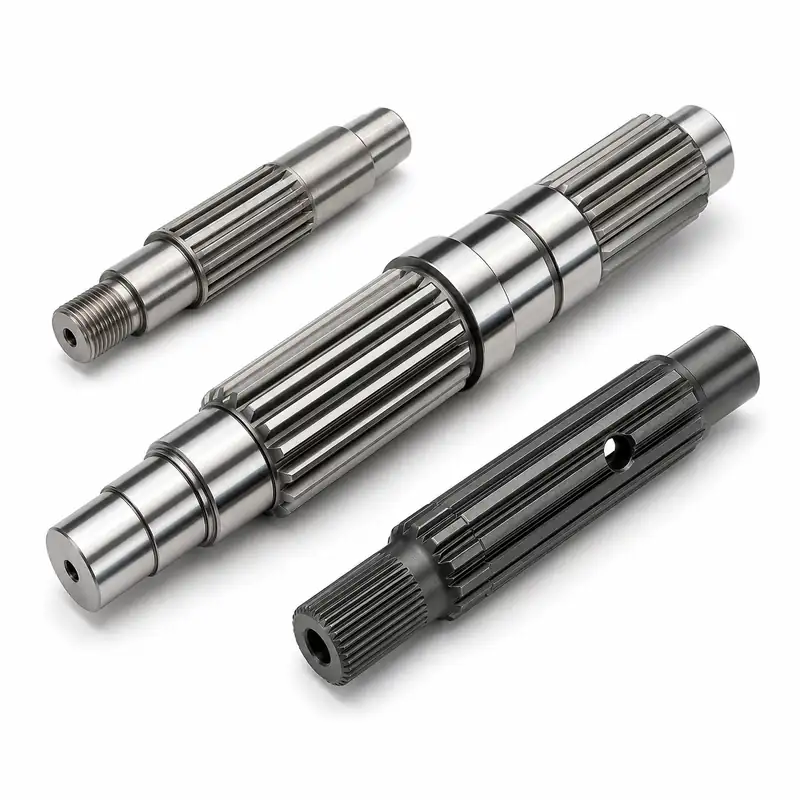
Custom Spline Shafts for Torque, Motion and Precision
Drawing-based CNC machined spline shafts for transmission, positioning, and sliding assemblies. We plan machining, heat treatment, surface finishing, and inspection around your application.
Get a Quote →Spline Shafts Deliver High-Torque, Accurate Motion
A spline shaft uses multiple longitudinal teeth to engage a matching internal spline. This multi-tooth connection transfers torque, keeps the assembly aligned, and guides controlled axial movement where the design requires sliding.
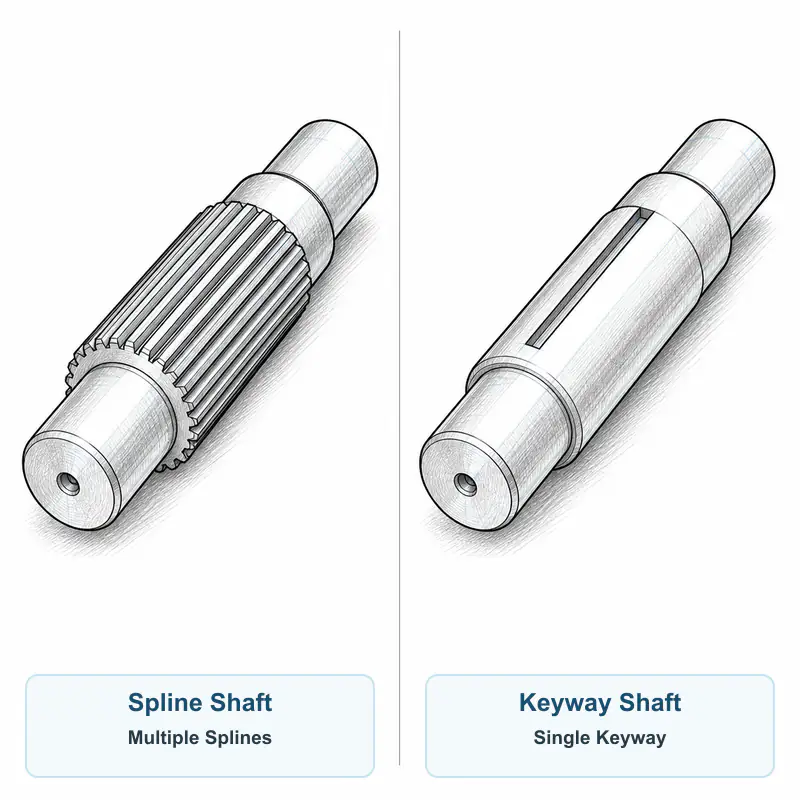
Common Configurations
Custom Spline Shaft Types and Machined Features
Select the spline profile from torque demand, centering accuracy, shaft size, required axial movement, and mating-part geometry.
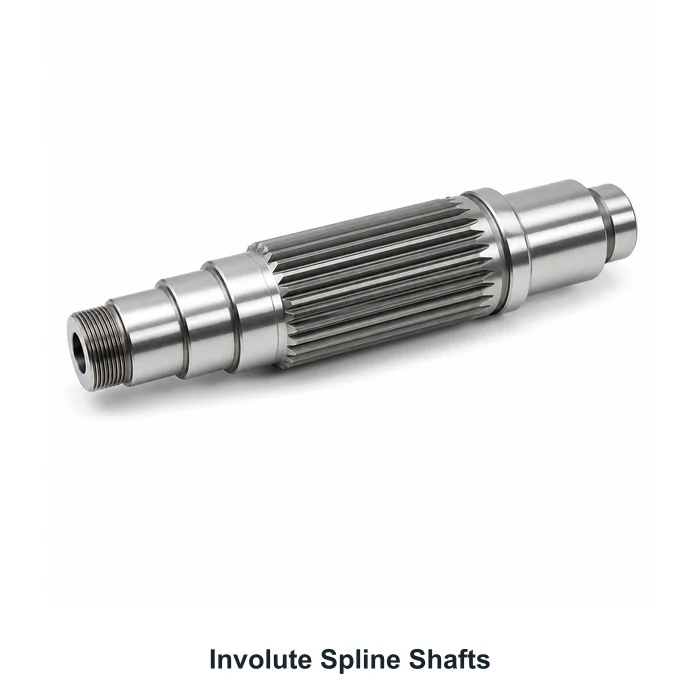
Involute Spline Shafts
Function: Involute tooth flanks distribute load evenly and provide accurate centering under torque.
Select when: The assembly requires high torque capacity, strong fatigue resistance, and accurate concentricity.
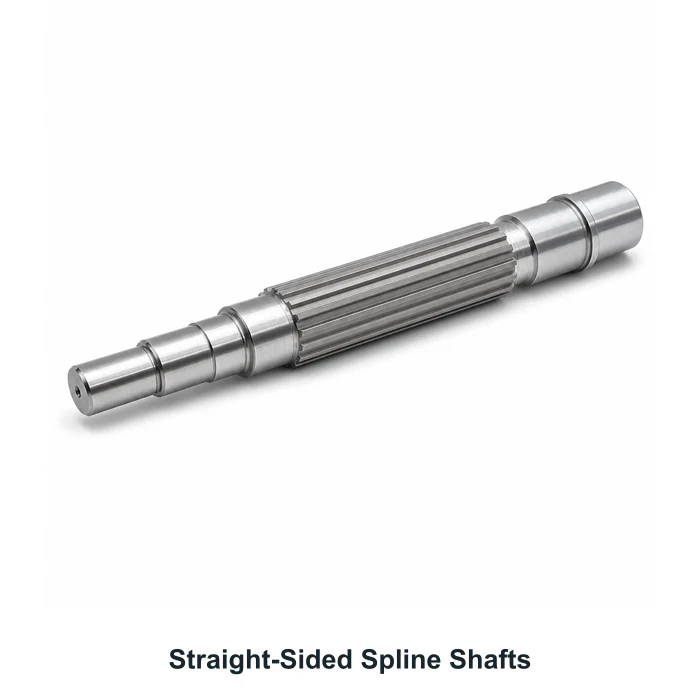
Straight-Sided Spline Shafts
Function: Parallel tooth sides create a direct multi-tooth drive connection for torque transfer and guided sliding.
Select when: The design uses established straight-sided standards and needs a practical, serviceable shaft connection.
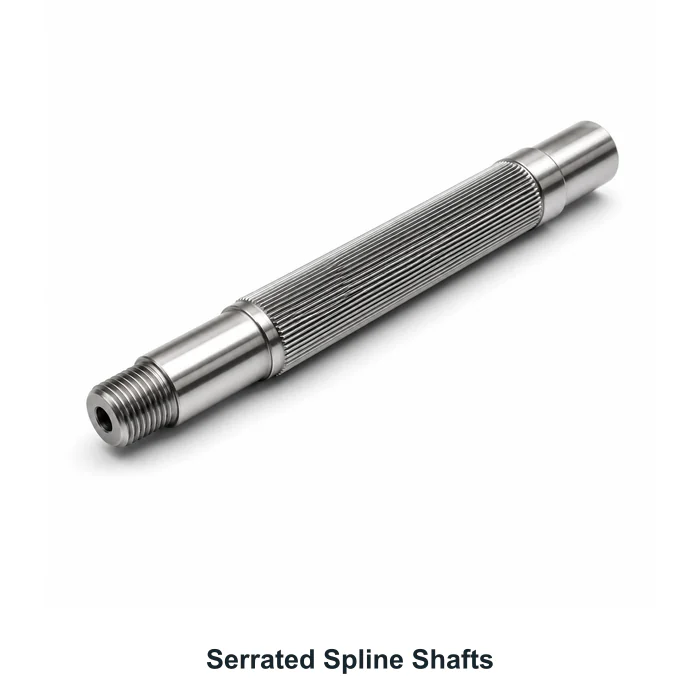
Serrated Spline Shafts
Function: Fine teeth provide secure anti-rotation while preserving more material in compact shaft and hub designs.
Select when: The assembly uses a small diameter, thin-walled hub, or light-duty static connection.
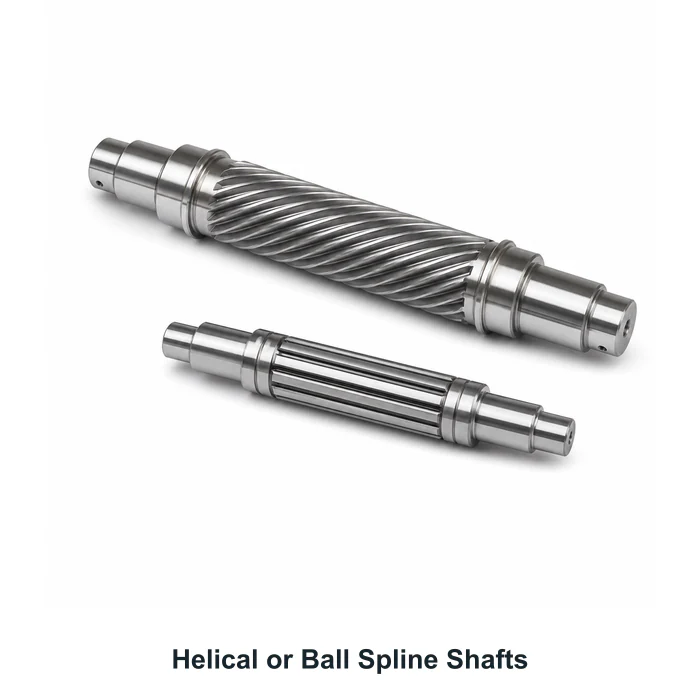
Helical or Ball Spline Shafts
Function: These spline systems combine torque transfer with controlled linear movement and high positional repeatability.
Select when: Automation equipment, robotic mechanisms, or precision motion assemblies require rotary and linear movement.
Material Selection
Spline Shaft Materials and Surface Finishing Options
Material selection defines spline strength, wear life, corrosion resistance, heat-treatment route, and final surface condition.
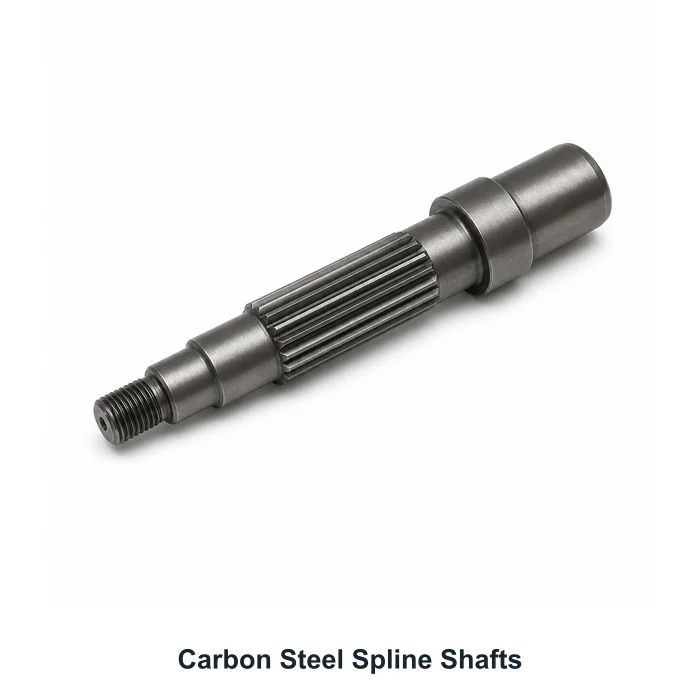
Carbon Steel Spline Shafts
Carbon steel provides an economical base for standard spline shafts. Heat treatment strengthens the working flanks and supports stable industrial transmission.
- Common grades
- C45 / 1045, 20Cr, 20CrMnTi
- Core strength
- Balanced strength, machinability, and production cost.
- Working environment
- General industrial drives and standard mechanical assemblies.
- Heat treatment
- Carburizing and quenching, induction hardening, or tempering.
- Surface finishes
- Black oxide, phosphating, zinc plating, and precision grinding.
- Common applications
- Gearboxes, agricultural machinery, couplings, and drive systems.
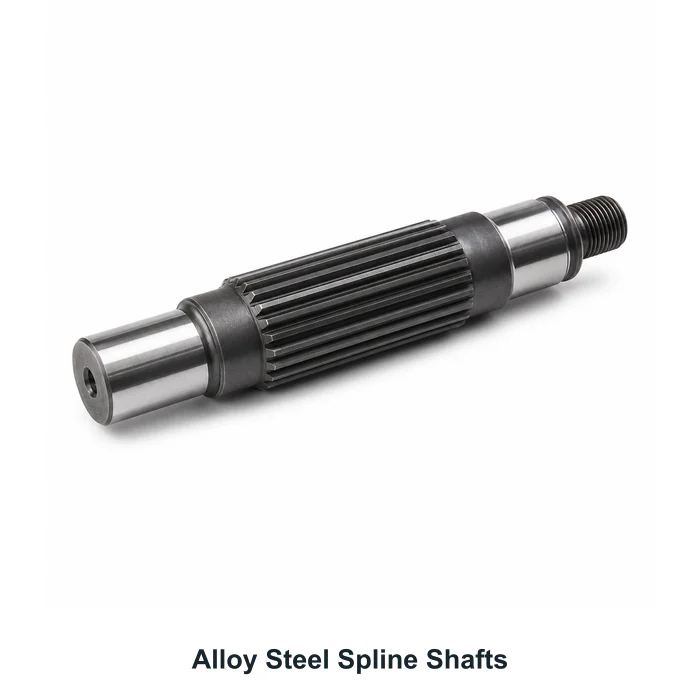
Alloy Steel Spline Shafts
Alloy steel delivers high strength, fatigue resistance, and reliable heat-treatment performance. It supports high-torque shafts exposed to impact and repeated load cycles.
- Common grades
- 40Cr, 4140, 42CrMo, 4340
- Core strength
- High torque capacity, strong fatigue resistance, and high toughness.
- Working environment
- Heavy-duty transmissions, high-load machinery, and vehicle drivetrains.
- Heat treatment
- Quenching and tempering, induction hardening, or nitriding.
- Surface finishes
- Black oxide, phosphating, zinc plating, and precision grinding.
- Common applications
- Automotive shafts, gearboxes, hydraulic drives, and heavy equipment.
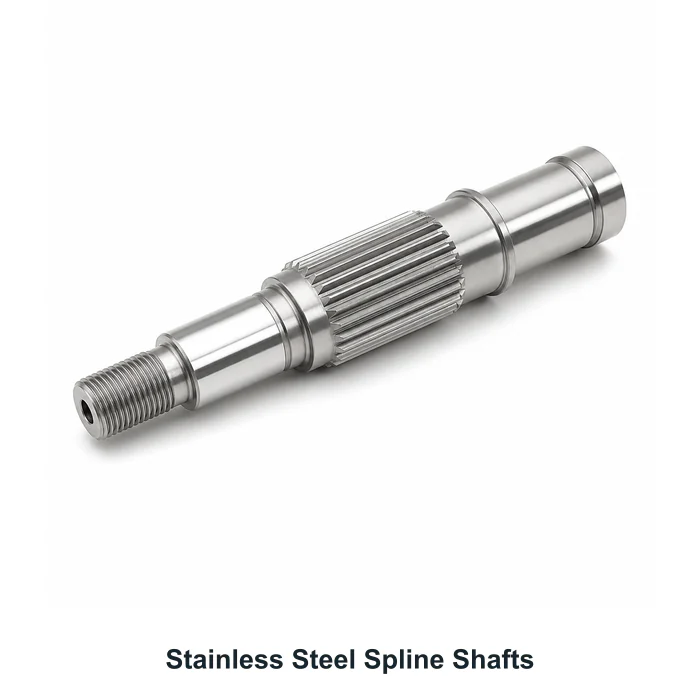
Stainless Steel Spline Shafts
Stainless steel combines strength, cleanability, and corrosion resistance for shafts operating in wet, hygienic, coastal, and chemically exposed assemblies.
- Common grades
- 303, 304, 316, 17-4PH
- Core strength
- Corrosion resistance with stable mechanical performance.
- Working environment
- Marine, food processing, medical, chemical, and outdoor equipment.
- Heat treatment
- Stress relief or precipitation hardening for 17-4PH.
- Surface finishes
- Passivation, electropolishing, bead blasting, and precision grinding.
- Common applications
- Pumps, valves, marine drives, hygienic equipment, and processing lines.
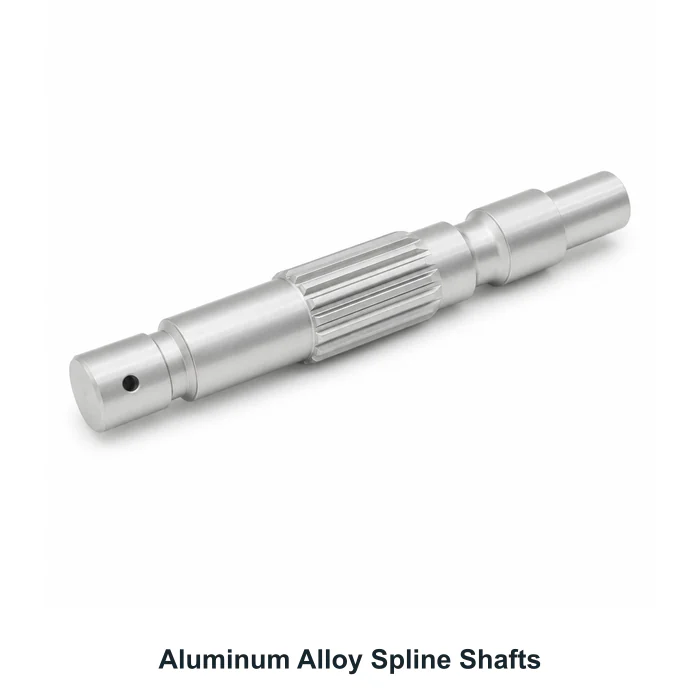
Aluminum Alloy Spline Shafts
Aluminum alloy reduces component weight while maintaining strong machinability and corrosion resistance. It supports lightweight motion systems and compact assemblies.
- Common grades
- 6061-T6, 6082-T6, 7075-T6
- Core strength
- Low weight, fast machining, and strong strength-to-weight ratio.
- Working environment
- Weight-sensitive equipment, automation systems, and electronic machinery.
- Heat treatment
- T6 condition and stress-relief processing.
- Surface finishes
- Clear anodizing, hard anodizing, color anodizing, and bead blasting.
- Common applications
- Robotics, aerospace fixtures, automation tooling, and lightweight drive units.
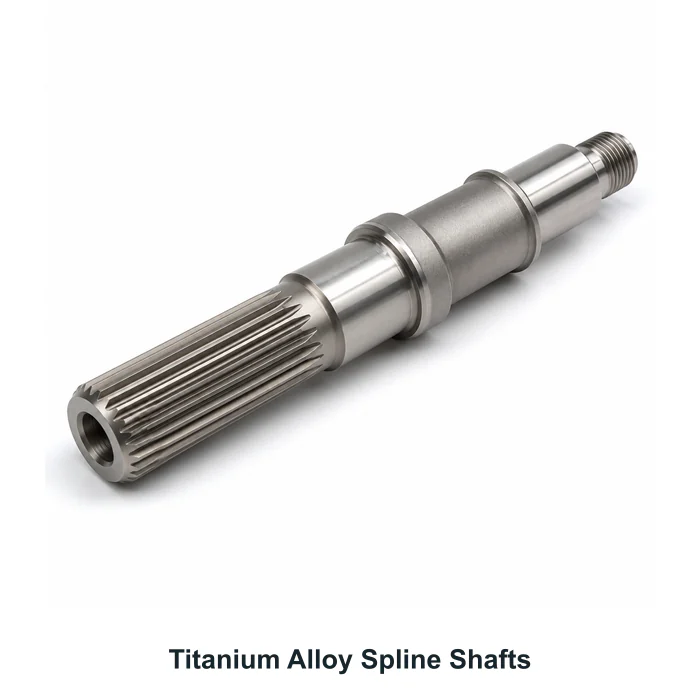
Titanium Alloy Spline Shafts
Titanium alloy provides a high strength-to-weight ratio and strong resistance to chloride corrosion. It supports high-value precision transmission assemblies.
- Common grades
- Grade 2, Grade 5 / Ti-6Al-4V
- Core strength
- High strength, low weight, and excellent corrosion resistance.
- Working environment
- Aerospace, marine, chemical, and high-performance equipment.
- Heat treatment
- Stress relief and controlled thermal processing.
- Surface finishes
- Passivation, bead blasting, precision grinding, and specified PVD coatings.
- Common applications
- Aerospace drives, marine systems, medical equipment, and specialty tooling.
Send your drawing, spline standard, material grade, heat-treatment requirement, and quantity for a manufacturing review.
Get a Quote →