
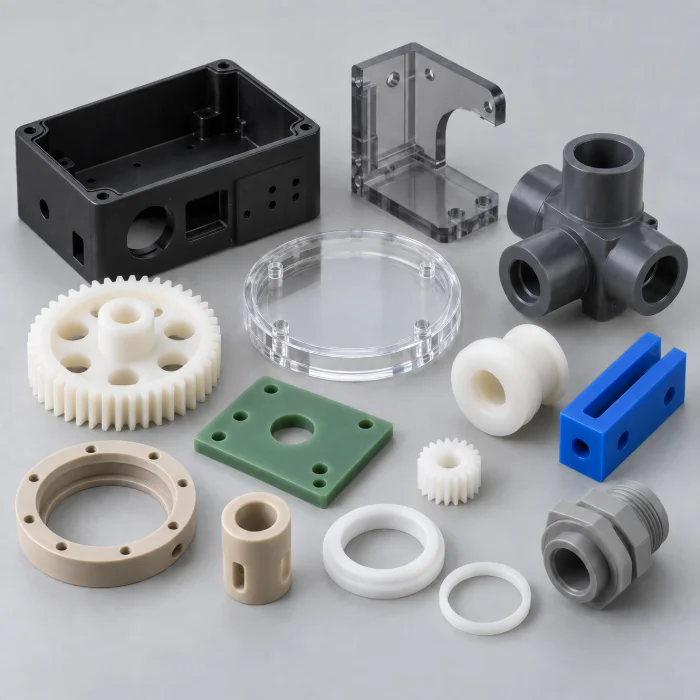
Custom CNC Plastic Machining
Weldo machines engineering plastics and composite stock into custom prototypes and repeat-production parts. We review the exact grade, geometry, critical dimensions, and inspection condition before planning milling, turning, and finishing.
- Engineering Plastics & FR-4
- CNCフライス加工と旋盤加工
- 図面に基づく検査
When CNC Plastic Machining Makes Sense
Machining is a practical route when the design is evolving, specific material performance matters, or the quantity favors production from stock.
Prototypes Without Mold Tooling
Machine functional samples from suitable sheet, plate, rod, or tube while the design and test requirements are evolving.
Features Defined by the Drawing
Create bores, pockets, threads, and mating surfaces around the dimensions that control the assembly.
Flexible Production Quantities
Support engineering samples and repeat batches. Compare total machining and molding costs when the design and sustained volume justify tooling.
Plastics and Composites for Custom Parts
Choose the exact grade for load, heat, chemicals, wear, clarity, and dimensional stability. Fillers, color, and stock form can change the machining route and finished performance.
ABS
Impact-resistant grades for machined housings, brackets, covers, and functional prototypes.
加工上の注意
Control heat, stock stress, clamping marks, and thin-wall movement. Specify the exact ABS grade, color, and cosmetic surfaces before finishing.
PVC
Rigid PVC options for chemical-service valve components, insulating spacers, and fluid-handling parts.
加工上の注意
Specify rigid grade, chemicals, temperature, and stock form. Match cutting and compatible finishing methods to the material and operating conditions.
POM/アセタール
Low friction and low moisture uptake make acetal useful for gears, bushings, guides, and precision mechanical parts.
加工上の注意
Confirm homopolymer or copolymer grade, fillers, load, and service conditions. Review thermal movement, stress release, fits, and controlled deburring.
PTFE
Low friction and broad chemical compatibility for seals, valve seats, sleeves, and insulating components.
加工上の注意
Account for creep, low stiffness, thermal movement, and clamping deformation. Specify unfilled or filled grade and the accepted measurement condition.
PMMA/アクリル
Transparent stock for viewing windows, light guides, instrument covers, and selected display components.
加工上の注意
Protect edges and surfaces from cracking, heat, and incompatible chemicals. Define the required clarity, stock type, and any polishing or optical acceptance.
PC / Polycarbonate
Impact-resistant transparent grades for protective covers, machine guards, and instrument housings.
加工上の注意
Review residual stress, chemical compatibility, coolant selection, edge condition, and any forming or finishing. Specify transparency and impact requirements for the actual grade.
FR-4
Stiff glass-epoxy laminate for insulating plates, spacers, fixtures, and electrical test supports.
加工上の注意
Glass reinforcement is abrasive. Match tooling, edge support, and dust control to the laminate, and specify thickness, orientation, surface condition, and required electrical grade.
PA / ナイロン
Tough, wear-resistant grades for rollers, guide wheels, bushings, and mechanical components.
加工上の注意
Specify PA type, cast or extruded stock, fillers, and moisture condition. Moisture uptake can change dimensions, so agree conditioning and close-fit inspection requirements.
PE/HDPE
Chemical-resistant grades for wear strips, guides, low-load fluid-handling parts, and equipment components.
加工上の注意
Review stiffness, creep, heat, and clamping distortion. Define the actual PE grade and the requirements for threads, sealing faces, joining, and any surface treatment.
覗き見
High-performance grades for heat-exposed fixtures, insulating spacers, bearing parts, and demanding mechanical components.
加工上の注意
Select unfilled, glass-filled, carbon-filled, or bearing grade for the duty. Confirm stock condition, grain or filler effects, cutting tools, service temperature, and required material records.
PP / Polypropylene
Lightweight, chemically resistant stock for lab fittings, fluid-system components, and process-equipment parts.
加工上の注意
Account for low stiffness, creep, thermal movement, and chip behavior. Specify grade, chemical exposure, temperature, and compatible joining or coating requirements.
ヒップス
Impact-modified polystyrene for economical covers, panels, and prototype housings with modest heat and load demands.
加工上の注意
Confirm impact needs, temperature, chemicals, and cosmetic finish. Support thin sections and plan cutting and deburring to limit damage or distortion.
FR-4 is a glass-epoxy composite laminate. For each material, confirm the exact grade, filler, stock form, available size, and required documentation. Critical fits should state the temperature, moisture, and loading conditions used for acceptance.
Plan for Plastic Movement and Surface Quality
Thermal expansion, low stiffness, moisture uptake, and stock stress can affect machined plastic dimensions. Match the route to the actual grade and geometry.
熱およびチップ制御
Use sharp tools, suitable engagement, and reliable chip evacuation to limit rubbing, softening, melting, and edge damage.
Low-Stress Support
Use broad, controlled support and clamping to limit marks, deflection, and springback in flexible or thin features.
Moisture and Stock Stress
Review moisture-sensitive materials and residual stock stress. Plan conditioning or grade-specific stress relief where appropriate.
Defined Inspection Conditions
Agree datums, support, measurement method, temperature, and moisture condition for the features that control the assembly.
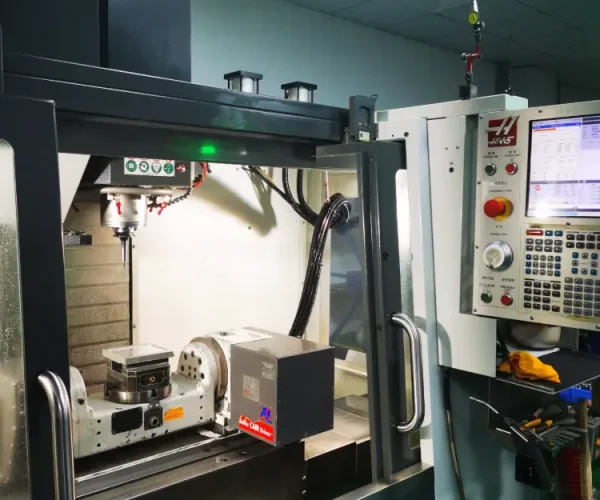
Weldo Plastic Machining Projects
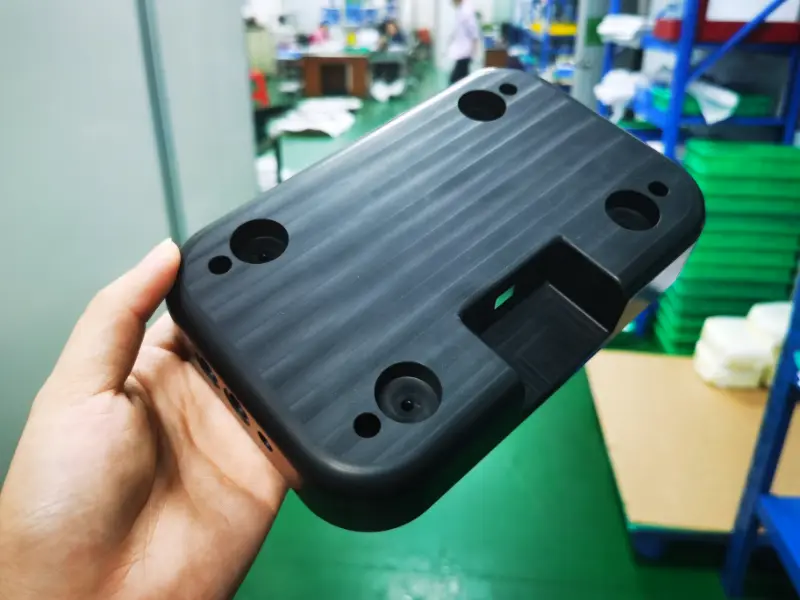
Examples of ABS housings, POM precision parts, PTFE components, FR-4 insulating parts, and machined PE components produced by Weldo.


Finishing and Inspection for Plastic Parts
Functional parts often use an as-machined surface with controlled deburring. Additional finishing is selected for the resin, geometry, and target appearance.
- Surface and edge requirements
- Specify roughness, burr limits, corner condition, cosmetic faces, and any surfaces that need special protection.
- Resin-compatible finishing
- Review polishing, texture, printing, or coating with suitable surface preparation. Define clarity or adhesion acceptance where required.
- 寸法検証
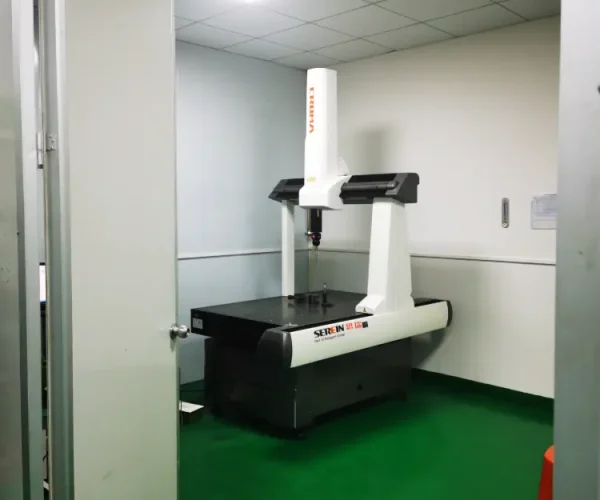
- Select suitable gauges, optical methods, or CMM checks. Agree support, contact force, datums, and environmental conditions for critical features.
- 資材記録
- Request the exact resin grade, filler, color, stock condition, and traceability documents needed for the application.
CNC Plastic Machining Questions
What tolerances can machined plastic parts hold?
Review the grade, feature size, geometry, wall thickness, temperature, moisture, support, and measurement method. Mark critical dimensions and acceptance conditions on the drawing so the machining and inspection route can be agreed.
反りをどのように抑えることができますか?
Use suitable stock, sharp tools, supported workholding, controlled heat, and balanced material removal. For sensitive materials or large stock removal, review grade-specific conditioning or stress relief and finish critical dimensions in the required condition.
When is molding more economical?
CNC machining supports prototypes, design revisions, and smaller or repeated batches from stock. Molding can reduce unit cost when the stable geometry, annual quantity, tooling investment, material, and qualification needs support that route.
機械加工されたプラスチック部品は、研磨やコーティングが可能ですか?
Often, with a compatible process. Acrylic can be polished toward a specified clarity, while low-surface-energy polymers may need special preparation for coating or printing. Define the actual resin, surface requirement, and finished acceptance criteria.