
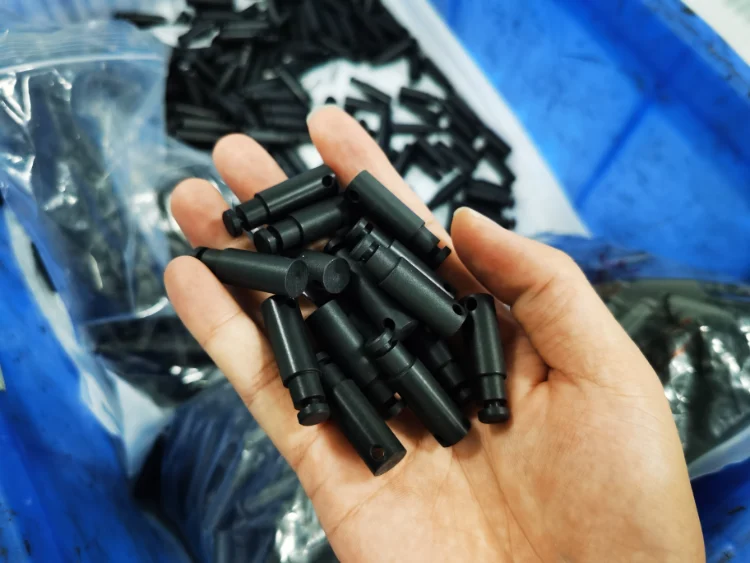
PTFE CNC Machining Services
Custom PTFE seals, bushings, valve seats, and fluid components made to drawing. Weldo machines virgin, filled, and modified grades, with attention to soft surfaces, close fits, and dimensional stability.
- Virgin & Filled PTFE
- Turning & Milling
- プロトタイプから生産へ
PTFEの主な材料特性
Representative references for unfilled PTFE. Exact values depend on resin, stock processing, test method, and conditioning; fillers change the property balance.
- 密度
- 2.13–2.20g/cm³
- 引張強度
- 20-35MPa
- 破断伸度
- 200–400%
- 融点
- 約327°CNot a service-temperature limit
- 吸水
- 0.01%未満Under stated test conditions
- Friction Behavior
- 低摩擦Depends on the sliding system
Typical published service ranges may extend from cryogenic temperatures to about 260°C. Confirm the exact grade, load, duration, and environment. Review creep and thermal expansion for loaded seals and close fits; use supplier data for final design.
Choose PTFE by Load, Wear, and Environment
Compare the compound with the fluid, contact pressure, sliding speed, electrical duty, and allowable dimensional change.
バージンPTFE
Unfilled PTFE combines broad chemical resistance, low friction, and strong electrical insulation. Its softness and creep require particular care in loaded fits and sealing details.
View material details
- 代表的な部品
- Gaskets, valve seats, fluid-handling components, spacers, and electrical insulators.
- Selection priorities
- Confirm fluid compatibility, pressure, temperature, allowable deformation, and any grade-specific food or medical documentation.
- Machining considerations
- Support thin walls, avoid excessive clamping force, and agree the temperature and contact force used for critical measurements.
ガラス繊維入りPTFE
Glass reinforcement generally improves stiffness, wear resistance, and resistance to creep compared with virgin PTFE. Performance changes with filler content and formulation.
View material details
- 代表的な部品
- Valve components, loaded seals, bearing elements, and support rings.
- Selection priorities
- Check the compatibility of both PTFE and the glass filler with the process fluid; retain electrical requirements only where the exact grade meets them.
- Machining considerations
- Abrasive reinforcement increases tool wear. Control edge condition and surface texture where the part contacts a seal or mating surface.
カーボン充填PTFE
Selected carbon-filled compounds improve wear behavior, creep resistance, and heat transfer. Electrical behavior varies with filler type and concentration.
View material details
- 代表的な部品
- Sliding seals, bushings, guide rings, and other wear components.
- Selection priorities
- Confirm the exact compound, mating surface, lubrication, speed, load, and chemical exposure. Conductivity must be verified for the selected grade.
- Machining considerations
- Account for filler-related tool wear and inspect finished edges, bores, and sliding surfaces against the drawing.
ブロンズ充填PTFE
Bronze-filled compounds can improve compressive load performance, thermal conductivity, and dimensional stability. The metal filler limits the chemical and electrical uses of the material.
View material details
- 代表的な部品
- Bearing bushes, guide rings, wear pads, and selected dynamic seals.
- Selection priorities
- Verify the fluid chemistry, mating shaft, load and speed together. Do not substitute for virgin PTFE in chemical or insulating duty without review.
- Machining considerations
- Use tooling and chip control suited to the compound; define the running clearance and surface requirements of the mating component.
変性PTFE
Modified PTFE grades can reduce deformation under load and permeation relative to conventional PTFE. The improvement depends on the specific resin and stock manufacturing route.
View material details
- 代表的な部品
- Demanding valve seats, chemical-service seals, fluid components, and precision machined parts.
- Selection priorities
- Specify the supplier grade and required mechanical, permeability, chemical, and compliance data. Modified PTFE is not one universal material specification.
- Machining considerations
- Confirm stock history, thermal stabilization, and inspection conditions. Critical fits still require allowance for creep and thermal movement.
Fillers can improve selected properties while changing chemical resistance, conductivity, and machining behavior. Specify the exact compound rather than substituting grades by color or a generic filler name.
Controlled Machining for Soft, Creep-Sensitive PTFE
Plan cutting, support, heat control, and inspection around the grade and geometry of the finished part.
Four Priorities for Consistent Parts
シャープ・ツーリング
Sharp cutting edges and suitable geometry limit rubbing, tearing, and soft burrs. Filled grades need closer tool-wear control.
Supported Workholding
Broad contact and controlled clamping force reduce distortion. Thin walls and flexible rings need support matched to their geometry.
熱およびチップ制御
Manage cutting heat and remove stringy chips before they wrap around the tool or mark finished surfaces.
安定化検査
Check critical dimensions after temperature stabilization, using a measurement method and contact force suitable for soft PTFE.
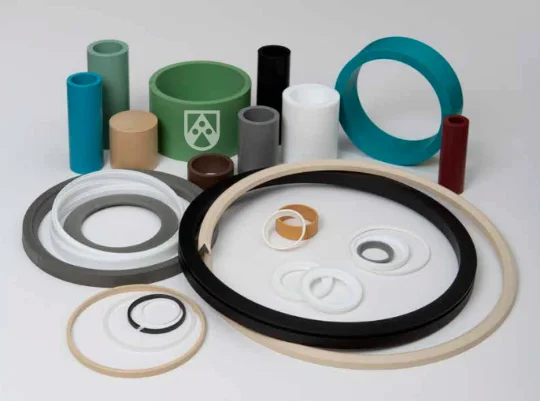
- 工程
- Turning, milling, turn-mill machining, drilling, and edge finishing, selected to suit the drawing.
- Dimensional Reference
- ±0.05 mm, subject to review. Confirm feature size, geometry, grade, and inspection conditions before production.
- 検査
- Micrometers, height gauges, optical measurement, or CMM where appropriate, with contact-force control for soft surfaces.
Weldo PTFE Machining Projects
Examples of PTFE components for sealing, sliding, fluid handling, and process equipment. Grade and geometry are reviewed against the intended service.
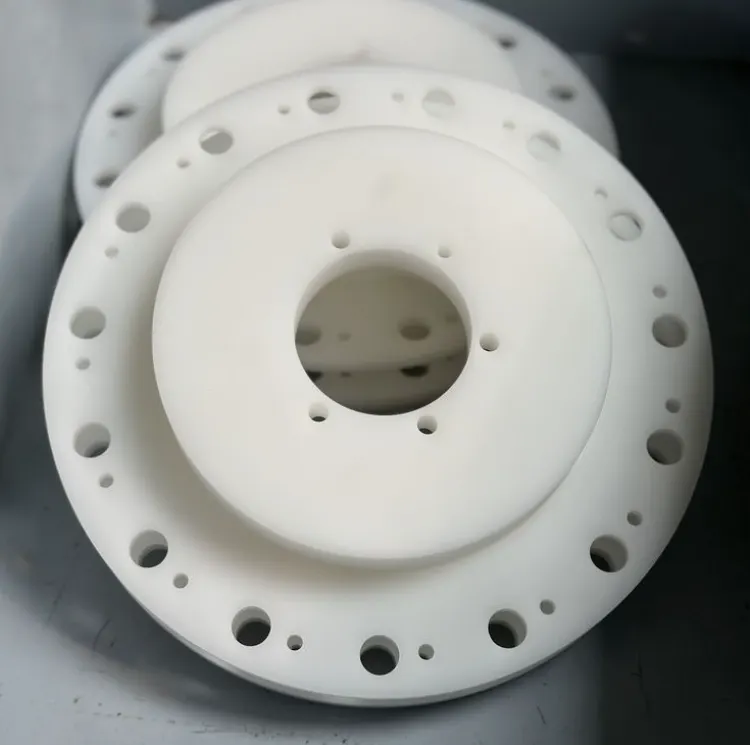
PTFE Flange Plates
Drawing-based faces, bores, and bolt patterns for fluid-handling and process equipment.
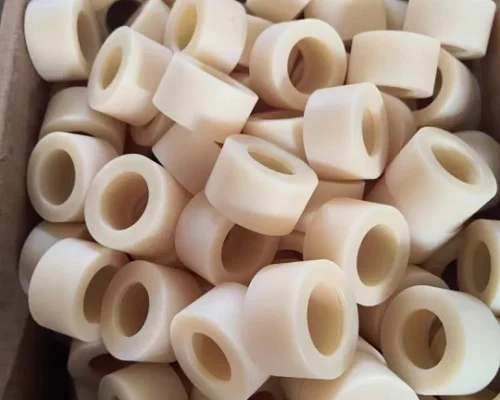
流体用部品
Custom profiles and internal features for valve, sealing, and chemical-service assemblies.
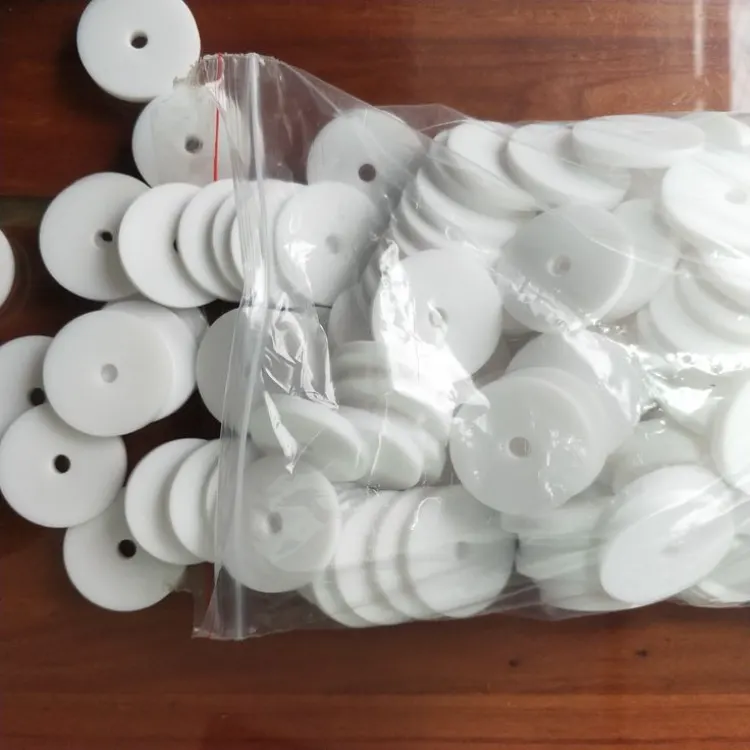
PTFE Gaskets and Seals
Sealing geometry reviewed against pressure, temperature, compression, and the mating faces.
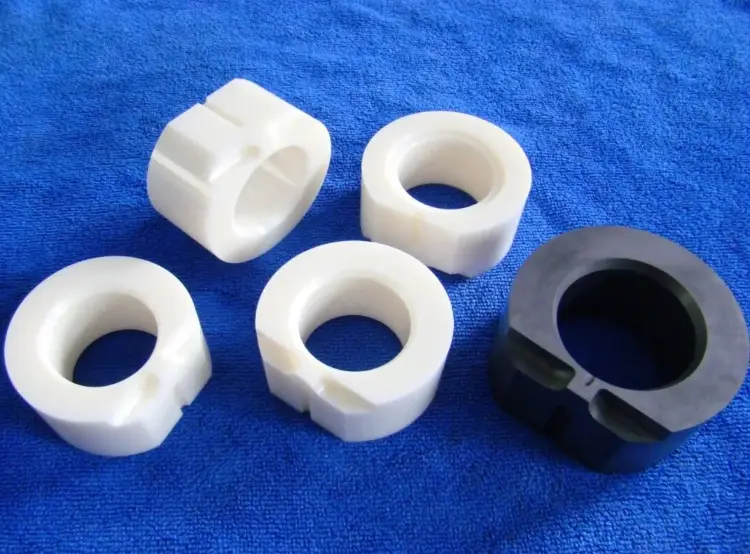
Bushings and Guide Rings
Sliding components matched to clearance, load, speed, mating surface, and wear requirements.
- Valve seats & manifolds
- Insulators & spacers
- Wear pads & liners
- Chemical-service components
PTFE部品の表面処理オプション
PTFE is usually supplied as-machined. Bonding and marking require a defined preparation process and verification of the finished interface.
Surface activation serves a functional purpose. Confirm any changes to appearance, dimensions, chemical compatibility, or compliance before specifying a treatment.
PTFE Machining Questions
Practical answers for material selection, tolerances, and surface preparation.
なぜPTFEは精密に加工するのが難しいのでしょうか?
It cuts readily, but low stiffness, creep, spring-back, and thermal expansion make close dimensions harder to maintain. Tool sharpness, workholding, part geometry, and inspection conditions all matter.
What tolerance can Weldo achieve on PTFE parts?
The page’s machining reference is ±0.05 mm, subject to drawing review. Feature size, wall thickness, grade, stock condition, and measurement temperature determine whether it is practical. Critical dimensions and inspection conditions should be agreed before production.
Which PTFE grade should I choose?
Virgin PTFE is often considered for chemical resistance and electrical insulation. Filled or modified grades may suit loaded, sliding, or sealing duties, but their exact chemical, wear, and electrical properties must be checked against supplier data.
Can PTFE parts be bonded, printed, or coated?
PTFE has very low surface energy. Adhesion normally needs qualified preparation, such as chemical etching or a specialist plasma process, followed by testing with the actual adhesive, ink, or coating.
Can PTFE be used at 260°C?
Some grades are rated for service up to about 260°C under specified conditions. The usable temperature of a loaded or sealing part can be lower. Review pressure, load, exposure time, chemical environment, and the exact grade data together.
What should I include with a PTFE machining enquiry?
Send the drawing or model, grade or required properties, quantity, critical dimensions, and operating conditions. For seals and bearings, include pressure, motion, mating material, and the intended inspection requirements.