
When comparing 6061 vs 7075 aluminum, both are heat-treatable alloys with different engineering priorities. 6061 is a practical choice for parts that need good machinability, weldability, corrosion resistance, and cost control. 7075 is better suited to high-strength, lightweight, and high-load structures.
Equipment housings, heat sinks, welded frames, and general brackets usually use 6061. Aerospace brackets, UAV load-bearing parts, high-strength mounting seats, and racing components are stronger candidates for 7075.
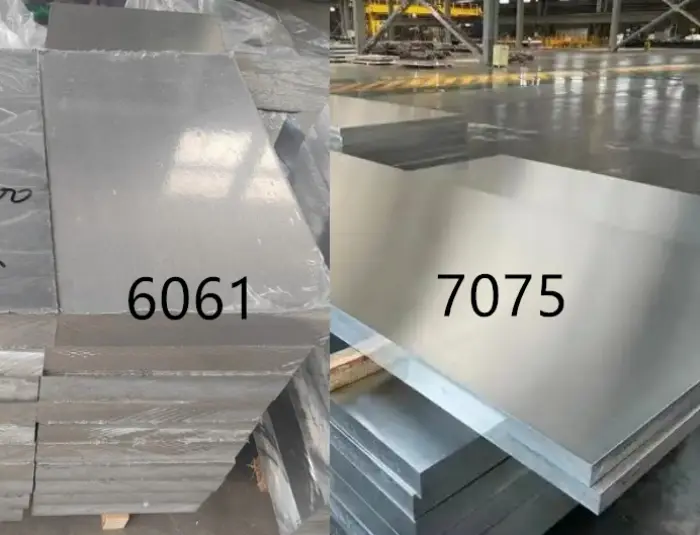
How to Quickly Choose Between 6061 and 7075
| Design priority | Recommended material | Main reason |
|---|---|---|
| Welded structures | 6061 | Better weldability and post-weld stability |
| Heat dissipation and liquid cooling | 6061 | Higher thermal conductivity and easier channel machining |
| General structural parts | 6061 | Stable machining and lower cost |
| High-load brackets | 7075 | Higher strength and specific strength |
| Lightweight load-bearing structures | 7075 | Reduces weight while meeting load requirements |
| High-hardness contact parts | 7075 | Better compressive and wear performance |
Engineering Material-Selection Sequence
- Verify strength first: If 6061 meets the load requirement with the required safety factor, it is usually the better choice. Evaluate 7075 when the design requires significant weight or section reduction.
- Confirm the joining method: Select 6061 for welded structures. Use bolting, riveting, or threaded inserts for load-bearing 7075 parts.
- Check thermal-management needs: Use 6061 for cold plates, heat sinks, and liquid-cooling manifolds. Evaluate 7075 when structural loads are more important than thermal conductivity.
- Assess the service environment: In salt spray, seawater, and dissimilar-metal contact, 7075 requires a higher level of surface protection.
- Calculate total cost: Compare material, machining time, tool consumption, surface finishing, and inspection costs.
Chemical Composition Comparison of 6061 vs 7075 aluminum
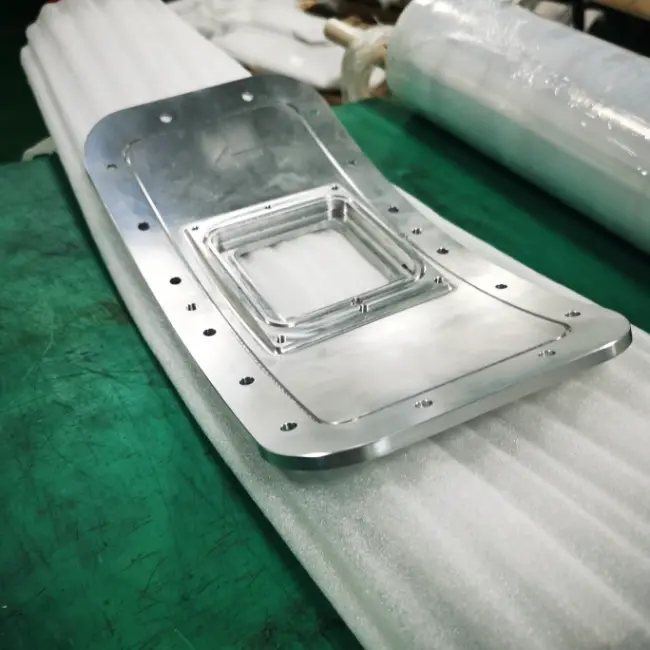
6061 is mainly strengthened by magnesium and silicon, while 7075 is primarily strengthened by zinc, magnesium, and copper. These alloy systems determine the differences in strength, machinability, thermal conductivity, and corrosion resistance.
The following are typical ranges found in common standards. Final acceptance should follow the specified standard and material certificate.
| Element | Typical range for 6061 | Typical range for 7075 | Main influence |
|---|---|---|---|
| Zinc (Zn) | ≤0.25% | 5.1%–6.1% | Main strengthening element in 7075 |
| Magnesium (Mg) | 0.8%–1.2% | 2.1%–2.9% | Increases strength and hardness |
| Silicon (Si) | 0.4%–0.8% | ≤0.4% | Forms strengthening phases with magnesium in 6061 |
| Copper (Cu) | 0.15%–0.4% | 1.2%–2.0% | Increases strength and adds corrosion-protection requirements |
| Chromium (Cr) | 0.04%–0.35% | 0.18%–0.28% | Improves structural stability |
| Iron (Fe) | ≤0.7% | ≤0.5% | Impurity element that affects toughness |
| Manganese (Mn) | ≤0.15% | ≤0.3% | Controls material structure |
| Titanium (Ti) | ≤0.15% | ≤0.2% | Refines grain structure |
The Mg-Si system in 6061 provides good machinability, weldability, and corrosion resistance. The Zn-Mg-Cu system in 7075 provides higher strength and hardness, but requires stronger protection in salt spray, humid environments, and dissimilar-metal contact.
Mechanical Performance Comparison of 6061 and 7075
7075 has significantly higher strength, hardness, and specific strength than 6061. 6061 provides higher elongation, better toughness, and more stable machining performance. The elastic moduli of the two alloys are close, so part stiffness mainly depends on wall thickness, ribs, and cross-sectional design.
| Mechanical property | 6061-T6 | 7075-T6 | Design impact |
|---|---|---|---|
| Tensile strength | Approx. 290–330 MPa | Approx. 510–570 MPa | 7075 suits higher loads |
| Yield strength | Approx. 240–280 MPa | Approx. 430–505 MPa | 7075 provides higher resistance to permanent deformation |
| Hardness | Approx. 90–100 HBW | Approx. 135–160 HBW | 7075 suits higher contact pressure |
| Elastic modulus | Approx. 68.9 GPa | Approx. 71.7 GPa | Difference in stiffness is limited |
| Density | Approx. 2.70 g/cm³ | Approx. 2.81 g/cm³ | Both support lightweight designs |
| Elongation | Higher | Lower | 6061 is more suitable for forming and bending |
Hardness Difference
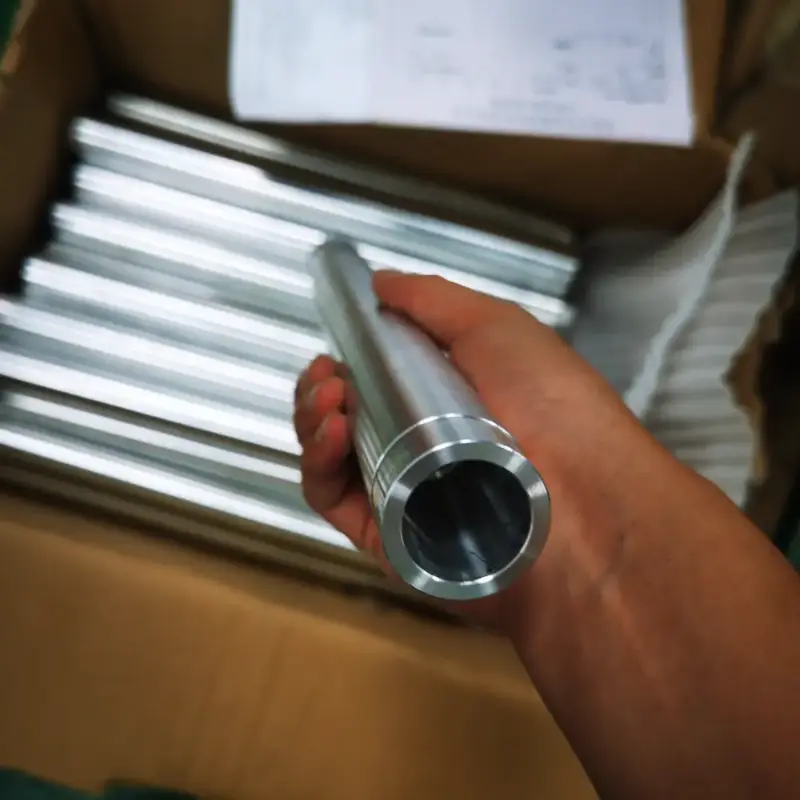
The hardness of 6061-T6 is approximately 90–100 HBW, while 7075-T6 is approximately 135–160 HBW. The higher hardness of 7075 suits contact pressure and light wear, but it also increases cutting loads, tool wear, and deburring requirements.
Strength Difference
7075 suits high-strength brackets, mounting seats, load-bearing arms, and lightweight structures. Although 6061 has lower strength, it provides a more balanced performance profile for equipment housings, frames, heat sinks, and general mounting parts.
Fatigue and Toughness
7075 can provide higher fatigue-strength potential in high-strength tempers, but it is more sensitive to notches, surface damage, corrosion, and assembly stress. 6061 provides better toughness and elongation, making it more suitable for structures exposed to impact, forming, or welding requirements.
Thermal Performance Comparison of 6061 and 7075
6061 has higher thermal conductivity than 7075, making it more suitable for cold plates, heat sinks, and liquid-cooling manifolds. 7075 provides higher strength and is suitable for structural components that also perform a heat-dissipation function.
| Thermal parameter | 6061-T6 | 7075-T6 |
|---|---|---|
| Thermal conductivity | Approx. 160–170 W/(m·K) | Approx. 130–150 W/(m·K) |
| Density | Approx. 2.70 g/cm³ | Approx. 2.81 g/cm³ |
| Main advantage | Higher heat-transfer efficiency and easier channel machining | Higher strength for load-bearing thermal structures |
6061 is commonly used for cold plates, server cold plates, liquid-cooling manifolds, laser-equipment baseplates, battery cooling plates, and power-electronics cooling structures.
7075 is suitable for high-strength heat sinks, equipment mounting plates, and structural cooling components. When 7075 is selected, flow-path optimization, increased heat-transfer area, or adjusted wall thickness should be used to meet thermal-management requirements.
Water-cooling parts require close control of:
- Channel width and depth
- Sealing grooves and O-ring contact surfaces
- Internal burrs and cleanliness
- Pressure and leak testing
- Coolant compatibility
- Corrosion protection at copper-to-aluminum or steel-to-aluminum joints
Heat-Treatment Differences Between 6061 and 7075
Both alloys gain strength through solution treatment, quenching, and artificial aging, but their strengthening systems and process sensitivity differ. 7075 requires tighter control of cooling rate, aging temperature, and holding time.
| Temper | 6061 | 7075 | Main effect |
|---|---|---|---|
| O | Annealed with good formability | Annealed with lower strength | Suitable for forming and pre-machining |
| T6 | General high-strength condition | Common high-strength condition | Suitable for structural parts |
| T651 | Stress-relieved by stretching | Common stable condition for plate | Reduces distortion in large parts |
| T6511 | Stress-relieved extruded material | High-strength extrusion condition | Suitable for long structural parts |
| T73/T7351 | Less commonly used | Improved stress-corrosion resistance | Lower strength than T6 |
T651 should be confirmed for thick plates and precision plates. For 7075 used in salt spray or high-stress environments, T73, T7351, T76, or T7651 can be evaluated.
6061 vs 7075 Machinability
Machining Performance of 6061
6061 cuts stably and is suitable for three-axis, four-axis, and five-axis milling, as well as turning, drilling, tapping, precision boring, and thread milling. Its lower tool wear makes it suitable for thin-wall parts, complex contours, and batch production.
Because 6061 has relatively high ductility, dull tools or poor chip evacuation can produce burrs, built-up edge, and surface scratches. Sharp aluminum-specific tools and effective cooling and chip removal are recommended for cosmetic parts.
Machining Performance of 7075
7075 has higher hardness and strength, resulting in greater cutting forces, tool loads, and machining heat. Deep cavities, thin walls, large plates, and complex surfaces require stable support and a staged process consisting of roughing, stress relief, semi-finishing, and finishing.
| Machining item | 6061 | 7075 |
|---|---|---|
| Cutting force | Lower | Higher |
| Tool wear | Slower | Faster |
| Thin-wall machining | Easier to control | Requires staged material removal and support |
| Deep-cavity machining | Stable | Requires vibration and heat control |
| Hole machining | Easier | Requires sharper tools |
| Thread machining | Stable | Requires torque and chip-control |
| Machining efficiency | Higher | Usually lower |
| Dimensional inspection | According to the drawing | Additional checks recommended for critical dimensions |
How Does the Machining Route Affect the Result?
For 6061, conventional roughing, semi-finishing, and finishing are sufficient for most parts. For 7075, uniform stock should be left after roughing. After settling or stress relief, the datum should be re-established before finishing.
Thin-wall and large parts should not have all stock removed in one operation. Zoned, symmetrical, and multiple-stage machining reduces distortion caused by residual stress.
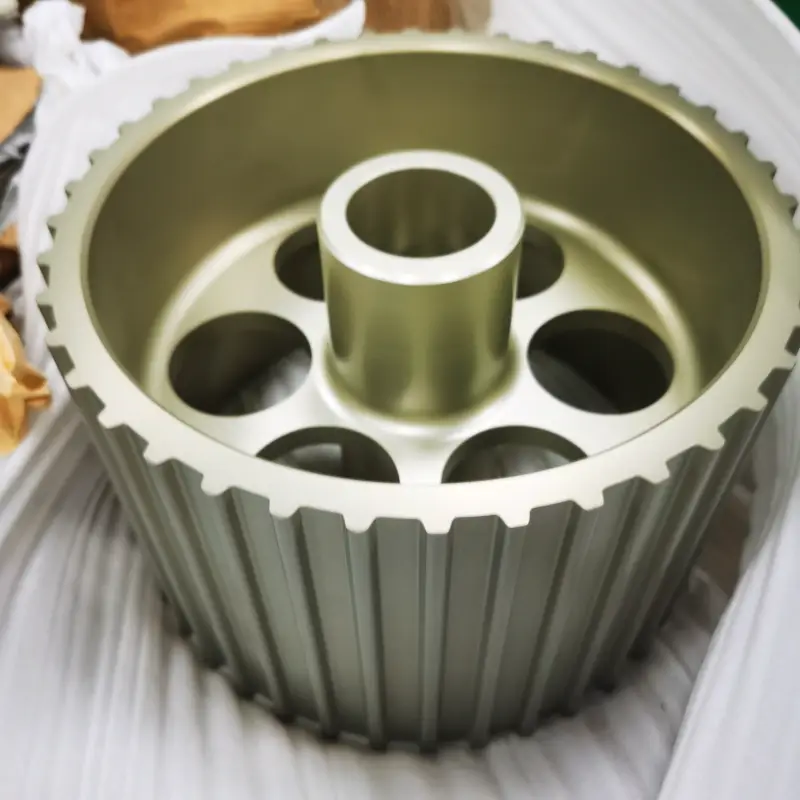
Machining Processes Supported by Both Alloys
CNC Milling
6061 is suitable for complex cavities, thin-wall housings, and high-efficiency machining. 7075 is suitable for high-strength multi-face brackets, with tighter control of fixtures and cutting parameters.
CNC Turning
Both alloys are suitable for shafts, sleeves, flanges, and connectors. When turning 7075, tool wear, bore stability, and thread quality require close control.
Five-Axis Machining
6061 is suitable for complex housings, thermal structures, and multi-face mounting parts. 7075 is suitable for high-strength multi-face brackets and lightweight load-bearing structures.
Precision Hole Machining
6061 provides stable hole-machining performance. Critical holes in 7075 should be finished after roughing and stress relief.
Joining Methods for 6061 and 7075
6061 is suitable for TIG welding, MIG welding, riveting, bolting, bonding, and sealing. After welding, the heat-affected-zone strength, distortion, and dimensions still require inspection.
Because the heat-affected zone of 7075 softens significantly after welding, load-bearing structures generally use bolting, riveting, press fits, threaded inserts, or structural adhesives.
When either alloy is joined to steel, stainless steel, copper, or carbon fiber, insulating washers, sealants, isolation sleeves, or protective coatings should be used to reduce galvanic corrosion in humid environments.
Surface-Finish Comparison of 6061 and 7075
| Surface finish | 6061 performance | 7075 performance | Purchasing focus |
|---|---|---|---|
| Anodizing | Uniform film formation and better color consistency | Good corrosion protection, but color may be darker or show variation | Confirm color samples and film thickness before production |
| Hard anodizing | Suitable for sliding and wear-resistant parts | Suitable for high-strength wear-resistant parts | Confirm changes to bores, threads, and mating surfaces |
| Alodine | Thin coating that retains electrical conductivity | Suitable for aerospace structures and conductive protection | Define conductive areas and masking zones |
| Sandblasting | Easily produces a uniform matte texture | Improves appearance but requires timely protection | Control abrasive media and blasting pressure |
| Powder coating | Relatively stable appearance and color | Good protection with higher pretreatment requirements | Include coating thickness in assembly tolerances |
| Nickel plating | Suitable for special wear and corrosion requirements | Requires closer verification of pretreatment and adhesion | Confirm coating thickness and hydrogen-embrittlement risks |
6061 is generally easier to control when color consistency is the main goal. For high-strength conductive protection, 7075 with Alodine can be evaluated. For precision mating surfaces, define masking areas and final inspection locations in advance.
Applications and Parts for 6061 and 7075
| Industry | Common 6061 parts | Common 7075 parts |
|---|---|---|
| Aerospace | Equipment housings, mounting plates, trays, and non-load-critical brackets | High-strength brackets, mounting seats, load-bearing arms, and lightweight structures |
| Defense equipment | Electronic housings, mounting bases, battery trays, and sensor brackets | High-strength mounting seats, payload brackets, and structural connectors |
| UAVs and robotics | Frames, control boxes, guide bases, and housings | Arm connectors, joint seats, payload brackets, and lightweight structural parts |
| Liquid cooling and heat dissipation | Cold plates, heat sinks, liquid-cooling manifolds, and thermal bases | Load-bearing heat sinks and structural thermal bases |
| Automotive and racing | Housings, brackets, frames, and mounting plates | Suspension brackets, hub parts, and high-strength mounting seats |
| Industrial automation | Fixtures, equipment panels, frames, and supports | High-load fixtures, robotic-arm connectors, and load-bearing parts |
| Outdoor equipment | Instrument housings, supports, and mounting bases | Lightweight high-strength brackets and moving structural parts |
Advantages and Limitations
| Material | Main advantages | Main limitations |
|---|---|---|
| 6061 | Good machinability, good weldability, good corrosion resistance, high thermal conductivity, stable supply, and lower overall cost | Lower strength and hardness than 7075 |
| 7075 | High strength, high hardness, high specific strength, and suitability for lightweight load-bearing structures | Higher cost, more difficult machining, significant post-weld softening, and lower corrosion resistance than 6061 |
Maintenance Comparison for 6061 and 7075 Parts
6061 parts mainly require clean, dry surfaces and intact protective coatings. Use a neutral cleaner and soft cloth on anodized or painted surfaces. Strong acids, strong alkalis, and abrasive tools should be avoided.
7075 parts require closer inspection of pitting, edge corrosion, coating damage, and dissimilar-metal contact areas. Inspection intervals should be shortened for parts used in salt spray or high-humidity environments, and exposed areas should be repaired promptly.
Both materials require:
- Thorough drying of holes and joints after cleaning
- No use of steel wool or hard abrasive paper
- Prompt treatment of peeling, scratches, and corrosion spots
- Reconfirmation of critical dimensions after repair
- Maintenance of threads and moving mating surfaces according to equipment requirements
Total Manufacturing Cost Comparison
6061 is easier to control in terms of material supply, cutting efficiency, and welding cost. It is suitable for general structural parts, small-batch projects, and production runs.
7075 generally involves higher material, tooling, fixturing, machining-time, surface-protection, and inspection costs. However, when the part requires significant weight reduction, higher load capacity, or longer fatigue life, the additional cost of 7075 can provide engineering value.
Purchasing decisions should compare the complete manufacturing cost rather than only the material price per kilogram.
6 Items to Confirm for Custom Purchasing
- Design load and safety factor
- Maximum allowable part weight
- Whether welding or brazing is required
- Service environment and surface finish
- Critical dimensions and assembly tolerances
- Quantity, delivery date, and budget range
Material Identification and Quality Acceptance
6061 and 7075 should not be identified solely by color or appearance. Purchasing and acceptance should confirm:
- Alloy grade
- Temper
- Chemical composition
- Mechanical properties
- Heat-lot number
- Material certificate
- Dimensional inspection report
Spectrographic or chemical-composition testing can be used when additional material verification is required.
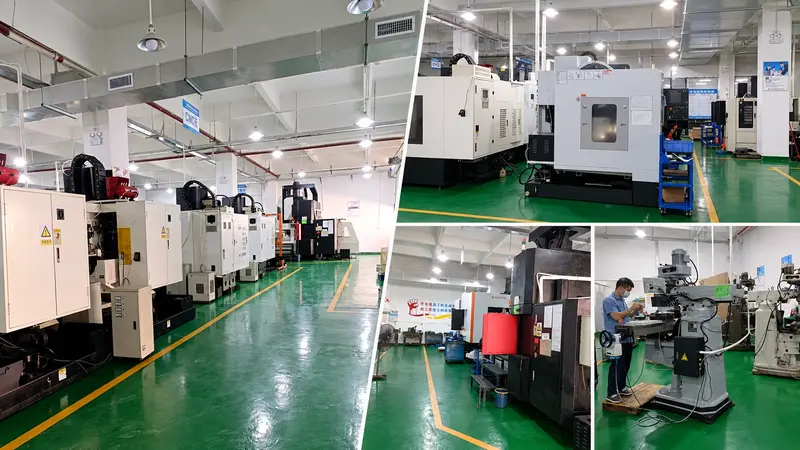
Weldo’s Custom Machining Capabilities for 6061 and 7075
Weldo supports three-axis, four-axis, and five-axis CNC machining of 6061 and 7075 aluminum, including:
- CNC turning and mill-turn machining
- Precision hole and thread machining
- Precision grinding
- Wire EDM
- Anodizing and hard anodizing
- Alodine, sandblasting, and painting
- Coordinate measuring machine inspection of critical dimensions
- Material certificates and batch traceability
- Prototype, small-batch, and repeat production
The engineering team evaluates the load, geometry, material temper, machining risk, and service environment to help buyers select the more suitable alloy.
FAQ
Can 6061 and 7075 replace each other?
They can be evaluated based on load, environment, joining method, and tolerance requirements. General structural parts may be changed from 7075 to 6061, while high-load lightweight structures require strength verification first.
Is the higher strength of 7075 always worth the added cost?
Not always. The additional cost is justified when 7075 provides a clear benefit in weight reduction, load capacity, or fatigue life.
Which alloy is better for complex thin-wall parts?
6061 is generally easier to control in terms of machining deformation and tool load. Thin-wall 7075 parts require more careful fixturing, stress relief, and dimensional inspection.
Which alloy is better for welded custom parts?
6061 is better suited to welded structures. The heat-affected zone of 7075 softens significantly after welding, so mechanical joining is preferred for high-strength structures.
How can buyers confirm that a supplier has not mixed 6061 and 7075?
Require the material grade, temper, heat-lot number, and material certificate. Batch identification and material traceability should also be maintained for production parts.
Submit Material Information for a Custom Machining Quote
Please provide:
- Part drawing or 3D model
- Design load and weight requirements
- Service environment
- Joining method
- Critical tolerances
- Quantity and delivery date
Weldo can help you choose between 6061 and 7075 based on part geometry, machining risk, and service requirements, then provide a custom machining quotation.