
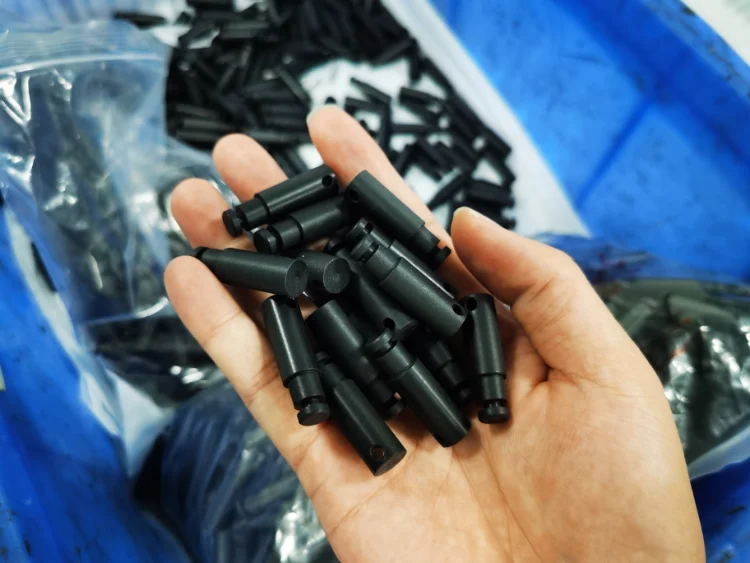
Custom PTFE Parts
CNC PTFE Machining Services
PTFE combines chemical resistance, low friction and electrical insulation for demanding parts. Send your drawing and service conditions for a machining plan and quotation.
- Virgin and filled grades
- Turning, milling and drilling
- Prototype to repeat production
PTFE Property Data
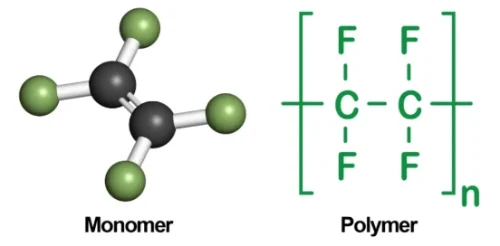
Key PTFE Material Properties
Representative values for unfilled PTFE. Fillers alter stiffness, wear and dimensional stability.
| Property | Representative Range | Engineering Relevance |
|---|---|---|
| Density | 2.13–2.20 g/cm³ | High for an engineering plastic. |
| Tensile Strength | 20–35 MPa | For functional, non-structural parts. |
| Elongation at Break | 200–400% | Spring-back affects close features. |
| Melting Point | About 327°C | Cutting heat still affects size. |
| Coefficient of Friction | 0.05–0.10 | Useful for sliding and sealing. |
| Water Absorption | Below 0.01% | Stable in wet environments. |
| Typical Service Range | −200 to +260°C | Verify grade, load and environment. |
Use supplier data for final design; review creep and thermal expansion for close fits.
PTFE Grade Selection
Choose PTFE by Load, Wear and Environment
Select fillers by chemical exposure, electrical needs, pressure, speed and dimensional stability.
Virgin PTFE
Maximum chemical resistance and insulation for seals, gaskets and fluid parts.
Glass-Filled PTFE
Higher stiffness and creep resistance for loaded supports and valves.
Carbon-Filled PTFE
Better wear and heat transfer for sliding or conductive parts.
Bronze-Filled PTFE
Higher load capacity and stability for bearings and guide rings.
Modified PTFE
Lower deformation and permeation for demanding seals.
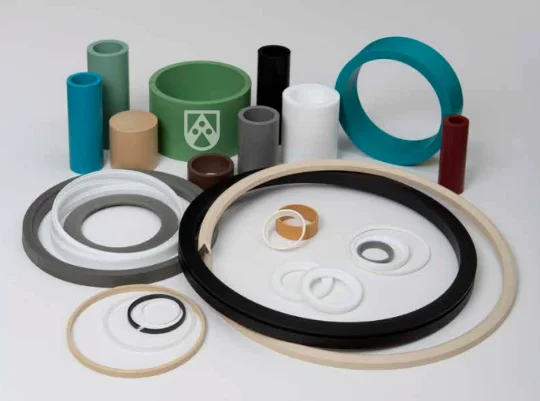
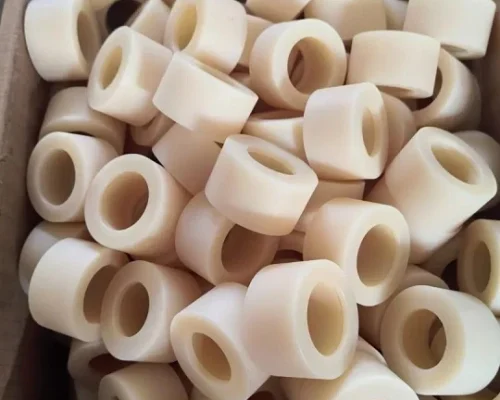
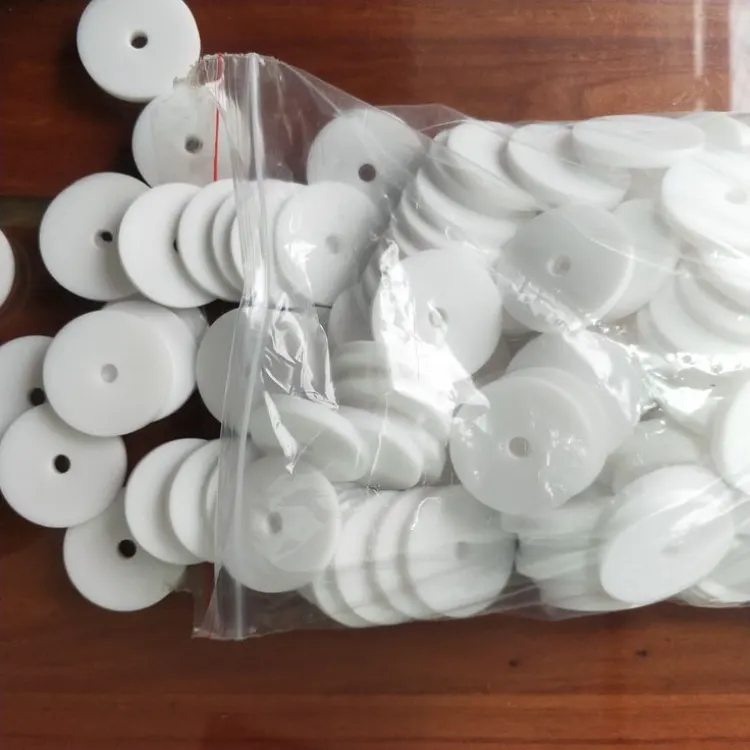
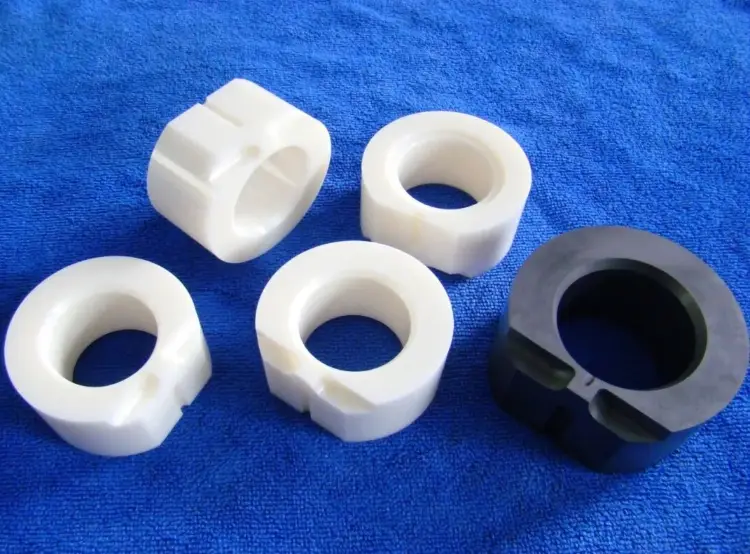
Machined PTFE Components
PTFE Parts for Sealing, Sliding and Chemical Service
Grade and geometry are selected for pressure, temperature, motion and chemicals.
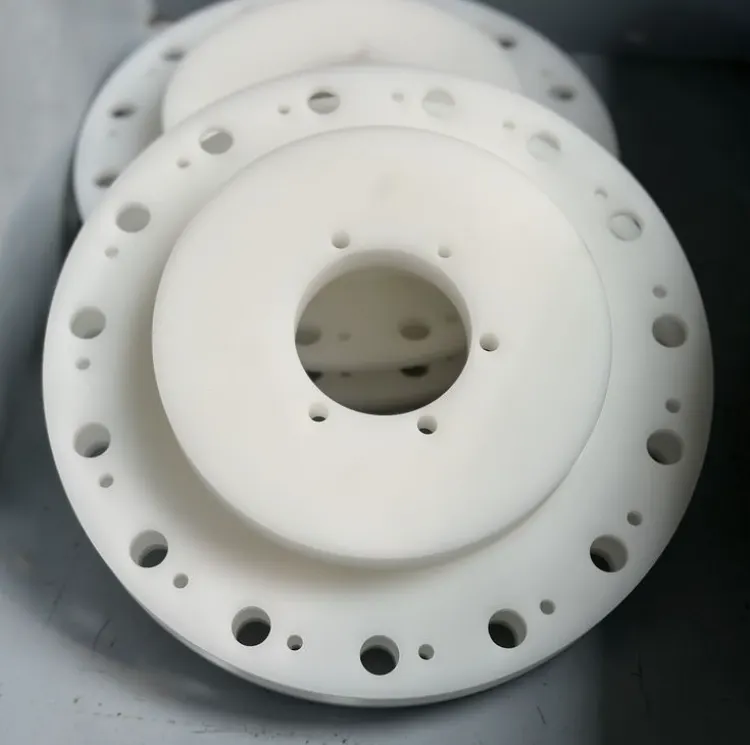
Bonding and Identification
Surface Options for PTFE Parts
PTFE is normally left as-machined. Bonding, printing or coating requires surface activation.
| Option | Purpose | Key Consideration |
|---|---|---|
| As-Machined | Sealing, sliding and internal surfaces. | Edge condition follows the drawing. |
| Chemical Etching | Improves adhesive bonding. | Control storage and adhesive compatibility. |
| Plasma / Corona | Supports printing, coating and bonding. | Use soon after treatment. |
| Specialty Treatment | Application-specific modification. | Validate property and compliance changes. |
Surface activation is functional, not decorative.
PTFE Machining Control
How We Control Soft, Creep-Sensitive PTFE
The process controls wall support, clamping, heat and inspection timing.
Sharp Tooling
Positive geometry limits rubbing, tearing and burrs.
Light Workholding
Broad support limits clamping distortion.
Heat and Chip Control
Controlled cutting and chip evacuation protect size and finish.
Stabilized Inspection
Critical dimensions are checked after stabilization.
| Processes | Turning, milling, turn-mill machining, drilling and finishing. |
|---|---|
| Machining Tolerance | ±0.05 mm |
| Inspection | Micrometers, height gauges, optical tools and CMM as required. |
PTFE Machining FAQ
PTFE Design and Machining Questions
Why is PTFE difficult to machine accurately?
Its softness, creep and thermal expansion can shift thin walls and close fits.
What PTFE machining tolerance can you achieve?
Our specified PTFE machining tolerance is ±0.05 mm.
Can PTFE be bonded or coated?
Yes, after chemical, plasma or corona activation matched to the adhesive or coating.
Start Your PTFE Project
Send Your PTFE Drawing
Send the drawing, grade, quantity and service conditions. We will review the machining route and quote the project.