Have you ever run into this situation: after waiting half a month for bronze prototype parts, you only discover during inspection that they are nonconforming? Or has a supplier’s delayed delivery ever caused your assembly project to miss its scheduled launch?
If you are looking for a reliable USA top bronze machining supplier, a good starting point is to ask trusted friends or industry peers for referrals, while also comparing the companies listed below. Local U.S. suppliers or companies near you usually respond faster and reduce communication costs, but their machining costs are often higher. By contrast, working with an experienced, well-established professional bronze machining center can often help you strike a better balance among quality, lead time, and cost.
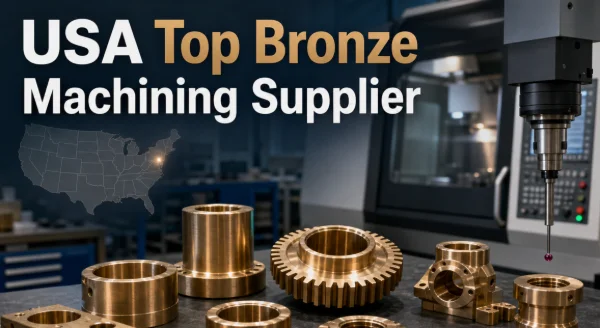
USA Top Bronze Machining Supplier Comparison
Below, I will introduce and compare leading partners in the field of custom bronze parts. We will start with a brief summary table so you can quickly understand the characteristics of each company.
| Supplier | Main Capabilities | Lead Time Reference | Main Advantages | Main Limitations |
| Xometry | CNC machining, 3D printing, sheet metal fabrication, injection molding, die casting | 3-15 days | Fast online quoting, large supplier network, broad process coverage | Quality consistency among different suppliers needs to be controlled through the platform system |
| Protolabs | CNC, injection molding, 3D printing, sheet metal fabrication | 5-14 days | Mature brand, high automation level, fast delivery | Costs may be higher for complex parts, special materials, or large-volume projects |
| Weldo Machining | CNC turning and milling, 3/4/5-axis machining, wire EDM, grinding, surface finishing | 1-7 days | Well-equipped, fast lead time, detailed bronze grade descriptions | Overseas customers need to consider cross-border communication and shipping time |
| Fictiv | CNC, 3D printing, injection molding, urethane casting | 5-20 days | Strong engineering support and project management capability, suitable for complex projects | Pricing is usually not low, and specific machining capability depends on the partner network |
| RapidDirect | CNC, injection molding, sheet metal fabrication, 3D printing, vacuum casting, die casting, EDM | 6-25 days | AI quoting, DFM analysis, relatively complete quality system certifications | High-difficulty, small-batch custom bronze parts may be quoted at a higher price |
| Prototek | CNC, sheet metal fabrication, 3D printing, casting, forming, precision machining | 4-16 days | U.S.-based manufacturing sites and strong certification qualifications | Small-batch or prototype bronze parts may be relatively expensive |
| eMachineShop | CNC, laser cutting, waterjet cutting, sheet metal fabrication, injection molding, 3D printing | 7-25 days | Low order threshold and free CAD tool support | High-end certification and complex project management capabilities are relatively limited |
| PTSMake | CNC machining, 5-axis machining, injection molding, molds, precision parts manufacturing | 3-20 days | Flexible delivery, relatively complete quality control, supports multiple industries | Advantages in pricing and lead time may not be obvious for small-batch, high-difficulty projects |
1. Xometry
Founded in 2013 and headquartered in Maryland, USA, Xometry (Zemi Technology) is an AI-driven one-stop on-demand manufacturing platform. It went public on Nasdaq in 2021 under the ticker symbol XMTR.
After customers upload CAD drawings, they can receive instant quotes, DFM feedback, and intelligent factory matching.
Xometry does not directly own factories. Instead, it integrates thousands of manufacturing suppliers worldwide and provides a wide range of manufacturing services, including CNC machining, 3D printing, sheet metal fabrication, injection molding, and die casting. It supports production from bronze prototypes to batch bronze parts.
Number of Machining Equipment:
Xometry mainly relies on a network of certified manufacturers rather than a single self-owned factory, so the exact number of machining equipment is not fixed or publicly disclosed.
Tolerance Accuracy and Inspection Equipment:
Its standard tolerance for metal CNC machining can typically reach about +/-0.005 in, making it suitable for most precision metal part machining requirements.
Shipping Lead Time: 3-15 days. (Depending on part complexity, material, quantity, and tolerance requirements.)
Advantages:
It has a large supplier network, fast online quoting, and broad material and process coverage, making it suitable for procurement from prototypes to small-batch and batch production parts.
Limitations:
Under the platform model, differences in machining experience and quality consistency among suppliers need to be managed through the platform’s professional supplier profile management system to ensure quality standards across different production batches.
Main Machined Industry Parts:
Bronze bushings, bearings, brackets, connectors, industrial machinery parts, as well as components for aerospace, automotive, and medical applications.
2. Protolabs
Founded in 1999 and headquartered in Minnesota, USA, Protolabs is a globally recognized digital manufacturing and on-demand production service provider. It went public on the New York Stock Exchange in 2012 under the ticker symbol PRLB.
Through its self-owned digital factories and global manufacturing partner network, the company provides CNC machining, injection molding, 3D printing, and sheet metal fabrication services. It supports rapid prototyping of custom bronze parts through small-batch custom production.
It is suitable for applications such as bushings, connectors, precision mechanical parts, and industrial equipment components.
Number of Machining Equipment:
Public information shows that its U.S. CNC capacity once exceeded 450 mills and lathes, with about 600 machines globally.
Tolerance Accuracy and Inspection Equipment:
Its CNC tolerance capability can reach about +/-0.001 in / 0.020 mm, and it can provide FAI, material certifications, and quality inspection documents.
Shipping Lead Time: 5-14 days.
Advantages:
It has strong brand recognition, a high level of automation, fast lead times, and mature processes, making it suitable for rapid prototyping and small-batch production.
Limitations:
Costs may be relatively high for complex custom parts, special materials, or high-volume projects.
Main Machined Industry Parts:
Medical devices, aerospace, automotive, electronics, consumer product parts, as well as various bronze functional parts and precision mechanical components.
3. Weldo Machining
Founded in 2008, Weldo Machining operates its manufacturing facility in Dongguan, Guangdong. It is a company that provides one-stop precision parts machining and manufacturing services, covering rapid prototyping, small-batch production, and batch production
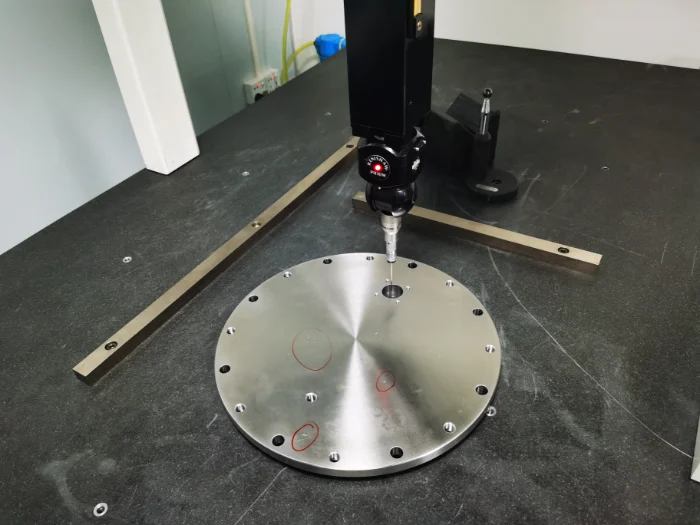
The company has capabilities including CNC turning and milling, 3/4/5-axis machining, wire EDM, grinding, and surface finishing. It can machine a variety of custom bronze parts and is equipped with inspection equipment such as CMMs, projectors, and 2D measuring instruments.
Number of Machining Equipment:
The company owns more than 70 CNC machine tools, as well as multiple wire EDM machines, including fast wire, slow wire, and medium wire-cutting machines. It also has manual milling machines and lathes that can quickly machine bronze samples within three hours.
Tolerance Accuracy and Inspection Equipment:
CNC tolerances can be as tight as about +/-0.005 mm, and the factory has passed ISO 9001:2015 factory certification.
Shipping Lead Time: 1-7 days.
Advantages:
Its workpiece material pages are well developed, bronze grade descriptions are detailed, its ability to handle international orders is strong, and the quotation process is clear.
Main Machined Industry Parts:
Bronze CNC parts, complex appearance parts, and small-batch functional parts. Its products are widely used in medical equipment, automotive components, communication electronics, industrial equipment, aerospace, automation machinery, and other fields.
4. Fictiv
Founded in 2013 and headquartered in San Francisco, USA, Fictiv is a global digital on-demand manufacturing platform that connects customers with global CNC manufacturing partner factories through AI quoting and intelligent matching.
The company provides services including CNC machining, 3D printing, injection molding, and urethane casting. It supports production from rapid prototyping to small-batch manufacturing and provides instant DFM feedback, order management, and quality tracking.
Its services cover industries such as robotics, aerospace, automotive, medical devices, and consumer electronics. After being acquired by MISUMI Group in 2025, it further strengthened its global manufacturing resources and supply chain capabilities.
Number of Machining Equipment:
It uses a global manufacturing network and certified partner model, and does not publicly disclose a unified number of machining equipment.
Tolerance Accuracy and Inspection Equipment:
Large CNC parts can achieve tolerances of about 0.007 in. Inspection may involve gantry CMMs, 3D scanning, NDT, as well as CMMs, optical comparators, surface roughness testers, and other equipment at partner factories.
Shipping Lead Time: 5-20 days.
Advantages:
It has strong engineering support and project management capabilities, making it suitable for complex bronze parts, projects with higher certification requirements, or projects with higher supply chain risk.
Limitations:
Its pricing is generally not positioned at the low-cost end, and specific machining capabilities depend on its cooperative manufacturing supply chain.
Main Machined Industry Parts:
Robotics parts, aerospace components, medical technology parts, automotive parts, EV/eVTOL components, and industrial equipment parts.
5. RapidDirect
Founded in 2019 and headquartered in Shenzhen, China, RapidDirect is a technology-driven collaborative manufacturing platform for custom parts, providing one-stop manufacturing services from prototyping to batch production.
The company covers CNC machining, injection molding, sheet metal fabrication, 3D printing, vacuum casting, die casting, EDM, surface finishing, and other processes, supporting high-precision parts, complex structural components, and multi-material custom machining.
Number of Machining Equipment:
Public information shows that after factory expansion, it has more than 300 pieces of equipment, making its self-owned manufacturing attributes more obvious than those of a pure platform company.
Tolerance Accuracy and Inspection Equipment:
Its official website states that CNC machining accuracy can reach +/-0.001 in. Conventional projects may follow standards such as +/-0.1 mm, and the specific requirement should be confirmed based on drawings and part structure.
Shipping Lead Time: 6-25 days.
Advantages:
AI-powered quoting, DFM analysis, a combination of self-owned factories and certified manufacturing networks, and certifications including ISO 9001, ISO 13485, and IATF 16949.
Limitations:
For custom bronze projects with high machining difficulty and small quantities, quotes may be relatively high.
Main Machined Industry Parts:
Metal prototypes such as bronze, aluminum, and stainless steel parts, medium- and small-batch parts, mechanical components, automotive parts, and industrial equipment parts.
6. Prototek
Founded in 1987, Prototek is a leading U.S. digital manufacturing service provider that offers one-stop manufacturing solutions from rapid prototyping to on-demand production. The company covers CNC machining, sheet metal fabrication, 3D printing, casting, forming, and precision machining processes, and supports instant quoting for 3D models and engineer-assisted quoting through the Prototek IQ platform.
Number of Machining Equipment:
Public information does not clearly disclose the total number of machines, but its process capabilities cover 3-axis, 4-axis, and 5-axis machining, as well as 9-axis mill-turn machining.
Tolerance Accuracy and Inspection Equipment:
Prototek emphasizes high-precision CNC machining capabilities. Some scenarios can meet relatively high precision requirements, but specific tolerances and inspection equipment need to be confirmed based on the project.
Shipping Lead Time: 4-16 days.
Advantages:
Multiple U.S. manufacturing sites, a team of about 300 people, and qualifications including ISO 9001, AS9100D, ITAR, and CMMC Level 2.
Limitations:
Quotes may be relatively high for small-batch or prototype bronze samples, and batch production projects may experience fluctuations in lead time and quality consistency.
Main Machined Industry Parts:
Aerospace/defense components, robotics parts, medical parts, transportation equipment parts, electronic components, and industrial equipment parts.
7. eMachineShop
eMachineShop is a U.S. custom parts manufacturing and digital manufacturing platform that provides rapid quoting, prototyping, and batch production services for companies, engineers, and inventors. The company covers CNC machining, laser cutting, waterjet cutting, sheet metal fabrication, injection molding, 3D printing, surface finishing, and other processes, and supports machining of more than 50 types of metal and plastic materials.
Number of Machining Equipment:
The total number of machining equipment is not clearly disclosed. Its services cover CNC milling, turning, EDM, laser cutting, waterjet cutting, sheet metal fabrication, 3D printing, and other processes.
Tolerance Accuracy and Inspection Equipment:
Tolerances, threads, and machining requirements can be added according to drawings, but the specific limit tolerances and inspection equipment are not clearly disclosed.
Shipping Lead Time: 7-25 days.
Advantages:
It offers a free CAD design tool, online file upload and quoting process, and a relatively low order threshold, making it suitable for diverse manufacturing needs ranging from simple custom parts to professional engineering components.
Limitations:
Its high-end certification, complex project management, and large-scale manufacturing capabilities are relatively limited compared with large digital manufacturing platforms.
Main Machined Industry Parts:
Bronze bushings, washers, connectors, small mechanical parts, custom plates, low-volume functional parts, and general metal/plastic parts.
8. PTSMake
PTSMAKE is a manufacturer with more than 20 years of precision manufacturing experience. It provides one-stop services from prototype sampling to batch production, covering CNC precision machining, high-temperature injection molding, custom mold manufacturing, and precision piston machining.
The company is equipped with 5-axis CNC machines and more than 50 injection molding machines. It can process complex structures and a wide range of materials, and is especially good at high-temperature polymer injection molding, long-life mold manufacturing, and high-precision custom part production.
Number of Machining Equipment:
Public information does not clearly disclose the total number of machining equipment, but it shows service capabilities including 5-axis milling, turning, CNC machining, and custom manufacturing.
Tolerance Accuracy and Inspection Equipment:
Its official website emphasizes custom machining and quality control, but specific information on limit tolerances, CMMs, and other inspection equipment is not clearly disclosed.
Shipping Lead Time: 3-20 days.
Advantages:
Fast delivery, strict quality control, and global service capabilities. It ensures product accuracy and traceability through CMMs, Renishaw probes, and a multi-layer inspection system, serving industries such as automotive, aerospace, medical, electronics, industrial machinery, and new energy.
Limitations:
If your project order quantity is small and the machining difficulty is high, its advantages in pricing and shipping lead time may not be obvious.
Main Machined Industry Parts:
Bronze CNC parts, mechanical components, bushings, connectors, precision metal parts, plastic parts, and injection molded parts.
Types of Bronze Alloys Used for Machining
Bronze is a copper-based alloy formed by adding elements such as tin, aluminum, lead, silicon, beryllium, and manganese to copper. It usually excludes brass and cupronickel. Compared with pure copper, bronze generally offers higher strength, hardness, wear resistance, and corrosion resistance. Material selection should be evaluated based on load, friction, corrosive environment, electrical conductivity requirements, and machining method.
Tin Bronze
Tin bronze has good wear resistance, friction-reducing properties, and corrosion resistance, making it one of the common wear-resistant copper alloys used in machining. It typically cannot be significantly hardened through quenching in the same way as steel, but its strength and wear resistance can be improved through cold working, alloy composition control, or optimization of the casting structure. Tin bronze is relatively tough during cutting, and some grades tend to produce continuous chips, so attention should be paid to tool sharpness, chip breaking, and cooling lubrication during machining. It is commonly used to manufacture sliding bearings, bushings, worm gears, gears, and wear-resistant guide components
Aluminum bronze
Aluminum bronze has relatively high strength, hardness, and corrosion resistance, making it especially suitable for seawater, steam, heavy-load, and impact conditions. Some aluminum bronzes, especially those containing nickel, iron, and other elements, can further improve mechanical properties through appropriate heat treatment. Because the material has high strength and hardness, cutting resistance is relatively high during machining, placing higher requirements on tool wear resistance, cutting parameters, and cooling lubrication. Aluminum bronze is commonly used to manufacture marine propellers, pump bodies, valves, gears, bushings, and structural parts that withstand impact loads.
Lead Bronze
Lead bronze has excellent friction-reducing properties, anti-seizure performance, and machinability. The lead phase in the material can act like a solid lubricant, helping reduce friction and improve chip breaking. It typically does not rely on heat treatment for strengthening; instead, it obtains good bearing performance through the alloy structure and lead distribution. Lead bronze is commonly used to manufacture sliding bearings, bearing shells, bushings, and wear-resistant support components, and is suitable for high-speed, heavy-load, or unstable lubrication conditions. However, applications involving environmental regulations, drinking water, food, or medical use require special attention to lead content restrictions.
Silicon Bronze
Silicon bronze has good strength, corrosion resistance, weldability, and hot and cold working performance, offering relatively balanced overall properties. Some silicon bronzes can increase strength through cold working, and a few special grades may also improve performance through heat treatment, but their main advantages usually lie in corrosion resistance, weldability, and stable machining behavior. Compared with high-hardness aluminum bronze, silicon bronze usually cuts more smoothly. It is commonly used to manufacture corrosion-resistant fasteners, valve parts, elastic components, welded structures, and chemical equipment components.
Beryllium Bronze
Beryllium bronze is a class of high-performance copper alloys that can be significantly strengthened through solution treatment and aging. After proper heat treatment, it can achieve very high strength, hardness, elastic limit, and fatigue performance, while also offering good electrical conductivity and corrosion resistance. Beryllium bronze is easier to machine in the unaged or softened state, and after aging it is more suitable for high-stress, high-elasticity, and high-reliability applications. It is commonly used to manufacture precision springs, connectors, conductive spring contacts, mold inserts, non-sparking tools, and aerospace precision components. When machining and handling beryllium bronze, attention should also be paid to dust control and occupational safety requirement.
Manganese Bronze
Manganese bronze usually has relatively high strength, hardness, wear resistance, and good impact resistance, and it is widely used in heavy-duty mechanical working conditions. It should be noted that the manganese bronze commonly used in engineering sometimes belongs to a zinc-containing high-strength copper alloy system. Although it is classified as a bronze by name, its composition and performance can vary significantly depending on the grade. It usually obtains its properties mainly through alloy strengthening, and some materials can also improve mechanical performance through heat treatment or microstructure control. Because the material has high strength, tool load is relatively high during cutting, so cutting speed, feed rate, and cooling conditions need to be properly controlled. Manganese bronze is commonly used to manufacture high-load bushings, gears, worm gears, valves, and wear-resistant parts for construction machinery.
Phosphor Bronze
Phosphor bronze has good elasticity, wear resistance, fatigue resistance, and corrosion resistance, making it suitable for parts that withstand long-term elastic deformation or frictional wear. It usually cannot be significantly hardened through conventional heat treatment, but its strength, hardness, and elastic properties can be improved through cold working. Phosphor bronze has relatively stable machinability, but when machining thin-walled parts, spring pieces, or precision elastic components, attention should be paid to clamping deformation, springback, and dimensional stability. It is commonly used for spring strips, terminals, connectors, washers, bushings, and precision instrument parts.
Overall, different bronze materials have different strengths:
Tin bronze and phosphor bronze are more oriented toward wear-resistant and elastic applications;
Aluminum bronze is suitable for high-strength, seawater-resistant, and heavy-load components;
Lead bronze is suitable for bearing-type parts;
Silicon bronze is more oriented toward corrosion-resistant and welded structures;
Beryllium bronze is suitable for high-elasticity precision parts;
Manganese bronze is more suitable for heavy-load and impact conditions.
Conclusion:
After reading the full article, you may still find it difficult to choose a reliable bronze contract manufacturing factory. Here is my personal advice:
If you want to find a supplier with advantages in machining cost, you can choose: Weldo Machining, RapidDirect, PTSMaker.
If you have strict requirements for delivery lead time within the United States, you can choose: Xometry, Protolabs.
If you also need custom related parts for injection molding services, you can choose: Fictiv, Weldo Machining.
If you want to find a supplier with high tolerance standards that can also provide one-stop surface treatment for parts, you can choose: Prototek, Weldo Machining, eMachineShop.
Of course, if you would like to learn more about this material or the production precautions for related industries, you can also consult our professional engineering team, and we will solve your problem as soon as possible.