
Polypropylene vs ABS is a common material comparison for custom plastic parts because the two plastics serve different engineering priorities. PP is lighter and offers better resistance to moisture and most acids and alkalis, making it suitable for living hinges, fluid-handling components, and structures that undergo repeated bending. ABS provides greater rigidity, holds machined dimensions more easily, and is better suited to painting, bonding, and cosmetic finishing.
When evaluating Polypropylene vs ABS, material selection should not be based solely on raw material prices. Operating temperature, load type, contact media, tolerances, assembly method, surface requirements, and production volume all affect the final cost and service life of a part.

Polypropylene vs ABS: How Should You Choose?
Choose PP when the part requires chemical resistance, low moisture absorption, low weight, or repeated flexing. Choose ABS when rigidity, dimensional accuracy, surface appearance, and mature finishing options are the priorities.
| Part Requirement | Recommended Material | Reason for Selection |
|---|---|---|
| Contact with most acids, alkalis, and aqueous solutions | PP | Generally provides better chemical stability |
| Humid environments or prolonged contact with water | PP | Low moisture absorption |
| Living hinges and repeated bending | PP | Excellent flexural fatigue resistance |
| Lightweight construction | PP | Density of approximately 0.90–0.91 g/cm³ |
| Rigid structural parts | ABS | Typically has a higher elastic modulus |
| Tight-tolerance CNC-machined parts | ABS | Lower cutting rebound makes dimensions easier to control |
| Painting, bonding, or electroplating | ABS | More established finishing systems |
| Equipment housings and control panels | ABS | Better surface quality and assembly stability |
| Long-term outdoor use | UV-stabilized PP, weather-resistant ABS, or ASA | Standard grades require weathering validation |
| Food or medical contact | Compliant PP or ABS grade | Regulatory documentation must be verified for the specific grade |
The material name only completes the initial screening. The specific grade, manufacturing process, operating temperature, and acceptance requirements must also be confirmed.
What Are PP and ABS?
What Is Polypropylene?
Polypropylene, abbreviated as PP, is a semi-crystalline thermoplastic. It has low density and low moisture absorption, resists most acids, alkalis, and aqueous solutions, and performs well under repeated bending.
PP is commonly used for chemical-processing components, fluid-handling parts, containers, battery housings, laboratory equipment, flip-top closures, and living-hinge structures. It deforms more elastically under load, making it suitable for parts that require flexibility and toughness.
What Is ABS?
ABS is an amorphous thermoplastic composed of acrylonitrile, butadiene, and styrene. These three components work together to provide rigidity, toughness, dimensional stability, and good processability.
ABS is commonly used for equipment housings, instrument panels, fixtures, brackets, guards, and functional prototypes. It is easier to CNC machine, paint, print, bond, and decoratively electroplate.
What Are the Key Performance Differences Between PP and ABS?
PP is lighter, absorbs less moisture, and performs better under repeated bending. ABS is more rigid, has lower molding shrinkage, and holds precision dimensions more easily.
The table below shows typical ranges for unfilled general-purpose grades and is intended only for preliminary comparison. Material grade, specimen thickness, temperature, processing direction, and test standard can all change the results. Engineering designs should use the data sheet for the specified grade.
| Property | Typical PP Range | Typical ABS Range | Effect on the Part |
|---|---|---|---|
| Density | 0.90–0.93 g/cm³ | 1.03–1.07 g/cm³ | PP is better suited to lightweight parts |
| Tensile strength | Approximately 25–40 MPa | Approximately 35–50 MPa | ABS typically provides higher structural strength |
| Tensile or flexural modulus | Approximately 1.0–1.8 GPa | Approximately 1.7–2.6 GPa | ABS is generally more rigid |
| Elongation at break | Typically above 50%, with some grades reaching several hundred percent | Approximately 5%–40% | PP is better suited to large deformation and repeated flexing |
| Shore D hardness | Approximately 65–75 | Approximately 68–80 | ABS usually has a harder surface |
| HDT at 0.45 MPa | Approximately 85–120°C | Approximately 90–105°C | Low-load heat resistance is similar and depends on the grade |
| HDT at 1.8 MPa | Approximately 45–65°C | Approximately 80–95°C | ABS is generally more stable at elevated temperatures under load |
| 24-hour water absorption | Approximately 0.01%–0.03% | Approximately 0.20%–0.45% | PP is better suited to humid and immersed environments |
| Injection-molding shrinkage | Approximately 1.0%–2.5% | Approximately 0.4%–0.9% | ABS injection-molded dimensions are easier to control |
| Coefficient of linear thermal expansion | Approximately 120–190 μm/m·K | Approximately 60–90 μm/m·K | PP dimensions are more sensitive to temperature changes |
| Electrical insulation | Good | Good | Both materials can be used for insulating structural components |
PP has a higher melting point than the glass-transition temperature of ABS, but melting point alone does not indicate the heat resistance of a loaded part. When comparing elevated-temperature performance, review heat deflection temperature under the same test load, long-term service temperature, and creep data.
These ranges are consistent with industrial stock-material data. For example, the Röchling PP-H technical data sheet and the GEHR ABS technical data sheet both show that material condition and test conditions directly affect the reported values.
What Are the Advantages and Limitations of PP and ABS?
Advantages of PP
- Chemical resistance: Suitable for parts exposed to most acids, alkalis, salt solutions, and water-based cleaning agents.
- Low weight: A PP part is lighter than an ABS part of the same volume.
- Moisture resistance: Low water absorption helps maintain performance in humid environments.
- Repeated bending resistance: Suitable for living hinges, flip-top closures, and structures that undergo repeated flexing.
- Suitable for high-volume injection molding: Its relatively low raw material cost and density make it suitable for thin-walled and high-volume parts.
Limitations of PP
- Lower rigidity: Long spans, cantilevers, and bending-loaded structures deflect more easily.
- Significant thermal expansion: Precision dimensions change more noticeably with temperature.
- Greater CNC machining rebound: Internal holes, narrow slots, and thin walls are more difficult to control consistently.
- Low surface energy: Painting and bonding generally require plasma treatment, flame treatment, or a dedicated primer.
- Limited low-temperature impact performance in standard homopolymer PP: Impact copolymer grades are more suitable for cold or drop-prone environments.
Advantages of ABS
- Balanced rigidity and toughness: Suitable for housings, brackets, and assembled structures.
- Good dimensional stability: Dimensions are easier to control during CNC machining and injection molding.
- Good machinability: Suitable for milling, turning, drilling, and tapping.
- Multiple finishing options: Supports sanding, painting, printing, bonding, and electroplating.
- Mature stock availability: Sheet, rod, pellets, and 3D printing filament are commonly available.
Limitations of ABS
- Limited solvent resistance: Ketones, esters, aromatic solvents, and chlorinated solvents can cause softening, swelling, or stress cracking.
- Outdoor weatherability depends on the grade: Prolonged sunlight exposure requires weather-resistant material, a protective coating, or ASA.
- Higher water absorption than PP: High-precision parts require controlled storage and inspection conditions.
- Limited continuous high-temperature capability: Heat-resistant ABS or a higher-temperature material should be selected for loaded parts at elevated temperatures.
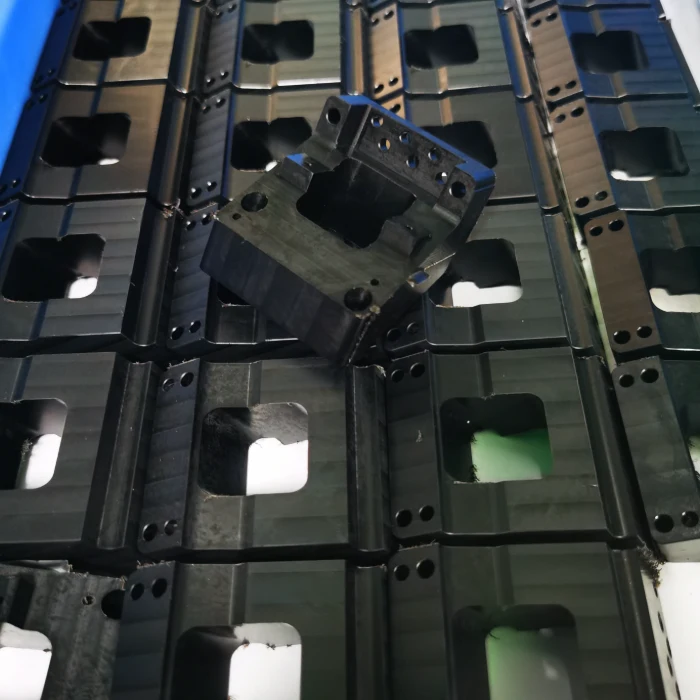
In What Stock Forms Are PP and ABS Available?
PP and ABS are both available as pellets, sheets, rods, pipes, and filament. CNC machining generally uses sheets or rods, injection molding uses resin pellets, and 3D printing uses filament or specialized pellets.
| Stock Form | PP | ABS | Primary Use |
|---|---|---|---|
| Resin pellets | Common | Common | Injection molding, extrusion, and compounding |
| Sheet | Common | Common | CNC milling, cutting, welding, or thermoforming |
| Round rod | Available | Common | CNC turning, bushings, rollers, and spacers |
| Pipe | Common | Common | Fluid piping, drainage piping, and protective sleeves |
| Thin sheet or roll | Common | Common | Liners, dividers, and thermoformed housings |
| Plastic welding rod | Common | Available | Hot-gas welding and structural repair |
| 3D printing filament | Available | Common | Prototypes, fixtures, and low-volume parts |
| Modified pellets | Common | Common | Reinforced, flame-retardant, UV-resistant, and antistatic parts |
Common PP Stock Forms
PP pellets are mainly used for injection molding and extrusion. They are suitable for high-volume production of containers, fluid components, flip-top closures, and automotive parts.
PP sheets include extruded and compression-molded forms. They are commonly used for chemical tanks, dividers, support panels, and CNC-machined parts. Before machining thick sheets, confirm flatness, thickness tolerance, internal stress, and manufacturing method.
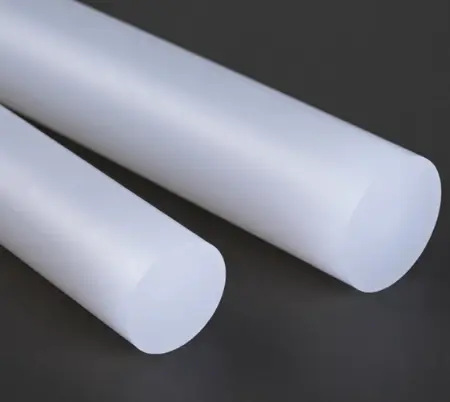
PP round rods are suitable for turned bushings, rollers, support rings, and circular fluid-handling components. Large-diameter rods should be checked for straightness and internal stress to reduce the risk of bending or roundness changes after machining.
PP pipes and welding rods are mainly used in chemical piping, ventilation systems, and welded tanks. The welding rod should be compatible with the base material grade, and the connection quality should be verified through weld appearance, strength, or leak testing.
Common ABS Stock Forms
ABS pellets are mainly used for injection-molded equipment housings, control panels, automotive interior parts, and consumer products. Color, heat resistance, flame resistance, impact performance, and plating capability depend on the specific grade.
ABS sheets are suitable for CNC milling, mechanical cutting, vacuum forming, and housing production. Machining-grade sheets are better suited to instrument panels, fixtures, and functional prototypes.
ABS round rods can be used for turned sleeves, spacers, rollers, and small rotating parts. Diameter tolerance, straightness, color, and extrusion direction should be confirmed during purchasing.
ABS filament is widely used in FDM 3D printing. Printed parts have pronounced interlayer directionality, so their strength, dimensional, and appearance standards should be specified separately from parts machined from sheet or rod stock.
Should You Choose PP or ABS for Different Operating Environments?
Chemical Environments
PP is generally more suitable for contact with most acids, alkalis, salt solutions, and water-based cleaning agents. Strong oxidizers, high-temperature hydrocarbons, and certain solvents can still affect PP, so final selection should be based on the actual chemical, concentration, temperature, and exposure time.
ABS is suitable for general industrial environments and contact with some diluted acids, diluted alkalis, and oils. Ketones, esters, aromatic solvents, and chlorinated solvents can significantly affect ABS, so compatibility should be verified through immersion testing under the actual stress condition.
Humid or Immersed Environments
PP has low water absorption and is better suited to water-treatment systems, laboratory equipment, and prolonged humid environments. ABS can also be used under general humidity, but high-precision parts require controlled material storage, inspection temperature, and environmental humidity.
Rigid and Precision Assemblies
Equipment housings, mounting brackets, instrument panels, and precision fixtures are generally better suited to ABS. It holds hole spacing, flatness, and assembly datums more easily and is also more convenient for installing threaded inserts and applying cosmetic finishes.
Repeated-Flexing Structures
PP is the preferred choice for living hinges, flip-top closures, and clips that undergo repeated deformation. ABS is better suited to rigid clips, screw-fastened assemblies, and joints with limited deformation.
Outdoor Environments
Standard PP and standard ABS both require weathering evaluation. For prolonged sunlight exposure, use UV-stabilized PP, weather-resistant ABS, or ASA, and validate performance according to color, wall thickness, temperature, and target service life.
Elevated-Temperature Environments
Elevated-temperature selection should compare HDT under the same load, long-term service temperature, and creep performance. PP performs well under low loads at elevated temperatures but is more prone to creep under sustained load. ABS generally retains rigidity better under moderate temperatures.
What Are the Differences Between CNC Machining PP and ABS?
ABS is easier to machine to stable dimensions and clean edges. PP machining requires greater control over tool deflection, rebound, burrs, and clamping deformation.
CNC Machining Characteristics of PP
PP is flexible, and both cutting force and clamping pressure can elastically deform the part. The material rebounds after the cutting tool moves away or the fixture is released, making internal holes, narrow slots, thin walls, and long cantilevers more difficult to control.
PP should be machined with sharp, low-friction tools that provide sufficient chip clearance. Clamping pressure should remain light. Releasing the part after rough machining, measuring it again, and re-establishing the datum can reduce errors caused by clamping deformation.
Chips must be evacuated continuously. Chip wrapping and localized heat buildup can cause melted edges, tearing, burrs, and dimensional changes, especially in deep holes, narrow slots, and small threads.
CNC Machining Characteristics of ABS
ABS is suitable for milling, turning, drilling, and tapping. It usually produces clean edges and holds dimensions consistently, making it suitable for housings, fixtures, panels, and low-volume functional parts.
Cutting heat still needs to be controlled. Dull tools, unsuitable feed rates, or poor chip evacuation can soften the local surface and create burrs or tool marks. Thin walls, deep cavities, and parts with substantial one-sided material removal also require residual-stress control.
Coolants and cleaning agents must be compatible with ABS. Liquids containing aggressive solvents can cause stress cracking in loaded areas.
How Can Deformation Be Controlled in Thin-Walled and High-Precision Parts?
Thin-walled, deep-cavity, curved-surface, and heavily one-sided machined parts should be processed in stages. Removing a large volume of material in one operation can release internal stress abruptly and change flatness, position, profile, or roundness.
A suitable process sequence is:
Rough machining with finishing allowance → fixture release → resting or stress relief according to the material condition → datum re-establishment → multiple finishing operations → temperature-controlled inspection.
The main focus when machining PP is controlling elastic deformation and thermal expansion. With ABS, the priority is balancing material removal, clamping force, and cutting heat. Critical curved surfaces and tight geometric tolerances require uniform support, symmetrical material removal, and multiple finishing passes.
Parts should return to the specified temperature before inspection. Plastics have significant thermal expansion, so dimensions measured immediately after machining may not represent the final dimensions after thermal stabilization.
Which Manufacturing Processes Are Suitable for PP and ABS?
CNC Machining
CNC machining is suitable for prototypes, low-volume orders, tight tolerances, and projects that do not justify tooling. ABS is easier to machine into precision structures, while PP is more suitable for chemically resistant, moisture-resistant, and flexible functional components.
Injection Molding
Injection molding is suitable for stable high-volume production. PP works well for lightweight parts, living hinges, and chemically resistant components. ABS is suitable for cosmetic housings, rigid structures, and precision assemblies.
PP and ABS have different shrinkage rates, flow behavior, mold-temperature requirements, and packing-pressure requirements. When an existing mold is changed from ABS to PP or vice versa, dimensional compensation, warpage, gating, and cooling conditions must be re-evaluated. Some projects also require tool modification.
3D Printing
ABS filament is widely available and suitable for functional prototypes, fixtures, and assembly validation. It requires an enclosed printing environment, a heated platform, and controlled cooling.
PP can also be FDM printed. PP prints offer good toughness and chemical resistance, but bed adhesion and warpage are more difficult to control. PP printing generally requires a compatible build surface, stable chamber temperature, and validated process parameters.
Thermoforming and Plastic Welding
ABS sheets are suitable for vacuum-formed housings, liners, and equipment guards. PP sheets are suitable for chemical tanks, ducts, and welded structures.
PP is commonly joined using hot-gas welding, extrusion welding, hot-plate welding, and ultrasonic welding. ABS can be joined through ultrasonic welding, hot-plate welding, solvent bonding, or adhesive bonding. The process should be selected according to part thickness, joint design, and sealing requirements.
What Are the Differences Between PP and ABS Post-Processing Options?
PP post-processing focuses on increasing surface adhesion. ABS post-processing focuses on achieving a uniform appearance while preventing solvent-induced stress cracking.
Post-Processing Options for PP Parts
- Deburring: Use a sharp scraper, controlled trimming, or carefully managed mechanical finishing to reduce edge stretching and rollover.
- Surface activation: Plasma, flame, or corona treatment increases surface energy and prepares the part for painting, printing, or bonding.
- Dedicated primer: A PP-compatible primer improves adhesion and long-term stability before painting or bonding.
- Plastic welding: Hot-gas, extrusion, and hot-plate welding are suitable for tanks, pipes, and large housings.
- Cleaning: Compatible water-based cleaners or ultrasonic cleaning can be used, while temperature and cleaning time should be controlled to prevent deformation.
Post-Processing Options for ABS Parts
- Sanding and mechanical polishing: Remove tool marks and improve visible surfaces on housings and panels.
- Painting and printing: ABS readily accepts uniform coatings, colors, brand graphics, and functional markings.
- Adhesive and solvent bonding: Tight joints can be produced, but the solvent type and quantity must be controlled to prevent stress cracking.
- Decorative electroplating: Plating-grade ABS can receive multilayer copper, nickel, and chromium coatings for a metallic appearance.
- Cleaning: Water-based or ultrasonic cleaning can remove chips and oil, but the cleaning agent must be checked for compatibility.
Surface roughness, residual stress, contamination, and the delay after surface activation all affect coating and bond strength. Post-processing requirements should be included in the drawing and acceptance criteria.
What Parts Are Commonly Made from PP and ABS?
Common PP Parts and Applications
In chemical-processing and fluid-handling equipment, PP is commonly used for valve bodies, pump components, flanges, distribution blocks, filter supports, and tank fittings. Its low water absorption and chemical resistance suit humid and corrosive-service environments.
In medical and laboratory equipment, PP is used for sample trays, reagent containers, tubing connectors, and disposable components. The specific project requires a grade supported by the relevant regulatory documentation.
In automotive and electrical applications, PP is used for battery housings, air ducts, interior brackets, guards, and cable-retaining components. Glass-fiber- or mineral-filled PP improves rigidity and dimensional stability.
In packaging and consumer products, PP is widely used for flip-top closures, containers, and living hinges. Its flexural fatigue resistance supports one-piece opening and closing structures.
Common ABS Parts and Applications
In industrial automation, ABS is used for fixtures, sensor housings, control boxes, brackets, and equipment guards. It is easy to machine and assemble, making it suitable for prototypes and low-volume custom production.
In electrical and electronic equipment, ABS is used for instrument housings, panels, insulators, and connector housings. Flame-retardant or antistatic ABS grades can meet more specific operating requirements.
In automotive applications, ABS is used for interior parts, control panels, trim covers, and non-high-temperature structural components. The surface can be painted, textured, or decoratively electroplated.
In medical equipment and consumer products, ABS is suitable for handheld housings, equipment covers, and functional prototypes. Its surface quality and colorability support appearance inspection requirements.
What Upgraded Options Are Available When Standard PP or ABS Is Insufficient?
Modified PP Materials
Impact copolymer PP improves low-temperature impact performance and is suitable for transport containers, automotive components, and housings exposed to drops.
Glass-fiber-reinforced PP increases rigidity, strength, and thermal dimensional stability. It is suitable for brackets, structural housings, and automotive components. Glass fibers increase tool wear and create directional properties and shrinkage.
Mineral-filled PP can improve rigidity, reduce shrinkage, and increase dimensional stability. It is commonly used for equipment housings, appliances, and automotive interior structures.
UV-stabilized PP is suitable for outdoor housings, agricultural equipment, and sun-exposed components. Target service life should be verified against color, wall thickness, stabilizer system, and actual exposure conditions.
Flame-retardant, conductive, and antistatic PP grades are used for electrical safety and static-control projects. Drawings should specify the flame rating and test thickness or the required resistance range.
Modified ABS Materials
High-impact ABS is suitable for guards, handheld housings, and frequently handled equipment parts.
Heat-resistant ABS provides better dimensional retention at elevated temperatures and is suitable for automotive interiors, appliances, and structural components near heat-generating equipment.
Flame-retardant ABS is used for electrical enclosures and control equipment. Purchasing requirements should specify the flame rating, test thickness, color, and certification requirements.
Glass-fiber-reinforced ABS offers higher rigidity and lower shrinkage, making it suitable for precision brackets and structural components. Glass fibers affect surface appearance and increase tool wear.
Plating-grade ABS is suitable for decorative parts and components requiring a metallic appearance. Antistatic or conductive ABS is used for electronic assembly, inspection fixtures, and ESD-controlled equipment.
Can CNC-Machined Samples Represent Injection-Molded Production Parts?
CNC-machined samples can verify assembly dimensions, basic structure, operating clearance, and some material functions, but they cannot fully reproduce the flow orientation, weld lines, shrinkage, and residual stress of injection-molded parts.
Machining stock and injection-molding pellets are usually different processing grades. Even when both are called PP or ABS, their properties may differ. If the final part will be injection molded, use sheet or rod stock with properties as close as possible to the target production resin, then use mold-trial parts to confirm clips, living hinges, warpage, surface quality, and final dimensions.
ABS samples can provide an initial check of the space and assembly relationship of a PP product, but the flexibility, rebound, shrinkage, and fatigue life of the production PP part must be validated using the target PP grade.
How Can the Cost and Lead Time of PP and ABS Parts Be Controlled?
- Select the correct grade: Choose the material according to temperature, load, contact media, and appearance requirements to avoid excessive performance and mid-project material changes.
- Use stock close to the finished dimensions: This reduces cutting volume, material waste, and stress release.
- Allocate tolerances appropriately: Apply tight tolerances to mating holes, sealing surfaces, and assembly datums while using economical tolerances on non-functional profiles.
- Simplify difficult features: Deep narrow slots, long deep holes, small internal radii, and thin cantilevers increase machining time and deformation risk.
- Define post-processing early: Painting, bonding, welding, cleaning, and appearance inspection each require separate process planning.
- Validate samples first: Confirming material, dimensions, and assembly before batch production reduces rework and batch rejection.
- Select the process according to volume: CNC machining suits prototypes and low-volume orders, while injection molding is better for stable high-volume production.
PP usually offers advantages in raw material cost and density, but precision CNC machining may require additional fixturing, deburring, and inspection time. ABS is easier to machine and finish consistently, which can produce a lower total cost per acceptable part for cosmetic and tight-tolerance components.
How Should Custom PP and ABS Parts Be Inspected?
Inspection should cover material, dimensions, appearance, and function. Confirming only that a part is labeled “PP” or “ABS” is insufficient.
- Material identity: Verify the specific grade, color, fillers, flame-retardant requirements, and UV-resistance requirements.
- Material documentation: Confirm material certificates, regulatory documentation, and batch traceability records.
- Dimensions and geometric tolerances: Inspect hole diameter, hole spacing, flatness, profile, and assembly datums at the specified temperature.
- Appearance quality: Define acceptable tool marks, scratches, color variation, burrs, and finishing limits.
- Functional validation: Perform assembly, sealing, chemical compatibility, thermal-aging, or load tests according to the application.
- Batch consistency: Compare first articles, in-process samples, and the final batch to prevent unapproved material or process changes.
Food, medical, and high-purity applications must be tied to a specific grade, regulatory documentation, and cleaning process. The material name alone does not demonstrate compliance.
How Should You Choose a Reliable PP and ABS Machining Supplier?
A reliable supplier needs experience in machining plastics, not merely access to CNC equipment. Plastics require different tooling, fixturing, temperature control, chip management, and cleanliness practices from metals.
The supplier assessment should confirm:
- Experience with similar PP and ABS parts
- Ability to control clamping deformation in thin-walled and flexible plastics
- Staged-machining and temperature-controlled inspection capabilities
- Material certification and batch traceability
- Deburring, cleaning, painting, bonding, and assembly capabilities
- Support for prototypes, low-volume orders, and production quantities
- Ability to identify high-risk features and provide DFM feedback before quotation
The supplier should also state which tolerances can be maintained consistently in production and which features increase deformation, surface-defect, and delivery risks.
How Does Weldo Support Custom PP and ABS Parts?
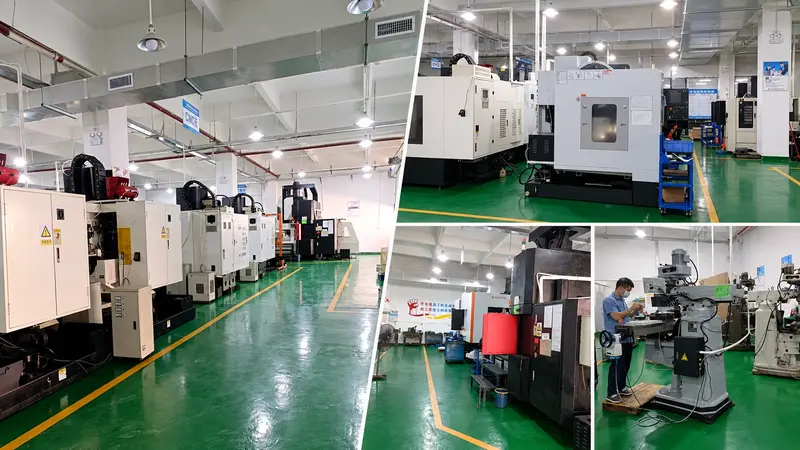
Weldo can assess PP and ABS material options and machining routes based on drawings, operating temperature, contact media, assembly method, and order volume.
Services cover CNC turning, CNC milling, staged machining of thin-walled parts, deburring, cleaning, surface finishing, dimensional inspection, and assembly. Support is available for functional prototypes, low-volume trials, and production orders.
For quotation, provide 2D drawings, 3D models, operating conditions, critical tolerances, appearance requirements, order quantity, and target delivery date. This information supports an accurate assessment of the material, manufacturing sequence, and inspection plan.
Conclusion: Should You Choose PP or ABS?
Choose PP when chemical resistance, moisture resistance, low weight, or repeated bending is required. It is better suited to fluid-handling components, chemical-processing parts, living hinges, containers, and lightweight structures.
Choose ABS when rigidity, precision dimensions, good appearance, or mature post-processing is required. It is better suited to equipment housings, fixtures, brackets, panels, and functional prototypes.
Tight-tolerance CNC parts are generally better suited to ABS. Parts exposed to chemicals or repeated flexing are generally better suited to PP. Outdoor, flame-retardant, antistatic, and high-rigidity projects require the corresponding modified grade.
FAQ
Can PP and ABS Be Used in the Same Product?
Yes. The design should account for differences in thermal expansion, rigidity, and shrinkage, with suitable clearance at the assembly interface. Preferred joining methods include screws, clips, heat staking, or a validated specialty adhesive system.
Can an ABS Sample Be Made First and the Production Material Later Changed to PP?
An ABS sample can verify basic dimensions and assembly space, but it cannot validate the flexibility, rebound, living-hinge life, or injection-molding shrinkage of PP. When functional loads are involved, a new sample should be produced from PP with properties close to the production material.
Can PP Parts Be Painted or Bonded?
Yes. PP has low surface energy, so painting or bonding requires plasma, flame, or corona treatment along with a PP-compatible primer, paint, and adhesive.
Is Recycled PP or Recycled ABS Suitable for Precision Parts?
Recycled materials with clearly controlled formulations and batches can be used for suitable projects. Tight-tolerance, cosmetic, or high-reliability parts require particular attention to consistency in contamination, color, shrinkage, melt flow, and mechanical properties.
Can the Same Injection Mold Be Switched Directly Between PP and ABS?
A molding trial can be performed, but stable production generally cannot use the same dimensional compensation and process settings without reassessment. PP and ABS have different shrinkage rates, flow behavior, mold-temperature requirements, and cooling conditions. Dimensions, warpage, gating, packing, and surface quality must be revalidated after the material change.