
Hastelloy C276 is a nickel-chromium-molybdenum-tungsten corrosion-resistant alloy with strong resistance to pitting, crevice corrosion, chloride-induced stress-corrosion cracking, and various acidic media. It is commonly used for valves, pumps, flanges, rings, and fasteners in chemical equipment, fluid-control systems, energy equipment, and highly corrosive environments.
For buyers of custom parts, material authenticity, work hardening, tool wear, dimensional stability, and cleanliness are the main factors that must be controlled when sourcing C276 components.
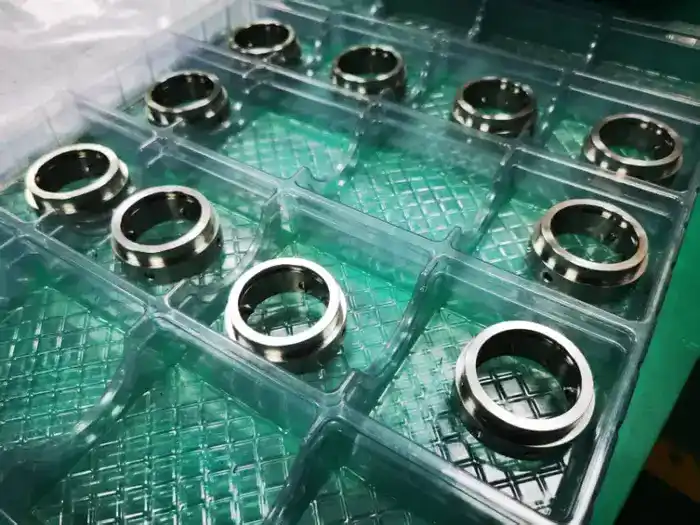
What Is Hastelloy C276?
Hastelloy C276, corresponding to UNS N10276 and material number 2.4819, is a low-carbon, low-silicon, solid-solution-strengthened nickel-based corrosion-resistant alloy. Its high molybdenum, chromium, and tungsten contents allow it to withstand various oxidizing and reducing environments.
“HASTELLOY” is a registered trademark. Engineering drawings and purchasing documents should also specify C276, UNS N10276, the applicable material standard, and the required supply condition to support material traceability and acceptance.
What Are the Key Chemical Elements in C276?
| Element | Typical Content | Primary Function |
|---|---|---|
| Nickel (Ni) | Balance | Forms the alloy matrix and provides corrosion resistance |
| Molybdenum (Mo) | 15.0%–17.0% | Improves resistance to pitting and reducing environments |
| Chromium (Cr) | 14.5%–16.5% | Improves corrosion resistance in oxidizing environments |
| Iron (Fe) | 4.0%–7.0% | Adjusts the microstructure and overall properties |
| Tungsten (W) | 3.0%–4.5% | Improves resistance to localized corrosion |
| Cobalt (Co) | ≤2.5% | Controlled alloying element |
| Carbon (C) | ≤0.01% | Reduces the risk of grain-boundary carbide precipitation |
| Silicon (Si) | ≤0.08% | Improves corrosion stability in the weld heat-affected zone |
Final acceptance should be based on the specified material standard and the EN 10204 3.1 material certificate for the relevant production batch.
What Are the Key Mechanical Properties of C276?
The following are typical ranges for solution-annealed material at room temperature. The exact values vary with product form, thickness, and the applicable standard.
| Property | Typical Range |
|---|---|
| Tensile strength | Approximately 780–800 MPa |
| 0.2% yield strength | Approximately 350–370 MPa |
| Elongation after fracture | Approximately 55%–60% |
| Hardness | Approximately 86–88 HRB |
| Elastic modulus | Approximately 205 GPa |
| Density | Approximately 8.89 g/cm³ |
| Melting range | Approximately 1323–1371°C |
These values are suitable for preliminary material selection. Part acceptance values should be defined by the drawing, purchasing specification, and material certificate.
What Are the Physical, Electrical, and Magnetic Properties of C276?
C276 has a room-temperature thermal conductivity of approximately 10.2 W/m·K, which is only about 1/16 that of 6061 aluminum and 1/13 that of 7075 aluminum. Cutting heat tends to concentrate near the tool tip, so CNC machining requires stable coolant delivery, sharp tools, and continuous chip evacuation.
Its electrical resistivity is approximately 1.23 μΩ·m, and its conductivity is about 1.4% IACS compared with annealed copper. It is therefore suitable as a corrosion-resistant structural material rather than a highly conductive component.
Solution-annealed C276 is essentially nonmagnetic, with a relative magnetic permeability close to 1. Heavy cold working may cause a slight change in magnetic response, so low-magnetic applications can be verified in the finished condition.
How Corrosion-Resistant Is C276?
C276 offers strong resistance to chlorides, wet chlorine, hypochlorites, saltwater, and various acidic media. It also resists pitting, crevice corrosion, and chloride-induced stress-corrosion cracking.
Final material selection should consider the chemical composition, concentration, temperature, pressure, flow rate, and impurities of the process medium. For mixed acids, high-temperature acidic solutions, or environments containing oxidizing contaminants, corrosion data should be reviewed or specimen testing should be completed under representative operating conditions.
What Are the Advantages and Service Limits of C276?
Main Advantages
- Stable corrosion resistance in a wide range of aggressive media.
- Strong resistance to pitting, crevice corrosion, and stress-corrosion cracking.
- Good weldability for complex equipment and welded assemblies.
- Good strength and toughness across a broad temperature range.
- Can be manufactured into valves, pump components, rings, springs, flanges, and fasteners.
Service Limits
- Raw material and machining costs are higher than those of conventional stainless steel, making appropriate stock selection and process planning important for cost control.
- Pronounced work hardening and low thermal conductivity place higher demands on tools, cooling, fixture rigidity, and cutting parameters.
Can C276 Be Heat Treated?
C276 can be solution annealed at a typical temperature of approximately 1120°C, followed by rapid cooling after the required holding time. This treatment restores a uniform microstructure, reduces the effects of cold working, and preserves resistance to grain-boundary corrosion.
The strength of C276 primarily comes from solid-solution strengthening and cold working rather than precipitation hardening. After hot forming or substantial cold deformation, renewed solution annealing should be evaluated according to material thickness, deformation level, and service requirements.
What Raw Material Forms Are Available for C276?
| Raw Material Form | Common Standards | Typical Parts |
|---|---|---|
| Plate, sheet, and strip | ASTM B575 / ASME SB-575 | Flanges, brackets, valve plates, equipment linings |
| Bar | ASTM B574 / ASME SB-574 | Shafts, pins, valve stems, sleeves, rings |
| Pipe and tube | ASTM B619, ASTM B622 | Corrosive-fluid piping and instrumentation tubing |
| Forgings | ASTM B564 | High-load flanges, valve bodies, connectors |
| Fittings | ASTM B366 | Elbows, tees, reducers |
| Wire | As specified in the purchase specification | Springs, retaining rings, wire components |
Purchasing documents should define the grade, product form, dimensions, solution-annealed condition, material standard, and material certification requirements.
Which CNC Machining Processes Support C276?
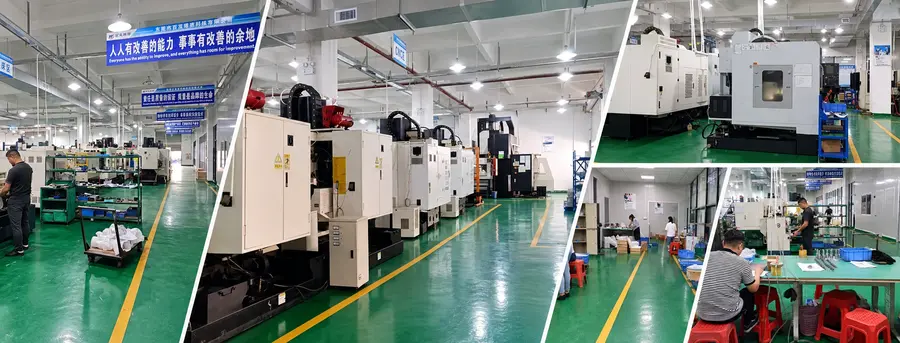
Multi-Axis CNC Milling
3-axis, 4-axis, and 5-axis machining are suitable for valve bodies, brackets, fluid manifolds, flanges, deep cavities, and multi-directional hole patterns. Reducing repeated setups helps maintain the positional relationships among holes, datums, and sealing surfaces.
CNC Turning
CNC turning is suitable for shafts, sleeves, valve stems, rings, threaded connectors, and rotational sealing components. Precision bores, end faces, and outside diameters can be machined from a common datum to control concentricity and face runout.
Mill-Turn Machining
Mill-turn machining is suitable for complex parts that combine rotational profiles, radial holes, eccentric holes, threads, and milled surfaces. Completing the primary features in one setup reduces errors caused by datum transfers.
Precision grinding and wire electrical discharge machining can be used for close-tolerance mating surfaces, narrow slots, complex profiles, and features that conventional cutting tools cannot easily access.
What Are the Main Challenges in CNC Machining C276?
| Machining Challenge | Effect | Control Method |
|---|---|---|
| Pronounced work hardening | Subsequent tool passes enter a hardened layer, accelerating wear | Maintain continuous cutting and reduce tool rubbing or dwell |
| Low thermal conductivity | Cutting temperature rises near the tool tip | Use stable coolant delivery and heat-resistant cutting tools |
| High toughness | Continuous, stringy chips can form | Optimize chip-breaker geometry, feed rate, and chip evacuation |
| Rapid tool wear | Dimensions and surface quality may fluctuate | Monitor tool life and perform in-process inspection |
| Low rigidity in thin walls | Clamping and cutting forces can cause distortion | Use soft jaws, uniform support, and staged machining |
| Difficult chip evacuation in deep holes | Bore surfaces or tools may be damaged | Use through-coolant tooling, pecking cycles, and forced chip evacuation |
How Should the Machining Route for C276 Parts Be Planned?
A suitable machining route should focus on datums, cutting heat, tool life, and distortion control:
- Verify the material certificate, heat number, and supply condition.
- Select stock close to the finished part geometry.
- Establish stable locating datums and a suitable fixturing method.
- Remove material evenly from all sides during rough machining.
- Release the fixture and remeasure the part condition.
- Semi-finish while retaining consistent finishing allowance.
- Use tools in stable condition to complete critical dimensions.
- Machine radial holes, threads, sealing surfaces, and mating features.
- Complete deburring, cleaning, and contamination control.
- Perform dimensional, surface, and nondestructive inspection according to the drawing.
Critical bores, sealing surfaces, and coaxial features should be completed during the later machining stages to reduce the influence of earlier operations and clamping on final accuracy.
How Are C276 Springs Manufactured?
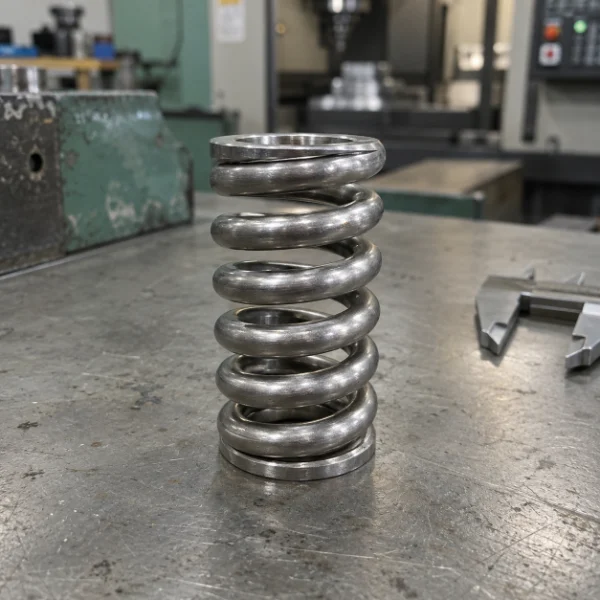
C276 springs are typically cold coiled from cold-drawn spring wire, followed by end finishing, deburring, cleaning, and setting. Their elasticity and strength primarily come from cold working. A qualified low-temperature stress-relief treatment may be applied according to the material supplier’s instructions, followed by load, dimensional, and fatigue testing.
Compression springs, extension springs, torsion springs, and wave springs can all be customized. Full solution annealing reduces the strength produced by cold working and is therefore generally not used as a routine post-coiling treatment.
What Joining Methods Are Commonly Used for C276 Parts?
Welded Joints
C276 can be welded using processes such as GTAW/TIG, GMAW/MIG, and SMAW. Common matching filler metals include ERNiCrMo-4 wire and ENiCrMo-4 electrodes.
Oil, oxides, and iron contamination should be removed before welding. Heat input, interpass temperature, and shielding gas must also be controlled. Pressure equipment and safety-critical assemblies should use qualified WPS/PQR procedures and undergo penetrant, radiographic, or other required inspections.
Bolted and Threaded Joints
These joints are suitable for valve bodies, flanges, and equipment assemblies that require disassembly and maintenance. Nickel-alloy threads are susceptible to galling, so assembly should use a compatible anti-seize compound, an appropriate surface treatment, and controlled tightening torque.
Flanged and Clamped Joints
These joints are suitable for piping, reactors, and fluid-handling equipment. They can be combined with media-compatible gaskets to create maintainable sealing systems.
Pin, Retaining-Ring, and Spring Joints
These methods are suitable for positioning, limiting movement, and applying preload in valves, pumps, and instrumentation assemblies.
What Should Be Considered When Joining C276 to Other Materials?
When C276 is in direct contact with aluminum, magnesium, zinc, galvanized steel, or carbon steel in humid, saltwater, or chemical environments, galvanic corrosion should be controlled. Insulating gaskets, sleeves, sealants, or localized coatings can be used to separate dissimilar metals.
When joining C276 to 304, 316L, duplex stainless steel, or other nickel-based alloys, the potential difference should also be evaluated in relation to the contact area, process medium, and temperature. Dissimilar-metal welds require a suitable filler metal and a qualified welding procedure to verify joint performance.
Which Surface Finishes Are Commonly Used for C276 Parts?
Mechanical Polishing
Mechanical polishing reduces surface roughness, removes tool marks, and improves sealing surfaces and appearance. It is commonly used for valve trim, sealing rings, and components used in clean-fluid systems.
Electropolishing
Electropolishing reduces microscopic surface peaks and improves cleanliness and surface uniformity. It is suitable for pharmaceutical, chemical-processing, and high-purity fluid components. The original surface condition and edge dimensions must be controlled before treatment.
Pickling and Chemical Cleaning
Pickling removes weld heat tint, oxide scale, and surface contamination. The acid system, treatment time, and cleaning method should be compatible with the C276 material and part geometry.
Glass-Bead Blasting
Glass-bead blasting creates a uniform matte finish and reduces the visibility of light machining marks. Clean, dedicated nonferrous media should be used, while threads, sealing surfaces, and precision mating areas should be masked.
C276 naturally forms a stable passive film. When chemical passivation or a functional coating is required, the selected process should be specifically validated for nickel-based alloys.
Which Industries and Parts Commonly Use C276?
Chemical and Petrochemical Equipment
Common parts include valve bodies, valve stems, valve seats, pump shafts, impeller components, sealing rings, fluid manifolds, nozzles, flanges, fittings, and agitator shafts. C276 is suitable for chloride-containing media, mixed acids, and highly corrosive process fluids.
Oil, Gas, and Energy Equipment
Typical applications include valve internals, instrumentation fittings, pressure connectors, sleeves, fasteners, springs, and offshore equipment components. Sour-service applications should also comply with NACE MR0175/ISO 15156 and the applicable project specifications.
Pharmaceutical and High-Purity Fluid Systems
Typical parts include sampling valves, metering valves, high-purity fittings, nozzles, compact manifolds, and reactor connectors. Surface roughness, cleanliness, and material traceability are primary acceptance requirements.
Flue-Gas Desulfurization and Pollution-Control Equipment
Typical applications include scrubber nozzles, flue-gas desulfurization components, damper mechanisms, waste-liquid valve parts, filter supports, and corrosion-resistant springs.
Pulp, Paper, and Bleaching Equipment
Common parts include mixers, nozzles, valve components, pump shafts, bushings, filter components, and adjustment springs.
Marine and Saltwater Equipment
C276 is used for valve internals, pump shafts, bushings, flanges, fittings, fasteners, retaining rings, and preload components.
Semiconductor Chemical-Delivery Equipment
Common parts include fluid manifolds, isolation valves, metering valves, high-purity fittings, nozzles, and sealing components.
How Does C276 Differ from Other Corrosion-Resistant Alloys?
| Material | Main Characteristics | Typical Applications |
|---|---|---|
| C276 | Broad corrosion resistance in oxidizing, reducing, and chloride-containing media | Mixed acids, chlorides, chemical-processing equipment |
| C22 | Strong performance in many oxidizing environments | Chemical equipment, pharmaceutical systems, high-purity systems |
| Inconel 625 | Balanced strength, heat resistance, and seawater corrosion resistance | Marine, aerospace, and high-temperature structural components |
| 316L | More economical material and machining costs | Moderate corrosion environments and general equipment |
| Super Duplex Stainless Steel | High strength and good resistance to chloride corrosion | Seawater, oil and gas, and pressure equipment |
Material substitutions should be verified according to the actual medium, temperature, strength requirements, manufacturing process, and project standards.
Which Quality Certificates and Inspections Are Required for C276 Parts?
- EN 10204 3.1 material certificate and heat traceability.
- XRF positive material identification to verify major elements such as nickel, chromium, molybdenum, and tungsten.
- Laboratory analysis of critical elements such as low carbon and low silicon when required by the project.
- CMM, roundness, surface roughness, and thread-gauge inspection.
- Penetrant, ultrasonic, radiographic, or eddy-current inspection selected according to the part geometry and applicable standard.
- Pressure, leakage, corrosion, or spring-load testing performed according to the component’s function.
ISO 9001, AS9100, ISO 13485, NACE, ASME, and PED represent quality systems or project requirements and cannot replace specific material certificates and part inspection records.
How Can the Cost and Lead Time of C276 Parts Be Controlled?
- Select plate, bar, tube, or forgings close to the finished dimensions.
- Apply tight tolerances only to mating, sealing, and locating features.
- Provide sufficient tool access for deep holes, narrow slots, and internal corners.
- Standardize material specifications and datum systems across repeat parts.
- Define inspection, cleaning, surface-finishing, and documentation requirements during the quotation stage.
- Freeze the machining program, tooling, and inspection plan after sample approval.
How Should a Reliable C276 CNC Machining Supplier Be Selected?
- The supplier can verify UNS N10276, the applicable material standard, and the heat certificate.
- The supplier has experience machining nickel-based alloys and uses a controlled tool-management system.
- The supplier can explain its fixturing, chip evacuation, cooling, and thin-wall distortion-control methods.
- The supplier has CMM, surface-roughness, thread, and nondestructive inspection capabilities.
- The supplier can provide complete traceability for materials, machining, cleaning, inspection, and delivery.
Weldo’s Custom C276 Machining Capabilities
Weldo provides three-axis, four-axis, and five-axis CNC machining with HAAS and Hurco equipment, together with CNC turning, mill-turn machining, precision grinding, and wire EDM. We manufacture custom valve parts, pump components, rings, sleeves, flanges, shafts, spring accessories, and complex fluid-handling components.
Supporting services include deburring, polishing, blasting, ultrasonic cleaning, CMM inspection, surface-roughness measurement, thread inspection, and material traceability. From prototypes and small batches to repeat production, each project follows a machining and quality-control plan based on the drawing and acceptance requirements.
Customer Case: Custom C276 Precision Annular Component for a Turkish Buyer
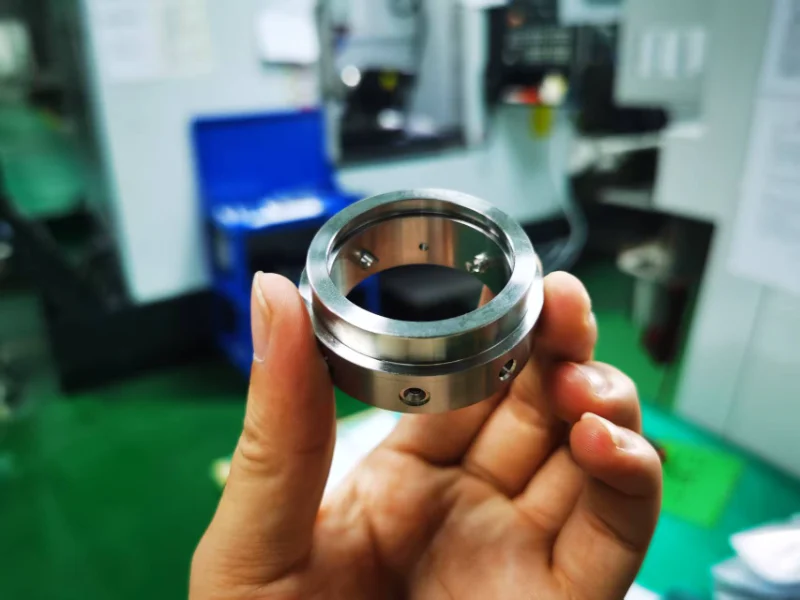
A Turkish chemical-equipment buyer commissioned Weldo to manufacture the C276 annular component shown in the image. The part featured stepped outside diameters, a precision bore, end faces, and multiple radial and threaded holes. The machining process had to control coaxial relationships between the turned surfaces, face runout, hole positions, and thread quality.
Weldo first verified the UNS N10276 material certificate and then used dedicated soft jaws to establish the bore and end face as machining datums. The outside diameter, steps, and bore were produced through staged turning, followed by multi-axis machining of the radial and threaded holes. Stable coolant delivery, continuous cutting, and tool-life monitoring reduced work hardening and burr formation around the holes.
The finished part underwent dimensional, concentricity, hole-position, thread, and surface inspections before deburring and ultrasonic cleaning. It was delivered in accordance with the drawing, and the customer confirmed successful assembly while providing positive feedback on dimensional consistency and project communication.
Frequently Asked Questions
Is Hastelloy C276 Considered Stainless Steel?
No. C276 is a nickel-based corrosion-resistant alloy containing chromium, molybdenum, and tungsten, while stainless steel is iron-based. C276 generally provides greater corrosion resistance than 316L in strong acids, chlorides, and mixed corrosive media.
Are Hastelloy and Inconel the Same Material?
No. Both are families of nickel-based alloys, but Hastelloy alloys generally focus on corrosion resistance in aggressive media, while Inconel alloys are commonly selected for high-temperature strength, oxidation resistance, and mechanical performance. Material selection should compare specific grades rather than brand names alone.
Is Hastelloy C276 Expensive?
Yes. The material and machining costs of C276 are generally higher than those of 316L stainless steel. Its high nickel, molybdenum, and tungsten content increases raw-material costs, while work hardening, tool wear, and lower cutting efficiency add to manufacturing expenses.
Can Hastelloy C276 Be Welded to Stainless Steel?
Yes. C276 can be welded to stainless steels such as 304 and 316L, commonly using a nickel-based filler metal such as ERNiCrMo-4. Joint loading, corrosive media, and operating temperature should be confirmed before welding, while the filler metal, heat input, and interpass temperature should be controlled through a qualified WPS/PQR.
Why Does C276 Welding Require Strict Process Control?
C276 has good weldability, but surface contamination, excessive heat input, and unsuitable filler metal can reduce the corrosion resistance of the joint. Pre-weld cleaning, matching filler metal, stable shielding gas, and post-weld removal of heat tint are essential for consistent weld quality.
What Are the Common Hastelloy Grades?
Common grades include C276, C22, C2000, B3, and X. C-series alloys are mainly used in corrosive environments, B-series alloys focus on strongly reducing media, and Hastelloy X is better suited to high-temperature oxidizing environments.
Is Hastelloy C276 Hard?
Solution-annealed C276 typically has a hardness of approximately 86–88 HRB, and hardness alone is not the main reason it is difficult to machine. Its high toughness, pronounced work hardening, and low thermal conductivity accelerate tool wear, requiring stable cutting, sufficient cooling, and controlled tool management.
Can C276 Parts Achieve a ±0.01 mm Tolerance?
Yes. Parts with sufficient rigidity and stable measurement datums can achieve a ±0.01 mm tolerance through staged machining, dedicated fixtures, tool compensation, and in-process inspection. Thin walls, deep cavities, and complex datum structures require individual dimensional and structural evaluation.
How Should C276 Parts Be Cleaned and Maintained?
Use a cleaning agent compatible with both the process medium and C276 to remove deposits, and prevent iron contamination from carbon-steel tools. During maintenance, inspect sealing surfaces, crevices, threads, welds, and dissimilar-metal contact areas.
Conclusion
C276 is suitable for valves, pump components, flanges, rings, fluid manifolds, connectors, and springs that remain in long-term contact with highly corrosive media. Purchasing specifications should control material certification, machining routes, critical dimensions, surface condition, cleanliness, and inspection documentation.
Weldo can evaluate C276 parts according to 2D drawings, 3D models, material standards, quantities, and acceptance requirements, while providing multi-axis CNC machining, grinding, EDM, post-processing, and quality inspection services.