Engineering Plastic Parts

Custom CNC Plastic Machining Services

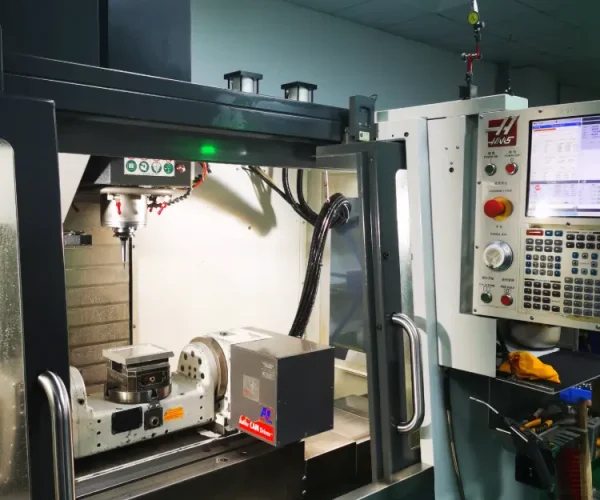
Weldo machines engineering and high-performance plastics into prototypes and production parts using CNC milling, turning, drilling and multi-axis machining.

Material Range12 Common Families
ProductionPrototype to Batch
Published Lead TimeFrom 1–5 Days*
3-Axis Milling4-Axis Machining5-Axis MachiningCNC TurningMolding3D Printing
Upload Your Design for a Quote

*Lead time and achievable tolerance depend on material, geometry, size, quantity and inspection requirements.

Process and Dimensional Control

What Is CNC Plastic Machining?

CNC machining removes material from plastic sheet, plate, rod or tube using programmed cutting paths. It avoids mold tooling and is well suited to functional prototypes, complex geometry and low-to-medium production volumes.

Plastic behavior must guide the process.

Unlike metals, plastics generally have lower stiffness and thermal conductivity, plus higher thermal expansion. Each drawing therefore requires material-specific tooling, workholding and tolerance review.

01

Sharp Cutting Tools

Polished, sharp edges reduce rubbing, heat and built-up material.

02

Heat and Chip Control

Stable chip evacuation and suitable cooling help limit melting and distortion.

03

Low-Stress Workholding

Distributed support and controlled clamping reduce deflection and jaw marks.

04

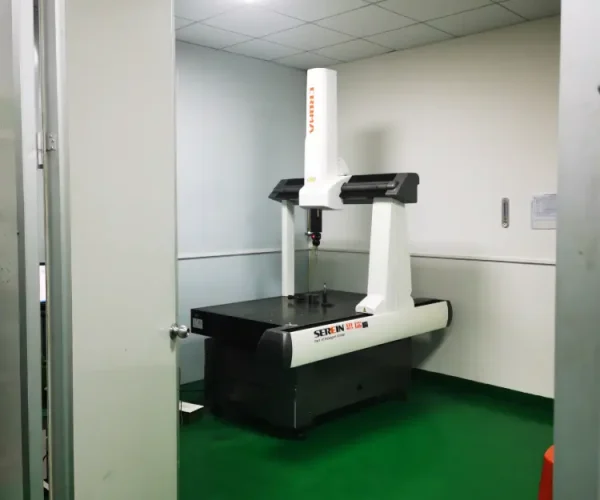
Conditioned Inspection

Temperature, moisture and stress relaxation are considered before final measurement.

Material Selection

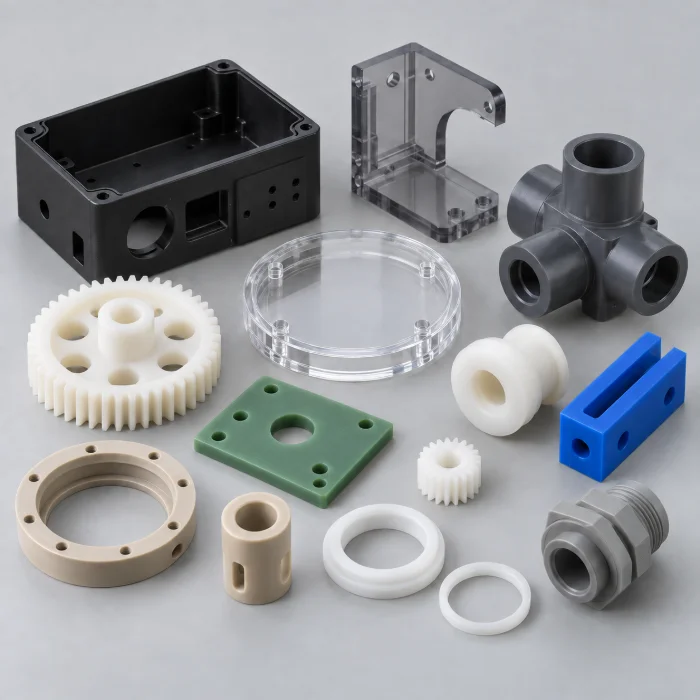
Common Plastics for CNC Machining

Choose by temperature, load, wear, chemical exposure, moisture, electrical behavior and dimensional stability—not by material name alone.

ABS

ABS

Tough, machinable and suitable for housings, brackets and functional prototypes.

PVC

PVC

Rigid grades offer chemical resistance for fluid-handling and insulating components.

POM

POM / Acetal

Low friction and good dimensional stability for gears, bearings and precision mechanisms.

PTFE

PTFE

Very low friction and broad chemical resistance for seals, gaskets and insulators.

PMMA

PMMA / Acrylic

Optically clear material for windows, light guides, covers and display components.

PC

PC

High impact strength and transparency for guards, housings and electrical parts.

FR4

FR4

Glass-epoxy laminate for insulating plates, fixtures, spacers and structural supports.

PA

PA / Nylon

Strong wear material for gears, rollers and bushings; moisture must be considered.

PE

PE / HDPE

Chemical-resistant stock for guides, tanks, valves and low-load components.

PEEK

PEEK

High-performance polymer for heat, chemical and demanding mechanical environments.

PP

PP

Lightweight, chemical-resistant material for lab, fluid and process equipment.

HIPS

HIPS

Economical impact-modified plastic for covers, housings and lightweight parts.

Colors, filled grades, compliance documents and stock dimensions vary. Confirm the exact resin grade before production.

Part Examples and Industries

CNC-Machined Plastic Components

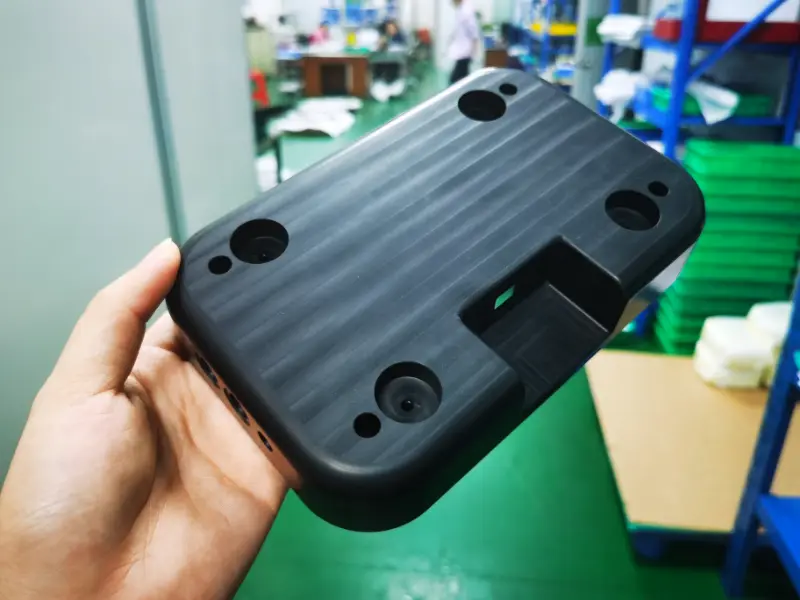
Plastic machining supports functional parts from simple insulating plates to complex multi-axis housings, wear components and fluid-handling parts.

ABS Housing
ABS Housing
POM Precision Part
POM Precision Part
PTFE Turn-Mill Parts
PMMA Stock Material
PMMA Stock Material
FR4 Insulating Part
FR4 Insulating Part
PA Nylon Material
PA Nylon Material
5-Axis PE Part
5-Axis PE Part
Polycarbonate Stock
Polycarbonate Stock
AutomationElectronicsAutomotiveMedical Equipment*Laboratory SystemsFood Equipment*AerospaceFluid Handling

*Regulated applications require the correct material grade, traceability and supporting documentation.

Material-Specific Finishing

Surface Finishes for Machined Plastic Parts

Finish selection depends on the polymer, color, geometry and visual or functional requirement.

As-Machined

Retains controlled tool marks and is the most direct option for functional components.

Deburring and Polishing

Removes sharp edges and can improve smoothness or clarity on compatible materials.

Blasting and Texturing

Creates a more uniform matte surface when the selected polymer tolerates the process.

Coating, Printing and Marking

May require cleaning, primer, flame, plasma or other activation because adhesion varies by resin.

View Surface Finish Options

Metal-only processes such as anodizing, black oxide and Alodine do not apply directly to plastic substrates.

Production and Quality Control

Why Work With Weldo?

Weldo combines plastic machining experience, multi-axis equipment, drawing review and staged inspection for prototypes and repeat production.

DFM Review

Material, tolerance, wall thickness, radii and workholding risks are reviewed before machining.

Material Control

Exact grade, color, filler, stock form and required documentation are confirmed.

Process Inspection

Critical dimensions are monitored before final inspection and shipment.

Scalable Supply

One workflow supports prototypes, engineering samples and repeat batches.

CNC Plastic Machining FAQ

Frequently Asked Questions

Practical answers about tolerance, deformation, material selection, finishing and production methods.

How tight can CNC-machined plastic tolerances be?

There is no single tolerance for every plastic. Material, size, wall thickness, temperature, moisture, geometry and inspection method must be reviewed together.

How do you reduce deformation during plastic machining?

Use sharp tools, controlled heat and chip removal, broad support, low clamping pressure, balanced stock removal and stress-relieved material where required.

Which plastics are best for dimensional stability?

POM, PET, PEEK and selected filled grades are common candidates, but the operating temperature, load and moisture exposure still determine suitability.

Is CNC machining better than injection molding?

CNC machining avoids mold tooling and suits prototypes, revisions and smaller volumes. Injection molding becomes more efficient for stable, high-volume designs.

Can machined plastic parts be polished or coated?

Yes, but results depend on the resin. PMMA can be polished for clarity, while low-surface-energy plastics may need activation before coating or bonding.

Can Weldo machine food-contact or medical plastic parts?

Yes, when the specified resin grade, additives, traceability, cleanliness and documentation meet the project’s regulatory requirements.

Start Your Plastic Part Project

Send Your Drawing for DFM Review

Upload the model and drawing with material, quantity, critical tolerances, finish and application requirements. Weldo will review machinability before quoting.

Upload CAD Files
1Upload STEP, IGES, STL or Drawing
2Confirm Material, Grade and Quantity
3Receive DFM Feedback and Quote