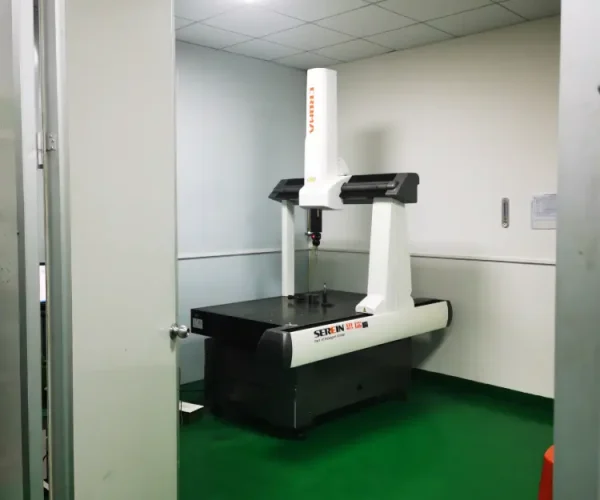
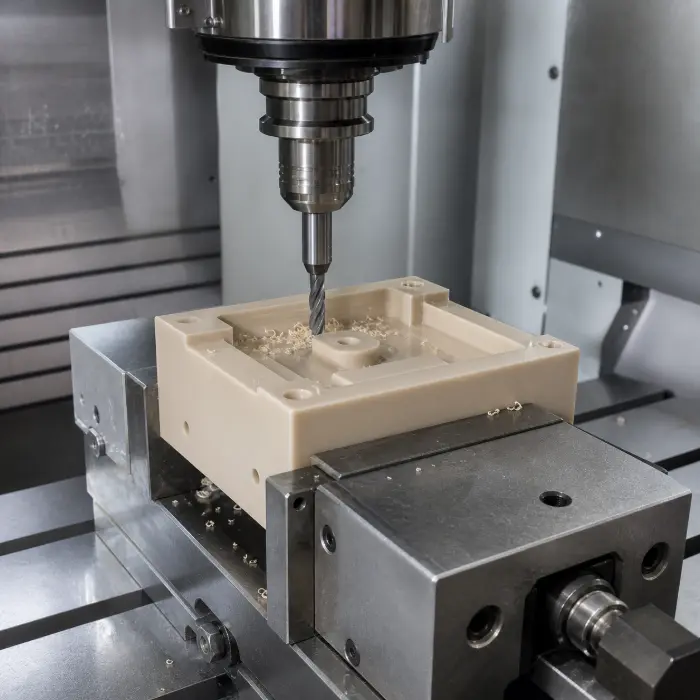
PEEK CNC machining process

High-Performance Polymer Machining

Custom PEEK CNC Machining Services

PEEK combines high-temperature capability, chemical resistance and mechanical strength for demanding precision components. Send your drawing for grade selection, DFM review and a transparent machining quote.

Upload Your Drawing

PEEK Material Properties

Key Mechanical and Thermal Parameters

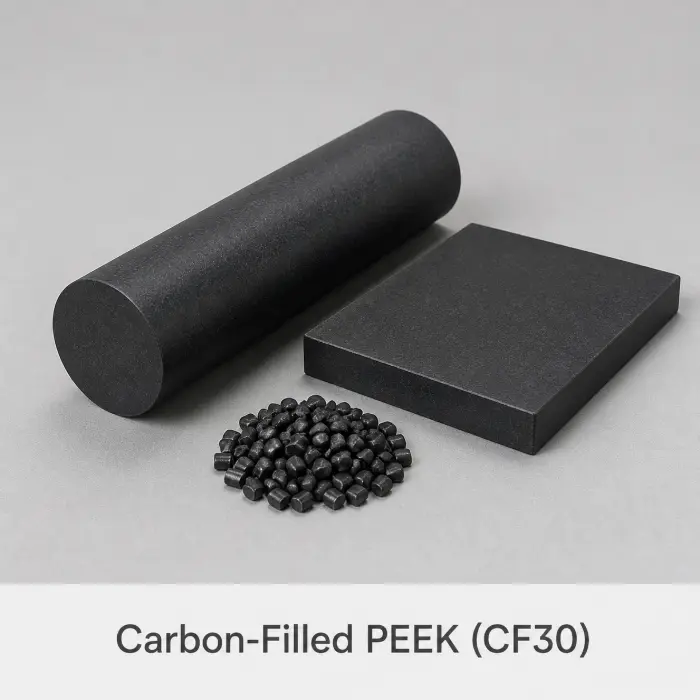
Representative supplier values for unfilled PEEK, 30% glass-filled PEEK and 30% carbon-filled PEEK.

1.30–1.51 g/cm³ Density · ISO 1183
100–265 MPa Tensile Strength at 23°C · ISO 527
3.9–28 GPa Tensile Modulus at 23°C · ISO 527
152–315°C HDT at 1.8 MPa · ISO 75
143°C Glass Transition, Onset · ISO 11357
343°C Melting Temperature · ISO 11357

Values are representative, not design allowables. Confirm the exact grade, conditioning and test method from the supplier datasheet.

Machining Capability

PEEK CNC Machining Parameters

Drawing-based limits for precision milled and turned PEEK components.

Maximum work envelope3000 × 1200 × 850 mm; stock and fixture dependent
Typical dimensional tolerance±0.02 mm
Selected precision features±0.01 mm after drawing review
Minimum wall thickness0.8 mm
Minimum internal radiusR0.3 mm
Machined surface roughnessRa 0.8–3.2 µm

PEEK Grade Selection

Select the Right PEEK Grade

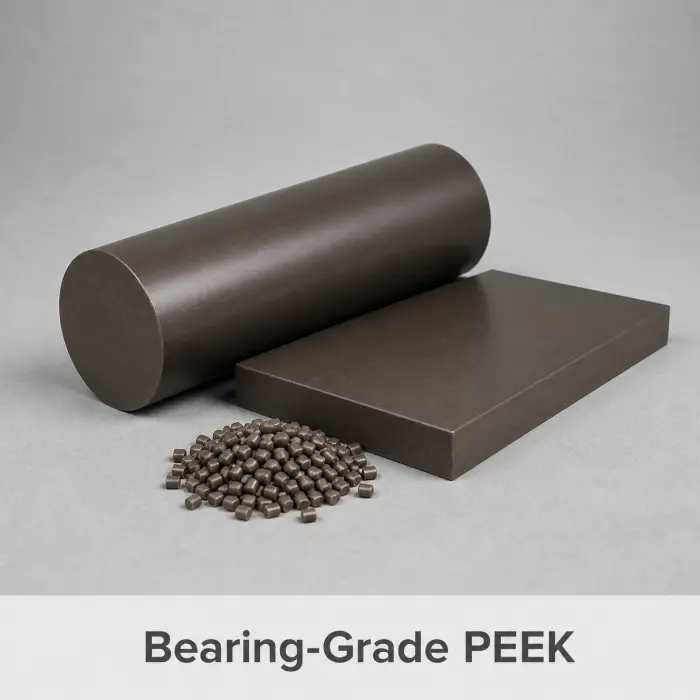
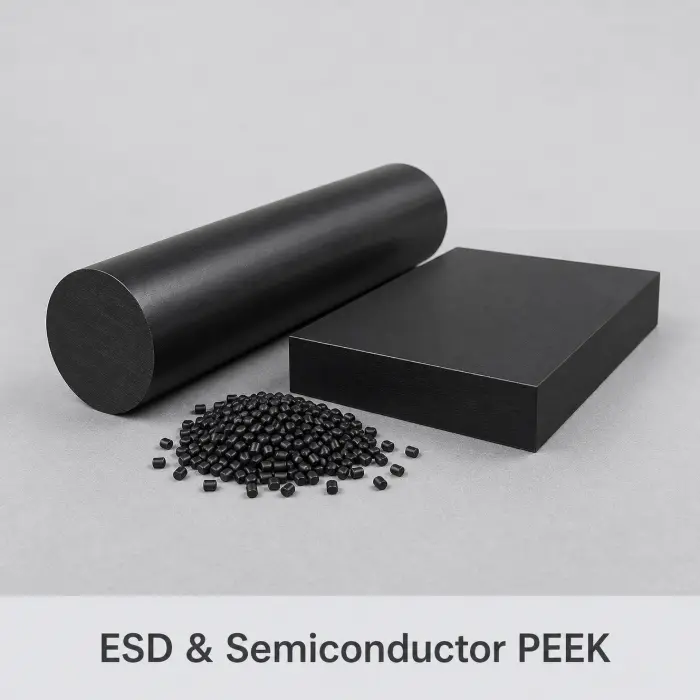
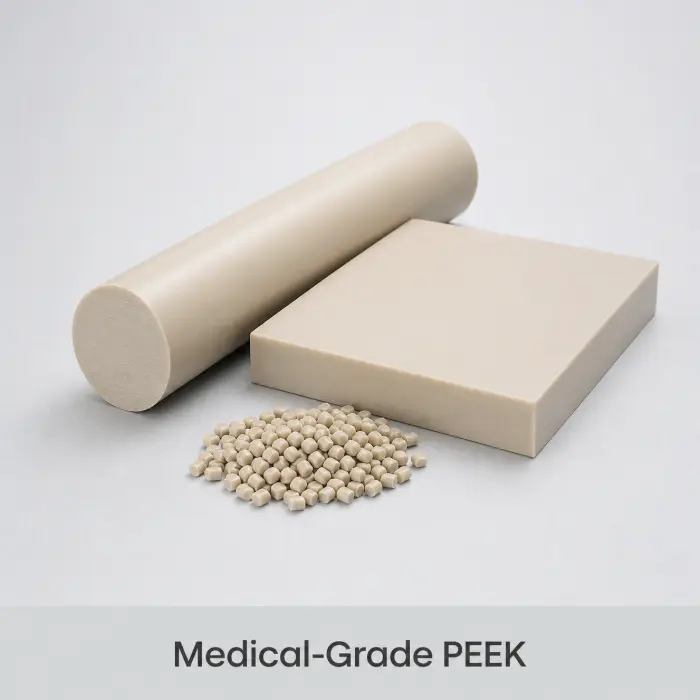
Match the PEEK formulation to load, temperature, wear, electrical control and certification requirements.
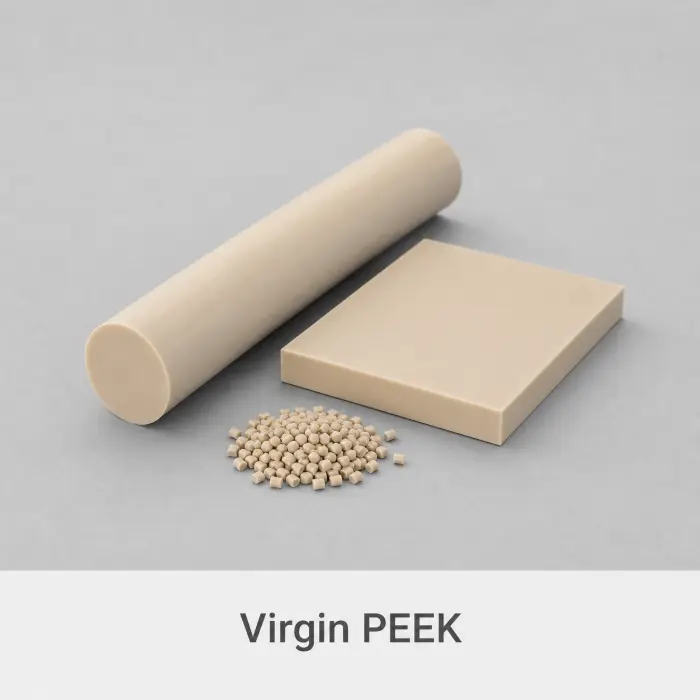
Virgin PEEK material

Virgin PEEK

Unfilled PEEK combines toughness, chemical resistance and electrical insulation without reinforcing fibers.
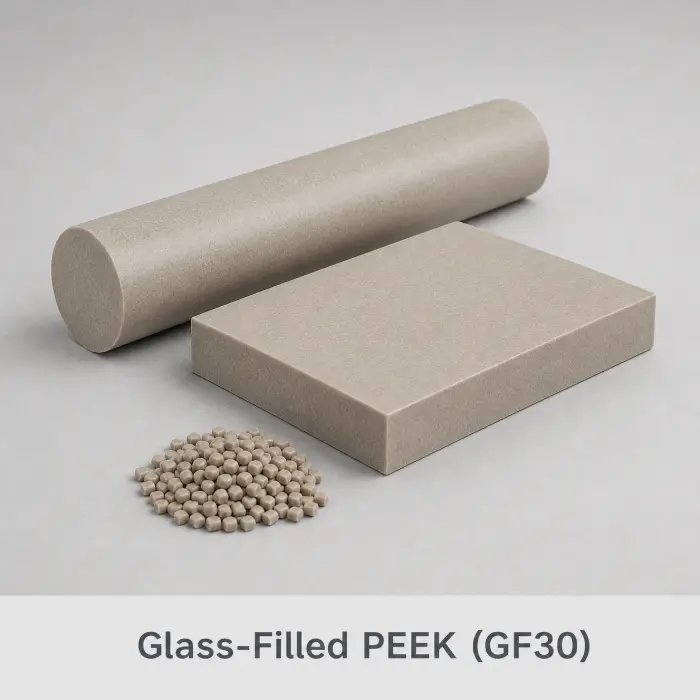
Service Environment High-temperature, chemical-service and electrically insulating assemblies.
Common Parts Seals, manifolds, insulators, valve components and precision fixtures.
Typical Color Natural tan; black is available in selected grades.

Filler content, electrical performance, medical status and compliance records are confirmed from the exact supplier datasheet before production.

Machined PEEK Projects

Custom CNC-Machined PEEK Parts

Prototype and low-volume PEEK components machined and inspected to your drawing.
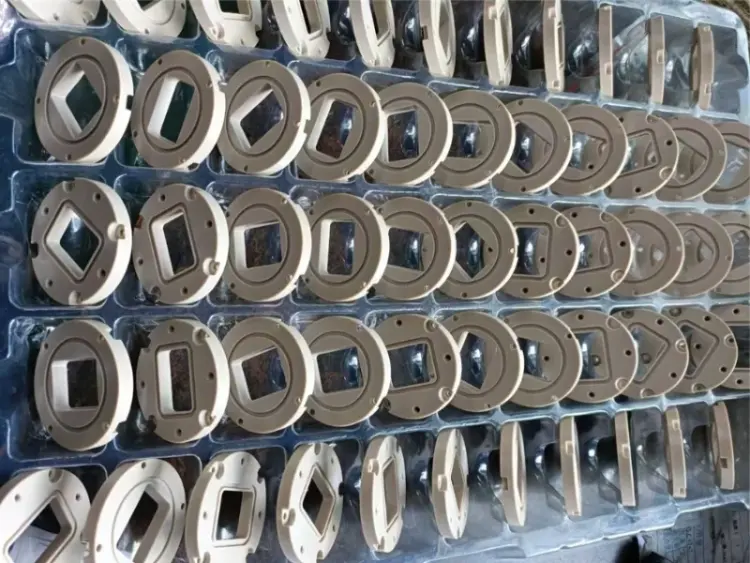
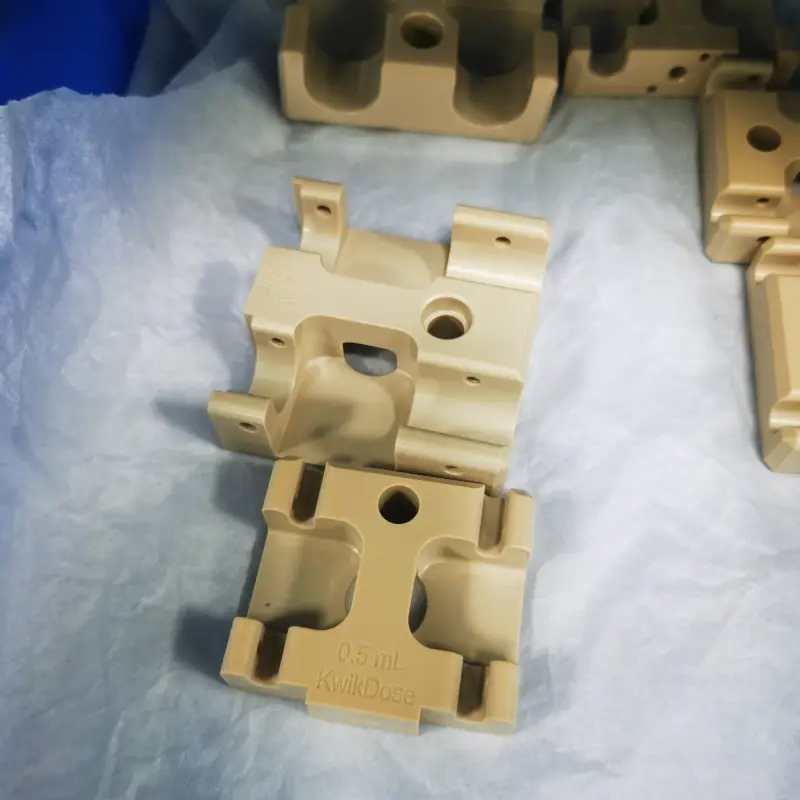
Custom CNC-machined PEEK part
Five-axis machined PEEK base
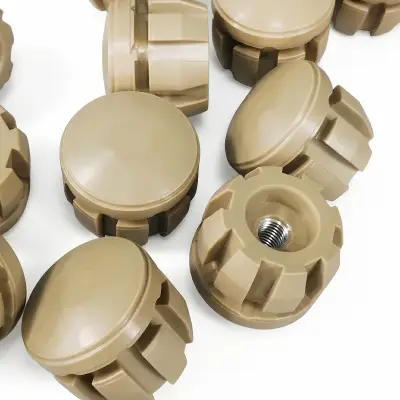
PEEK nuts with embedded threads
CNC-machined PEEK parts
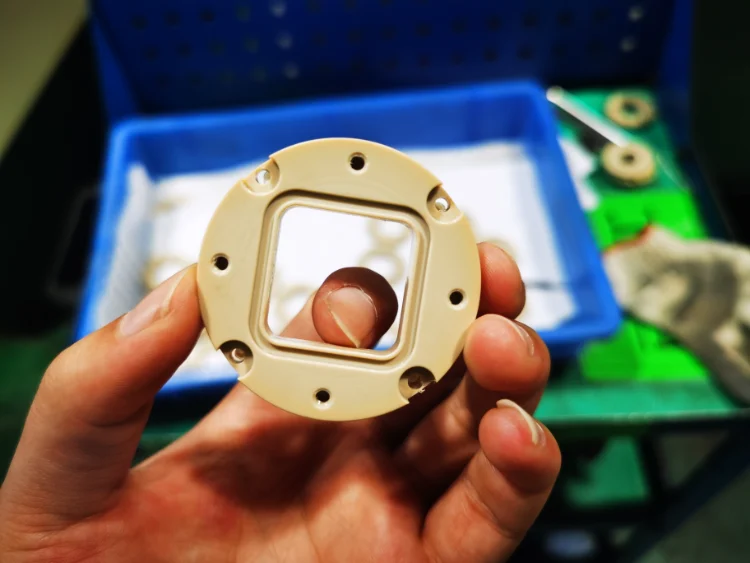
Precision PEEK machined parts
Precision CNC-machined PEEK component
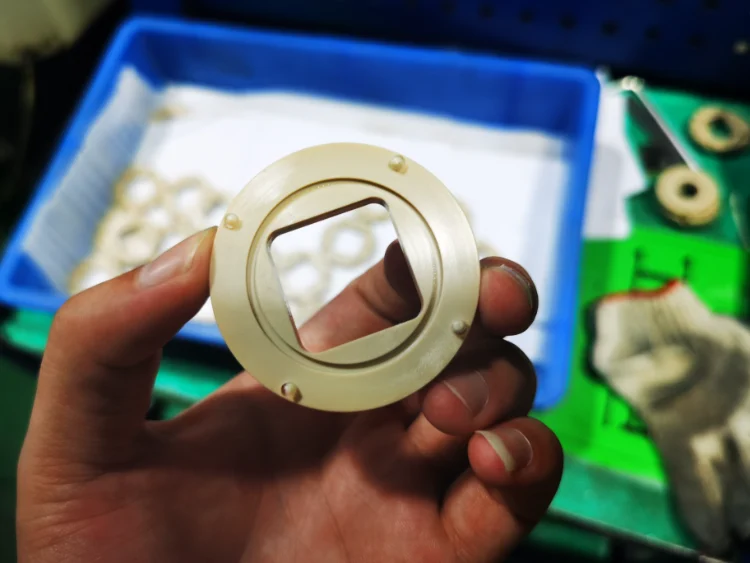
Custom PEEK precision parts

Functional Surface Options

Surface Finishes for PEEK Parts

PEEK is normally used as machined. Secondary finishes are selected only when roughness, identification or adhesion requires them.

Explore More Finishes
01

As-Machined

Preserves dimensions and base material properties with controlled tool marks.

02

Mechanical Polishing

Reduces machining marks on suitable sealing, optical or appearance surfaces.

03

Bead Blasting

Creates a uniform matte texture on non-sealing and non-sliding areas.

04

Laser Marking

Adds durable part numbers, serial codes and traceability marks.

Controlled Production

From Drawing Review to Final Inspection

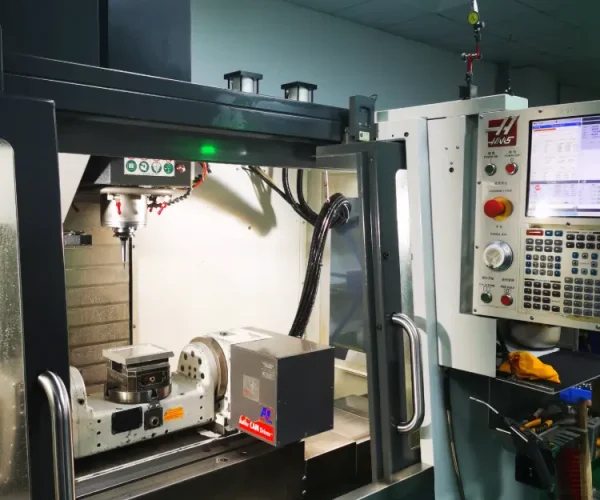
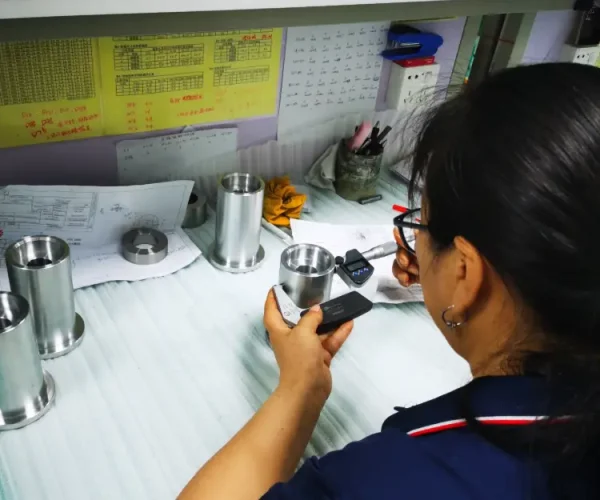
PEEK grade, datum strategy, heat control and inspection points are defined before machining and verified before shipment.
01

DFM Review

Grade, certification, tolerances, walls and datum strategy are checked first.

02

Process Control

Sharp tooling, stable support and controlled heat protect geometry and finish.

03

Dimensional Inspection

Critical dimensions and geometric tolerances are verified against the drawing.

04

Delivery Control

Approved parts are cleaned, protected, labeled and packed for shipment.

PEEK Machining FAQ

Project Questions

Concise answers for specifying CNC-machined PEEK components.

What are the main challenges when CNC machining PEEK?

Heat buildup, internal stress, burrs and abrasive reinforcement can affect size and tool life. Use sharp tools, stable support, effective chip removal and grade-specific parameters.

Which PEEK grade is easiest to machine?

Unfilled PEEK is generally the cleanest to machine. Glass- and carbon-filled grades hold dimensions well but are more abrasive and require wear-resistant tooling.

How should tight PEEK tolerances be controlled?

Use stress-relieved stock, remove material symmetrically, control cutting heat and allow the part to stabilize at inspection temperature before final measurement.

Which tools are suitable for reinforced PEEK?

Sharp carbide tools work for many operations; PCD tooling improves life on abrasive glass- or carbon-filled grades. Tool geometry must maintain clean chip evacuation.

Can PEEK parts be polished or marked?

Yes. Mechanical polishing, bead blasting and laser marking are common. Coating or printing requires application-specific surface preparation and adhesion testing.