
ABS and PVC are two commonly used thermoplastics for custom plastic parts, but they solve different engineering problems. ABS offers advantages in impact resistance, low weight, surface appearance, and assembly toughness. PVC offers advantages in structural rigidity, chemical resistance, electrical insulation, and compatibility with fluid-handling environments.
For buyers of custom polymer parts, choosing between ABS and PVC involves more than comparing raw material prices. Operating temperature, mechanical loads, contact media, dimensional tolerances, joining methods, surface finishes, order quantities, and target service life all affect the final material selection.
In this article, PVC refers to rigid PVC suitable for CNC machining, also known as PVC-U. It does not include flexible PVC. For readability, the term “PVC” is used throughout the article. Clear PVC, impact-modified PVC, CPVC, and antistatic PVC are discussed separately as specialized materials for machining.
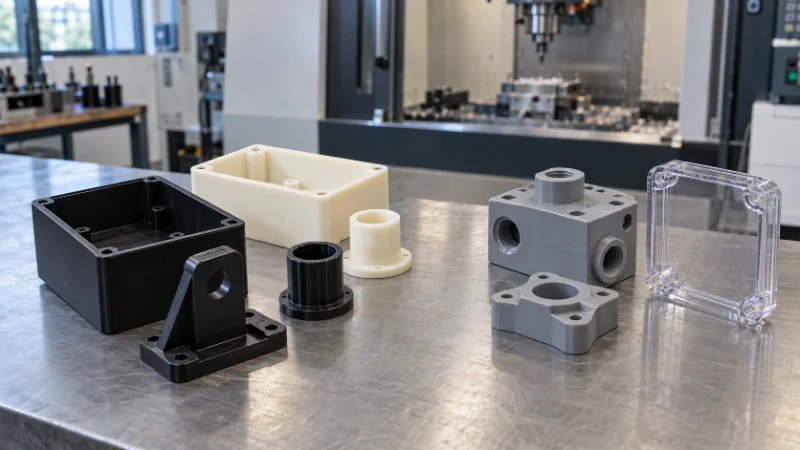
Key Differences Between ABS and PVC
| Comparison | ABS | PVC |
|---|---|---|
| Primary advantages | Toughness, impact resistance, and surface quality | Rigidity, chemical resistance, and electrical insulation |
| Structural rigidity | Moderate | Higher |
| Impact performance | Higher | More sensitive to notches and sudden impact |
| Material density | Lower | Higher |
| Chemical resistance | Suitable for general industrial and indoor equipment environments | Better resistance to many acids, alkalis, and salt solutions |
| Low-temperature performance | Better low-temperature toughness | Increased brittleness at low temperatures |
| CNC machining priorities | Control melting, burrs, and thin-wall deformation | Control edge chipping, clamping stress, and cutting heat |
| Surface finishing | Suitable for painting, printing, and specified plating processes | Suitable for mechanical polishing, printing, bonding, and plastic welding |
| Flame-retardant performance | Requires a designated flame-retardant grade | Exhibits self-extinguishing behavior after the ignition source is removed, but the rating still depends on grade and thickness |
| Typical parts | Housings, guards, brackets, snap-fit parts, and panels | Valve bodies, manifold blocks, insulating panels, and chemical equipment parts |
ABS is more suitable when a part must withstand impact, maintain a high-quality appearance, or incorporate snap-fit features. PVC is more suitable when a part contacts chemicals, requires higher rigidity, or contains internal fluid passages.
These conclusions support preliminary material screening. Final designs must be based on the technical data sheet for the specific grade. General material characteristics should not be treated as guaranteed finished-part properties.
Common ABS Grades and PVC Types Suitable for Machining
ABS and PVC are both available in multiple modified grades. These grades differ significantly in impact strength, heat resistance, flame retardancy, weather resistance, transparency, and finishing capability. Buyers of custom plastic parts should specify the material type according to the actual functional requirements rather than listing only “ABS” or “PVC.”
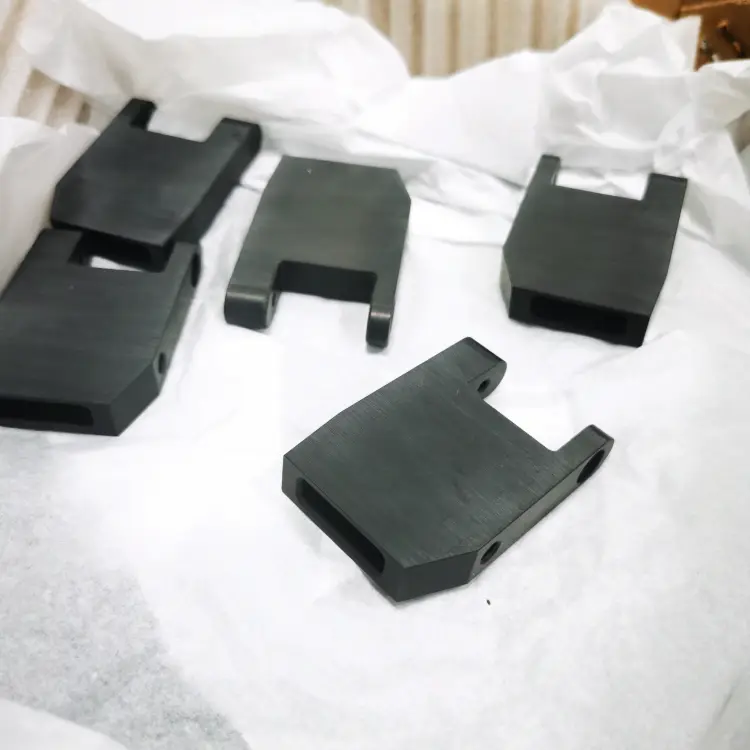
General-Purpose ABS
General-purpose ABS provides a balanced combination of rigidity, impact toughness, dimensional stability, and machinability. It is suitable for CNC milling, turning, drilling, and injection molding. Its surface quality also supports painting, screen printing, and pad printing.
Typical parts include instrument housings, control panels, standard mounting brackets, equipment covers, fixtures, and functional prototypes. General-purpose ABS should not be used directly for parts with defined flame-retardant, high-temperature, or long-term outdoor requirements.
High-Impact ABS
High-impact ABS uses a toughened formulation to improve impact energy absorption. It is suitable for parts exposed to drops, collisions, vibration, or repeated assembly loads. The toughened formulation also changes material rigidity, surface hardness, and dimensional stability.
Typical parts include robotic guards, handheld device housings, transportation equipment components, protective covers, snap-fit parts, and assembly brackets. Sharp cutting tools should be used during machining to prevent material tearing, burr formation, and heat buildup.
High-Heat ABS
High-heat ABS uses an adjusted resin formulation to improve rigidity and dimensional retention at elevated temperatures. It is suitable for equipment parts operating beyond the temperature range of general-purpose ABS.
Typical parts include automotive interior components, lighting housings, electrical equipment brackets, covers located near heat sources, and internal industrial equipment structures. Material approval must be based on the performance of the specific grade under sustained load.
Flame-Retardant ABS
Flame-retardant ABS uses a dedicated flame-retardant system to meet a specified UL 94 rating. It is suitable for electrical and electronic equipment parts that require controlled flame spread.
Typical parts include power supply housings, junction boxes, terminal covers, controller housings, internal instrument partitions, and electrical mounting brackets. Procurement specifications must state the material grade, flame-retardant rating, and minimum finished-part wall thickness.
Plating-Grade ABS
Plating-grade ABS has a surface structure suitable for chemical etching and metal deposition, allowing decorative or functional metallic coatings to be applied. Standard ABS cannot directly replace plating-grade ABS.
Typical parts include decorative knobs, equipment panels, automotive trim, handles, and housings with a metallic appearance. CNC machining exposes the internal material, so coating adhesion on machined surfaces and edges should be validated with representative samples.
UV-Stabilized ABS
UV-stabilized ABS uses ultraviolet stabilizers and weather-resistant formulations to reduce fading, chalking, and loss of impact performance caused by outdoor exposure.
Typical parts include outdoor equipment enclosures, sensor housings, communication equipment components, instrument panels, and outdoor mounting brackets. Project specifications should define allowable color change, aging duration, and mechanical property retention.
Performance differs significantly among ABS grades. Final material selection should be based on the manufacturer’s technical data for general-purpose, high-impact, flame-retardant, high-heat, or plating grades. SABIC CYCOLAC ABS Material Information
Standard Rigid PVC
Standard rigid PVC is the most common PVC material used for machining and is primarily supplied as sheets and round rods. It provides high rigidity, low water absorption, electrical insulation, and good chemical resistance.
Typical parts include valve bodies, pipe fittings, fluid manifold blocks, electrical insulation panels, laboratory fixtures, equipment liners, and corrosion-resistant brackets. Designs should avoid sharp corners, insufficient edge distance around holes, and excessive assembly interference.
Impact-Modified PVC
Impact-modified PVC uses impact modifiers to improve toughness while maintaining relatively high rigidity. It reduces the risk of brittle fracture during transportation, assembly, and service.
Typical parts include industrial equipment panels, machine guards, enclosures, and structural supports. The modified formulation affects rigidity, heat resistance, bondability, and chemical resistance, so standard rigid PVC design data cannot be applied without verification.
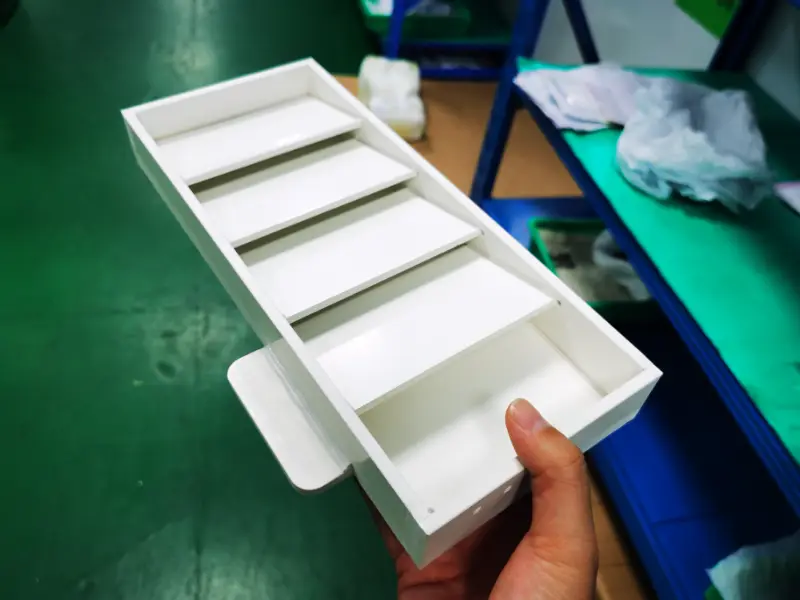
Clear PVC
Clear PVC combines visibility, rigidity, and chemical resistance. It is suitable for equipment parts that allow operators to observe liquid levels, flow conditions, or internal contamination.
Typical parts include viewing windows, level covers, clear piping components, and laboratory equipment panels. Clear PVC is not an optical-grade material. PMMA or optical-grade PC should be selected when high light transmission, low haze, or optical surface quality is required.
CPVC
CPVC, also known as PVC-C, is a further chlorinated form of PVC. It offers higher temperature resistance than standard PVC while retaining good chemical resistance and structural rigidity.
Typical parts include hot-water system connections, higher-temperature valve bodies, chemical equipment components, and industrial piping parts. CPVC has different machining temperature limits, adhesives, and welding requirements from standard PVC and should not be processed using unverified standard PVC procedures.
Antistatic PVC
Antistatic PVC controls static charge accumulation through bulk modification or surface treatment. It is suitable for electronics manufacturing, clean areas, and electrostatic-sensitive equipment.
Typical parts include electronic assembly fixtures, cleanroom partitions, inspection equipment panels, and semiconductor support equipment components. If the antistatic function comes from a surface coating, CNC-machined hole walls, edges, and cut surfaces will not retain the same electrical resistance as the original surface.
PVC Foam Board
PVC foam board uses a lightweight foam-core structure and is suitable for equipment signs, display panels, non-load-bearing partitions, and large decorative covers.
The foam core reduces thread strength, local load capacity, dimensional stability, and sealing reliability. It is therefore unsuitable for valve bodies, pressure-bearing parts, and close-tolerance mating components.
Key Mechanical Property Ranges of ABS and PVC
The following table compares representative property ranges for common general-purpose ABS and solid rigid PVC sheets and rods. The final values depend on the manufacturer, formulation, color, forming method, specimen thickness, and testing conditions.
These ranges do not directly apply to flame-retardant ABS, high-impact ABS, clear PVC, impact-modified PVC, or CPVC. Final design and acceptance must use technical data for the actual purchased grade.
| Property | Representative Range for General-Purpose ABS | Representative Range for Solid Rigid PVC | Effect on Custom Parts |
|---|---|---|---|
| Density | 1.03–1.08 g/cm³ | 1.40–1.55 g/cm³ | ABS parts weigh less at the same volume |
| Tensile strength | 30–50 MPa | 45–65 MPa | PVC is suitable for static structures, but tensile strength does not represent impact resistance |
| Tensile modulus | 1.6–2.5 GPa | 2.5–3.6 GPa | PVC is more rigid and exhibits less elastic deflection under load |
| Elongation at break | 10%–50% | 10%–50% | Results depend on formulation and specimen condition and cannot independently define part toughness |
| Charpy notched impact strength | 10–35 kJ/m² | 2–5 kJ/m² | ABS provides greater resistance to notches and sudden impact |
| Shore D hardness | 70–80 | 75–82 | PVC has greater surface hardness, but its edges and hole openings are also more susceptible to chipping |
The tensile properties in the table generally correspond to the ISO 527 test system, notched impact properties correspond to ISO 179, and Shore D hardness corresponds to ISO 868. Data generated under different testing standards should not be compared directly.
PVC’s higher tensile strength and modulus make it suitable for valve bodies, equipment panels, fluid manifold blocks, and continuously supported structures. These designs still require evaluation of operating temperature, sustained load, and long-term creep.
ABS’s higher notched impact strength makes it more suitable for housings, guards, snap-fit parts, handheld components, and custom plastic parts exposed to impact. Its impact advantage does not replace proper wall thickness, fillet, and assembly stress design.
Elongation at break does not independently define part toughness. Snap-fit, drop-impact, and impact-loaded structures must also be evaluated for notched impact strength, wall-thickness transitions, machining marks, assembly stress, and actual operating temperature.
These ranges should only be used for preliminary ABS and PVC comparisons. Custom polymer parts that carry structural loads, fluid pressure, or safety-related functions require engineering calculations based on the exact material grade, part dimensions, operating temperature, and target service life.
Sustained Loads and Dimensional Stability
Both ABS and PVC undergo creep under sustained load. Parts exposed to pressure, suspended loads, or continuous bolt preload should use sufficient wall thickness, larger load-bearing areas, or metal load-transfer structures to control deformation.
Residual stress within sheets and rods affects shape stability after machining. Removing a large amount of material from one side disrupts the original stress balance and can cause bending, twisting, or changes in flatness.
Large panels, thin-walled parts, and components with strict flatness requirements should be machined symmetrically in stages. Residual stress should be allowed to stabilize after rough machining before semi-finishing and finishing.
Final inspection requirements must define measurement temperature, conditioning time, support method, and free-state condition. Thin-walled parts should not be forced flat in a fixture when final flatness is evaluated.
Temperature Performance of ABS and PVC
General-purpose ABS is suitable for ordinary indoor equipment environments. As temperature increases, its rigidity decreases and creep accelerates. High-temperature applications require high-heat ABS, PC/ABS, or another heat-resistant engineering plastic.
Standard PVC is suitable for ambient and moderate-temperature industrial environments. As temperature rises, its pressure capacity, rigidity, and dimensional stability decline. CPVC or another heat-resistant material should be evaluated for higher-temperature fluid systems.
Material selection must account for continuous operating temperature, short-term peak temperature, mechanical load, contact media, and target service life. Heat-deflection temperature alone does not define long-term part performance under sustained load.
Chemical Resistance of ABS vs PVC
PVC provides good resistance to many inorganic acids, alkalis, and salt solutions, making it more suitable for chemical equipment, fluid handling, laboratory systems, and corrosive industrial environments.
ABS is suitable for general indoor equipment and many aqueous environments, but it is more sensitive to ketones, aromatic hydrocarbons, esters, and certain cleaning agents. Contact with an incompatible medium can cause softening, swelling, surface whitening, or environmental stress cracking.
PVC is not resistant to every chemical. Compatibility for both materials must be evaluated against concentration, operating temperature, exposure duration, exact material grade, residual part stress, and sustained mechanical load.
Parts used for sealing, fluid transfer, or chemical equipment should be tested with the actual medium and specified material grade. General material classifications and room-temperature immersion data cannot replace validation under actual service conditions. IPEX PVC Chemical Resistance Guide
Electrical and Flame-Retardant Performance
ABS and PVC both provide good electrical insulation and can be used for insulating partitions, equipment housings, connector components, and internal electrical equipment structures.
Standard ABS should not be treated as inherently flame-retardant. Applications with flame-resistance requirements must use an ABS grade with the required UL 94 rating and confirm the minimum finished-part wall thickness.
Rigid PVC does not readily sustain combustion after an external ignition source is removed, but its final flame-retardant rating still depends on formulation, additives, color, thickness, and test method.
Insulating PVC and antistatic PVC serve different functions. Insulating PVC restricts electrical current, while antistatic PVC controls surface charge accumulation. They are not interchangeable.
CNC Machining ABS vs PVC
ABS and PVC can both be CNC milled, turned, drilled, bored, and threaded to produce custom CNC plastic parts, but each material requires different tooling, parameters, and workholding methods.
ABS CNC Machining
ABS has relatively low cutting resistance and is suitable for housings, panels, brackets, fixtures, and functional prototypes. Dull tools, excessive spindle speed, or insufficient feed can cause melted edges and chip adhesion.
Thin-walled ABS parts are sensitive to clamping pressure and uneven material removal. Sharp tools, stable feed rates, balanced toolpaths, and low-stress workholding should be used.
Clamping areas should be defined before machining ABS parts with critical cosmetic surfaces. Visible areas should not contain clamp marks, tool-entry marks, or uncontrolled deburring traces.
PVC CNC Machining
PVC is suitable for valve bodies, pipe fittings, fluid manifold blocks, insulation panels, and chemical equipment parts. Sharp corners, inadequate hole-edge distance, and interference fits create stress concentrations.
PVC drilling exits and thin edges require adequate support. Excessive clamping force can produce an acceptable on-machine measurement while allowing the part to spring back after release.
Overheated PVC undergoes thermal decomposition and releases hydrogen chloride gas. The machining area must provide effective chip removal, local extraction, and ventilation.
Machining must stop immediately if an irritating odor, yellow discoloration, or blackening appears. Tool sharpness, spindle speed, feed rate, and chip evacuation should then be checked.
Cooling and Cleaning
Unverified metalworking fluids should not be used directly on ABS or PVC. Some coolants, cleaners, and rust inhibitors can cause softening, whitening, or environmental stress cracking.
Machining facilities should prioritize sharp tools, compressed air, and continuous chip evacuation for heat control. Any liquid coolant must be verified for compatibility with the exact material grade before use.
After machining, chips and liquid residues must be removed from cavities, passages, threads, and sealing grooves.
Threads, Inserts, and Assembly Design
ABS and PVC can both be machined with internal or external threads, but plastic threads are best suited to low loads and limited assembly cycles.
ABS can use validated heat-set, ultrasonic, or mechanical inserts. Installation temperature, pressure, and insertion depth must be controlled to prevent hole displacement and excessive local stress.
PVC is more sensitive to localized heat and radial expansion. Low-stress mechanical inserts, bonded inserts, or separate metal load-transfer structures should be prioritized.
Connections exposed to repeated assembly or high torque should use greater thread engagement and sufficient material around the hole. Assembly torque, pull-out force, and cracking should be tested.
Surface Finishing and Joining Methods
ABS is suitable for sanding, painting, screen printing, and pad printing. Decorative plating requires a validated plating-grade ABS, and coating adhesion on machined surfaces should be confirmed with representative samples.
Solvent polishing changes surface stress and local dimensions in ABS. It should not be applied to precision mating surfaces, threads, bonding surfaces, or highly stressed areas.
PVC is suitable for mechanical polishing, printing, solvent bonding, and plastic welding. Sealed or pressure-bearing assemblies require joining processes designed around the material grade, joint clearance, adhesive system, and curing conditions.
Bonded and welded PVC parts should not be accepted by appearance alone. Fluid-handling parts require leak or pressure testing, while structural joints require shear or tensile validation according to the applied load.
How to Select a Manufacturing Process for Custom Plastic Parts
CNC machining is suitable for plastic prototypes, functional validation, low-volume production, and close-tolerance custom polymer parts. It requires no tooling and supports rapid changes to hole positions, sealing grooves, internal passages, and mounting features.
Injection molding is suitable for repeat production after the design has stabilized. ABS provides good flow and surface quality, while PVC injection molding requires strict control of temperature, venting, and material residence time.
Extrusion is suitable for sheets, rods, tubes, and continuous profiles. Thermoforming is suitable for large thin-walled covers, trays, and equipment liners.
Extruded or thermoformed parts with precision holes, sealing faces, or assembly datums should receive secondary CNC machining.
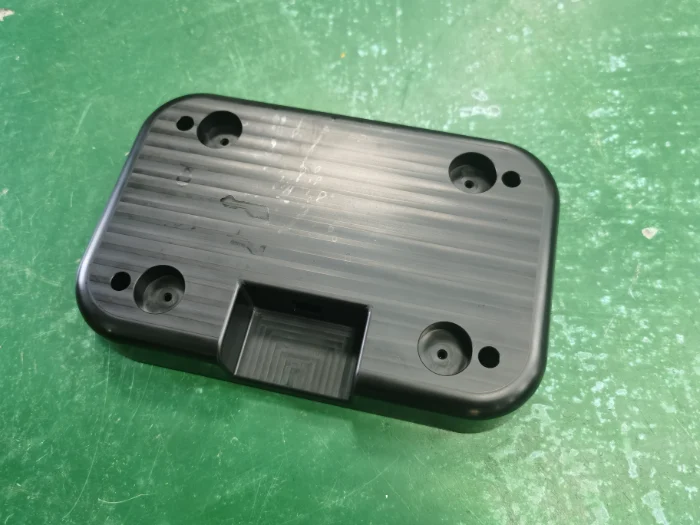
Typical ABS and PVC Applications
| Part Type | Recommended Material | Reason for Selection |
|---|---|---|
| Instrument housings and control panels | ABS | Impact resistance and convenient cosmetic finishing |
| Equipment guards | ABS | Lower weight and resistance to routine impact |
| Snap-fit parts and assembly brackets | ABS | Better toughness and assembly tolerance |
| Electrical equipment housings | Flame-retardant ABS | Combines structural toughness with specified flame resistance |
| Outdoor equipment covers | UV-stabilized ABS | Combines weather resistance, toughness, and appearance |
| Valve bodies and pipe fittings | PVC | Rigidity and chemical resistance for fluid environments |
| Fluid manifold blocks | PVC | Suitable for passages, ports, and sealing grooves |
| Chemical equipment liners | PVC | Good resistance to many corrosive media |
| Electrical insulation panels | PVC | Good insulation and structural rigidity |
| Visible fluid components | Clear PVC | Combines visibility with chemical resistance |
| High-temperature fluid connections | CPVC | Higher temperature resistance than standard PVC |
| Electronics manufacturing fixtures | Antistatic PVC | Controls static charge accumulation |
ABS is suitable for custom plastic parts that must withstand impact, maintain a high-quality appearance, or incorporate flexible assembly features. PVC is suitable for functional parts exposed to chemicals, requiring higher rigidity, or containing internal fluid passages.
When Neither ABS nor PVC Is Suitable
When higher impact strength and heat resistance are required, PC or PC/ABS should be selected according to operating temperature.
POM should be selected for low-friction, dimensionally stable precision motion components. Nylon should be selected for higher wear resistance and fatigue performance after evaluating humidity and dimensional requirements.
For highly corrosive media, PP, HDPE, PVDF, or PTFE should be selected according to the medium and temperature. PEEK, PEI, or metal should be used for high-temperature, highly loaded, or dimensionally critical applications.
Cost and Lead Time for Custom Plastic Parts
The cost of cosmetic ABS parts is primarily affected by specialized grades, painting, plating, printing, color control, and protective packaging.
The cost of functional PVC parts is primarily affected by specialized grades, deep holes, intersecting passages, sealing surfaces, welding, bonding, internal cleaning, and pressure testing.
Costs can be reduced by standardizing hole and thread sizes, removing unnecessary deep cavities, applying close tolerances only to functional surfaces, and using readily available sheet and rod sizes.
Plastic prototypes and low-volume parts are well suited to CNC machining. Once demand stabilizes, tooling investment, unit cost, and total delivery time should be compared with injection molding.
Finished-Part Acceptance Priorities
Cosmetic ABS parts should be inspected for dimensions, deformation, scratches, stress whitening, melted edges, burrs, color variation, and coating quality.
Functional PVC parts should be inspected for material grade, hole size, hole position, sealing surfaces, threads, internal cleanliness, joint quality, and leakage performance.
Thin-walled or large parts made from either material must be measured at a specified temperature and in a free state. Final flatness should not be accepted while the part is forced flat or constrained by a fixture.
Flame-retardant, weather-resistant, antistatic, and chemical-resistance requirements must correspond to the exact material grade. Generic documents for a related material should not be substituted.
How to Select a Reliable Plastic Machining Factory
A reliable custom plastic parts manufacturer should have the ability to evaluate materials, perform CNC plastic machining, control deformation, coordinate finishing, and inspect completed parts.
Buyers should confirm that the factory uses separate tooling, cutting parameters, and workholding methods for ABS and PVC. The factory should also have appropriate chip extraction and ventilation for PVC machining.
The supplier should provide material certification, first-article inspection, batch traceability, and support for inserts, bonding, welding, and surface finishing.
A reliable manufacturer identifies conflicts between the material, geometry, tolerances, and service environment before production and provides solutions that can be manufactured and inspected.
Weldo’s Custom Plastic Parts Manufacturing Capabilities
Weldo operates its own manufacturing facility and provides custom plastic part and custom polymer part machining services for ABS, PVC, and other engineering plastics.
Services include material confirmation, DFM review, CNC turning, CNC milling, post-processing, assembly, and finished-part inspection.
Weldo manufactures ABS equipment housings, guards, brackets, and panels, as well as PVC valve bodies, fluid manifold blocks, insulation components, piping connections, and laboratory equipment parts.
ABS requires control of thin-wall deformation, chip adhesion, and cosmetic surface protection. PVC requires control of notch sensitivity, clamping deformation, and machining heat. Weldo develops a dedicated manufacturing plan based on the material grade and part geometry.
The target shipping time for standard prototypes and low-volume custom plastic parts is 3–15 days. Lead times for specialized materials, complex geometries, finishing, and production orders are confirmed in the quotation after the manufacturing process has been reviewed.
FAQ
What Is the Difference Between PVC and PVC-U?
PVC is the general term for polyvinyl chloride materials. PVC-U refers to unplasticized rigid PVC. Most PVC sheets and rods used for custom machining are PVC-U.
Can CPVC Directly Replace Standard PVC?
No. CPVC provides higher temperature resistance, but its material properties, processing window, adhesives, and welding specifications differ from those of standard PVC.
Can CNC-Machined Parts Use Injection-Molding Material Data Directly?
No. Injection-molded test specimens, extruded sheets, and machined rods have different manufacturing conditions, molecular orientation, and residual stress. Designs should use data for the actual semi-finished material grade.
Can Metal Inserts Be Installed in Both ABS and PVC?
Yes. ABS supports validated heat-set, ultrasonic, or mechanical inserts. PVC should prioritize low-stress mechanical or bonded inserts.
Can Recycled ABS or PVC Be Used for Precision Parts?
Only when the material source, batch consistency, and performance data have been confirmed. High-precision, flame-retardant, pressure-bearing, or safety-related parts should use materials with complete traceability documentation.
Technical Basis and Data Notes
The material selection and machining guidance in this article references the following sources:
- SABIC CYCOLAC ABS Material Information
- Ensinger TECARAN ABS Stock Shape Data
- Röchling PVC-U Technical Data
- ASTM D1784 Classification for Rigid PVC and CPVC
- IPEX PVC Chemical Resistance Guide
This article supports preliminary material screening for custom plastic parts. Final production approval must be based on the exact material grade, customer drawings, technical agreements, and actual operating conditions.
Conclusion: How to Choose Between ABS and PVC
Choose an ABS grade that meets the required temperature, flame-retardant, and weather-resistance conditions when the part requires impact resistance, low weight, a high-quality appearance, or flexible assembly features.
Choose a PVC grade that meets the required chemical, temperature, and joining conditions when the part requires higher rigidity, chemical resistance, electrical insulation, or internal fluid passages.
For elevated operating temperatures, compare high-heat ABS with CPVC. For transparent viewing components, compare clear PVC with PMMA and PC. For flame-retardant, weather-resistant, or antistatic requirements, use an exact grade with the required functional properties and certifications.
Final material selection should follow the sequence of service environment, mechanical load, material grade, manufacturing process, post-processing, and acceptance criteria. It should not be based solely on the raw material price of ABS or PVC.
Send Weldo your custom plastic part drawings, operating temperature, mechanical loads, contact media, quantities, and surface requirements. Our engineering team will compare the suitability of ABS and PVC, define the material grade, CNC machining route, and inspection plan, and provide a clear quotation and lead time.