Does Copper Rust?
Copper does not rust. Rust specifically refers to the iron oxides and iron hydroxides formed when iron or iron-containing materials react with moisture and oxygen. Because copper is not primarily composed of iron, it does not form rust in the traditional sense.
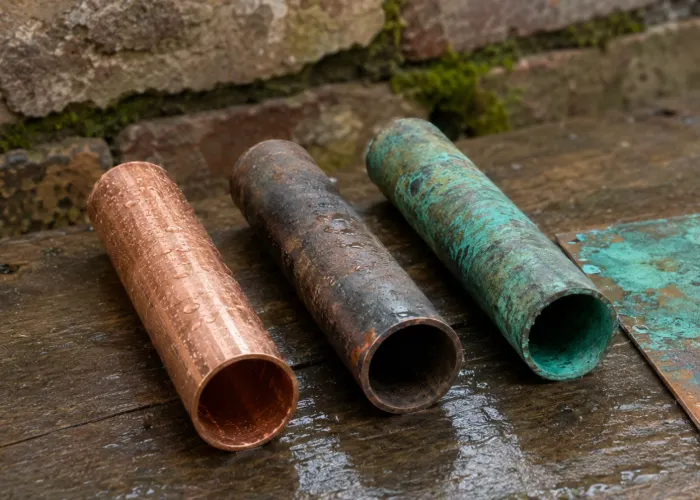
However, not rusting does not mean that copper is completely immune to corrosion. Copper forms copper oxides after contact with air. With continued exposure to humid air, salts, carbon dioxide, and sulfur-containing pollutants, its surface compounds continue to change, producing brown, black, green, or blue-green corrosion layers.
The key difference between copper and carbon steel lies in the structure of their corrosion layers:
- The stable corrosion layer formed on copper is dense and firmly adherent, which can reduce the rate of subsequent corrosion.
- Rust formed on carbon steel is loose, porous, and prone to flaking, so it cannot continuously isolate the metal from moisture and oxygen.
- Uniform discoloration of copper mainly affects appearance, while powdering, blistering, and localized penetration affect dimensions, electrical conductivity, and structural integrity.
Therefore, copper does not produce iron rust, but it does oxidize, tarnish, discolor, and corrode.
Why Does Copper Not Rust Like Iron?
Rust Requires Iron
The formation of rust depends on the presence of iron. When iron or carbon steel is exposed to moisture and oxygen, a series of electrochemical reactions produces hydrated iron oxides. This corrosion layer expands in volume, has a loose structure, and cracks or flakes away from the substrate, exposing the underlying metal to continued corrosion.
Copper does not have the iron substrate required to form rust. Its corrosion products are copper oxides, copper carbonates, copper sulfates, or copper chlorides rather than iron rust.
Brass and bronze likewise do not form traditional rust, but each has its own corrosion mechanisms. Brass can undergo dezincification under certain water-quality and chemical conditions, while tin bronze can develop powdery green active corrosion products in humid, chloride-containing environments.
Copper Develops a Different Oxide Layer
Freshly machined or polished copper has a reddish-orange appearance. After contact with air, cuprous oxide (Cu₂O) first forms on the surface and is typically reddish brown or brown. As oxidation continues, black cupric oxide (CuO) and other products of environmental reactions develop on the surface.
Once these compounds cover the copper substrate, they reduce direct contact between the substrate and the surrounding environment. When the surface layer remains dense, uniform, and firmly adherent, the corrosion rate of copper decreases over time.
Copper Forms a Stable Patina
Patina is the surface layer that forms on copper and copper alloys after long-term environmental exposure. A stable patina differs from loose rust in both structure and protective effect.
A uniform, dense, and firmly adherent patina can:
- Reduce direct contact between oxygen and moisture and the copper substrate;
- Lower the rate of uniform corrosion in atmospheric environments;
- Extend the service life of roofs, curtain walls, and outdoor copper components;
- Create a decorative brown, green, or blue-green surface.
When light green powder, localized blistering, peeling, or continuously expanding corrosion spots appear on a copper surface, the surface layer does not provide stable protection. These conditions indicate that chlorides, persistent standing water, or chemical pollutants are causing active corrosion.
What Happens When Copper Oxidizes?
| Oxidation Stage | Typical Color | Main Surface Change |
| Fresh Copper | Reddish orange or metallic copper | Clean surface with an extremely thin oxide layer |
| Initial Oxidation | Reddish brown or brown | Formation of a thin layer consisting mainly of cuprous oxide |
| Continued Oxidation | Dark brown or black | Increase in cupric oxide and products formed through reactions with environmental pollutants |
| Stable Patina | Green or blue-green | Formation of a surface layer composed of carbonates, sulfates, and other copper salts |
| Active Corrosion | Light green powder, spots, or blisters | Loose corrosion layer with continuing localized corrosion |
This color sequence is typical of atmospheric exposure. The actual surface color is determined by humidity, salt content, air pollution, temperature, drainage conditions, and the condition of the copper surface.
In dry indoor environments, copper mainly tarnishes and develops brown oxides. Copper exposed outdoors forms a green patina after long-term exposure. Chlorides in coastal environments promote the formation of blue-green or light green corrosion products and increase the risk of pitting and powdery active corrosion.
Why Does Copper Turn Green?
Copper turns green through the combined effects of long-term oxidation and environmental reactions, not through the formation of rust.
When oxides on the copper surface continue to react with moisture, carbon dioxide, sulfur dioxide, and chlorides, they form basic copper carbonates, sulfate-based copper compounds, and chloride-based copper compounds. These reaction products are green or blue-green and gradually cover the original brown and black oxide layers.
The environment directly determines the rate and composition of patina formation:
- Humid air provides a water film for electrochemical reactions;
- Carbon dioxide promotes the formation of carbonate-based patina;
- Industrial sulfur-containing pollutants promote the formation of sulfate-based corrosion products;
- Chlorides in sea salt and salt spray promote chloride corrosion;
- Persistent standing water concentrates localized corrosion in crevices, joint surfaces, and drainage dead zones.
A uniform green patina is a naturally stable layer on the copper surface. Light green powder, localized blistering, and edge peeling are signs of active corrosion and require investigation of the sources of salts, standing water, and chemical contamination.
Copper Corrosion Resistance and Factors Affecting It
Copper has good corrosion resistance in ordinary atmospheric and most fresh-water environments, but environmental conditions directly affect the stability of the protective layer and the actual corrosion rate.
Moisture and Oxygen
Moisture and oxygen are the basic conditions for copper oxidation. High humidity, condensation, and persistent standing water form an electrolyte film on the copper surface and accelerate electrochemical reactions.
Moisture does not evaporate easily from structural crevices, lap joints, and blind holes, so corrosion becomes concentrated in these areas. Providing proper drainage holes, minimizing crevices, and keeping surfaces dry directly reduce the risk of localized corrosion.
Salt and Chlorides
Seawater, salt spray, perspiration, and deicing salts all contain chlorides. Chlorides increase the conductivity of the surface water film and disrupt the stable protective layer on copper.
Copper parts exposed to coastal or saline environments for extended periods develop green or blue-green corrosion layers. Light green powder and localized pits indicate that chlorides have caused active corrosion or pitting.
Air Pollution
Sulfur dioxide, hydrogen sulfide, and other sulfur-containing pollutants cause copper surfaces to darken rapidly and form black or nonuniform corrosion layers.
When pollutants in industrial atmospheres interact with moisture, they form acidic surface films that accelerate the corrosion of copper and copper alloys. Copper parts near chemical-processing equipment require plating, sealed structures, and protective coatings selected according to the actual gas composition.
Acids, Alkalis, and Ammonia
Strong acids, strong alkalis, and ammonia-containing chemicals dissolve or damage the stable oxide layer on copper. Acidic media promote copper dissolution, while high chloride concentrations intensify localized corrosion.
When ammonia-containing media and tensile stress are present together, copper alloys such as brass can undergo stress corrosion cracking. Cleaning agents used for copper alloy parts must therefore be compatible with the material grade, heat-treatment condition, and operating medium.
High Temperature
Higher temperatures increase the rates of oxidation and chemical reactions. Hot air rapidly forms a dark oxide layer on copper surfaces, while hot-water systems require simultaneous consideration of water quality, dissolved oxygen, flow velocity, and deposits.
High-temperature conductive parts also require control of oxide-layer thickness because oxides increase contact resistance at electrical contact surfaces.
Galvanic Corrosion
When copper is directly connected to aluminum, zinc, or carbon steel and both metals are exposed to water or a salt solution, a galvanic couple forms. Copper has a higher electrode potential than these metals, so the more active aluminum, zinc, or carbon steel is preferentially attacked.
Methods for preventing galvanic corrosion include:
- Isolating dissimilar metals with insulating gaskets or insulating bushings;
- Applying a sealing layer at joint surfaces to prevent electrolyte ingress;
- Using coatings compatible with both substrate materials;
- Maintaining structural drainage to prevent prolonged saltwater accumulation;
- Controlling the effective area ratio between copper and the active metal.
Copper Properties That Make It Valuable
In addition to corrosion resistance, copper offers high electrical conductivity, high thermal conductivity, and good formability, so it is widely used in electrical, thermal-management, fluid-control, and precision mechanical components.
Excellent Electrical Conductivity
Copper has excellent electrical conductivity and is commonly used for busbars, terminals, connectors, contacts, electrodes, and motor components.
The performance of electrical parts depends on more than the conductivity of the material. Contact-surface flatness, surface roughness, oxide layers, contaminants, and clamping pressure all affect contact resistance. Tin plating improves oxidation resistance and solderability, while silver plating is used for parts with higher requirements for electrical conductivity and high-temperature contact performance.
Good Thermal Conductivity
Copper transfers and dissipates heat rapidly, making it suitable for heat sinks, cooling plates, heat spreaders, heat exchangers, and heat-pipe bases.
For precision copper parts with internal channels, channel location, wall thickness, base flatness, sealing-surface roughness, and connection reliability directly affect heat-transfer efficiency and sealing performance.
Natural Corrosion Resistance
In ordinary indoor environments, natural atmospheres, and most fresh-water systems, copper can form a stable surface layer and has a lower long-term corrosion rate than unprotected carbon steel.
Coastal environments, chemical-processing conditions, high-temperature water, and high-velocity piping are more severe corrosion environments. These applications require selection of the copper grade, copper alloy, and surface-protection system according to chloride concentration, pH, temperature, flow velocity, and stress condition.
Good Ductility and Formability
Copper has good ductility and can be rolled, drawn, bent, stamped, and deep drawn into wire, tubing, sheet, and complex thin-walled parts.
Continuous cold working increases the hardness and strength of copper while reducing elongation. Complex forming processes require intermediate annealing to restore ductility and prevent edge cracking.
Good Machinability
Pure copper is soft, tough, and highly adhesive. During CNC cutting, it is prone to tool adhesion, built-up edge, long chips, burrs at hole openings, and surface tearing.
Sharp tools, a large positive rake angle, stable coolant delivery, and effective chip evacuation help achieve accurate dimensions and good surface quality. Free-machining copper alloys offer better chip control and machining efficiency than high-purity copper, but material selection must also satisfy requirements for electrical conductivity, thermal conductivity, strength, and environmental compliance.
Copper Machining Processes
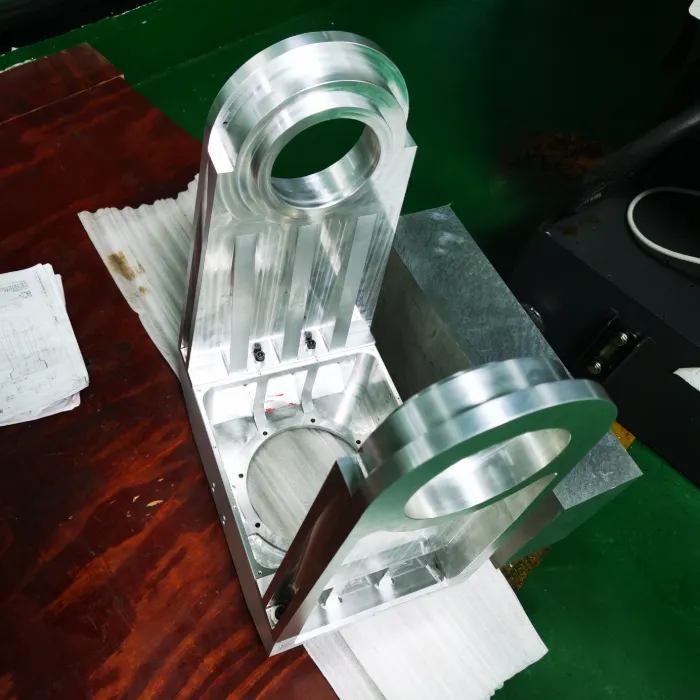
Copper can be processed by CNC milling, turning, drilling, tapping, wire EDM, laser cutting, waterjet cutting, extrusion, forging, stamping, polishing, and other methods. Process selection depends on the copper grade, part geometry, tolerances, surface requirements, and production volume.
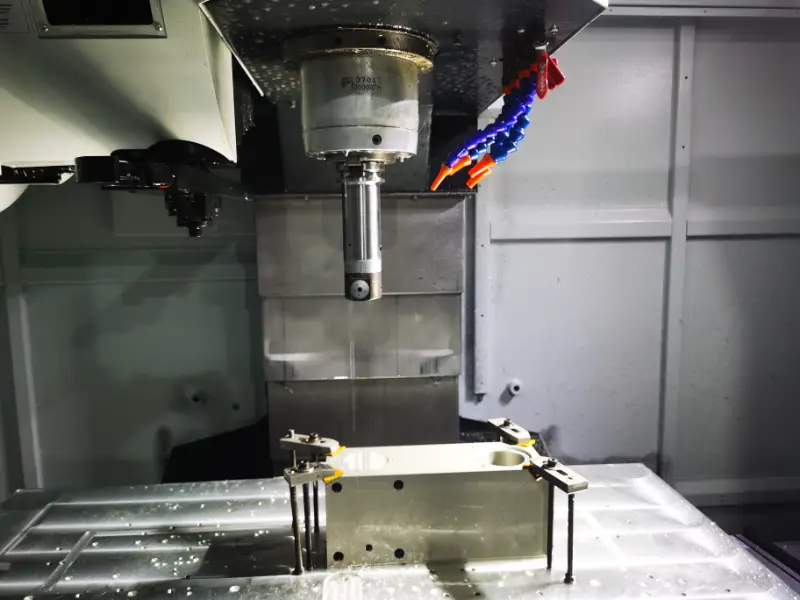
CNC Milling
CNC milling is suitable for copper cooling plates, heat sinks, busbars, electrodes, and parts with holes, slots, cavities, and complex contours.
When machining high-purity copper, sharp tools designed for nonferrous metals should be used, and stable chip evacuation must be maintained. Repeated tool rubbing against the machined surface causes material smearing, burrs, and deterioration of surface roughness, so toolpath planning should minimize rubbing during non-cutting moves and the recutting of chips.
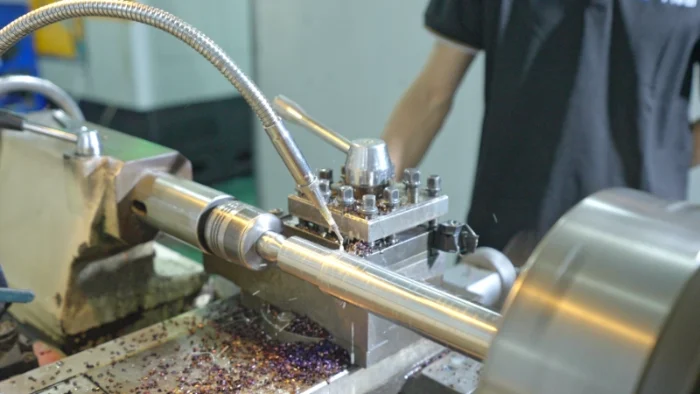
CNC Turning
CNC turning is commonly used to manufacture copper bushings, nozzles, terminals, electrodes, pipe fittings, and threaded parts.
Proper selection of the tool nose radius, feed rate, and chip-breaking method makes it possible to control the dimensions of outside diameters, bores, grooves, and threads. Stable coolant delivery and timely chip evacuation prevent long chips from wrapping around the workpiece and reduce surface scratching.
Drilling and Tapping
Copper can be drilled, bored, reamed, and tapped. These processes are used to produce busbar mounting holes, cooling channels, connection holes, and internal threads.
Chip evacuation and lubrication are especially important when machining small holes, deep holes, and blind holes. Chip clogging can cause drill deflection, scoring of the hole wall, out-of-tolerance hole diameters, and tool breakage. Sharp taps and cutting fluids suitable for copper should be used during tapping to prevent torn threads and exit burrs.
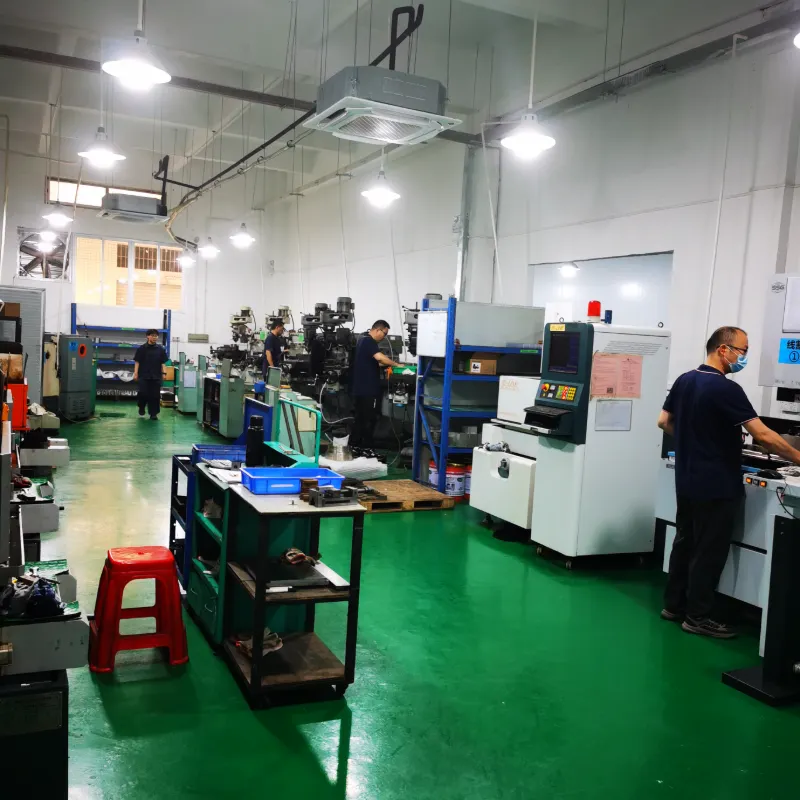
EDM Machining
Wire EDM is suitable for machining precision notches, narrow slots, thin-walled structures, and complex contours that conventional cutting tools cannot reach.
The process removes material through electrical discharge without applying continuous mechanical cutting forces, thereby reducing deformation of thin-walled copper parts caused by cutting loads or clamping forces. Wire EDM can also be used for copper electrodes, conductive components, and high-precision contoured parts.
Copper itself is also a common electrode material for electrical discharge machining. Copper electrodes have good electrical conductivity and thermal stability, making them suitable for machining mold cavities, fine contours, and deep, narrow features.
Laser Cutting and Waterjet Cutting
Laser cutting and waterjet cutting are primarily used for copper sheet, busbars, electrical connector plates, and other two-dimensional profile parts.
Copper has high reflectivity and thermal conductivity, so laser processing requires equipment, wavelengths, and cutting parameters suitable for copper. Waterjet cutting does not create a significant heat-affected zone and is suitable for thicker copper plate or parts that must avoid thermal distortion, but cut-edge roughness and taper must be evaluated against subsequent assembly requirements.
Extrusion and Forging
Extrusion can be used to manufacture copper bars, copper tubes, conductive profiles, and industrial components with constant cross sections. Forging is suitable for copper alloy structural parts that require higher strength, a dense microstructure, and reliable load-bearing capacity.
Extruded or forged blanks generally require subsequent CNC machining to produce mounting holes, sealing surfaces, threads, and high-precision mating areas.
Stamping and Forming
Copper sheet and strip can be blanked, bent, drawn, and progressive-die stamped to produce terminals, contacts, conductive plates, spring contacts, and shielding covers.
In mass production, material hardness, rolling direction, die clearance, and bend radius must be controlled. Improper parameter settings can cause excessive burrs, springback, wrinkling, and cracking along bent edges.
Grinding and Polishing
Grinding is used to improve the flatness, thickness tolerance, and surface roughness of copper parts, while polishing restores metallic luster, removes light oxide layers, and meets decorative requirements.
Soft copper can load a grinding wheel. An open-structure wheel, light grinding pressure, and ample cooling should be used to prevent surface smearing, overheating, and loss of dimensional control.
Common Copper Machined Parts and Applications
Electrical Components
Copper is commonly used to manufacture:
- Busbars;
- Connectors;
- Terminals;
- Electrical contacts;
- Electrodes;
- Conductive plates.
These parts require stable material conductivity and strict control of hole positions, contact-surface flatness, roughness, and plating thickness.
High-current busbars also require control of cross-sectional area, corner radii, and joint-surface quality to prevent localized resistance increases and resulting overheating.
Thermal Management Components
Common copper thermal-management components include:
- Heat sinks;
- Cooling plates;
- Heat spreaders;
- Heat pipe bases;
- Heat exchanger components.
Channel dimensions, wall-thickness uniformity, sealing structure, and contact-surface flatness directly affect thermal conductivity, fluid resistance, and service reliability. Chips, oil, and oxidation residues must be removed from inside the channels after machining.
Industrial Components
Copper and copper alloys are commonly used for:
- Copper fittings;
- Valves;
- Nozzles;
- Bushings;
- Bearing components;
- Guide components;
- Sealing connections.
Brass and bronze have higher mechanical strength, hardness, and wear resistance than high-purity copper, making them suitable for parts subjected to friction, impact, or continuous mechanical loads. The specific alloy should be selected according to the load, lubrication conditions, mating material, and operating temperature.
Automotive and EV Applications
Copper parts used in new-energy vehicles include:
- EV battery connectors;
- Battery busbars;
- Charging terminals;
- Motor conductors;
- Inverter cooling components;
- High-voltage connectors.
These parts must simultaneously satisfy requirements for electrical conductivity, thermal conductivity, dimensional accuracy, and surface reliability. Burrs, oxide layers, and plating defects in connection areas increase contact resistance and affect assembly and long-term operating stability.
Aerospace Applications
Copper and copper alloy parts used in aerospace applications include high-reliability electrical connectors, heat-transfer components, conductive components, and specialized bearing parts.
These applications generally require complete material traceability, rigorous dimensional inspection, consistent surface treatment, and precise control of burrs and contaminants.
Architectural and Decorative Components
Copper can be used for roofs, curtain walls, door handles, decorative panels, and works of art.
The intended final appearance must be defined during the design stage: either allowing a natural brown or green patina to develop or maintaining the original copper color through polishing, waxing, and clear coating. Different protection systems have different maintenance intervals and surface effects, so the choice should be confirmed before material procurement and manufacturing.
Copper Corrosion in Different Environments
The surface condition and corrosion form of copper are determined by humidity, salt content, pollutants, water quality, flow velocity, and temperature.
| Environment | Typical Surface Change | Main Corrosion Risk |
| Dry Indoor Environment | Surface gradually tarnishes and turns brown | Low corrosion rate; mainly affects appearance |
| Outdoor Atmosphere | Gradual change from brown and black to a green patina | Rain, humidity, and pollutants affect the stability of the protective layer |
| Coastal Environment | Rapid formation of a green or blue-green corrosion layer | Chlorides cause pitting and powdery active corrosion |
| Plumbing Systems | Formation of oxide films, scale, or mineral deposits | pH, flow velocity, temperature, and deposits cause erosion or localized corrosion |
| Industrial Environment | Surface blackening and formation of a nonuniform corrosion layer | Sulfides, acidic pollutants, and chemical vapors accelerate corrosion |
| Electrical Applications | Discoloration and formation of a thin oxide layer on contact surfaces | Oxides and contaminants increase contact resistance |
| High-Temperature Service | Rapid formation of a dark oxide layer | Thickening of the oxide layer affects electrical contact performance |
Copper in ordinary indoor environments mainly undergoes slow tarnishing and discoloration. Marine, chemical-processing, high-temperature water, and high-velocity piping environments require material validation and corrosion control through plating, protective coatings, drainage design, and isolation of dissimilar metals.
Copper vs Other Metals: Corrosion Comparison
| Material | Corrosion Behavior | Protective Behavior | Key Limitation |
| Copper | Forms copper oxides and a patina | A stable surface layer can reduce the rate of subsequent corrosion | Chlorides, ammonia, and acidic media can cause active corrosion |
| Carbon Steel | Forms rust | Rust is loose and cannot protect the substrate | Continuous corrosion in humid environments |
| Aluminum | Forms an aluminum oxide film | The oxide film is thin and dense | Chlorides can disrupt the oxide film and cause pitting |
| Stainless Steel | Forms a chromium-rich passive film | The passive film can repair itself in oxygen-containing environments | Chlorides can cause pitting and crevice corrosion |
| Brass | Forms corrosion products of copper and zinc | Good corrosion resistance in ordinary environments | Certain water-quality and chemical conditions can cause dezincification |
| Bronze | Forms a copper-based patina | A stable layer can protect the substrate | Humid, chloride-containing environments can cause powdery active corrosion |
Material selection cannot be based solely on whether a metal “rusts.” Electrical conductivity, thermal conductivity, strength, weight, operating medium, temperature, and maintenance requirements also determine the long-term performance of a part.
Does Copper Need Surface Treatment?
Whether copper requires surface treatment depends on the operating environment and functional requirements. Ordinary indoor, noncontact parts may retain a natural copper surface, while parts used for electrical contact, soldering, decoration, wear resistance, or in corrosive environments require the corresponding surface treatment.
Tin Plating
Tin plating improves the oxidation resistance and solderability of copper parts and is commonly used for terminals, busbars, and electrical connectors. The tin layer also isolates the copper substrate and reduces surface discoloration during storage and use.
Silver Plating
Silver plating provides high electrical conductivity and good high-temperature contact performance, making it suitable for high-current contacts, switch components, and high-performance connectors. Plating thickness and the underlying treatment must meet the requirements for contact load and operating temperature.
Nickel Plating
Nickel plating increases surface hardness, wear resistance, and corrosion resistance and provides a stable base layer for subsequent coatings. Nickel has lower electrical conductivity than copper, so the coating structure and thickness on electrical contacts must be controlled according to the allowable contact resistance.
Clear Coating and Wax
Clear protective coatings and waxes are suitable for decorative copper parts. They isolate the surface from air, moisture, and fingerprints and delay tarnishing and discoloration.
A clear coating changes the surface feel, gloss, and subsequent maintenance method. Insulating coatings should not cover functional surfaces in high-temperature, conductive-contact, or soldering areas.
Passivation and Anti-Tarnish Treatment
Anti-tarnish treatments for copper use cleaning, chemical treatment, or an organic protective film to reduce the short-term oxidation rate and are suitable for storage, transportation, and assembly.
These treatments cannot replace durable coatings and structural protection designed for marine, chemical-processing, or continuously humid environments.
How to Prevent Copper Corrosion
Keep the Surface Clean and Dry
Condensation, salts, perspiration, fingerprints, machining fluids, and cleaning-agent residues should be removed promptly. Structural design should minimize crevices, blind areas, and locations where water can collect and should ensure that rainwater or process fluids drain freely.
Select Compatible Cleaning Chemicals
Copper parts must not remain in prolonged contact with ammonia-containing cleaners, strong acids, strong alkalis, or high concentrations of chlorides. Before cleaning, confirm that the cleaning agent is compatible with the specific copper grade, solder, and surface coating.
After cleaning, the parts must be rinsed thoroughly and dried to prevent chemical residues from continuing to corrode the material inside crevices and blind holes.
Use the Correct Protective Coating
Decorative parts can use a clear protective coating or wax; soldered terminals can use tin plating; highly conductive contacts can use silver plating; and parts requiring wear resistance and base-layer protection can use nickel plating.
The coating or plating must cover exposed areas, and continuity must be controlled around hole openings, edges, and joints. Damage to the coating creates an initiation point for localized corrosion.
Isolate Dissimilar Metals
When copper is connected to aluminum, zinc, or carbon steel, insulating gaskets, bushings, sealants, or compatible coatings should be used for isolation. The connection area should also be well drained to prevent water and salt solutions from forming a continuous electrolyte path.
Control Packaging and Storage
Precision copper parts should be stored in dry, moisture-resistant packaging that does not release corrosive gases. Packaging materials must not contain sulfides, acidic residues, or chlorides that can attack copper.
Electrodes, terminals, and high-gloss parts should be packaged in separate compartments to prevent direct hand contact, mutual rubbing, scratching, and contamination of contact surfaces.
Can Copper Be Used Outdoors?
Yes. Copper is durable outdoors, but it naturally develops a brown, black, or green patina. Clear coatings are required to retain its original color.
How Long Do Copper Components Last?
Copper components can last for decades, depending on wall thickness, environment, temperature, water quality, loads, and maintenance.
Is Oxidized Copper Harmful?
Stable copper oxidation is generally harmless, but powdery or flaking green corrosion should not contact food or drinking water, especially on unlined copper surfaces.
Can Copper Parts Be Protected from Oxidation?
Yes. Tin, silver, or nickel plating, anti-tarnish treatments, clear coatings, and wax can slow oxidation, depending on the part’s appearance and functional requirements.
Conclusion
Copper combines excellent electrical and thermal conductivity, corrosion resistance, and formability, making it widely used in busbars, terminals, connectors, cooling plates, fittings, valves, and precision mechanical components. Whether developing a complex copper component, validating a prototype, or preparing for copper part mass production, the appropriate copper grade, tolerance requirements, and post-processing methods should be determined according to the application.
With over ten years of machining experience, Weldo Machining can achieve tolerances as tight as ±0.002 mm and offers a wide range of post-processing options. We provide copper part buyers with competitive pricing and reliable manufacturing support. Contact us to learn more about our copper machining capabilities.