Custom Powertrain Component Manufacturing
Custom Engine Blocks & CNC Engine Block Machining
Weldo manufactures drawing-based custom engine blocks from approved castings and billet blanks. We combine DFM review, multi-axis CNC machining and documented inspection for prototypes and repeat production.
Définition du produit
What Is a Custom Engine Block?
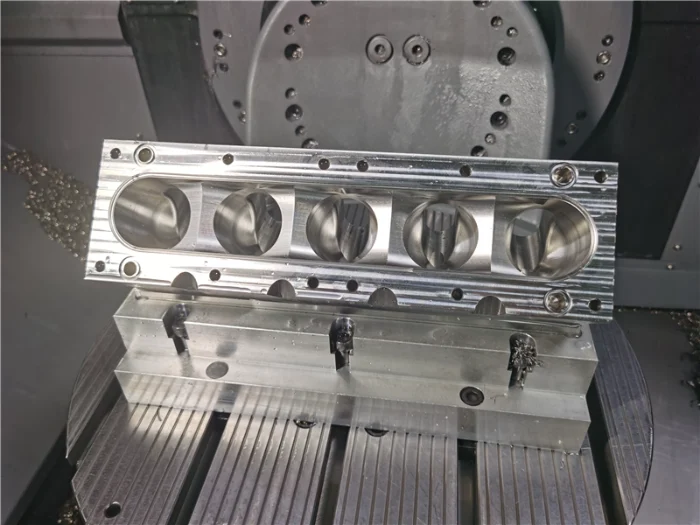
An engine block supports the cylinders, crankshaft and main bearings while containing the oil and coolant passages required for lubrication and temperature control. A custom block is manufactured around customer-defined geometry rather than a standard catalog configuration.
When Custom Machining Makes Sense
Choose a custom route for a new powertrain, revised cylinder spacing, nonstandard mounting, legacy replacement, lightweight billet concept or design validation before casting tooling.
Drawing-Controlled Manufacturing
Weldo machines to approved manufacturing data. Material, bore construction, datums, tolerances, cleanliness and inspection scope are agreed before production.
Engine Configurations
Custom Engine Block Designs We Support
Architecture determines datum strategy, access, workholding and bore-control requirements. Every project is reviewed from its own drawing and blank condition.
Inline Engine Blocks
Straight cylinder rows require consistent bore spacing, main-bearing alignment and long-datum control. Suitable for inline-four and customer-defined 2JZ engine block projects.
V-Type Engine Blocks
Both deck angles must remain controlled to the crankshaft centerline. Applications include custom V6, LS3 engine block and LS7 engine block programs.
Narrow-Angle VR Blocks
A VR6 engine block combines close cylinder spacing with restricted tool access. Datum planning is critical around the bores, deck and cooling features.
GT-R Performance Projects
Customer-supplied Nissan GT-R and VR38DETT-based designs can be reviewed for bore geometry, deck control, lubrication features and billet feasibility.
Diesel Engine Blocks
Heavy-duty diesel blocks prioritize bearing support, material stability and pressure-resistant deck geometry for industrial, mobile and generator applications.
Billet & Legacy Blocks
Billet machining supports prototypes, motorsport and discontinued configurations when casting tooling is impractical and complete manufacturing data is available.
VR6, 2JZ, LS3, LS7, GT-R and related names describe customer project references and engine configurations only. Weldo is not presented as an OEM-authorized replacement-parts supplier.
Common Project References
Vehicle and Engine Platforms We Can Review
Weldo supports drawing-based machining for custom, prototype and performance engine block projects. The platform names below are common engineering references; every part is manufactured to customer-approved data.
Volkswagen
VR6 and related compact multi-cylinder layouts where bore spacing, deck access and cooling geometry require careful datum planning.
BMW
Inline-four and inline-six development projects involving deck resurfacing, bearing alignment, revised mounting or prototype block geometry.
Nissan
GT-R, VR38 and RB-series reference architectures for customer-defined performance, billet and replacement-development programs.
Honda & Honda Fit
K-series, L-series and Honda Fit conversion projects requiring nonstandard mounting, bore, deck or accessory-interface features.
Toyota & Lexus
2JZ, UZ, GR and related inline or V-engine layouts for performance development, legacy replacement and prototype machining.
Mazda
Conventional piston-engine blocks and specialist rotary-engine housings, which require separate geometry and machining reviews.
Materials, Performance & Finishing
Select the Material for Your Custom Engine Block
Compare common grades, machining considerations, surface treatments and practical tradeoffs. Power and torque values are preliminary project references—not material guarantees or finished-block ratings.
Cast Aluminum Alloys
A practical choice for weight-sensitive blocks that require efficient heat transfer and complex cast coolant passages.
Avantages
Low mass, good thermal conductivity and efficient machining after the casting is stabilized.
Limites
Lower bore wear resistance and stiffness than iron. Porosity, deck movement and liner retention require careful control.
Options de traitement de surface
- Conversion coating for corrosion protection
- Selective hard anodizing on exposed wear areas
- Iron liners or specialist bore coating followed by honing
Applications typiques
Modern passenger cars, hybrids, light trucks and aluminum LS3/LS7- or VR38-style performance layouts.
Billet Aluminum
Used when casting tooling is impractical or a prototype, motorsport or low-volume program needs greater geometry freedom.
Avantages
No casting porosity, high design flexibility and easier revision of bore spacing, deck height and internal features.
Limites
High material use and machining time. 7075 requires dedicated review of corrosion, thermal cycling and bore construction.
Options de traitement de surface
- Hard anodizing on selected external features
- Electroless nickel on specified wear or corrosion areas
- Specialist liner or cylinder-bore coating system
Applications typiques
Prototype and racing engines, including custom LS, 2JZ, VR6 and GT-R/VR38-based architectures.
Gray Cast Iron
A proven option for stable cylinder bores, vibration damping and long wear life in durable gasoline and diesel engines.
Avantages
Good wear resistance, damping, dimensional stability and economical casting for repeat production.
Limites
Higher mass, lower corrosion resistance and less tensile ductility than aluminum, CGI or ductile iron.
Options de traitement de surface
- Plateau honing for the specified bore texture
- Phosphate treatment with rust-preventive oil
- E-coating or high-temperature paint on external surfaces
Applications typiques
Commercial diesel engines, traditional performance engines and 2JZ- or early VR6-type block layouts.
Fer graphite compacté
Selected for elevated cylinder pressure where greater strength and stiffness are needed without a substantially thicker gray-iron block.
Avantages
Higher strength, stiffness and fatigue resistance than gray iron while retaining useful damping and thermal performance.
Limites
More demanding foundry control, higher cutting forces and faster tool wear increase manufacturing cost.
Options de traitement de surface
- CBN- or diamond-assisted plateau honing
- Phosphate or black oxide with supplementary protection
- E-coating or high-temperature external coating
Applications typiques
High-output diesel pickups, heavy commercial vehicles and compact high-load powertrains.
Fonte ductile
A specialized option when toughness, fatigue strength and resistance to mechanical shock are more important than block weight.
Avantages
High toughness, fatigue resistance and structural strength for heavily loaded bearing and bulkhead regions.
Limites
High mass and lower heat transfer than aluminum. It is less attractive for weight-sensitive passenger-vehicle programs.
Options de traitement de surface
- Local induction hardening on specified wear areas
- Electroless nickel for selected corrosion-sensitive surfaces
- Phosphate, e-coat or industrial paint on external areas
Applications typiques
Heavy-duty diesel, industrial power units and specialized high-load racing engines.
Note technique : Displacement, power and torque are design inputs rather than intrinsic material ratings. Final capability must be validated from block geometry, bore construction, peak cylinder pressure, engine speed, thermal load, fatigue duty and inspection requirements.
Before Machining
Material and Blank Verification
The blank is checked against the drawing and material documentation before machining. Visual inspection is standard; penetrant, magnetic-particle, ultrasonic or radiographic testing is selected according to material, blank form and defect risk. Large or distortion-sensitive blanks receive the specified stress-relief or aging treatment. No material substitution is made without written customer approval.
Processus de fabrication
CNC Machining Process for Custom Engine Blocks
The route is built around stable datums, controlled bore geometry, clean passages and measurable drawing requirements.
Vérification des dessins et de la conception pour la fabrication (DFM)
Confirm the blank, datums, bore system, passages, tolerances and inspection plan.
Blank & Datum Preparation
Verify material and machining allowance, then establish stable reference surfaces.
Multi-Axis CNC Milling
Machine decks, crankcase faces, mounting bosses, pockets and multi-face interfaces.
Drilling & Threading
Produce oil, coolant, dowel and threaded features with controlled chip evacuation.
Precision & Line Boring
Control cylinder and main-bearing geometry relative to the approved datum system.
Cylinder Bore Honing
Finish bore geometry and the drawing-specified surface texture for the ring system.
CNC Turning Support
Manufacture liners, sleeves, bushings, plugs and other rotational companion parts.
Optional Wire EDM
Cut selected conductive through-slots, inserts or profiles that milling cannot reach efficiently.
Deburring & Cleaning
Remove breakout burrs and residual chips from intersecting and blind passages.
Contrôle final
Verify critical geometry, surface condition, passage integrity and requested records.
Wire EDM is limited to suitable conductive through-features. It does not replace milling, deep-hole drilling, boring or honing for the primary block geometry.
Reference Capacity
Engine Block Machining Capabilities
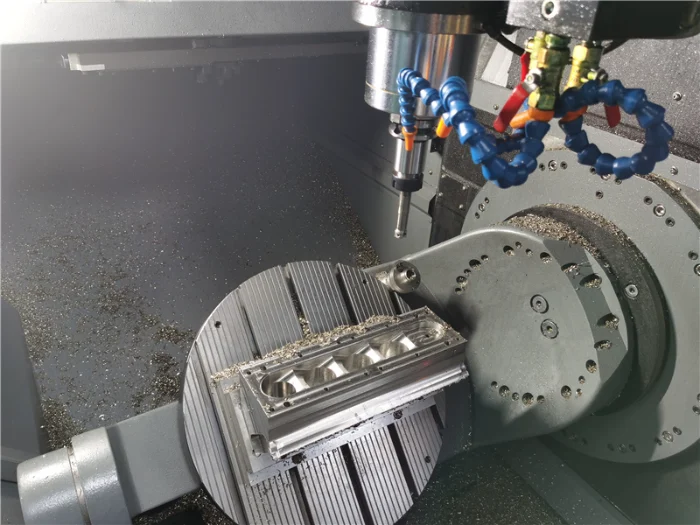
These are planning references rather than universal engine-block tolerances. Final capability is confirmed after reviewing the drawing, material, feature size, workholding and inspection method.
Usable block size depends on fixtures and access.
Typical noncritical machined features.
Confirmed after material and geometry review.
Finer surfaces require a dedicated finishing route.
Class, depth and sealing form follow the drawing.
Route depends on blank type and validation scope.
Bore requirements remain drawing-specific. Cylinder quality may require diameter, roundness, cylindricity, crosshatch angle and Rk-family surface parameters—not Ra alone.
Assurance qualité
Inspection for Custom Engine Blocks
Inspection is planned around the features that control assembly, sealing, lubrication and long-term stability.
Vérification des matériaux
Check certificates, traceability, blank dimensions and the specified nondestructive-test records.
Contrôle dimensionnel
Verify decks, bore positions, bearing geometry and datum relationships during and after machining.
Bore Surface Control
Assess diameter, form and specified texture using equipment matched to the drawing requirement.
Passage & Leakage Checks
Inspect continuity, burrs and contamination. Pressure or leakage testing can be coordinated when specified.
Pourquoi Weldo ?
A Practical Route From Drawing to Inspected Part
Weldo focuses on manufacturing feasibility, stable process planning and clear inspection requirements. Specialized honing, coating, CT inspection or pressure testing can be coordinated through an approved route when the project requires them.
Explore prototype CNC machining →Engineering FAQ
Custom Engine Block Questions
Short answers for sourcing, manufacturing and repair-related decisions.
Can Weldo machine an engine block from my drawing? +
Yes. Weldo supports drawing-based machining of customer-supplied castings, billet stock and approved blanks. Feasibility is confirmed from the material, dimensions, datums, tolerances and inspection requirements.
What information is required for a quotation? +
Provide the 2D drawing or 3D model, blank condition, material, quantity, critical tolerances and finishing requirements. Identify the cylinder bores, main-bearing bores, deck surfaces and critical passages.
How do I know if my engine block is bad? +
Warning signs include repeated overheating, coolant or oil leakage, mixed oil and coolant, white exhaust smoke, low compression and abnormal noise. Similar symptoms can come from the head or gasket, so testing is required before confirming block damage.
Can an engine block be repaired? +
Some blocks can be restored by boring, honing, deck resurfacing or an approved repair liner. Severe bulkhead cracks, main-bearing damage, extensive distortion or major structural breakage usually make replacement safer.
How long will an engine block last? +
There is no fixed lifespan. A properly manufactured and maintained block can last for the service life of the engine. Overheating, poor lubrication, corrosion, detonation, contamination and incorrect assembly shorten its life.
How expensive is it to fix an engine block? +
Cost depends on damage, engine design and required operations. Honing or resurfacing costs less than installing liners, repairing cracks, rebuilding the rotating assembly or replacing the engine. Inspection is required before a reliable quotation.
What is the strongest material for an engine block? +
There is no single best material. CGI and ductile iron provide high strength and stiffness; gray iron offers wear resistance and damping; reinforced aluminum provides a better strength-to-weight ratio. Selection depends on pressure, temperature, weight, bore design and cost.
Engineering Review & Quote
Start Your Custom Engine Block Project
Send your drawing or model with the blank condition, material, quantity, bore requirements, tolerances and inspection specifications. We will review manufacturability and prepare an appropriate machining route.