
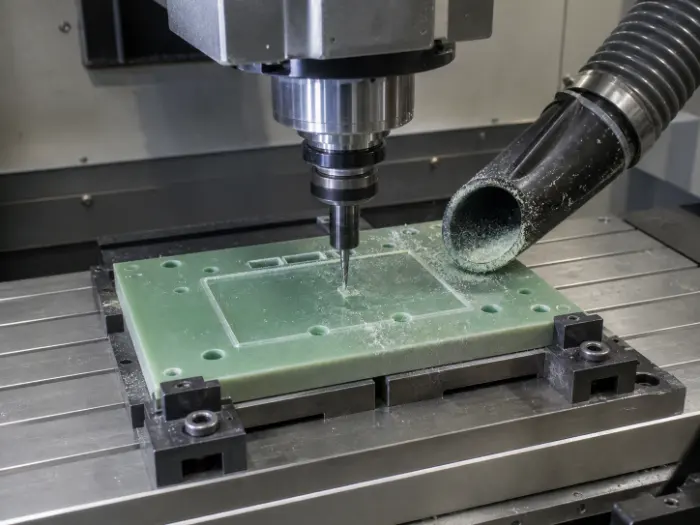
Custom FR-4 CNC Machining Services
Custom glass-epoxy insulation plates, spacers, fixtures, and precision components made to drawing. Weldo reviews the laminate grade, thickness, electrical duty, geometry, edge condition, and inspection requirements before machining.
- Glass-Epoxy Laminate Options
- Du prototype à la production
- Contrôle sur la base de plans
Property References for Glass-Epoxy Laminate
Representative room-temperature ranges for selected unclad woven-glass epoxy laminates. Resin system, glass style, direction, thickness, conditioning, and test method affect the result.
- Densité
- 1.80–2.00g/cm³
- Résistance à la flexion
- 310–650MPa · direction-dependent
- Glass Transition
- 130–200°CDSC · selected grades
- Absorption de l'eau
- 0.05–0.25% · method-dependent
- Résistance électrique
- 15–45kV/mm · test-specific
- Résistivité volumique
- 10¹³–10¹⁵Ω-cm
Use exact supplier data for design. Tg is not a continuous-use temperature, and test electric strength is not a device working-voltage rating. Confirm the relevant operating, insulation, and material acceptance requirements.
Drawing-Based FR-4 Machining Capabilities
Match tooling, support, cutting strategy, and inspection to the laminate’s abrasive reinforcement and layered construction.
Machining Reference Parameters
| Part-envelope reference | Up to 1200 × 1000 × 100 mm*Subject to stock construction, equipment, tool access, support, and workholding. |
|---|---|
| Dimensional references | General ±0.10 mm / selected features ±0.05 mm*Review feature size, laminate direction, edge support, thickness, and inspection conditions. |
| Wall or web reference | From 1.00 mm*Depends on height, span, holes, edge distance, handling, and the required insulation function. |
| Small-hole reference | From Ø0.80 mm*Confirm depth, tool selection, backing support, breakout allowance, and inspection access. |
| Stock-thickness reference | 0.20–100 mm*Availability and thickness tolerance depend on supplier grade and laminate construction. |
- Laminate identity
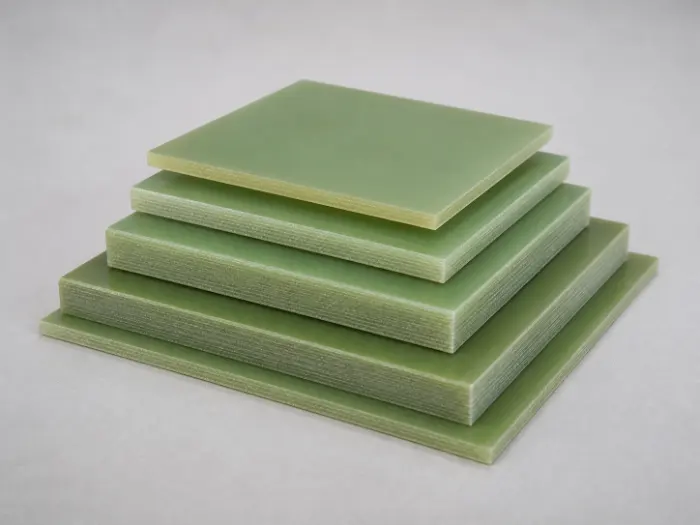
- Confirm product standard, supplier grade, thickness tolerance, glass construction, and required material records.
- Clean edges and stable cutting
- Plan suitable carbide or diamond tooling, backing support, controlled workholding, tool-wear checks, and dust extraction.
- Finished acceptance
- Define critical profiles, hole patterns, edge fray, delamination limits, cleanliness, and the inspection method.
*Planning references confirmed against the drawing. Maximum size, stock thickness, narrow webs, hole size, and tolerance are reviewed separately and should not be assumed achievable together.
Select the FR-4 Laminate for the Part
Compare thermal, electrical, tracking, loss, and documentation requirements against the intended machined component.
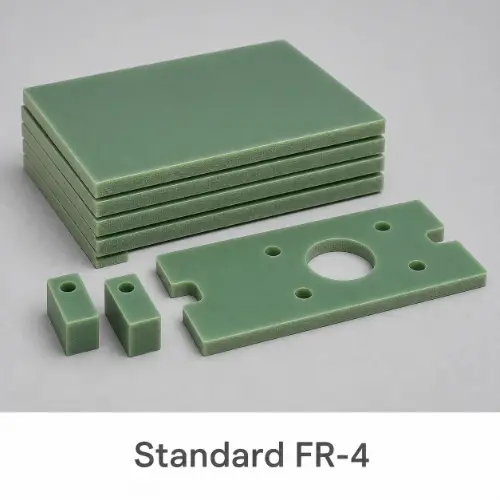
Standard FR-4
A general-purpose woven-glass epoxy laminate offering useful stiffness and electrical insulation for a specified cost and performance target.
Applications & machining notes
- Typical parts and uses
- Insulation plates, spacers, fixtures, support panels, and terminal boards.
- Selection requirements
- Operate within the documented grade rating and define voltage, humidity, thickness, and assembly requirements.
- Options de finition
- As-machined edges, controlled deburring, edge sanding, and printed identification.
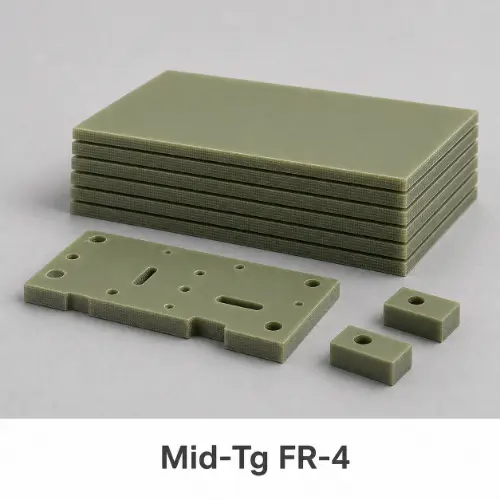
Mid-Tg FR-4
Supplier-defined formulations offering additional thermal-processing margin compared with conventional standard-Tg materials.
Applications & machining notes
- Typical parts and uses
- Test plates, equipment panels, insulation supports, and assembly fixtures.
- Selection requirements
- Confirm the actual Tg, test method, expansion, thermal cycling, and long-term operating rating. Mid-Tg is a descriptive category, not a complete material specification.
- Options de finition
- As-machined edges, sanding, suitable precision grinding, and marking.
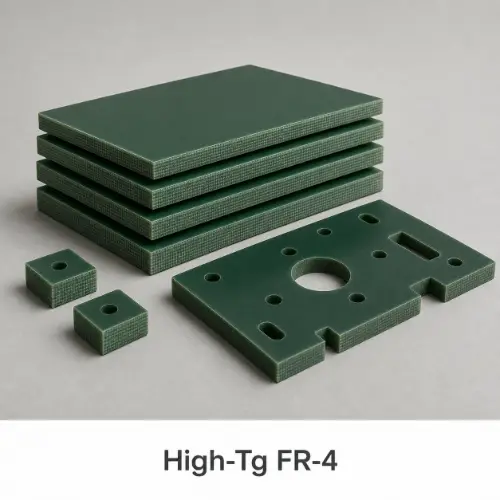
High-Tg FR-4
Formulations selected for greater thermal-process margin and specified dimensional behavior through temperature changes.
Applications & machining notes
- Typical parts and uses
- Thermal fixtures, test plates, supports, and electrical panels.
- Selection requirements
- Review verified RTI or supplier operating limits, load, and exposure time. A higher Tg does not by itself establish a higher continuous-use temperature.
- Options de finition
- Precision machining, controlled grinding, edge sealing, and compatible insulating coatings where required.
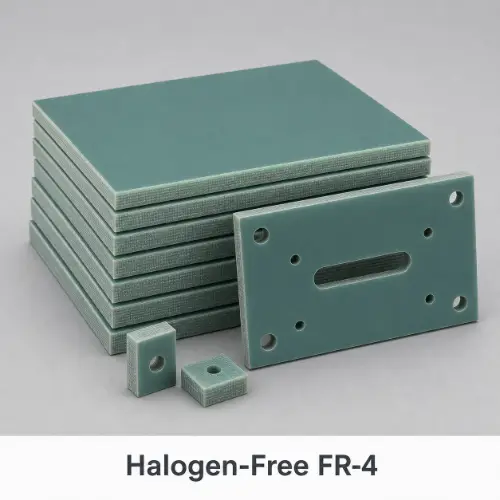
Halogen-Free FR-4
Formulations specified for defined halogen-content requirements, with electrical, thermal, and flame properties confirmed separately.
Applications & machining notes
- Typical parts and uses
- Insulation panels, fixtures, enclosures, and electrical support components.
- Selection requirements
- State the actual halogen-content specification and required supplier records. Confirm the thermal and electrical performance of the exact product.
- Options de finition
- Mechanical finishing, marking, or coating compatible with the selected laminate and project requirements.
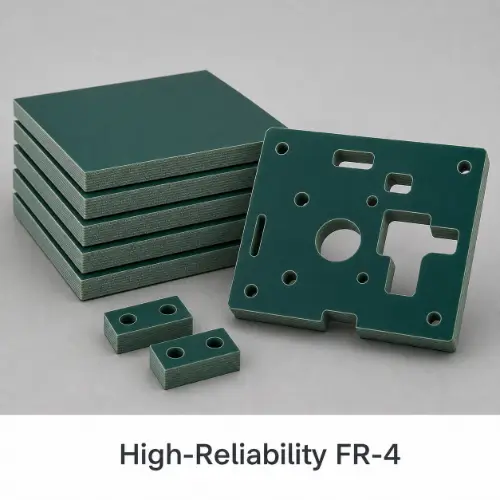
High-CTI FR-4
Documented grades selected for greater resistance to surface tracking under the specified test conditions.
Applications & machining notes
- Typical parts and uses
- Barrier plates, terminal supports, busbar insulation, and switchgear components.
- Selection requirements
- Specify the CTI requirement and review creepage, clearance, humidity, contamination, and assembly design. CTI and bulk electric strength describe different properties.
- Options de finition
- Controlled edges, marking, edge sealing, or approved insulating coatings as specified.
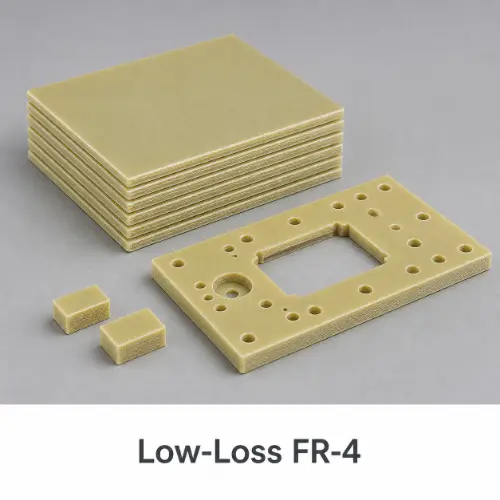
Low-Loss Glass-Epoxy Laminate
Supplier-qualified formulations with defined dielectric constant and loss at specified frequencies for signal-related applications.
Applications & machining notes
- Typical parts and uses
- Test fixtures, carrier plates, dielectric supports, and circuit tooling.
- Selection requirements
- State Dk, Df, frequency, test method, glass construction, thickness, and direction. Lower-loss performance must follow the exact laminate data.
- Options de finition
- Precision machining, edge sanding or grinding, and compatible printed identification.
CAF-Resistant FR-4
Qualified laminate systems intended to resist internal conductive-filament growth under defined humidity, bias, and conductor-spacing conditions.
Applications & machining notes
- Typical parts and uses
- Primarily printed-wiring cores and dense conductor structures where CAF qualification is relevant.
- Selection requirements
- Identify the actual test or qualification requirement. CAF resistance is distinct from surface tracking and is rarely the main selection criterion for a plain machined insulation plate.
- Options de finition
- Deburring, controlled edges, specified edge sealing, and approved identification.
These material categories can overlap within one supplier product. Specify the exact laminate and required properties rather than treating the category name or material color as a complete identification.
Design for Clean Edges and Reliable Insulation
FR-4 suits many rigid sheet-based insulation and support parts. Review geometry, electrical duty, thermal exposure, moisture, and assembly loads together.
Support the Layered Construction
Use practical hole-to-edge distances, support thin sheets and cutting exits, and review narrow webs to limit breakout, fray, and delamination.
Define Functional Geometry
Identify datums, critical hole patterns, mating faces, and accessible internal radii. Apply close tolerances where the assembly needs them.
Specify Electrical and Thermal Duty
State voltage, temperature, humidity, flame rating, CTI, and dielectric requirements as relevant to the application and exact laminate.
Review Fastening and Loads
Consider impact, concentrated loads, repeated assembly, and thread strength. Select suitable edge distances, through-fastenings, inserts, or other validated joint designs.
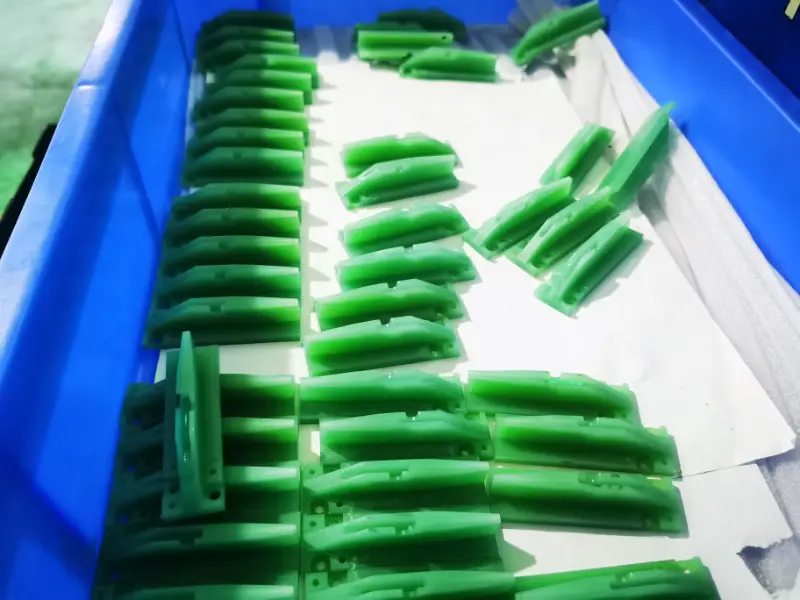
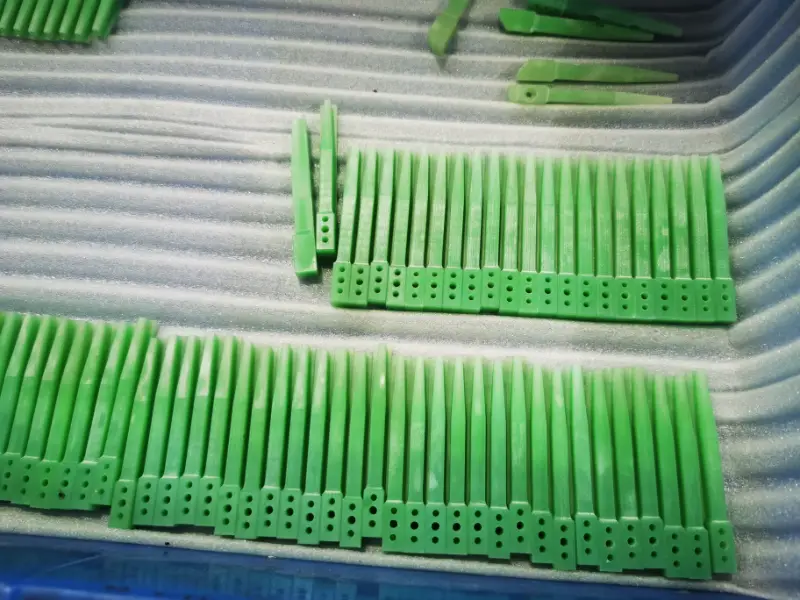
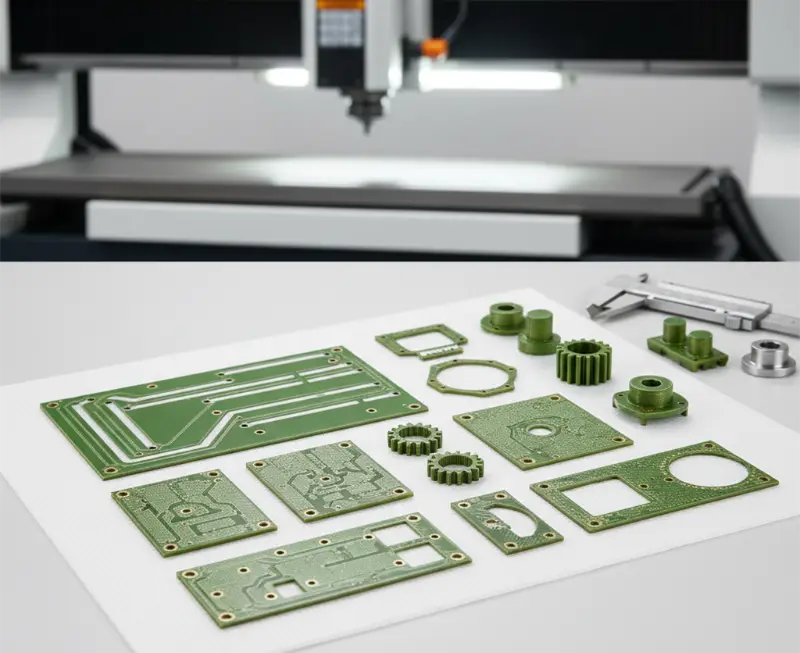
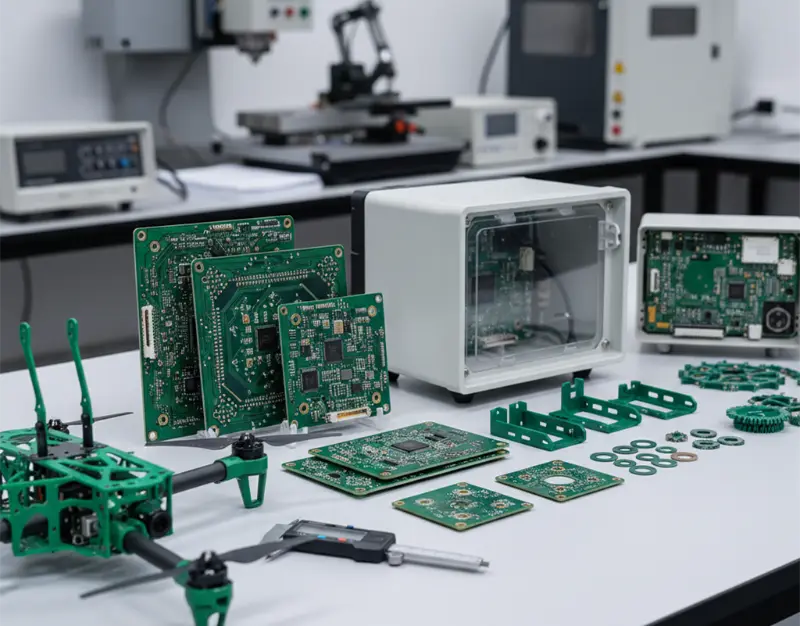
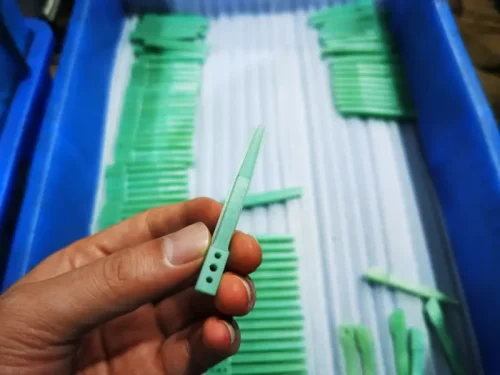
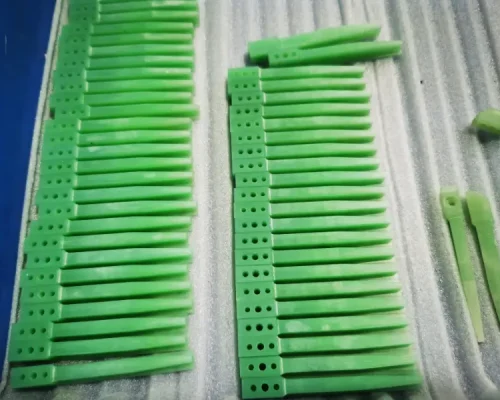
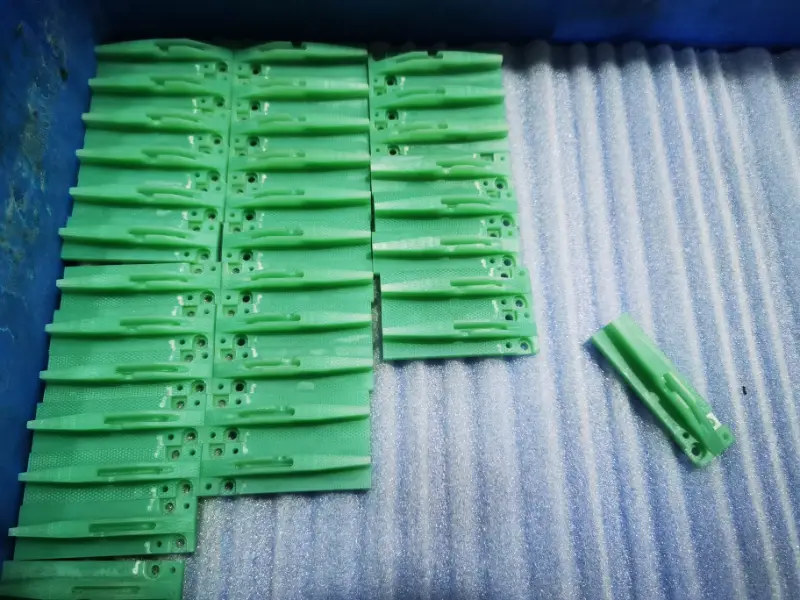
Weldo FR-4 Machining Projects
Examples of machined glass-epoxy plates, electrical fixtures, support parts, and custom insulation components produced by Weldo.
De la vérification du stratifié à l'inspection finale
Confirm material identity, edge quality, and critical dimensions from process planning through finished-part acceptance.
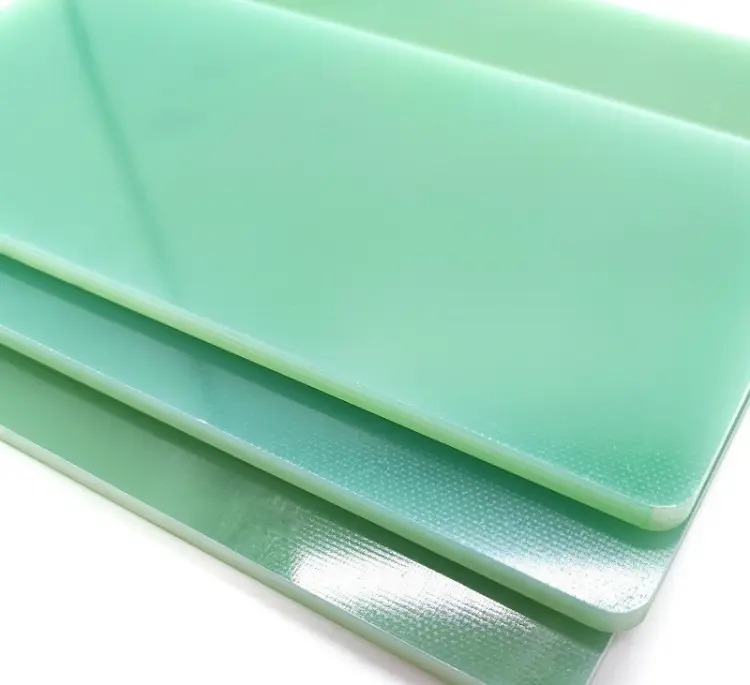
Laminate Review
Confirm supplier product, thickness, glass construction, condition, and required material records.
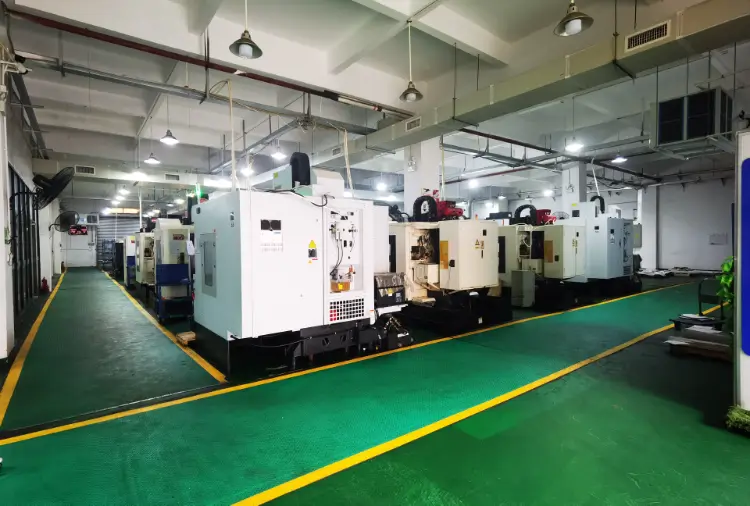
Contrôle des processus
Manage abrasive tool wear, workholding, cutting support, dust extraction, and edge quality.
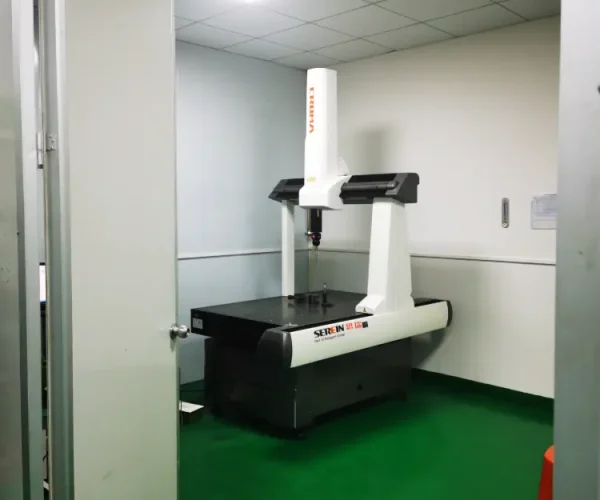
Contrôle dimensionnel
Verify profiles, hole patterns, thickness, and critical interfaces under agreed measurement conditions.

Contrôle des livraisons
Confirm required records and clean, protect, label, and pack approved parts for shipment.
Secondary operations can include deburring, sanding, controlled grinding, marking, edge sealing, insulating coating, bonding, and assembly. Specify compatibility, final dimensions, and any required adhesion or insulation acceptance.
Explore surface finishing options →FR-4 Machining Questions
Which cutting tools suit FR-4?
Suitable carbide, diamond-coated, or PCD tools are selected according to geometry, production volume, laminate, and edge requirements. Glass reinforcement is abrasive, so tool wear and chip or dust control are part of the process plan.
How is deformation or edge damage reduced?
Support thin sheets and tool exits, use controlled workholding, and plan suitable cutting engagement and material removal. Verify critical dimensions after release from the fixture at the agreed measurement condition.
How is flame performance specified?
State the required rating and verify the exact manufacturer, product designation, color, and thickness against the applicable supplier recognition or test record. FR-4 naming alone is not the full certification specification.
What is the difference between FR-4 and G10?
Both are woven-glass epoxy laminates. FR-4 is specified with flame-retardant performance, while G10 has its own structural and electrical material requirements. Review exact product data and required ratings before substitution.
Can threads be machined into FR-4?
Direct threads require adequate laminate thickness, edge distance, and verified loading. Through-bolts, captive nuts, or compatible inserts can suit repeated assembly or higher loads. Define torque, pull-out requirements, and the joint geometry.
Does high Tg mean a higher operating temperature?
Tg identifies a material transition under a stated test method. Long-term use depends on the exact product rating, electrical or mechanical duty, exposure time, and environment. Review supplier RTI or operating data for the actual application.