
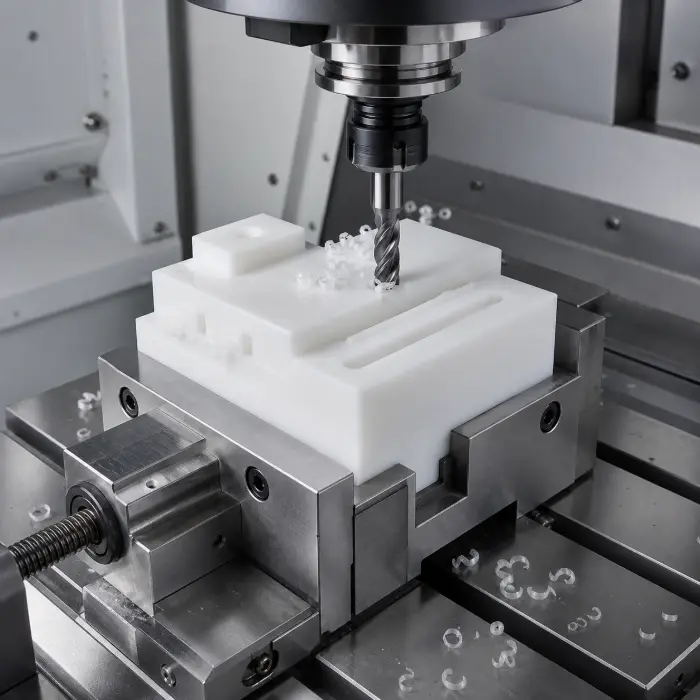
Services d'usinage CNC sur mesure du POM
POM, also known as acetal, offers useful stiffness, low friction, wear performance, and low moisture uptake for moving components. Weldo machines gears, bushings, guides, and custom parts to drawing, with grade, finishing, and inspection matched to the application.
- POM-H, POM-C & Modified Grades
- Du prototype à la production
- Contrôle sur la base de plans
Mechanical Property References for POM
Illustrative values for selected unfilled homopolymer and copolymer grades. Supplier formulation, product form, conditioning, and test method affect the result.
- Densité
- 1.39–1.43g/cm³
- Résistance à la traction
- 55–75MPa
- Module de traction
- 2.3–3.2GPa
- Résistance à la flexion
- 75–110MPa
- Allongement à la rupture
- 10–40%
- Dureté Rockwell
- M80–M94Rockwell M scale
Use grade-specific supplier data for design and acceptance. Filled, bearing, ESD, and documented contact grades can differ from these ranges.
Drawing-Based POM Machining Capabilities
Milling and turning routes are confirmed from the material, stock size, geometry, functional surfaces, and inspection requirements.
Machining Reference Parameters
| Part-envelope reference | Up to 3000 × 1200 × 850 mm*Subject to stock availability, equipment, support, workholding, and tool access. |
|---|---|
| Selected dimensional features | Down to ±0.01 mm*Feature-specific engineering review; define temperature, support, material condition, and inspection method. |
| Thin-wall reference | From 1.5 mm*Review wall height, span, clamping, stress release, and final handling. |
| Small-hole reference | From Ø2 mm*Depends on depth, tool reach, chip removal, burr limits, and measurement access. |
| Rugosité à l'état brut d'usinage | Ra 0.8–3.2 µm*Depends on grade, tools, geometry, cutting conditions, and the required functional surface. |
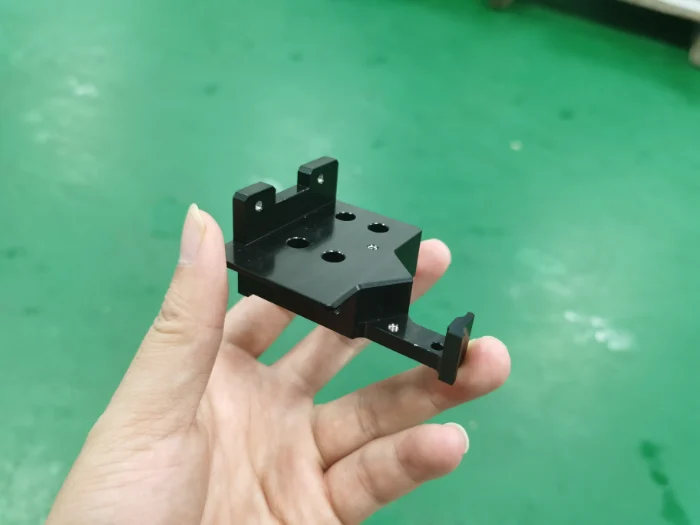
- Stock and material condition
- Confirm POM-H or POM-C, any fillers, product form, residual-stress condition, and required material records.
- Stable machining sequence
- Plan support, balanced removal, sharp tools, chip evacuation, and thermal stabilization.
- Finished-part acceptance
- Agree critical fits, datums, edge condition, inspection environment, and any post-treatment acceptance.
*Planning references confirmed against the drawing. Maximum size, thin walls, hole size, tolerance, and roughness are assessed separately and should not be assumed achievable together.
Select the Right POM and Acetal Grade
Compare stiffness, friction, wear, chemicals, electrical behavior, and the required documentation for the finished part.
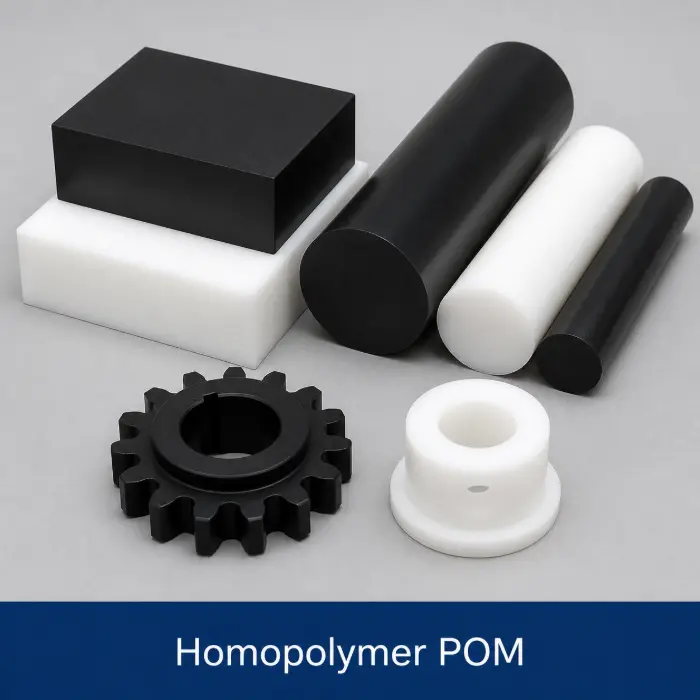
Homopolymère de POM
Commonly selected for high stiffness, strength, hardness, and fatigue performance among unfilled acetal grades.
Applications & machining notes
- Pièces courantes
- Precision gears, rollers, cams, bearing cages, and mechanically loaded parts.
- Colors and stock
- Natural white and black are common; verify exact grade, stock form, and color availability.
- Selection considerations
- Review operating temperature, load, chemicals, and stock stress. Continuous hot-water or steam exposure requires a material-specific suitability review.
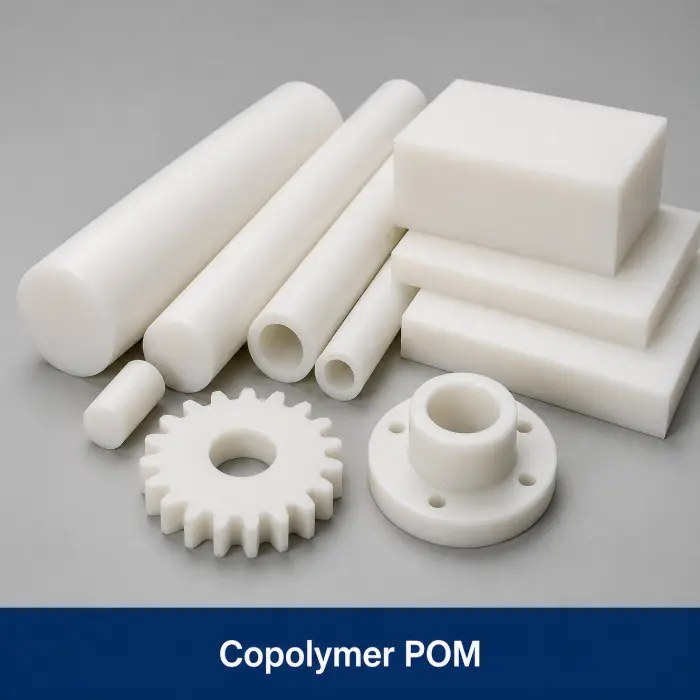
Copolymère POM
A general engineering acetal option with useful machining and dimensional stability, often selected for improved hot-water and alkaline resistance relative to POM-H.
Applications & machining notes
- Pièces courantes
- Valve parts, pump components, clips, guides, and gears in reviewed fluid or humid service.
- Colors and stock
- Natural and black are common; selected grades offer detectable blue or other documented colors.
- Selection considerations
- Specify chemical concentration, temperature, cleaning cycle, and the exact formulation. Hot-water resistance does not automatically qualify every grade for repeated steam exposure.
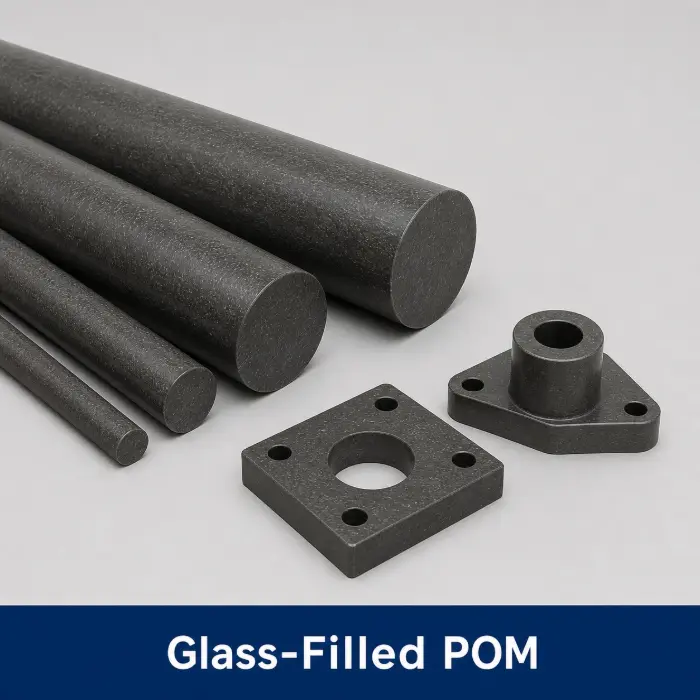
POM rempli de verre
Reinforcement increases stiffness and can reduce creep and thermal movement, with grade-dependent impact, surface, and directional properties.
Applications & machining notes
- Pièces courantes
- Fixtures, supports, pump components, and dimensional-control parts under sustained load.
- Colors and stock
- Natural gray or black are common; verify supplier and reinforcement level.
- Selection considerations
- Specify filler content and stock direction. Abrasive fibers require wear-resistant tools and controlled edge finishing; review the effect on mating or sliding surfaces.
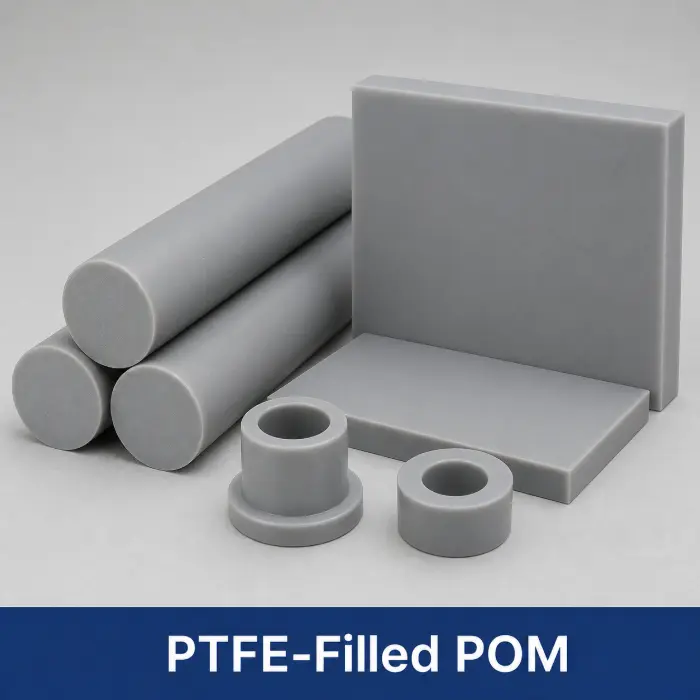
POM rempli de PTFE
Bearing formulations designed to reduce friction, stick-slip, or wear for suitable mating materials and operating conditions.
Applications & machining notes
- Pièces courantes
- Bushings, wear pads, slide blocks, and guides in selected low-maintenance mechanisms.
- Colors and stock
- Color depends on formulation and supplier.
- Selection considerations
- Define load, speed, temperature, shaft finish, lubrication, and expected wear. Dry-running suitability must be assessed for the actual bearing system.
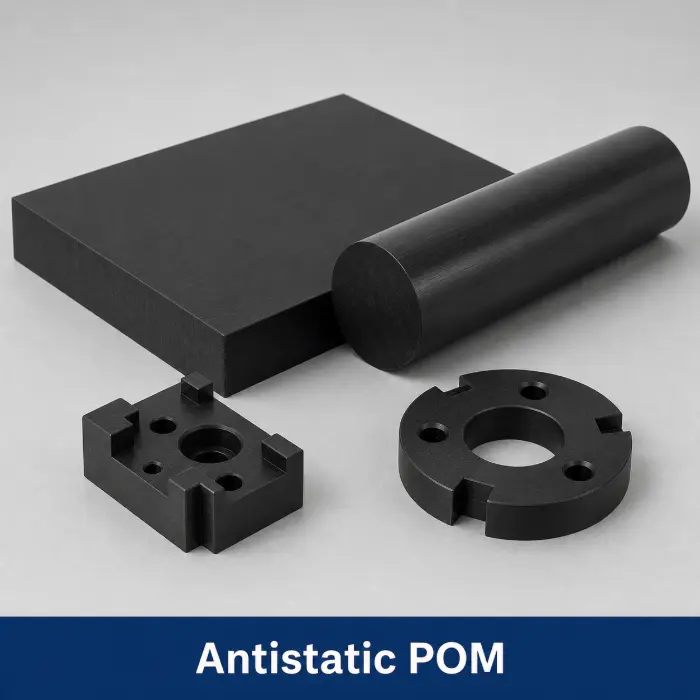
Antistatic and ESD POM
Modified acetal grades for defined electrostatic-control requirements in electronics production and handling equipment.
Applications & machining notes
- Pièces courantes
- Test fixtures, assembly nests, handling guides, and automation components.
- Colors and stock
- Black or gray is common; the electrical range is formulation-specific.
- Selection considerations
- Specify the required surface or volume resistivity, test method, environment, and finished-part acceptance. Antistatic, dissipative, and conductive grades provide different electrical behavior.
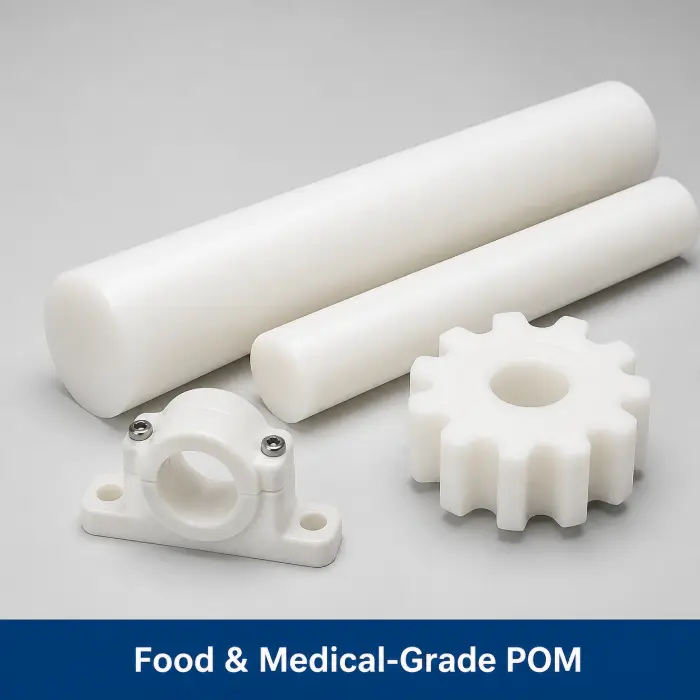
Food-Contact & Healthcare POM
Documented grades selected for an application’s material, contact, cleanliness, and traceability requirements.
Applications & machining notes
- Pièces courantes
- Conveyor guides, dosing components, equipment parts, and specified non-implant instrument components.
- Colors and stock
- Natural, blue, or other documented colors depending on the exact grade.
- Selection considerations
- State the intended contact conditions and required supplier records. Match grade, filler, color, cleaning method, and finished-part requirements to the application.
Confirm the exact supplier grade, filler, color, stock form, and available size. Specify the actual load, speed, mating surface, temperature, and contact environment for functional parts.
Traitements de surface pour les pièces en POM
Many functional POM parts use an as-machined finish with controlled deburring. Additional surface treatment must suit the resin, assembly, and finished dimensions.
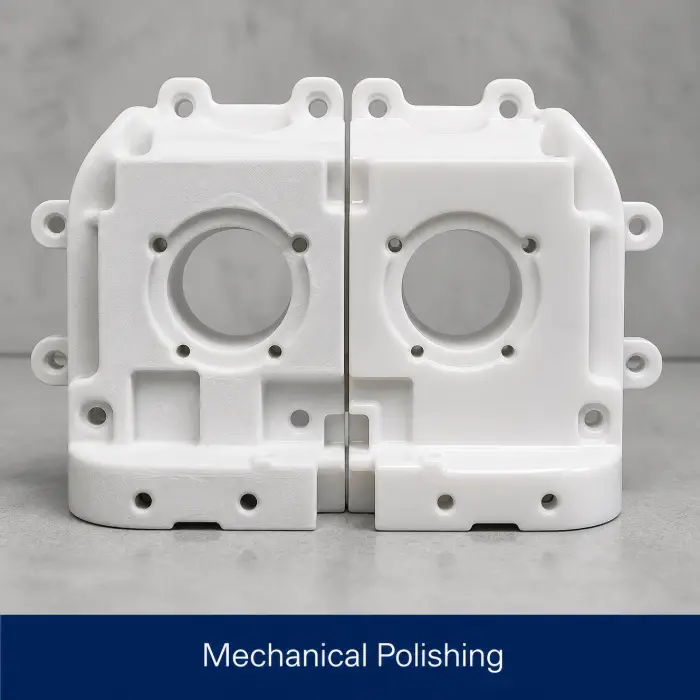
Polissage mécanique
Refine selected surfaces with controlled heat and material removal. Define roughness, appearance, and protected fits.
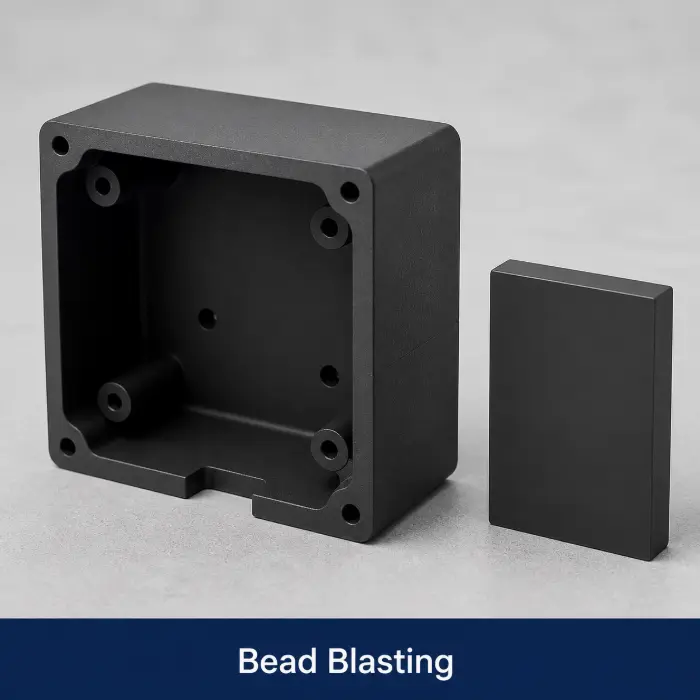
Sablage de perles
Create a specified matte texture using suitable clean media and masking. Review edge condition and functional-surface requirements.
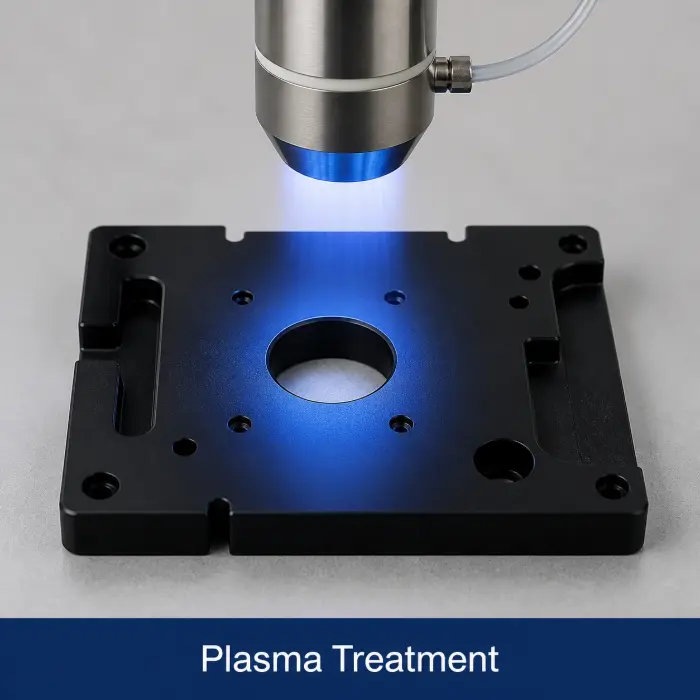
Traitement au plasma
Surface activation can support a defined bonding or coating route. Validate the process, treatment-to-assembly interval, and adhesion requirements.
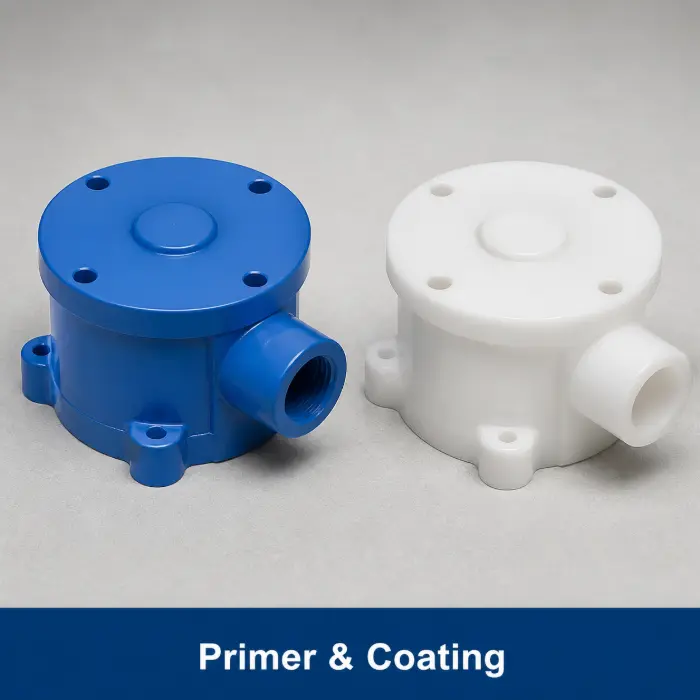
Apprêt et revêtement
Use a POM-compatible preparation, primer, and coating system. Agree thickness, cure conditions, adhesion, masking, and final dimensions.
Explore surface finishing options →
POM can be difficult to bond, print, or coat reliably. Define the preparation, complete material system, adhesion acceptance, masking, and treatment sequence before approving a coated or bonded part.
De la révision des plans à la réception définitive
Identify material, dimensional, and surface requirements before production, then verify the agreed finished-part condition.
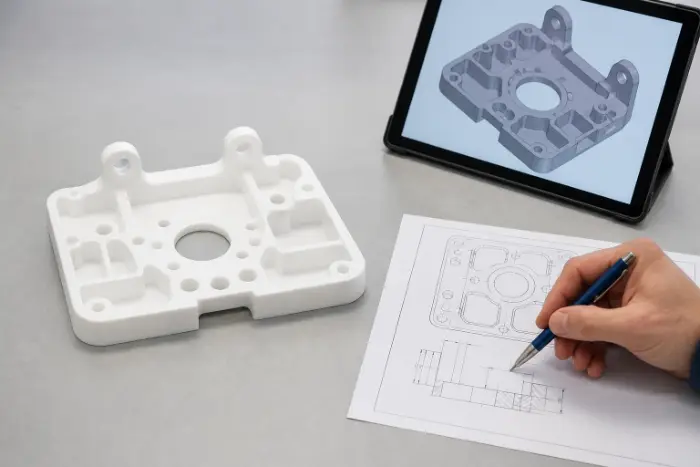
Analyse DFM
Confirm grade, stock condition, datums, wall sections, critical fits, and inspection requirements.
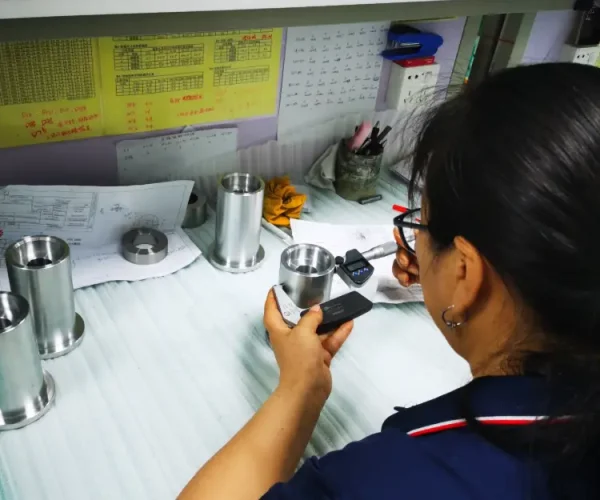
Contrôle des processus
Plan sharp tooling, support, clamping, chip evacuation, and thermal stabilization around the geometry.
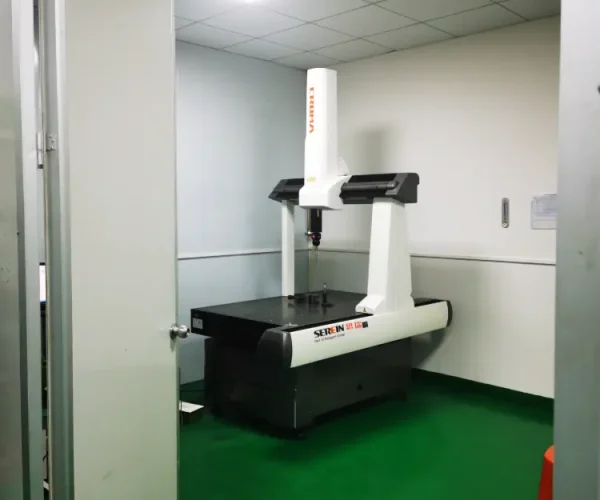
Contrôle dimensionnel
Verify critical features with suitable contact force, support, equipment, and agreed measurement conditions.
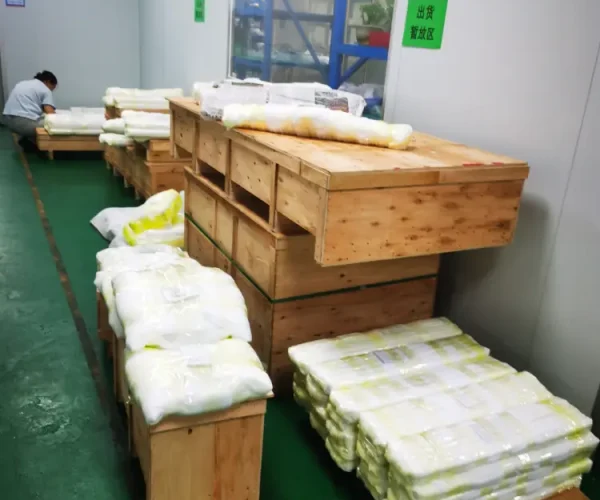
Contrôle des livraisons
Confirm required records and clean, protect, label, and pack approved parts for shipment.
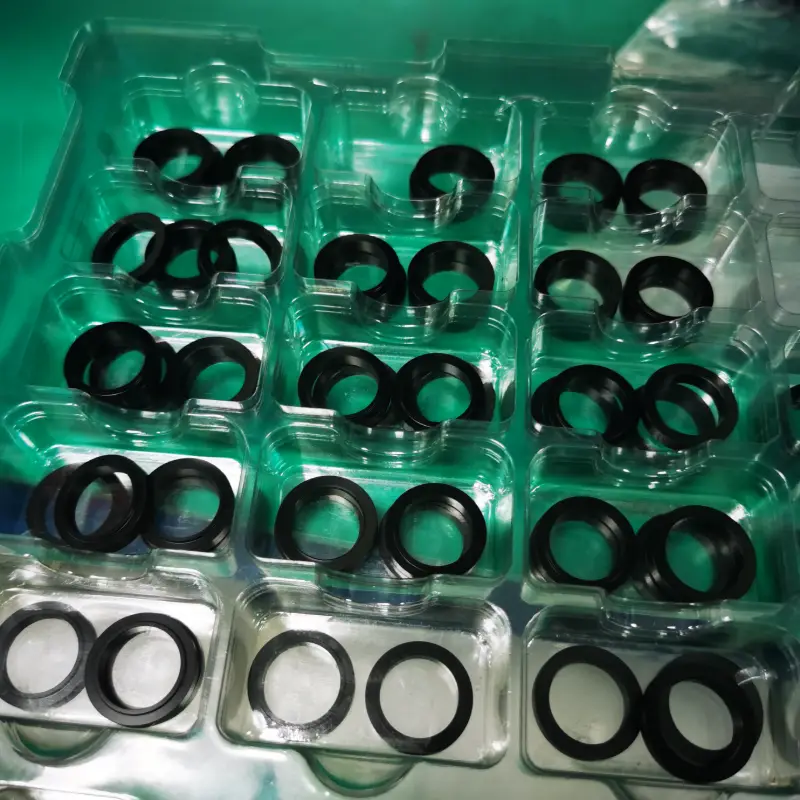
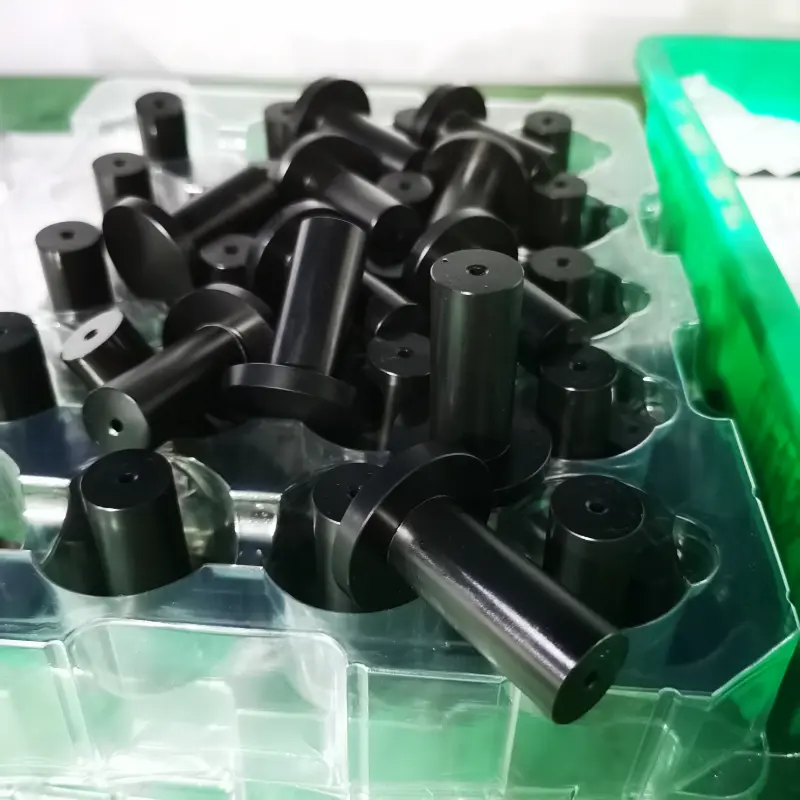
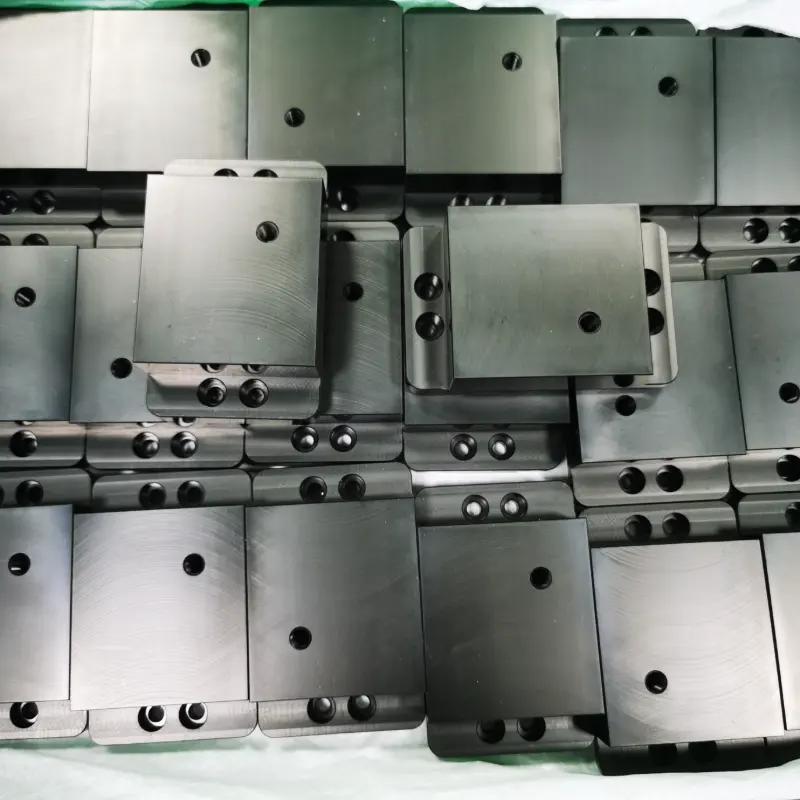
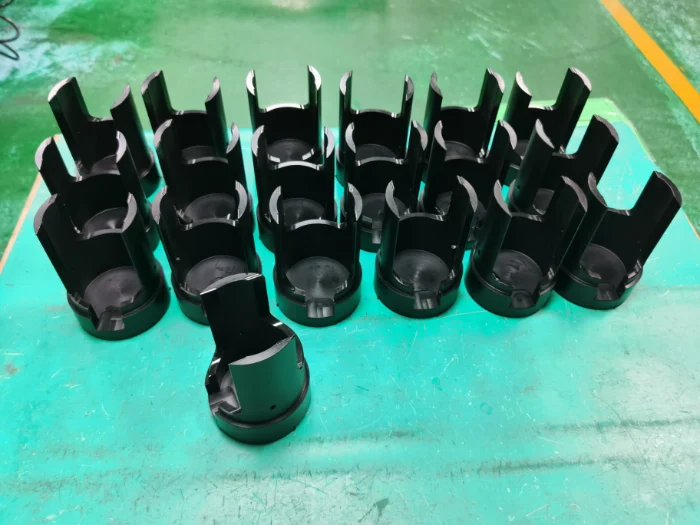
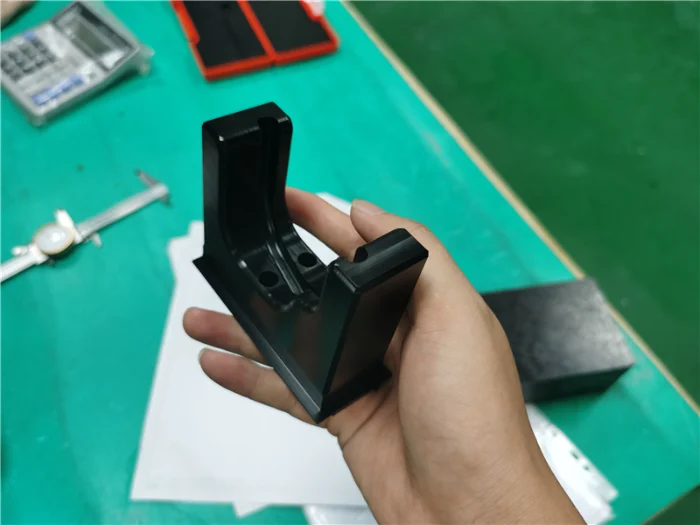
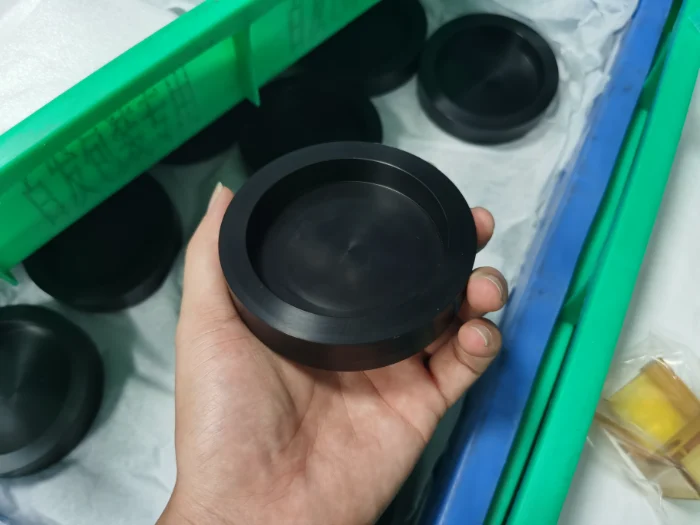
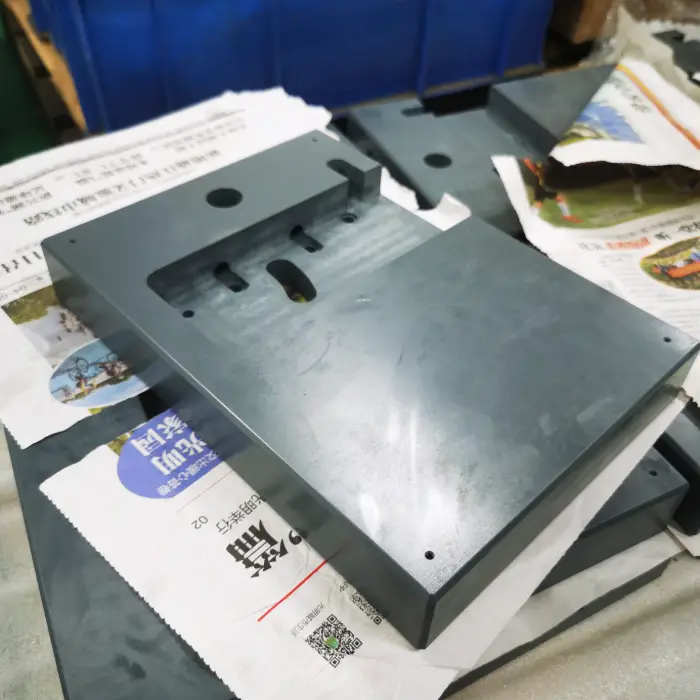
Weldo POM Machining Projects
Examples of turned, milled, and multi-axis POM components, plates, and custom precision parts produced by Weldo.




POM Machining Questions
How is dimensional stability maintained during POM machining?
Select suitable low-stress stock, use sharp tools and supported workholding, remove material in a balanced sequence, and control heat. Stabilize the part at the agreed inspection conditions before accepting critical dimensions.
Which tools and speeds suit acetal?
Sharp HSS or suitable carbide tools with adequate chip clearance can be used depending on the grade and operation. Select speed, feed, and engagement from tool guidance, machine rigidity, depth, finish, and reinforcement rather than applying one universal range.
How are burrs and poor surface finish reduced?
Review tool sharpness, cutting exits, chip evacuation, support, and heat together. Plan deburring and edge acceptance without rounding critical features or distorting flexible sections.
Does POM need coolant?
Some operations can run dry with suitable heat and chip management. Deep drilling or sustained heat may require a compatible cutting fluid. Confirm grade and fluid compatibility and the cleanliness needed for later bonding, coating, or assembly.
How does temperature affect close fits?
Thermal expansion and stress release can change measured dimensions. Plan roughing and finishing, allow stabilization, and specify the reference temperature, support, and acceptance method for critical features.
Why choose POM for moving components?
Useful stiffness, low friction, low moisture uptake, and machining behavior make acetal suitable for many gears, guides, and bushings. The exact grade must suit load, speed, temperature, mating material, chemicals, and expected life.