

Precision surface finishing
Black Oxide Coating
Black oxide gives compatible ferrous-metal parts a low-glare finish with minimal effect on threads, bores and close fits.
- Minimal dimensional buildup
- Oil, wax or dry seal
- Hot and stainless processes
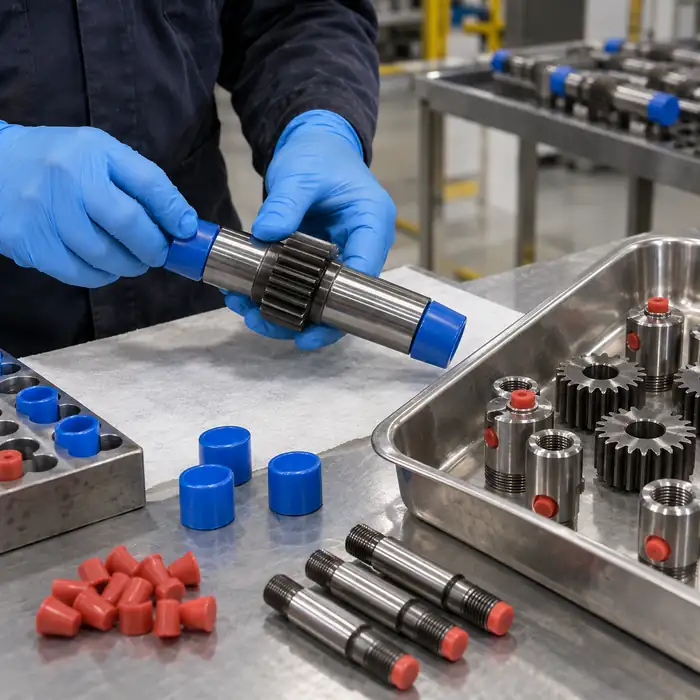
- Post-finish inspection
Process selection
Which Black Oxide Process Is Right?
Select the process according to material, heat-treatment condition and coating specification.
Hot Black Oxide
Processed at about 135–150°C for steel, tool steel and compatible cast iron.
Ossido nero a temperatura media
Processed at about 90–120°C for approved industrial applications.
Stainless Steel Black Oxide
Uses dedicated chemistry matched to the stainless grade and specification.
Room-Temperature Blackening
Restores black color during approved local touch-up; specification-controlled coating uses the required hot or dedicated process.
Controlled workflow
How Is Black Oxide Applied?
Five controlled stages determine coating consistency and protection.
Suitable materials
Black Oxide Compatible Materials
Material grade and surface condition determine the finish and sealing route.
Acciaio al carbonio
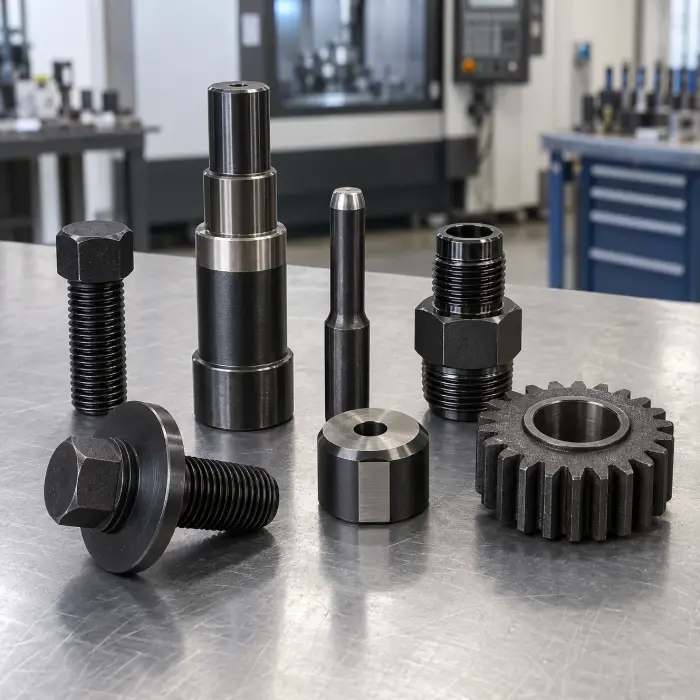
Creates a uniform sealed finish for pins, sleeves, brackets and screws.
Acciaio Legato
Preserves close fits on gears, shafts, bushings and high-strength fasteners.
Acciaio per utensili
Adds low-glare rust protection to punches, dies and tool holders.
Ghisa
Supports appearance and light protection on gears, pulleys and housings.
Acciaio inox
Dedicated chemistry darkens instrument parts, optical hardware and fasteners.
Powder-Metal Parts
Oil sealing supports sintered gears, sprockets and bushings after thorough rinsing.
Aluminum normally uses black anodizing. Copper and brass require dedicated chemical blackening processes and should be specified separately from ferrous black oxide.
Drawing requirements
Black Oxide Drawing Requirements
State the substrate, standard revision, process class, sealer, treatment area, masking area and inspection method.
| Standard | Main application | What to specify |
|---|---|---|
| MIL-DTL-13924F | Inorganic black conversion coatings for ferrous metals | Class 1, 2, 3 or 4, preservative treatment and inspection |
| SAE AMS2485M | Engineering and aerospace black oxide coatings | Material condition, pre/post-treatment and acceptance |
| ISO 11408:1999 | Cast iron, carbon steel, low-alloy and stainless steel | Substrate, supplementary protection and testing |
| DIN 50938:2025-06 | Immersion black oxide on ferrous components | Substrate and inspection; excludes fasteners and semi-finished products |
| SAE AMS2489B | Ambient-temperature color restoration after black oxide removal | Touch-up area; visual color restoration only |
For steel hardened to 39 HRC or above, MIL-DTL-13924F requires the specified pre-process stress relief and post-coating hydrogen-embrittlement relief before the supplementary preservative, unless an approved exception applies.

Appearance and sealing
Black Oxide Sealer Options
The original texture and selected sealer determine the final shade, gloss and rust protection.
Oil Seal
Improves rust protection for gears, shafts, tools and lubricated parts.
Wax Seal
Provides a drier handling surface for fixtures and indoor hardware.
Dry-to-Touch Seal
Supports clean handling when oil transfer must be limited.
Unsealed
Selected when another coating or bonding process follows blackening.
Prestazioni
Benefits of Black Oxide
Black oxide provides a dark, low-build finish and light-duty protection while the substrate controls strength and hardness.
Minimal dimensional change
The conversion finish causes no appreciable buildup on threads, bores, shafts and close fits.
Low-reflective appearance
The dark finish reduces glare on instruments, tooling and internal components.
Preserved texture
Polished, ground and blasted surfaces retain their original texture.
Light corrosion protection
Sealing supports storage, assembly and controlled indoor use.
Lubricant retention
An oiled surface retains lubricant on sliding and threaded contacts.
Base properties preserved
A correctly specified process preserves the established hardness and strength of the substrate.
Finish comparison
Black Oxide vs. Black Zinc
Choose black oxide for minimal buildup and low glare. Choose black zinc for stronger sacrificial corrosion protection.
| Key difference | Ossido nero | Black zinc plating |
|---|---|---|
| Formation | Chemical conversion of the ferrous surface | Electrodeposited zinc followed by black passivation |
| Dimensional buildup | No appreciable dimensional change | Several to tens of micrometers, as specified |
| Protezione dalla corrosione | Light duty; depends on the sealer | Higher sacrificial protection |
| Componenti tipici | Tools, gears, shafts, fixtures and precision fasteners | Automotive hardware, brackets and exposed fasteners |
Masking and fit
What Should Be Masked?
Masking protects surfaces where oxide or sealer would affect electrical contact, bonding, welding, sealing or the next manufacturing operation.
- Bonding and welding surfaces
- Defined electrical contacts
- Oil-sensitive sealing surfaces
- Vacuum and clean-service areas
- Selective cosmetic regions
- Customer-specified bare metal
Before processing
Define final fit, surface roughness, treatment area, masking boundary and measurement locations.
After processing
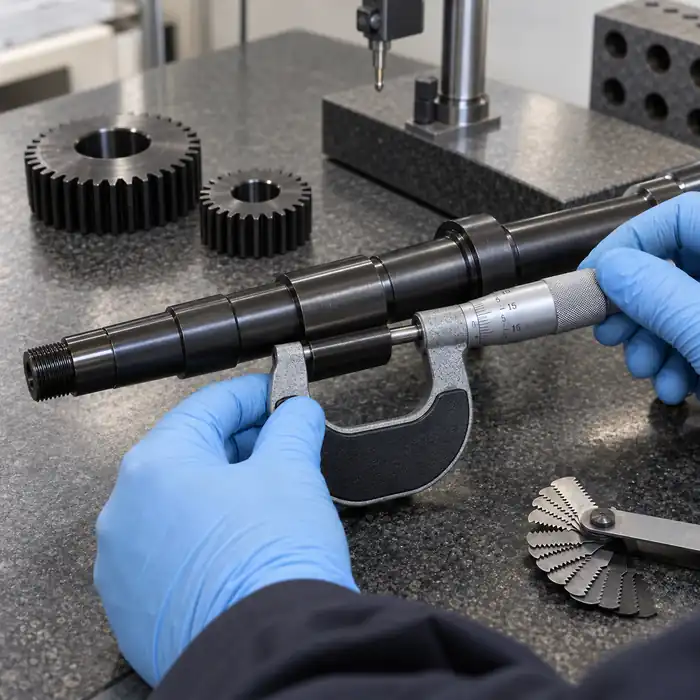
Recheck precision bores, shaft diameters, functional threads, sliding fits and press-fit features.
Black oxide reproduces the existing surface profile. Tool marks, grinding burns, scratches, pits and material differences remain visible after treatment.
Acceptance check
Black Oxide Defects and Inspection
Check coating coverage and dimensions first, followed by color, cleanliness, sealing and packaging.
| Difetto | Inspection focus |
|---|---|
| Uneven or gray color | Material, cleaning, bath condition and surface texture |
| Red rust or brown stains | Rinsing, sealing, humidity and packaging |
| Bare areas | Oil, scale, activation and rack contact |
| Excess black smut | Reaction control, bath condition and rinsing |
| Pitting or residue | Substrate condition, pretreatment and blind-hole drainage |
Custom parts
Common Black Oxide Parts
Black oxide suits precision ferrous-metal parts requiring a dark finish with minimal buildup.
Macchinari e automazione
Locating pins, guide shafts, couplings, rollers, fixtures and mounting hardware.
Automotive & Transmission
Gears, splined shafts, bushings, washers and lubricated transmission hardware.
Tooling & Molds
Punches, dies, tool holders, mold accessories and precision fixture components.
Optical & Instruments
Lens mounts, adjustment rings, internal supports and low-reflective hardware.
Fasteners & Hardware
Bolts, nuts, screws, washers, retaining rings and precision pins.
Apparecchiature industriali
Brackets, control parts, internal mechanisms and laboratory tool components.
Domande frequenti
Black Oxide FAQs
Direct answers about black oxide performance, material compatibility, dimensional effects, rework, and maintenance.
What is black oxide coating?
Black oxide is a chemical conversion finish that forms a thin black iron-oxide layer on compatible ferrous metals. It adds negligible dimensional buildup, while an oil, wax, or dry sealer provides the required corrosion protection.
How is steel blackened?
Steel is blackened through cleaning, surface activation, chemical oxidation, rinsing, sealing, and inspection. Hot black oxide commonly uses a controlled alkaline oxidizing bath at approximately 135–150°C.
Does black oxide rust, and is it corrosion resistant?
Yes, black oxide can rust when the sealing layer is removed or the part remains exposed to moisture. Oil- or wax-sealed black oxide provides light corrosion protection for indoor use, while outdoor and salt-rich environments require a stronger protective finish.
Can stainless steel be black?
Yes, stainless steel can receive a black oxide finish. Its passive chromium-rich surface requires dedicated activation and blackening chemistry selected for the specific stainless steel grade.
Is black oxide conductive?
Black oxide is not a strong electrical insulator and generally preserves metal-to-metal continuity. Sealing oils, waxes, contamination, and contact pressure can increase resistance, so critical grounding surfaces should be tested after finishing.
What are black oxide drill bits used for?
Black oxide drill bits are used for general-purpose drilling when the drill geometry and cutting parameters match the workpiece. The finish helps retain cutting lubricant and provides light storage corrosion protection.
Will black oxide change part dimensions?
Black oxide creates no appreciable dimensional buildup on standard threads, holes, and CNC-machined features. Ultra-precision fits should still be measured after treatment and sealing.
Can color variation or missed areas be reworked?
Yes, many color and coverage defects can be stripped and reprocessed. The substrate condition and remaining dimensional tolerance should be checked before rework begins.
How should black oxide parts be maintained?
Keep black oxide parts clean, dry, and protected with the specified rust-preventive oil or wax. Remove moisture and fingerprints promptly, then use dry, moisture-controlled packaging for storage.
Get a Black Oxide Quote
Send your drawing and finish requirements for a quote; prototypes and small batches typically ship in 3–15 days, while production schedules are confirmed by project.