
Servizi di rettifica di precisione
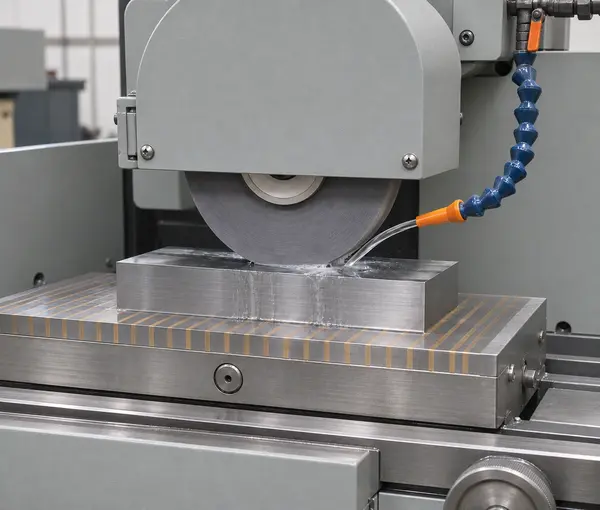
Finish critical dimensions, flat faces, diameters, and bores after Lavorazione CNC or heat treatment. Weldo plans the grinding route around your material, stock allowance, functional fits, and surface requirements.
- Size & Geometry Control
- Fine Surface Finish
- Ispezione basata su disegni
Finish the Surfaces That Control Fit
A dressed abrasive wheel removes controlled stock to bring functional surfaces to their final size, geometry, and roughness.
Grinding is often planned after milling, turning, or heat treatment, with allowance left on the faces, journals, or bores that require a final finishing operation.
- Control flatness, parallelism, roundness, and dimensional relationships.
- Refine bearing seats, sealing faces, and precision mating surfaces.
- Finish hardened or wear-resistant components with material-specific wheel and coolant selection.
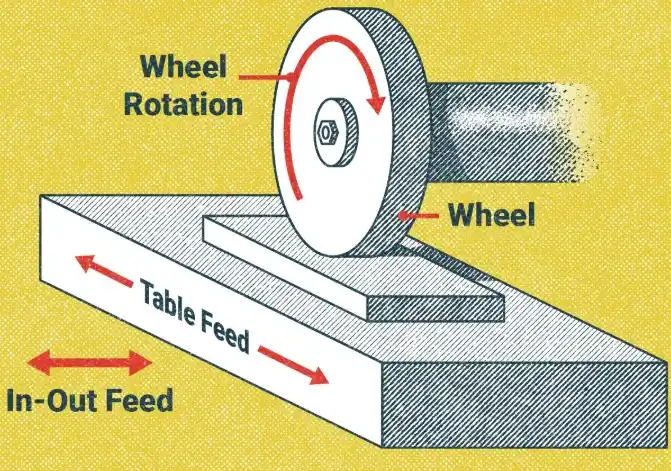
Grinding Processes for Different Surfaces
Choose the process by surface geometry, datum scheme, accessibility, required finish, and production quantity.
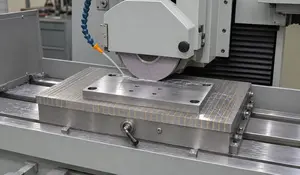
Rettifica di superficie
Finishes flat faces to control thickness, flatness, parallelism, and surface texture.
Componenti tipici: plates, dies, spacers, blocks, and precision mating faces.
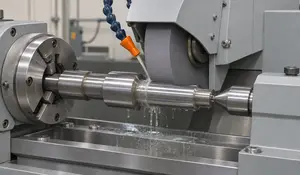
Rettifica cilindrica
Finishes external diameters and journals with control of size, roundness, and datum relationships.
Componenti tipici: shafts, rollers, spindles, journals, and bearing seats.
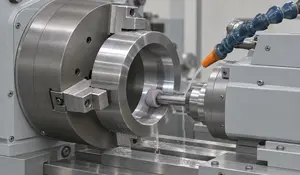
Rettifica interna
Refines bores and internal cylindrical features where size, form, and alignment are critical.
Componenti tipici: sleeves, bearing rings, bushings, and precision housings.
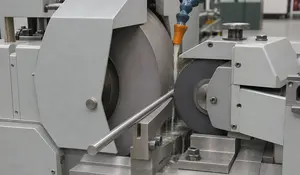
Rettifica senza centri
Supports external cylindrical surfaces between a grinding wheel, regulating wheel, and work rest.
Componenti tipici: pins, rods, tubes, and suitable repeat-production cylindrical parts.
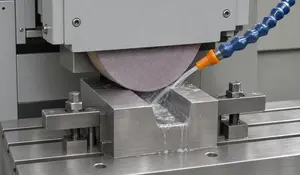
Rettifica a avanzamento graduale
Combines a relatively deep cut with slow feed for reviewed profiles and material-removal requirements.
Process focus: wheel form, machine rigidity, power, dressing, and coolant delivery.
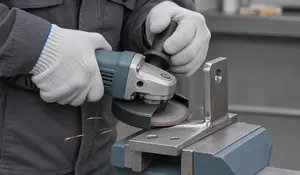
Manual Grinding & Finishing
Localized deburring, weld blending, repair, and surface touch-up with task-specific acceptance criteria.
Typical work: accessible edges and local areas on low-volume or repair parts.
Precision capability figures apply to selected controlled grinding operations. Manual finishing is reviewed separately for its intended function.
Capacità di rettifica e scelta delle mole
Capability is confirmed against the exact material, hardness, geometry, grinding allowance, and measurement method.
Capacità basata sul disegno
| Selected dimensional tolerances | ±0,001–0,01 mm*Feature-specific acceptance after engineering review. |
|---|---|
| Selected surface roughness | Ra 0.1–0.4 µm*Confirmed by material, surface geometry, process, and agreed measurement conditions. |
| Geometria controllata | Flatness, parallelism, roundness, and cylindricity to drawing requirements. |
| Forme dei pezzi | Plates, shafts, rods, bores, journals, and bearing surfaces. |
| Production scope | Prototype, small-batch, and repeat-production grinding. |
Principali famiglie di abrasivi
- Aluminum Oxide
- Common starting point for carbon, alloy, tool, and stainless steels, with grade-specific wheel selection.
- CBN
- Often selected for hardened ferrous materials when the machine, bond, and process suit the application.
- Carburo di silicio
- Suitable for many cast-iron, non-ferrous, and non-metal applications, subject to material and wheel specification.
- Diamante
- Commonly used for cemented carbide, technical ceramics, glass, and selected non-ferrous work.
Final wheel selection includes abrasive, bond, grit, grade, structure, speed, dressing, and coolant. Diamond is generally not the first choice for steel grinding.
*Planning references, not blanket guarantees. Tolerance, geometry, and roughness are reviewed as separate requirements and are not necessarily achievable together on every part.
Materials for Precision Grinding
The wheel, coolant, workholding, and stock-removal strategy must match the exact grade and supplied condition.
Carbon & Alloy Steel
Suitable for final sizing and geometry control on loaded components, including work after heat treatment.
View material details
- Componenti tipici
- Shafts, journals, gears, plates, and bearing seats.
- Grinding focus
- Confirm hardness, stock allowance, wheel condition, thermal input, and the datum route.
- Ispezione
- Size, roundness or flatness, surface roughness, and specified surface-integrity checks.
Tool & Hardened Steel
Controlled abrasive finishing for hard tooling and wear surfaces with tight functional requirements.
View material details
- Componenti tipici
- Dies, punches, gauges, precision blocks, and hardened wear parts.
- Grinding focus
- Match aluminum oxide or CBN to the grade and process; manage dressing, coolant access, and burn risk.
- Ispezione
- Critical geometry and roughness, with additional burn or crack testing when specified.
Acciaio inox
Refines corrosion-resistant components where dimensional fits and functional surfaces require finishing.
View material details
- Componenti tipici
- Shafts, sleeves, valve parts, sealing faces, and precision hardware.
- Grinding focus
- Grade-specific control of wheel loading, heat, smearing, and surface contamination.
- Ispezione
- Final size, surface condition, roughness, and any specified cleaning or passivation requirements.
Ghisa
Ground reference surfaces and cylindrical features for machinery and wear-related applications.
View material details
- Componenti tipici
- Machine plates, guide surfaces, sleeves, and structural mating faces.
- Grinding focus
- Confirm the cast-iron grade, casting stability, abrasive choice, and edge condition.
- Ispezione
- Flatness, parallelism, dimensions, and agreed texture or roughness.
Metalli non ferrosi
Selected aluminum, copper, brass, and bronze components can be ground with a material-specific setup.
View material details
- Componenti tipici
- Lightweight plates, conductive parts, bushings, and precision mating surfaces.
- Grinding focus
- Control loading, smearing, thermal expansion, clamping distortion, and compatibility of wheel and coolant.
- Ispezione
- Free-state dimensions, temperature stabilization, surface condition, and edge quality.
Carburo cementato
High hardness and wear resistance for tooling and gauges, with controlled edge and surface integrity.
View material details
- Componenti tipici
- Tooling inserts, gauges, wear parts, dies, and precision carbide features.
- Grinding focus
- Match diamond wheel and bond to the carbide grade; control cooling, edge support, and material removal.
- Ispezione
- Dimensions, profile, edge chipping, and any specified crack or surface-integrity criteria.
Ceramiche tecniche
Selected ceramic grades require suitable abrasive systems and a setup that limits brittle damage.
View material details
- Componenti tipici
- Insulators, seals, wear surfaces, and specialized precision components.
- Grinding focus
- Review ceramic grade, bond, grit, work support, feed, and allowance for edge protection.
- Ispezione
- Dimensions, form, edge chips, and specified surface or subsurface damage limits.
Glass
Controlled grinding for specified dimensions, edges, and profiles in reviewed glass applications.
View material details
- Componenti tipici
- Precision glass components, supports, gauges, and specialized profiles.
- Grinding focus
- Use grade-appropriate abrasives, support, coolant, and edge protection; confirm any polishing requirement separately.
- Ispezione
- Size, form, edge quality, and specified surface condition; ground finish does not imply optical polish.
POM / Acetal
Selected stable components may receive abrasive finishing when it offers a clear advantage for the geometry.
View material details
- Componenti tipici
- Guides, bushings, spacers, and low-friction precision components.
- Grinding focus
- Control heat, wheel loading, clamping force, and elastic deformation; confirm suitability against alternative machining routes.
- Ispezione
- Free-state dimensions and surface condition after temperature stabilization.
SETTIMANA
Selected grades and features are reviewed for precision finishing in demanding service conditions.
View material details
- Componenti tipici
- Insulators, seals, guides, and specialized instrument components.
- Grinding focus
- Confirm resin grade, filler, residual stress, heat control, coolant compatibility, and finishing allowance.
- Ispezione
- Dimensions after stabilization, roughness where specified, and surface damage.
Filled Engineering Polymers
Glass-, carbon-, or mineral-filled grades require application-specific abrasive and process selection.
View material details
- Componenti tipici
- Wear components, guides, seals, and precision insulating parts.
- Grinding focus
- Review filler abrasiveness, fiber exposure, resin heat response, work support, and surface acceptance.
- Ispezione
- Conditioned dimensions, edge integrity, and grade-specific surface criteria.
Plastic, ceramic, glass, and non-ferrous projects receive a separate feasibility review. Precision ranges for hardened steel should not be assumed to apply to other materials.
Controllo del calore, della geometria e dell'integrità della superficie
A stable setup, correctly dressed wheel, controlled grinding conditions, and suitable measurement support consistent results.
Analisi del disegno
Define datums, fits, roughness, incoming condition, stock allowance, and inspection records.
Wheel & Setup
Match abrasive, bond, grit, dressing, coolant, and workholding to the part and material.
Controllo del processo
Manage feed, passes, dressing intervals, and thermal input to reduce burn and distortion.
Verifica finale
Check critical dimensions, geometry, roughness, edges, and drawing-specific acceptance criteria.
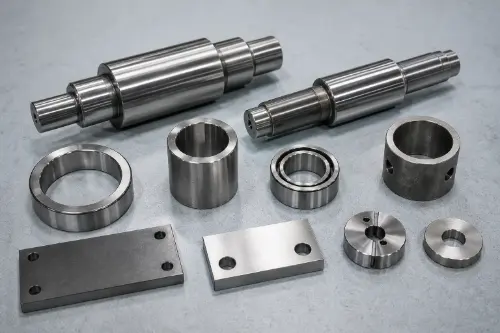
Functional Surface Verification
Inspect the surfaces that control fit, motion, location, and sealing using the method agreed for the drawing.
- Size and fit
- Flatness and parallelism
- Roundness and cylindricity
- Surface roughness and edges
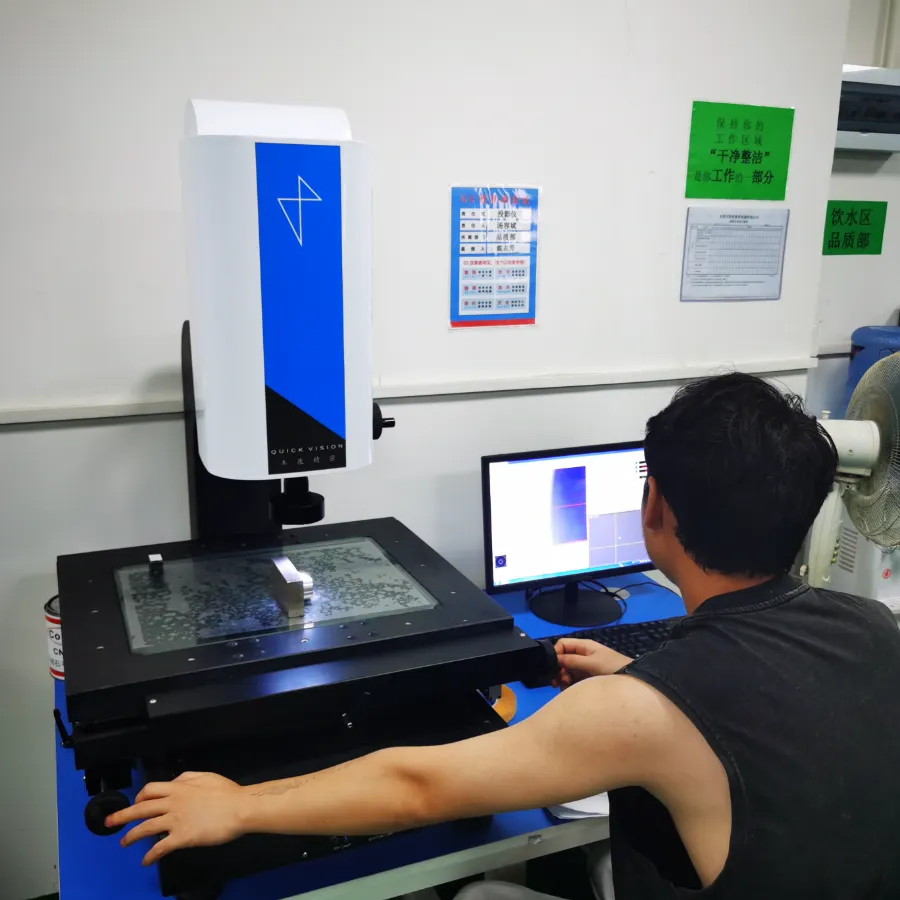
Measurement Matched to the Feature
Optical inspection supports suitable profiles and edges. Dimensional and surface requirements use the appropriate calibrated equipment.
- Profile and accessible edges
- Misura dimensionale
- Roughness measurement
- Additional tests by agreement
Request dimensional or CMM reports, roughness records, material certificates, and heat-treatment records during quotation. Burn, crack, or other surface-integrity testing must be specified where required.
Precision Grinding Questions
What determines grinding cost and lead time?
Material and hardness, incoming stock, grinding allowance, workholding, tolerance, finish, quantity, and inspection all affect the process and quotation. Heat treatment and secondary operations are included in the project review.
Should parts be ground before or after heat treatment?
Critical surfaces are often finish-ground after heat treatment, with suitable allowance left beforehand. The sequence depends on material, distortion, hardness, surface requirements, and the final datum scheme.
How much stock should be left for grinding?
There is no single allowance for every part. Size, material, heat-treatment movement, incoming geometry, workholding, and the selected grinding method determine the required stock.
Quali sono le cause dei segni di vibrazione durante la rettifica?
Common causes include imbalance, unsuitable dressing, vibration, unstable workholding, spindle condition, and incorrect process parameters. The machine, wheel, setup, and cutting conditions are reviewed together.
How is surface integrity checked?
Dimensional, geometry, roughness, and visual checks are matched to the drawing. Visual inspection alone does not establish freedom from thermal damage or microcracks; additional testing is agreed when required.
How is repeatability maintained across batches?
Consistent wheel specification, dressing, coolant, workholding, incoming condition, and measurement methods support repeatability. Critical features and inspection frequency are defined for the order.