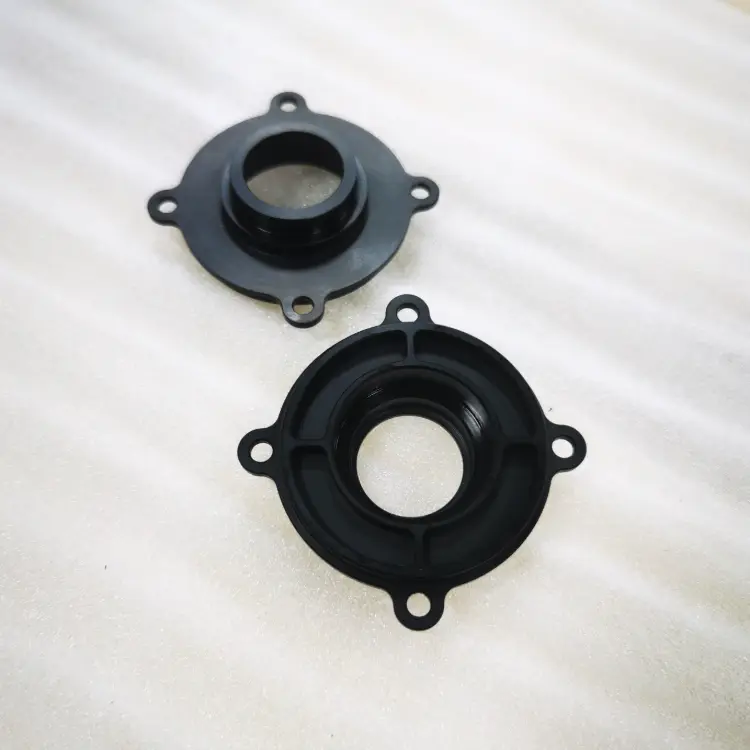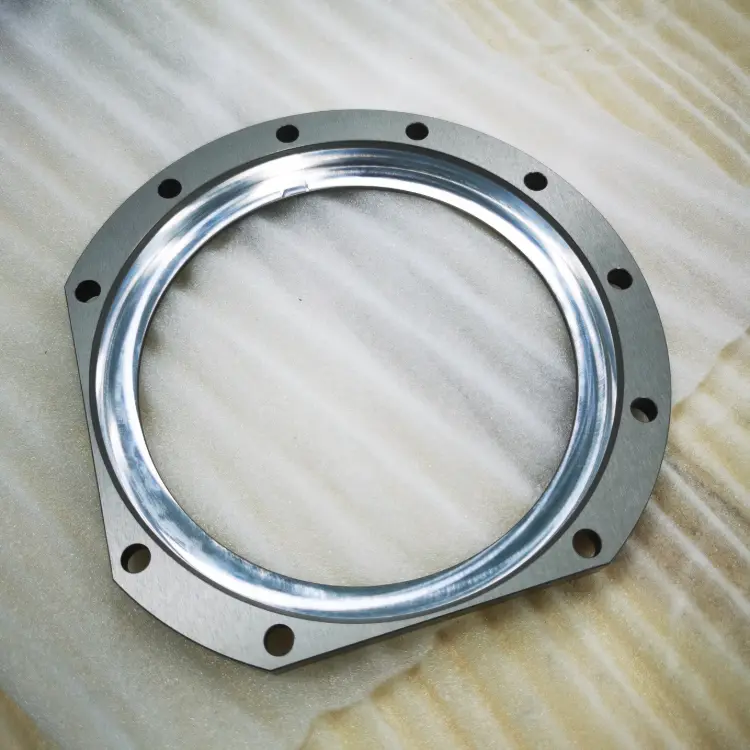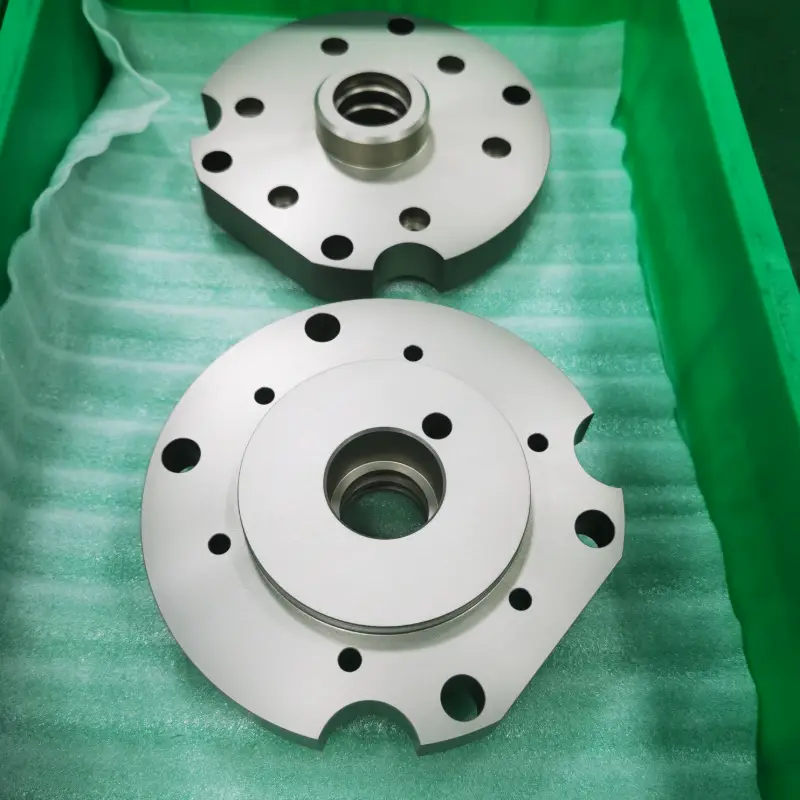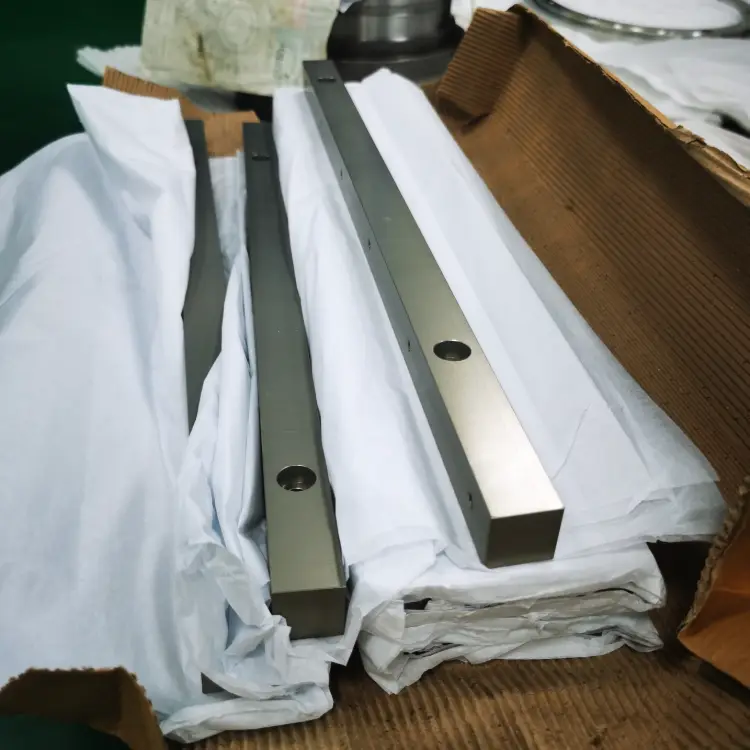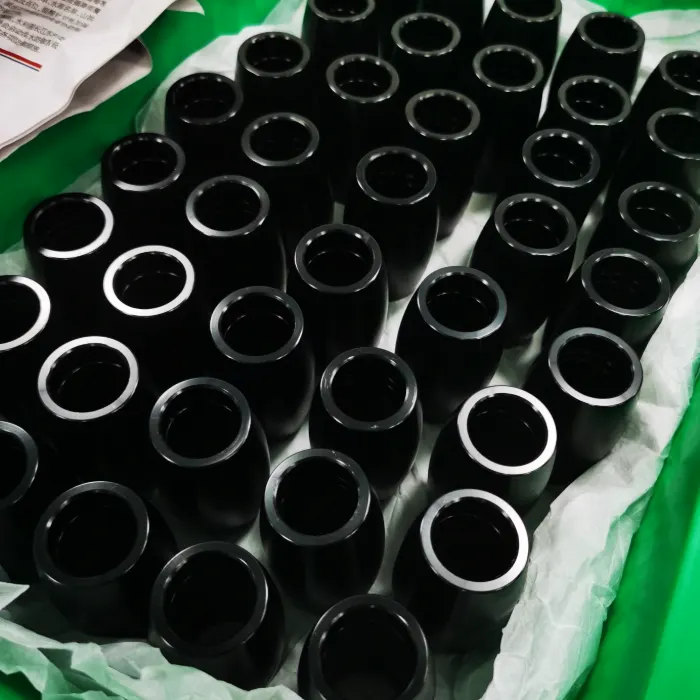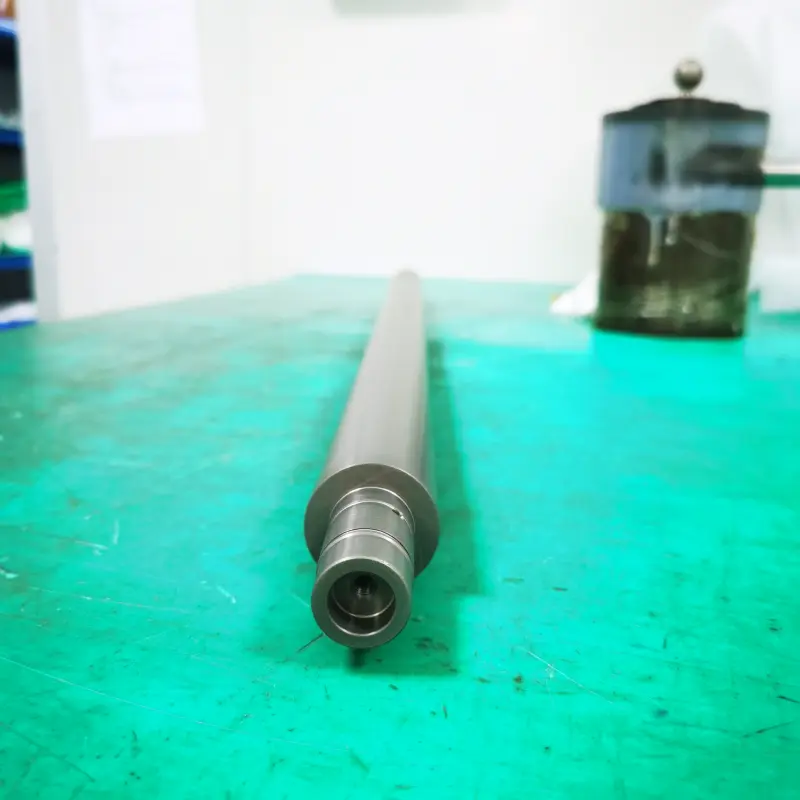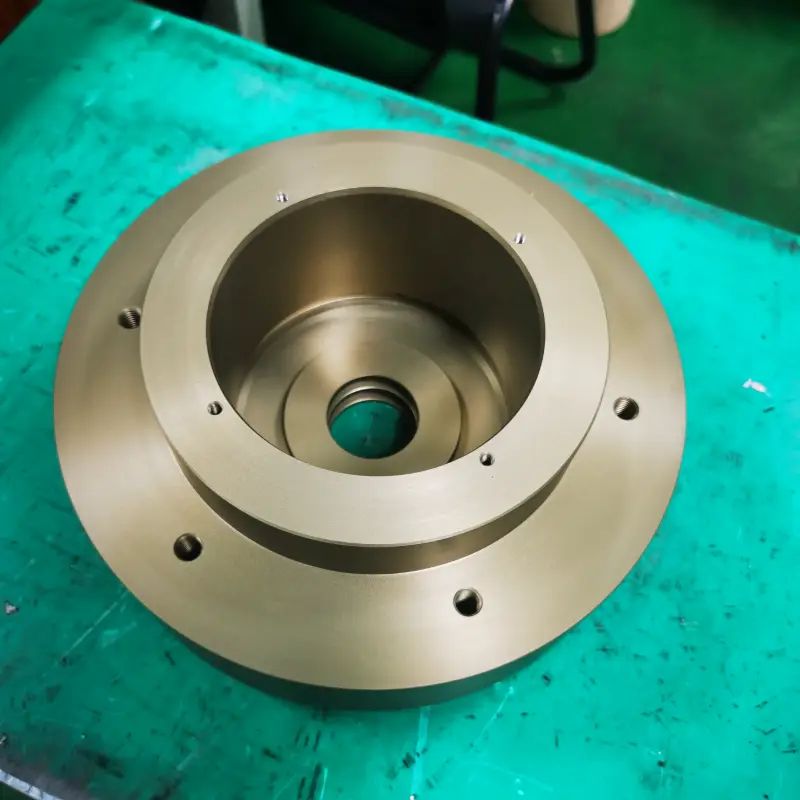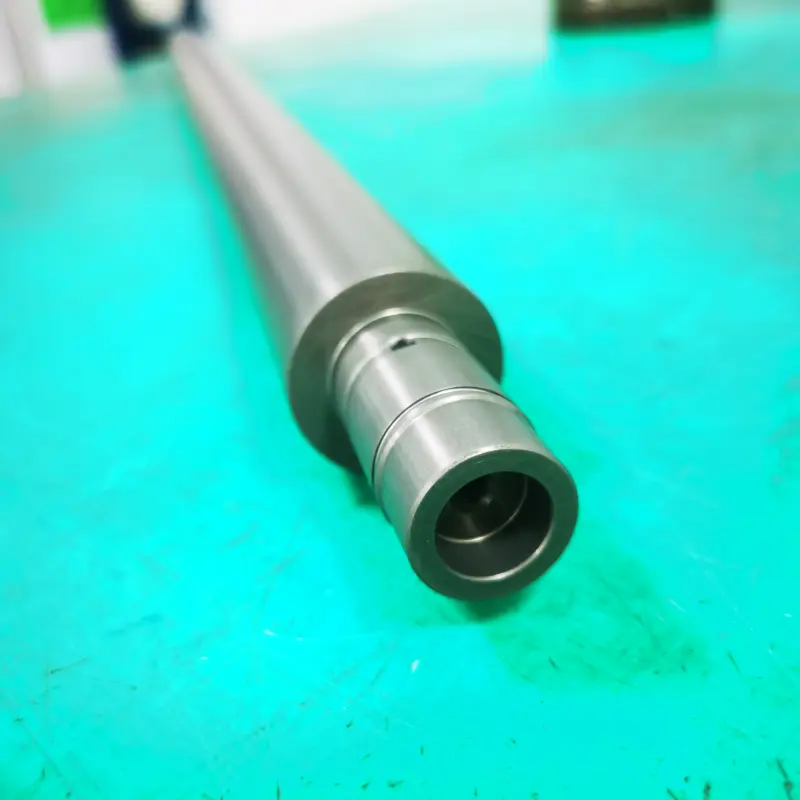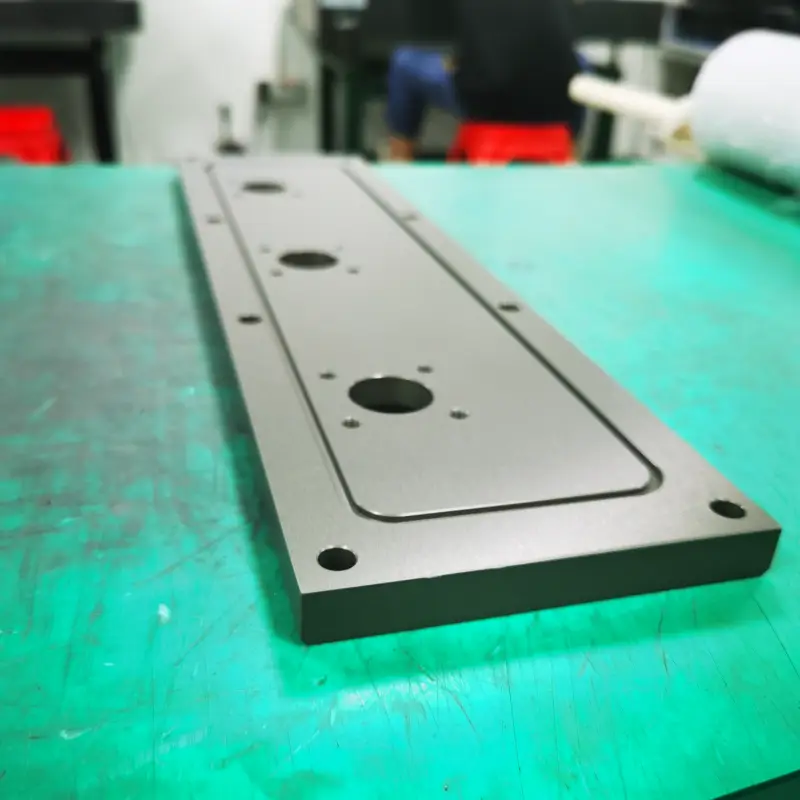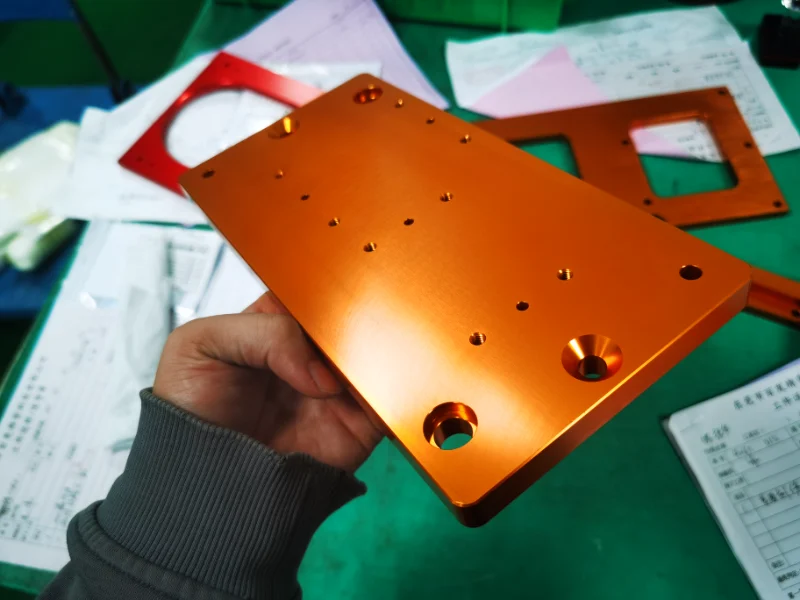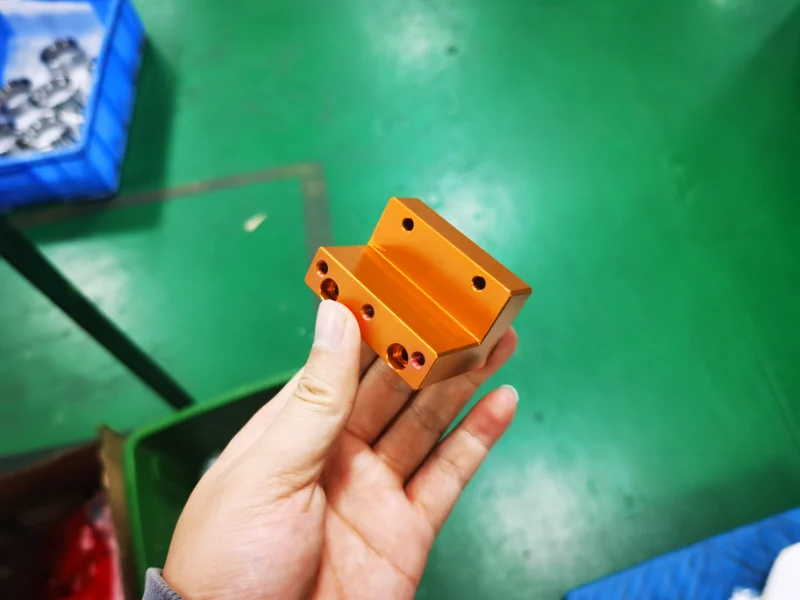
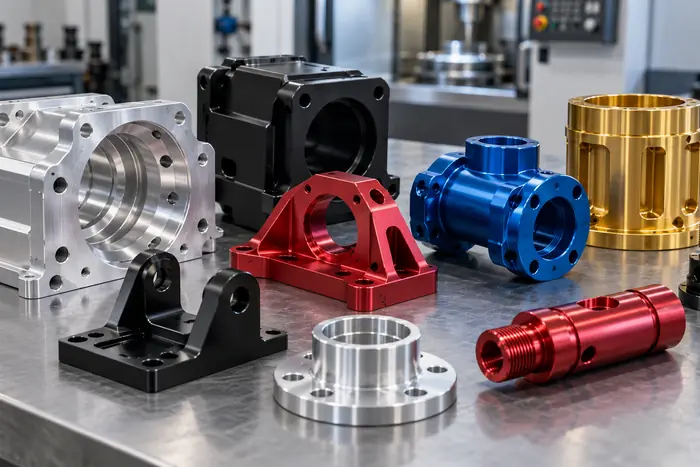
Anodized CNC aluminum parts

아노다이징

Improve the corrosion resistance, wear resistance, and appearance consistency of aluminum housings, panels, fixtures, and precision components.

Upload Drawing for Quote

PROCESS SELECTION

Which Type of Anodizing Should You Choose?

Select the process according to the required appearance, corrosion resistance, wear resistance, painting process, or adhesive-bonding requirements.

TYPE II

Conventional Sulfuric Acid Anodizing

Suitable for aluminum housings, panels, and brackets requiring corrosion protection or decorative coloring. Drawings should also specify bead-blasted or brushed textures when appearance consistency is critical.

TYPE III

Hardcoat Anodizing

Suitable for guide supports, sleeves, and repeatedly contacted surfaces. Mating holes and sliding surfaces should include the finished dimensions and required coating thickness.

SPECIAL USE

Pretreatment for Painting and Bonding

Parts intended for painting or structural adhesive bonding require surface preparation compatible with the subsequent process and its applicable specification.

MIL-PRF-8625 also covers Types I, IB, IC, and IIB. Each type uses different electrolytes or process requirements and should be confirmed against the specified drawing revision.

표준 유형Electrolyte일반적인 용도Example Parts
Type I / IBChromic acidAerospace and painting applications specifying a chromic acid processAerospace brackets and aluminum parts prepared for painting
Type ICNon-chromic electrolyte defined by the specified processApplications requiring an alternative to Type I or Type IBAluminum aerospace equipment components
Type II / IIBSulfuric acidDecorative coloring and corrosion protection; Type IIB supports thin-film requirementsEquipment housings, panels, and brackets
Type IIITypically a sulfuric acid system내마모성 표면Sleeves, guide supports, and fixtures
Phosphoric Acid AnodizingPhosphoric acidSurface preparation for structural adhesive bondingBonded aluminum structural components

SUITABLE MATERIALS

Which Metals Can Be Anodized?

Anodizing is primarily applied to aluminum, magnesium, titanium, and their alloys. Each metal requires its own electrolyte, process controls, coating function, and acceptance criteria.

01

알루미늄 합금

Aluminum has the most mature anodizing processes. The 1xxx, 3xxx, 5xxx, and 6xxx series generally produce uniform coatings. The 2xxx and 7xxx series can also be anodized, although their alloying elements affect color and coating condition.

02

마그네슘 합금

Magnesium alloys require dedicated electrolytes and process controls. Anodizing improves surface protection, wear resistance, and coating adhesion for lightweight housings and aerospace components.

03

티타늄 합금

Titanium anodizing uses controlled voltage to vary oxide-film thickness. Optical interference creates colors such as gold, blue, and purple without dyes.

04

Special Nonferrous Metals

Zinc alloys, niobium, zirconium, and tantalum can be processed using specialized anodizing methods for research, medical, and special industrial applications.

DRAWING REQUIREMENTS

Which Anodizing Requirements Should Be Specified on the Drawing?

In addition to the standard number, specify the anodizing type, color, coating thickness, treatment areas, masking areas, and inspection locations. A note stating only “black anodize” does not define the required masking or thickness-measurement locations.

표준Application Requirements
MIL-PRF-8625 Specify Type I, IB, IC, II, IIB, or III together with Class 1 for undyed coatings or Class 2 for dyed coatings.
ASTM B580-25 Used to specify anodic oxide coatings on aluminum and aluminum-alloy parts. Its type designations are separate from those in MIL-PRF-8625.
SAE AMS2469L Used for hardcoat anodizing. When a legacy drawing specifies AMS2469J, confirm the required revision with the customer.
SAE AMS2482F Used for PTFE-impregnated or PTFE-codeposited hard anodic coatings. A black finish should be specified separately.
AAMA 611-26 Used for architectural aluminum extrusions and panels. A3 and A4 belong to the Aluminum Association finish designation system.

ASTM D1730 may be referenced for surface preparation before painting, while ASTM D3933 applies to phosphoric acid anodizing for structural adhesive bonding.

COLOR OPTIONS

Common Anodizing Colors

Production colors should be approved against a physical reference sample rather than judged only from an image displayed on a screen.
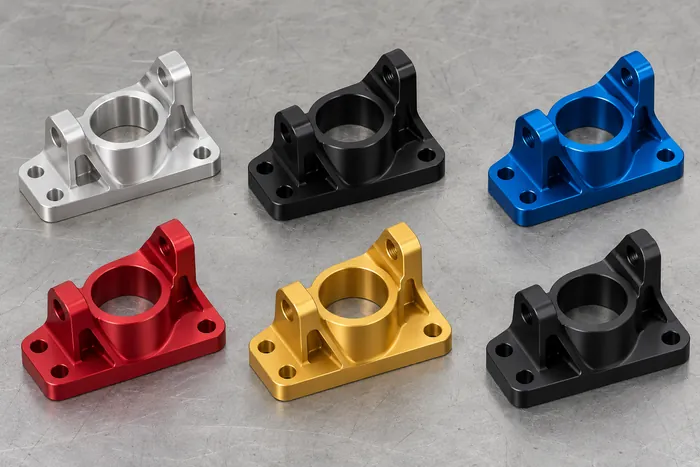
Common anodized aluminum colors

Clear or Natural

Preserves the metallic appearance of aluminum for housings, mounting plates, and equipment brackets.

검정색

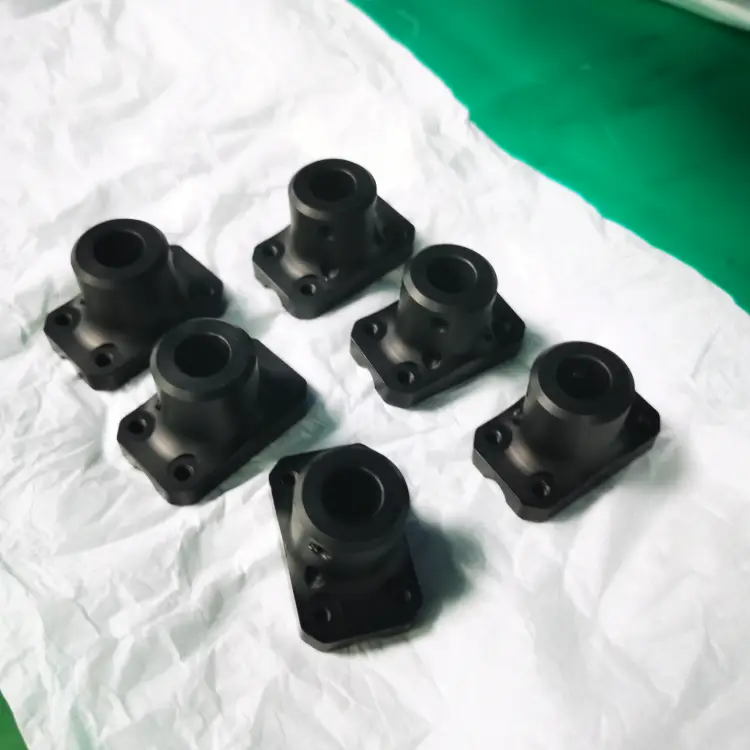
Commonly used for optical components, equipment housings, and visible structural parts.

블루

Suitable for knobs, fixtures, and components that require visual identification.

빨간색

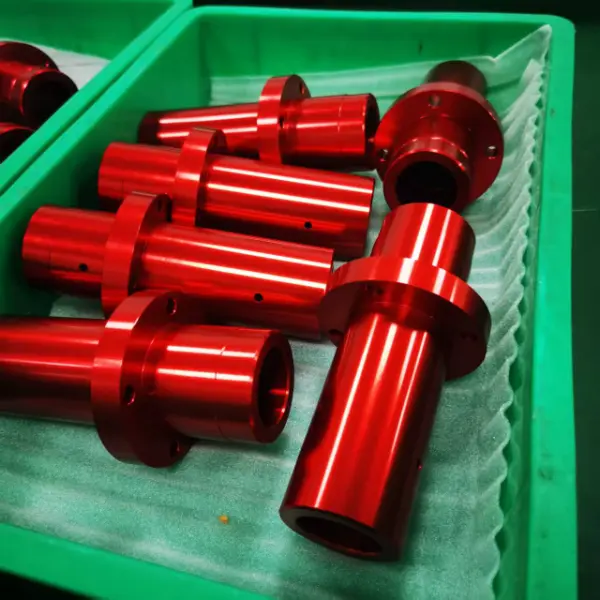
Used for operating components and custom parts requiring prominent visual identification.

골드

Used for decorative panels, handles, and visible product components.

PTFE-Impregnated Hardcoat

Combines a dark appearance with improved wear resistance and reduced friction.
WHY ANODIZE

What Does Anodizing Add to a Part?

부식 방지

The anodic coating protects the aluminum surface. Corrosion-tested projects should also specify sealing and test requirements.

내마모성

Hardcoat anodizing protects repeatedly contacted or sliding surfaces. Thickness should be defined at the actual wear location.

장식용 채색

Anodizing supports natural and dyed finishes. Bead-blasted and brushed textures remain visible through the coating.

전기 절연

The anodic coating reduces conductivity. Grounding and electrical contact surfaces should be masked.

PROCESS COMPARISON

What Is the Difference Between Anodizing and Alodine?

Anodizing supports decorative color, electrical insulation, and improved wear resistance. Alodine is a chemical conversion coating used primarily for corrosion protection and surface preparation before painting.

Key Difference아노다이징알로다인
Formation Method An oxide coating forms through an electrolytic process. A conversion coating forms through a chemical reaction.
Coating and Dimensions The thicker coating requires allowances on mating holes, shaft diameters, and other precision features. The thinner coating has less effect on finished dimensions.
Electrical Contact The oxide coating reduces conductivity, so electrical contact surfaces usually require masking. Better suited to surfaces that must retain electrical contact, subject to the drawing requirements.
Wear and Color Available as hardcoat anodizing and in multiple decorative colors. Primarily used for corrosion protection and paint adhesion rather than wear resistance.
대표 부품 Housings, panels, guide supports, sleeves, and fixtures. Electronic grounding components and aluminum parts prepared for painting.
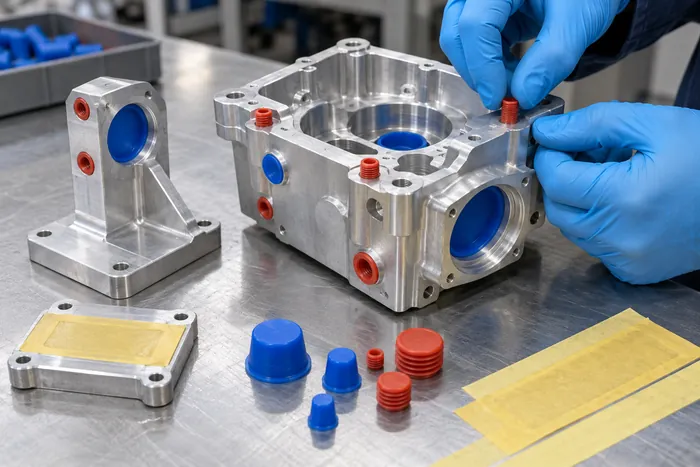
Masking aluminum parts before anodizing

MASKING & FIT

Which Areas Require Masking?

Masking protects dimension-critical surfaces and electrical contact areas that must remain free of anodic coating. Common materials include acid-resistant tape, silicone plugs, threaded masking plugs, stop-off lacquer, and dedicated fixtures.

Mating Holes and Bearing Seats

Silicone, rubber, or custom plugs protect the surfaces. Critical hole diameters are rechecked after processing.

Internal and External Threads

Threaded plugs protect internal threads, while caps or tape protect external threads from coating buildup.

Sealing and Electrical Contact Surfaces

Acid-resistant tape or die-cut masking film protects the surface. Firm edges reduce electrolyte seepage.

Complex Profiles and Production Parts

Stop-off lacquer protects irregular areas, while dedicated plugs and fixtures improve batch repeatability.

THICKNESS CONTROL

How Is Anodizing Thickness Specified and Inspected?

Conventional sulfuric acid anodizing is commonly specified at approximately 5–25 μm. Hardcoat anodizing is commonly specified at approximately 25–75 μm. The final requirement depends on function, specification, and mating dimensions.

01

Before Machining: Specify the target thickness, permitted variation, measurement locations, and critical finished dimensions.

02

During Processing: Control current density, bath temperature, and processing time according to the material and surface area.

03

Before Shipment: Measure coating thickness and recheck holes, shaft diameters, and assembly-related dimensions.

Part of the coating grows outward while another part forms by consuming the aluminum substrate. Dimensional changes should be calculated from the validated process rather than treating the nominal coating thickness as the direct increase per side.

ACCEPTANCE CHECK

What Should Be Inspected Before Shipment?

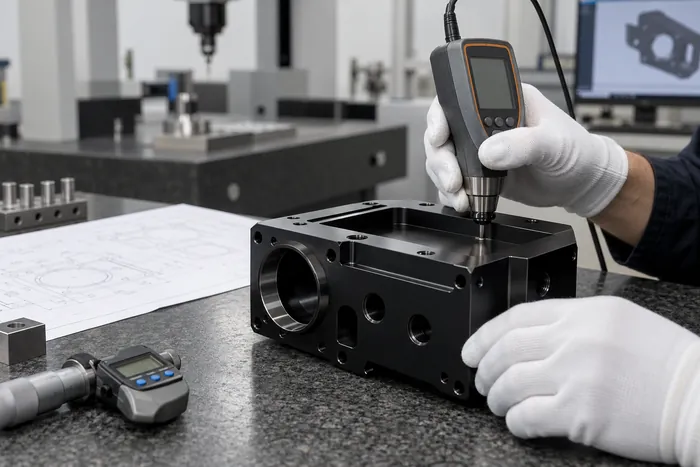
Begin by verifying coating thickness and finished dimensions. Then inspect color, masking boundaries, cosmetic surfaces, and approved rack-contact locations.

Defect or NonconformityWhat to Inspect
Incorrect Coating Thickness Check whether the measured coating thickness or anodized mating dimensions exceed the limits specified on the drawing.
Color Variation or Staining Compare critical cosmetic surfaces and parts from the same batch with the approved physical reference sample.
Burning, Powdering, or Flaking Inspect the surface for loose, chalky, burnt, or damaged coating areas that fail the acceptance requirements.
Incomplete Masking Confirm that protected holes, threads, sealing surfaces, and electrical contact areas remain free of anodic coating.
Scratches and Rack Marks Check cosmetic surfaces for scratches and confirm that rack marks remain within the approved contact locations.
Anodized aluminum part inspection

CUSTOM PARTS

Which Custom Parts Commonly Use Anodizing?

Equipment Housings and Panels: Key requirements include color, surface texture, scratch control, and appearance consistency within the batch.

Guide Supports and Motion Components: Key requirements include wear surfaces, coating thickness, and finished assembly dimensions.

Optical Brackets and Instrument Parts: Key requirements include black surfaces, locating holes, and protected electrical contact areas.

Fixtures and Automation Components: Key requirements include hole positions, threads, mounting surfaces, and durability during repeated assembly.

FREQUENTLY ASKED QUESTIONS

Frequently Asked Questions About Anodized Parts

Answers covering machining coordination, defect handling, lead times, and maintenance.

Why Choose Weldo Machining for Anodized Custom Parts?

Weldo coordinates drawing review, CNC machining, masking, anodizing, and final inspection. Critical dimensions and appearance are rechecked after processing to reduce assembly problems.

How Does Weldo Handle Anodizing Defects?

Weldo isolates affected parts and records the defect location, quantity, and lot. Engineers evaluate stripping and re-anodizing while accounting for base-material loss. Reworked parts are inspected again, while parts that cannot be restored reliably are remanufactured.

What Is the Lead Time for Machining and Anodizing?

Standard custom parts generally ship within 3–15 days. Batch orders, hardcoat anodizing, PTFE impregnation, sample approval, testing, and inspection reports may require additional processing time.

How Should Anodized Parts Be Maintained?

Clean the parts with a neutral detergent, clean water, and a soft nonwoven cloth. Keep the surface away from strong acids, strong alkalis, steel brushes, abrasives, and sharp tools.

What Should You Do If the Anodic Coating Flakes?

Isolate the affected parts and provide photographs, lot information, and service conditions. After confirming the cause, the parts may be stripped and re-anodized or remanufactured. Local color touch-up does not restore coating thickness, hardness, or corrosion resistance.

SEND YOUR DRAWING

Request a Quote for Anodized Parts

Send your drawing, material grade, quantity, color, coating thickness, masking areas, and target delivery date.

그림 업로드하기