
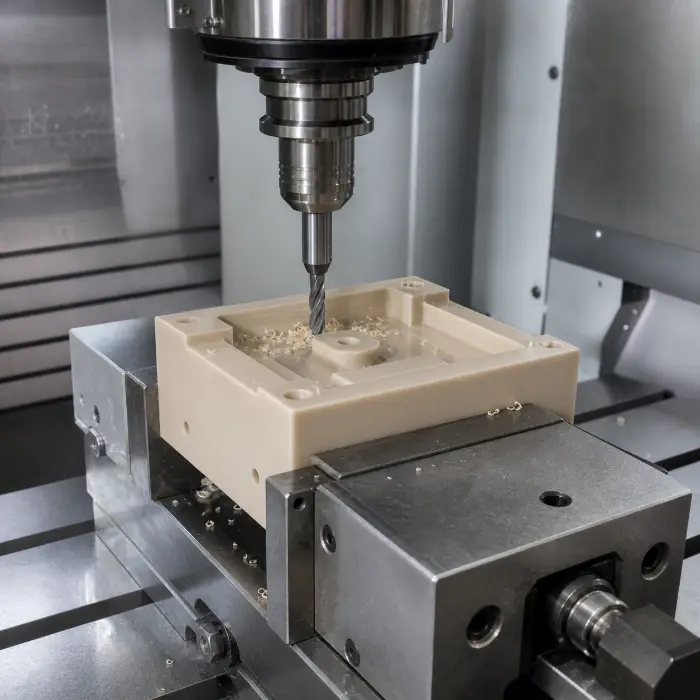
맞춤형 PEEK CNC 가공 서비스
PEEK offers high-performance options for heat, chemicals, wear, and mechanically demanding components. Weldo reviews the exact grade, stock condition, geometry, finishing, and inspection to machine custom prototypes and repeat-production parts to drawing.
- Unfilled & Reinforced Grades
- 시제품부터 양산까지
- 마감 및 검사
Mechanical and Thermal Property References
Representative supplier values for selected unfilled, 30% glass-filled, and 30% carbon-filled PEEK. Formulation, reinforcement direction, processing, and test conditions affect the result.
- 밀도
- 1.30–1.51g/cm³ · selected grades
- 인장 강도
- 100–265MPa at 23°C · ISO 527
- 인장 탄성 계수
- 3.9–28GPa at 23°C · ISO 527
- 열 변형 온도
- 152–315°CSelected grades at 1.8 MPa
- Glass Transition
- Approx. 143°CTypical PEEK onset
- Melting Temperature
- Approx. 343°CTypical PEEK melting point
Use exact grade and stock-shape data for design and acceptance. Molded test-specimen values are not automatically machined-part properties. Heat deflection temperature, glass transition, and melting point describe different tests or transitions; none alone defines continuous-use temperature.
Drawing-Based PEEK Machining Capabilities
Confirm grade, stock availability, feature geometry, workholding, surface condition, and inspection before agreeing the manufacturing route.
Machining Reference Parameters
| Work-envelope reference | Up to 3000 × 1200 × 850 mm*Subject to stock availability, equipment, support, clamping, and tool access. |
|---|---|
| Dimensional references | General ±0.02 mm / selected features ±0.01 mm*Confirm feature geometry, grade, stock condition, temperature, and measurement method. |
| Thin-wall reference | From 0.8 mm*Review wall height, span, support, clamping, reinforcement, and final handling. |
| Internal-radius reference | From R0.3 mm*Subject to tool access, reach, depth, edge quality, and dimensional requirements. |
| 가공 표면 거칠기 | Ra 0.8–3.2 µm*Depends on the grade, surface geometry, tool wear, cutting strategy, and finishing. |
Controls for PEEK Components
Cutting Heat and Chips
Use sharp tools, suitable engagement, and reliable chip clearance to reduce rubbing, heat buildup, and poor edges.
Support and Stock Stress
Plan stable support, controlled clamping, and balanced removal. Review stock conditioning or intermediate stress relief where appropriate.
Reinforcement and Tool Wear
Glass- and carbon-filled grades require tools and edge-finishing methods matched to abrasive fibers and directional behavior.
Finished-Part Acceptance
Define critical fits, datums, temperature, support, surface condition, and material records before final inspection.
*Planning references confirmed against the drawing. Maximum size, thin walls, small radii, tolerance, and roughness are assessed separately and should not be assumed achievable together.
Select the PEEK Grade for the Part
Match formulation to load, temperature, wear, electrical behavior, chemical exposure, and required material documentation.
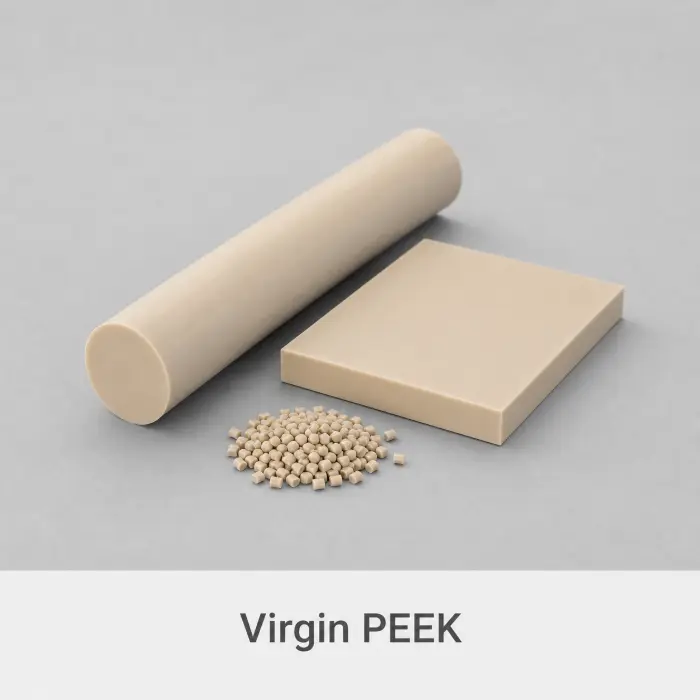
미충진 PEEK
An unreinforced grade offering useful toughness, chemical resistance, and electrical insulation for demanding precision components.
Applications & machining notes
- 일반적인 부품
- Seals, manifolds, insulators, valve parts, and precision fixtures.
- Stock and material records
- Natural tan is common; black is available in selected grades.
- Selection considerations
- Confirm stock condition, load, temperature, chemical exposure, and required electrical performance. Plan cutting heat and stress release before final sizing.
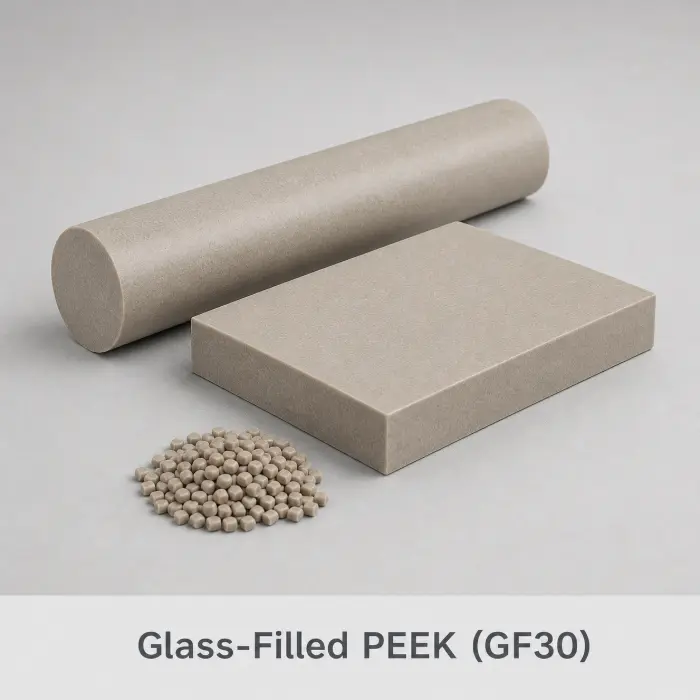
유리 충전 PEEK
Glass reinforcement increases stiffness and can reduce thermal movement and creep, with properties affected by filler level and direction.
Applications & machining notes
- 일반적인 부품
- Pump bodies, support rings, housings, structural carriers, and insulating supports.
- Stock and material records
- Confirm supplier grade, filler percentage, color, and stock form.
- Selection considerations
- Abrasive fibers require suitable tools and controlled edges. Define stock direction and electrical insulation requirements; molded test data are not automatically finished-part properties.
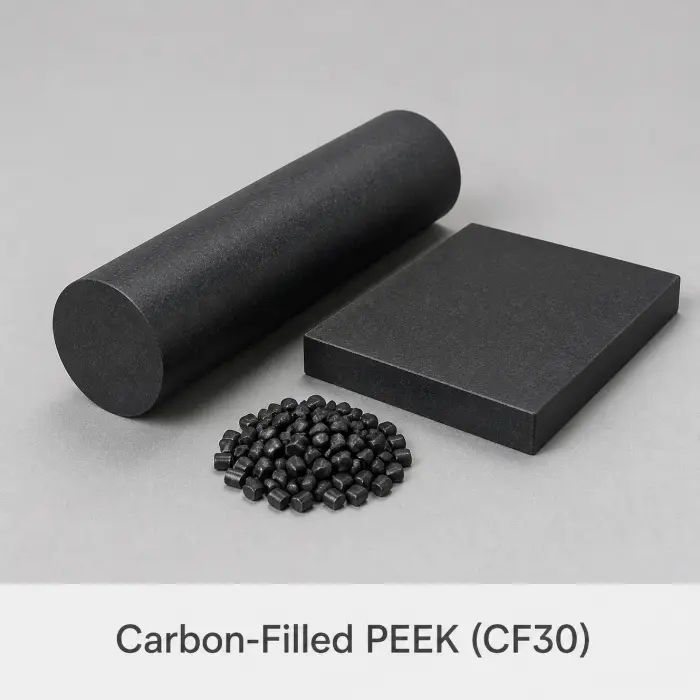
탄소 충전 PEEK
Carbon reinforcement can increase stiffness, creep resistance, and thermal conductivity for mechanically demanding parts.
Applications & machining notes
- 일반적인 부품
- Carriers, gears, brackets, compressor components, and precision fixtures.
- Stock and material records
- Usually dark or black; formulation and stock availability vary.
- Selection considerations
- Specify reinforcement level, stock orientation, and required conductivity or resistance. Carbon-filled grades must not be assumed electrically insulating.
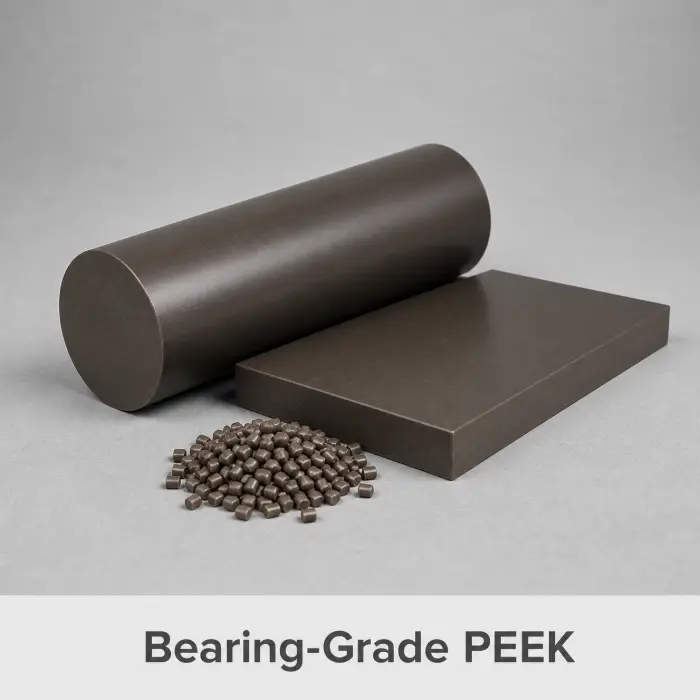
베어링용 PEEK
Specialized filler systems target friction and wear performance in suitable sliding or rotating interfaces.
Applications & machining notes
- 일반적인 부품
- 부싱, 스러스트 와셔, 마모 패드, 슬라이더 및 씰 링.
- Stock and material records
- Color depends on filler system and supplier.
- Selection considerations
- Select by load, speed, temperature, lubrication, mating material, and surface finish. Validate dry-running or intermittent-lubrication duty for the actual bearing system.
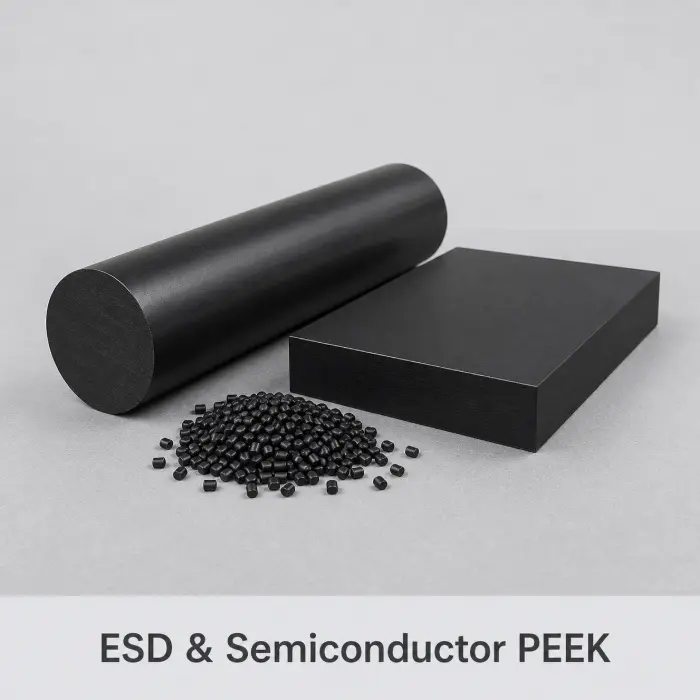
ESD 및 반도체용 PEEK
Formulations providing specified electrical behavior for sensitive handling and production environments.
Applications & machining notes
- 일반적인 부품
- Wafer fixtures, test sockets, carriers, guides, and selected sensor housings.
- Stock and material records
- Specify the exact supplier grade and documented cleanliness requirements.
- Selection considerations
- Define surface or volume resistivity, test conditions, contamination limits, and finished-part acceptance. Static-dissipative and conductive grades serve different requirements.
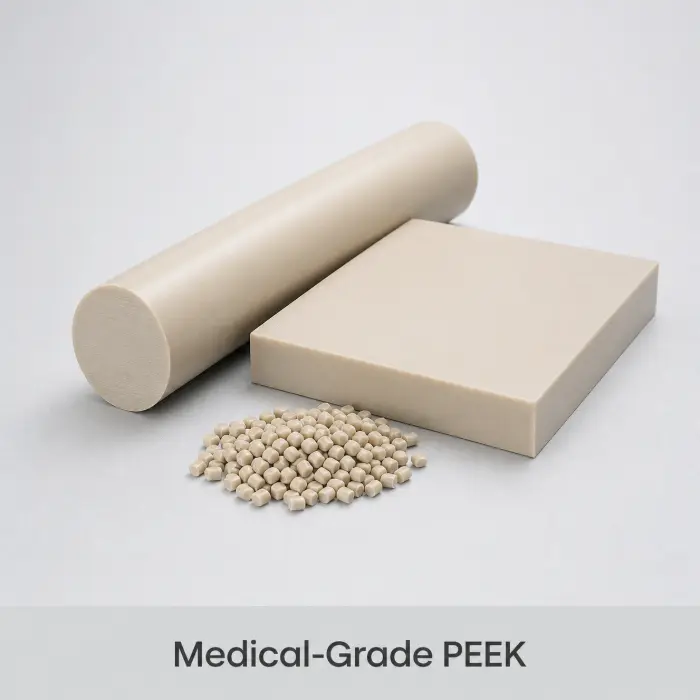
의료용 PEEK
Documented formulations for specified healthcare components, with composition, traceability, cleanliness, and application requirements defined.
Applications & machining notes
- 일반적인 부품
- Selected surgical guides, instrument components, trial parts, and implant components where the material and finished-device requirements permit.
- Stock and material records
- Use the exact documented grade and product form.
- Selection considerations
- Specify the intended use, required material records, processing, and qualification. Instrument-grade and implant-grade materials must be selected for their respective requirements.
Confirm the exact supplier grade, filler content, stock form, electrical properties, and required records. Similar colors or trade-family names do not establish equivalent performance.
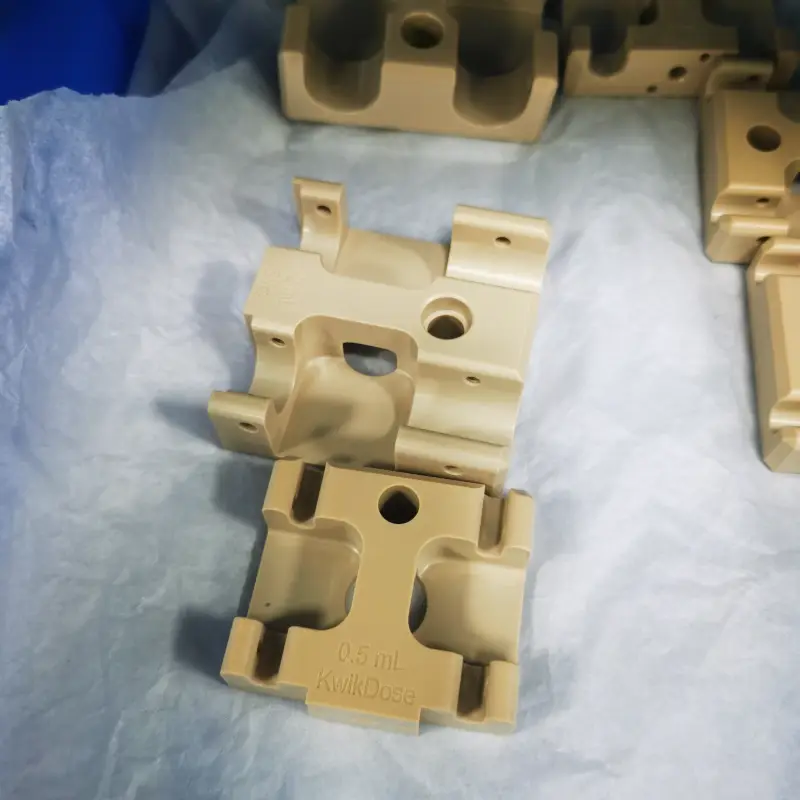
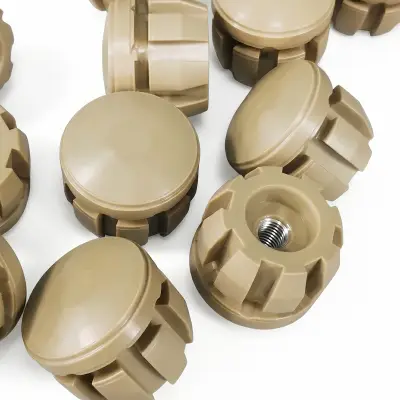
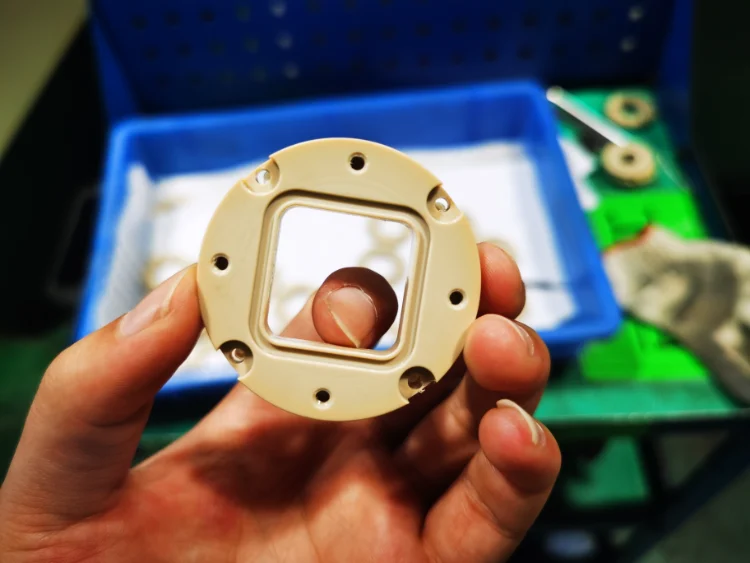
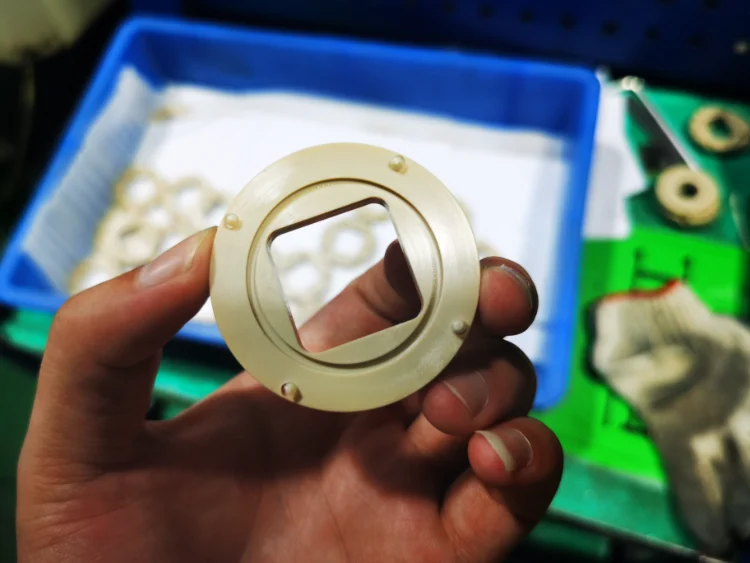
Weldo PEEK Machining Projects
Examples of custom PEEK bases, threaded components, and precision parts made by milling, turning, and multi-axis machining.
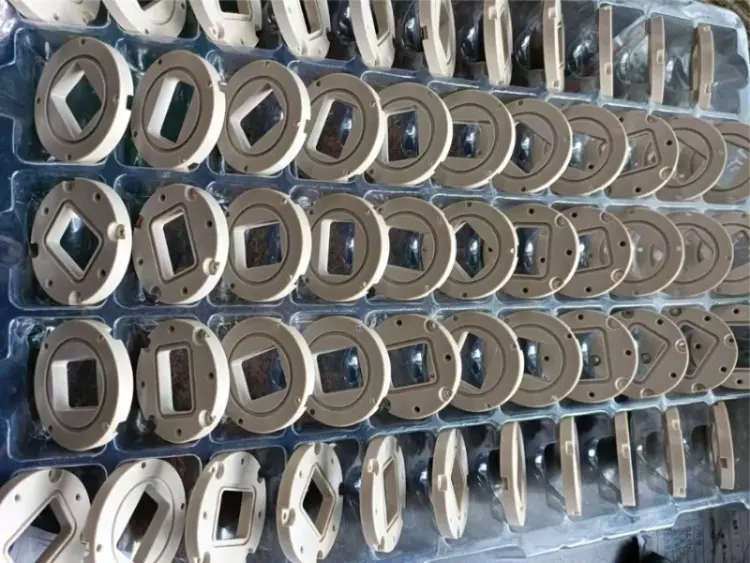


PEEK 부품의 표면 처리
As-machined surfaces with controlled deburring often suit functional parts. Select additional finishing for roughness, identification, contact behavior, or appearance.
도면 검토부터 최종 검사까지
Define material, dimensional, and surface requirements before machining, then verify the agreed finished-part condition.
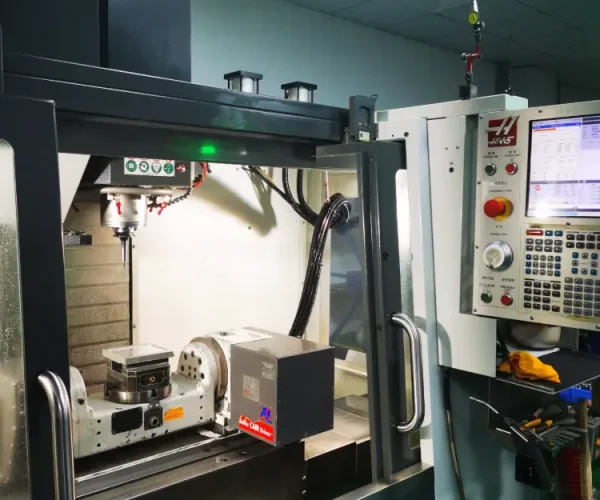
DFM 검토
Confirm grade, material records, datums, functional tolerances, wall sections, and the machining route.
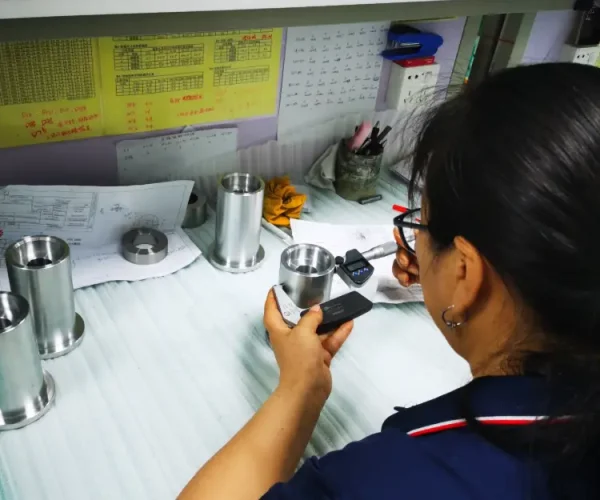
공정 관리
Monitor support, clamping, tooling, chip evacuation, and thermal stabilization between stages.
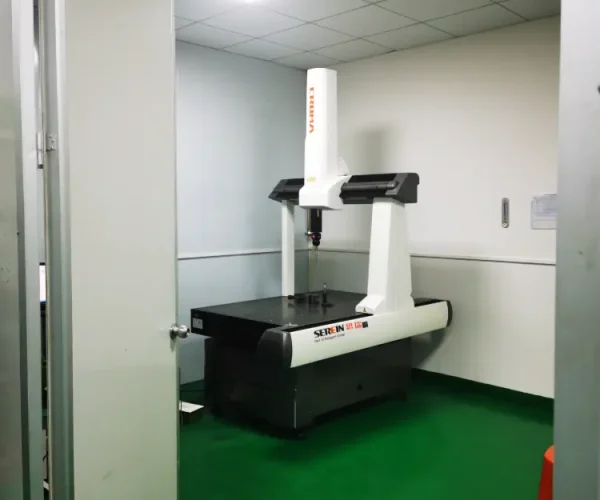
치수 검사
Verify critical dimensions and form using suitable support, equipment, and agreed inspection conditions.
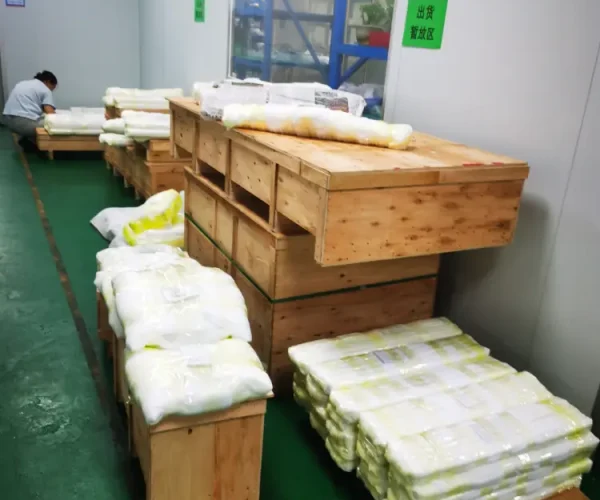
전송 제어
Check the required records, then clean, protect, label, and pack approved parts for shipment.
PEEK Machining Questions
What makes PEEK demanding to machine?
Cutting heat, stock stress, burrs, tool wear, and reinforcement can affect size and surface quality. Use a grade-specific route with suitable tooling, supported workholding, controlled material removal, and defined inspection conditions.
Which PEEK grade is easier to machine?
Unfilled grades generally avoid the abrasive fibers present in reinforced grades. Filled materials may offer greater stiffness or lower expansion, but require tooling matched to the filler, stock direction, and required edge condition.
How are close tolerances controlled?
Review suitable stock, balanced removal, heat, support, and stress relief where appropriate. Stabilize the part before final sizing or measurement and agree the temperature, support, and acceptance method for critical features.
Which tools suit reinforced PEEK?
Suitable carbide tools are used for many operations, while PCD can improve tool life in abrasive reinforced grades. Geometry, chip space, engagement, rigidity, and the specific filler influence the choice.
Can PEEK parts be polished, coated, or marked?
Yes, with a compatible process for the grade and function. Define roughness, marking contrast, masking, and final fits. Coating or printing requires an agreed surface preparation and adhesion acceptance.