CHEMICAL CONVERSION COATING
Alodine Finish
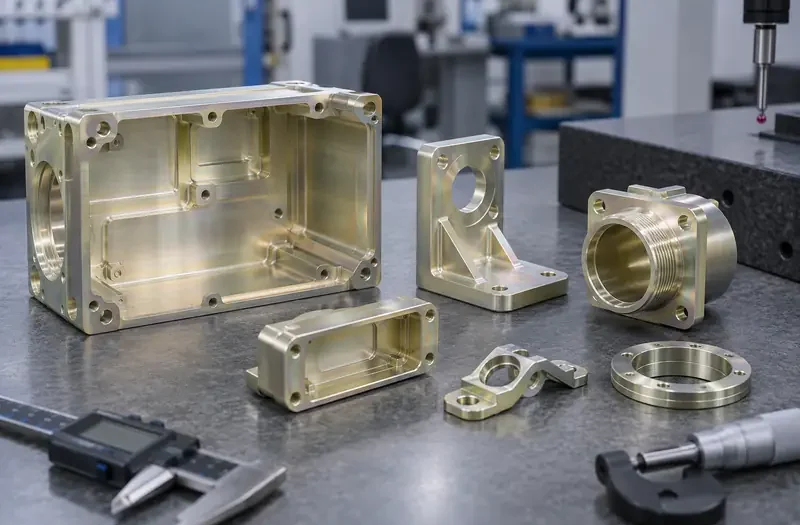
Weldo provides Alodine conversion coating, masking, inspection, and packaging for CNC aluminum parts requiring corrosion protection, low electrical contact resistance, and stable precision dimensions.
그림 업로드하기PROCESS CAPABILITIES
Alodine Finish Capabilities
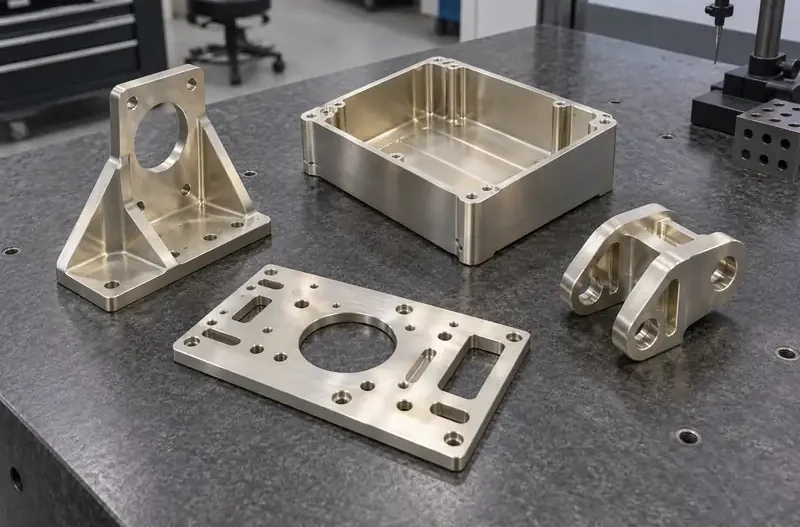
Six specifications define whether the coating, inspection, and delivery plan match the part.
| 항목 | 능력 |
|---|---|
| Compatible materials | 1xxx, 2xxx, 5xxx, 6xxx, and 7xxx aluminum alloys, plus evaluated cast aluminum alloys. |
| Specifications | MIL-DTL-5541, MIL-DTL-81706, ASTM B449, and customer-specified requirements. |
| Type and class | Type I or Type II; Class 1A for corrosion protection and paint preparation, and Class 3 for low electrical contact resistance. |
| Processing scope | Full-part or selective treatment with controlled masking of threads, bores, contact areas, and drawing-specified untreated surfaces. |
| 검사 서류 | Appearance, dimensions, corrosion resistance, electrical contact resistance, and certificates of conformance as specified. |
| Volume and lead time | Prototypes, low-volume, and production parts; standard shipments in 3–15 days. |
PROCESS OVERVIEW
What Is Alodine Finish?
Alodine finish is a chemical conversion treatment for aluminum and aluminum alloys, also known as chem film or chemical conversion coating. It forms an extremely thin protective layer that improves corrosion resistance and paint adhesion; Class 3 also maintains low electrical contact resistance with minimal effect on precision dimensions.
부식 방지
Slows environmental attack on the aluminum surface.
Electrical Contact
Class 3 supports grounding and EMI/RFI contact areas.
Paint Adhesion
Provides a controlled base for compatible organic coatings.
치수 안정성
The thin film adds negligible dimensional buildup.
DRAWING REQUIREMENTS
Standards, Types, and Classes
Type defines the chemistry. Class defines the required coating performance.
| Standard or Classification | Core Requirement | 일반적인 용도 |
|---|---|---|
| MIL-DTL-5541F, Notice 2 | Requirements for chemical conversion coatings on aluminum and aluminum alloys. | Aerospace, defense, electronics, and engineered parts. |
| MIL-DTL-81706B, Notice 2 | Qualification requirements for chemical conversion materials. | Projects requiring an approved chemistry system. |
| ASTM B449-93(2022) | Chromate conversion coatings for corrosion protection, coating adhesion, and low contact impedance. | Industrial aluminum parts and painted assemblies. |
| 타입 I | Approved chemistry containing hexavalent chromium. | Legacy or drawing-specified chromate systems. |
| 타입 II | Approved chemistry containing no hexavalent chromium. | Hexavalent-chromium-free projects. |
| 1A 등급 | Corrosion protection and organic coating preparation. | Unpainted, painted, or sealed components. |
| 3등급 | Corrosion protection with low electrical contact resistance. | Grounding, shielding, and electrical mating surfaces. |
Type II does not by itself confirm complete RoHS or REACH compliance. The selected chemistry declaration and project documentation provide the final compliance evidence.

SUITABLE MATERIALS
Which Aluminum Alloys Support Alodine Finish?
Alodine is primarily specified for aluminum and aluminum alloys. Alloy chemistry, temper, and surface texture influence coating color and uniformity.
Uniform coating for conductive components, sheet assemblies, and general corrosion protection.
High-strength aerospace parts; copper-rich surfaces require controlled deoxidizing and desmutting.
Sheet-metal housings, panels, marine hardware, and fluid-handling components.
CNC housings, heat sinks, brackets, mounts, and automation parts.
High-strength aerospace, robotics, and precision structural components.
Processed after alloy review; first-article samples define acceptable shade and surface uniformity.
CONTROLLED PROCESS
How Is Alodine Finish Controlled?
Stable results begin with material verification and surface preparation, not the conversion bath alone.
-
01
그림 리뷰
Confirm alloy, temper, specification revision, Type, Class, masking, and inspection.
-
02
Cleaning
Remove coolant, oil, polishing compound, and handling residue.
-
03
Deoxidizing and Rinsing
Remove oxide and alloy smut, then rinse thoroughly to limit chemical carryover.
-
04
Conversion
Control chemistry concentration, pH, temperature, time, and application method.
-
05
Final Rinse and Dry
Use specified water quality and a drying method that protects the new film.
-
06
검사 및 포장
Verify coverage, appearance, dimensions, required performance, and cleanliness.
Bare spots point to contamination, trapped air, or rack contact. Mottling is commonly linked to material or surface variation. Powdery films require review of chemistry condition, pH, concentration, and treatment time.
COATING PERFORMANCE
Color, Film, and Electrical Performance
Appearance helps verify coverage, while performance tests determine acceptance.
Clear or Near-Clear
Common with lighter films and some Type II systems used on electronic enclosures and grounding parts.
Light Gold to Iridescent
Common with traditional chromate systems; shade varies with alloy, chemistry, Class, and processing time.
Minimal Buildup
The film has little effect on bores, threads, and mating dimensions. Critical features are still inspected after treatment.
Low Contact Resistance
Class 3 performance also depends on roughness, cleanliness, contact pressure, and the specified test method.
Color depth alone does not confirm corrosion resistance, electrical contact resistance, or specification compliance.
MASKING & SEQUENCE
Which Areas Require Masking?
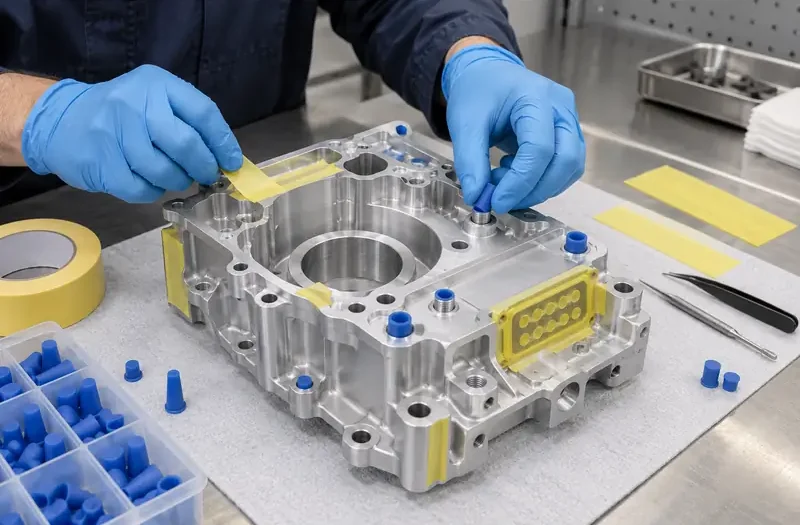
Masking protects drawing-specified bare aluminum, welding or brazing surfaces, sealing and vacuum faces, electrical contacts, and areas reserved for another finish.
Tapes and Films
Chemical-resistant tape defines flat surfaces and clean masking boundaries.
Plugs and Caps
Silicone or rubber plugs protect bores, threads, and shaped openings.
Stop-Off Coatings
Liquid masking reaches irregular areas that are difficult to cover with tape.
맞춤 고정구
Reusable covers improve repeatability on production parts.
Recommended sequence: CNC machining → deburring → cleaning → masking → Alodine → inspection → painting, an approved bonding process, or assembly.
PARTS & INDUSTRIES
Where Is Alodine Finish Used?
The process protects aluminum while preserving the features needed for assembly, grounding, and later finishing.
항공우주
- Aircraft brackets and stiffeners
- Avionics housings
- Mounting plates and connector supports
Electronics & Communication
- EMI/RFI enclosures
- Grounding plates and heat sinks
- Base-station housings and connector shells
자동차 및 신에너지
- Controller and inverter housings
- Battery-system fittings
- Sensor bodies and mounting brackets
Automation & Instruments
- Robot fixtures and end-effectors
- Machine-vision and optical mounts
- Instrument frames and precision panels
ONE-STOP PRODUCTION
How Weldo Controls Cost and Lead Time
Weldo coordinates material sourcing, CNC machining, deburring, cleaning, masking, Alodine treatment, inspection, and packaging. Before quoting, the engineering team reviews Type, Class, treatment boundaries, contact areas, downstream painting, and document requirements.
Group parts with the same material and coating class, define masking boundaries clearly, and reserve special tests for critical features.
Standard custom parts ship in 3–15 days. Production schedules reflect quantity, masking, testing, and documentation scope.
Approved first-article settings, controlled processing, and traceable inspections support repeat orders.
FREQUENTLY ASKED QUESTIONS
Alodine Finish FAQs
Direct answers to removal, electrical contact, maintenance, and repair questions.
How to remove Alodine?
Precision aluminum parts should be stripped by a qualified supplier using a controlled chemical process compatible with the alloy and next operation. After stripping, the parts are rinsed, reactivated, recoated, and reinspected for dimensions, roughness, and appearance.
Is Alodine conductive?
Alodine maintains low electrical contact resistance while providing corrosion protection. MIL-DTL-5541 Class 3 is specified for grounding, shielding, and electrical mating areas, with acceptance based on the drawing’s test method.
How should Alodine-coated parts be maintained?
Handle parts with clean gloves and clean them with a neutral detergent, deionized water, and a soft non-abrasive material. Dry thoroughly, use moisture-resistant packaging, and isolate the parts from dissimilar metals during storage.
Can damaged Alodine coating be repaired locally?
When the drawing or specification permits, approved touch-up pens, wipe-on chemistry, or local conversion treatment can repair minor scratches and small bare spots. Large damaged or corroded areas are stripped, reprocessed, and reinspected.
REQUEST A QUOTE
Send Your Alodine Part Requirements
Provide the drawing or 3D model, aluminum alloy and temper, specification, Type, Class, masking areas, inspection documents, quantity, and target delivery date.