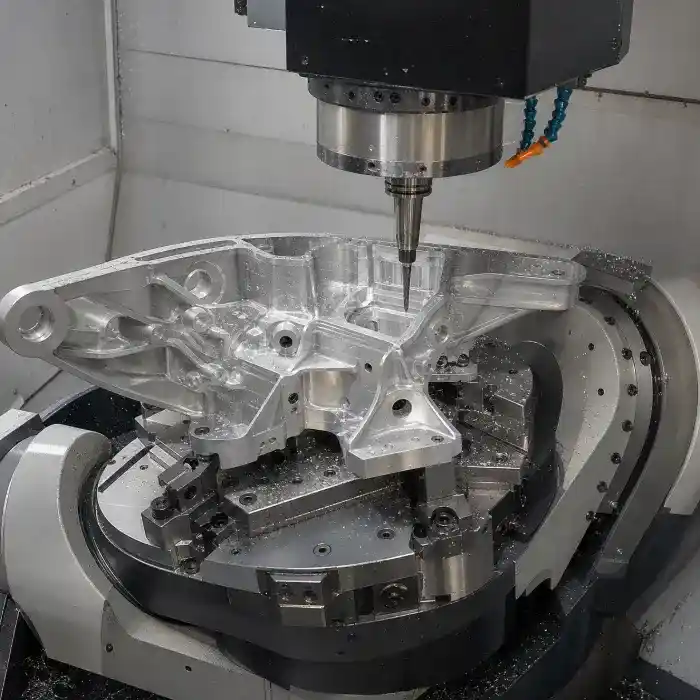
The key to comparing 2024-T351 vs 6061-T651 is not deciding which material is superior. The real question is which material meets the part’s load, structural, joining, and service-environment requirements.
- Choose 2024-T351 for high strength, cyclic loading, and lightweight structures.
- Choose 6061-T651 for corrosion resistance, welding, heat dissipation, anodizing, and cost control.
Material engineers must also confirm the product form, plate thickness, rolling direction, machining distortion, surface treatment, and acceptance standard. Tensile strength alone cannot support a reliable material decision.
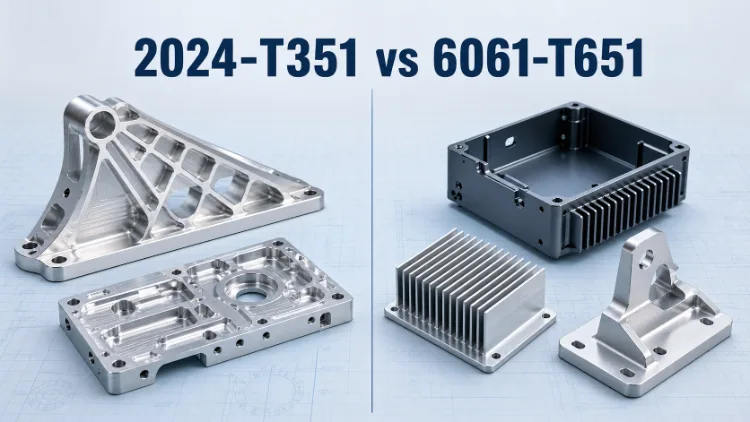
What Are 2024-T351 and 6061-T651?
2024-T351
2024 is a high-strength Al-Cu-Mg aluminum alloy. Copper and magnesium form its primary strengthening system, giving the material high tensile strength, yield strength, shear strength, and fatigue performance.
The T351 temper undergoes:
- Solution heat treatment.
- Rapid quenching.
- Controlled stretching for stress relief.
- Natural aging at room temperature.
2024-T351 is used for highly loaded brackets, aerospace structures, connecting plates, and components exposed to cyclic loads. Its high copper content reduces corrosion resistance, so all exposed machined surfaces require protective treatment.
6061-T651
6061 is a heat-treatable Al-Mg-Si aluminum alloy. Magnesium and silicon form the Mg₂Si strengthening phase, giving the material moderate strength, good corrosion resistance, and stable manufacturing performance.
The T651 temper undergoes:
- Solution heat treatment.
- Rapid quenching.
- Controlled stretching for stress relief.
- Artificial aging.
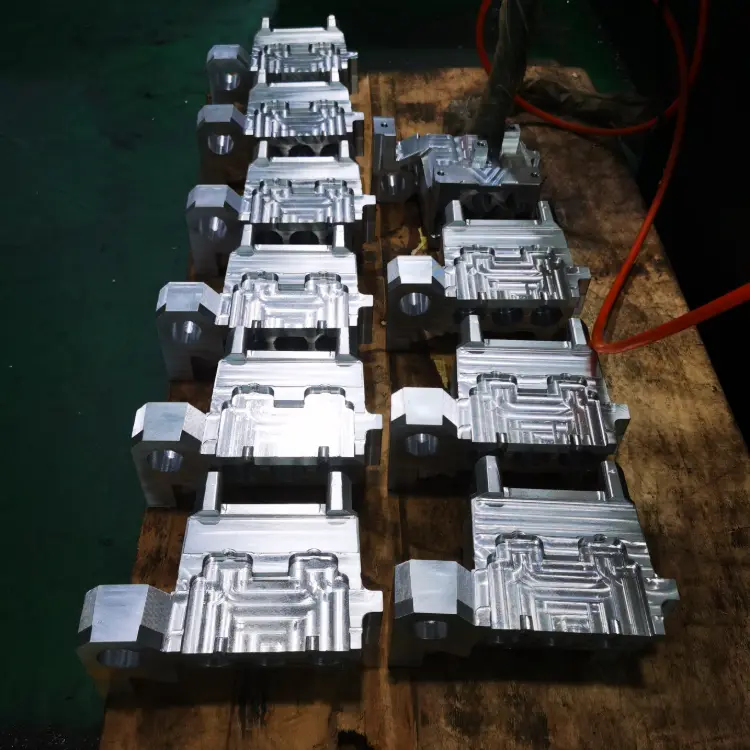
6061-T651 is used for machine baseplates, equipment housings, fixtures, hydraulic manifolds, heat-dissipation structures, and mounting brackets. It maintains a good balance between machining, welding, surface finishing, and manufacturing cost.
T351 and T651 apply to rolled plate. Extruded products use T3511 or T6511. Purchase documents must specify the alloy, temper, and product form.
Chemical Composition Comparison
| Element | 2024 | 6061 |
|---|---|---|
| Copper, Cu | 3.8–4.9% | 0.15–0.40% |
| Magnesium, Mg | 1.2–1.8% | 0.8–1.2% |
| Manganese, Mn | 0.30–0.90% | ≤0.15% |
| Silicon, Si | ≤0.50% | 0.40–0.80% |
| Chromium, Cr | ≤0.10% | 0.04–0.35% |
| Zinc, Zn | ≤0.25% | ≤0.25% |
| Aluminum, Al | Balance | Balance |
Data sources: Kaiser 2024 Technical Data and Hydro 6061 Alloy Data.
2024 relies on copper and magnesium for high strength. 6061 relies on magnesium and silicon for a more balanced combination of strength, corrosion resistance, and weldability. These compositional differences determine how each material is used.
Key Mechanical Properties of 2024-T351 vs 6061-T651
The table below uses typical values from manufacturer technical data for engineering material selection. Contract acceptance must follow the standard, thickness range, and material certification specified on the drawing.
| Property | Typical Value for 2024-T351 | Typical Value for 6061-T651 | Material Selection Meaning |
|---|---|---|---|
| Ultimate tensile strength | 469 MPa | 310 MPa | 2024 carries higher tensile loads |
| Yield strength | 324 MPa | 276 MPa | 2024 provides greater resistance to permanent deformation |
| Elongation | 20% | 17% | Acceptance values follow the specified plate thickness and standard |
| Brinell hardness | 120 HB | 95 HB | 2024 has higher hardness |
| Shear strength | 283 MPa | 207 MPa | 2024 is better suited to highly loaded shear connections |
| Fatigue strength | 138 MPa | 97 MPa | 2024 is better suited to cyclic loading |
| Modulus of elasticity | 73.1 GPa | 68.3 GPa | The two alloys have similar stiffness |
| Density | 2.77 g/cm³ | 2.70 g/cm³ | 6061 has slightly lower weight |
| Thermal conductivity | 120 W/m·K | 167 W/m·K | 6061 is better suited to heat-dissipation components |
| Electrical conductivity | 30% IACS | 43% IACS | 6061 provides higher electrical conductivity |
6061 data source: Kaiser 6061 Technical Data.
Fatigue data must be compared under the same stress ratio, number of cycles, surface condition, and specimen orientation. Procurement acceptance must use the guaranteed minimum values in the applicable material standard. Typical values do not replace acceptance values.
Key Advantages and Disadvantages
| Material | Key Advantages | Key Disadvantages |
|---|---|---|
| 2024-T351 | High strength, good fatigue performance, high shear load capacity, stable chip breaking, and a high strength-to-weight ratio | Low corrosion resistance, unsuitable for conventional fusion welding, demanding surface-protection requirements, and higher total cost |
| 6061-T651 | Corrosion resistance, weldability, good thermal and electrical conductivity, consistent anodizing, and broad availability | Lower strength and fatigue performance than 2024, softening in the weld heat-affected zone, and a greater tendency to form burrs during machining |
2024-T351 Solves High-Load Problems
2024-T351 provides higher load capacity at the same cross-section. It suits cyclic loads, highly loaded shear connections, and lightweight structures.
Its higher hardness produces stable chip breaking and reliable finishing performance. Precision holes, bearing surfaces, thin ribs, and complex contours achieve consistent dimensional and surface quality.
6061-T651 Solves General Manufacturing Problems
6061-T651 supports welding, heat dissipation, anodizing, and stable batch production. It is available in a wide range of sizes, shortens material procurement, and reduces total manufacturing cost.
It suits moderately loaded parts. For housings, baseplates, frames, heat sinks, and general industrial brackets, 6061-T651 provides greater supply efficiency.
Strength Is Not the Same as Stiffness
2024-T351 is significantly stronger than 6061-T651, but their moduli of elasticity are close.
When a part experiences permanent deformation or insufficient load capacity, 2024-T351 provides a direct advantage.
When excessive elastic deflection is the problem, engineers must increase wall thickness, adjust rib placement, or change the cross-sectional shape.
Replacing 6061 with 2024 does not significantly reduce the elastic deflection of an identical structure. This distinction directly affects material decisions for robotic arms, long-span brackets, and precision mounting plates.
CNC Machining and Cutting Tool Selection
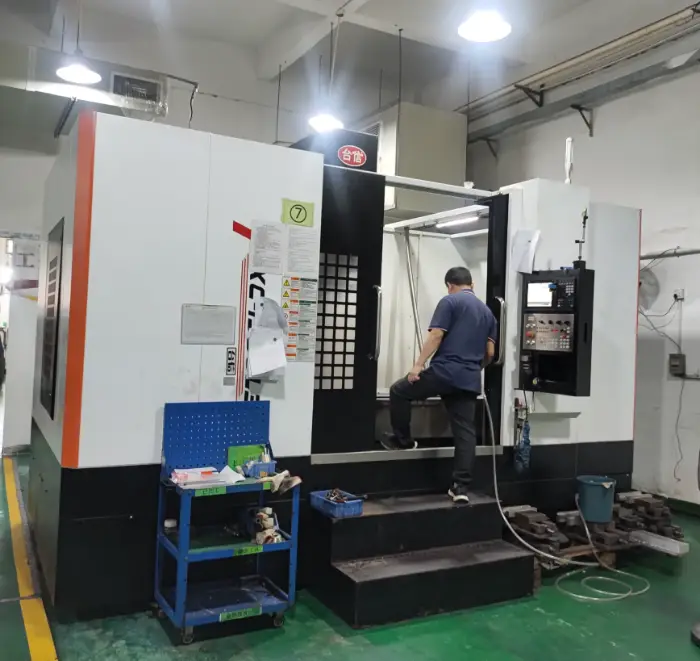
2024-T351 and 6061-T651 are low-silicon wrought aluminum alloys. Both are machined with aluminum-specific carbide or PCD cutting tools.
Prototypes and Low-to-Medium Volumes
Use sharp, polished carbide cutting tools:
- Two-flute or three-flute end mills with large chip gullets.
- High-positive-rake aluminum cutting tools.
- Polished flutes.
- Through-coolant carbide drills.
- ZrN- or DLC-coated low-friction tools.
General-purpose steel-cutting tools have smaller rake angles and narrower chip spaces. They increase adhesion, burr formation, and surface tearing, so they are not used for precision aluminum production.
High-Volume Production
PCD tools are used for high-speed milling, drilling, reaming, and face finishing. PCD provides a sharp cutting edge, low friction, and stable tool life. It reduces tool changes and dimensional variation in batch production.
Kennametal uses PCD tooling for high-speed aluminum machining and highlights its sharp cutting edges and low-friction rake surfaces. Kennametal PCD Tooling
Machining Differences Between the Two Materials
| Machining Factor | 2024-T351 | 6061-T651 |
|---|---|---|
| Chip control | Stable with good chip breaking | Chips are more adhesive |
| Built-up edge | Lower tendency | Requires strict control |
| Cutting force | Higher | Lower |
| Burr control | Easier | Depends on a sharp cutting edge |
| Precision hole machining | Stable | Requires stronger chip evacuation |
| High-speed roughing | Supported | Supported |
| Batch finishing | Carbide or PCD | PCD provides a clear advantage |
2024-T351 has better machinability than 6061-T651 and provides greater stability in precision hole and contour machining.
6061-T651 produces lower cutting forces and supports high-speed material removal, but built-up edge and burr formation must be controlled.
Total machining time is determined by part geometry, cutting tools, material removal volume, workholding, and surface requirements. The alloy designation alone does not establish a fixed speed ratio.
Machining Distortion Control
T351 and T651 are both stress relieved by stretching, but deep pockets, thin walls, and one-sided high material removal still release internal stress.
Stable machining requires:
- Equal machining allowance on both sides.
- Balanced material removal from opposing surfaces.
- Layered roughing for deep pockets.
- Releasing clamping stress after roughing.
- Re-establishing datums before finishing.
- Low clamping force and proper support for thin walls.
- Inspecting flatness and position after complete unclamping.
2024-T351 has higher strength and produces higher cutting forces. 6061-T651 is softer, so clamping marks and thin-wall deformation require greater control.
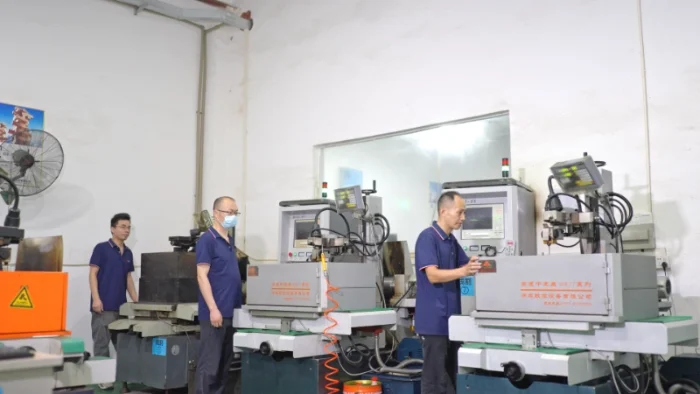
Is Wire EDM Supported?
2024-T351 and 6061-T651 are electrically conductive. Both materials support Wire EDM.
Wire EDM is used for:
- Precision through-slots and narrow slots.
- Small internal corner radii.
- Irregular through-holes.
- Closed two-dimensional profiles.
- Thin-wall and sheet components.
- Through-features that milling tools cannot reach.
Wire EDM cuts through the workpiece along the wire direction. It is not used for blind holes, blind cavities, or complete three-dimensional surfaces. CNC milling is used for standard external profiles, deep cavities, and high-volume material removal.
Rolling Direction and Product Form
Rolled plate has longitudinal, long-transverse, and short-transverse directions. 2024-T351 is more sensitive to orientation. The short-transverse properties of thick plate directly affect highly loaded holes, thick connecting sections, and fatigue-critical structures.
Drawings and purchase documents must specify:
- Plate or extrusion.
- Material temper.
- Plate thickness.
- Primary load direction.
- Plate rolling direction.
- Blank nesting direction.
- Long-transverse and short-transverse property requirements.
Suppliers must not change the part nesting direction to improve material utilization without engineering approval.
Corrosion Resistance, Welding, and Joining Methods
2024-T351
2024-T351 is used in controlled environments or structures with complete protective coatings. Humidity, salt spray, and marine exposure accelerate pitting and intergranular corrosion on unprotected surfaces.
2024-T351 is not used for conventional TIG- or MIG-welded structures. Its joining methods include:
- Bolts.
- Rivets.
- Pins.
- Interference fits.
- Structural adhesives.
Joint design must verify hole-bearing stress, edge distance, preload, and fatigue loading.
6061-T651
6061-T651 is used in industrial environments, outdoor equipment, automotive components, and electronic devices. It supports conventional aluminum welding.
The weld heat-affected zone softens, so welded assemblies cannot be designed using the T651 properties of the unwelded base material. Precision welded parts also require a controlled welding sequence, dedicated fixtures, post-weld straightening, and secondary machining.
Choose 6061-T651 when welding is required. Choose 2024-T351 for highly loaded mechanically fastened structures.
Surface Treatment Selection of 2024-T351 vs 6061-T651
| Surface Treatment | 2024-T351 | 6061-T651 | Primary Function |
|---|---|---|---|
| As machined | Controlled environments only | Indoor environments | Preserves dimensions and reduces cost |
| Chemical conversion coating | Primary protection option | Standard protection option | Improves corrosion resistance and coating adhesion |
| Conventional anodizing | Corrosion protection and insulation | Corrosion protection, insulation, and appearance | Forms a protective oxide layer |
| Hard anodizing | Wear-resistant functional surfaces | Wear-resistant functional surfaces | Increases surface hardness |
| Primer and paint | Highly loaded corrosion-protected structures | Environmental and appearance protection | Isolates the material from corrosive media |
| Electroless nickel plating | Wear-resistant and functional surfaces | Wear-resistant and functional surfaces | Improves wear resistance |
| Powder coating | Not used on critical fatigue surfaces | Housings and frames | Provides appearance and protection |
2024 produces less consistent anodized color than 6061. Choose 6061-T651 for parts with strict cosmetic requirements.
Anodizing and plating change hole diameters, threads, and mating dimensions. Drawings must specify coating thickness, post-treatment dimensions, and masking locations.
Applications and Typical Parts
| Industry | Typical 2024-T351 Parts | Typical 6061-T651 Parts |
|---|---|---|
| Aerospace | Wing ribs, connecting plates, fuselage brackets, and highly loaded hinge components | Instrument housings, ground equipment, and mounting components |
| Automotive and motorsports | Suspension links, highly loaded brackets, and lightweight load-bearing components | Battery brackets, sensor housings, and mounting brackets |
| Automation equipment | Motion links and cyclically loaded components | Fixtures, baseplates, frames, and tooling |
| Electronics | High-strength precision structural components | Heat sinks, display frames, and power-module housings |
| Hydraulic systems | Highly loaded valve bodies and connector blocks | Manifolds, pump bodies, and hydraulic structures |
| Transportation | Fatigue-loaded brackets and connecting structures | Platforms, housings, and welded assemblies |
Material and Machining Cost Comparison
Under the same dimensions, purchase quantity, material source, and quality level, 6061-T651 costs less than 2024-T351.
| Cost Factor | 2024-T351 | 6061-T651 |
|---|---|---|
| Raw material price | Higher | Lower |
| Stock availability | More concentrated | Broad |
| CNC machining | Stable chip breaking with higher cutting forces | Lower cutting forces with greater burr-control requirements |
| Surface protection | Requires focused protection | Selected according to environment |
| Welded fabrication | Conventional fusion welding is not used | Welding is supported |
| Quality documentation | Strict for highly loaded projects | Flexible for industrial projects |
| Total delivered cost | Higher | Lower |
The complete cost of 2024-T351 includes material, orientation control, staged machining, corrosion protection, and quality documentation. 6061-T651 reduces delivery cost through stock availability, weldability, and stable surface finishing.
Choose 6061-T651 to control cost for moderately loaded parts. Choose 2024-T351 to control structural weight and failure risk in highly loaded and fatigue-critical parts.
Items Custom-Part Engineers Must Confirm
1. Product Form
T351 and T651 apply to rolled plate. T3511 and T6511 apply to extruded products. Dimensional tolerances, residual stress, and mechanical properties from different product forms cannot be used interchangeably.
2. Plate Thickness
Material standards define minimum strength and elongation by plate thickness. Design data, quoted material, and the actual blank must fall within the same thickness range.
3. Strength and Stiffness
2024 addresses load capacity and fatigue requirements. Wall thickness, rib placement, and cross-sectional design address structural deflection.
4. Post-Weld Properties
The heat-affected zone of welded 6061-T651 does not retain the properties of the T651 base material. Welded structures must use post-weld design data.
5. Surface Treatment Dimensions
Anodizing, electroless nickel plating, and coatings change mating dimensions. Pre-treatment dimensions, post-treatment dimensions, and masking areas must be specified separately.
6. Material Substitution
Replacing 2024-T351 with 6061-T651 requires revalidation of:
- Static strength.
- Fatigue life.
- Hole-bearing strength.
- Cross-sectional dimensions.
- Joining method.
- Corrosive environment.
- Surface treatment.
- Applicable standard.
Materials must not be substituted without approval from the design engineer.
Procurement and Inspection Requirements
The RFQ package must include:
- Material grade and temper.
- Product form.
- Plate thickness and rolling direction.
- ASTM, AMS, or customer standard.
- Material certification and batch traceability.
- Critical dimensions and geometric tolerances.
- Surface roughness.
- Surface treatment specification and coating thickness.
- First Article Inspection Report or CMM report.
- Packaging and transportation protection.
This information directly determines the machining plan, inspection method, quotation, and lead time.
Get Machining Advice and a Quote from Weldo Machining
Selecting the wrong material increases distortion, rework, surface-treatment, and delivery costs. Weldo Machining reviews 2024-T351 and 6061-T651 against the drawing, load, service environment, tolerances, quantity, and finishing requirements.
The engineering review covers:
- Material temper and product-form verification.
- Thin-wall, deep-pocket, and high-material-removal analysis.
- Rolling direction and blank nesting.
- Carbide or PCD tooling strategy.
- CNC machining and Wire EDM planning.
- Surface-treatment dimensional compensation.
- Inspection methods and quality documentation.
- Prototype and production quotations.
Upload your 2D drawings, 3D models, purchase quantity, and material requirements to receive a defined machining plan, lead time, and quotation.
Conclusion
2024-T351 provides higher strength, fatigue performance, and shear load capacity. It is used for highly loaded, lightweight structures.
6061-T651 provides better corrosion resistance, weldability, thermal conductivity, anodizing results, and cost control. It is used for general industrial and production applications.
Final material selection must confirm the temper, product form, plate thickness, rolling direction, structural stiffness, joining method, surface treatment, and acceptance standard.