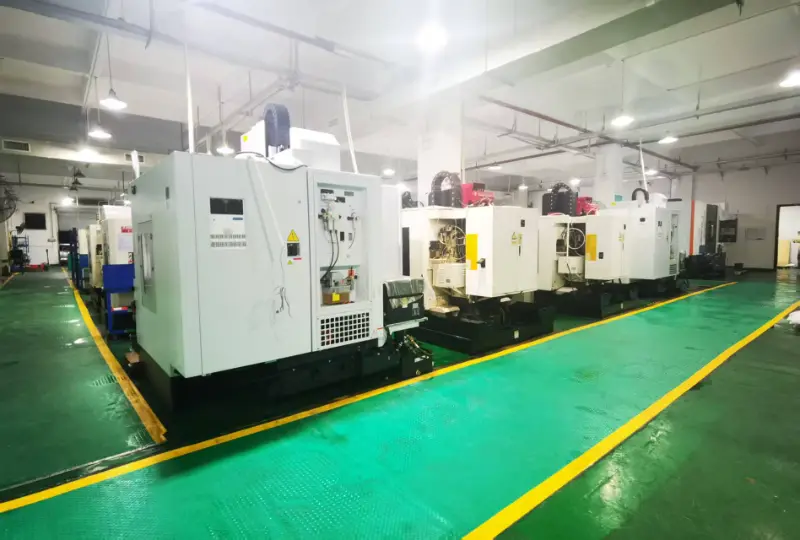
2024 aluminum is a heat-treatable Al-Cu-Mg alloy that combines relatively high strength, good fatigue performance, and low weight. It is widely used in aerospace structures, transportation equipment, hydraulic systems, and precision mechanical components.
This 2024 aluminum guide explains why specifying only “2024 aluminum” on a drawing is not sufficient when purchasing custom parts. The temper, product form, rolling direction, surface protection, and inspection standard all affect part performance, machining stability, delivery time, and cost.
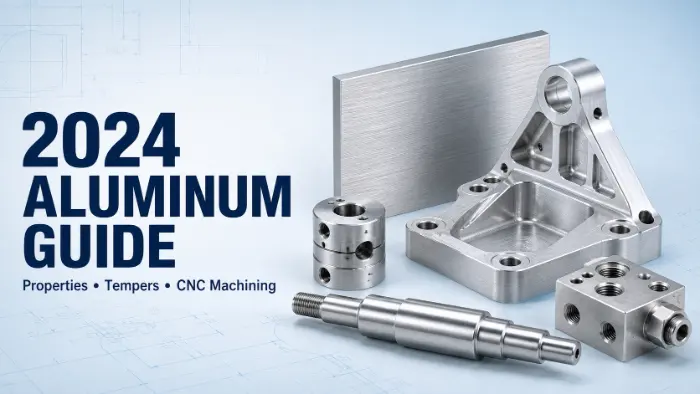
What Is 2024 Aluminum?
2024 is a 2xxx-series wrought aluminum alloy. Copper and magnesium are the principal strengthening elements, while manganese helps control the microstructure and recrystallization behavior.
| Element | AA 2024 Mass Fraction |
| Copper (Cu) | 3.8%–4.9% |
| Magnesium (Mg) | 1.2%–1.8% |
| Manganese (Mn) | 0.30%–0.90% |
| Silicon (Si) | ≤0.50% |
| Iron (Fe) | ≤0.50% |
| Zinc (Zn) | ≤0.25% |
| Chromium (Cr) | ≤0.10% |
| Titanium (Ti) | ≤0.15% |
| Aluminum (Al) | Remainder |
The relatively high copper content increases strength, but it also reduces general corrosion resistance. For this reason, 2024 parts usually require anodizing, chemical conversion coating, painting, or Alclad protection selected according to the service environment.
2024 and the Chinese grade 2A12 have similar alloy systems, but they do not follow exactly the same material standards, composition ranges, or performance requirements. They must not be substituted for one another without engineering confirmation.
Properties of 2024-O Aluminum
2024-O is 2024 aluminum in the annealed condition. This temper has lower strength and hardness but better ductility and formability, making it suitable for bending, stamping, deep drawing, and subsequent heat treatment.
The following are typical reference values for 2024-O:
| Property | Typical 2024-O Value | Significance for Part Procurement |
| Density | Approx. 2.78 g/cm³ | Suitable for lightweight structures |
| Young’s modulus | Approx. 73.1 GPa | Indicates the material’s resistance to elastic deformation |
| Ultimate tensile strength | Approx. 186 MPa | Typical strength before tensile fracture |
| Yield strength | Approx. 76 MPa | Permanent deformation may occur above this stress |
| Elongation at break | Approx. 22% | Suitable for substantial plastic deformation and complex forming |
| Brinell hardness | Approx. 47 HB | The material is relatively soft, so clamping marks must be controlled |
| Shear strength | Approx. 124 MPa | Used to evaluate shear-loaded areas and connection structures |
| Shear modulus | Approx. 28 GPa | Indicates the material’s resistance to shear deformation |
| Poisson’s ratio | Approx. 0.33 | Used in structural calculations and finite element analysis |
| Reference fatigue strength | Approx. 90 MPa | Based on 5 × 10⁸ fully reversed stress cycles |
These values are typical data obtained under specific specimen conditions and are not guaranteed acceptance values for every 2024-O product. Final requirements must be based on the product form, thickness, sampling direction, applicable standard, and material certificate.
2024 Aluminum Young’s Modulus
The Young’s modulus of 2024-O aluminum is approximately 73.1 GPa, or 10.6 Msi.
Young’s modulus represents a material’s resistance to tensile or compressive deformation within the elastic range and primarily reflects stiffness. It is not a substitute for ultimate tensile strength or yield strength.
The Young’s modulus values of 2024-O, T351, and T851 are similar, but their strength, hardness, elongation, and residual stress conditions differ significantly. Therefore, similar Young’s modulus values do not mean that these tempers are interchangeable.
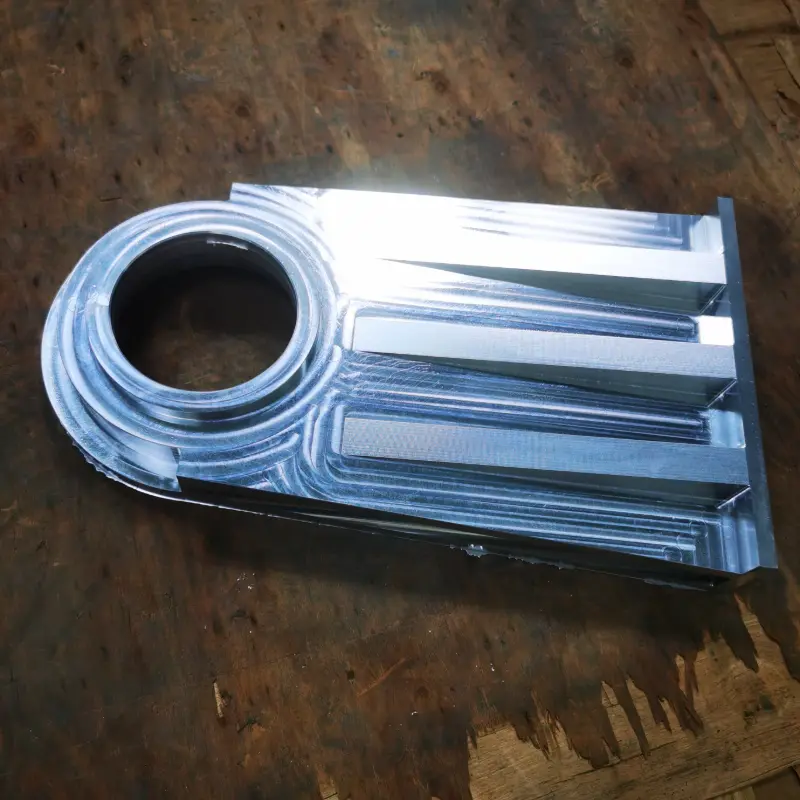
Why Must the Temper of 2024 Aluminum Be Specified?
The heat-treatment temper determines the part’s strength, ductility, residual stress, and machining behavior. If the drawing does not specify the temper, different suppliers may use entirely different raw materials.
| Temper | Primary Characteristics | Common Products and Applications |
| 2024-O | Low strength with good ductility and formability | Deep-drawn parts, bent parts, complex formed parts, and blanks for subsequent heat treatment |
| 2024-T3 | Solution heat treated, cold worked, and naturally aged | Sheet, aircraft skin, and structural components subjected to cyclic loading |
| 2024-T4 | Solution heat treated and naturally aged | Parts requiring some ductility and subsequent processing |
| 2024-T351 | Stress relieved by stretching and naturally aged | CNC-machined plate parts, brackets, connectors, and precision structural components |
| 2024-T3511 | Stress relieved by stretching, naturally aged, and straightened as permitted | Bar, tube, extrusions, and long shaft-type parts |
| 2024-T851 | Stress relieved by stretching and artificially aged | High-yield-strength structural parts with verified load requirements |
2024-O is suitable for forming, but it should not be treated as the default final temper for highly loaded parts. If solution heat treatment and aging are required after forming, heat-treatment distortion, dimensional allowances, and subsequent finish machining must be considered in advance.
How Should Different Product Forms Be Selected?
2024 aluminum is available as sheet, plate, bar, tube, extrusion, and forging. Product form affects material properties, grain direction, machining allowance, and procurement lead time.
- Sheet: Suitable for skins, covers, bent parts, and lightweight enclosures.
- Plate: Suitable for CNC-machined brackets, bases, connectors, and load-bearing structures.
- Bar: Suitable for shafts, sleeves, pistons, and rotating parts.
- Tube: Suitable for hydraulic, aerospace, and lightweight hollow structures.
- Extrusions: Suitable for long frames, guide rails, and structural parts with a constant cross-section.
- Forgings: Suitable for highly loaded parts requiring controlled grain flow.
The alloy grade, temper, product form, and material standard should all be specified in the purchase requirements. For example, 2024-T351 plate and 2024-T3511 extruded bar cannot be treated as the same material based on the alloy designation alone.
How Should 2024, 6061, and 7075 Be Selected?
| Comparison Item | 2024 aluminum | 6061 | 7075 |
| Primary alloy system | Al-Cu-Mg | Al-Mg-Si | Al-Zn-Mg-Cu |
| Strength level | Relatively high | Medium | Very high |
| Fatigue performance | Suitable for cyclically loaded structures | Suitable for general industrial loads | Depends on temper and service environment |
| Corrosion resistance | Relatively low | Good | Relatively low |
| Conventional fusion weldability | Poor | Good | Poor |
| CNC machinability | Good | Good | Good |
| Typical applications | Aerospace structures, gears, and hydraulic parts | Automation equipment, enclosures, and general structures | Highly loaded structures, fixtures, and aerospace parts |
6061 is suitable for welded structures, general mechanical loads, and corrosive environments. 7075 is suitable for weight-sensitive structures subjected to high static loads. 2024 is suitable for parts where fatigue performance and weight reduction are important.
Material selection must not be based on tensile strength alone. Load type, service environment, joining method, surface protection, and inspection requirements must also be considered.
CNC Machining Characteristics of 2024-O Aluminum
2024-O has relatively low hardness, so it requires comparatively low cutting forces. However, the softer material is more likely to cause tool adhesion, built-up edge, burrs, and clamping distortion.
The following points should be controlled during machining:
- Use sharp cutting tools designed for aluminum alloys.
- Maintain effective chip evacuation to prevent chips from scratching the surface again.
- Reduce clamping pressure on thin-walled and soft workpieces.
- Leave a uniform finishing allowance after rough machining.
- Add support for holes, thin walls, and long overhanging features.
- Include deburring requirements in the machining and inspection processes.
2024-O does not necessarily provide more stable dimensions than T351. For precision CNC parts requiring substantial material removal, T351 generally offers a more suitable combination of strength and stress condition.
How Can Machining Distortion in 2024 Parts Be Controlled?
After extensive one-sided machining of 2024 plate, redistribution of internal stress may cause bowing, twisting, or changes in flatness. Thin walls, deep cavities, and asymmetrical structures carry a higher risk.
Common control methods include:
- Select an appropriate material temper and blank thickness according to the part geometry.
- Use symmetrical, layered, and alternating rough-machining toolpaths.
- Allow an interval for stress redistribution after rough machining.
- Leave a uniform finishing allowance on critical dimensions.
- Use low-distortion fixtures and appropriate support positions.
- Reinspect flatness, parallelism, and profile in the free state.
Stress-relieved tempers such as T351 can reduce the risk of distortion, but they cannot guarantee that a part will remain completely distortion-free. Toolpaths, part geometry, workholding, and material batch must still be controlled together.
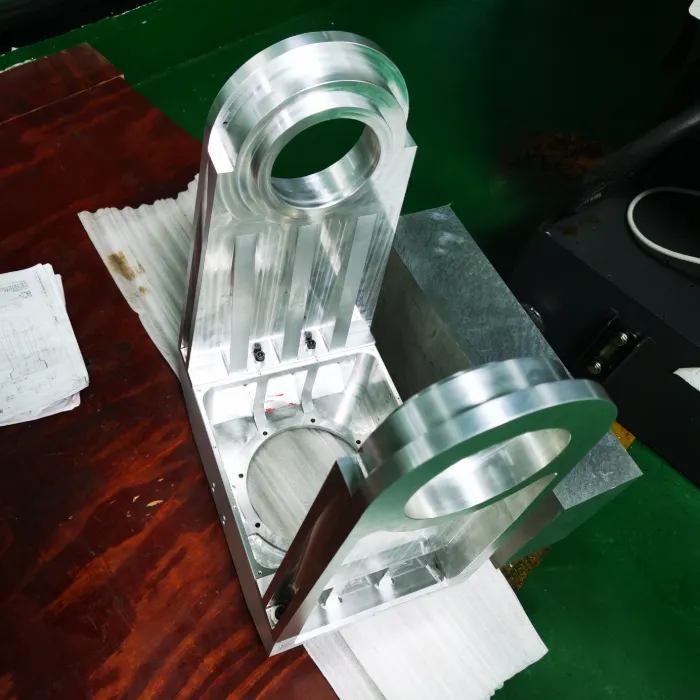
Why Is Rolling Direction Important?
Rolled plate has longitudinal, transverse, and short-transverse directions. Strength, elongation, and fracture behavior may differ between these directions.
For load-bearing structures and thin-walled parts, the drawing or purchasing document should specify:
- The principal load direction of the part;
- The material rolling direction;
- The sampling direction shown in the material certificate;
- Whether changing the part nesting direction is permitted;
- Whether short-transverse properties are required.
Specifying only the alloy and temper does not fully define a structural part with directional property requirements.
Common Custom 2024 Aluminum Parts
2024 aluminum is suitable for lightweight load-bearing and precision connection components, including:
- Aerospace structural brackets and connectors;
- Fuselage frames and internal reinforcements;
- Gears, worm gears, and couplings;
- Shafts, bushings, and sleeves;
- Hydraulic valve bodies and cylinder components;
- Pistons and motion-system components;
- High-strength bolts, nuts, and fasteners;
- Precision fixtures and inspection tooling.
The material temper should be selected separately according to the part load, forming method, machining route, and service environment. Not every part should use the same temper.

Surface Treatments for 2024 Aluminum
Because 2024 has a relatively high copper content, surface protection is usually an important purchasing requirement.
- Anodizing: Improves corrosion resistance and surface wear resistance. The copper content may affect color consistency, so appearance parts should be confirmed with a sample first.
- Hard anodizing: Suitable for wear surfaces. Holes, threads, and mating surfaces require coating-thickness compensation or masking.
- Chemical conversion coating: Produces a thin protective layer and can serve as a paint base or be used where electrical contact is required.
- Painting: Suitable for parts requiring color, environmental isolation, and additional protection.
- Electroless nickel plating: Can improve surface hardness and wear resistance, but pretreatment, adhesion, and dimensional buildup must be validated.
- Alclad sheet: Uses an aluminum cladding layer to improve corrosion resistance. Exposed core material at machined or drilled locations still requires a protection assessment.
Alclad should be translated as “aluminum-clad” or “aluminum-alloy clad sheet”; it must not be interpreted as galvanizing.
Common Inspection Items
Inspection of custom 2024 aluminum parts should be based on drawing requirements.
- Material certificate: Confirms the alloy, temper, heat or lot number, and applicable specification.
- Dimensional inspection: Checks critical dimensions, tolerances, hole locations, and fit relationships.
- Geometric tolerance inspection: Confirms flatness, parallelism, perpendicularity, and profile.
- Surface roughness: Verifies the machined quality of sealing, sliding, and mating surfaces.
- Coating inspection: Checks coating thickness, coverage, color, and masked areas.
- First article inspection: Confirms process and drawing compliance before batch production.
- Batch traceability: Links raw material, production batch, and inspection records.
Inspection items should be defined before quotation. Adding reports after batch production has been completed usually increases cost and extends the lead time.
How Can a Reliable 2024 Aluminum Machining Partner Be Selected?
A reliable supplier must do more than perform milling or turning. It should also understand how the material temper and product form affect part performance.
The following points can be reviewed when evaluating a supplier:
- Whether it can purchase the correct 2024 temper and product form according to the drawing;
- Whether it can provide traceable material certificates;
- Whether it has experience controlling distortion in thin-walled, deep-cavity, and high-material-removal parts;
- Whether it can coordinate heat treatment, surface treatment, and final dimensional reinspection;
- Whether it can provide dimensional or first article inspection reports in the agreed format;
- Whether it identifies tolerance, workholding, or surface-treatment risks before production.
Weldo Machining can evaluate the machining route based on the drawing, material temper, critical tolerances, and quantity. Buyers can review the processing capabilities on the CNC machining service page or submit drawings for engineering review through the file upload page.
Why Is Lead Time Important for Custom 2024 Parts?
Not every 2024 temper and size is readily available. Special thicknesses, Alclad sheet, aerospace material specifications, or materials requiring complete traceability documentation may require additional procurement time.
The complete lead time usually includes:
- Raw-material procurement and certificate verification;
- Process review and fixture preparation;
- Rough and finish machining;
- Heat treatment or stress control;
- Surface treatment;
- Final inspection and documentation preparation.
For projects with assembly deadlines, the target delivery date should be stated during the quotation stage, and material availability should be confirmed. Comparing machining time alone does not accurately indicate the final delivery date.
How Can the Machining Cost of 2024 Aluminum Parts Be Controlled?
Effective cost control starts with the drawing and purchasing requirements.
- Prioritize standard sizes: Special thicknesses and nonstandard tempers increase material cost and procurement time.
- Separate critical tolerances: Apply tight requirements only to mating, sealing, and locating dimensions.
- Reduce deep cavities and thin walls: This lowers costs associated with tool overhang, distortion control, and repeated setups.
- Standardize hole diameters and threads: This reduces the number of tools and tool changes.
- Combine similar batches: This spreads programming, fixture, and first article inspection costs.
- Define the inspection scope: Request only the reports and certificates that the project actually requires.
- Determine surface treatment in advance: This prevents post-machining changes to dimensional compensation and masking plans.
Cost reduction must not rely on unauthorized temper substitutions, removal of critical inspections, or relaxation of functional dimensions.
What Information Is Required When Requesting a Quote for 2024 Aluminum Parts?
A complete request for quotation should include:
- 2D drawings and 3D models;
- The complete material designation and temper;
- Product form or applicable material standard;
- Critical dimensions, tolerances, and GD&T requirements;
- Surface roughness and appearance requirements;
- Heat-treatment and surface-treatment specifications;
- Prototype, initial-batch, and annual demand quantities;
- Material certificate and inspection report requirements;
- Packaging, traceability, and target delivery date.
The more complete this information is, the easier it is for the supplier to provide an accurate process plan, price, and delivery schedule.
FAQ of 2024 aluminum guide
What Is the Young’s Modulus of 2024 Aluminum?
The Young’s modulus of 2024-O is approximately 73.1 GPa. Young’s modulus indicates stiffness, not ultimate tensile strength or yield strength.
Is 2024-O Suitable for Manufacturing Highly Loaded Parts Directly?
2024-O has relatively low strength and is primarily used for forming and subsequent heat treatment. T3, T351, T851, or another verified temper should be selected according to the load requirements of highly loaded parts.
Is 2024 Aluminum Stronger Than 6061?
In commonly used strengthened tempers, 2024 generally provides higher strength and better fatigue performance, but its corrosion resistance and weldability are generally lower than those of 6061.
Can 2024 Aluminum Be Welded?
2024 is not suitable for conventional fusion welding. Structural designs generally use bolted, riveted, or other verified joining methods.
Is 2024 Aluminum Corrosion Resistant?
2024 has relatively low general corrosion resistance. Surface protection and galvanic corrosion isolation should be planned for humid, salt-spray, or dissimilar-metal contact environments.
Are 2024-O and 2024-T351 Interchangeable?
They are not directly interchangeable. Their strength, hardness, ductility, and residual stress conditions differ, so the design and material specification must be reviewed before substitution.