
4340 is a medium-carbon nickel-chromium-molybdenum alloy steel.
AISI/SAE standard grade: 4340. UNS number: G43400.
In the field of custom parts procurement, 4340 is renowned for its comprehensive performance of “high strength + high toughness”. It falls into the category of quenched and tempered steel, and its mechanical properties are highly enhanced by the heat treatment process.
Mastering its material characteristics, processing requirements and the influence of heat treatment performance can make the service cost of your parts and the service life of accessories more controllable. Below I will give a comprehensive introduction around this material.
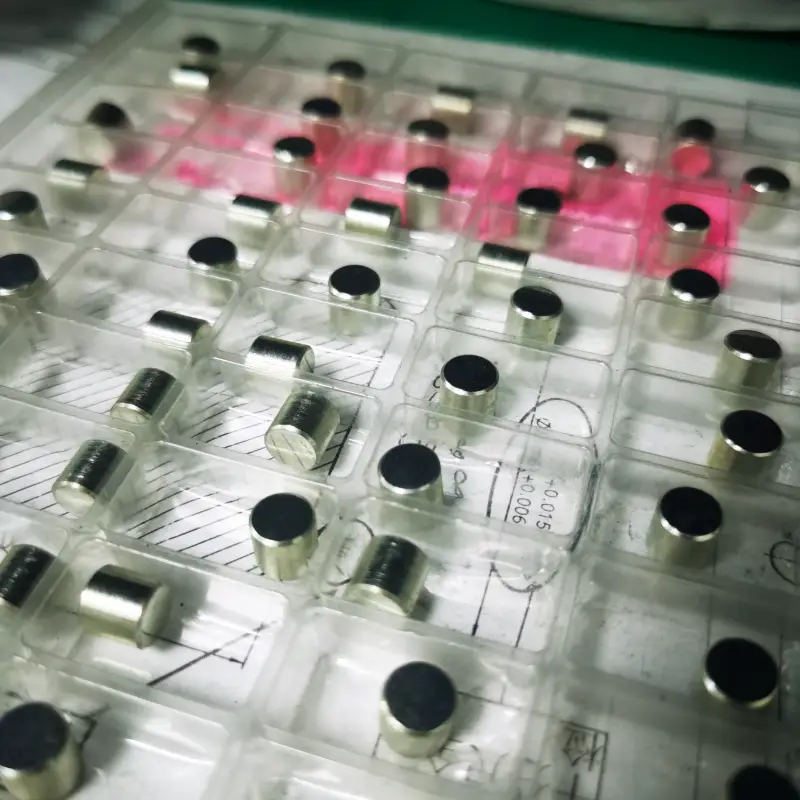
Detailed Explanation of 4340 Chemical Composition
According to the ASTM A29 standard, the chemical composition range of 4340 alloy steel is as follows:
| Element | Content Range | Core Function |
|---|---|---|
| Carbon (C) | 0.38% – 0.43% | Determines the upper limit of quench hardness, affects machinability |
| Nickel (Ni) | 1.65% – 2.00% | Enhances toughness, improves low-temperature impact performance |
| Chromium (Cr) | 0.70% – 0.90% | Improves hardenability and wear resistance |
| Molybdenum (Mo) | 0.20% – 0.30% | Refines grain structure, suppresses temper embrittlement |
| Manganese (Mn) | 0.60% – 0.80% | Deoxidizes and desulfurizes, improves hot workability |
| Silicon (Si) | 0.15% – 0.35% | Deoxidizer, auxiliary strengthening |
| Phosphorus (P) | ≤0.035% | Impurity, the lower the better |
| Sulfur (S) | ≤0.040% | Impurity, but an appropriate amount can improve machinability |
Key Interpretation:
The nickel content is the core difference that distinguishes 4340 from chromium-molybdenum steels like 4140. The 1.65%-2.00% nickel gives 4340 excellent toughness and hardenability, allowing it to achieve a uniform hardness distribution even in large cross-section workpieces.
The role of molybdenum is often underestimated. The 0.20%-0.30% molybdenum can effectively suppress temper embrittlement—this is the reason why 4340 still requires rapid cooling after high-temperature tempering.
The carbon content is controlled within the range of 0.38%-0.43%, which falls into the medium-carbon steel category. This range balances strength and toughness while retaining machinability.
4340 Corrosion Resistance Analysis
Direct Conclusion: 4340 is not stainless steel, and its corrosion resistance is limited.
The chromium content of 4340 is only 0.70%-0.90%, far below the minimum chromium content requirement of 12% for stainless steel. It cannot form a stable passive film.
Actual Performance:
In atmospheric environments, the corrosion resistance of 4340 is slightly better than that of ordinary carbon steel, but the difference is not significant. In humid environments, salt spray, or acidic and alkaline media, it will rust rapidly. Machined workpieces left unprotected can develop surface rust spots within a few days in a workshop environment.
Protection Recommendations:
Apply anti-rust oil between operations. Finished products must undergo surface treatment: blackening, phosphating, chrome plating, or zinc plating are all acceptable. For parts in highly corrosive environments, it is recommended to directly choose stainless steel as an alternative.
Comparison with Common Materials:
| Material | Chromium Content | Corrosion Resistance Rating |
|---|---|---|
| 1045 Carbon Steel | None | Poor |
| 4340 Alloy Steel | 0.70%-0.90% | Slightly better than carbon steel |
| 4140 Alloy Steel | 0.80%-1.10% | Similar to 4340 |
| 304 Stainless Steel | 18%-20% | Excellent |
| 316 Stainless Steel | 16%-18% | Outstanding |
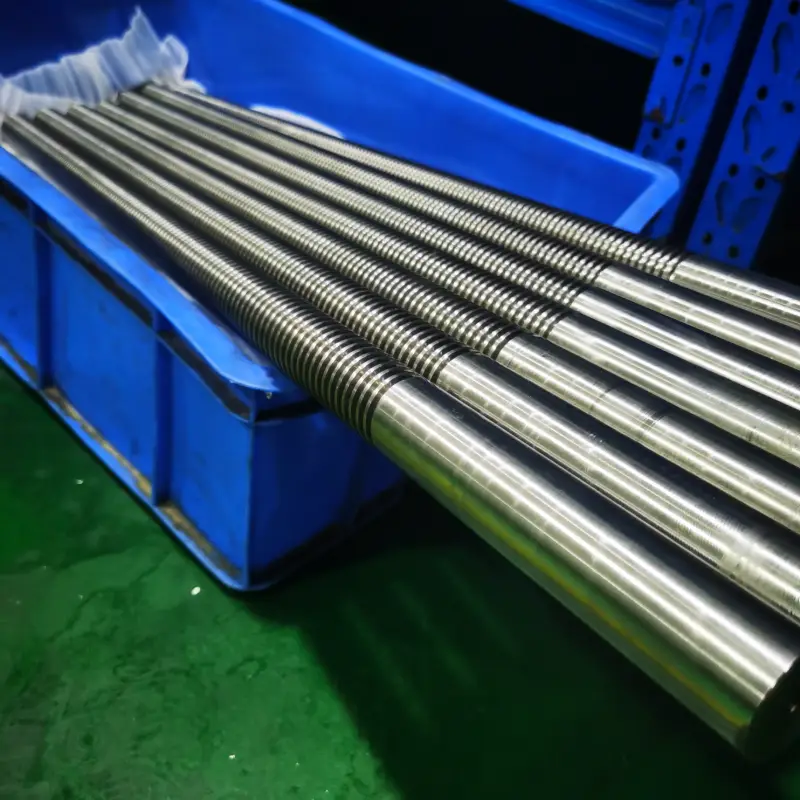
4340 Mechanical Property Analysis
The mechanical properties of 4340 are highly dependent on the heat treatment condition. The following is an explanation based on common delivery conditions.
Annealed Condition:
Hardness is typically ≤HB 248, with a tensile strength of approximately 650-750 MPa. Machinability is at its best in this condition. It is recommended that all rough machining be completed in this condition.
Normalized Condition:
Hardness is slightly higher than the annealed condition, with a finer grain structure. Suitable for semi-finished product states that require a certain level of strength.
Quenched and Tempered Condition:
This is the most commonly used condition for 4340. Typical mechanical properties are as follows:
| Property Indicator | Typical Value | Description |
|---|---|---|
| Tensile Strength | ≥980 MPa | Some heat treatments can reach over 1200 MPa |
| Yield Strength | ≥835 MPa | Yield ratio approximately 0.85, good plasticity reserve |
| Elongation | ≥12% | Ensures a certain capacity for plastic deformation |
| Reduction of Area | ≥45% | Reflects the material’s toughness level |
| Impact Energy (Charpy V-notch) | ≥40J (Room Temperature) | Core advantage contributed by the nickel element |
Key Interpretation:
The yield ratio is approximately 0.85, meaning the material undergoes significant plastic deformation before fracture and will not suddenly fail in a brittle manner. Compared to 4140, it has higher impact toughness at the same hardness level, which is a direct result of the difference in nickel content.
Hardness and Strength Conversion:
| Hardness (HRC) | Approximate Tensile Strength (MPa) |
|---|---|
| 28 | 900 |
| 32 | 1000 |
| 36 | 1150 |
| 40 | 1280 |
| 44 | 1420 |
Once hardness exceeds HRC 36, the machining difficulty of 4340 increases significantly. It is recommended to control the quenched and tempered hardness within the HRC 28-34 range.
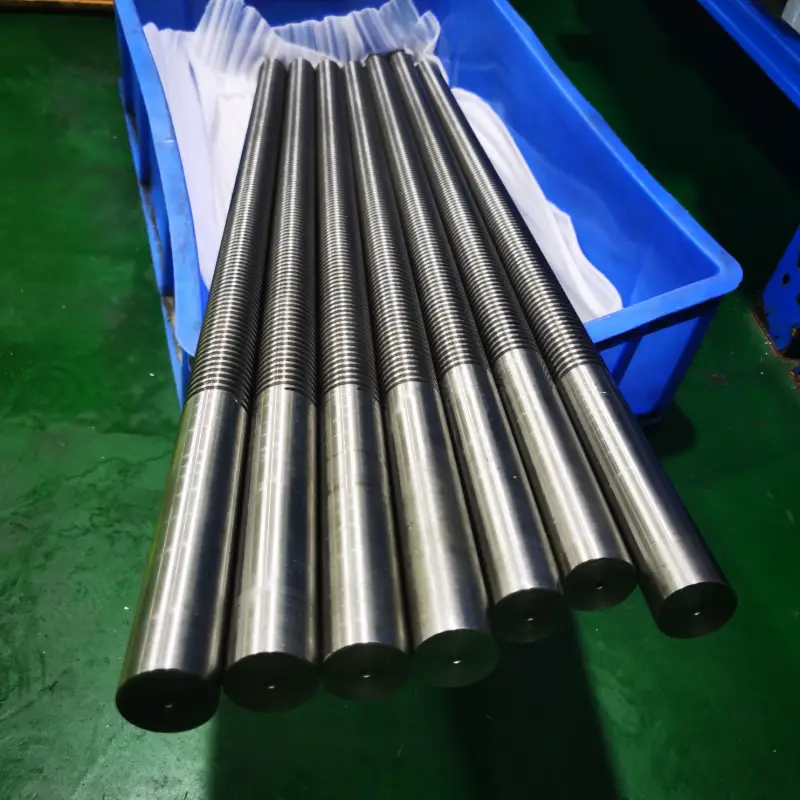
4340 Machining Practical Advice
Machining characteristics of 4340: good toughness, poor thermal conductivity, prone to work hardening, high demands on tooling.
Machining Condition and Tool Selection:
Prioritize rough machining in the annealed condition and finish machining after quenching and tempering. Use P30/P40 carbide for rough turning in the annealed condition, and P10/P20 with TiAlN coated inserts for finish turning in the quenched and tempered condition. Use cobalt high-speed steel or carbide drills for drilling; standard drills burn out easily.
Practical Key Points:
First, cooling must be sufficient. 4340 has poor thermal conductivity, and insufficient cooling will quickly burn the tool.
Second, avoid “rubbing the tool.” If the feed rate is too low or the depth of cut is insufficient, the tool rubs against the workpiece surface instead of cutting, which will quickly cause work hardening, making subsequent cutting even more difficult.
Third, chip control. 4340 chips are tough and do not break easily. Use inserts with chipbreaker geometries and appropriately increase the feed rate to promote chip breaking.
Fourth, peck frequently when drilling. For deep holes, the depth per peck should not exceed 3 times the drill diameter. Clear chips promptly to prevent clogging.
Common Problems and Solutions:
| Problem | Possible Cause | Solution Direction |
|---|---|---|
| Tool chipping | Cutting speed too high or insufficient cooling | Reduce surface speed, increase coolant flow |
| Poor surface finish | Built-up edge or tool wear | Increase cutting speed, replace with coated insert |
| Work hardening | Feed rate too low, tool rubbing the surface | Increase feed, ensure the tool “bites in” |
| Chip entanglement | Chipbreaker mismatch or insufficient feed | Switch to a chipbreaker insert, appropriately increase feed |
Detailed Explanation of 4340 Heat Treatment Process
Heat treatment is the “switch” for 4340’s performance. With the same material, different heat treatments yield vastly different final properties.
Quenching:
Heat to 830-860°C, hold for sufficient time, then cool rapidly. Oil quenching is the preferred medium. 4340 has excellent hardenability, and oil quenching is sufficient to obtain martensite. Water quenching carries a high risk; complex parts are prone to cracking.
Tempering:
Tempering is mandatory after quenching. The temperature is selected based on the target hardness:
| Tempering Temperature (°C) | Approximate Hardness (HRC) | Applicable Scenarios |
|---|---|---|
| 200-300 | 46-52 | High-hardness wear parts |
| 350-450 | 40-45 | Medium-hardness structural parts |
| 500-550 | 34-38 | General mechanical parts |
| 580-650 | 28-33 | High-toughness heavy-duty parts |
Temper Embrittlement—A Pitfall That Must Be Avoided:
Tempering in the 350-450°C range, or slow cooling after tempering above 550°C, will cause a sharp drop in impact toughness. Countermeasure: Cool rapidly after the tempering hold is complete, using oil or water cooling; do not air cool.
Typical Quenching and Tempering Process:
850°C oil quench → 580-620°C temper → rapid cooling. Hardness HRC 28-34, tensile strength 900-1050 MPa. This is the most classic service condition for 4340.
Surface Heat Treatment:
For parts requiring a hard exterior and tough core, nitriding (surface hardness HV 600-700) or induction hardening (surface hardness HRC 50-55) can be performed.

Core Surface Treatment Options for 4340 Steel Parts
Surface Strengthening: Induction hardening followed by low-temperature tempering delivers a surface hardness of HRC 55-60, balancing excellent wear resistance and core toughness. Nitriding at 500-550℃ forms a 0.1-0.5mm high-hardness layer with minimal distortion, ideal for high-precision heavy-load components.
Protective Coatings: Hard chrome plating requires post-treatment baking at 185-195℃ to eliminate hydrogen embrittlement. HVOF-sprayed WC-Co coatings, with their compressive stress state, impose far less negative impact on fatigue performance and skip the hydrogen removal process, making them a preferred choice for aerospace parts.
Stress Regulation: Overall stress relieving at 650-675℃ releases residual stresses generated during machining and straightening, preventing in-service deformation.
Basic Corrosion Protection: For regular scenarios, black oxide finishing or zinc plating offers low-cost rust prevention. High-corrosion environments require pairing with high-performance protective coatings.
Typical Application Cases of 4340
The core material selection logic for 4340: high strength + high toughness + fatigue resistance.
Automotive and Racing: Crankshafts, connecting rods, half shafts, drive shafts. Racing connecting rods are almost exclusively made of 4340, ensuring fatigue life even under lightweight design.
Aerospace: Landing gear components. Subjected to enormous impact loads upon landing, 4340’s high toughness and fatigue resistance are the key reasons for its selection.
Tooling and Machinery: Heavy-duty gears, grade 12.9 high-strength bolts. Quenching and tempering followed by nitriding or induction hardening is the standard process route.
Petroleum Equipment: Downhole tools, drill pipe joints. In high-pressure, high-torque environments, 4340 quenched and tempered with surface treatment meets API standard requirements.
Comparison and Selection of 4340 with Other Alloy Steels
4340 vs 4140: 4340 contains nickel, resulting in 30%-50% higher impact toughness at the same hardness. 4140 is lower cost and more economical when not subjected to severe impact loads.
4340 vs 8620: 8620 is a case-hardening steel, hard on the surface and tough in the core, suitable for gears and camshafts. 4340 is a quenched and tempered steel, offering overall high strength and toughness, suitable for crankshafts and connecting rods.
4340 vs 300M: 300M is a modified version of 4340, with a tensile strength reaching 1900-2100 MPa, designed specifically for extreme aerospace applications. 4340 is sufficient for conventional industrial use.
Quick Selection Reference:
| Material | Strength | Toughness | Cost | Typical Applications |
|---|---|---|---|---|
| 4340 | High | High | Medium-High | Crankshafts, connecting rods, gears |
| 4140 | Medium-High | Medium | Medium | Shafts, bolts |
| 8620 | High on surface | High in core | Medium | Gears, camshafts |
| 300M | Extremely High | High | High | Landing gear, aircraft structural parts |
Precautions for Purchasing 4340 Material
Material Certification: A heat-number-matched material certificate must be provided. Focus on verifying whether the nickel content is within 1.65%-2.00%. Nickel is the most expensive alloying element in 4340, and inferior materials often cut corners here.
Delivery Condition: Prioritize purchasing in the annealed condition (≤HB 248), which can be directly rough machined upon arrival. The quenched and tempered condition is more costly and suitable for direct finish machining.
Ultrasonic Testing: For critical parts, require the supplier to provide an ultrasonic testing report to avoid discovering internal defects halfway through machining.
Dimensional Allowance: Heat treatment will cause deformation. Leave a 0.5-1mm allowance after rough machining before quenching and tempering, then finish machine to the final dimensions after heat treatment.
Supplier Selection: Prioritize suppliers with quality system certification. For export orders, confirm that the supplier can provide an EN 10204 3.1 certificate.
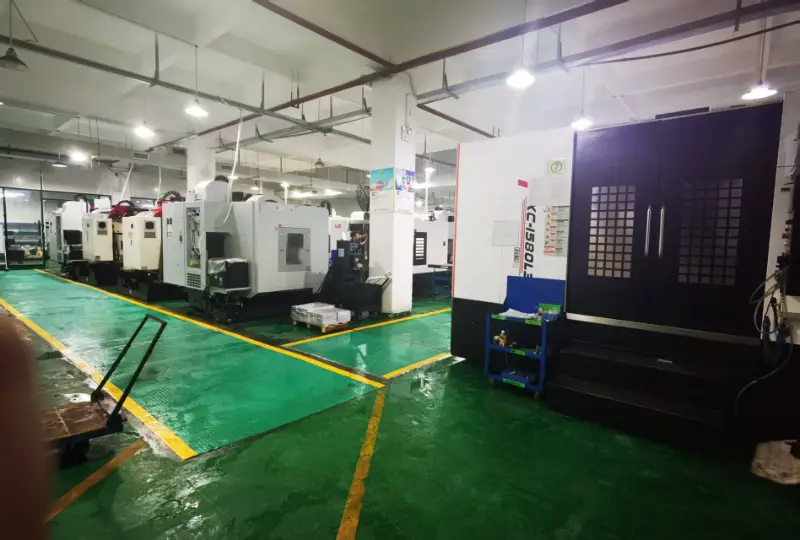
Summary
4340 is a material that “feeds on proper processing.”
The chemical composition determines its upper limit. The synergistic effect of nickel, chromium, and molybdenum allows it to find a balance between strength and toughness. Machining and heat treatment determine its lower limit. If the details—rough machining in the annealed condition, finish machining after quenching and tempering, and rapid cooling after tempering—are done right, 4340 is a miraculous material.
When purchasing, keep a close eye on the nickel content and delivery condition. Good material paired with good processing yields good parts.if you want want to get a quote about custom 4340 component,you can contact with us.