7050 aluminum is a high-strength, heat-treatable Al-Zn-Mg-Cu alloy that combines high strength, fracture toughness, and resistance to stress-corrosion cracking. It is primarily used for load-bearing structural components in aerospace, defense equipment, high-performance transportation, and precision motion systems.
When sourcing custom parts, buyers should consider the material temper, stock form, grain orientation, machining route, surface finish, and inspection requirements. Specifying only “7050” does not fully define the required part properties; the drawing should also identify T7451, T7651, T7452, or another applicable temper.
What Are the Main Characteristics of 7050 Aluminum?
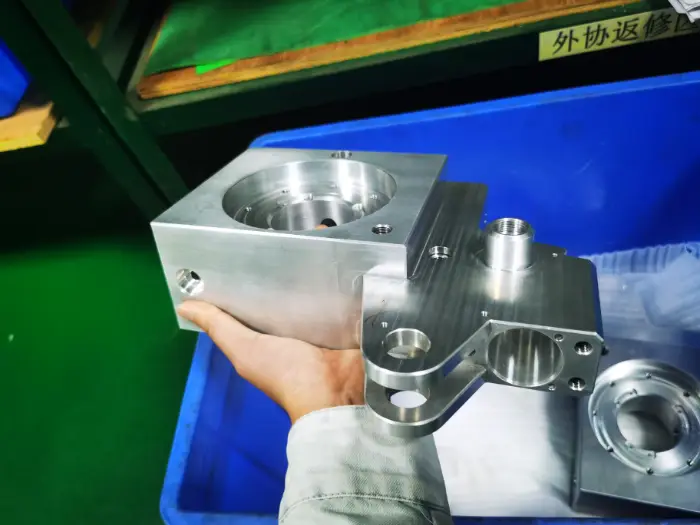
The primary advantages of 7050 aluminum are its high strength, good through-thickness performance, high fracture toughness, and better resistance to stress-corrosion cracking than some peak-aged, high-strength aluminum alloys. These properties make it particularly suitable for large components, thick sections, and parts subjected to long-term structural loads.
Its main characteristics include:
- A high strength-to-weight ratio for lightweight load-bearing structures.
- Stable overall performance in thick plates and large forgings.
- Good resistance to exfoliation corrosion and stress-corrosion cracking in overaged tempers such as T7451 and T7452.
- Good CNC machinability for complex cavities, multi-sided structures, and precision hole patterns.
- Residual stresses within the material may redistribute after extensive material removal, so thin-walled, deep-cavity, and asymmetrical parts require staged machining.
- Welded assemblies generally use bolts, pins, rivets, threaded inserts, or validated adhesive-bonding methods.
What Are the Advantages and Limitations of 7050 Aluminum?
The main advantages of 7050 aluminum are its high strength, good fracture toughness, and resistance to stress-corrosion cracking, particularly in thick plates, large forgings, and lightweight structures carrying substantial loads. It also requires tighter control of material temper, machining routes, and surface finishing than general-purpose aluminum alloys.
Main Advantages
- High strength and low weight: Typical tensile strength ranges from approximately 524 to 586 MPa, while its density is about 2.83 g/cm³, making it suitable for reducing structural weight while carrying high loads.
- Good thick-section performance: Tempers such as T7451 and T7452 provide a stable balance of strength, toughness, and resistance to stress corrosion in large plates and forgings.
- Good fracture toughness: It is suitable for load-bearing structures that require resistance to crack propagation, impact loading, and long-term service.
- Good CNC machinability: It supports multi-axis milling, turning, mill-turn machining, precision boring, reaming, threading, and precision grinding.
- Multiple surface-finishing options: It supports anodizing, hard anodizing, chemical conversion coating, blasting, shot peening, and painting to meet corrosion-resistance, wear-resistance, conductivity, and appearance requirements.
Service Limitations
- Machining distortion requires careful control: Thin-walled, deep-cavity, and asymmetrical parts may release residual stress after extensive material removal. Symmetrical roughing, uniform stock allowance, stabilization periods, and multiple finishing passes should therefore be used.
- Joining and surface finishing require stricter control: Conventional fusion welding of 7050 is limited, so load-bearing structures commonly use mechanical joining. Anodized appearance and coating thickness in fatigue-critical areas must also be controlled according to the drawing.
What Is the Chemical Composition of 7050 Aluminum?
7050 obtains its high strength from zinc, magnesium, and copper, while zirconium controls recrystallization and improves microstructural stability. The following are common composition ranges; final acceptance should be based on the applicable material standard and material certificate.
| Element | Content Range | Primary Function |
|---|---|---|
| Zinc, Zn | 5.7%–6.7% | Forms the principal strengthening phases and increases strength |
| Magnesium, Mg | 1.9%–2.6% | Works with zinc to provide age hardening |
| Copper, Cu | 2.0%–2.6% | Improves strength, hardness, and thermal stability |
| Zirconium, Zr | 0.08%–0.15% | Inhibits recrystallization and stabilizes the microstructure |
| Silicon, Si | ≤0.12% | Controlled as an impurity |
| Iron, Fe | ≤0.15% | Controls coarse intermetallic compounds |
| Manganese, Mn | ≤0.10% | Controls non-target alloying elements |
| Chromium, Cr | ≤0.04% | Controls microstructure and impurity levels |
| Titanium, Ti | ≤0.06% | Helps refine the as-cast grain structure |
| Aluminum, Al | Balance | Base metal |
These ranges are based on typical specification values in technical data for 7050 aluminum. Kaiser Aluminum 7050 Technical Data
What Are the Key Mechanical Properties of 7050 Aluminum?
In suitable heat-treated tempers, common 7050 products provide a tensile strength of approximately 524–586 MPa and a yield strength of approximately 469–510 MPa. Actual values vary with temper, thickness, sampling direction, and product form.
| Property | Typical Range |
|---|---|
| Tensile strength | 524–586 MPa |
| Yield strength | 469–510 MPa |
| Elongation | Approximately 5%–11% |
| Brinell hardness | Approximately 140–150 HB |
| Shear strength | Approximately 303–324 MPa |
| Elastic modulus | Approximately 70.3 GPa |
These ranges cover common T7451 and T7651 plate products and certain T6 seamless tubes. Part acceptance should be based on the specified material standard, product thickness, and measured values shown on the material certificate. The highest values in the table should not be used as minimum acceptance requirements for every 7050 part.
What Are the Key Physical Properties of 7050 Aluminum?
7050 has a density of approximately 2.83 g/cm³, about one-third that of steel, making it suitable for load-bearing parts where structural weight matters. Its elastic modulus is similar to that of other high-strength aluminum alloys, so reducing deflection still requires optimized sections, ribs, and support structures rather than relying on material strength alone.
| Physical Property | Typical Value |
|---|---|
| Density | Approximately 2.83 g/cm³ |
| Elastic modulus | Approximately 70.3 GPa |
| Melting range | Approximately 524–635°C |
| Coefficient of thermal expansion | Approximately 23.5 µm/m·K |
| Thermal conductivity | Approximately 154–157 W/m·K |
| Specific heat capacity | Approximately 860 J/kg·K |
For optical mounts, precision frames, and assemblies exposed to temperature changes, the design should account for differences in thermal expansion between aluminum and components made from steel, titanium, ceramics, or glass.
How Electrically Conductive Is 7050 Aluminum?
7050 provides moderate electrical conductivity. Common T7451 and T7651 materials have an electrical conductivity of approximately 39.5%–40.5% IACS. It can be used for structural parts requiring some electrical conductivity or static dissipation, although the material is generally selected primarily for its load-bearing and corrosion-resistance properties.
When grounding or controlled contact resistance is required, the drawing should clearly identify the conductive contact areas. Chemical conversion coatings are generally more suitable than anodized coatings for electrical contact areas. Fastener contact surfaces can also be locally masked or stripped after finishing to establish a stable conductive path.
How Corrosion-Resistant Is 7050 Aluminum?
In overaged tempers such as T7451 and T7452, 7050 offers good resistance to exfoliation corrosion and stress-corrosion cracking. However, exposed surfaces may still experience pitting, crevice corrosion, and galvanic corrosion. Humid, salt-spray, condensation, and dissimilar-metal environments require a suitable protective finish.
Buyers should confirm:
- Whether the service environment includes sea salt, road salt, condensation, or industrial corrosive media.
- Whether the part will be in direct contact with steel, copper, or carbon-fiber materials.
- Whether drain holes, lap joints, and fastener areas are likely to retain moisture.
- Whether primer, topcoat, or sealant is required after surface treatment.
- Whether dry, scratch-resistant, and contamination-resistant packaging will be used during shipping and storage.
When assembled with carbon-fiber composites, insulating washers, sealants, coatings, or other isolation methods should be used to reduce the risk of galvanic corrosion.
How Weldable Is 7050 Aluminum?
7050 has limited conventional fusion weldability. Gas welding and arc welding can soften the heat-affected zone, introduce residual stress, and reduce joint performance. High-load structures therefore commonly use bolted joints, pinned joints, riveting, threaded inserts, or validated adhesive-bonding processes.
When welding is required, the engineering team should specify the welding method, filler material, heat input, test-sample validation, and post-weld inspection requirements. Welded-joint strength should be established through welding procedure qualification rather than based directly on the strength of the parent material.
What Are the Common Tempers of 7050 Aluminum?
The heat-treatment temper directly affects strength, corrosion resistance, fracture toughness, and dimensional stability. The temper should be specified together with the raw-material form when ordering.
| Temper | Common Product Form | Characteristics and Applications |
|---|---|---|
| T6 | Certain drawn seamless tubes and other products | High strength; specific properties should be confirmed against the product standard |
| T7451 | Stress-relieved thick plate | Provides a good balance of strength, toughness, and resistance to stress corrosion; commonly used for machined structural parts made from thick plate |
| T7651 | Stress-relieved plate | Provides high strength while maintaining good corrosion resistance |
| T7452 | Die forgings or hand forgings | Compression stress-relieved and suitable for highly loaded forged structural parts |
| T74511 | Extrusions | Suitable for long structural members, beams, and products with specific cross-sections |
7050-T7451 plate can be purchased in accordance with SAE AMS4050K. T7452 forgings may be specified to AMS4108G or AMS4333E. T74511 extrusions may be specified to AMS4342G.
What Raw-Material Forms Are Available for 7050 Aluminum?
7050 is primarily supplied as thick plate, forgings, extrusions, bars, and certain sizes of seamless tubing. The raw-material form influences the internal microstructure, directional properties, machining allowance, and final cost.
| Raw-Material Form | Suitable Parts |
|---|---|
| Thick plate | Integral frames, brackets, baseplates, deep-cavity housings, and aerospace structures |
| Die forgings or hand forgings | Highly loaded joints, complex structural connections, and near-net-shape structures |
| Extrusions | Long beams, guides, reinforcements, and parts with constant cross-sections |
| Bar stock | Bushings, connecting rings, round supports, and mill-turn parts |
| Seamless tube | Thin-walled rings, cylindrical connectors, and selected tubular structures |
For large parts, the rolling direction, forging grain flow, and principal load direction should also be confirmed. The orientation of highly loaded holes, attachment lugs, and thin-section transitions can affect fatigue life and fracture performance.
Which Machining Processes Does 7050 Aluminum Support?
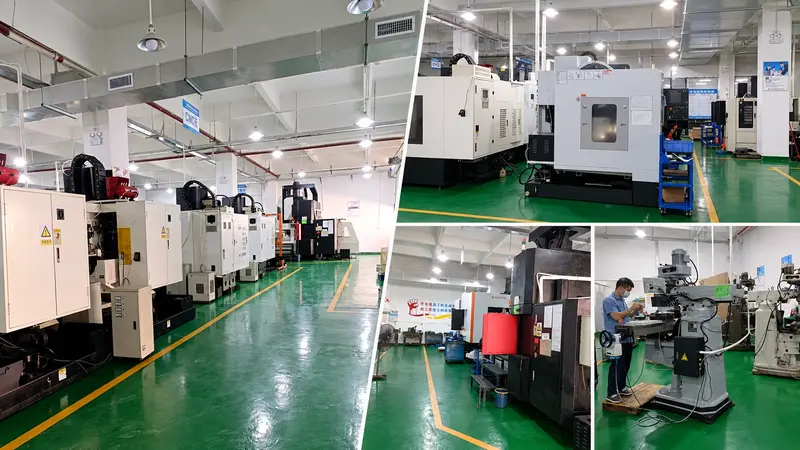
7050 has good machinability and supports CNC milling, turning, mill-turn machining, drilling, reaming, precision boring, and threading. Its main manufacturing challenge is the redistribution of residual stress after extensive material removal rather than difficulty in cutting the alloy itself.
Depending on the part geometry, Weldo can provide:
- Three-axis, four-axis, and five-axis CNC milling.
- CNC turning and mill-turn machining.
- Drilling, reaming, and boring of precision holes.
- Thread milling, cutting taps, and single-point thread turning.
- Surface grinding and localized precision grinding.
- Wire electrical discharge machining.
- Deburring, ultrasonic cleaning, and surface finishing.
Five-axis machining is suitable for multi-directional holes, inclined surfaces, complex cavities, and integral structures. It reduces repeated setups and helps maintain datum relationships. Wire EDM is suitable for narrow slots and special profiles, but the recast layer on fatigue-sensitive surfaces should be controlled and followed by additional finishing when required by the drawing.
How Is Distortion Controlled When CNC Machining 7050?
Distortion during 7050 machining mainly results from residual material stress, asymmetrical material removal, clamping force, and cutting heat. Thin walls, deep cavities, extensive one-sided material removal, and tight positional tolerances require staged machining.
A typical machining route includes:
- Verify the material temper, batch, and rolling direction.
- Establish stable datums and complete symmetrical rough machining.
- Leave a uniform finishing allowance on critical surfaces.
- Release the fixture and inspect distortion in the free state.
- Turn the part over and re-establish the machining datums.
- Complete semi-finishing and correct critical features.
- Complete finishing in two to four stages.
- Machine bearing bores, locating holes, and sealing surfaces last.
- Perform final inspection in the restrained or free state specified on the drawing.
For parts with a high risk of distortion, Weldo can schedule a 24-hour dimensional-stability observation period after roughing or semi-finishing and then re-establish the machining datums based on the measured movement. This stabilization period is used to observe post-machining dimensional changes and is not equivalent to heat treatment or artificial aging.
Which Surface Finishes Are Commonly Used for 7050 Aluminum?
7050 can be sulfuric-acid anodized, hard anodized, chemically conversion coated, bead blasted, shot peened, painted, and locally polished. The surface treatment should be selected according to corrosion resistance, wear resistance, electrical conductivity, fatigue performance, and appearance requirements.
Sulfuric-Acid Anodizing
Sulfuric-acid anodizing improves surface corrosion resistance, provides decorative color, and adds basic electrical insulation. Common engineering coating thicknesses are approximately 5–25 μm, while the final thickness should be specified by the drawing or applicable standard.
The copper and zinc content of 7050 can affect anodized color. Parts made from different batches, tempers, or surface textures may show color variation. Cosmetic parts should use material from the same batch, consistent blasting parameters, and approved limit samples to control appearance.
Bearing bores, precision threads, sealing surfaces, and grounding locations should be masked according to assembly requirements. Because the anodized coating changes finished dimensions, compensation should be included during machining for critical fits.
Hard Anodizing
Hard anodizing is suitable for sliding surfaces, guide surfaces, and areas exposed to light or moderate wear. Common engineering coating thicknesses are approximately 25–75 μm. The coating provides high hardness and wear resistance, but dimensional growth, edge buildup, and coating distribution inside bores must be considered in advance.
Hard-anodized coatings are relatively brittle. For areas exposed to cyclic loading, significant stress concentrations, or fatigue-critical service, the treatment area and coating thickness should be approved by the design engineer.
Chemical Conversion Coating
Chemical conversion coating is suitable for 7050 parts that are dimensionally sensitive, require electrical contact, or will subsequently be painted. The coating is very thin and generally has minimal influence on precision fits, allowing it to serve as either a corrosion-protection layer or a pretreatment for painting.
When MIL-DTL-5541 is specified, the drawing should identify the required type and class:
- Type I: Hexavalent-chromium system; project-specific regulatory requirements should be confirmed before use.
- Type II: Hexavalent-chromium-free system suitable for RoHS and similar compliance requirements.
- Class 1A: Primarily used for corrosion protection and as a paint base.
- Class 3: Primarily used where lower electrical contact resistance is required.
Ground terminals, conductive mounting surfaces, and shielding contact areas should have defined contact-resistance limits, treatment boundaries, and acceptance methods.
Bead Blasting or Abrasive Blasting
Blasting creates a uniform surface texture, reduces the visibility of light tool marks, and produces an even matte appearance. It is a mechanical texturing process and does not provide long-term corrosion protection by itself, so it is commonly combined with anodizing, chemical conversion coating, or painting.
Bearing bores, precision threads, locating surfaces, and sealing surfaces should be masked before blasting. Abrasive material, grit size, pressure, stand-off distance, and blasting angle affect roughness and edge condition. Production cosmetic parts should be approved against a first-article sample.
Primer and Topcoat Systems
A chemical conversion coating combined with an epoxy primer and topcoat is suitable for outdoor, marine, aerospace structural, and continuously humid environments. A complete coating system can cover complex geometries and provide additional isolation in assemblies containing dissimilar materials.
Purchasing documents should define the coating system, color, dry-film thickness, masking areas, adhesion, and appearance requirements. Fastener contact surfaces and conductive areas should also specify whether they remain bare or receive a conductive finish.
Controlled Shot Peening
Shot peening introduces compressive residual stress into the surface to improve fatigue performance in specified areas. It is a controlled surface-strengthening process and serves a different purpose from ordinary abrasive cleaning.
Engineering drawings should specify the treatment areas, shot type, Almen strip, intensity, coverage, and masking boundaries. The sequence of shot peening, anodizing, and painting should follow the applicable design specification so that subsequent machining does not remove the strengthened layer.
Local Polishing and Precision Grinding
Local polishing or grinding is suitable for sealing surfaces, sliding surfaces, optical mounting datums, and visible areas. Material-removal amount, edge radius, and surface direction should be controlled to ensure that critical flatness and profile tolerances remain within drawing requirements.
What Should Be Inspected After Surface Finishing?
Surface-finish acceptance for 7050 parts should cover coating thickness, appearance, masking boundaries, and critical dimensions. Color inspection alone does not demonstrate that the coating meets assembly and service requirements.
Depending on the project, inspection should include:
- Anodized or coating thickness.
- Treatment condition of precision holes, threads, and mating surfaces.
- Color variation, burning, powdering, pinholes, scratches, and runs.
- Masking boundaries and areas of exposed substrate.
- Bore diameter, flatness, and positional tolerances after treatment.
- Contact resistance in electrically conductive conversion-coated areas.
- Coating adhesion or corrosion-resistance testing.
- Correlation between batch records, material certificates, and finishing records.
Which Industries and Parts Commonly Use 7050 Aluminum?
7050 is primarily used for structural parts requiring high loads, low weight, and reliable thick-section performance. Its value lies in its combination of strength, toughness, stress-corrosion resistance, and machinability rather than in ordinary cosmetic applications.
Aerospace Structures
7050 is commonly used for integrally machined frames, ribs, spar components, fuselage frames, load-bearing brackets, structural fittings, and large mounting structures. These parts often involve high material-removal ratios, deep cavities, thin walls, and numerous precision holes, making distortion control, hole-pattern position, and surface integrity critical.
Common surface systems include chemical conversion coating followed by primer, localized anodizing, and design-approved shot peening. Surface-treatment areas, edge breaks, and tool-mark direction in fatigue-critical zones should follow the engineering drawing.
Avionics and Electro-Optical Equipment
7050 can be used for avionics racks, optical mounting platforms, sensor supports, gimbal frames, radar mounting structures, and load-bearing electronic enclosures. These parts often require low weight, high rigidity, thermal stability, grounding, and long-term dimensional consistency.
When EMI shielding or grounding is required, Class 3 chemical conversion coating or locally masked conductive surfaces are commonly used. Optical mounting holes and reference surfaces are generally finished after stress redistribution and semi-finishing.
Defense and High-Reliability Equipment
Typical components include rugged equipment enclosures, electro-optical gimbal structures, communication-equipment mounts, radar supports, control-equipment bases, and highly loaded connectors. These projects often require material-batch traceability, critical-dimension reports, and controlled surface treatment.
For outdoor or coastal environments, a chemical conversion coating, primer, and topcoat can form a complete protective system. Galvanic isolation should be provided when the part is assembled with steel fasteners, copper conductors, or carbon-fiber components.
High-Performance Transportation and Motorsport
7050 can be used for suspension mounting brackets, chassis connection nodes, brake-system mounts, powertrain brackets, and lightweight test components. These parts are often exposed to vibration, impact, and cyclic loads, so fillet radii, edge distances, load direction, and the influence of surface treatment on fatigue performance should be reviewed together.
Anodizing or coating systems can improve surface protection against road salt, rainwater, and cleaning fluids. Coating thickness and contact conditions should be controlled around bolted joints.
Robotics and Precision Automation
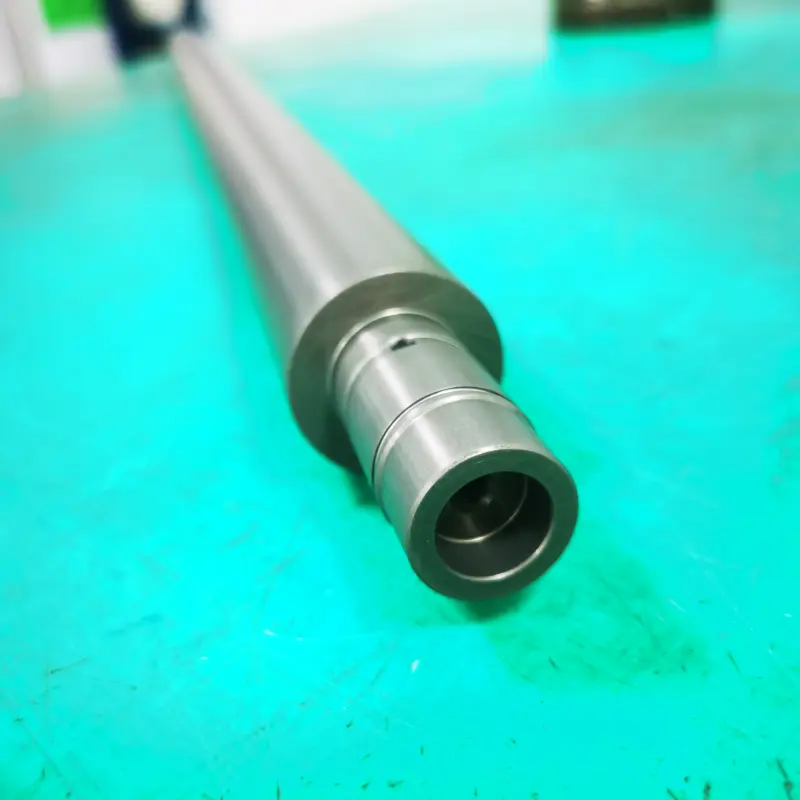
7050 can be used for robot-joint housings, end-effector bodies, high-speed motion platforms, precision fixtures, lightweight beams, and load-bearing baseplates. It is suitable for equipment where moving mass must be reduced while maintaining high structural strength.
For automation parts with moderate loads and tighter cost targets, 6061 or 6082 is generally more economical. 7050 becomes more valuable where section size is limited, loads are high, or weight reduction provides a clear performance benefit.
Tooling and Test Equipment
Typical parts include aerospace assembly fixtures, load-test fixtures, precision positioning frames, and large measurement supports. 7050 can reduce the weight of large mobile tooling while maintaining high load-bearing capacity.
Tooling materials should still be selected according to stiffness, thermal expansion, and usage frequency. Higher material strength does not produce a corresponding increase in elastic modulus, so large fixtures still require structural design to control deflection.
How Does 7050 Compare with Other Common Aluminum Alloys?
| Material | Main Characteristics | More Suitable Parts |
|---|---|---|
| 7050 | High strength, good fracture toughness, and resistance to stress corrosion; suitable for thick sections | Aerospace frames, load-bearing joints, and large structural parts |
| 7075 | High strength, broad availability, and well-established applications | Small and medium-sized high-strength brackets, connectors, and motion components |
| 2024 | Good fatigue performance and damage tolerance | Aircraft skin, frames, and fatigue-loaded structures |
| 6061 | Good balance of machinability, weldability, corrosion resistance, and cost | General-purpose enclosures, brackets, and automation parts |
| 6082 | Stronger than most 6000-series alloys and widely available in Europe | Mechanical structures, transportation equipment, and general load-bearing parts |
| 7055 | Higher strength potential with stricter application and sourcing requirements | Selected high-strength aerospace structures |
7050 should not replace 7075, 2024, or another aerospace aluminum alloy based solely on a strength table. Material substitution also requires verification of fracture toughness, corrosion temper, thickness effects, fatigue requirements, material standards, and design approval.
How Should You Choose a Reliable 7050 Aluminum CNC Machining Supplier?
Evaluate the following five areas when selecting a supplier:
- 7050 machining experience
The supplier should understand the differences between T7451, T7651, T7452, and other tempers and be able to evaluate rolling direction, machining allowance, and residual-stress risks. - Multi-axis machining capability
Four-axis, five-axis, and mill-turn equipment can reduce the number of setups and maintain positional relationships among complex hole patterns, inclined surfaces, and multi-directional features. - Distortion-control strategy
Before quoting, the supplier should evaluate wall thickness, deep cavities, material-removal ratio, and datum transfers, then define a route covering roughing, stabilization, semi-finishing, and multiple finishing stages. - Inspection and material traceability
Critical projects should support material certificates, temper verification, batch traceability, CMM reports, and specified surface-treatment records. - Surface-finishing control
The supplier should understand coating-thickness compensation, masking, color variation, electrical contact areas, fatigue-sensitive zones, and post-treatment dimensional inspection rather than treating finishing as a coloring operation alone.
Frequently Asked Questions
What Is the Difference Between 7050-T6 and 7050-T7451?
7050-T6 is a high-strength temper found in certain drawn seamless tubes and other product forms. T7451 is an overaged plate temper that has been stress-relieved by stretching and provides a better balance of strength, toughness, and stress-corrosion resistance for thick-plate structures. T7451 is more common for machined parts produced from thick plate.
Can 7050 Aluminum Be Anodized?
Yes. 7050 supports sulfuric-acid anodizing and hard anodizing, but its copper and zinc content can affect color consistency and coating appearance. Cosmetic parts should therefore use a consistent material batch, controlled pretreatment parameters, and approved limit samples.
Is 7050 Suitable for Thin-Walled and Deep-Cavity Parts?
Yes. These parts should use symmetrical roughing, uniform finishing allowances, unclamped inspection, stabilization periods, and two to four finishing stages to control flatness, profile, and hole-pattern position.
Does 7050 Aluminum Corrode?
Yes. Although 7050 does not form red rust like carbon steel, it can still experience pitting, galvanic corrosion, and stress corrosion in salt spray, retained moisture, crevices, or dissimilar-metal assemblies. The material temper, surface finish, and assembly isolation method should therefore be selected together.
Can 7050 Aluminum Be Welded?
It can be welded using a qualified, specialized process, but conventional fusion welding reduces heat-affected-zone properties and increases the risk of distortion. High-load structures generally use bolts, pins, rivets, or validated adhesive-bonding methods.
Can 7050 Directly Replace 7075?
Only after an engineering review. The two alloys differ in strength, fracture toughness, corrosion-resistant tempers, thickness effects, material standards, and available product forms. Design allowable values and acceptance requirements should be reviewed before substitution.
Does 7050-T7451 Require Additional Stress-Relief Heat Treatment After Machining?
Additional heat treatment is generally unnecessary for conventional precision machining. Using stress-relieved stock together with symmetrical material removal, staged machining, and free-state remeasurement can control dimensional change. Further heat treatment may alter both material properties and finished dimensions.
Can 7050 Parts Consistently Hold ±0.01 mm Tolerances?
Local critical dimensions can achieve ±0.01 mm, but the result depends on part size, wall thickness, datums, temperature, fixturing, and measurement conditions. Large thin-walled parts should use geometric tolerances to define functional requirements and should clearly specify the inspection state.
Conclusion
7050 is suitable for custom parts requiring thick sections, high loads, low weight, and resistance to stress corrosion. Buyers should first confirm the material temper and product form, then establish a complete manufacturing plan covering distortion control, critical dimensions, joining methods, and surface finishing.
Weldo Machining operates HAAS, Hurco, and other multi-axis CNC equipment and provides precision grinding, wire EDM, ultrasonic cleaning, and more than 50 post-processing options. Its engineering and quality teams can review machining datums, distortion risks, coating-thickness compensation, and inspection plans based on 7050 part drawings, supporting prototype, low-volume, and repeat-production projects.