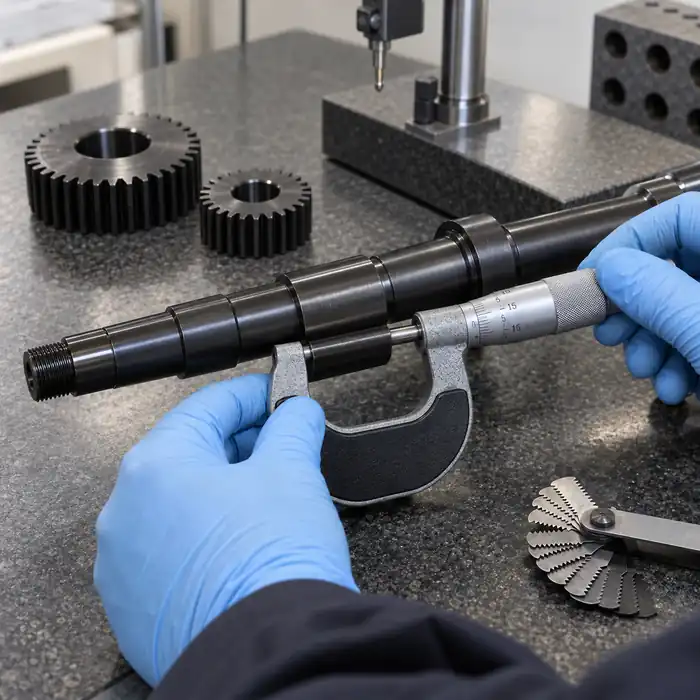
Precision surface finishing

Black Oxide Coating Services for CNC Parts

Weldo provides controlled black oxide coating for CNC-machined steel, stainless steel and other compatible metal parts.

Minimal buildup

Supports close fits and functional threads.

Sealer choices

Oil, wax or dry-to-touch options.

Controlled process

Hot and stainless-grade routes.

Final inspection

Appearance and critical dimensions checked.
Upload Drawing for Quote
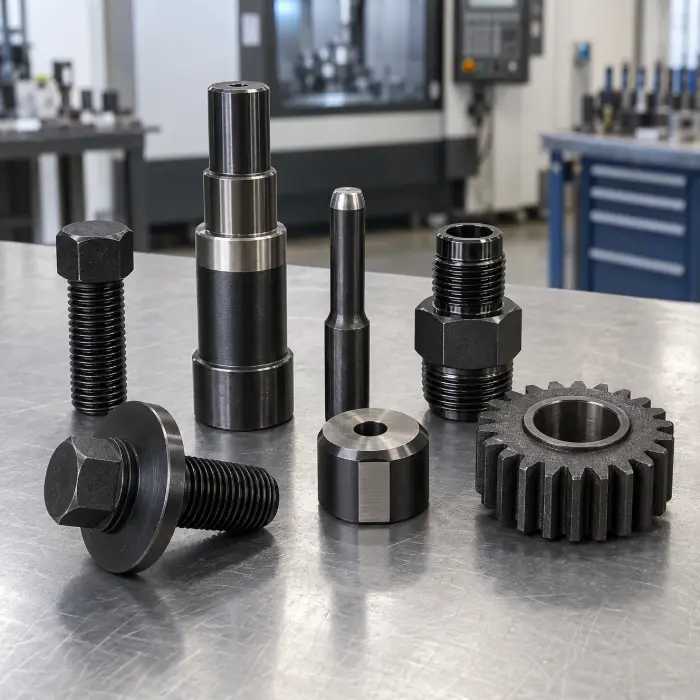
Black oxide coated CNC metal parts

Process selection

Which Black Oxide Process Is Right?

We select the process according to material grade, heat-treatment condition and drawing specification.

Hot Black Oxide

About 135–150°C for steel, tool steel and compatible cast iron.

Mid-Temperature

About 90–120°C for approved industrial applications.

Rostfreier Stahl

Dedicated chemistry matched to the stainless grade.

Room-Temperature

Used for approved local color restoration and touch-up.

For process background and maintenance guidance, see our Black Oxide Guide.

Controlled workflow

How Is Black Oxide Applied?

Five controlled stages connect drawing requirements with a consistent finished part.

01 · ReviewVerify material, hardness, drawing and masking.
02 · CleanRemove oil, rust and heat-treatment scale.
03 · BlackenControl chemistry, temperature and time.
04 · SealRinse and apply oil, wax or dry film.
05 · InspectCheck appearance, dimensions and packaging.

Suitable materials

Black Oxide Compatible Materials

The material grade and surface condition determine the process, masking and sealing route.

Kohlenstoffstahl

Pins, sleeves, brackets and screws.

Legierter Stahl

Gears, shafts, bushings and high-strength fasteners.

Werkzeugstahl

Punches, dies and tool holders.

Gusseisen

Gears, pulleys and housings.

Rostfreier Stahl

Instrument parts, optical hardware and fasteners.

Powder-Metal Parts

Sintered gears, sprockets and bushings.

Black oxide parts in multiple ferrous materials

Aluminum normally uses black anodizing. Copper and brass require dedicated chemical blackening and should be specified separately.

Drawing requirements

Black Oxide Drawing Requirements

State the substrate, standard revision, process class, sealer, treatment area, masking area and inspection method.

StandardMain applicationWhat to specify
MIL-DTL-13924FBlack conversion coatings for ferrous metalsClass, preservative treatment and inspection
SAE AMS2485MEngineering and aerospace black oxideMaterial condition and acceptance
ISO 11408:1999Cast iron, carbon, low-alloy and stainless steelSubstrate, protection and testing
DIN 50938:2025-06Immersion black oxide on ferrous partsSubstrate and inspection
SAE AMS2489BColor restoration after oxide removalTouch-up area and visual acceptance

For hardened steel at 39 HRC or above, confirm the specified stress-relief and hydrogen-embrittlement relief requirements before production.

Appearance and sealing

Black Oxide Sealer Options

The original surface and selected sealer determine the final shade, gloss and storage protection.

Oil Seal

For gears, shafts, tools and lubricated parts.

Wax Seal

For a drier handling surface.

Dry-to-Touch Seal

When oil transfer must be limited.

Unsealed

When another coating or bonding step follows.
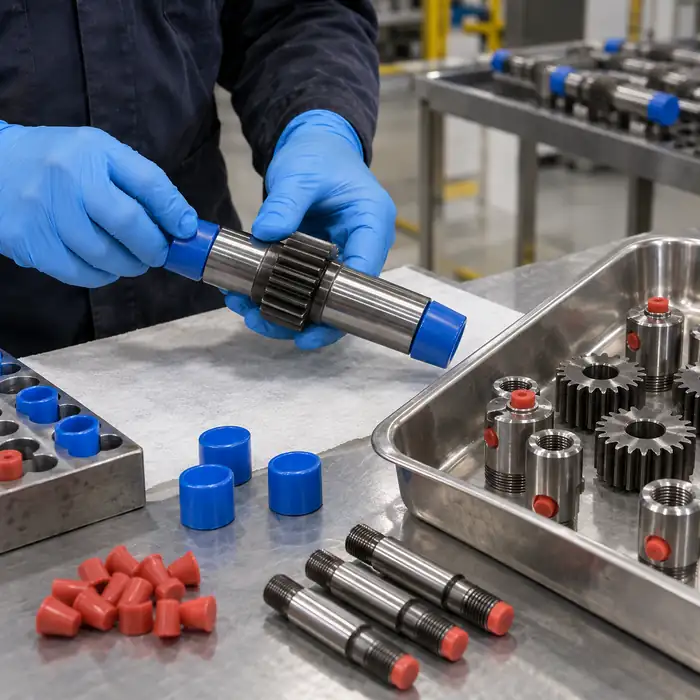
Masked parts prepared for black oxide coating

Leistung

Benefits of Black Oxide

Minimal dimensional change

Supports threads, bores, shafts and close fits.

Low-reflective appearance

Reduces glare on tools and internal components.

Preserved texture

Retains the original polished, ground or blasted texture.

Light corrosion protection

Sealing supports storage and controlled indoor use.

Lubricant retention

Oiled surfaces retain lubricant on sliding contacts.

Base properties preserved

Strength and hardness remain controlled by the substrate.

Finish comparison

Black Oxide vs. Black Zinc

Choose black oxide for minimal buildup and low glare. Choose black zinc for stronger sacrificial corrosion protection.

Key differenceSchwarzes OxidBlack zinc
FormationChemical conversion of the ferrous surfaceElectrodeposited zinc with black passivation
Dimensional buildupNegligible in normal processingMeasurable thickness as specified
KorrosionsschutzLight duty with suitable sealingHigher sacrificial protection
Typische BauteileTools, gears, shafts and fixturesExposed fasteners and brackets

Masking and fit

What Should Be Masked?

Masking protects surfaces where oxide or sealer could affect the next operation.

Functional areas

Threads, precision bores, sealing faces and electrical contacts.

Process boundaries

Bonding, welding, vacuum and customer-specified bare areas.

Acceptance check

Black Oxide Defects and Inspection

Weldo checks coverage, appearance, sealing, cleanliness and critical dimensions before shipment.

FehlerInspection focus
Uneven colorMaterial, cleaning, bath and surface texture
Rust stainsRinsing, sealing and packaging
Bare areasOil, scale, activation and rack contact
Smut or residueReaction control and rinsing
Inspection of black oxide coated precision parts

Custom parts

Common Black Oxide Parts

Black oxide suits precision ferrous-metal parts that need a dark finish with minimal buildup.

Machinery & Automation

Locating pins, guide shafts, couplings and fixtures.

Automotive & Transmission

Gears, splined shafts, bushings and washers.

Tooling & Molds

Punches, dies, holders and fixture components.

Optical & Instruments

Lens mounts, adjustment rings and internal supports.

Fasteners & Hardware

Bolts, nuts, screws, washers and retaining rings.

Industrielle Ausrüstung

Brackets, control parts and internal mechanisms.

Frequently asked questions

Black Oxide FAQs

Which black oxide standard should be specified on a drawing?

Specify the standard and revision together with the substrate, process class, sealer, treated area and inspection requirements.

Can Weldo mask threads and precision bores?

Yes. Threads, bores, sealing faces, electrical contacts and other functional areas can be masked according to the drawing.

Which sealer should be used?

Oil suits lubricated parts, wax provides a drier handling surface, and dry-to-touch sealer limits oil transfer.

How are black oxide parts inspected?

Weldo checks coverage, color, sealing, cleanliness and critical dimensions. Reports and additional testing are available when specified.

Can black oxide be combined with CNC machining?

Yes. CNC machining, masking, black oxide processing, cleaning and final inspection can be coordinated in one production route.

Welche Angaben werden für ein Angebot benötigt?

Send the drawing, material grade, quantity, finish requirement, critical dimensions, masking areas and delivery target.

Senden Sie Ihre Zeichnung

Get a Black Oxide Quote

Weldo will review the material, masking, process specification, inspection scope and delivery schedule.

Laden Sie Ihre Zeichnung hoch