Integrated Turning + Milling
Turn-Mill Compound Machining
Produce complex rotary parts with turning, milling, drilling and threading in a coordinated setup. Weldo supports prototypes and repeat production in metals and engineering plastics.
Prozessübersicht
What Turn-Mill Machining Combines
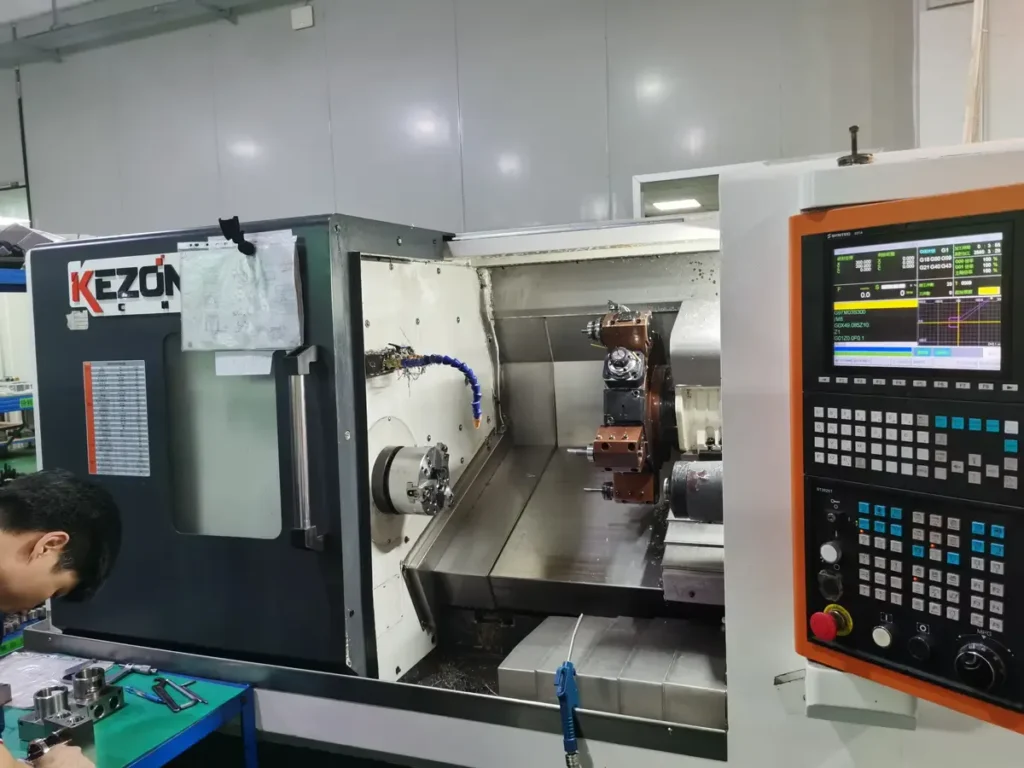
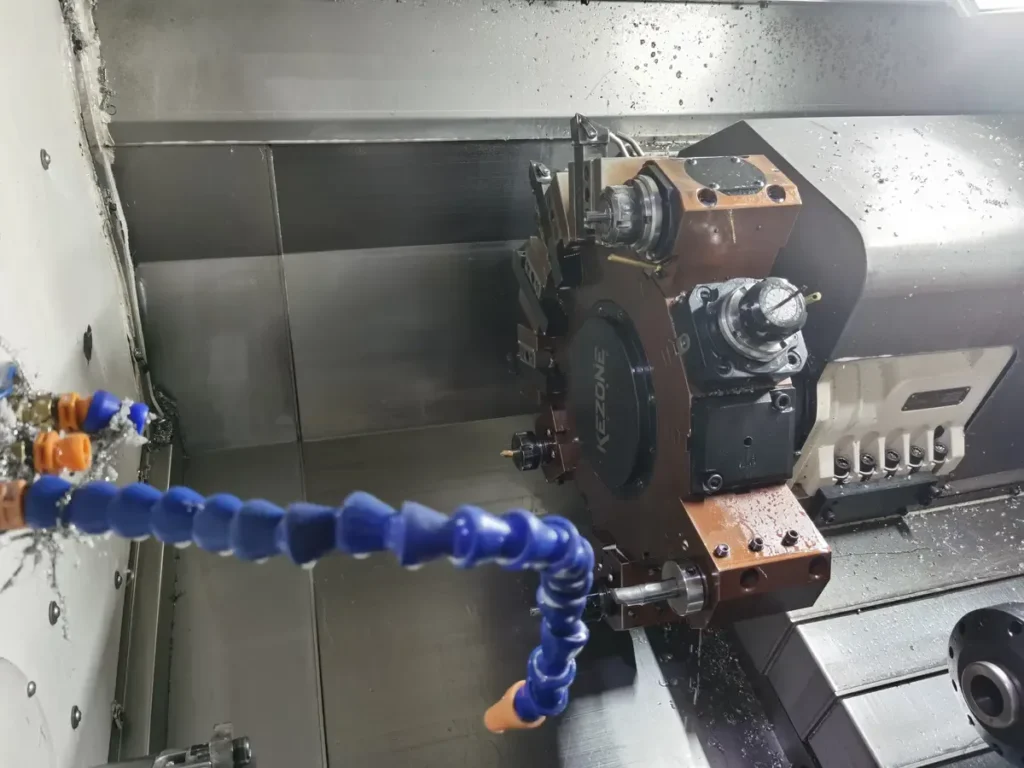
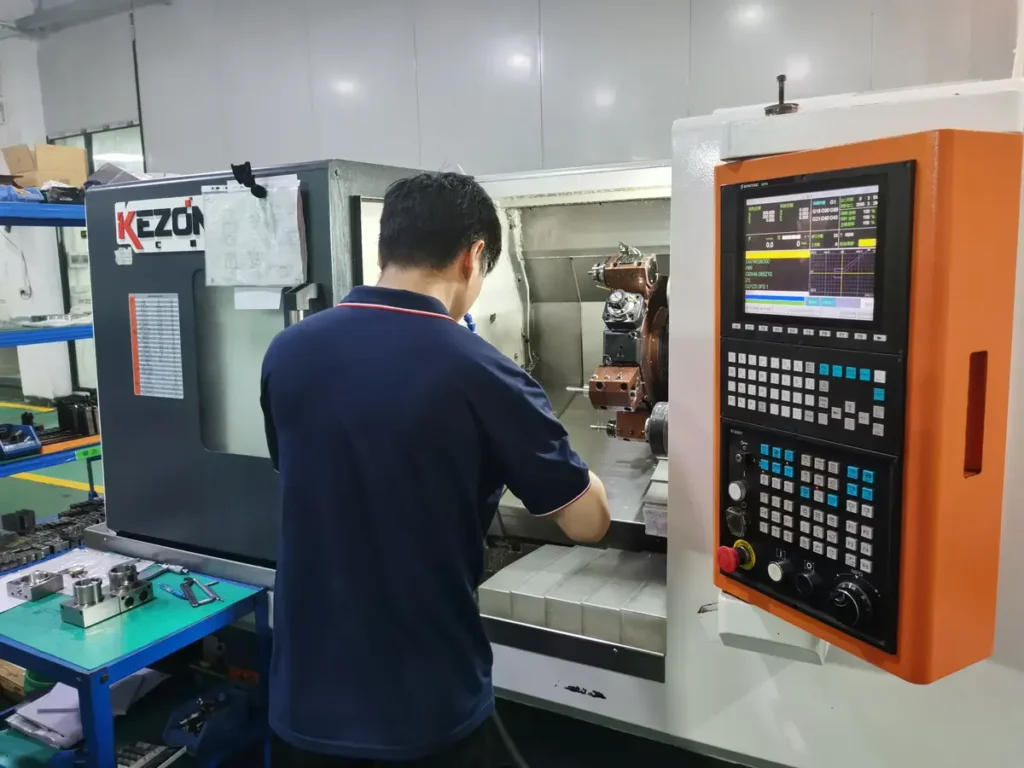
Turn-mill Compound machining coordinates lathe operations with driven-tool machining. It is useful when a rotary part also needs flats, slots, cross holes, threads or other milled features.
Mixed Features, Fewer Transfers
The process can reduce movement between separate machines. This helps preserve relationships between features and simplifies work-in-process control.
Projects may also combine CNC-Drehdienstleistungen mit CNC-Fräsdienstleistungen when separate operations are more practical.


Part Selection
When One Setup Makes Sense
Turn-mill machining delivers the most value when rotational and milled features share critical datums or would otherwise require several transfers.
Parts With Combined Features
Why Buyers Choose Turn-Mill
Machining Scope
Turn-Mill Machining Capabilities
Our engineering team selects the route from the part geometry, material, tolerance, batch size and inspection requirements.
Outside and Inside Turning
Diameters, faces, shoulders, tapers, grooves and internal bores for rotational features.
Milled Features
Flats, keyways, pockets, slots and local profiles added to turned components.
Axial and Radial Holes
Drilled, bored, reamed or tapped features positioned from the relevant part datums.
Threads and Grooves
Internal or external threads, reliefs and grooves specified by the engineering drawing.
Multi-Face Features
Repeated or indexed features around the component when machine access allows.
Sekundäre Operationen
Deburring, cleaning, inspection and approved finishing are coordinated after machining.
Auswahl des Materials
Materials for Turn-Mill Custom Parts
Material behavior affects tool choice, heat control, burr formation and dimensional stability. Final availability is confirmed during quotation.
Aluminium
6061, 2024 and 7075 are common choices for lightweight housings, shafts and structural components.
Aluminum CNC machiningRostfreier Stahl
303, 304, 316 and 17-4 PH cover machinability, corrosion resistance and higher-strength requirements.
CNC-Bearbeitung von EdelstahlKohlenstoffstahl und legierter Stahl
1045, 4140 and 8620 support shafts, couplings, gears and wear-related mechanical parts.
Steel CNC machiningBrass and Bronze
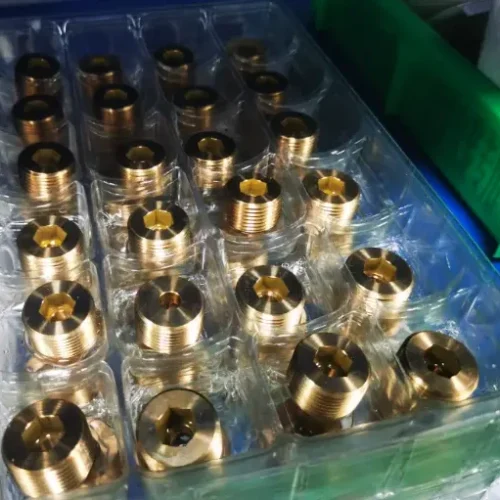
C360 brass and selected bronze grades suit fittings, bushings and low-friction components.
CNC-Bearbeitung von MessingTitan
Grade 2 and Grade 5 are reviewed for strength, corrosion resistance and heat-sensitive machining behavior.
CNC-Bearbeitung von TitanTechnische Kunststoffe
POM, nylon, PTFE and PEEK require material-specific control of heat, clamping and deformation.
View CNC machining materialsZeichnungsprüfung
DFM Guidance for Turn-Mill Parts
Clear drawings help engineering choose a stable datum strategy, practical tool access and an inspection method that matches the functional requirement.
Existing Project Examples
Turn-Mill Part Examples
These examples show how material behavior and feature access influence the machining route.
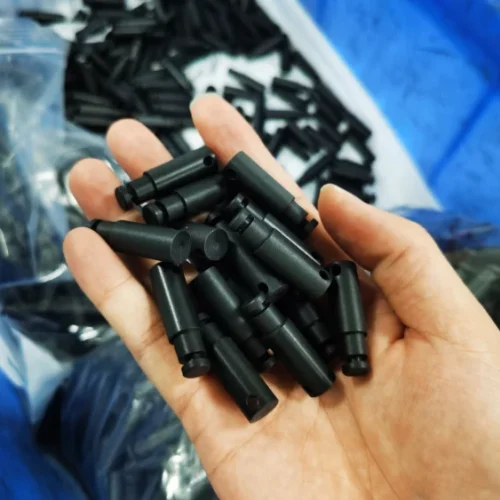
Multi-Diameter Component
The machining plan focuses on burr control, edge integrity and stable clamping while combining rotational and drilled features.
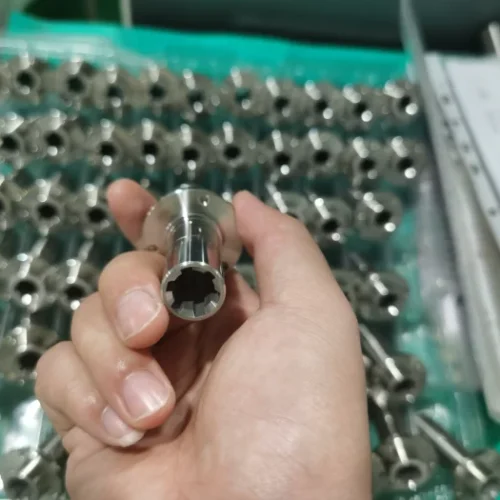
Splined Coupling
Tool access, work-hardening control and the relationship between the bore, spline and outside diameter guide the process.
Threaded Spline Bushing
Sharp tooling, controlled feeds and in-process inspection help manage burrs and low-rigidity internal features.
Manufacturing Proof
Quality Control From Setup to Shipment
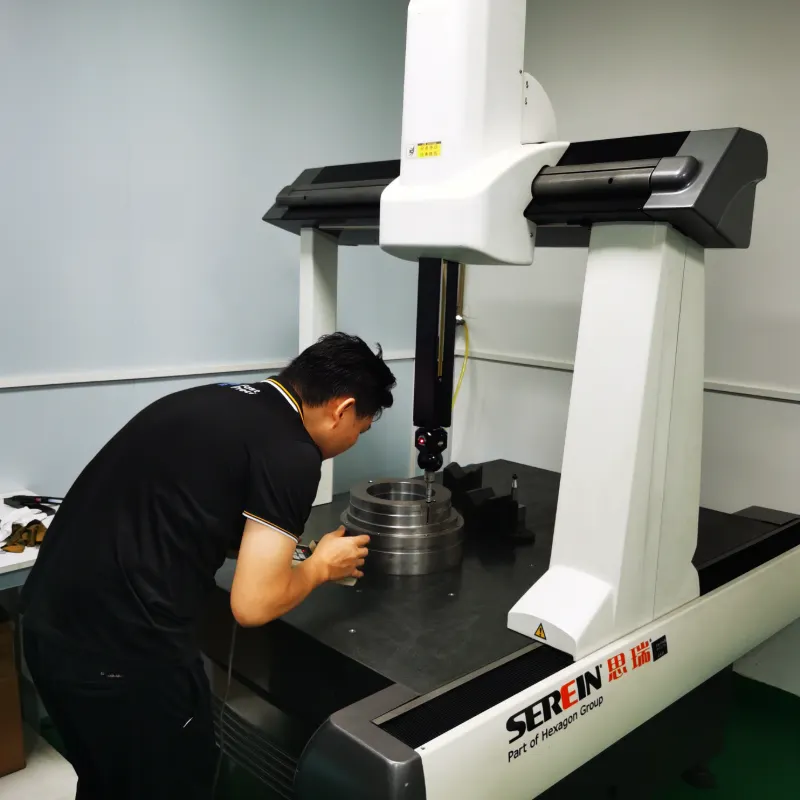
Process checks and final inspection are selected from the drawing requirements. Available resources include CMM, height measurement, vision inspection, hardness testing, micrometers, calipers and gauges.


Anwendungen
Where Turn-Mill Parts Are Used
Turn-mill machining supports compact mechanical parts that combine rotational geometry with precise secondary features.
Luft- und Raumfahrt
Fittings, sleeves, shafts and lightweight components with multiple related features.
Medizinische Ausrüstung
Instrument components, connectors and small precision parts with controlled documentation.
Automobilindustrie
Drivetrain, fluid-system and test-system components for prototype or repeat production.
Industrielle Ausrüstung
Couplings, valve parts, bushings and motion-system components built from customer drawings.
Fragen zum Projekt
Turn-Mill Machining FAQ
Short answers to quotation and production questions not covered in the main service sections.
Do I need both a 3D model and a 2D drawing?
A 3D model defines geometry, while a 2D drawing communicates tolerances, datums, threads, finishes and inspection notes. Supplying both gives the clearest RFQ package.
How are mixed turned and milled features inspected?
The inspection method follows the drawing and datum scheme. CMM, height, vision, micrometer, caliper or gauge inspection may be used according to feature type.
Can heat treatment or surface finishing be included?
Yes. Approved heat treatment and surface finishing can be coordinated after reviewing the material, protected dimensions, tolerance impact and cosmetic requirements.
What usually drives turn-mill machining cost?
Material, stock size, feature access, tooling, cycle time, tolerance, inspection, quantity and finishing all affect price. A complete drawing package improves quotation accuracy.
When are separate turning and milling operations more economical?
Separate operations may suit simple parts, large components, low-access features or jobs that match available equipment better. Weldo selects the route after DFM review.
Beginnen Sie mit Ihrer Zeichnung
Review Your Turn-Mill Part With Weldo
Send the model, drawing, material, quantity and inspection requirements. Our engineering team will review the process route before quotation.
Laden Sie Ihre Zeichnungen hoch