
CNC MACHINING + METAL FINISHING
Vernickeln
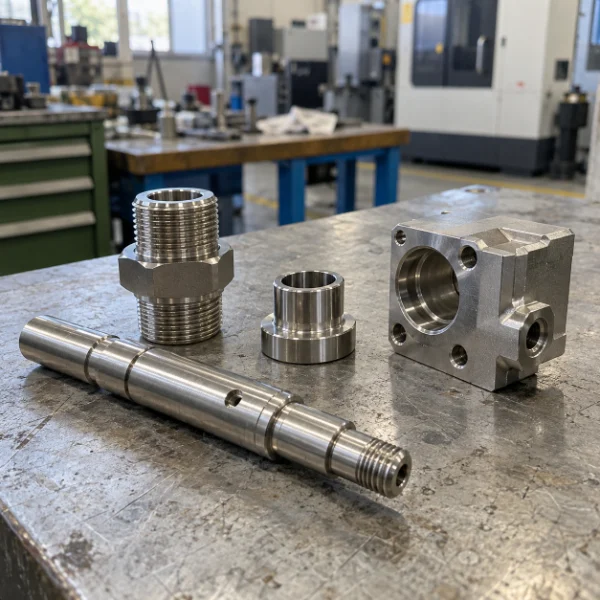
Weldo coordinates machining, electrolytic nickel plating and final inspection, with coating thickness and finished dimensions planned together.
Laden Sie Ihre Zeichnung hochPROJECT SCOPE
Nickel Plating Capabilities
Specify the finished part, not just the coating. We confirm the route and measurable requirements during drawing review.
| Artikel | What to specify |
|---|---|
| Base materials | Carbon and alloy steel, copper alloys; aluminum and stainless steel after pretreatment review |
| Deposit type | Bright, engineering or low-stress nickel, selected for appearance, wear or dimensional requirements |
| Coating thickness | Drawing-defined target, tolerance and measurement points; feasibility depends on geometry |
| Selective plating | Mask threads, bores, contact faces and drawing-defined no-plate zones |
| Acceptance | Appearance, thickness, adhesion and post-plate dimensions; other tests as specified |
| Quantity and delivery | Prototypes through production; shipment date confirmed with the quotation |
PROCESS OVERVIEW
How Does Electrolytic Nickel Plating Work?
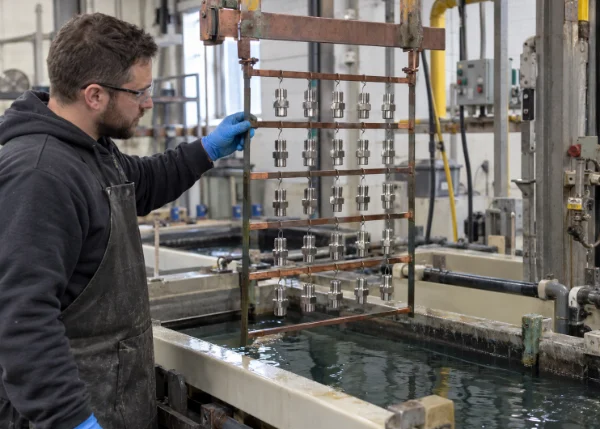
Electric current deposits nickel onto a conductive part. Cleaning and activation establish adhesion; the nickel bath builds the specified coating, followed by rinsing and inspection.
Bright nickel
A reflective finish for visible housings, fittings and hardware. Appearance is approved against a sample when color consistency matters.
Engineering nickel
Specified for corrosion protection, wear surfaces or controlled dimensional build-up; ASTM B689 is a relevant engineering-coating standard.
Low-stress nickel
A sulfamate-based route for components where deposit stress matters. SAE AMS2424 applies when the drawing requires that specification.

MATERIALS & PARTS
Which CNC Parts Can Be Nickel Plated?
The substrate determines pretreatment; geometry determines how evenly current reaches each surface.
Steel parts
Shafts, rollers, valve bodies and brackets receive cleaning and activation before plating. High-strength steel also needs a hydrogen-embrittlement review.
Copper and brass parts
Connectors, terminals and fittings require clean, oxide-free surfaces. Specify contact, soldering or appearance requirements separately.
Aluminum parts
Housings and machined enclosures need alloy-specific preparation—commonly zincate and an appropriate strike—to secure adhesion.
Stainless steel requires a suitable activation or strike sequence. Castings with pores and deep blind holes require an early plating-feasibility review.
FUNCTIONAL BENEFITS
Why Choose Nickel Plating?
Match the deposit type and thickness to the part’s actual duty; the coating is not a one-size-fits-all performance guarantee.
Corrosion barrier
A continuous deposit separates the substrate from moisture. Thickness and porosity determine protection on steel parts.
Wear surfaces
Engineering deposits add a wear-resistant working surface to suitable shafts and guides. Load and lubrication still govern service life.
Metallic appearance
Bright nickel gives visible hardware a reflective finish; engineering nickel prioritizes function over gloss.
Dimensional build-up
Selected deposits rebuild an undersized or worn surface, which can then be ground or lapped to final size.
Functional underlayer
Nickel can serve beneath another compatible metal finish on connectors and contacts. Electrical and soldering requirements must be specified.
Selective coverage
Masking confines plating to required areas, protecting threads, sealing faces and other critical features.
CRITICAL ENGINEERING DETAIL
Control Thickness, Fits and Masking
Electroplating deposits more nickel on exposed edges and less inside recesses. The drawing should identify where thickness must be measured.
Define final dimensions
Mark pre-plate allowances and post-plate acceptance dimensions for shafts, bores and mating features.
Plan the rack
Part orientation and electrical contact points help control coverage and prevent marks on critical faces.
Mask no-plate areas
Plugs, caps, tape or stop-off lacquer protect threads, seal faces and electrical contacts.
Finish critical fits
Where needed, grinding or lapping after plating brings a plated surface to its final size.

QUALITÄTSKONTROLLE
How Is Nickel Plating Quality Controlled?
Reliable plating starts with a clean, activated substrate and ends with measurements at the locations that control fit and function.
Prepare for adhesion
Check the base alloy and surface condition; remove oil and oxide. Aluminum uses an alloy-appropriate zincate and strike sequence.
Control the deposit
Monitor bath chemistry, temperature and current density. Set rack position and plating time for the required coverage and thickness.
Verify the finished part
Check appearance, critical dimensions and thickness at drawing points; XRF or coulometric measurement is selected to suit the layer stack. Run specified tests, retain batch records and protect the finish in packing.
Relevant specifications
ASTM B689 covers engineering electroplated nickel; SAE AMS2424 covers low-stress electrodeposited nickel. ASTM B850 guides post-coating treatment of susceptible steels. For legacy QQ-N-290 drawings, confirm the revision and disposition against SAE AMS-QQ-N-290 before production. Specify test methods and reporting in the order.
INDUSTRIES & PARTS
Where Are Nickel-Plated Parts Used?
These examples show typical part families; coating suitability is confirmed against load, environment and the specified acceptance tests.
| Industrie | Why nickel plating is specified | Typische Bauteile |
|---|---|---|
| Aerospace & defense | Drawing-specified low-stress deposits with qualified process control | Fittings, actuator components, pins |
| Automobilindustrie | Corrosion protection and functional surfaces | Shafts, fasteners, fittings |
| Electronics & electrical | A conductive barrier or underlayer for a specified contact finish | Connectors, terminals, busbars |
| Hydraulics & pneumatics | Protection of selected fluid-handling and wear surfaces | Valve bodies, sleeves, fittings |
| Industrielle Maschinen | Wear-surface protection or dimensional restoration | Shafts, rollers, guides |
| Energietechnische Ausrüstung | Specified barrier protection matched to the service environment | Couplings, flanges, tooling parts |
PURCHASING GUIDE
Cost and Lead Time
Price reflects plated area, thickness, pretreatment, masking, inspection and batch size. Deep recesses and tight post-plate fits add setup or finishing work.
For a reliable quotation, send the 2D drawing, material, quantity, plated and masked areas, thickness locations and acceptance requirements. The quoted schedule should include sample approval and final inspection.
What buyers should settle first
- Choose the functional coating requirement.
- Specify final dimensions after plating.
- Mark no-plate areas and permitted contact points.
- Define inspection and documentation.
COMMON QUESTIONS
Nickel Plating FAQ
Does nickel plating prevent rust?
Yes, an intact nickel coating limits moisture reaching steel. Pinholes or scratches expose the steel, so thickness and porosity must match the environment.
How thick should nickel plating be?
Specify the thickness at functional measurement points on the drawing. The target depends on corrosion exposure, wear, geometry and any final grinding allowance.
Can aluminum be nickel plated?
Yes. Aluminum needs oxide removal and a qualified intermediate treatment, such as zincate followed by a suitable strike, to achieve adhesion.
Is nickel plating RoHS compliant?
Nickel is not one of the substances restricted by RoHS. Compliance of the finished part still depends on all materials, chemicals and the required declaration.
Can nickel-plated parts be painted?
Yes. Clean and prepare the nickel surface, then use a compatible primer or coating system to establish adhesion.
How should nickel-plated parts be cleaned?
Use mild detergent, water and a soft cloth, then dry the part. Avoid abrasive pads and aggressive chemicals that damage the finish.
READY TO QUOTE?
Machining, Plating and Inspection in One Project
Send your drawing and requirements. Weldo will review the coating route, finished dimensions and delivery schedule.