
CUSTOM METAL FINISHING
Custom Electroplating Services for CNC Parts
We coordinate zinc, nickel, copper, tin and other metal coatings for CNC-machined parts, including substrate preparation, coating thickness, masking and dimensional inspection.
Upload a Drawing for a Quote →PLATING OPTIONS
Common Electroplating Types and Applications
Compare finish appearances and select the coating type, process and acceptance criteria according to the part’s function.
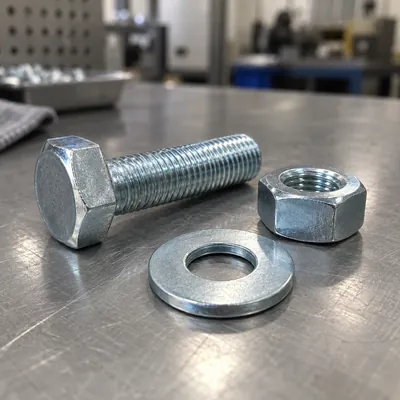
Placage de zinc
Provides corrosion protection for steel fasteners, brackets and connectors.
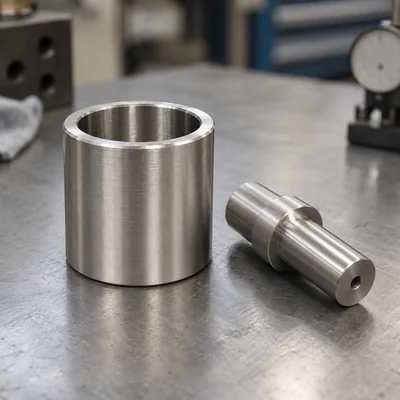
Engineering Nickel
Provides wear or corrosion resistance and dimensional build-up on shafts and sleeves.
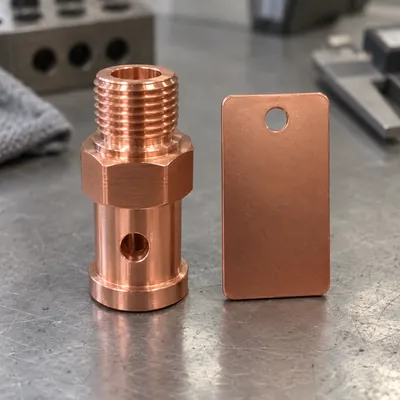
Copper Plating
Used for conductive surfaces and solderable underlayers.
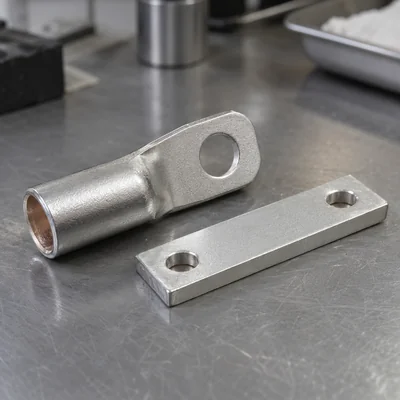
Étainnage
Used on connectors, terminals and busbars.
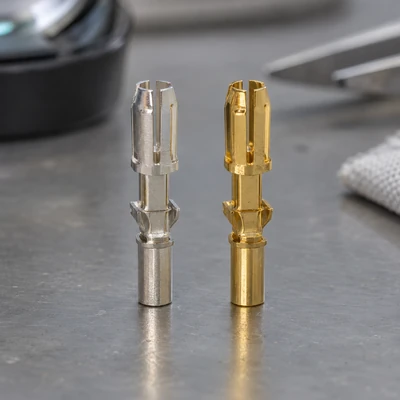
Silver and Gold Plating
Selected for precision contacts and low contact resistance.
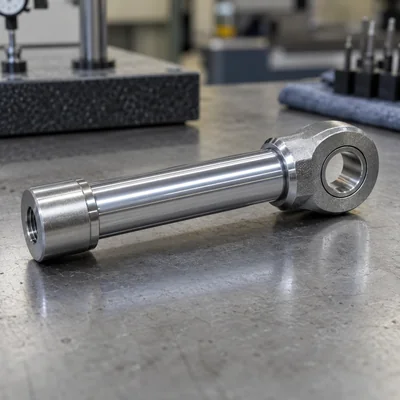
Chromium Plating
Used for decorative finishes and hard wear surfaces.
Fasteners, brackets and terminals
Connectors and busbars
Shafts, valves and piston rods
Exposed hardware and controls
ASTM B633 covers zinc coatings. ASTM B689 covers engineering nickel. ASTM B456 covers copper-nickel-chromium and nickel-chromium coatings.
SUBSTRATE COMPATIBILITY
Which Materials Can Be Electroplated?
The substrate determines the pretreatment route. Nonconductive plastics require a conductive metallic layer before electrolytic deposition.
Carbon and Alloy Steels
Select coatings for corrosion, wear or dimensional requirements. High-strength steels require hydrogen-embrittlement review.
Acier inoxydable
Clean and activate the surface before plating to achieve reliable adhesion.
Cuivre et alliages de cuivre
Select coatings for conductivity, solderability, wear or appearance.
Alliages d'aluminium
Use dedicated cleaning, conditioning and zincate or strike treatment.
Alliages de zinc
Match pretreatment to substrate stability, geometry and adhesion requirements.
Plastiques
Apply a conductive metallic base layer before electroplating.
Aluminum pretreatment may use zincate or strike routes. ASTM B253 provides related guidance.
THICKNESS & FIT
How Does Coating Thickness Affect Dimensions?
Coating thickness changes fit dimensions. Specify finished dimensions and measurement locations on the drawing or technical agreement.
Specify the Finished Condition
State the required dimensions after plating and identify the functional fit surfaces so coating allowance and inspection points can be planned.
Which Areas Should Be Masked?
- Fitted bores, bearing seats and precision threads
- Grounding surfaces and electrical contacts
- Sealing faces, locating datums and no-plate areas
Mark coating boundaries and permitted contact points on the drawing.
PROCESS & INSPECTION
Electroplating Process and Quality Control
The process route and inspection plan are selected according to the substrate, coating specification and part function.
Analyse du dessin
Confirm material, coating, thickness, critical dimensions and acceptance criteria.
Cleaning and Pretreatment
Remove oil and oxides, then activate or apply a strike layer.
Racking and Masking
Define electrical contact points and protect no-plate areas.
Electrolytic Deposition
Deposit the specified metal coating and complete post-treatment.
Coating Inspection
Check appearance, thickness, adhesion and specified properties.
Dimensions and Records
Verify finished dimensions and provide inspection records.
PROJECT SUPPORT
Align the Plating Plan with Your Part Requirements
Weldo can review drawings for CNC machining, grinding, wire EDM, cleaning, finishing coordination and dimensional inspection.
Upload a Drawing for a Quote →Include material grade, quantity, coating type, thickness, no-plate areas and acceptance requirements.
FAQ
Foire aux questions
What is an electroplated coating?
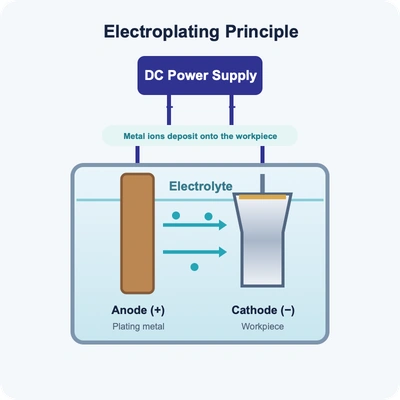
An electroplated coating is a metal layer deposited on a conductive workpiece by electrolysis.
How long does electroplating last?
Service life depends on coating type, thickness, pretreatment, sealing, corrosion exposure and wear conditions.
Is electroplating expensive?
Cost depends on plating metal, surface area, target thickness, pretreatment, masking, inspection and quantity.
What are the common electroplating methods?
Rack, barrel and brush plating are selected according to geometry, quantity and plated area.
Is electroplating safe?
Controlled production manages chemical handling, wastewater treatment and worker-protection procedures.
What is the difference between electroplated and plated?
Electroplated specifically means deposited by electrolysis. Plated is a broader term for a coated surface.
READY TO QUOTE?
Plan from Drawing Review Through Post-Plating Inspection
Submit your drawing and coating requirements for a project review.