
For custom plastic parts, the ABS vs PETG decision starts with the part’s engineering requirements. ABS is better suited to parts requiring heat resistance, structural stability, threaded inserts, and painted finishes; PETG is better suited to parts requiring transparency, toughness, moisture resistance, and impact resistance.
For CNC machining projects, material selection should be based on operating temperature, load type, assembly method, critical tolerances, contact media, and appearance requirements. Once these conditions are defined, material selection, process planning, cost, and lead time can be managed together.

ABS vs PETG: Which Material Should You Choose?
Choose ABS: Equipment housings, mounting brackets, locating blocks, electronic inner frames, insert holes, and visible parts that require painting or screen printing generally favor ABS.
Choose PETG: Transparent guards, viewing windows, protective panels, external optoelectronic structures, light-duty fixtures, and protective parts used in humid environments generally favor PETG.
For parts requiring long-term outdoor weatherability, high-temperature and high-load performance, low-friction sliding, strict dimensional stability, or specific regulatory requirements, evaluate ASA, PC, POM, nylon, and the appropriate modified engineering plastics as well.
What Operating Conditions Should Be Defined Before Choosing ABS or PETG?
Material selection should begin with the part’s actual service conditions rather than a comparison of one strength value. During design or quotation, buyers should first define temperature, load, assembly, and environmental conditions.
Operating temperature and thermal cycling: Continuous temperature, peak temperature, distance from heat sources, and heat buildup in enclosed spaces establish the required heat resistance. Equipment-internal brackets, control boxes, and structures close to heat sources are generally better candidates for ABS; transparent guards and ambient-temperature external equipment components are generally better candidates for PETG.
Load type and service life: Static loading, repeated disassembly, vibration, impact, and long-term preload place different demands on a material. Structures that must retain hole positions, support metal inserts, or withstand screw preload are well suited to ABS evaluation; protective structures that absorb impact or local bending are well suited to PETG evaluation.
Dimensions and assembly requirements: Locating holes, mating surfaces, sealing surfaces, insert holes, and installation datums should each have defined dimensions and inspection methods. ABS is suitable for parts centered on assembly features; PETG can also machine critical features when wall thickness, workholding, and transparent-surface requirements are included in process planning.
Appearance and service environment: Transparency, surface gloss, painting, humidity, cleaning agents, sunlight, and chemical media collectively influence material selection. Transparent viewing structures favor PETG; equipment housings requiring paint, texture, markings, or opaque finishes benefit from ABS’s more established machining and finishing routes.
What Are ABS and PETG?
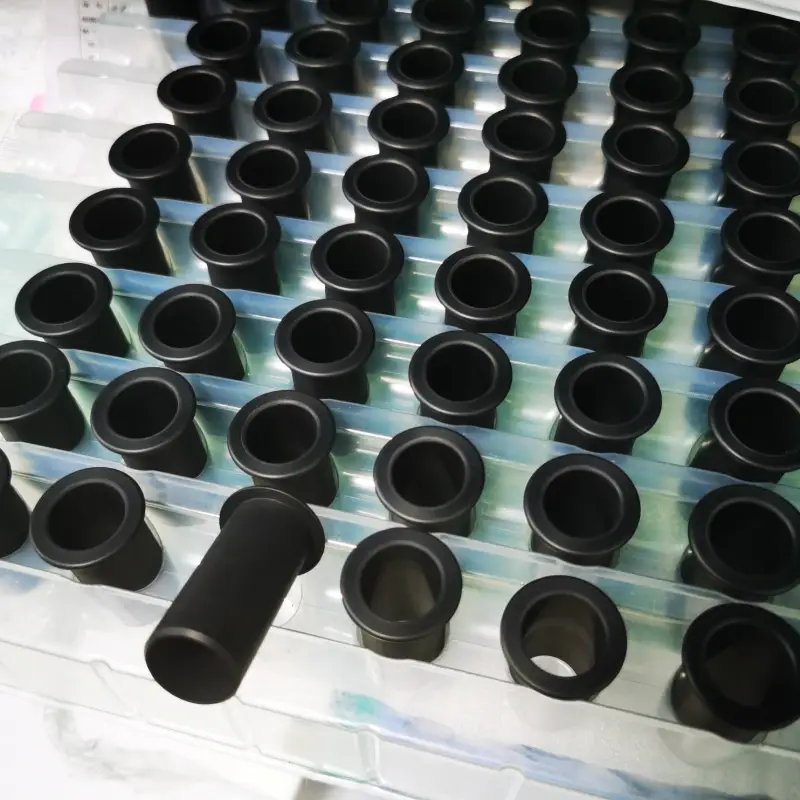
ABS: An Engineering Plastic for Structural, Housing, and Assembly Parts
ABS consists of acrylonitrile, butadiene, and styrene. Acrylonitrile provides a degree of chemical resistance and surface hardness, butadiene improves toughness and impact resistance, and styrene contributes rigidity, processing performance, and appearance quality.
ABS resin can be supplied as sheet, rod, or block for CNCフライス加工, drilling, turning, and profile machining; it is also used in injection molding and FDM 3D printing. Equipment housings, locating blocks, control boxes, electronic inner frames, fixtures, and assemblies with metal inserts are typical ABS applications.
PETG: A Copolyester for Transparent, Protective, and Moisture-Resistant Parts
PETG is a glycol-modified polyester copolymer. This structure helps the material retain a transparent or translucent appearance while providing good toughness, moisture resistance, and forming versatility.
PETG can be supplied as transparent, frosted, colored, or diffusing sheet, and may also be available as rod, block, and printing filament to suit project needs. Transparent viewing covers, equipment guards, external optoelectronic structures, display parts, light-duty fixtures, and external laboratory-equipment components are common PETG part types.
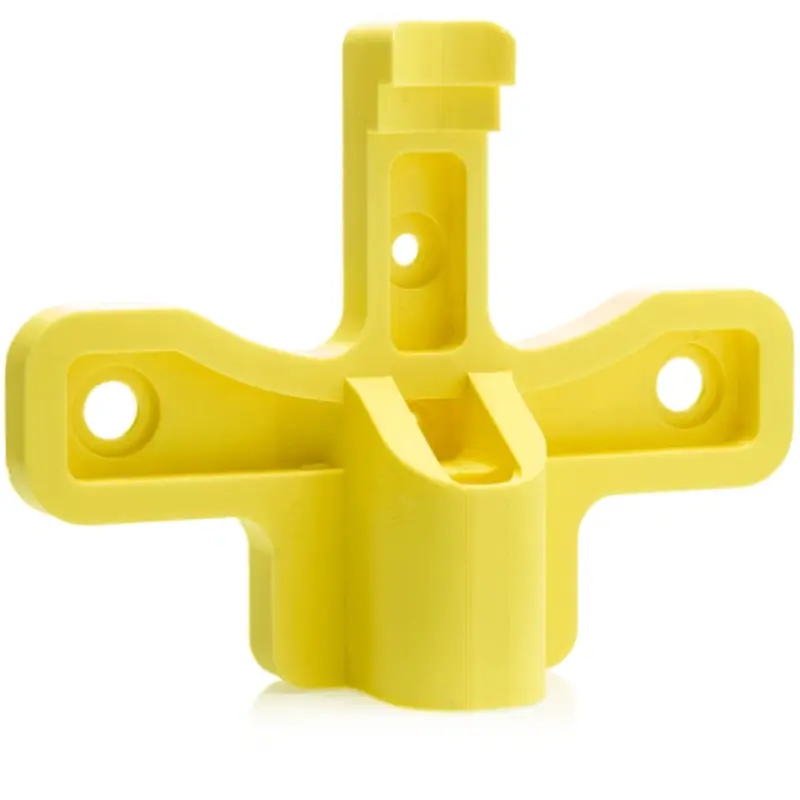
How Should CNC Machining, 3D Printing, and Injection Molding Be Used?
CNC加工 is suitable for precision holes, assembly planes, mating surfaces, locating slots, insert holes, and low-volume functional parts. Solid sheet, rod, or block stock provides a stable foundation for critical dimensions.
3Dプリンティング is suitable for rapid validation of form, assembly space, and structural concepts. 射出成形 is suitable for medium- and high-volume production after the design is stable, where it can support lower unit costs and stronger batch consistency.
Can ABS and PETG Be Modified?
Both ABS and PETG can achieve flame retardancy, antistatic behavior, weatherability, reinforcement, light diffusion, and specific appearance effects through blends, fillers, and specialized functional formulations. Modification changes part performance and also affects tooling, surface quality, transparency, material cost, and supply lead time in CNC machining.
Common ABS Modifications and Their Functions
Flame-retardant ABS is suitable for electronic housings, control boxes, cable-retention features, and equipment-internal structures. Project requirements should confirm flame performance together with the material grade, part wall thickness, and target standard.
Antistatic or conductive ABS can be used for PCB assembly fixtures, electronic component trays, and peripheral parts for automated equipment. These functional grades alter surface resistivity, color, and appearance, with dark colors being common.
UV-stabilized and weather-resistant ABS is suitable for sunlight exposure, thermal cycling, and outdoor equipment. Glass-fiber-reinforced ABS raises stiffness and dimensional stability for semi-structural brackets and load-bearing housings; machining should also control tool wear, edge burrs, and exposed fibers.
Common PETG Modifications and Their Functions
UV-stabilized PETG can be used for equipment panels, transparent viewing covers, and outdoor protective structures. Flame-retardant PETG-based copolyesters are suitable for consumer electronics and external electrical equipment structures, with final performance defined by the specified grade and applicable thickness.
Antistatic, conductive, light-diffusing, or custom-colored PETG can be used for static-sensitive part handling, display-equipment protection layers, and lighting diffusers. Transparent visible areas generally benefit from unfilled clear grades; conductive additives, colorants, and reinforcing fillers affect light transmission and surface condition.
What Should Be Confirmed When Purchasing Modified Materials?
The RFQ should identify the material manufacturer, complete grade, color, stock form, functional target, and documentation requirements. Flame-retardancy, ESD, UV stability, transparency, light diffusion, and reinforcement requirements should be defined together with actual thickness, test standards, and acceptable appearance conditions.
What Are the Key Mechanical Properties of ABS and PETG?
The following table provides typical engineering reference ranges for common unfilled ABS and PETG grades. Actual properties vary with grade, stock form, color, fillers, and test method; final acceptance should follow the technical data sheet of the specified material.
| プロパティ | ABS | PETG | Effect on CNC Parts |
|---|---|---|---|
| 密度 | 1.03–1.07 g/cm³ | 1.23–1.27 g/cm³ | Both are suitable for lightweight non-metal structures. |
| 引張強さ | 40-50 MPa | 45–57 MPa | Influences the load capacity of tensile brackets, housings, and connection areas. |
| 曲げ弾性率 | 1.8–2.5 GPa | 1.9–2.6 GPa | Influences flatness retention, housing stiffness, and locating stability. |
| 破断伸び | 10-50% | 50–150% | PETG is more suitable for local deformation and impact buffering. |
| Heat deflection temperature at 0.45 MPa | 75–95°C | 65–70°C | ABS offers a higher conventional heat-resistance margin. |
| Glass transition temperature | 95–110°C | 75–85°C | PETG enters a range of reduced stiffness at a lower temperature. |
| Electrical behavior | Unfilled grades are insulating | Unfilled grades are insulating | ESD, conductive, and flame-retardant structures require specified functional grades. |
ABS and PETG have overlapping tensile and flexural data, so material selection should focus on part function. ABS offers advantages in heat-resistance margin, insert installation, appearance finishing, and structural machining; PETG offers value in transparent appearance, toughness, moisture resistance, and protective structures.
A control box with locating holes, threaded inserts, and a painted finish is well suited to an ABS-based design. A transparent guard that must allow observation of internal movement, absorb occasional impact, or operate in a humid environment is well suited to a PETG-based design.
How Do ABS and PETG Compare in Thermal, Chemical, and Electrical Properties?
Thermal Properties: ABS Provides a Higher Heat-Resistance Margin
ABS has a higher heat deflection temperature and glass transition temperature than common PETG, making it suitable for equipment interiors, locations near heat sources, electronic housings, and assemblies exposed to higher continuous temperatures.
PETG is suitable for ambient to moderate-temperature conditions. Transparent PETG guards, viewing windows, and protective parts should be designed around environmental temperature, loading, and proximity to heat sources. High-heat copolyesters and modified PETG grades vary significantly, so project decisions should rely on the data for the specified grade.
Chemical Properties: Define the Material Plan Around the Actual Medium
PETG performs well with water, humidity, and common water-based cleaning environments, making it suitable for guards and external equipment components in humid conditions. ABS is suitable for standard indoor industrial environments, general cleaning conditions, and many equipment structures.
Projects involving fuels, ketones, esters, aromatic hydrocarbons, strong acids, strong alkalis, high-temperature cleaning agents, or long-term immersion should establish a compatibility-validation plan based on medium type, concentration, temperature, contact duration, and part stress condition.
Electrical Properties: Both Can Serve in Insulating Structures
Unfilled ABS and PETG can both be used for electronic equipment housings, insulating brackets, cable-retention features, and nonconductive assembly fixtures.
Projects requiring ESD dissipation, conductivity, flame retardancy, comparative tracking performance, or specified electrical documentation should select the appropriate functional grade and include target surface resistivity, flame rating, applicable thickness, and inspection documentation in the RFQ.
How Do ABS and PETG Differ in CNC Machining?

Both ABS and PETG support CNC milling, drilling, profile cutting, slotting, and low-stress turning. ABS is more suited to structural parts, assembly holes, insert holes, and visible housings; PETG is more suited to transparent parts, protective parts, and tough structures, with process control focused on cutting heat, clamping force, and visible-surface protection.
ABS CNC Machining: Suitable for Structural Parts, Holes, and Insert Features
ABS can reliably support milling, drilling, slotting, profile machining, and insert-hole machining. Its material behavior helps maintain hole spacing, planes, locating surfaces, and medium-precision assembly features.
Thin-wall ABS housings and large flat parts benefit from even support, staged material removal, and appropriate toolpaths. Threaded inserts, snap fits, and bosses should be designed around wall thickness, installation depth, expected disassembly cycles, and tightening force.
PETG CNC Machining: Suitable for Transparent Parts and Tough Protective Structures
PETG supports milling, drilling, edge trimming, and low-stress turning, making it suitable for viewing covers, transparent panels, equipment guards, and light-duty functional structures. Sharp tools, stable feed, effective air cooling, and clear chip evacuation help maintain clean edges and transparent-surface quality.
Visible surfaces on transparent PETG should retain protective film, and drawings should define permitted tool marks, polishing scope, edge condition, and packaging requirements. Thin-wall parts benefit from broad support and low-stress clamping, while critical dimensions should be checked after the part returns to a stable condition.
What Are the Main Challenges in ABS CNC Machining, and How Are They Controlled?
Melted edges and burrs: ABS can develop melted edges and burrs where friction is high or chip evacuation is restricted. Sharp tooling, stable feed, suitable toolpaths, and effective chip evacuation help keep hole entrances and outer profiles clean.
Thin-wall vibration and clamping deformation: Thin-wall ABS housings benefit from soft jaws, support pads, vacuum workholding, or dedicated fixtures. Staged machining and balanced material removal help preserve flatness and assembly dimensions.
Visible-surface protection: Drawings should identify no-clamp zones for visible surfaces. Locating clamp contact on internal surfaces, assembly faces, or areas hidden after assembly helps reduce marks and improve appearance consistency.
Cleaning and assembly media: ABS parts benefit from cleaning, bonding, painting, and assembly materials that are compatible with the specified grade. First-article validation of the cleaning and finishing route supports consistent surface condition and long-term service performance.
What Are the Main Challenges in PETG CNC Machining, and How Are They Controlled?
Melted edges, stringing, and chip adhesion: PETG’s higher ductility benefits from sharp positive-rake tools, stable feed, and air-cooled chip evacuation. This combination helps reduce local softening while keeping holes and profile edges defined.
Whitening or haze on transparent surfaces: Visible transparent PETG surfaces benefit from retained protective film, finishing toolpaths, and low-stress clamping. Defining the visible area, viewing distance, lighting condition, and permitted tool marks before production creates a stable visual acceptance standard.
Thin-wall springback: Thin-wall PETG benefits from even support, short overhang, smaller individual cutting loads, and controlled clamping force. This approach helps retain profile, hole spacing, and assembly-plane stability.
Edge finishing: Drilled and profile-cut PETG edges benefit from low-stress deburring. Gentle finishing maintains transparent-edge quality while reducing the risk of surface scratching.
Which Surface Finishes Are Common for ABS and PETG?
Common Surface Finishes for ABS
Deburring and cleaning: Machined ABS parts benefit from deburring at holes, slots, edges, and bosses, followed by compatible cleaning to remove cutting residues.
Sanding, painting, and screen printing: ABS is well suited to sanding, painting, screen printing, pad printing, and textured appearance treatments. Equipment panels, consumer-electronics housings, and display samples should define color, gloss, texture, visible surfaces, and allowable defects in the drawing.
Chemical vapor smoothing: Specified ABS appearance parts can use controlled chemical vapor smoothing to improve surface uniformity. Critical mating surfaces, sharp edges, and dimension-controlled areas should have masking, allowance, or post-machining planned into the process.
Threaded-insert installation: ABS is suitable for heat-set or ultrasonic inserts in repeatedly assembled housings, equipment brackets, and electronic assemblies. Insert-hole diameter, wall thickness, installation depth, and assembly torque should be confirmed against the part design.
Common Surface Finishes for PETG
Deburring and protective cleaning: PETG parts benefit from low-stress deburring and compatible cleaning. Visible areas of transparent parts should be handled and packaged with soft, clean protective materials.
Edge finishing and transparent-surface control: PETG transparency depends on stock quality, tool condition, cutting heat, edge finishing, and packaging protection. Transparent visible areas typically retain the original surface, while edge areas can receive mechanical finishing or validated polishing as specified in the drawing.
Printing, coatings, and protective films: PETG can use marking print, protective films, and specified coating processes. Samples should confirm adhesion, rub resistance, transparency, and color performance.
UV protection: PETG parts for outdoor or high-light environments can use UV-stabilized stock, protective film, or compatible coatings. Yellowing, light transmission, and impact-retention requirements should be defined early in the project.

What Are the Advantages and Selection Boundaries of ABS and PETG?
ABS Advantages and Selection Boundaries
ABS provides a balanced combination of heat-resistance margin, structural machining performance, insert installation, painting, and textured finishes. Equipment housings, control boxes, locating features, electronic inner frames, and assemblies with inserts can make effective use of these characteristics.
Long-term sunlight exposure, specialized chemical media, and elevated-temperature service are well served by weather-resistant, heat-resistant, flame-retardant, or other functional ABS grades selected for the actual environment.
PETG Advantages and Selection Boundaries
PETG offers advantages in toughness, moisture resistance, transparent appearance, and impact-resistant protection. Viewing windows, equipment guards, transparent panels, display structures, and external optoelectronic components can make effective use of these properties.
High temperature, continuous preload, close-fitting assemblies, and high-stiffness structures benefit from design validation around the selected grade, wall thickness, temperature, and assembly method. Transparent PETG projects also benefit from defined visible surfaces, edge requirements, and packaging protection.
Which Industries and Parts Commonly Use ABS and PETG?
| 産業 | 共通部品 | Suitable Material Direction |
|---|---|---|
| オートメーション設備 | Sensor brackets, fixtures, locating blocks, equipment housings | ABS is the primary choice. |
| 家電製品 | Housings, inner frames, buttons, assembly fixtures | ABS is the primary choice; PETG suits transparent areas. |
| Optoelectronic equipment | Transparent covers, diffusers, viewing windows, light covers | PETG is the primary choice. |
| Industrial equipment | Guards, guide parts, maintenance fixtures, light-duty brackets | Select according to temperature, load, and media. |
| External medical-equipment structures | Instrument guards, non-implant fixtures, equipment housings | Select according to cleanliness, appearance, and material-documentation requirements. |
| Automotive and transportation equipment | Interior brackets, instrument structures, prototype parts | ABS is preferred when heat resistance and structural stability are priorities. |
ABS suits parts centered on structure, assembly, and appearance, including control boxes, brackets, locating blocks, electronic inner frames, and housings with inserts. PETG suits parts centered on transparency, protection, observation, and impact resistance, including viewing covers, transparent shields, laboratory protection structures, and optoelectronic equipment guards.
How Should ABS and PETG Parts Be Maintained?
ABS Maintenance Guidance
ABS parts benefit from cleaning with neutral cleaners and soft cloths. Painted appearance parts should use compatible cleaning methods, while weather-resistant grades, protective coatings, or appropriate structural shielding support stable outdoor service.
ABS housings that undergo repeated assembly benefit from metal inserts or limiting features. Following the designed torque helps preserve long-term stability in bosses, holes, and connection areas.
PETG Maintenance Guidance
Transparent PETG parts benefit from soft cloths and compatible cleaners. Transparent guards should be installed with consideration for heat-source distance and operating temperature so that the part remains within a stable service range.
PETG assemblies benefit from metal inserts, mechanical stops, or metal fastening structures for repeated disassembly. Reasonable tightening force and contact area help maintain long-term hole and assembly-surface stability.
How Can You Control ABS and PETG CNC Machining Cost and Improve Efficiency?
Select standard stock materials: Common sheet thicknesses, rod diameters, colors, and frequently stocked grades shorten material-preparation time and reduce cost caused by excessive material removal.
Apply tight tolerances where function requires them: High precision should be concentrated on locating surfaces, mating holes, sealing faces, insert holes, and critical assembly features. Practical tolerances on nonfunctional external profiles improve machining and inspection efficiency.
Optimize part geometry: Stable wall thicknesses, practical radii, accessible cavities, and appropriate slot widths reduce machining time. Transparent visible areas, deep cavities, very thin walls, and complex surfaces should have machining and inspection plans confirmed during DFMレビュー.
Reduce setups and rework: Clear datums and feature orientation can reduce part flips and repeat location. Transparent PETG visible zones, ABS painted areas, and insert regions should be defined before machining to establish consistent first-article and production standards.
Consolidate production batches: Grouping parts with the same material, color, appearance requirements, and inspection criteria distributes programming, setup, first-article, and fixture costs while improving repeat-order consistency.
How Can You Find a Reliable ABS and PETG Plastic Machining Partner?
A reliable plastic-machining partner can confirm the material source, understand polymer machining behavior, and convert drawing requirements into a repeatable process route. Procurement reviews should focus on the following capabilities:
- Ability to supply the specified ABS or PETG grade, color, stock form, and material documentation;
- Practical machining experience with transparent PETG, thin-wall parts, insert holes, precision holes, and visible parts;
- DFM capability for clamping deformation, cutting heat, burr control, and transparent-surface protection;
- CNC milling, turning, deburring, cleaning, insert installation, and finishing coordination;
- CMM, optical measurement, height-gauge, and calibrated-gauge inspection for critical dimensions;
- First-article, dimensional-report, material-certificate, and appearance-inspection record support;
- Confirmation of material availability, process route, quantity, finishing, and target lead time before quotation.
How Does Weldo Support Custom ABS and PETG Parts?
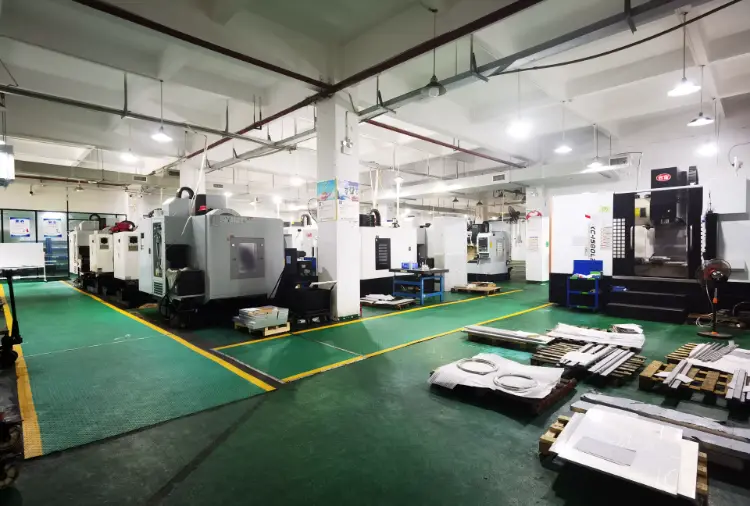
Weldo Machining is based in Dongguan, China, and provides drawing-based ABS, PETG, and other engineering-plastic parts for overseas OEM customers and engineering procurement teams. Each project begins with a review of material, geometry, tolerance, appearance, quantity, and delivery requirements before the CNC machining, workholding, inspection, and finishing route is defined.
The facility operates Haas, Hurco, and other three-, four-, and five-axis CNC machining centers, with CNC turning, precision grinding, and coordinated secondary-process support. For transparent areas, thin-wall structures, insert holes, mating dimensions, and visible appearance surfaces, the engineering team confirms machining and inspection requirements before production.
Send a 2D drawing or 3D CAD file together with the material grade, quantity, tolerances, surface requirements, inserts, and delivery target to receive an engineering review, manufacturing recommendation, and clear quotation.
Conclusion: How Should You Choose Between ABS and PETG?
ABS is suitable for custom CNC parts requiring higher heat resistance, stable assembly, threaded inserts, painted appearance, and structural support. Equipment housings, electronic inner frames, locating brackets, and equipment-internal structures generally favor ABS.
PETG is suitable for custom CNC parts requiring transparent or translucent appearance, good toughness, moisture resistance, and impact protection. Viewing covers, transparent panels, protective structures, optoelectronic guards, and light-duty fixtures generally favor PETG.
Projects requiring flame retardancy, antistatic behavior, ESD control, weatherability, light diffusion, or higher stiffness should directly specify the functional grade. Projects requiring long-term outdoor weatherability, high-temperature and high-load performance, low friction, close fits, or specific regulatory documentation should evaluate a more closely matched engineering-plastic solution.
よくあるご質問
Can ABS and PETG Parts Be 3D Printed First and Then CNC Machined?
Yes. 3D printing is suitable for producing complex forms, while CNC machining finishes locating holes, assembly planes, insert holes, and critical mating areas. Areas to be machined should be designed as continuous solid structures with room for workholding and tool access.
What Should Be Checked When Changing an ABS Part to PETG?
Confirm operating temperature, wall thickness, fastening method, long-term load, transparent areas, and assembly clearance. PETG is better suited to transparent and tough structures, while ABS is better suited to heat resistance, painting, and structural assembly parts.
Can a Transparent PETG Part Be Refined After Machining?
Yes. Non-visible edges can receive deburring and finishing; transparent visible areas should define allowable tool marks, viewing distance, edge condition, and protection method in the drawing. A first article can serve as the appearance-acceptance standard for later batches.
Can Flame-Retardant, ESD, UV-Stabilized, or Reinforced Materials Be CNC Machined?
Yes, after confirming that the material is supplied as sheet, rod, or block. The RFQ should state the complete grade, color, functional requirement, applicable standard, and required material documentation.
How Can Repeat ABS or PETG Orders Remain Consistent?
The first article should confirm material, critical dimensions, appearance, insert holes, and finishing requirements. Repeat orders should use the approved drawing revision, material grade, inspection method, and packaging standard.
Parameters and functional grades should follow the technical data sheet of the specified material. ABS composition and functional-grade information can be referenced in SABIC CYCOLAC ABS, while typical PETG properties can be referenced in the Eastman PETG technical data sheet.