
Choosing between Hastelloy C22 vs C276 for corrosion-resistant parts starts with the service environment; neither alloy performs better in every chemical medium. For a custom part, identify the chemicals it will contact, its operating temperature, and any welds or sealing crevices. Then compare the machining plan and total cost.
This article focuses on choosing between the two alloys. For complete information on either grade, see the C22 machining guide そして C276 machining guide.
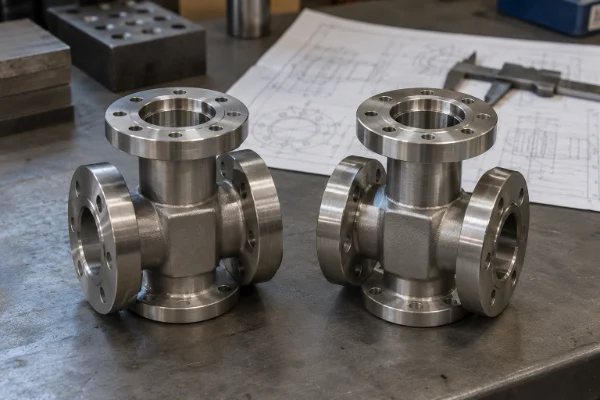
Hastelloy C22 vs C276: What Are the Main Differences?
C22 and C276 are both corrosion-resistant nickel alloys. Their main differences lie in their chromium, molybdenum, and tungsten content, as well as their performance in specific corrosive environments. C22 deserves priority consideration for wet chlorine, oxidizing chloride-containing media, and applications with a high risk of crevice corrosion. C276 also serves a wide range of corrosive applications, but the final choice must be checked against data for the actual medium.
| 比較 | C22 | C276 |
|---|---|---|
| UNS designation | N06022 | N10276 |
| 構成 | Higher chromium content | Higher molybdenum and tungsten content |
| Primary selection criterion | Target medium and localized-corrosion risk | Target medium and validated service requirements |
| Custom-part purchasing focus | Conditions at sealing crevices and welds | Drawing requirements and material-substitution conditions |
This table is only a starting point. It does not replace an assessment of concentration, temperature, and part geometry.
How Do Their Chemical Compositions Differ?
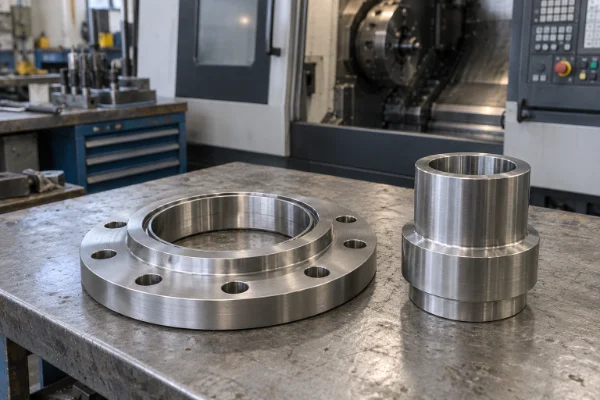
C22 has a nominal chromium content of about 22%, compared with about 16% for C276. C276 has higher nominal molybdenum and tungsten content. These differences help explain how the alloys perform in different media, but they cannot be converted directly into a service-life estimate for a particular part.
| Main element, nominal wt.% | C22 | C276 |
|---|---|---|
| Nickel, Ni | Balance, about 56% | Balance, about 57% |
| クロム、Cr | About 22% | About 16% |
| Molybdenum, Mo | About 13% | About 16% |
| Tungsten, W | About 3% | About 4% |
| Iron, Fe | About 3% | About 5% |
For example, C276’s higher molybdenum content does not mean it will resist every acid solution better. Acid concentration, temperature, and oxidizing impurities can also change the result.Haynes C22 data, Haynes C276 data
How Different Are the Mechanical Properties of C22 and C276?
Both alloys have high tensile strength and ductility in the solution-annealed condition, and their room-temperature elastic moduli are very close. The table below uses representative room-temperature sheet values published by the manufacturer. They show the general magnitude of each property, not guaranteed values for bars, thick plates, or finished parts of different sizes.
| プロパティ | C22 sheet | C276 sheet |
|---|---|---|
| 0.2% 降伏強度 | About 407 MPa | About 356 MPa |
| 極限引張強さ | About 800 MPa | About 792 MPa |
| 破断時の伸び | About 57% | About 61% |
| 硬度 | About 88 HRBW | About 88 HRBW |
| Room-temperature dynamic elastic modulus | About 206 GPa | About 205 GPa |
The C22 tensile values cover sheet approximately 0.7–3.2 mm thick; the C276 values are for sheet approximately 2 mm thick. They are not a strict comparison of specimens with identical thickness. Load-bearing design and acceptance should rely on the specified product standard, actual supply condition, and material certificate for the batch. For most corrosion-resistant CNC parts, the medium and structural risks are usually more important to establish first than the modest property differences in this table.
How Do Their Density, Thermal, and Electrical Properties Compare?
C22 has a slightly lower density and room-temperature electrical resistivity. The thermal conductivity of both alloys is low, and their values are close. These properties matter when designing for part weight, thermal fits, or electrical contact, but they are usually not the primary basis for selecting a corrosion-resistant part.
| Physical property | C22 | C276 |
|---|---|---|
| Room-temperature density | 8.69 g/cm³ | 8.89 g/cm³ |
| Thermal conductivity at 50°C | 10.1 W/(m·K) | 10.5 W/(m·K) |
| Room-temperature electrical resistivity | 1.14 μΩ·m | 1.23 μΩ·m |
| Mean coefficient of thermal expansion, 24–100°C | 12.4 μm/(m·°C) | 11.2 μm/(m·°C) |
Neither alloy normally shows significant ferromagnetism in the annealed condition. If equipment has a specific magnetic-property limit, the technical requirements should state the test conditions and allowable value. Low thermal conductivity also means heat can concentrate near the cutting zone during machining, calling for suitable tooling and cooling.
Which Alloy Is More Corrosion-Resistant in Chemical Media?
C22 has a documented advantage in comparative tests involving wet chlorine and certain oxidizing chloride-containing environments. In other acid solutions, compare corrosion data for the specific concentration, temperature, and impurities. For custom parts, the assessment must include sealing crevices, welds, and heat-affected zones—not just flat base-metal specimens.
Wet chlorine. In one series of Haynes tests, the C276 weld metal and heat-affected zone experienced corrosion, while C22 showed no localized attack under the listed test conditions. This is useful selection evidence, but it applies to the medium composition, temperature, and exposure time in that test. It does not mean that C22 is suitable for every chloride-containing medium.
Crevice corrosion. Flange gaskets, sealing-ring contact surfaces, and areas covered by deposits can form narrow crevices. In an acidified 6% ferric chloride test published by Haynes, the critical crevice-corrosion temperatures were 80°C for C22 そして 55°C for C276. These are results from a specific test, not maximum operating temperatures for the alloys in all fluids.
Acids and mixed media. Changes in hydrochloric or sulfuric acid concentration and temperature can substantially change corrosion rates. Buyers should provide the actual medium composition, including oxidizing ions that may be introduced and any cleaning chemicals, before comparing material data for the relevant conditions. Projects with complex service conditions or high consequences of failure should also undergo the project-specified validation.
How Does Their Welding Performance Differ?
Both alloys can be welded using established processes such as GTAW/TIG and GMAW/MIG. The main differences for a project are the matching filler metal and the corrosion assessment required for the finished welded assembly. The matching solid-wire classification is ERNiCrMo-10 for C22 そして ERNiCrMo-4 for C276; the filler and procedure should follow the design documents and welding procedure specification.
When purchasing a welded valve body or pipe fitting, specify whether the weld contacts the process medium. Check pre-weld cleaning, post-weld oxide removal, and the inspections required by the project. Base-metal corrosion data alone cannot represent the entire welded assembly, particularly in environments such as wet chlorine that are sensitive to the condition of welded areas.
How Do C22 and C276 Perform in CNC Machining?
Both C22 and C276 work-harden and have low thermal conductivity. Their machining plans need to control cutting heat, tool wear, and residual stress at the surface. The alloy designation alone cannot tell you which will machine faster on a given drawing: stock shape, hole depth, wall thickness, material removal, and tolerances also affect machining time.
When comparing quotations for the same part in both alloys, focus on three points:
- Stock and workholding: Is a suitable plate or bar size available, and how much material must be removed after cutting the blank?
- Critical features: Will deep holes, thin walls, sealing grooves, or precision bores require additional setups or finishing passes?
- Finished-part control: Can deburring, cleaning, and dimensional inspection cover all wetted and critical mating surfaces?
This produces a machining plan for the actual part rather than a broad ranking of alloy machinability.
How Should Surface Finishes Be Selected for C22 and C276?
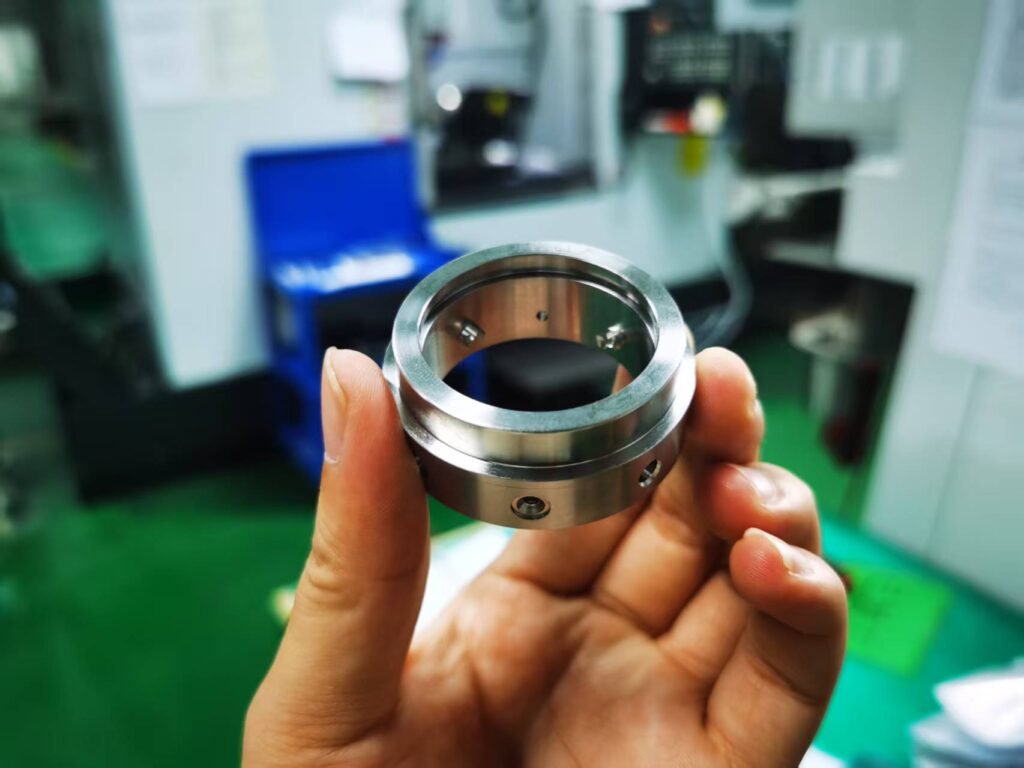
The common finishing options for the two alloys are broadly similar. The choice depends on the surfaces exposed to the medium, sealing requirements, and cleanliness requirements. The alloys’ primary corrosion resistance comes from the base material; finishing establishes the specified surface condition and removes contamination left by machining or welding.
| Surface condition or treatment | 目的 | What buyers should specify |
|---|---|---|
| As-machined surface plus precision cleaning | Remove cutting fluid and chips while maintaining mating dimensions | Roughness, burrs, cleanliness |
| 機械研磨 | Improve specified sealing or flow-path surfaces | Treatment areas and final dimensions |
| 電解研磨 | Meet project-specified smoothness and cleanliness requirements | Confirm process suitability and material removal on a sample first |
| Post-weld descaling and pickling | Remove oxides formed during welding or heat treatment | Treatment area and final surface condition |
| Glass-bead blasting | Produce a uniform matte appearance | Masking of sealing surfaces and inspection for residual media |
After finishing, inspect critical dimensions, specified roughness, and surface cleanliness. Contamination introduced by blasting media or tools should also be controlled. Haynes provides specific processing guidance for descaling and blasting nickel alloys.
What Should Buyers Compare for Different Custom Parts?
A part name does not dictate a fixed alloy grade. Buyers can first identify where the part is most likely to fail, then compare C22 and C276 against the conditions at that location.
| Custom part | Risk to check first |
|---|---|
| Valve body or valve seat | Corrosion of wetted surfaces and sealing-face condition |
| Flange or sealing ring | Crevice corrosion at gasket contact surfaces |
| Welded pipe fitting | Service performance of the filler metal, weld, and heat-affected zone |
| Precision fluid manifold | Trapped liquid in internal passages, cross-hole burrs, and cleanliness |
For example, when purchasing a flange sealing ring, nominal material strength is rarely the only concern. It is more useful to establish whether a chloride-containing medium will remain trapped at the gasket contact surface.
How Should the Cost of C22 and C276 Be Compared?
Compare the total cost of the finished part on the same drawing, not just the price per kilogram of alloy. Available stock sizes, material yield, machining hours, tool consumption, welding, finishing, inspection, and lead time all affect the final quotation.
If both alloys meet the service and acceptance requirements, request quotations for the same quantity and inspection scope. Then compare purchasing cost with expected maintenance and replacement costs. Material prices and inventory change, so a fixed price difference would not remain reliable.
Can C22 Directly Replace C276 on a Drawing?
The two alloys should not be treated as automatically interchangeable; a material substitution requires the designer’s approval. Even if the dimensions are identical, the specified material, filler metal, product standard, and basis for service validation may differ. C22 is UNS N06022, while C276 is UNS N10276; quotations and material certificates should state the exact designation.
What Is Needed to Purchase and Accept Custom Parts?
Provide the drawing, medium and temperature, quantity, specified alloy or permission to propose a substitute, critical dimensions, and required inspection documents. This allows a supplier to evaluate both options against the same requirements. At acceptance, check the material certificate and heat traceability, critical dimensions, and the roughness and cleanliness of specified surfaces. For welded parts, also check the filler-metal and welding records required by the project.
Conclusion: When Should You Choose C22 or C276?
Choose C22 for wet chlorine or oxidizing chloride exposure, especially when welds or sealing crevices are at risk of corrosion. Haynes’ wet-chlorine tests support this choice under the tested conditions.
Choose C276 when the approved drawing specifies it, or when corrosion data for the actual acid concentration and temperature confirm it meets the required service life. If both qualify, compare finished-part cost and lead time; obtain design approval before substituting one alloy for the other.
When both alloys pass the same service assessment, compare the total finished-part quotation, lead time, and inspection requirements. The reliable choice is not a grade that is “better overall,” but the alloy that matches the actual medium, part geometry, and acceptance criteria.