
Ordinary brass is generally not noticeably attracted to a magnet, but a magnet test cannot confirm the brass grade or composition. When purchasing custom brass parts, also verify the material standard, part structure, surface finish, and acceptance requirements.
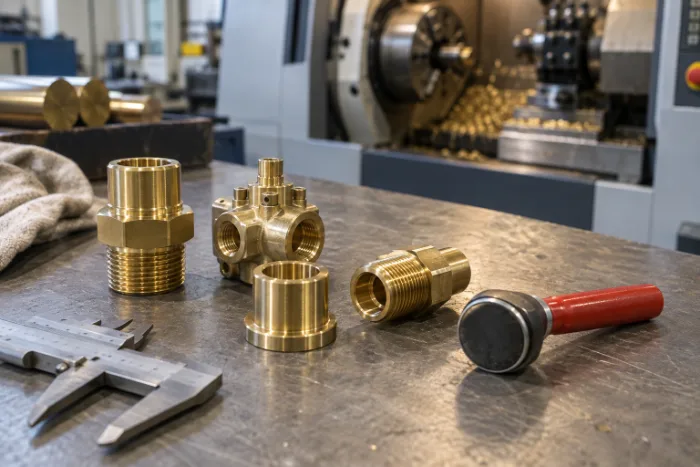
Is Brass Magnetic?
Common copper-zinc brasses are essentially non-ferromagnetic, so an ordinary magnet will not attract them in the way it attracts steel. The actual magnetic response is also affected by alloy composition and part structure; the Copper Development Association describes brass as essentially nonmagnetic.
A magnet test is therefore suitable for preliminary screening, but not for final material acceptance. For magnetically sensitive assemblies, also account for internal inserts, fasteners, and other assembled materials.
How Can You Confirm Whether a Part Is Brass?
Color and a magnet can help with preliminary identification, but material documents and composition analysis are the basis for confirming a part’s material. A steel part with brass plating can look like solid brass, while its steel substrate may still be attracted to a magnet.
- Check the material documents: Verify the drawing, material certificate, grade, applicable standard, and batch information to ensure the documents correspond to the delivered part.
- Use a magnet for preliminary screening: If the part is clearly attracted, check for a steel substrate, inserts, fasteners, or other ferromagnetic components. Lack of attraction does not prove that the part is brass.
- Perform a composition analysis: Handheld XRF can screen for copper, zinc, and some alloying elements to help identify a brass grade. XRF primarily measures the surface, so plating, coatings, and surface contamination can affect results. For finished parts, measure a clean area where the base material is exposed, or use a laboratory analysis method appropriate to the project requirements.
For custom parts, a material certificate provides batch traceability, while composition analysis verifies the actual material. Using both is more reliable than relying on appearance or a magnet alone.
Why Might a “Brass” Part Attract a Magnet?
When a brass part shows noticeable magnetic attraction, first check its structure and material combination. Common causes include a brass-colored coating over a steel substrate, steel inserts or screws in the part, or other ferromagnetic materials in the assembly.
During acceptance inspection, locate the area that attracts the magnet and compare it with the drawing, material list, and material certificate. This helps distinguish the magnetic response of the brass itself from that of other components.
How Is Brass Made?
Brass is primarily an alloy of copper and zinc. Common engineering brasses contain approximately 60%–70% copper, with most of the balance being zinc; the exact proportions vary by grade. For example, C26000 contains 68.5%–71.5% copper, while C28000 contains 59%–63%. C36000 also contains lead and other alloying elements, so its composition cannot be described simply as a binary copper-zinc ratio.
Manufacturers charge and melt materials to meet the target grade, control the composition, and cast the melt into billets. They then use processes such as extrusion, rolling, drawing, or forging to produce stock in forms such as bars, plates, and tubes. Custom parts are machined from these forms using CNC processes; some parts are first cast or forged and then machined to finish critical holes, threads, and sealing surfaces.
The stock form and supplied condition affect machining allowance, cutting behavior, and dimensional stability. Specify the brass grade, applicable standard, and stock form on the drawing or in the technical agreement.
What Are Common Brass Grades for Custom Parts?
The table below lists several common UNS brass grades and their typical uses. Composition and performance should be verified against the specified standard and the supplier’s material certificate. Similar-sounding grades from different standards systems should not be treated as equivalent based on name alone.
| グレード | 材料特性 | Typical part applications |
|---|---|---|
| C36000 | Excellent free-machining characteristics; contains lead, so suitability must be confirmed against applicable regulations and media requirements | Turned fittings, threaded parts, valve components, precision connectors |
| C26000 | Good ductility and cold-forming properties | Connectors, spring contacts, thin-walled or stamped parts |
| C46400 | Tin-bearing naval brass commonly used for marine and related components | Marine hardware, shipboard equipment fittings, valve components |
| C37700 | Good hot-forging properties; functional surfaces can be machined afterward | Valve components, pipe fittings, connectors |
C36000 is commonly used for high-efficiency turned parts; C26000 suits parts where forming performance is important; and C46400 is used for marine-related applications, although corrosion performance must still be assessed against the media and operating conditions.
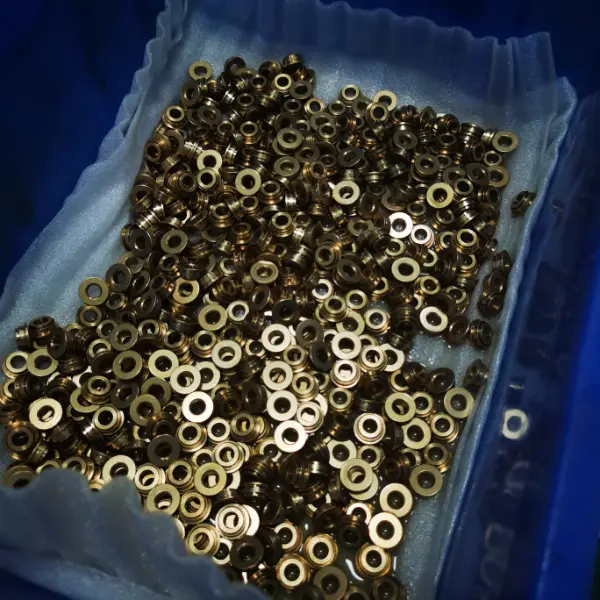
What Are Common Brass Parts and Applications?
Brass is commonly used in fluid systems, automation equipment, mechanical transmissions, and electrical connections. Select the grade based on the part’s loads, media, conductivity requirements, and manufacturing method—not just its color or magnetic response.
- Fluid and piping systems: Valve bodies, pipe fittings, adapters, nozzles, and water-meter components. Key requirements include thread accuracy, sealing-surface quality, media compatibility, and applicable standards.
- Instrumentation and automation equipment: Pneumatic fittings, instrument fittings, sensor housings, and valve spools. Key requirements include bore size, concentricity, internal passages, and assembly dimensions.
- Mechanical transmission and wear components: Bushings, sleeves, small gears, and locating parts. Material selection should account for load, friction, and lubrication conditions.
- Electrical and electronic equipment: Terminals, connectors, contact components, and terminal posts. Design should account for conductivity, contact pressure, surface finish, and assembly method.
- Fasteners and connectors: Nuts, studs, special screws, and mounting connectors. Machining and inspection typically focus on threads, mating dimensions, and batch consistency.
Brass is used in valves, pipe fittings, mechanical components, and electrical connectors. The specific grade should be selected according to the part’s function and operating conditions.
What Surface Finishes Are Used for Custom Brass Parts?
Choose post-processing for brass parts based on appearance, corrosion resistance, contact requirements, and dimensional requirements. Specify the treated areas and functional-surface requirements on the drawing.
- Polishing or brushing: Improves appearance and surface texture for visible and decorative parts.
- サンドブラストまたはビードブラスト: Produces a uniform matte texture. Select the process parameters according to the part dimensions and surface requirements.
- 電気めっき: Nickel, chrome, tin, gold, or silver plating can change the appearance and surface function. Specify the plating type, treated areas, and post-plating dimensional requirements on the drawing.
- Clear protective lacquer: Slows surface discoloration and suits parts that need to retain their brass appearance.
- Chemical conversion treatment: Can be used for specific anti-tarnish or coating requirements. Confirm that the process is compatible with the alloy and operating environment.
How Should Brass Parts Be Cleaned and Maintained?
Maintenance should match the surface finish. For routine cleaning, use a soft cloth and a mild cleaner, then dry the part. For polished, lacquered, or electroplated parts, follow the care instructions for the specific finish and avoid cleaners or abrasives that could damage the surface.
Bare brass gradually changes color with environmental exposure. If appearance stability is a product requirement, specify a protective finish during design and clean and inspect the part according to the finish requirements.
Can Brass Cause Skin Allergies?
Skin reactions depend on individual sensitivity, alloy composition, and surface plating. People with nickel allergies should verify the composition of the part and its plating and check applicable nickel-release requirements; anyone with a persistent skin reaction should consult a medical professional.
Does brass tarnish?
Yes. Unlacquered brass gradually reacts with air and moisture, causing its surface to darken or develop a patina. A clear protective lacquer slows this change, while heat, humidity, handling, and cleaning products affect how quickly it appears. Clean the part according to its finish to avoid damaging the protective layer
Weldo Custom Brass CNC Machining
Weldo machines custom brass parts to customer drawings and can arrange CNC旋盤加工, milling, drilling, and threading, with inspection of critical dimensions according to the drawing. Common projects include fittings, bushings, valve components, connectors, and other precision-machined parts.
For a quotation, provide a 2D drawing or 3D model, material grade, order quantity, tolerances, surface finish, and inspection requirements. ウェルド can use these details to assess the manufacturing route and acceptance criteria, helping define manufacturing requirements before production.
What Should Custom Brass Part Buyers Specify?
- Brass grade, material standard, and supplied form.
- Whether the part is solid brass, brass-plated, or an assembly with inserts.
- Requirements for critical dimensions, threads, mating surfaces, and sealing surfaces.
- Surface-finish type, treated areas, and post-finish dimensions.
- Whether material certificates, batch traceability, or composition analysis are required.
よくあるご質問
Can brass become magnetized?
Common brass is not noticeably attracted to an ordinary magnet like a ferromagnetic material and does not retain magnetism like steel. If a part shows noticeable magnetic attraction, check for steel inserts, fasteners, or other materials in the assembly.
Can a metal detector detect brass?
Yes. A metal detector senses metals through electromagnetic response, which differs from the attraction produced by an ordinary magnet. Detection results depend on the detector type, part size, and equipment settings.
Is brass stronger than copper?
Brass is generally harder than pure copper, and some grades are also stronger, but exact performance depends on the grade and material condition. Select the material based on the load, machining method, and operating environment.