
特注部品において、リン青銅とベリリウム銅を比較する場合、主な違いは、その強化メカニズム、性能範囲、および製造コストにあります。どちらの材料も、電気接点、ばね部品、および耐摩耗性機械部品に使用されています。 リン青銅は主に合金組成と冷間加工によってその特性を発揮するのに対し、ベリリウム銅は合金組成、冷間加工、および時効硬化を組み合わせて、強度と電気伝導性の異なる組み合わせを実現しています。.
特注部品を購入する場合、材料の選定は単に原材料の価格に影響を与えるだけではありません。それは、加工の難易度、熱処理による歪み、表面仕上げ、検査要件、そしてリードタイムにも直接的な影響を及ぼします。適切な材料選定を行うには、まず部品の負荷、使用温度、組み立てスペース、耐用年数を考慮し、その上で材料の状態や製造方法を検討する必要があります。.
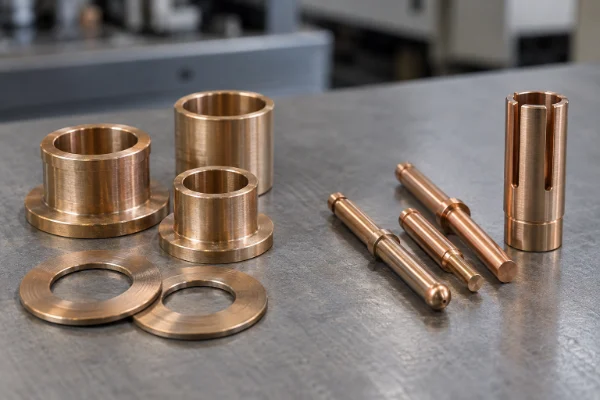
リン青銅とベリリウム銅:カスタム部品にはどちらが適しているか?
リン青銅:従来のばね特性、耐摩耗性、および導電性の要件を満たす
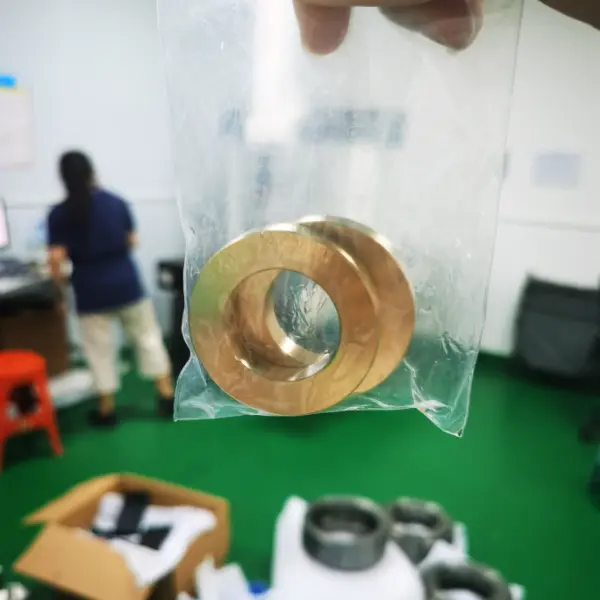
リン青銅 ブッシング、摩耗ワッシャー、電気接点、および計測機器用のばね部品に適しています。部品の寸法、負荷、および使用温度の条件において、リン青銅が設計要件を満たすのであれば、単に引張強度を高めるためだけにベリリウム銅に切り替える必要はありません。.
従来のリン青銅は、時効硬化型ベリリウム銅のように、析出硬化熱処理によって強度を大幅に向上させることはできません。その強度は、冷間加工状態と密接に関連しています。強度が高まるにつれて、伸びや成形性は低下します。 したがって、購入者は、大径の棒材から機械加工された部品に対して、薄板用高強度データをそのまま適用するのではなく、焼なまし状態、半硬状態、硬状態を区別する必要があります。.
ベリリウム銅:限られたスペースや高い弾性荷重が求められる用途に適しています
ベリリウム銅は、スロット付きコンタクトソケット、精密スプリング式クランプ部品、高負荷がかかるコネクタ部品など、断面積が小さいにもかかわらず高い弾性荷重能力を維持する必要がある部品に適しています。.
ベリリウム銅は、一様な物性をすべて兼ね備えた材料ではありません。高強度型と高導電率型のベリリウム銅は、それぞれ異なる性能目標を満たすものです。あるシリーズの最大強度と、別のシリーズの最大導電率を組み合わせて購入仕様を策定してはなりません。最終的な物性は、供給状態や時効処理によっても異なります。. マテリオン社による銅ベリリウムの熱処理ガイド
まず、その部品が対応すべき故障モードを特定する
材料を選定する際は、以下の3つの質問を優先的に考慮してください:
- その部品には恒久的な変形が生じますか? 引張強度の比較だけにこだわるのではなく、構造物における降伏強度、実応力、および応力集中に注目すべきである。.
- 接触力は時間の経過とともに減少しますか? 使用温度、連続負荷時間、および応力緩和特性を検討してください。室温での硬度だけでは、答えは得られません。.
- その部品は過熱したり、摩耗が早すぎたりしませんか? 電流経路、接触抵抗、潤滑状態、および嵌合材料について、それぞれ個別に確認してください。より高強度の材料に切り替えたからといって、すべての問題が自動的に解決するわけではありません。.
リン青銅およびベリリウム銅の主な機械的特性
以下のデータは、予備的な材料選定の参考となるものであり、代表的なリン青銅および高強度ベリリウム銅について、さまざまな供給状態および強化状態における室温時の既発表値をまとめたものである。.
| プロパティ | リン青銅 | 高強度ベリリウム銅 |
|---|---|---|
| 引張強さ | 約330~750 MPa | 約410~1550 MPa |
| 降伏強度、Rp0.2 | 約90~710 MPa | 約130~1380 MPa |
| 破断時の伸び | 約 2%~60% | 約 2%~75% |
| 弾性率 | 代表値:約110 GPa | 代表値:約131 GPa |
これらの範囲は、単一の材料状態に対する合格限界値ではなく、また、すべての市販合金や製品形態を網羅しているわけでもありません。この表は、さまざまな状態における代表的な値と、選定された規格の最低値をまとめたものです。最大強度と最大伸びは、同時に達成することはできません。最終的な合格判定は、具体的な材料、供給状態、断面寸法、および試験方法に基づいて行わなければなりません。. リン青銅の材料データ, ベリリウム銅棒のデータ
ばね部品では降伏強度を優先する
ばね状の接触部、締め付け部品、およびスロット付き構造物は、荷重が除去された後に元の形状に戻らなければならない。降伏強度は、材料が所定の永久変形を生じる応力レベルを示すものであり、引張強度だけと比較して、これらの部品にとってより重要な指標となる。.
しかし、材料強度を高めたとしても、構造の最適化に代わるものではありません。スロットの根元が鋭角であったり、フィレットの半径が小さすぎたり、断面形状が急激に変化したりすると、局所的な応力集中が生じます。これにより、全体的な荷重が高くない場合でも、局所的な塑性変形や疲労亀裂が発生する可能性があります。.
強度が向上しても、剛性がそれに比例して増加するわけではない
「強度」とは、材料が降伏や破壊に耐える能力のことです。「剛性」とは、部品が荷重下で変形するのを防ぐ能力のことです。.
ベリリウム銅の上限強度は、従来のリン青銅よりもかなり高いが、弾性係数の差は強度の差に比べてはるかに小さい。同じ形状の場合、ベリリウム銅に切り替えても、強度の増加に比例して弾性変形が減少するわけではない。 たわみを制御するには、依然として肉厚、長さ、断面形状、および支持条件を考慮する必要がある。.
伸び率は延性を示すものであり、部品がどれだけ曲がるかを直接示すものではない
伸びが大きいほど、材料は塑性変形を受けやすくなりますが、それを許容曲げ角度や最小曲げ半径に直接換算することはできません。また、成形挙動は、板厚、加工方向、エッジの品質、および材料の状態にも左右されます。.
CNC加工後に圧入、リベット留め、または局所的な成形が必要な特注部品の場合、材料評価にはその後の組立工程も考慮に入れる必要があります。最終的な強度のみを基準にして過度に硬い素材を選択すると、後々問題が生じる可能性があります。.
電気伝導度、動作温度、および使用環境は、製品の選定にどのような影響を与えるのでしょうか?
電気部品には、単なる導電率の比較以上の要素が必要である
代表的なスズ含有リン青銅の電気伝導率は約15% IACSであるのに対し、時効処理を施した高強度ベリリウム銅は約25%~30% IACSである。 IACSとは、国際焼鈍銅規格(International Annealed Copper Standard)を指します。これらの値は、すべてのリン青銅やベリリウム銅のシリーズを網羅しているわけではありません。.
コネクタ、接点ピン、およびスプリング式コンタクトソケットにおいて、総抵抗は材料そのものと接点界面の両方から生じます。接触圧の不足、酸化膜、汚染、およびメッキの摩耗は、いずれも接触抵抗の増加や局所的な発熱の原因となります。.
したがって、電気部品については、導電率、接触力、表面メッキを総合的に評価する必要があります。材料の導電率のみに基づいて通電容量を決定するのではなく、規定の電流および周囲温度における温度上昇を確認する必要があります。.
高温下で荷重を受ける部品については、応力緩和の評価が必要である
持続的な荷重が加わっているばね部品は、温度や時間の経過に伴い応力緩和が生じ、その結果、接触力や締め付け力が低下します。これは、繰り返しの荷重によって引き起こされる疲労破壊とは異なります。.
For parts held in compression or bending over long periods, performance must be evaluated at the actual temperature, initial stress, and duration. High-strength beryllium copper must also be selected in a validated material condition. Room-temperature strength must not be treated as a direct measure of contact force retention at elevated temperatures.
Wear and Corrosion Resistance Depend on Operating and Mating Conditions
The service life of ブッシング, sliding washers, and wear sleeves depends on contact pressure, sliding speed, lubrication, mating shaft hardness, and surface roughness. Higher hardness is not the only criterion. Insufficient lubrication or unsuitable clearance can still cause overheating, wear, and galling.
For both materials, corrosion resistance must be checked against the actual chemical medium, concentration, and temperature. When connected to other metals, galvanic corrosion must also be considered in damp or electrolyte-containing environments, rather than assuming that all contact between dissimilar metals causes corrosion.

How Do Raw Material Condition and CNC Machining Affect Part Quality?
Product Form and Material Condition Must Match the Part
Bar stock is suitable for bushings, pins, threaded parts, and rotational components. Plate is suitable for clamping components, connection blocks, and complex profiles. Strip is primarily used for thin spring structures and stamped parts.
Even under the same material name, properties differ with product form, dimensions, and processing condition. Material certificates and engineering drawings should specify the grade, applicable standard, supplied condition, and final property requirements. Comparing material families in this article does not mean that the specific grade can be omitted from purchasing documents.
Some free-machining copper alloys contain added lead to improve machinability. Projects involving electronics, medical applications, or specific environmental requirements must verify composition restrictions. Substitution with a free-machining material requires approval.
Thin Walls and Slotted Structures Require Clamping and Burr Control
Both phosphor bronze and beryllium copper can be turned, milled, drilled, and machined with precision slots, but tooling and cutting parameters must match the actual hardness and material condition.
For thin-walled bushings and slotted spring components, excessive clamping force can produce dimensions that pass inspection while clamped but move out of tolerance after release. Process planning should control clamping force, support locations, and machining sequence, with critical dimensions inspected after unclamping.
Fine slots, intersecting holes, and thread exits are prone to burr formation. These burrs can interfere with assembly, scratch mating parts, or break loose and contaminate the system. デバリング requirements must therefore be established alongside machining requirements.
Beryllium Copper Aging Requires Provision for Dimensional Control
For age-hardenable beryllium copper, a common route is to complete most cutting in a more machinable condition, perform aging, and then carry out the necessary finishing and inspection. Prehardened material can also be purchased where suitable sizes are available, but cutting loads, tool wear, and supply conditions differ.
Aging produces dimensional changes and releases some machining-induced residual stress. A single shrinkage compensation value must not be applied to every geometry. Critical bore diameters, slot widths, flatness, and fit dimensions should be confirmed through first-article evaluation. Materion’s Guide to Controlling Shape Distortion
Annealing or stress relief must not be added arbitrarily for phosphor bronze either. Subsequent heating affects strength obtained through cold working. Brazing, assembly heating, and other elevated-temperature operations must be included in the manufacturing route review.
Beryllium Copper Machining Requires Appropriate Safety Controls
The primary hazards in beryllium copper processing arise from beryllium-containing dust, fumes, and inhalable particles, rather than from the part’s name alone. Exposure risks must be assessed separately for cutting, grinding, polishing, welding, and other operations.
The machining facility should establish effective engineering controls, cleaning procedures, and waste management measures based on the material safety data sheet and applicable requirements. Using coolant does not replace comprehensive exposure control. Compressed-air blowdown and dry sweeping should not be used to remove beryllium-containing residues. Materion Material Safety Information
Post-Processing: Deburring, Surface Finishing, and Ultrasonic Cleaning
Burr and Sharp-Edge Removal: Preserve Functional Dimensions and Edge Geometry
Deburring aims to remove loose metal, sharp burrs, and assembly interference while preserving the specified edges and dimensions.
For spring slots, thin-walled structures, and contact edges, excessive grinding can reduce the cross-section, change the contact location, or affect spring performance. Internal bores, intersecting holes, and thread roots must also be checked for retained chips rather than treating only visible external edges.
Tumbling, brushing, and manual deburring should be selected according to the geometry. One method must not be applied indiscriminately to all precision copper alloy parts.
Surface Finishing: Select for Contact, Protection, and Wear Requirements
Both materials can receive surface plating according to the application. Common options include:
- Tin plating: Used where solderability and electrical contact performance are required. Repeated mating, micromotion, and contact pressure requirements must be evaluated together with the plating system.
- ニッケルめっき: Used for protection, wear resistance, or as an underlayer beneath other coatings. Plating thickness and ductility must accommodate part deformation and assembly requirements.
- Gold plating: Used on critical electrical contact areas requiring stable contact resistance. Thickness and underlayer design should be determined by mating cycles, wear, and the environment rather than simply specifying “gold plated.”
Plating changes final dimensions. With ideal uniform deposition, an outside diameter increases by approximately twice the coating thickness, while a bore diameter decreases accordingly. Actual results also depend on geometry and coating distribution. Precision fit dimensions must therefore specify whether acceptance applies before or after plating.
Ultrasonic Cleaning: Remove Contamination, Not Attached Burrs
Ultrasonic cleaning is suitable for removing cutting oil, coolant, polishing residues, and loose particles. It does not replace mechanical removal of attached burrs or guarantee the removal of every oxide layer.
The cleaning agent, temperature, duration, and ultrasonic settings should be compatible with the substrate and plating. Compatibility must be confirmed before cleaning to prevent discoloration or surface damage. Parts should be separated during loading to reduce collisions, and trapped air must be allowed to escape from holes and cavities. Cleaning should be followed by thorough rinsing, drying, and clean packaging.
Bath solutions, filter materials, and residues generated when cleaning beryllium-containing parts must be included in the appropriate occupational health and waste management procedures.
How Should Materials Be Selected for Typical Parts and Applications?
Electrical Contacts and Connector Components
Phosphor bronze is used for contacts, connecting strips, and spring structures that require a balance between performance and cost. Beryllium copper is suitable for slotted sockets, precision contacts, and connector components with demanding miniaturization, elastic load capacity, or contact force retention requirements.
Selection should consider the current-carrying cross-section, spring travel, contact pressure, and plating together. When contact resistance is excessive, contact design and surface condition should be checked first rather than relying solely on a change of base material.
Instruments and Precision Spring Mechanisms
Spring components in instruments and precision clamping mechanisms require consistent springback and dimensional uniformity. Phosphor bronze is suitable for conventional structures that meet the load requirements. Beryllium copper deserves closer evaluation when space is limited and stress levels are high.
Thin stamped strip springs and three-dimensional spring components CNC-machined from bar stock have different material conditions and manufacturing routes. The same performance, cost, or service-life data must not be applied directly to both.
Bushings, Sleeves, and Wear Washers
Phosphor bronze is a common candidate for bushings, sliding washers, and wear sleeves. Selection should focus on load, sliding speed, lubrication conditions, and compatibility with the mating shaft or guide.
Evaluate an appropriate beryllium copper material when the part also requires higher strength, specific anti-galling performance, or thermal conductivity. Its higher price does not mean that it will last longer under every friction and wear condition.
Mold and Thermal Management Components
Certain beryllium copper materials are used for mold inserts and components that need a combination of thermal conductivity and mechanical performance. Selection for these applications should consider the heat flow path, operating temperature, strength, and surface requirements.
Phosphor bronze is not a direct substitute for these beryllium copper parts. Temperature distribution, dimensional stability, and load capacity must be revalidated before substitution.
How Should Phosphor Bronze and Beryllium Copper Parts Be Maintained?
Protect Contact Surfaces and Plating During Cleaning
Before maintenance, stop the equipment and isolate the relevant electrical power and mechanical loads. Use a cleaning agent compatible with the copper alloy, plating, and surrounding plastics and seals. Avoid indiscriminate use of abrasive paper or polishing compounds on electrical contacts, precision mating surfaces, and plated areas.
研磨 and polishing repairs on beryllium copper parts should be performed by personnel working under appropriate control conditions. These parts must not be dry-ground on site as though they were ordinary metal components.
Lubricate According to the Design, Not an Assumption of Self-Lubrication
A copper alloy bushing is not automatically suitable for operation without lubrication simply because its name includes “bronze.” Use the specified lubricant and check lubrication passages, service intervals, and contamination.
Ordinary mechanical lubricating oil must not be applied directly to electrical contacts. Where lubrication is required, use a product suitable for the contact system and plating.
Focus Inspection on Changes That Affect Function
Electrical contacts should be checked for contact resistance, temperature rise, contact force, and plating wear. Bushings and sliding components should be checked for clearance, wear, and lubrication condition.
Parts with cracks, permanent deformation, or a significant loss of contact force should be segregated and assessed. Bending them back by hand or lightly polishing them does not restore damaged material properties. Spare parts should be kept dry, packaged separately, and retain their material and batch identification.
How Can You Control Costs, Lead Times, and Procurement Risks?
Compare Finished-Part Costs, Not Just Raw Material Prices
Custom part costs include raw material and waste, machining, heat treatment, surface finishing, cleaning, inspection, and tooling. Beryllium copper generally has higher material costs and more demanding processing controls than conventional phosphor bronze, but the actual difference depends on material condition, geometry, and order quantity.
Focus on three measures to control costs:
- Select the material and condition for the function: Avoid unnecessary strength or processing steps when the performance requirements are already met. Where forming or aging is needed, determine the appropriate raw material condition in advance.
- Concentrate strict requirements on critical features: Define tolerances for mating bores, contact surfaces, and spring structures. Apply reasonable requirements to nonfunctional dimensions rather than machining every feature to the highest precision.
- Validate the first article before stabilizing batch production: Confirm the final results after machining, heat treatment, and plating. Separate one-time tooling or development charges from repeat-order unit prices in the quotation.
Lead Time Depends on the Entire Manufacturing Route
Lead time includes more than CNC machining. It also covers material procurement, aging, plating schedules, cleaning, inspection, and packaging.
For precision spring components being produced for the first time, the schedule should allow for first-article validation. For repeat orders, the material condition and process route should be fixed, with clear approval requirements for changes to materials or subcontracted operations to reduce rework and lead-time variation.
Material Substitution Requires Revalidation of Critical Functions
Phosphor bronze and beryllium copper cannot be directly interchanged solely because the parts have the same shape or similar hardness. Substitution assessment should cover stress, contact force, temperature rise, cycle life, and assembly requirements.
If the replacement material lacks sufficient elastic load capacity, the structure or material selection must be revised. Adding plating cannot compensate for insufficient substrate strength.
Acceptance Should Address Three Levels
- Material consistency: Check material certificates, supplied condition, and batch identification against the purchasing requirements.
- Final part quality: Inspect critical dimensions, geometric tolerances, surfaces, and burr condition after heat treatment and surface finishing are complete.
- Actual function: Verify contact force, resistance, and temperature rise, or assess assembly, wear, and cycle life according to the application.
Retain approval records after the first article passes inspection. Changes to the material, aging process, plating, or critical machining route should trigger a reassessment of their effect on function.
Weldo’s Support for Custom Copper Alloy Parts
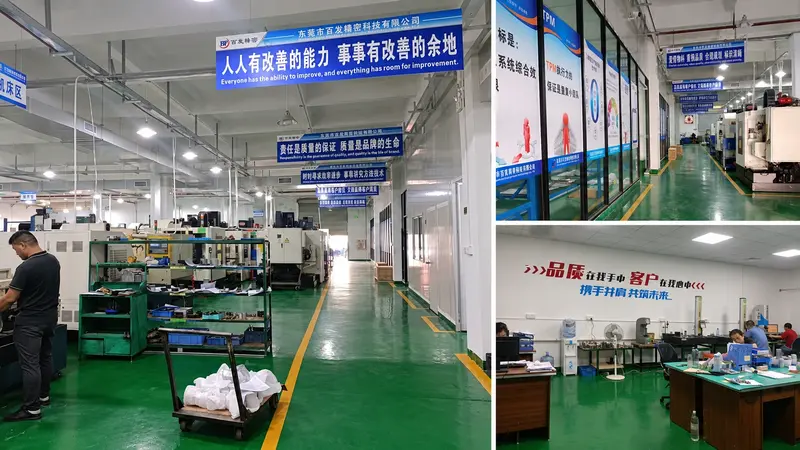
Weldo provides CNC加工サービス for prototypes, small batches, and repeat production, with turning, milling, and subsequent operations planned around bushings, sleeves, contact pins, threaded parts, and precision connecting components.
During project evaluation, we review the manufacturing route against the material condition, thin walls, fine slots, critical tolerances, and assembly requirements. The quotation also defines the scope of deburring, surface finishing, cleaning, and inspection.
Orders involving beryllium copper require an acceptance review based on the specific material, processing operations, and safety controls. Parts requiring aging or precision plating should also have clearly defined final dimensions and performance requirements after treatment.
You can submit your drawings and project requirements, including the material, quantity, critical functions, and target delivery date, for a manufacturing assessment and quotation.
Conclusion: When Should You Choose Phosphor Bronze or Beryllium Copper?
For conventional wear-resistant, conductive, and spring components, evaluate phosphor bronze first. For precision parts with limited space and higher load or contact force requirements, focus on beryllium copper.
| Part Requirements and Application | Material Selection Advice |
|---|---|
| Bushings, sliding washers, and wear sleeves with defined loads and lubrication conditions, where cost control matters | Consider phosphor bronze first. Confirm wear resistance, fit clearance, and lubrication requirements. |
| Conventional electrical contacts and instrument spring components whose existing dimensions meet conductivity and springback requirements | Consider phosphor bronze first. There is no need to increase material and machining costs solely for higher strength. |
| Small spring contacts, slotted sockets, and precision spring clamping components that must carry greater elastic loads in limited space | Focus on high-strength beryllium copper. Confirm yield strength and service life for the specified aged condition. |
| Connector contacts held under sustained compression or operating at elevated temperatures that require stable contact force | Evaluate beryllium copper closely. Verify stress relaxation performance at the actual temperature and loading duration. |
| High-current contacts or heat-dissipating inserts requiring a combination of electrical conductivity, thermal conductivity, and strength | Evaluate high-conductivity beryllium copper series. Do not directly apply high-strength beryllium copper property data. |
Keep one principle in mind when purchasing: If phosphor bronze meets the performance requirements, prioritize cost optimization. Choose an appropriate beryllium copper material when strength, contact force retention, or thermal and electrical conductivity becomes the limiting factor. Confirm the final choice using the specific material condition and finished-part test results rather than substituting on material names alone.