
When comparing 6061 vs 6063 aluminum, first determine the loads the part must carry, the appropriate manufacturing method, and the final surface requirements. 6061 is generally better suited to load-bearing brackets, mounting plates, and precision machined parts; 6063 is better suited to complex extrusions, decorative housings, and extruded heat sinks.
For buyers of custom parts, material temper, blank geometry, and order quantity are equally important. Direct machining from plate or bar, and secondary machining of extrusions, often result in different cost and delivery options.
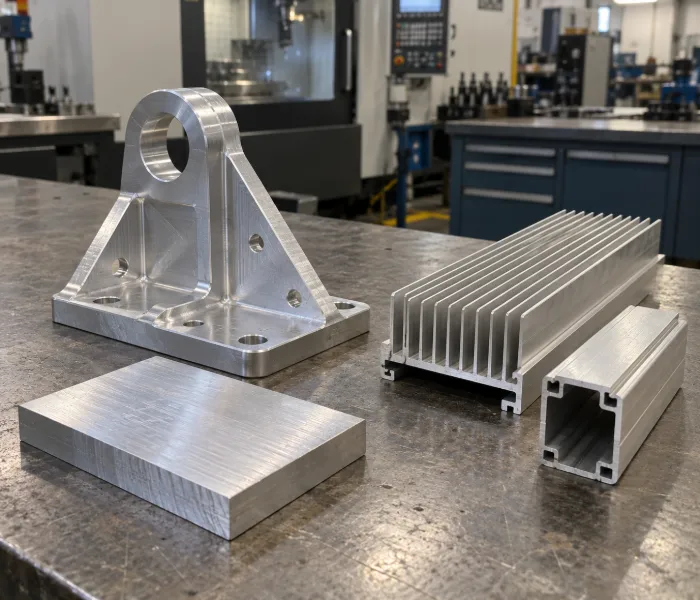
6061 vs 6063: Similarities and Differences
6061 and 6063 are both wrought aluminum alloys in the 6xxx series, with magnesium and silicon as their principal alloying elements. Both can be strengthened through heat treatment.
The advantage of 6061 is its balance of strength, material availability, and suitability for machining. Plate, bar, tube, and structural profiles are widely available, making it suitable for mechanical parts with hole patterns, threads, deep cavities, and features on multiple faces. For complex, thin-walled extrusions, it is generally more difficult to form than 6063.
The advantages of 6063 are extrudability and surface quality. It is suitable for thin-walled, hollow, multi-ribbed parts and long parts with constant cross sections, allowing profile design to reduce subsequent material removal. Where load-bearing requirements are higher, both temper and cross-sectional dimensions must be selected to meet the strength requirements. Hydro 6063 Alloy Overview
6061 vs 6063 Aluminum: Comparison of Key Chemical Compositions
The table below shows the weight percentages of the principal elements, with aluminum making up the balance.
| 요소 | 6061 | 6063 |
|---|---|---|
| Mg | 0.80–1.20% | 0.45–0.90% |
| Si | 0.40–0.80% | 0.20–0.60% |
| Cu | 0.15–0.40% | ≤0.10% |
| Cr | 0.04–0.35% | ≤0.10% |
| Fe | ≤0.70% | ≤0.35% |
The alloy composition of 6061 supports its higher level of age hardening. The lower alloying-element content of 6063 favors the extrusion of complex profiles and decorative surface finishing.
The composition table distinguishes the materials’ characteristics. Complete incoming material acceptance should be checked against the applicable product standard and batch material certificate.
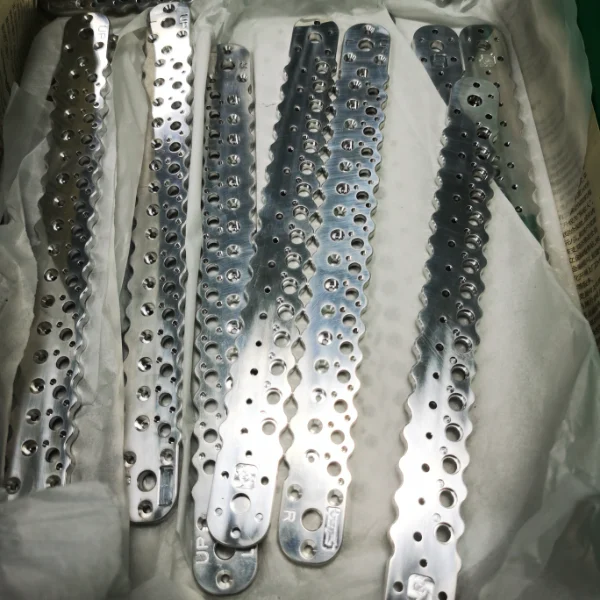
6061 vs 6063 Aluminum: Key Mechanical Properties
The following are typical room-temperature data for common 6061-T6 and 6063-T6 products, with values appropriately rounded. Minimum properties for the material being purchased are determined by the product standard, thickness, and delivery conditions.
| 특성 | 6061-T6 | 6063-T6 |
|---|---|---|
| 합금은 주로 아연, 마그네슘, 구리로 구성되어 있으며 다음과 같은 특징을 제공합니다: | Approx. 310 MPa | Approx. 240 MPa |
| 항복 강도 | Approx. 276 MPa | Approx. 215 MPa |
| 파단 후 연신율 | Approx. 12% | Approx. 12% |
| 브리넬 경도 | Approx. 95 HB | Approx. 73 HB |
| 전단 강도 | Approx. 207 MPa | Approx. 150 MPa |
| 탄성 계수 | 약 69 GPa | 약 69 GPa |
| Fatigue strength reference value | Approx. 97 MPa | Approx. 70 MPa |
Elongation should be compared using the same specimen type and gauge length. The fatigue values are reference levels for smooth specimens under rotating bending and fully reversed loading. Actual parts must be evaluated in relation to cycle count, load spectrum, hole edges, and surface condition.
Compare Strength and Stiffness Separately
The higher yield strength of 6061-T6 allows a part with the same cross section to carry a greater load before permanent deformation occurs, making it suitable for connecting mounts, load-bearing brackets, and mechanical mounting structures.
The two materials have similar elastic moduli, so their elastic deflections are also similar under the same geometry, support conditions, and load. To reduce part bending, prioritize changes to section height, ribs, support spacing, and cantilever length.
Parts subject to repeated disassembly or high fastening loads also require checks of thread engagement length, hole bearing capacity, and edge distance. Threads exposed to high wear can be fitted with suitable wire thread inserts or solid inserts.
How Do Thermal, Electrical, and Other Physical Properties Compare?
The table below gives common typical values. Thermal and electrical conductivity data refer to the T6 temper at approximately 20–25°C.
| 물리적 특성 | 6061 | 6063 |
|---|---|---|
| 밀도 | 약 2.70 g/cm³ | 약 2.70 g/cm³ |
| 열전도율 | Approx. 167 W/(m·K) | Approx. 201 W/(m·K) |
| 전기 전도도 | Approx. 43% IACS | Approx. 53% IACS |
| Mean coefficient of linear thermal expansion, 20–100°C | Approx. 23.6×10⁻⁶/K | Approx. 23.4×10⁻⁶/K |
| Specific heat capacity, room temperature | Approx. 900 J/(kg·K) | Approx. 900 J/(kg·K) |
| 자성 | Non-ferromagnetic | Non-ferromagnetic |
IACS uses the electrical conductivity of standard annealed copper as the 100% reference. Material temper and actual composition affect thermal and electrical conductivity. thyssenkrupp Aluminum Alloy Property Data
Heat Sinks and Water-Cooling Parts
Based on the typical values above, the thermal conductivity of 6063 aluminum is approximately 20% higher than that of 6061. It is well suited to extrusion for long heat sinks and closely spaced fin structures.
6061 is well suited to machining flow channels, seal grooves, threads, and precision mounting surfaces from plate, making it suitable for CNC-machined cold plates and heat sink bases. Cold plate material selection should also account for the joining method, operating pressure, coolant compatibility, and sealing requirements.
Overall equipment cooling performance is determined by the material, heat dissipation area, and airflow or coolant flow rate together. Thermal conductivity is only one factor.
Conductive and Shielding Structures
For the same length and cross-sectional area, 6063 generally has lower electrical resistance, making it suitable for profiles that combine mechanical support with electrical conduction.
Electrical connections require control of the surface film, clamping pressure, and contact area. Shielding enclosures should also be evaluated for operating frequency, wall thickness, openings, seams, and grounding method.
Thermal Expansion and Assembly
The two materials have similar thermal expansion. When assembling them with steel shafts, steel guide rails, or other materials, set fit clearances according to the temperature range to control binding, loosening, and positional shifts as temperature rises.
Neither exhibits significant ferromagnetism, and an ordinary magnet does not noticeably attract either material.

How Do Common Heat Treatment Tempers Affect Material Selection?
6061 알루미늄
6061-O and T4 are suitable for parts that require subsequent forming. O is the annealed temper and offers good ductility; T4 is solution heat treated and naturally aged, combining a degree of strength with formability.
6061-T6 is solution heat treated and artificially aged, making it suitable for brackets, connectors, tubular parts, and general mechanical parts.
6061-T651 and T6511 include a specified stress-relief stretching operation after solution heat treatment, followed by artificial aging, helping reduce machining distortion. T651 is common for plate; T6511 is common for extruded bar and profiles and permits subsequent straightening within specified limits.
6063 알루미늄
6063-T5 is cooled after an elevated-temperature shaping process and artificially aged. It is a common temper for general-purpose frames, housings, and heat sink profiles.
6063-T6 and T66 are suitable for profiles with higher strength requirements. T6 is solution heat treated and artificially aged; T66 uses special process controls to achieve mechanical properties above the corresponding T6 requirements.
6063-T4 is suitable for profiles that require further bending or forming. Subsequent aging and final properties are determined by the manufacturing requirements.
Specify the complete alloy designation, temper, product form, and standard when purchasing, so that material properties are consistent with the subsequent manufacturing route.
How Do 6061 and 6063 Differ in Manufacturing Performance?
CNC Cutting Performance
6061-T6 has higher hardness and generally allows better control of burrs and edge deformation than lower-hardness tempers of 6063. When machining 6063 in softer tempers, focus on built-up edge, chip entanglement, and burrs at hole edges; the T6 temper can improve its cutting performance.
Both are suitable for precision machining. Sharp cutting tools, effective chip evacuation, and appropriate lubrication help maintain surface quality.
Thin Walls and Dimensional Stability
The two materials have similar elastic moduli. With the same geometry, thin-wall deflection during cutting is mainly determined by support, clamping force, and cutting loads. The higher yield strength of 6061 helps resist permanent deformation.
For substantial material removal, use blanks that have been stress relieved by stretching and balance material removal in stages to help control dimensional changes.
Extrusion Performance
6063 generally offers better extrudability, is better suited to thin-walled, hollow, and complex cross sections, and readily achieves a good as-extruded surface finish.
6061 profiles place greater emphasis on load-bearing capacity. For cross sections of similar complexity, they generally require greater extrusion force and tighter process control.
Common Product Forms and Machining Applications for Both Materials
6061: Plate and Bar Machining and Load-Bearing Structures
- Sheet and plate: Suitable for milling mounting plates, fixture baseplates, valve blocks, cold plates, and deep-cavity housings.
- 바: Round bar is suitable for turning bushings, flanges, and fittings; square and flat bar are suitable for machining connecting mounts and brackets.
- 튜브: Suitable for machining sleeves, support tubes, and tube fittings.
- Profiles: Suitable for manufacturing load-bearing frames, support beams, and mechanical mounting structures.
6063: Complex Profiles and Thin-Walled Parts
- Extruded profiles: Suitable for electronics enclosures, finned heat sinks, lighting housings, and frames, with subsequent machining of mounting holes, end faces, and local slots.
- 튜브: Suitable for cylinder tubing, sleeves, and lightly loaded supports, followed by cutting to length, bore finishing, and end machining.
- 바: Suitable for knobs, end caps, and small connectors. Confirm the availability of the required size and temper before purchasing.
How Do Welding Performance and Post-Weld Machining Compare?
6061 and 6063 both have good weldability and can be welded using suitable TIG or MIG processes. 6061 is commonly used for load-bearing mechanical structures, while 6063 is commonly used for profile frames, housings, and decorative assemblies.
Post-Weld Strength
The welding thermal cycle changes the strengthening precipitates, softening the heat-affected zone in strengthened tempers. Load-bearing calculations should use data for the corresponding welded joint and heat-affected zone.
6061-T6 has higher base-metal strength, but its welded joint region still requires a separate assessment;
Joint dimensions for 6063 profile frames should also be determined according to weld location, effective cross section, and load direction.
Filler Metal and Anodizing Color Differences
4043 is commonly used to improve weld pool fluidity and reduce susceptibility to solidification cracking.
5356 generally offers good weld ductility, shear performance, and color matching after post-weld anodizing.
Filler metal selection should also account for service temperature and post-weld heat treatment. For parts with anodized cosmetic surfaces, approve a weld sample in advance. Mechanical blending can adjust the contour but cannot eliminate all color differences caused by the different compositions of the base and filler metals. ESAB Filler Metal Selection Guide
Welding and Finish Machining Sequence
Mounting surfaces, locating holes, and sealing surfaces should preferably receive final machining after welding, straightening, and any specified heat treatment.
Where specified strength must be restored, establish an appropriate post-weld heat treatment route and verify joint properties. Complete solution treatment, quenching, and aging have a different effect from post-weld aging alone, so the process must be matched to the target temper.
How Do Corrosion Protection Requirements Differ by Environment?
Dry Indoor Environments
Both materials have good resistance to atmospheric corrosion. Select the surface treatment according to appearance, cleanliness, and wear requirements.
For precision mating surfaces and electrical contact surfaces, the priorities are dimensional control, surface films, and contact condition.
Humidity, Rain, and Salt Spray
The lower copper content of 6063 favors general corrosion resistance; 6061 is also widely used for outdoor equipment and structural parts.
Long-term protection should address standing water, salt deposits, cut edges, and assembly crevices. Select sealed anodizing or a coating system according to exposure severity, and provide drainage and joint sealing.
Acidic, Alkaline, and Cleaning Environments
Both materials and their oxide films are attacked by certain acidic and alkaline media. Strongly alkaline cleaners and chloride-containing media warrant particular attention.
When purchasing, specify the medium, concentration, temperature, and contact time before selecting the material and protection system. Water-cooling parts also require control of coolant formulation, water quality, and compatibility within circuits containing dissimilar metals.
Contact with Dissimilar Materials
Contact with copper, stainless steel, steel, or carbon fiber in humid conditions can cause galvanic corrosion, with the aluminum side generally suffering the corrosion loss.
Connections can use insulating bushings, washers, compatible coatings, and sealing. Locations that require electrical conduction should satisfy both electrical contact and corrosion protection requirements.
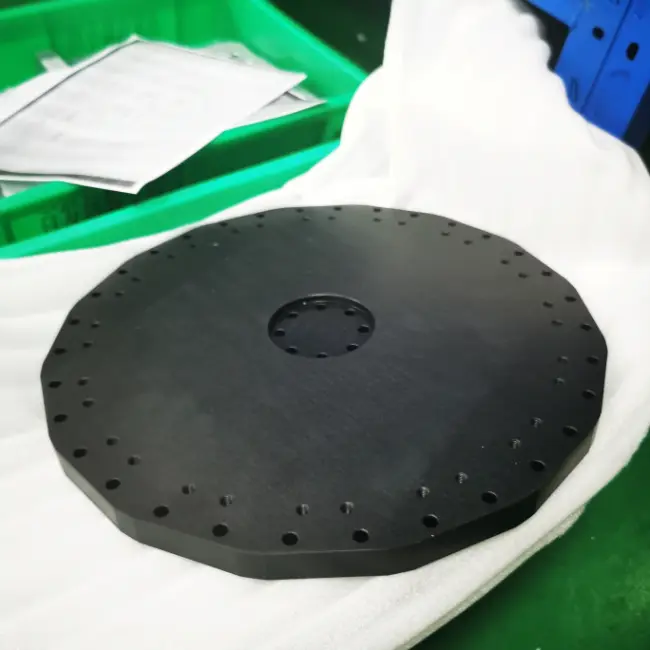
How Should Common Surface Finishes Be Selected?
Decorative Anodizing
6063 more readily achieves a bright, uniform metallic appearance and is suitable for clear, light-colored finishes and parts with demanding appearance requirements. 6061 also responds well to 양극 산화, but differences in alloy composition and the original surface mean that the resulting shade and gloss may differ from those of 6063.
하드 아노다이징
Both are suitable for hard anodizing, and 6063 can also develop a coating with good wear and corrosion resistance. The advantage of 6061 is its higher substrate strength, making it suitable for functional surfaces that also carry mechanical loads. Coating hardness and wear resistance should be compared for the actual process used.
Blasting and Anodizing
Both can achieve a matte surface, with the main difference arising from the underlying surface before blasting. 6063 extrusions may retain extrusion lines, while machined 6061 parts may retain tool marks. Once prominent marks have been reduced to comparable levels, both can achieve a uniform matte finish.
알로다인
The two have similar suitability, both providing thin-film corrosion protection, a base for painting, and specified low electrical contact resistance. Clear, lightly iridescent, or golden colors are mainly determined by the chemical system and processing conditions; alloy designation alone does not determine film color. Corrosion protection and contact resistance should be compared within the same class.
분체 도장 또는 액체 도장
Both can achieve similar color, gloss, and coating hardness, and an opaque coating can conceal differences in the alloys’ natural color. Final smoothness is affected by extrusion lines, tool marks, and pretreatment. Coating adhesion and corrosion performance also depend on substrate composition, pretreatment, and curing quality.
Electroless 니켈 도금
With the same nickel-phosphorus system and post-treatment, both can achieve similar coating color, hardness, and wear resistance. Substrate differences mainly affect pre-plating activation, zincating, and adhesion control. The higher substrate strength of 6061 makes it better suited to parts requiring both load-bearing capacity and surface wear resistance.
Material Selection by Application
| 응용 분야 | Common 6061 Parts | Common 6063 Parts |
|---|---|---|
| Industrial equipment and automation | Mounting plates, fixtures, connecting mounts, mechanical brackets | Equipment frames, mounting profiles, protective enclosures |
| Electronics and communications | CNC-machined enclosures, structural brackets, mounting bases | Extruded enclosures, heat-dissipating housings, decorative frames |
| Heat dissipation and water cooling | CNC-machined cold plates, channel plates, heat sink bases | Finned heat sinks, heat sink profiles |
| Transportation equipment | Connectors, structural supports, mechanical mounts | Interior trim profiles, lighting housings, equipment frames |
| Aerospace and defense equipment | Instrument brackets, electronics enclosures, equipment mounting structures | Suitable heat-dissipating and enclosure profiles for electronic equipment |
| Construction and decoration | Special-purpose connectors, mounting brackets | Window and door frames, decorative trims, cladding profiles |
Both materials can be used together in one assembly. For example, communications equipment can use 6061 for a precision machined mounting base and 6063 for a long heat-dissipating enclosure, with assembly, grounding, and color requirements checked together.
항공우주 그리고 defense projects follow the alloy, temper, and verification requirements specified on the drawing. The material’s application must be matched to the loads and environmental conditions of the specific part.
How Do Total Cost and Purchasing Requirements Compare?
For Small Batches, Compare Readily Available Blanks First
For small quantities of brackets, mounting plates, and deep-cavity housings, standard plate and bar generally simplify material preparation and production planning. 6061 is available in a broad range of common sizes. Selecting blanks close to the finished dimensions reduces waste and rough machining time.
Standard 6063 tube or profiles can also provide an economical solution when they are close to the part’s shape. Compare material unit prices for the same size, temper, and purchase quantity.
For Batch Production, Calculate the Allocated Extrusion Die Cost
For repeat production of long housings, heat sinks, and constant-cross-section parts, custom extrusion can reduce material removal.
A complete quotation should include die cost, die trials, minimum order quantity, material utilization, and secondary machining time. With sufficient planned volume, the cost advantage of the extrusion route becomes more apparent.
Part Complexity Determines Machining Cost
Deep cavities, thin walls, hole patterns on multiple faces, tight tolerances, and positional and roundness tolerances for holes machined on curved surfaces increase the number of setups and finish-machining operations, as well as inspection requirements, for both materials.
Defining critical dimensions, areas where tool marks are acceptable, and cosmetic surfaces can reduce unnecessary finish machining and surface treatment costs. Where 6063 requires a larger cross section to meet the load requirements, include the additional material, weight, and space costs in the comparison.
Can 6063 Replace 6061?
A substitution can be proposed after the design has been reassessed. Check yield strength, cross-sectional dimensions, connection load capacity, fatigue requirements, and surface appearance.
When the drawing specifies a material, a substitution requires the designer’s approval and corresponding updates to the drawing and acceptance documents. Purchasing records should include, at a minimum, the alloy, temper, product standard, material certificate, and batch records.
자주 묻는 질문
What are the key differences between 6063-T5 and 6061-T6 aluminum?
6061-T6 has higher strength and hardness, making it suitable for load-bearing brackets, mounting plates, and precision machined parts;
6063-T5 is suitable for complex extruded profiles, frames, and heat-dissipating enclosures. T5 is cooled from an elevated-temperature shaping process and artificially aged; T6 is solution heat treated and artificially aged.
Can 6061 and 6063 Be Welded Together?
Yes. They can be joined using suitable TIG or MIG processes and filler metals. Load-bearing joints require an assessment of the weld and the heat-affected zones on both sides, followed by the appropriate process qualification to establish acceptance requirements.
How Can Buyers Verify Whether Similar-Looking Incoming Material Is 6061 or 6063?
Check the material certificate and test the chemical composition using spark optical emission spectrometry. Color, feel, or hardness alone cannot reliably distinguish the two.
Can Both Materials Match in Color After Anodizing When Used in the Same Assembly?
A close color match is possible, but an exact match is difficult to guarantee. Because 6061 and 6063 have different compositions, differences in shade and gloss can occur after anodizing. For mating parts that require strictly consistent appearance, use material of the same alloy, temper, and batch.
How Should You Choose Between 6061 and 6063?
When to Choose 6061 Aluminum
Choose it when the part prioritizes load-bearing performance, precision hole patterns, deep cavities, or machining from plate and bar, such as mounting plates, fixtures, connecting mounts, and mechanical brackets. T651 products merit particular consideration for plate parts with substantial material removal.
When to Choose 6063
Choose it when the part prioritizes complex constant cross sections, decorative surfaces, or extruded heat-dissipating structures, such as long enclosures, frames, lighting housings, and finned heat sinks.
Where welding is involved, determine both post-weld load-bearing capacity and the final finish-machining sequence. Projects with existing drawings should be manufactured to the specified material temper and acceptance conditions.
Why Choose Weldo Machining for Custom Aluminum Parts?
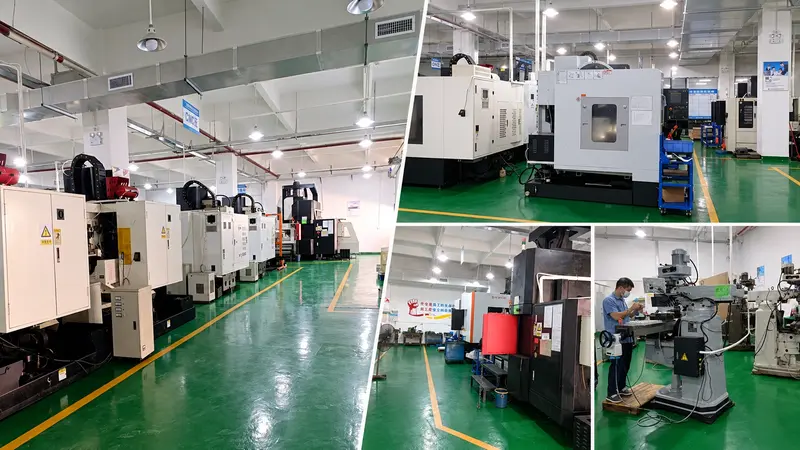
Weldo Machining provides multi-axis CNC machining, precision grinding, 와이어 방전 가공, 표면 마감, and dimensional inspection. With 15 years of machining experience and a team of more than 80 people, we offer a one-stop service and cost-effective machined parts, earning the trust of customers in Europe, the United States, Japan, and South Korea. Our overall annual shipment fulfillment rate and yield rate have both exceeded 95%.
Submit your drawing, quantity, and operating requirements. We can assess the manufacturing route based on blank dimensions, critical fits, and surface requirements, recommend improvements to machining efficiency and manufacturing processes, and provide a custom quotation.