
7075 aluminum is a high-strength, heat-treatable Al-Zn-Mg-Cu alloy used in aerospace, defense, UAVs, racing vehicles, and high-load industrial structures. Its strength is higher than 6061, but it requires more careful control of corrosion resistance, weldability, and machining stability. Custom parts must be designed with the material temper, part geometry, and surface protection requirements in mind.
Chemical Composition of 7075 Aluminum
The main strengthening elements in 7075 are zinc, magnesium, and copper. Limits vary by standard and product form. The following are typical ranges:
| 요소 | Typical content by mass |
|---|---|
| 아연(Zn) | 5.1%–6.1% |
| 마그네슘(Mg) | 2.1%–2.9% |
| 구리(Cu) | 1.2%–2.0% |
| 크롬(Cr) | 0.18%–0.28% |
| 철(Fe) | ≤0.50% |
| 실리콘 (Si) | ≤0.40% |
| 망간 (Mn) | ≤0.30% |
| 티타늄(Ti) | ≤0.20% |
For production orders, the actual melt analysis should be checked against the specified AMS, ASTM, EN, or project standard.
Key Properties of 7075 Aluminum
기계적 특성
The typical tensile strength of 7075-T6 and 7075-T651 is approximately 510–570 MPa, with a yield strength of about 430–505 MPa and hardness of approximately 135–160 HB. Overaged tempers such as T73 and T7351 provide better stress-corrosion resistance but lower strength than T6.
Elastic Modulus and Young’s Modulus
The elastic modulus of 7075 is approximately 71.7 GPa. Its Young’s modulus has the same value and is used to calculate elastic deformation under load.
밀도
The density is approximately 2.81 g/cm³. Although slightly higher than 6061, it remains significantly lower than steel and supports lightweight, high-strength structures.
열전도율
The thermal conductivity of 7075 is approximately 130–150 W/(m·K), lower than the typical 160–170 W/(m·K) of 6061. For water-cooling plates or heat sinks, the flow path, wall thickness, and heat-transfer area should be optimized to meet thermal-management requirements.
두꺼움(0.0001” ~ 0.002”)
The electrical conductivity of 7075 is typically about 30%–36% IACS, or approximately 52%–62% that of standard copper. It is suitable for structural grounding and shielding brackets but is not used as a replacement for high-current conductors.
자성
7075 is a non-ferromagnetic aluminum alloy. A conventional magnet does not produce noticeable attraction.
내식성
7075 has lower corrosion resistance than 6061. Humidity, salt spray, seawater, and contact with dissimilar metals require suitable surface treatment and isolation design.
용접성
7075 can be welded by TIG, MIG, and laser welding, but the heat-affected zone experiences significant softening. High-reliability load-bearing structures generally use bolting, riveting, or mechanical locking. Welding requires process qualification and strength verification.
Common 7075 Tempers
| 합금 | 특징 | 일반적인 적용 분야 |
|---|---|---|
| 7075-O | Annealed condition with low strength and good formability | Formed parts and complex pre-machined parts |
| 7075-T6 | High strength and widely used | High-strength brackets, connectors, and structural parts |
| 7075-T651 | T6 condition with stress relief by stretching | Thick plates, precision plates, and large bases |
| 7075-T6511 | Extruded and stress-relieved by stretching | Profiles and long structural parts |
| 7075-T73 | Overaged condition with improved stress-corrosion resistance | High-reliability structural parts |
| 7075-T7351 | Thick plate overaged and stress-relieved | Aerospace thick plates and large structures |
| 7075-T76 | Balances strength and exfoliation-corrosion resistance | Aerospace and outdoor structures |
| 7075-T7651 | Improved dimensional stability and corrosion resistance for thick plate | High-reliability plate parts |
What Is the Difference Between 7075-T6 and Aerospace-Grade 7075-T6?
7075-T6 identifies the alloy grade and heat-treatment condition. It does not itself represent aerospace certification. Aerospace-grade 7075-T6 must also meet specified AMS, ASTM, or EN requirements and include the heat-lot number, material certificate, inspection records, and complete traceability documentation.
Purchasing teams should confirm:
- Alloy grade and temper
- Applicable standard
- Heat-lot number and material certificate
- Chemical composition and mechanical properties
- Ultrasonic testing requirements
- Certificate of conformity requirements
Procurement and Machining Points for 7075-T651 Aluminum Plate
7075-T651 is suitable for large plates and parts that require high dimensional stability. Purchasing specifications should define plate thickness, flatness, thickness tolerance, machining allowance, and internal-quality requirements.
For thick-plate projects, ultrasonic testing can be added according to the drawing or industry standard to check for delamination, inclusions, and internal defects. Machining should use symmetrical material removal, staged machining, and stress-relief procedures to reduce warping and dimensional drift.
Differences Between 7075 and Common Aluminum Alloys
| 재료 | 강도 | 내식성 | 절삭 가공성 | 일반적인 적용 분야 |
|---|---|---|---|---|
| 7075 | 높음 | 중간 | 중간 | Aerospace structures and high-strength brackets |
| 6061 | Medium-high | 좋음 | 좋음 | General structures, housings, and heat sinks |
| 6063 | 중간 | 좋음 | 좋음 | Profiles, decorative parts, and frames |
| 2024 | 높음 | 비교적 낮은 | 중간 | Aerospace plates and load-bearing parts |
| 7050 | 매우 높음 | Better than 7075 thick plate | 중간 | Aerospace thick plates and large load-bearing structures |
CNC Machining Performance of 7075 Aluminum
7075 has higher strength and hardness than 6061, resulting in greater cutting forces and tool loads. Thin walls, deep cavities, large plates, and complex surfaces require careful control of heat, vibration, and residual stress.
Recommended practices include:
- Use sharp carbide tools
- Apply stable fixturing and auxiliary support
- Use coolant to control cutting heat
- Leave uniform stock during roughing
- Remove material symmetrically
- Allow settling or stress relief after roughing
- Finish critical dimensions after the material has stabilized
- Use consistent machining datums and reduce repeated fixturing
Supported Machining Processes for 7075
Multi-Axis CNC Milling
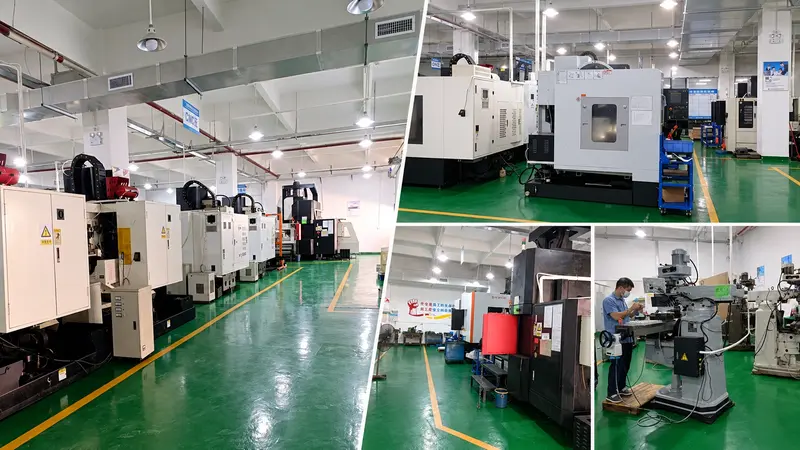
Suitable for aerospace brackets, complex surfaces, deep cavities, angled holes, and multi-face structures. Five-axis machining reduces the number of setups and improves positional accuracy.
CNC Turning and Mill-Turn Machining
Suitable for shafts, flanges, rings, connectors, and turned parts with side holes or milled slots.
Precision Hole and Thread Machining
Supports drilling, reaming, precision boring, thread milling, and thread turning for bearing bores, locating holes, and assembly holes.
Precision Grinding and Wire EDM
Suitable for high-precision profiles, narrow slots, complex contours, and local features that are difficult to produce with conventional cutting tools.
Common 7075 Machining Issues and Control Methods
Machining deformation: Use T651 or T6511 material with symmetrical machining and staged material removal to control dimensional changes.
Tool wear: Use sharp tools and adjust cutting speed, feed rate, and depth of cut according to the material condition.
Burrs and edge chipping: Optimize entry direction and tool paths, then add dedicated deburring.
Hole-position deviation: Use a consistent fixturing datum, precision fixtures, and in-process alignment when required.
Surface scratches: Use soft fixtures, protective film, and separate protective packaging.
Common Surface Finishes for 7075
아노다이징
Improves corrosion resistance, wear resistance, and appearance consistency. It is suitable for brackets, housings, panels, and mounting parts.
하드 아노다이징
Suitable for guide rails, sliding parts, fixtures, and wear surfaces. Before processing, confirm the effect of coating thickness on bore sizes, threads, and assembly clearances.
알로다인 Conversion Coating
This thin coating causes minimal dimensional change and retains electrical conductivity. It is suitable for aerospace structures, electronic housings, and paint primers.
샌드블라스팅 and Painting
Sandblasting improves surface texture and paint adhesion. Painting improves weather resistance and salt-spray protection. Coating thickness should be included in the assembly dimension design.
Electroless Nickel or 도금
These finishes are suitable when a part requires special wear resistance, corrosion protection, or dimensional restoration. Before processing, confirm the pretreatment, coating adhesion, and hydrogen-embrittlement risks.
Performance of 7075 Aluminum in Different Environments
Dry Indoor Environments
7075 provides stable strength and dimensions indoors under dry conditions. Natural machining, clear anodizing, or basic protective oil is generally sufficient for standard requirements.
Humid and Rainy Environments
Long-term moisture exposure increases the risk of pitting and corrosion at joints. Alodine, anodizing, or a sealing coating should be used together with drainage and sealing features.
Marine and Salt-Spray Environments
Chloride ions accelerate pitting and increase corrosion risk in highly stressed areas. T73, T7351, T76, or T7651 can be selected with sealed anodizing, primer, and topcoat protection.
Acidic Environments
Acidic media can damage the oxide film and corrode the aluminum substrate. Select a compatible protective coating according to the medium, concentration, and temperature, and complete compatibility testing before production.
Alkaline Environments
Strong alkaline media rapidly dissolve aluminum. An alkali-resistant barrier coating or an alternative material should be selected according to the operating medium.
Sand and Dust Environments
Abrasive particles can wear exposed surfaces, sliding areas, and edges. Hard anodizing or a wear-resistant coating should be combined with dust-protection features.
Ultraviolet Environments
The 7075 metal substrate is stable under UV exposure, while ordinary coatings may fade or age. Outdoor parts should use outdoor-grade powder coating, polyurethane paint, or a UV-resistant clear coating.
High-Temperature Environments
Long-term exposure above 100–120°C affects the aging condition, strength, and dimensional stability of 7075. Thermal-cycle validation should be completed during design, and the material temper and tolerance requirements should be reconfirmed.
Materials That Should Not Be Directly Joined to 7075
In humid, salt-spray, or other conductive environments, direct contact between 7075 and materials with a large electrochemical potential difference creates galvanic corrosion. Isolation or sealing measures should be used.
| Mating material | Main risk | Recommended measures |
|---|---|---|
| Copper, brass, and bronze | Large potential difference accelerates aluminum corrosion | Use insulating washers, sealant, or isolation sleeves |
| 탄소강 및 합금강 | Contact corrosion can occur in humid environments | Use coated fasteners and isolate the contact surfaces |
| 스테인리스강 | Local corrosion may occur in salt-spray environments | Use insulating washers, coatings, or sealants |
| 티타늄 합금 | The higher potential requires isolation at the joint | Use insulating film, washers, and sealing |
| Carbon-fiber composites | High conductivity creates a significant galvanic-corrosion risk | Use a glass-fiber isolation layer, coating, or structural adhesive |
Common Raw Material Forms of 7075
Plate
Suitable for brackets, panels, bases, and connection plates. 7075-T6 or 7075-T651 is commonly selected.
Thick Plate
Suitable for large structural plates, aerospace bases, and high-strength supports. T651, flatness, and internal quality are key purchasing requirements.
Bar
Round, square, and hexagonal bars are used for shafts, pins, sleeves, and connectors.
Tube
Suitable for support tubes, sleeves, and lightweight frames. Confirm the outside diameter, inside diameter, wall thickness, and tolerances during purchasing.
Extrusions
Suitable for guide rails, frames, and long structural parts. Confirm the cross-section and straightness before machining.
단조품
Forgings provide a dense structure and stable load-bearing performance. They are suitable for high-load brackets, connection seats, and hub-type parts.

Common Joining Methods for 7075 Parts
Bolted joints: Suitable for high-load and removable structures. Use isolation measures when joining dissimilar metals.
Riveting: Suitable for thin sheets and lightweight aerospace structures, with high joining efficiency.
Press fits: Suitable for pins, bushings, and locating parts. The interference should be calculated according to the material and assembly force.
Threaded joints: Suitable for modular structures. Wire-thread inserts can be added to frequently disassembled locations.
Bonding and sealing: Suitable for lightweight housings and waterproof structures. Degreasing and surface activation are required before bonding.
Welded joints: Can be used after process qualification. The heat-affected-zone strength and deformation must be verified after welding.
Applications and Common Parts
항공우주
Brackets, connection seats, equipment trays, frame parts, and internal structural components.
Defense Equipment
Equipment housings, mounting bases, sensor brackets, lightweight structural parts, and portable assemblies.
UAVs and 로봇공학
Arm connectors, payload brackets, joint seats, mounting plates, and weight-reduction structures.
Automotive and Racing
Suspension brackets, hub components, connectors, and high-strength mounting seats.
산업 장비
Fixtures, mold components, guide-rail bases, robotic-arm connectors, and high-strength flanges.
해양 및 야외 장비
Instrument brackets, mounting bases, and lightweight structural parts. Reliable surface protection is required in salt-spray environments.
How to Control the Cost of Custom 7075 Parts
- Select plate, bar, extrusion, or forging according to the part size and structure.
- Apply tight tolerances only to critical dimensions.
- Optimize datums and fixturing to reduce repeated positioning.
- Address deep cavities, thin walls, and complex surfaces during DFM review.
- Apply surface finishing only to areas that require protection or decoration.
- Use batch nesting and a standardized process route.
- Define inspection items and report scope according to the project risk level.
Weldo’s 7075 Custom Machining Capabilities
웰도 provides three-axis, four-axis, and five-axis CNC machining, CNC turning, mill-turn machining, precision grinding, and wire EDM.
The service also covers anodizing, hard anodizing, Alodine, sandblasting, painting, and plating. Critical dimensions are verified with coordinate measuring machines.
Weldo supports prototypes, small batches, and repeat production. Manufacturing routes and quotations are prepared according to the drawings, material standards, environmental requirements, and acceptance criteria.
7075 Aluminum Custom Machining FAQ
How can I confirm that 7075-T6 is aerospace-grade material?
7075-T6 identifies the alloy grade and temper. Aerospace-grade material must also meet the specified AMS, ASTM, or EN standard and include material certificates and batch traceability.
What quality documents are required for custom 7075 parts?
Common documents include an EN 10204 3.1 material certificate, certificate of conformity, dimensional inspection report, surface-finish record, and batch-traceability information.
What inspections are required for 7075-T651 thick plate?
The main checks include thickness, flatness, external dimensions, hardness, and material temper. Ultrasonic testing can be added for high-reliability projects.
How are critical dimensions on 7075 parts finally accepted?
Datums, hole locations, profiles, and assembly dimensions are inspected according to the drawing. Critical dimensions can be verified with a coordinate measuring machine, with measurement data included in the inspection report.
Submit Your Details for a 7075 Aluminum Machining Quote
Please submit the following six items:
- 2D engineering drawing or 3D model
- 7075 material temper
- Required quantity and batch plan
- Critical dimensions and tolerances
- Surface-finish requirements
- Inspection standard and required delivery date
Weldo will develop a manufacturing plan and provide a quotation based on the part structure, material temper, machining requirements, and acceptance criteria.