In the field of plastic processing, Polyacetal is POM, commonly known as acetal steel or super steel. Its chemical name is polyoxymethylene, and it is also commonly called polyformaldehyde or acetal resin. Its main structural unit is a crystalline thermoplastic resin composed of (-CH2O-).
Polyacetal material is mainly divided into POM-H (Polyacetal homopolymer) and POM-C (Polyacetal copolymer). The core difference between the two lies in molecular structure and performance:
The molecular chains of Polyacetal homopolymer are more regular and have higher crystallinity, so rigidity, hardness, creep resistance, and fatigue resistance are more outstanding, making it suitable for high-strength, high-dimensional-stability parts;
Polyacetal POM-C, because comonomers are introduced, has slightly lower crystallinity and slightly weaker strength, but better thermal stability, hydrolysis resistance, chemical corrosion resistance, and processing performance. Its processing window is wider, making it more suitable for complex injection molding, long-flow-path molding, and applications involving long-term contact with hot water or chemical media.
| English Spelling | Chemical Name | Meaning |
| POM-C | Copolymer formaldehyde | Copolymer acetal / Acetal copolymer |
| POM-H | Homopolymer formaldehyde | Homopolymer acetal / Acetal homopolymer |
Below, I will provide a general interpretation of Polyacetal strength and related content.
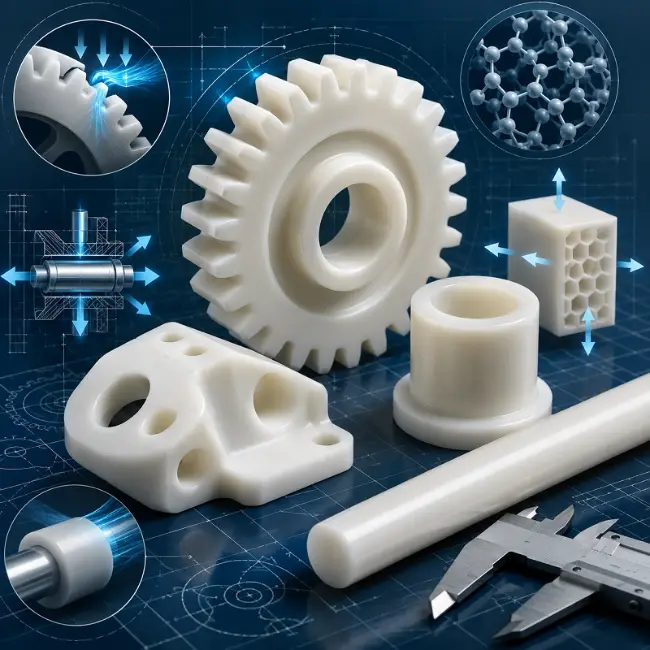
Polyacetal strength
To comprehensively interpret the strength performance of polyacetal resin, I will discuss it from dimensions such as mechanical strength, wear resistance, dimensional stability, long-term load-bearing capacity, and application replacement capability:
Mechanical Properties of Polyacetal
Tensile strength: The tensile strength of Polyacetal materials is usually tested according to ISO 527 or ASTM D638 standards. Copolymer POM is about 60 MPa, while homopolymer POM is usually about 10% higher. Higher tensile strength enables POM parts to withstand certain tensile loads without easily breaking, making them suitable for gears, connectors, fasteners, and load-bearing structural parts. Material grade, molding conditions, and processing direction affect actual tensile performance, so material selection for high-load applications needs to be combined with product structure and operating environment.
Compression strength: The compression strength of POM is usually measured according to standards such as ISO 604 / GB/T 1041. Copolymer POM is about 110 MPa, while homopolymer POM is usually slightly higher. Good compression resistance gives POM good load-bearing capacity in compressed parts such as bushings, pads, sliders, and support parts. During processing, local stress concentration and excessive clamping should be avoided to reduce compression deformation or dimensional changes under long-term loads.
Flexural strength: POM flexural strength is generally measured by a three-point bending test according to ISO 178 or ASTM D790. Copolymer POM is about 90 MPa, while homopolymer POM is usually about 10% higher. Better bending resistance allows it to maintain structural stability in bending, load-supporting, or assembly compression scenarios, making it suitable for brackets, snap-fits, guide rails, and precision structural parts. Part thickness, rib design, and molding shrinkage control directly affect flexural load-bearing performance.
Impact strength: POM impact strength is commonly measured by the Izod notched impact test, with common standards including ASTM D256 and ISO 180. The notched impact strength of copolymer POM is about 6 kJ/m², while homopolymer POM is about 9 kJ/m². This index is mainly used to evaluate the material’s resistance to cracking under stress concentration or sudden impact conditions. Because POM is sensitive to notches, sharp corners, deep grooves, and excessively small radii should be avoided in design to reduce the risk of cracking.
Flexural modulus: The flexural modulus of POM is usually tested according to ISO 178 / GB/T 9341 standards. Copolymer POM is about 2400-2600 MPa, while homopolymer POM is about 2800-3000 MPa. A higher flexural modulus indicates that POM has good rigidity and deformation resistance, allowing it to maintain good dimensional stability under load. For precision transmission parts, sliding parts, and assembly parts, stable rigidity helps improve fitting accuracy and service life.
Compressive strength: The compressive strength of Polyacetal (POM) is usually measured by compression tests according to ISO 604 or ASTM D695. Cylindrical or block specimens are commonly used, and axial compression load is applied on a universal material testing machine. The result is calculated based on the maximum compression load and the original bearing area. POM often uses compressive strength at 10% strain as a reference, with homopolymer POM at about 126 MPa and copolymer POM at about 112 MPa. Higher compressive strength makes it suitable for bushings, pads, support parts, and sliding load-bearing parts, and it can still maintain good structural stability under long-term compression conditions.
Hardness: The hardness of Polyacetal is usually expressed as Rockwell M hardness, and Shore D can also be used for quick comparison. The Rockwell hardness of homopolymer POM is generally about M90-M94, while copolymer POM is about M80-M85; the common Shore D hardness range is about D80-D94. Higher hardness gives POM good resistance to indentation, scratching, and wear, making it suitable for gears, sliders, rollers, and precision contact parts. Different hardness scales have different testing principles, so actual selection should be based on the data sheet of the specific grade.
Elongation at break: The elongation at break of Polyacetal is usually measured by tensile testing according to ISO 527 or GB/T 1040, and is used to evaluate the material’s ability to stretch before fracture. Conventional homopolymer POM generally has elongation at break of about 15%-30%, while copolymer POM is about 30%-60%. Higher elongation at break indicates better toughness and deformation absorption capacity. Copolymer POM usually has better ductility and is more suitable for parts requiring toughness, assembly deformation, or crack resistance.
Fatigue resistance: The fatigue resistance of Polyacetal is usually measured through tension-tension fatigue, tension-compression fatigue, or flexural fatigue tests, and the results are generally evaluated by the number of cycles to failure and S-N curves. POM has a fatigue strength of about 35 MPa, which is relatively outstanding among engineering plastics. Good fatigue resistance enables it to withstand repeated loads and periodic motion, making it suitable for gears, bushings, connecting rods, transmission parts, and reciprocating structural parts.
Creep resistance: The creep resistance of Polyacetal is usually tested according to ISO 899-1 or ASTM D2990, with deformation over time continuously recorded under constant temperature and constant stress. POM has good creep resistance. For example, when tested at room temperature under a 21 MPa load for 3000 hours, the creep value is about 2.3%. Lower creep deformation helps parts maintain dimensional stability under long-term stress, making them suitable for precision assembly parts, load-bearing sliders, support parts, and positioning components.
Wear resistance: The wear resistance of Polyacetal can usually be evaluated through Taber abrasion tests, pin-on-disk friction and wear tests, thrust washer tests, or reciprocating friction tests. Different methods apply to different working conditions. The coefficient of friction of POM is usually about 0.15-0.35. With high crystallinity, it can maintain low friction and good wear resistance even under unlubricated conditions. Its wear resistance is better than that of common engineering plastics such as PA and ABS, making it suitable for long-term friction parts such as gears, bearings, bushings, sliders, guide rails, and rollers.
Density: POM density can usually be measured by the water displacement method, that is, first weighing the sample mass, then measuring its displaced water volume, and calculating the ratio of mass to volume. In general, copolymer POM has a density of about 1.41 g/cm³, while homopolymer POM is about 1.42 g/cm³. The lower density gives POM an obvious lightweight advantage compared with metal materials, while still maintaining good strength, rigidity, and dimensional stability, making it suitable for replacing some metal parts.

The typical measured values of mechanical strength above are summarized in the following table
| Parameter (Typical Value) | Copolymer Polyacetal | Homopolymer Polyacetal | Main Purpose |
| Tensile Strength | ≈ 60 MPa | About 66 MPa | Ability to withstand tensile loads |
| Compression Strength | ≈ 110 MPa | About 121 MPa | Ability to withstand compression loads |
| Flexural Strength | ≈ 90 MPa | ≈ 99 MPa | Ability to resist bending and fracture |
| Impact Strength | ≈ 6 kJ/m² | ≈ 9 kJ/m² | Evaluates impact resistance under stress concentration conditions |
| Flexural Modulus | 2400-2600 MPa | 2800-3000 MPa | Material rigidity and deformation resistance |
| Compressive Strength | ≈ 112 MPa | ≈ 126 MPa | Long-term compression or structural load-bearing ability |
| Hardness | Rockwell M80-M85; Shore D ≈ D80-D94 | Rockwell M90-M94; Shore D about D80-D94 | Surface indentation and scratch resistance |
| Elongation at Break | ≈ 30%-60% | ≈ 15%-30% | Toughness, ductility, and fracture deformation ability |
| Fatigue Resistance | ≈ 35 MPa | ≈ 35 MPa | Service life of parts under repeated stress |
| Creep Resistance | Creep ≈ 2.3% at room temperature, 21 MPa, 3000 h | Usually higher rigidity, depending on specific grade | Dimensional stability under long-term stress |
| Coefficient of Friction | 0.15-0.35 | 0.15-0.35 | Performance of friction parts such as gears, bushings, sliders, and guide rails |
| Density | 1.41 g/cm³ | 1.42 g/cm³ | Relatively light material, lightweight choice |
Advantages and Disadvantages of Polyacetal:
Advantages of Polyacetal:
1. High Mechanical Strength and Rigidity
Polyacetal (POM) has high tensile strength and flexural modulus, can withstand large loads without easily deforming, and has mechanical properties close to metal, making it suitable for load-bearing parts such as gears, bearings, and bolts.
2. Excellent Fatigue Resistance
Polyacetal can still maintain good structural stability under repeated alternating loads, and its fatigue life is better than that of most ordinary engineering plastics. It is suitable for long-term reciprocating parts such as automotive wiper gears and transmission components.
3. Low Coefficient of Friction and Self-Lubricating Property
Polyacetal has a low coefficient of friction and good self-lubricating performance, allowing long-term use without frequent addition of lubricants. It has outstanding wear resistance and is commonly used in sliding parts, rollers, door lock handles, and other components.
4. Low Water Absorption and Dimensional Stability
Polyacetal has low water absorption and small dimensional changes during long-term use, allowing it to maintain good mechanical properties and processing accuracy. It is suitable for sanitaryware parts, faucet valve cores, and precision structural parts.
5. Good Chemical Resistance and Electrical Insulation
Polyacetal has good resistance to most organic solvents, gasoline, lubricating oil, and other substances. It also has excellent electrical insulation performance and is suitable for automotive, electronic, electrical, mechanical, and household appliance fields.
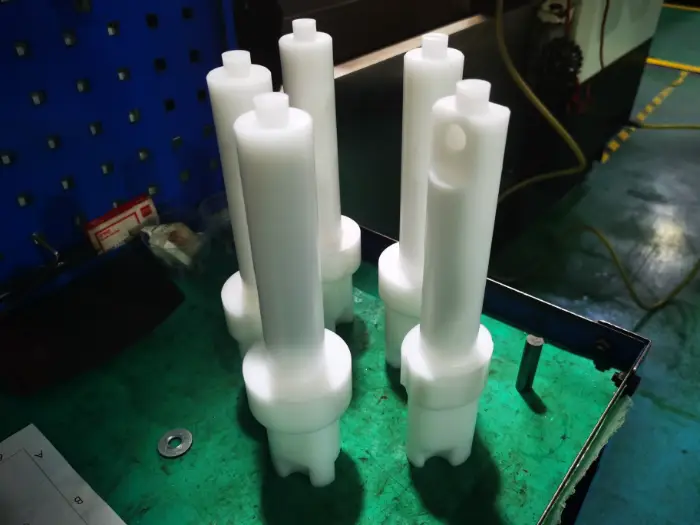
Disadvantages of Polyacetal
1. Limited Chemical Resistance
POM is not resistant to strong acids, strong alkalis, strong oxidants, and some organic halides. Long-term contact with these media may cause material decomposition or performance degradation, so material selection in chemical environments requires caution.
2. Poor Weather Resistance and Flame Retardancy
When POM is exposed to ultraviolet light, oxygen, and other environments for a long time, it is prone to aging, with surface chalking, cracking, and performance degradation. At the same time, its oxygen index is low, it burns easily when exposed to fire, and it may release irritating gases during combustion, making it unsuitable for scenarios with high weather resistance or flame-retardant requirements.
3. Notch Sensitivity and High Processing and Bonding Requirements
POM is sensitive to notches and stress concentration, and it is prone to cracking at defects when impacted. In addition, its processing temperature range is narrow, and overheating can easily cause decomposition. Its surface energy is also low and bonding performance is poor, which is not conducive to direct bonding or composite processing.
How Polyacetal Raw Materials Are Made
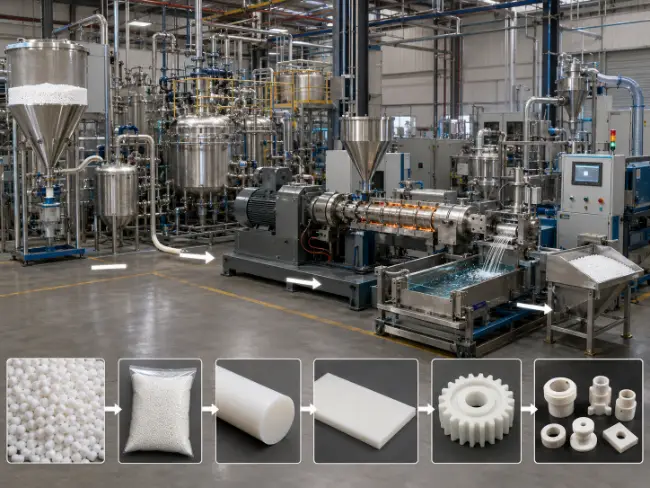
Homopolymer acetal uses high-purity formaldehyde as the monomer. After formaldehyde is prepared from methanol, it is concentrated and refined to remove water and impurities, then polymerized in an inert solution under the action of a cationic catalyst. To improve thermal stability, terminal hydroxyl groups must be esterified and end-capped with acetic anhydride, and curing agents, antioxidants, and other additives are added during pelletizing to make the product;
Copolymer acetal uses trioxane as the main monomer, and its process includes formaldehyde preparation, trioxane preparation, copolymerization, and stabilization treatment. Specifically, methanol is oxidized to produce formaldehyde, formaldehyde is trimerized to form trioxane, and then a small amount of comonomer is added for polymerization to obtain crude POM copolymer. Finally, stabilizers are added for pelletizing; it can also be compounded and modified by adding glass fiber, reinforcing agents, or special additives to produce materials of different performance grades.
Are Polyacetal and Derlin the Same Material?
Are Polyacetal and Derlin the Same Material?
Polyacetal (polyformaldehyde, POM) and Delrin are not completely the same concept, but Delrin is a type of Polyacetal.
Polyacetal includes two main types – homopolymer (POM-H) and copolymer (POM-C).
Delrin: It is the trade name of polyacetal homopolymer (POM-H) produced by DuPont in the United States.
Therefore, Delrin is a specific product of Polyacetal, but Polyacetal also includes other brands and types of polyformaldehyde materials, such as POM-C copolymers.
Both Polyacetal and Derlin can be modified and processed into materials with stronger comprehensive performance, improving durability and service performance in harsher environments
Is Polyacetal Toxic?
Polyacetal itself is non-toxic under normal use conditions, but attention should be paid to risks under specific scenarios:
Normal Use at Room Temperature
Compliant Polyacetal products, such as food-grade Polyacetal certified by FDA, EU food contact standards, or China GB 4806, are chemically stable at room temperature and do not release toxic substances. They meet food-grade safety use requirements and can be safely used in food contact, medical devices, household appliance parts, and other fields.
High Temperature or Extreme Conditions
If Polyacetal products remain in a high-temperature environment for a long time, such as above 220°C, they may thermally decompose and release formaldehyde gas, irritating the eyes and respiratory tract and even endangering health.
When burned, formaldehyde, carbon monoxide, and other toxic gases will be released, so Polyacetal products should be kept away from open flames or high-temperature sources, such as microwave heating.
Inferior or Non-Standard Polyacetal
Some Polyacetal products produced by non-standard manufacturers may contain harmful additives, such as lead- or cadmium-containing compounds. Long-term contact may damage health. It is recommended to choose regular products with certification marks.
Summary: Polyacetal itself is non-toxic, but high temperature, combustion, and other extreme conditions should be avoided, and compliant products should be selected to ensure safety.
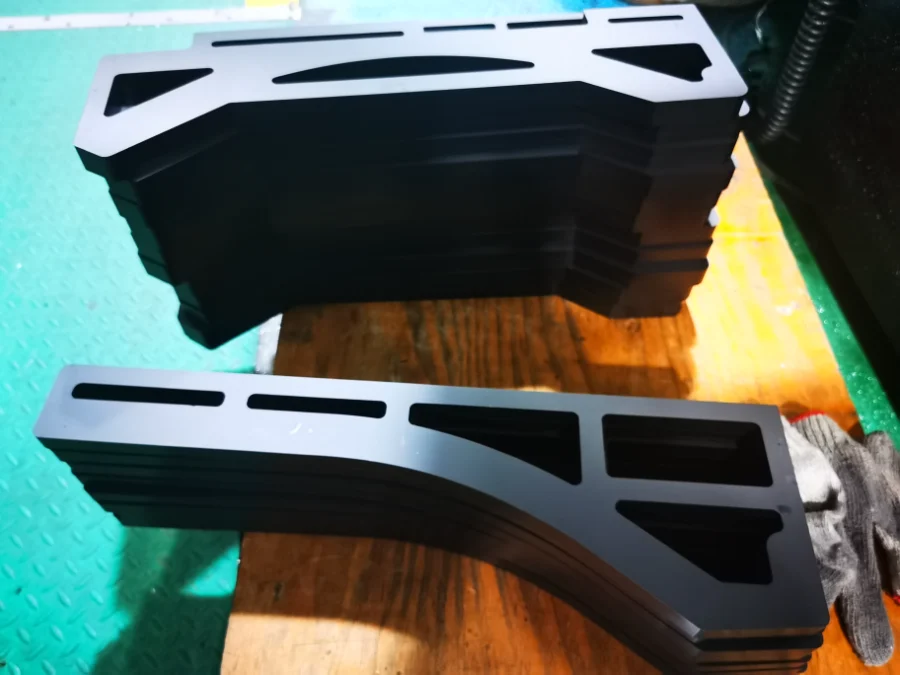
Common Shapes of Polyacetal
To meet different subsequent processing methods and application scenarios, Polyacetal manufacturers process the material in a molten state into different shapes
Pellets
This is the most common initial form of Polyacetal. It is usually supplied in small pellets, making it convenient for molding through injection molding, extrusion, and other processes.
Rod Stock
Made by extrusion molding, it is cylindrical in shape, and the diameter and length can be customized according to requirements. It is often used to make shaft parts, transmission rods, bearing bushings, and more.
Sheet Stock
The thickness and dimensions can be adjusted. It is suitable for making flat parts, housings, brackets, and more, and can also be further processed by cutting, drilling, and other secondary processing into complex shapes.
Tube Stock
Used where hollow structures are required, such as pipe connectors, fluid transmission components, and more, with high strength and chemical resistance.
Gears and Toothed Parts
Including spur gears, helical gears, worm gears, and more. By using the wear resistance and self-lubricating properties of Polyacetal, they are widely used in mechanical transmission systems.
Bearings and Bushings
They have various shapes, such as cylindrical, conical, or special shapes, and are used to reduce friction and wear. They are common in rotating parts of mechanical equipment.
Housings and Shells
They can be made into housings of various complex shapes to protect internal electronic components or mechanical parts, such as electronic device housings and instrument housings.
Snap-Fits and Fasteners
Including snap-fits, press studs, nuts, bolts, and more, they use the elasticity and strength of Polyacetal to achieve quick connection and fastening.
Custom Special-Shaped Parts
Made through injection molding, 3D printing, and other processes, they can be customized into complex shapes according to specific requirements, such as ergonomic handles and special structural parts.
These shapes reflect the wide application of Polyacetal in machinery, electronics, automotive, medical, and other fields. Their shape design usually needs to be optimized in combination with material performance and processing feasibility.
Common Processing Methods for Polyacetal Parts
Most Polyacetal materials cannot be directly used for assembly. Subsequent processing plans must be developed according to product structure, precision, and quantity requirements. Common processing methods mainly include injection molding, extrusion molding, CNC machining, blow molding, compression molding, and 3D printing.
Injection Molding
Injection molding is the most commonly used processing method for Polyacetal parts and is suitable for mass-producing parts with complex structures and high dimensional requirements. Its process is to heat and melt POM pellets, inject them into a mold, and form the part after cooling and solidification. During processing, melt temperature, mold temperature, injection pressure, and speed must be reasonably controlled to reduce shrinkage, warping, and internal stress problems.
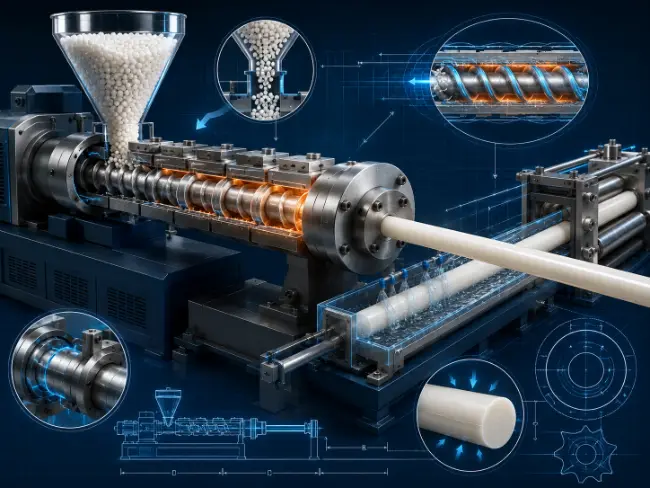
Extrusion Molding
Extrusion molding is mainly used to produce continuous-shaped products such as Polyacetal rods, sheets, tubes, and profiles, which can then be made into specific parts through cutting machining. This process continuously extrudes molten POM from a die through an extruder, then cools and sets it. During processing, melt temperature, screw speed, and cooling conditions should be controlled to avoid material degradation or surface defects.
CNC Machining
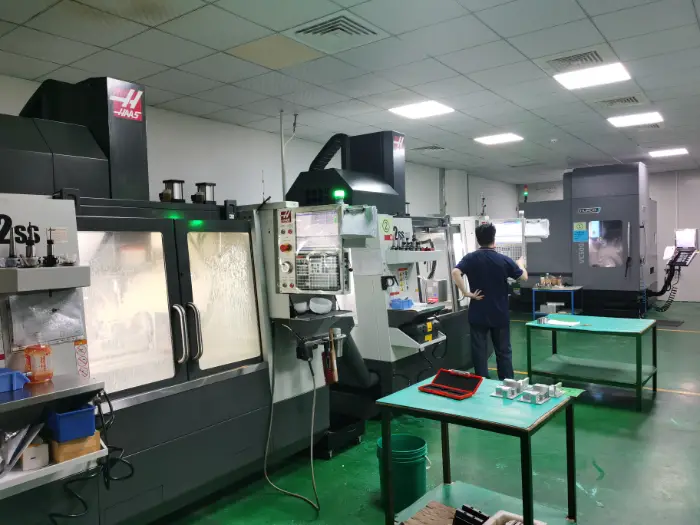
CNC machining is suitable for small-batch, customized, and high-precision POM parts production, and is often used for prototype making, structural verification, and precision part machining. Among them, CNC milling is suitable for machining planes, holes, slots, and complex contours; CNC turning is suitable for machining rotational parts such as bushings, rollers, and washers. During processing, cutting parameters and clamping methods should be controlled to avoid deformation and burrs.
Blow Molding
Blow molding is mainly used to produce Polyacetal hollow products, such as containers, housings, or special hollow structural parts. Its process usually involves first making a parison, then using compressed air to expand it inside the mold. During processing, attention should be paid to parison thickness, blowing pressure, and mold temperature to ensure uniform product wall thickness and stable shape.
Compression Molding
Compression molding is suitable for producing POM parts with relatively simple shapes, larger dimensions, or high requirements for material density. This process places Polyacetal powder or pellets into a mold and completes molding through heating and pressure. The key is to control temperature, pressure, and holding time to ensure sufficient material filling and reduce internal stress and deformation.
3D Printing
3D printing is suitable for manufacturing small-batch, customized, or complex-structured Polyacetal parts, and is often used for product development and prototype verification. Common processes include FDM and SLS. Because POM is sensitive to temperature and cooling conditions, layer thickness, speed, and temperature parameters must be reasonably set during printing to improve molding quality and dimensional accuracy.
Will Modified Polyacetal Materials Change Strength?
Modified Polyacetal materials usually change their strength. The specific changes depend on the modification method and material type. The following are common situations:
Reinforced Modification (Strength Improvement)
Fiber reinforcement: Fiber materials such as glass fiber, carbon fiber, and whiskers are filled into the Polyacetal matrix. Through the skeletal effect of the fibers, stress is transmitted and dispersed, significantly improving the tensile strength, flexural strength, and rigidity of POM. For example, the tensile strength of glass-fiber-reinforced Polyacetal can increase by 2-3 times, and the flexural modulus increases significantly.
Inorganic filler reinforcement: Adding inorganic fillers such as alumina, talc, and potassium titanate can improve the hardness and compressive strength of Polyacetal while improving dimensional stability, making the material less likely to deform when bearing loads.
Toughening Modification (Strength May Change, Toughness Improves)
Elastomer toughening: Adding elastomers such as TPUR and EPDM can improve the impact toughness and crack propagation resistance of Polyacetal, but it may reduce tensile strength and rigidity to a certain extent because the addition of elastomers interferes with the arrangement and crystallization of POM molecular chains.
Rigid particle toughening: Adding rigid particles such as nylon and copolymer nylon can maintain or slightly improve strength while increasing toughness, but the effect is usually not as obvious as fiber reinforcement.
Lubrication Modification (Strength May Decrease)
Adding lubricants such as polytetrafluoroethylene (PTFE) and silicone oil mainly aims to reduce the coefficient of friction and wear amount, but it may slightly reduce the tensile strength and rigidity of Polyacetal because the addition of lubricants reduces the interaction forces between molecular chains.

Will Modified Polyacetal Be More Expensive Than Normal Polyacetal?
Generally, modified Polyacetal is more expensive than ordinary Polyacetal, mainly for the following reasons:
Increased Raw Material Cost
Modified Polyacetal is made by adding reinforcing materials such as glass fiber and carbon fiber, lubricants such as PTFE and graphite, or flame retardants to ordinary Polyacetal. These additives are relatively expensive and directly push up raw material costs.
More Complex Production Process
The modification process requires additional mixing, compounding, molding, and other process steps, with higher requirements for production equipment and technology, increasing production difficulty and energy consumption and thereby causing production costs to rise.
Performance Improvement and Added Value
Modified POM is usually better than ordinary POM in strength, wear resistance, flame retardancy, self-lubricating properties, and other aspects, and can meet more demanding application scenario requirements. Therefore, it has higher market added value, and its price is correspondingly higher.
The price increase for modified POM depends on the modification type, additives, process, and market conditions. PTFE-filled Polyacetal usually costs slightly more, while high-glass-fiber-reinforced Polyacetal is much more expensive than standard POM.
Is Polyacetal (POM) stronger than ABS?
| Comparison Item | POM | ABS | Conclusion |
|---|---|---|---|
| Tensile Strength | 60–70 MPa | 40–50 MPa | POM is stronger |
| Rigidity / Flexural Modulus | ~24,000 kgf/cm² | 14,000–18,000 kgf/cm² | POM is more rigid |
| Fatigue Resistance | Excellent | Weaker | POM is better for long-term moving parts |
| Impact Toughness / Notched Izod Impact Strength | 8–12 kgf·cm/cm | ~18 kgf·cm/cm | ABS has better impact resistance |
| Typical Applications | Gears, bearings, wear-resistant moving parts | Appliance housings, toys, impact-resistant parts | Choose based on application needs |
| Overall Strength Comparison | Better in tensile strength, rigidity, and fatigue resistance | Better in impact toughness and cost control | POM is better for mechanical strength; ABS is better for impact resistance |
Polyacetal outperforms ABS in tensile strength, rigidity, and fatigue resistance, making it more suitable for mechanical parts such as gears and bearings, while ABS offers better impact toughness and lower cost, making it better suited for impact-resistant applications such as housings and toys.
Is polyacetal the same as acetal?
Polyacetal and acetal are not the same substance.
Polyacetal is a high-molecular polymer, usually referring to POM, with acetal bonds in its main chain. It offers high strength, wear resistance, and good chemical resistance, and is commonly used for engineering parts such as gears, bearings, and pipes.
Acetal is a class of organic compounds formed by the reaction of aldehydes with alcohols, with the general formula R-CH(OR’)₂. It is usually a low-molecular-weight compound used in organic synthesis, solvents, or protecting groups. Although their names are similar, polyacetal is an engineering plastic, while acetal is a class of chemical compounds.
Is POM softer than PC?
POM is generally harder than PC, with a typical Rockwell hardness of about 80–90 HRM, higher than PC’s 75–80 HRM, making it more suitable for high-rigidity, wear-resistant, and dimensionally stable precision parts, while PC is better suited for transparent, impact-resistant, and heat-resistant applications.
Summary
From the above, we can understand most of the performance knowledge about polyacetal materials. This material is an engineering plastic with good comprehensive performance and can be widely used in the production of industrial custom parts. If you want to learn more related information or need to compare polyacetal machining quotations, you can contact our Weldo machining professional customer service staff.