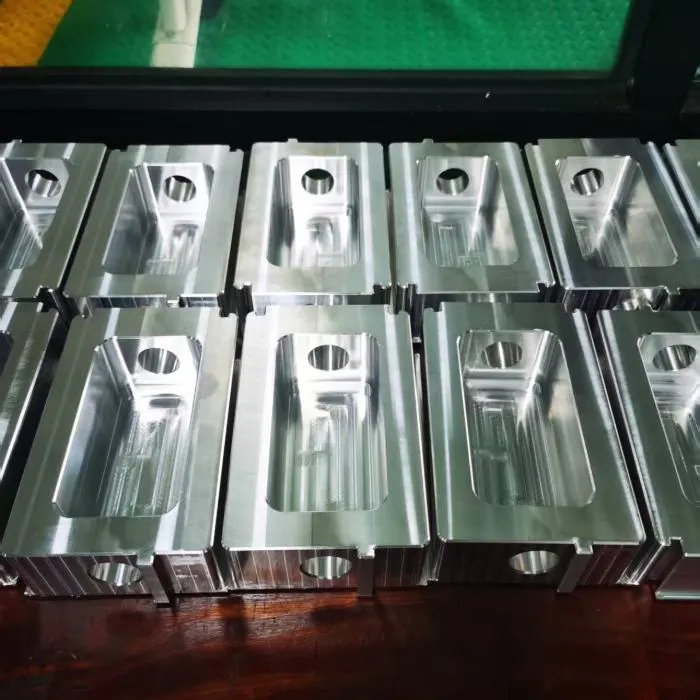
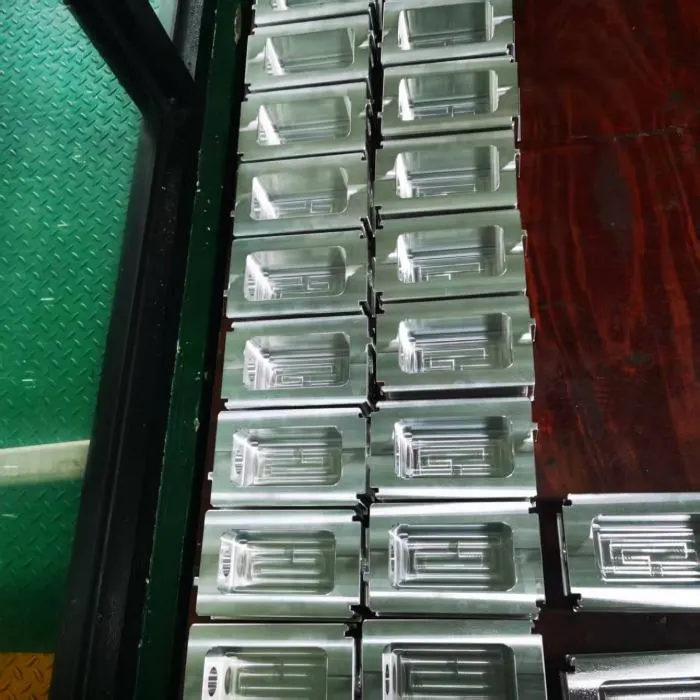
7085 aluminum is a high-strength aluminum alloy developed for aerospace thick plate, large forgings, and highly loaded structural components. It combines a high strength-to-weight ratio, fracture toughness, and resistance to stress-corrosion cracking, and is commonly used for large components such as wing ribs, bulkheads, and fuselage frames.
7085 offers good machinability, but during high material removal, deep-cavity, and thin-wall machining, residual stresses in large plate workpieces can readily cause warping or dimensional deviations. Therefore, the key to 7085 aluminum CNC machining is proper control of the material temper, machining sequence, clamping force, and machining allowance. The following sections explain the material properties and other aspects to help you better understand the machining considerations and improve the yield rate of 7085 aluminum parts.
What Is 7085 Aluminum?
7085 is a high-strength wrought aluminum alloy in the 7xxx series, with zinc, magnesium, and copper as its principal alloying elements. Its density is approximately 2.85 g/cm³, and the main material forms available on the market include thick plate, die forgings, and open-die forgings.
Compared with 7075, the core advantage of 7085 is not higher strength, but lower quench sensitivity, which allows it to retain strength, toughness, and resistance to stress-corrosion cracking more effectively in thick sections. Its actual properties depend on tempers such as T7451, T7452, or T7651, as well as the product form, thickness, and test direction.
Chemical Composition of 7085 Aluminum
7085 aluminum uses a high-purity Al-Zn-Mg-Cu alloy system. Its principal chemical composition is shown below:
| Element | Content (wt.%) | Main Function |
| Zn | 7.0–8.0 | Forms age-hardening precipitates with magnesium to increase strength |
| Mg | 1.2–1.8 | Affects strength, hardness, and quench sensitivity |
| Cu | 1.3–2.0 | Improves strength and thermal stability |
| Zr | 0.08–0.15 | Suppresses recrystallization and improves microstructural stability |
| Fe | ≤0.08 | Strictly controlled impurity element |
| Si | ≤0.06 | Strictly controlled impurity element |
| Al | Balance | Matrix material |
The mechanical properties of 7085 are not determined solely by its relatively high zinc content. They also depend on the combined proportions of Zn, Mg, Cu, and Zr, impurity control, and subsequent heat treatment. Lower Fe and Si contents help reduce coarse second-phase particles at grain boundaries, thereby improving fracture toughness and fatigue performance.
Key Properties of 7085 Aluminum
7085 combines low density, high strength, and good thick-section performance, but specific values vary with heat-treatment temper, product form, section thickness, and test direction.
| Property | Reference Value |
| Density | Approx. 2.85 g/cm³ |
| Elastic Modulus | Approx. 69.6 GPa |
| Thermal Conductivity | 159.5 W/(m·K) at 100°C |
| Thermal Expansion | 24.7 × 10⁻⁶/K at 20–100°C |
| Tensile Strength | 482–503 MPa* |
| Yield Strength | 407–462 MPa* |
*The strength ranges are directional design allowable values for specific 7085-T7452 die forgings and do not represent all 7085 materials.
Among aluminum alloys, 7085 has a slightly higher density than common 5xxx- and 6xxx-series alloys, but its density is still only about one-third that of steel. Its advantage is not the lowest density, but its ability to provide high load-bearing capacity at a relatively low weight, making it suitable for large load-bearing aerospace structures.
The elastic modulus of 7085 is close to that of most wrought aluminum alloys, which means that its high strength does not equate to high stiffness. Although the material can resist substantial permanent deformation, thin-walled, deep-cavity, and large frame components can still deflect during machining. Stiffening ribs, low-stress clamping, and staged machining are therefore required to control overall dimensions.
Its thermal conductivity is good for a high-strength 7xxx-series aluminum alloy, helping cutting heat dissipate quickly. However, its coefficient of thermal expansion remains at the typically high level of aluminum alloys. Large 7085 parts should therefore be allowed to reach a stable temperature before finish machining and final inspection to prevent dimensional changes caused by temperature differences.
The tensile strength and yield strength of 7085 are both at the level expected of high-strength aluminum alloys. Its high tensile strength helps it withstand ultimate loads, while its high yield strength reduces the risk of permanent deformation under sustained loading. Combined with its thick-section performance, 7085 is particularly suitable for wing ribs, bulkheads, fuselage frames, and other aerospace structural components that require both low weight and load-bearing capacity.
Common 7085 Aluminum Tempers
Common heat-treatment tempers for 7085 include T7451, T7651, and T7452. Each temper corresponds to different product forms, stress-relief methods, and performance priorities, so machining stock should not be selected on the basis of the “7085” alloy designation alone.
| Temper | Typical Form | Stress-Relief Method | Main Characteristic |
| T7451 | Thick plate | Stretching | Balances fracture toughness, resistance to stress-corrosion cracking, and dimensional stability |
| T7651 | Thick plate | Stretching | Places greater emphasis on strength while maintaining good corrosion resistance |
| T7452 | Hand or die forging | Compression | Suitable for large load-bearing forgings, with good thick-section performance |
7085-T7451 is primarily used as thick plate that has been stress-relieved by stretching and overaged. It is suitable for machining wing ribs, bulkheads, and large plate-type structures. Its strength, toughness, and resistance to stress-corrosion cracking are well balanced, making it a common choice for large monolithic machined parts.
7085-T7651 is also commonly supplied as thick plate stress-relieved by stretching, but its properties place greater emphasis on higher strength, making it suitable for structural components with higher load-bearing requirements. When selecting the material, the applicable material standard must still be checked according to part thickness, test direction, and corrosion-resistance requirements.
7085-T7452 is primarily used for die forgings or open-die forgings that have been stress-relieved by compression. Forging flow lines can improve load-bearing capacity in specific directions, but they also affect stock orientation and machining distortion. Therefore, the property data and machining plan for T7451 plate cannot be applied directly.
The designations “51” and “52” mainly indicate different stress-relief methods and do not represent higher or lower quality grades. Before purchasing, the material certificate should be checked against the product form, heat-treatment temper, thickness, material direction, and inspection standard.
Why Is 7085 Used for Thick Aerospace Parts?
When thick-section 7xxx-series aluminum alloys are quenched, the surface and center cool at different rates, which can reduce properties in the central region. Because 7085 has lower quench sensitivity, it can retain strength, fracture toughness, and resistance to stress-corrosion cracking more effectively in thick plate and large forgings. It is particularly suitable for load-bearing aerospace structures in which short-transverse properties are important. ICAA Research Paper
Thick 7085 stock can also be machined into monolithic structures such as large wing ribs, bulkheads, and fuselage frames, reducing the number of joints, fasteners, and assembly locations to lower weight and improve structural reliability. However, good thick-section performance does not mean that properties are identical across different thicknesses, directions, and heat-treatment tempers. The applicable material standard and material certificate must still be checked during design and procurement.
Is 7085 Aluminum Easy to Machining?
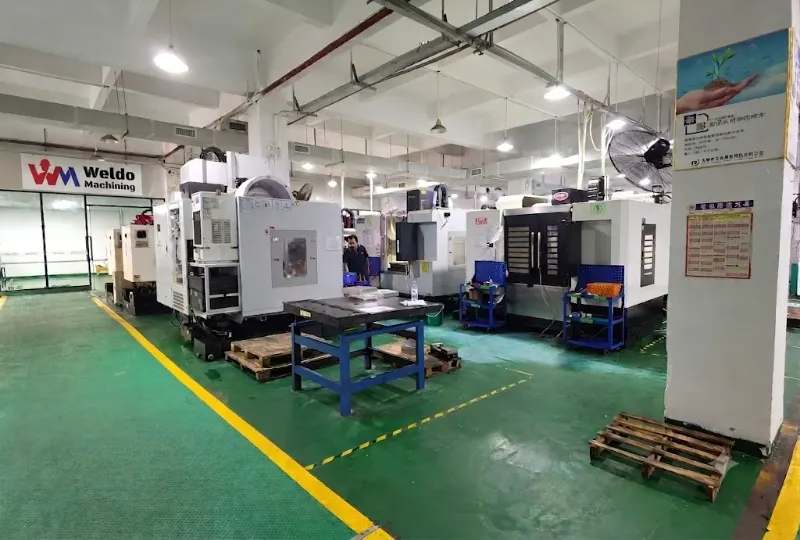
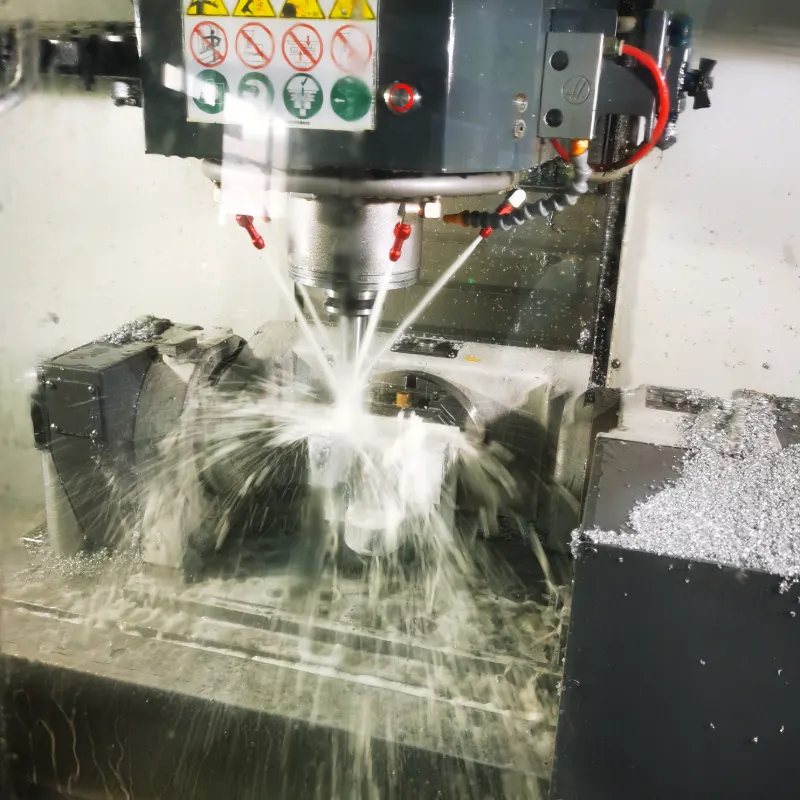
7085 aluminum itself has good machinability and can be processed by high-speed milling, drilling, turning, and five-axis machining. Sharp carbide tools, appropriate cooling, and efficient chip evacuation generally provide stable machining efficiency and surface quality.
However, large 7085 parts are not easy to machine. After substantial material removal from thick plate or forgings, internal residual stresses redistribute, while the stiffness of thin-wall and deep-cavity structures gradually decreases. This can cause deflection, warping, and overall dimensional changes. Forging residual stresses directly affect machining distortion in 7085-T7452 aerospace frame components.
Therefore, the machining difficulty of 7085 mainly depends on the heat-treatment temper, stock form, material direction, material-removal ratio, part stiffness, and clamping method. Large thin-walled parts should be machined in stages with uniform allowances, symmetrical material removal, and low-stress clamping to maintain dimensional stability.
CNC Machining Processes and Tooling Considerations
7085 can be milled, five-axis machined, turned, and drilled. Large wing ribs, bulkheads, and deep-cavity structures are primarily produced by milling or five-axis machining, and reducing repeated setups helps maintain consistent datums. Turning is suitable for machined flanges, sleeves, and annular supports.
Large or thin-walled parts should follow a staged process consisting of roughing, semi-finishing, and finishing, with uniform allowances retained on critical surfaces. After roughing, the workpiece can be released from the vise and reclamped. Material should also be removed as symmetrically as possible to reduce distortion caused by the redistribution of residual stress.
Tools should use sharp carbide cutting edges, a high positive rake angle, and polished flutes to reduce built-up edge and improve chip evacuation. Low-friction coatings or PCD tools may also be used for volume production or machining that requires high surface quality. Kennametal Aluminum Tooling Information
Actual spindle speed, feed rate, and depth of cut should be adjusted according to tool size, machine rigidity, part wall thickness, and clamping conditions. For deep-cavity and deep-hole machining, tool overhang should also be minimized, while stable cooling and timely chip evacuation should be used to prevent chip recutting.
Main Challenges in 7085 Aluminum CNC Machining
Thin-Wall Deflection
As cavity depth increases and wall thickness decreases, part stiffness continues to decline. Cutting and clamping forces can cause thin-wall displacement, uneven wall thickness, or localized overcutting. A smaller radial depth of cut, uniform allowances, and low-stress clamping are therefore required.
Vibration in Deep Cavities
Deep-cavity machining usually requires a longer tool overhang, which can readily cause vibration, chatter marks, and dimensional variation. Tool extension should be kept as short as possible, while layered cutting and stable toolpaths should be used to control the cutting load.
Chip Adhesion and Surface Quality
During machining, aluminum chips may adhere to the tool and form a built-up edge, affecting surface roughness and dimensional stability. Sharp tools, polished flutes, sufficient lubrication, and timely chip evacuation help maintain machining quality.
Material and Scrap Costs
7085 generally has a higher material price and more demanding procurement requirements than conventional aluminum alloys, while large monolithic structures often require most of the stock to be removed. Errors in material direction, machining sequence, or distortion control can therefore result in high rework and scrap costs.
How to Control Distortion During Machining
Distortion control for 7085 parts should cover the entire process, including material selection, clamping, machining, and inspection:
Verify the material temper, product form, and rolling direction or forging flow lines.
Check stock flatness and establish stable machining datums.
Divide the process into roughing, semi-finishing, and finishing to avoid removing a large volume of material in one deep-cutting operation.
Remove material symmetrically from both sides of the part and retain uniform allowances on critical surfaces.
After roughing, release the workpiece so that distortion can occur naturally, then realign and reclamp it.
Use soft jaws, vacuum fixtures, or dedicated fixtures to reduce thin-wall displacement caused by clamping force.
Stabilize the workpiece temperature before finishing and perform manual inspections in high-risk areas during machining.
Research shows that initial residual stress and the stock location through the plate thickness both affect the final distortion of monolithic aluminum parts. Large 7085 parts therefore cannot rely solely on final finish machining to correct dimensions. Distortion risk should be reduced in advance through balanced material removal and staged inspections.
If intermediate thermal stabilization or stress relief is required, an approved process must be used. Unverified heating may alter the original temper and mechanical properties of 7085.
Surface Finishing Options for 7085 aluminum Machined part
The following surface treatments can be selected for machined 7085 parts according to appearance, corrosion resistance, wear resistance, and fatigue requirements:
Deburring: Removes burrs from hole openings and profile edges, reducing the risk of assembly interference and stress concentration.
Bead Blasting: Produces a uniform matte surface, but should not replace final quality inspection of load-bearing aerospace surfaces.
Anodizing: Improves corrosion resistance and surface stability, making it suitable for general aerospace structural components.
Hard Anodizing: Increases hardness and wear resistance, making it suitable for functional surfaces subject to friction or wear.
Chemical Conversion Coating: Provides a lightweight corrosion-protection film and improves the adhesion of primers and coatings.
Painting: Works with a conversion coating or anodized base layer to provide additional environmental protection for the part.
Shot Peening: Can introduce compressive stress into the surface layer, but peening intensity, coverage, and surface roughness must be strictly controlled for load-bearing aerospace components.
Laser Marking: Used for part identification and batch traceability, but should be kept away from high-stress areas and critical mating surfaces.
7085 can be anodized, but the coating color on Al-Zn-Mg-Cu alloys may be affected by the material temper, microstructure, and pretreatment conditions. Decorative color consistency is generally more difficult to control than with 6061, so sample machining and validation should be completed before volume production.
Anodic-film and coating thicknesses also change hole diameters, threads, sealing surfaces, and precision-fit dimensions. Coating thickness should be considered when defining machining allowances, and critical areas should be masked. Anodizing processes for aerospace parts may be performed according to customer requirements or specified aerospace standards.
Quality Control for 7085 CNC Parts
Quality control for 7085 aerospace parts should begin with the raw material. During purchasing, the material certificate, heat or lot number, heat-treatment temper, product form, and rolling direction or forging flow lines must be verified. The raw material should also undergo ultrasonic testing when required by the drawing.
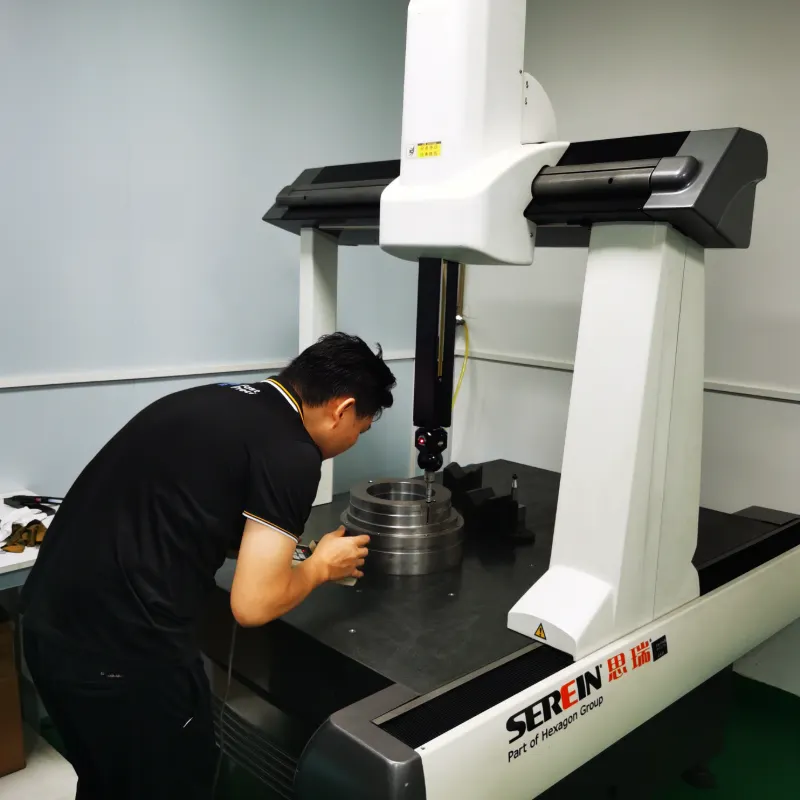
During machining, dimensions should be controlled through first-article inspection, CMM measurement, and surface-roughness inspection. Large precision parts also require final inspection after their temperature has stabilized. Critical load-bearing components may undergo penetrant testing as required to detect surface cracks and other defects.
All mechanical-property data must correspond to the material temper, section thickness, and test direction. Data for specific 7085-T7451 plate or T7452 forgings cannot be applied directly to other product forms.
7085 vs 7075 vs 7050 for CNC Machining
7085, 7075, and 7050 are all high-strength 7xxx-series aluminum alloys, but they differ in thick-section performance, availability, and typical applications.
| Factor | 7085 | 7075 | 7050 |
| Main Advantage | Thick-section performance | Availability and high strength | Toughness and corrosion balance |
| Thick Plate Suitability | Excellent | More limited | Very good |
| Quench Sensitivity | Relatively low | Higher | Moderate |
| Availability | Limited | Widely available | Common in aerospace |
| Machining Cost | High | Relatively lower | High |
| Typical Application | Large aerospace structures | General high-strength parts | Aircraft structural parts |
7075 is widely available and has a mature machining system, making it suitable for general high-strength parts, but its ability to retain properties in extra-thick sections is relatively limited. 7050 places greater emphasis on fracture toughness, resistance to stress-corrosion cracking, and thick-plate performance, and is widely used for aerospace structures.
Through its lower quench sensitivity, 7085 improves internal properties in large thick plates and forgings, making it more suitable for monolithic wing ribs, bulkheads, and large fuselage frames.
Applications of CNC-Machined 7085 Aluminum
7085 is primarily used for large aerospace structural components that require a combination of low weight, thick-section performance, and damage tolerance. Its lower quench sensitivity helps maintain stable properties within thick plate and large forgings. Common applications include:
Monolithic wing ribs and spar structures
Fuselage bulkheads, frames, and load-bearing connectors
Large forged supports and highly loaded structural joints
Deep-cavity, thin-walled aerospace parts with high material-removal ratios
7085 is better suited to thick sections and large monolithic structures. For smaller general high-strength parts without demanding material-supply requirements, 7075 is generally easier to source and less expensive. 7050 is suitable for aerospace structures in which fracture toughness and resistance to stress-corrosion cracking are priorities.
FAQ of 7085 Aluminum
What Is the Difference Between 7085-T7451 and T7452?
T7451 is primarily used for thick plate that has been stress-relieved by stretching, while T7452 is mainly used for die or open-die forgings that have been stress-relieved by compression. Their product forms, material directions, and applicable property data differ, so they cannot be directly substituted for one another.
Can 7085 Aluminum Be Anodized?
7085 can be anodized to improve corrosion resistance and surface stability. However, alloy composition, heat-treatment temper, and pretreatment conditions affect coating color and uniformity, so samples should be validated before volume production.
Can 7085 Aluminum Be Welded?
Conventional fusion welding is not suitable as a routine joining method for critical load-bearing structures made from 7085 because the welding thermal cycle may soften the heat-affected zone, reduce strength, and alter corrosion resistance. Friction stir welding can reduce defects associated with fusion welding, but heat-affected-zone properties must still be evaluated and the welding procedure validated.
What Does 7085-T7451 Mean?
In “7085,” 7 indicates a 7xxx-series aluminum alloy with zinc as the principal alloying element, 0 indicates the original alloy composition, and 85 is the alloy identification number; it does not represent elemental content or strength.
In “T7451,” T74 indicates that the material has undergone solution heat treatment, quenching, and artificial overaging; 51 indicates that residual stresses have been relieved through controlled stretching. This temper is mainly used for thick plate and provides a good balance of strength, fracture toughness, stress-corrosion resistance, and dimensional stability during machining.
What Does 7085-T7651 Mean?
The numbers in “7085” have the same meaning: 7 identifies a zinc-based aluminum alloy, 0 denotes the original alloy composition, and 85 is the identification number assigned to this specific alloy.
In “T7651,” T76 indicates a specific degree of artificial overaging following solution heat treatment and quenching. Compared with T74, it places greater emphasis on strength while retaining good corrosion resistance; 51 indicates that residual stresses have been relieved through controlled stretching. This temper is mainly used for aerospace thick-plate components with higher load-bearing requirements.
What Does 7085-T7452 Mean?
“7085” likewise identifies an originally registered 7xxx-series zinc-based aluminum alloy, while 85 is simply the alloy identification number.
In “T7452,” T74 indicates that the material has undergone solution heat treatment, quenching, and artificial overaging; 52 indicates that residual stresses have been relieved through controlled compression. This temper is mainly used for die forgings and hand forgings and is suitable for large load-bearing aerospace structures.
Note: T7451, T7651, and T7452 are all tempers of 7085 aluminum alloy. Their main differences lie in the degree of overaging, the residual-stress-relief method, and whether they are supplied as plate or forgings. 51 and 52 are complete supplementary temper designations and should not be interpreted as separate digits.
Conclusion
The core value of 7085 aluminum lies in its combination of high strength, thick-section performance, fracture toughness, and low weight. It is suitable for large aerospace wing ribs, bulkheads, fuselage frames, and forged load-bearing components. Although it has good machinability, machining quality depends heavily on the material temper, stock orientation, machining sequence, clamping method, and residual-stress control.
For high-removal, deep-cavity, or thin-walled 7085 parts, staged machining, symmetrical material removal, low-stress clamping, temperature control, and in-process inspection should be incorporated into the complete process plan. If you are preparing to order custom 7085 aluminum parts, you can submit your design drawings to Weldo Machining for professional machining recommendations and a quotation.